

Root vegetables are difficult to grow because the part you harvest develops underground, where soil conditions, pests, moisture levels, and harvesting practices all affect success.
Crops such as carrots, beets, parsnips, radishes, turnips, potatoes, and sweet potatoes often face problems long before they reach the market. Postharvest losses can be significant too.
Root crops can experience significant losses even after harvest due to handling, storage, and transportation problems. Understanding these challenges can help growers improve production methods and maintain better crop quality.
Reasons Root Vegetables Are Difficult
- Soil conditions matter most. Compacted, rocky, or poorly drained soil can cause misshapen roots, stunted growth, and lower yields.
- Pests and weather create constant risks. Underground pests, excess moisture, drought, and temperature swings can reduce root quality and harvest size.
- Harvesting and storage affect final results. Root crops are easily damaged during harvest, and improper storage can lead to significant postharvest losses.
Why Do Root Vegetables Face More Challenges Than Above-Ground Crops?
Root vegetables are challenging to grow because they spend their entire development period inside the soil environment.
Unlike tomatoes, peppers, or beans, growers cannot easily monitor root development. Problems often remain invisible until harvest day. By then, root vegetables may already be forked, twisted, stunted, cracked, or diseased.
The soil itself determines whether roots can expand properly. Even slight issues with soil structure, moisture, or oxygen availability directly affect marketable yield.
Storage creates another obstacle. Root crops continue respiring after harvest, meaning they remain biologically active long after leaving the field.
The Philippine Center for Postharvest Development and Mechanization reported post-harvest losses reaching 31.21%–32.97%, demonstrating how root vegetables struggle to grow profitably even after successful production.
Root vegetables also require suitable soil pH levels. Most root crops grow best in slightly acidic to neutral soils (pH 6.0–7.0). Outside this range, nutrient availability declines and roots may develop poorly.
How Does Soil Compaction Prevent Healthy Root Growth?

Root vegetables hard to cultivate often suffer from compacted soil that physically blocks root expansion.
Compacted soil restricts oxygen movement, slows water infiltration, and increases mechanical resistance. For crops whose harvestable portion must penetrate soil and expand underground, this creates major problems.
Excess nitrogen can worsen root quality by encouraging leafy top growth at the expense of root enlargement. Balanced fertilization supports uniform root development. The same principle applies when managing hydroponic plant nutrients, where nutrient balance strongly influences root size and quality.
From our experience, gardeners frequently blame seeds when the real issue is soil structure. A carrot seed can germinate perfectly and still produce a twisted, unusable root. Growers experimenting with root vegetables with hydroponics often notice how removing soil-related barriers can improve root uniformity.
What Happens When Soil Becomes Too Dense?
Root elongation becomes increasingly difficult as soil density rises.
Research shows root growth can become severely restricted at soil bulk densities between 1.25 and 1.6 g/cc.
As noted by scielo
“Small pores in soils of agricultural fields restrict the permeability and root systems growth.” – SciELO
Symptoms include:
- Root vegetables fork.
- Root vegetables twist.
- Root vegetables become stunted.
- Root vegetables produce poor harvest yields.
- Root vegetables develop gnarled shapes.
- Root vegetables may develop hollow centers or uneven sizing.
These symptoms are common in clay soil root vegetables and heavy soil root vegetables.
Before discussing air movement, it helps to understand what healthy soil should look like internally.
Why Is Soil Air Space Important?
Healthy root development requires a balance between solid particles and pore spaces.
| Soil Component | Recommended Share |
| Mineral & Organic Material | ~50% |
| Pore Space (Air + Water) | ~50% |
Soil science guidelines indicate healthy agricultural soils require approximately 50% pore space for proper root function.
Without adequate pore space, root vegetables penetrate soil more slowly and often grow poorly regardless of fertilizer inputs.
Why Do Carrots and Parsnips Become Forked or Misshapen?
Carrots difficult to grow and parsnips difficult to grow often become misshapen because underground obstacles force roots to change direction.
A forked carrot rarely results from genetics. More often, it reflects environmental stress. Compacted layers, rocks, debris, nematodes, and poor soil root vegetables conditions all contribute to deformities.
What Happens When Plow Pans Form?
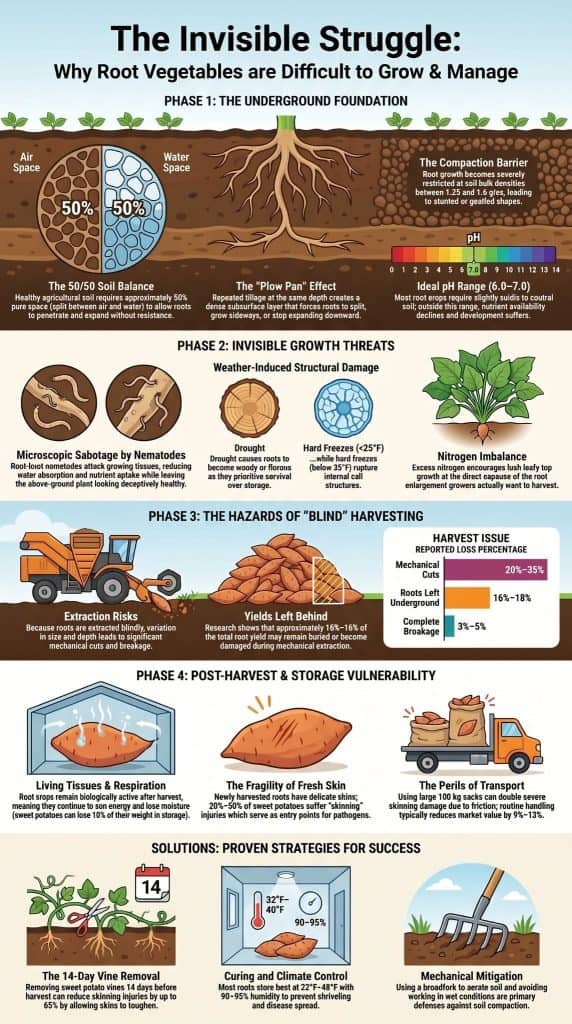
Repeated tillage at the same depth creates a dense subsurface layer called a plow pan. These barriers commonly form within the upper 0–12 inches of soil.
When roots encounter this resistance, they may:
- Split into multiple branches.
- Grow sideways.
- Develop twisted shapes.
- Stop expanding downward.
This explains many root vegetables twisting issues observed in home gardens. Before assuming soil is solely responsible, biological causes deserve attention.
Can Pests Cause Forked Roots?
Yes. Root-knot nematodes, such as Meloidogyne hapla, can damage developing roots by attacking growing tissues and interfering with normal root formation.
Even low nematode populations can render carrot crops commercially unmarketable. Wireworms, seedcorn maggots, and root maggots can also damage developing roots, creating tunnels and reducing marketability.
One could argue that many gardeners spend months correcting soil structure while overlooking microscopic pests that cause similar symptoms.
How Do Soil Pests Create Long-Term Crop Problems?
Soil pests attack the very tissues responsible for nutrient and water uptake.
Because root vegetables depend on underground storage organs, damage to the root system directly reduces production potential.
Why Are Nematodes So Damaging?
Nematodes:
- Feed on root tissues.
- Reduce water absorption.
- Restrict nutrient uptake.
- Increase drought sensitivity.
- Delay maturity.
Affected crops often appear healthy above ground until harvest reveals poor root formation.
Crop rotation is one of the most effective strategies for reducing nematode populations naturally. Rotating susceptible root crops with non-host plants can help interrupt the nematode life cycle and reduce pest pressure over time.
What Are the Economic Consequences?
Parasitic nematodes can damage root systems, reducing root size and slowing down crop development.
Farmers frequently apply additional water and fertilizer attempting to compensate, increasing production costs without solving the underlying issue.
Why Are Sweet Potatoes Especially Difficult to Maintain Over Time?
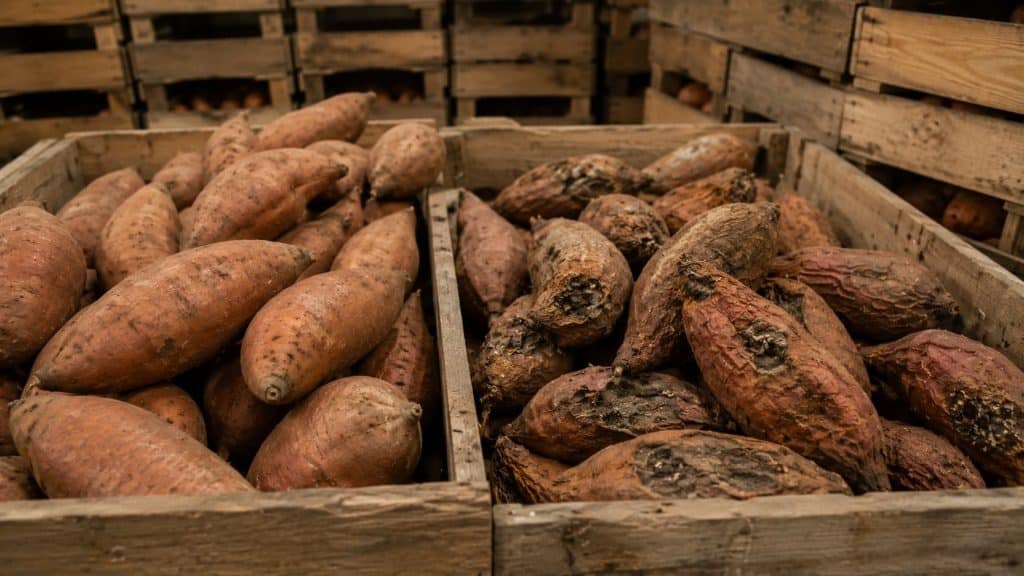
Sweet potatoes can be challenging to grow because they are propagated through plant cuttings rather than seeds. Growers typically use slips to produce new plants, which can increase the risk of disease buildup and gradual loss of plant vigor over time.
What Is Genetic Decay?
Genetic decay refers to gradual reductions in vigor caused by mutations and virus accumulation.
Over time, productivity declines even if growing conditions remain unchanged.
Why Don’t Growers Reuse Planting Stock Indefinitely?
Saved planting material can begin to lose quality and productivity after only a few generations.
That means reusing slips indefinitely often results in:
- Lower yields.
- Smaller roots.
- Greater disease pressure.
- Reduced vigor.
Of course, saving planting material lowers costs initially. That said, declining performance often outweighs those savings.
How Does Weather Increase Root Crop Risk?
Root vegetables depend heavily on soil conditions, making weather one of their greatest risks.
Both excessive moisture and extreme cold can create serious problems.
What Happens During Hard Freezes?
The University of California Agriculture and Natural Resources reports carrot tissues suffer severe damage at approximately 25°F (-4°C).
When cells freeze, internal structures rupture and storage quality declines rapidly.
Cold season root vegetables generally tolerate cool temperatures, but hard freezes remain dangerous.
This risk is especially significant for growers producing root vegetables in northern climates.
Why Is Wet Soil Dangerous Before Harvest?
Wet soils create multiple challenges simultaneously.
Problems include:
- Increased soil compaction.
- Greater disease pressure.
- Reduced machinery efficiency.
- Higher harvesting losses.
Waterlogged soils can increase diseases such as Pythium root rot and Rhizoctonia infections, both of which can damage developing roots and reduce overall crop quality.
Some studies report losses reaching 30%–40% under wet harvest conditions under wet harvest conditions.
How Does Drought Affect Root Development?
Drought can severely limit root vegetable growth because developing roots require consistent moisture to expand properly. When soil remains dry for extended periods, root enlargement slows and plants divert energy toward survival rather than storage root production.
Insufficient moisture often leads to:
- Reduced root expansion.
- Smaller harvest size.
- Uneven root development.
- Increased susceptibility to pest and disease stress.
In many root crops, prolonged drought can also cause roots to develop a woody or fibrous texture. This occurs because growth slows while structural tissues continue to mature, reducing tenderness and overall eating quality.
Consistent irrigation throughout the growing season helps maintain steady root enlargement and improves both yield and market quality.
Why Is Harvesting Root Vegetables So Difficult?
Harvesting root vegetables remains difficult because growers cannot see exactly where the crop sits underground. Unlike fruit crops, roots must be extracted blindly. Variation in size, depth, and orientation complicates harvesting operations.
How Much Crop Is Lost During Digging?
| Harvest Issue | Reported Loss |
| Roots left underground | Approximately 16%–18% of roots may remain underground |
| Mechanical cuts | 20%–35% |
| Complete breakage | 3%–5% |
These figures highlight why poor root vegetable harvest yields remain a major concern, even after successful crop production.
Long-rooted crops such as parsnips and carrots generally experience higher extraction losses than shallow-rooted crops because their roots extend deeper into the soil and are more likely to break during harvesting.
Why Can’t Harvesters Avoid Damage?
Root size and positioning vary throughout the field.
Even modern equipment struggles to remove roots without causing injury.
The Philippine Center for Postharvest Development and Mechanization found nearly 18% of yield may remain buried or become damaged during extraction.
Why Do Root Vegetables Bruise So Easily After Harvest?
Freshly harvested roots possess delicate skins that have not fully hardened.
This vulnerability explains why root vegetables often deteriorate quickly after digging.
What Happens Immediately After Digging?
The outer protective layer remains susceptible to:
- Abrasion.
- Scratches.
- Moisture loss.
- Disease entry.
Many growers underestimate how fragile newly harvested roots remain.
How Serious Is Skin Damage?
Research supported by the UK Department for International Development found Studies show 20%–50% of harvested sweet potatoes can suffer skinning injuries.
A practical example illustrates the issue.
A sweet potato that appears healthy at harvest may begin deteriorating days later because a small abrasion created an entry point for pathogens.
Pro Tip: Cure roots properly before long-distance transportation.
How Do Transportation and Packaging Reduce Profitability?
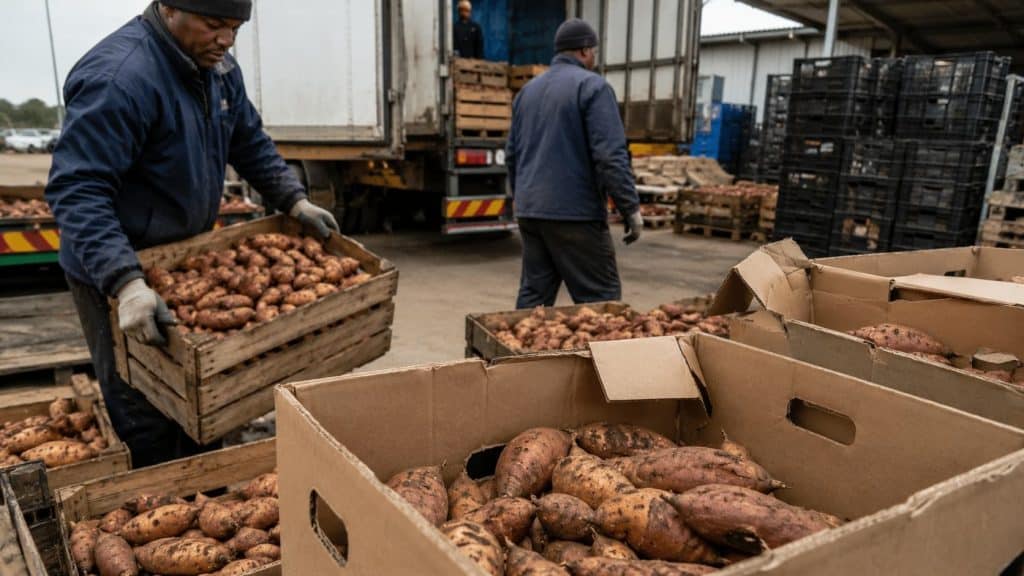
Transportation creates hidden losses that many growers overlook.
Small impacts during transit generate cosmetic defects that reduce market value.
Why Are Large Transport Bags Risky?
Traditional 100 kg sacks increase friction between roots. Studies show these containers can double severe skinning damage.
How Much Value Is Lost During Transport?
Routine handling often reduces market value by 9%–13%.
Research presented in Methods for Reducing Post-Harvest Handling Losses of Sweet Potato highlights how even ordinary transportation contributes to significant economic losses.
Why Are Root Vegetables Difficult to Store Successfully?
Root vegetables remain alive after harvest.
They continue respiring, losing moisture, and consuming stored energy reserves.
Storage success depends on maintaining very specific environmental conditions.
What Storage Conditions Work Best?
Most root vegetables store best at 32°F–40°F and 90–95% humidity, although sweet potatoes typically require warmer storage conditions of approximately 55°F–60°F.
Standard agricultural recommendations suggest maintaining these conditions (32°F–40°F, 95% humidity) to preserve quality.
Before discussing storage failures, remember that roots are living tissues rather than inert products.
What Happens in Poor Storage?
Common storage problems include:
- Moisture loss.
- Shriveling.
- Texture decline.
- Reduced shelf life.
- Increased disease risk.
Storage diseases such as Fusarium dry rot and bacterial soft rot can spread rapidly when temperatures fluctuate, increasing spoilage and reducing the marketable quality of stored roots.
Sweet potatoes can lose 10% or more of their weight during storage from moisture loss alone.
Research from Lewthwaite, S.L., Fletcher, P.J., Fletcher, J.D., & Triggs, C.M. shows
“Storage root yield decreased significantly with increasing field exposure, for both cultivars” – New Zealand Plant Protection
This finding highlights how delays and poor postharvest handling can contribute to additional losses before roots ever reach long-term storage.
What Can Growers Do to Reduce Root Vegetable Losses?
Successful root vegetable production depends on managing risks throughout the entire growing cycle.
No single solution eliminates all challenges.
Which Practices Deliver the Biggest Improvements?
The most effective strategies include:
- Avoid working wet soil.
- Reduce compaction with a broadfork.
- Use raised beds where appropriate.
- Monitor nematodes regularly.
- Practice consistent watering root vegetables.
- Improve weed control root vegetables.
- Cure harvested roots before storage.
These practices help improve organic root vegetable gardening while promoting more sustainable growing systems
Are There Proven Techniques?
Yes. One particularly effective technique involves preparing sweet potatoes before harvest.
Research from the University of Kentucky found removing vines approximately 14 days before harvest significantly reduced skinning injuries (studies report 50%–65% reduction).
That single adjustment demonstrates how small management changes can significantly improve outcomes.
What Should Readers Remember About Root Vegetable Production?
Root vegetables are challenging because every stage from planting through storage occurs under conditions that increase biological and physical risk. Even highly controlled hydroponic systems cannot eliminate every production and postharvest challenge affecting root crops.
Several principles stand out:
- Soil structure determines root shape.
- Underground pests reduce marketability.
- Harvesting causes unavoidable losses.
- Storage requires strict environmental control.
- Handling damage accumulates rapidly.
Entire post-harvest systems may lose more than 30% of production volume, emphasizing how vulnerable these crops remain. Losses can continue even after root crops are harvested and removed from the field.
How Nanobubble Technology Improves Plant Growth
The video explains the use of nanobubble technology and how it can improve water quality in agricultural systems. It shows how tiny oxygen bubbles increase dissolved oxygen levels in water, helping create healthier conditions for plant roots. The technology can support better nutrient absorption, improve plant growth, and help reduce problems caused by poor water quality. It also highlights how better oxygen management can make water use more efficient and support more productive crop growth.
Credits: Moleaer Inc
FAQ
Why do root vegetables grow poorly even in well-prepared garden beds?
Many gardeners ask why some root vegetables are difficult to grow even after preparing the soil. Root vegetables grow poorly when the soil remains compacted below the surface, preventing roots from expanding normally. Compacted soil root vegetables often become small or misshapen. Poor soil root vegetables may also lack the nutrients needed for steady development. Inconsistent watering further reduces growth and can lower harvest quality.
How can I prevent root vegetables from developing twisted or forked roots?
Root vegetables forking problems usually occur when roots encounter physical barriers underground. Rocky soil root vegetables often split when growing around stones, while clay soil root vegetables may become distorted because dense soil restricts root expansion. Root vegetables twisting issues can be reduced by improving root vegetables soil preparation, removing rocks, adding organic matter, and ensuring sufficient soil depth before planting.
Why are carrots, beets, parsnips, radishes, and turnips often difficult to grow successfully?
Carrots, beets, parsnips, radishes, and turnips can be difficult to grow because they require loose, deep soil and consistent moisture throughout the growing season. When gardeners direct sow root vegetables into heavy or compacted soil, seedlings may struggle to establish strong roots. Under these conditions, root vegetables may develop stunted growth, uneven sizing, cracking, or misshapen roots that reduce overall harvest quality. Proper soil preparation, balanced fertility, and regular watering help support healthy root development and improve yields.
How does watering affect root vegetable harvest size and quality?
Water management plays a major role in preventing poor root vegetable harvests. Excessive watering can reduce oxygen levels in the soil and create conditions that encourage common root diseases. On the other hand, insufficient water slows root development and limits overall yield. Irregular watering patterns may lead to cracking, tough textures, and uneven root growth. Maintaining consistent moisture levels helps support healthier roots from early growth through harvest.
Which climate conditions make root vegetables harder to grow?
Climate conditions influence both root development and harvest quality. Cool-season root vegetables usually grow best in moderate temperatures, while warm-season crops may experience stress during prolonged heat. In northern climates, shorter growing periods can limit root expansion and reduce final yields. Crops such as sweet potatoes may struggle in cooler regions, while potatoes can produce smaller harvests when temperatures become too high. Extreme soil temperatures can also interfere with root growth, slowing enlargement, lowering quality, and contributing to poor harvest outcomes.
Why Root Vegetables Are Difficult to Grow
Few things are more frustrating than pulling up root vegetables and finding poor quality after months of work. That’s the reality.
Problems like compacted soil, uneven growth, disease pressure, insect damage, and storage losses can quickly reduce both yield and quality, even when crops seem healthy above ground. The good news is that many of these issues can be reduced with better growing practices and closer attention to conditions throughout the season.
By improving soil preparation, managing fertility carefully, and handling crops properly after harvest, growers can get more reliable results. As weather patterns become less predictable, understanding these challenges gives you a practical way to reduce waste and support more sustainable food production.
References
- https://www.scielo.org.mx/scielo.php?script=sci_arttext&pid=S1405-31952018000500685&lng=en&nrm=iso&tlng=en
- https://journal.nzpps.org/index.php/nzpp/article/view/5976?articlesBySameAuthorPage=1#articlesBySameAuthor
Related Articles
- https://tophydroponicgarden.com/hydroponic-systems/
- https://tophydroponicgarden.com/grow-root-vegetables-with-hydroponics/
- https://tophydroponicgarden.com/best-hydroponic-plant-nutrients/
Was this helpful?

I’m Barrie L., a passionate hydroponic gardening enthusiast dedicated to cultivating thriving, soil-less gardens. With a focus on all things hydroponic, I share my expertise on innovative growing techniques and sustainable practices through my blog, tophydroponicgarden.com. As a seasoned hydroponics specialist, my goal is to inspire and guide fellow gardeners in harnessing the power of water-based cultivation for bountiful and eco-friendly harvests. I’m also an author of the book “Hydroponics For Absolute Beginners: Your Step By Step Guide For How To Create An Hydroponics System At Home Without Soil, For Growing Vegetable, Fruit And Herbs.” which is sold on Amazon. Join me on a journey of redefining the way we cultivate plants, one nutrient-rich solution at a time. Happy growing!