

Plant roots need oxygen. This isn’t optional; it’s a core requirement for survival. Roots use oxygen in a process called cellular respiration to make ATP, which is the energy currency powering everything they do.
This energy is what drives nutrient uptake from the soil, fuels new root growth, and keeps the whole system running, day and night. While leaves produce oxygen, that oxygen doesn’t travel down to the roots. Roots must get their supply directly from the air in the soil or dissolved in water.
When that supply is cut off-like in compacted or waterlogged soil-roots suffocate. Their metabolism crashes in a state called hypoxia, growth stalls, and they become vulnerable to rot. Getting this right is fundamental for anyone growing plants, from backyard gardeners to commercial farmers.
The science is clear: oxygen availability directly controls root health, which in turn dictates the health of the entire plant. To see exactly how oxygen powers nutrient uptake, growth, and disease resistance, keep reading.
Quick Root Oxygen Insights
- Oxygen enables root respiration, powering nutrient uptake.
- Low oxygen causes root hypoxia and weak growth.
- Adequate oxygen boosts roots and disease resistance.
The Role of Oxygen in Cellular Respiration in Plant Roots
Roots need to breathe. They really do. They pull oxygen from the soil to fuel a process called aerobic respiration. This is how they turn stored sugars into usable energy, all inside tiny cellular power plants known as mitochondria
That energy runs the whole show. It keeps their metabolism ticking and powers the pumps that pull in nutrients.
Leaves make food. Roots consume it. They are completely dependent on what the soil provides, on oxygen moving through its pores or dissolved in water. This isn’t a part time job, either.
The demand for energy is constant, day and night. That relentless need is why soil oxygen dictates so much about root health and, ultimately, how well a plant grows.
So how does it work? Oxygen lets roots convert glucose into ATP. This happens in the mitochondria. The energy produced supports their core functions.
Research from plant physiologists, including work at the University of California, shows the scale. Actively growing roots can use up to half of a plant’s entire daily energy budget. It’s a huge investment.
And when the oxygen is gone? Trouble. Roots switch to a last ditch process called anaerobic fermentation. This makes toxic stuff. Ethanol. Lactic acid.
It damages cells quickly, shutting down the plant’s ability to absorb what it needs. The whole system falters.
Oxygen’s Role in Nutrient and Water Uptake
The connection is direct. Oxygen lets roots breathe, and that breathing creates the energy they need to eat. This becomes especially important in an indoor hydroponic garden, where oxygen dissolved in water replaces the air pockets normally found in soil. The ATP produced during aerobic respiration powers the tiny pumps in root cell membranes.
These pumps perform active transport, pulling essential minerals like nitrogen, phosphorus, and potassium into the roots, even when the concentration outside is lower. This isn’t a passive trickle. It’s active, hard work.
As highlighted by Moleater
“If oxygen levels are low, the root cell produces less ATP from glucose to power the absorption of water and nutrients. … the rate of plant respiration in root cells will limit water and nutrient absorption leading to less root growth and development.”-Moleaer
The Food and Agriculture Organization notes this fundamental link. No oxygen means no energy for those pumps.
It affects water, too. Root cells manage their internal pressure and keep their pathways open, a metabolic process that needs constant energy. This allows water to flow smoothly into the plant.
Cut the oxygen, and everything slows down. The system breaks.
- Uptake of key nutrients like nitrogen and potassium plummets.
- Water absorption drops.
- The chemistry of the soil around the roots changes, locking nutrients away.
| Oxygen Level in Root Zone | Root Respiration | Nutrient Uptake | Water Absorption | Plant Growth |
| Adequate oxygen | Active aerobic respiration produces sufficient ATP | Efficient uptake of nitrogen, phosphorus, and potassium | Water moves easily into root cells | Strong and steady plant growth |
| Low oxygen (hypoxia) | Respiration slows and ATP production drops | Nutrient transport becomes inefficient | Water absorption decreases | Growth slows and plants weaken |
| Severe oxygen deficiency | Roots shift to anaerobic metabolism | Nutrient uptake may nearly stop | Water movement becomes restricted | Roots may suffer damage or die |
The impact is measurable. Agricultural research shows oxygen poor soil can slash a plant’s nutrient uptake efficiency by thirty to sixty percent. The result is always the same. Weaker plants, stunted growth.
It’s simple, really. Maintaining good oxygen levels, whether in soil or a water based system, isn’t just about survival. It’s what makes a plant vigorous, productive, and truly healthy.
Oxygen’s Influence on Root Growth and Development

Roots don’t just sit there. They grow, they push, they explore. And for that, they need fuel.
Oxygen provides the energy for the very building blocks of growth: cell division and elongation right at the root tips. This is how the root system expands its reach, searching the soil for water and food.
Data from Harvst demonstrates
“Adequate oxygen levels in the root zone promote cell division and elongation, allowing roots to penetrate deeper into the soil… Adequately oxygenated roots are better equipped to withstand environmental stressors, such as extreme temperatures, drought, and disease.”-Harvst
The action happens in the meristem, a zone of rapid cell division. Those new cells then stretch and specialize. It’s a high energy operation, completely dependent on a steady supply of ATP from aerobic respiration.
Take away the oxygen, and the metabolic engine sputters. Growth simply stalls.
Good soil aeration does more than just sustain the main roots. It fuels the respiration of fine roots, those critical, hair like structures that are the primary interface for grabbing nutrients.
This influences how the plant manages its entire carbon budget.
With healthy oxygen levels, several things happen.
- Cells in the root meristems divide quickly.
- Fine root branching increases dramatically.
- The overall root structure becomes stronger and more robust.
Research from places like Cornell University’s Soil & Crop Sciences department puts numbers to it. Oxygen rich soil can boost root biomass by twenty to forty percent.
That means a more stable plant and far better access to nutrients.
The benefit is a resilient, extensive root system. It can explore a larger volume of soil, capture more resources, and stand up to environmental stress. It’s the foundation of a healthy plant.
Root Suffocation in Low-Oxygen Soils
Credits: Bud Fellas
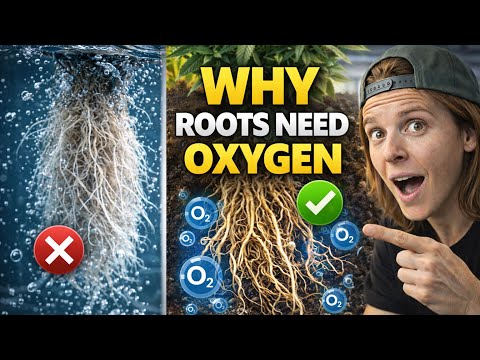
Plants can drown. It happens on the ground. When soil holds too much water, the air pockets that roots rely on disappear.
Oxygen can’t move fast enough through water to reach them. This is root hypoxia. The roots begin to suffocate. Their respiration slows, and their cells start to fail.
In a good soil, about a fifth of the space is air. Roots breathe that air. But when soil is saturated, water fills those spaces instead. The difference is staggering. Oxygen moves through waterlogged soil up to ten thousand times slower than through air.
The USDA’s Natural Resources Conservation Service highlights this as a major issue. The drop in supply is so sudden that plants deteriorate fast.
You see it in the garden. Overwatering is a common cause. So is soil compaction, poor drainage, or any event that leaves the ground waterlogged.
The plant tells you what’s wrong. Its leaves turn yellow. It wilts, even though the soil is wet. Growth just stops. If you check the roots, they’re often dark, soft, and smell bad.
The solution comes back to air. Keeping the soil properly aerated isn’t a luxury. It’s the only way to sustain the respiration that keeps roots, and the entire plant, alive.
Oxygen’s Role in Preventing Root Diseases
This is about defense. Oxygen keeps the bad guys out.
Think of the soil around roots as a neighborhood. When oxygen is plentiful, it’s a good place. The roots are healthy and active.
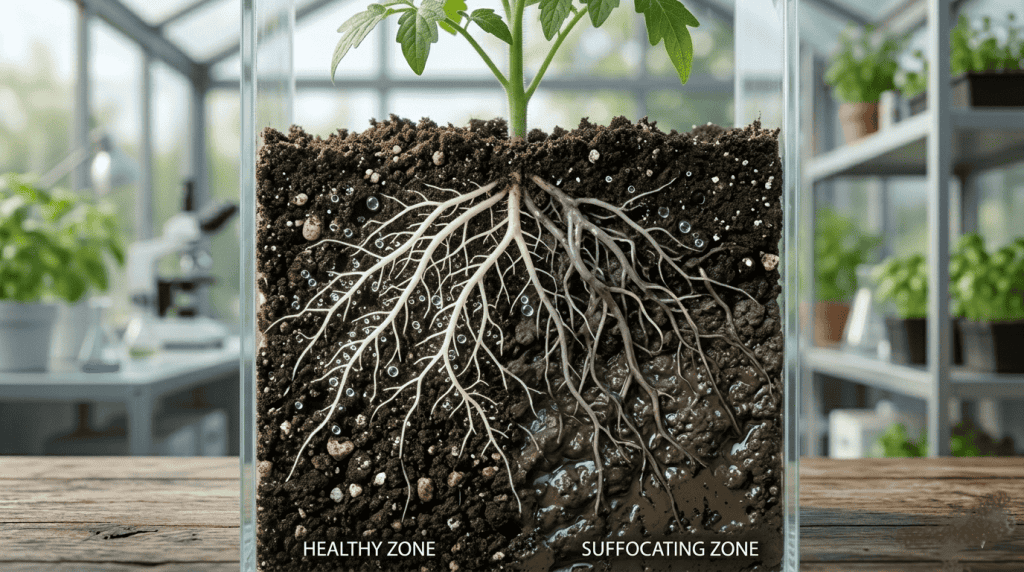
But when the air gets thin, the neighborhood changes. Weak roots can’t defend themselves. That’s when the troublemakers move in.
Pathogens like Pythium and Fusarium love low oxygen. They’re anaerobic. They cause root rot and wilt, diseases that destroy tissue and block nutrients.
Research from groups like the American Phytopathological Society shows how these organisms exploit the situation.
Oxygen fights them off in several ways. It keeps root metabolism strong. It makes the root zone itself less welcoming to invaders. And it helps good microbes thrive, which crowd out the dangerous ones.
The diseases linked to poor aeration are a farmer’s nightmare: Pythium root rot, Fusarium wilt, various bacterial infections.
The impact is huge. Globally, root diseases are blamed for 10% to 20% of crop losses. That’s a massive toll. It shows that keeping roots well aerated isn’t just about feeding the plant.
It’s a critical strategy to stop these pathogens before they start. Good oxygen levels create an environment where roots are resilient and diseases can’t easily get a foothold.
Ways Gardeners Can Improve Oxygen Levels in the Root Zone
Getting air to the roots is a basic job for any gardener. It doesn’t matter if you’re growing in dirt or water. The goal is the same. Roots need to breathe.
In soil, they pull oxygen from air pockets. In a hydroponic tank, they rely on oxygen dissolved in the water. Managing these conditions is what keeps root metabolism running smoothly.
For soil, it’s about structure and restraint. You want a loose, porous mix that holds air. Adding materials like perlite or coarse sand creates space. The biggest mistake is overwatering.
Soggy soil drowns roots. Using raised beds helps water drain away faster. If the ground is compacted, you have to loosen it. Let the air back in.
Hydroponics is different. There’s no soil, just water. Here, oxygen has to be mixed into the nutrient solution.
Research, including work by NASA on controlled environment agriculture, shows most crops do best when dissolved oxygen stays above 6 to 8 milligrams per liter. Drop below 3 mg/L, and roots can be damaged in a matter of hours.
Growers use a few reliable tools to keep levels up, especially in hydroponic setups like deep water culture where plant roots sit directly in oxygenated nutrient solution.
| Method | What It Does | Common System |
| Air Stones | Release fine air bubbles into the water to increase dissolved oxygen levels. | Deep Water Culture (DWC) |
| Water Circulation | In systems such as the nutrient film technique, constant flow keeps the nutrient solution moving and prevents oxygen-poor dead zones around roots | Nutrient Film Technique (NFT) |
| Cooler Reservoirs | Lower water temperatures allow the solution to hold more dissolved oxygen. | General hydroponic reservoir management |
It comes down to monitoring and balance. Whether you’re fluffing soil or checking a water meter, the principle is identical.
Consistent oxygen means healthy roots. And healthy roots are the foundation of everything else.
FAQ
How does oxygen diffusion affect root respiration in compacted or poorly aerated soil?
Oxygen diffusion to roots depends on air spaces within the soil. When soil becomes compacted or waterlogged, soil porosity decreases and oxygen diffusion slows.
As a result, root respiration and cellular respiration in roots become less efficient. Lower oxygen availability reduces ATP production in roots, which limits root growth energy, weakens nutrient absorption, and ultimately reduces plant vigor and overall development.
What signs show plants suffering from root hypoxia or low oxygen damage?
Plants experiencing root hypoxia often show visible stress above the soil surface. Leaves may turn yellow, growth slows, and plants appear weak. Below the surface, roots may become brown, soft, or poorly developed.
Root anoxia symptoms can also include reduced water uptake and weaker nutrient absorption. Prolonged oxygen deficiency allows anaerobic pathogens to thrive, which can increase the risk of root rot and disease.
Why do proper soil aeration and oxygen levels help prevent root diseases?
Proper soil aeration allows oxygen to move freely through the root zone and supports aerobic root metabolism. Adequate oxygen levels in the rhizosphere help maintain healthy root respiration and strengthen plant defenses.
Oxygen-rich conditions also discourage anaerobic pathogens that thrive in poorly aerated soils. As a result, better aeration can help reduce the risk of root diseases such as those caused by Pythium and Fusarium.
How do dissolved oxygen levels influence roots in hydroponic growing systems?
In hydroponic systems, plant roots depend on dissolved oxygen in the nutrient solution rather than oxygen from soil air spaces. Adequate dissolved oxygen supports healthy root respiration and efficient aerobic metabolism.
When oxygen levels remain stable, roots absorb nutrients more effectively and produce more energy for growth. Consistent oxygen levels also support stronger root development and improve overall plant health.
Can soil structure and air–water balance improve oxygen availability to plant roots?
Soil structure strongly influences how oxygen moves through the root zone. A balanced air–water ratio allows oxygen to diffuse through soil pores and reach plant roots.
Good soil structure improves oxygen availability, supports fine root respiration, and increases nutrient bioavailability. Proper structure also reduces waterlogging, which helps maintain healthy root physiology and supports vigorous plant growth.
Let Your Roots Breathe
You water your plants, check the leaves, and still something feels off. The growth slows, the color fades, and the soil stays heavy under your fingers. Oxygen is often the missing piece.
Roots need it to make energy so they can pull in nutrients and move water upward. Without air in the soil, that system stalls. The plant struggles.
The fix is simple once you see the problem. Focus on airflow around the roots, not just water. Keep soil loose so air pockets stay open, and avoid soil that stays packed or soaked.
When roots can breathe, they work harder, the plant grows stronger, and the whole system finally feels balanced.
References
- https://www.moleaer.com/blog/horticulture/high-plant-yields-oxygen-uptake-by-roots-is-critical-for-plant-respiration
- https://harvst.io/blogs/news/oxygen-for-plant-roots
Related articles
- https://tophydroponicgarden.com/is-deep-water-culture-the-best/
- https://tophydroponicgarden.com/nutrient-film-technique/
- https://tophydroponicgarden.com/indoor-hydroponic-garden-diy/
Was this helpful?

I’m Barrie L., a passionate hydroponic gardening enthusiast dedicated to cultivating thriving, soil-less gardens. With a focus on all things hydroponic, I share my expertise on innovative growing techniques and sustainable practices through my blog, tophydroponicgarden.com. As a seasoned hydroponics specialist, my goal is to inspire and guide fellow gardeners in harnessing the power of water-based cultivation for bountiful and eco-friendly harvests. I’m also an author of the book “Hydroponics For Absolute Beginners: Your Step By Step Guide For How To Create An Hydroponics System At Home Without Soil, For Growing Vegetable, Fruit And Herbs.” which is sold on Amazon. Join me on a journey of redefining the way we cultivate plants, one nutrient-rich solution at a time. Happy growing!