

Good air circulation is vital for healthy plants. It helps control temperature, spreads carbon dioxide, reduces extra moisture, and supports steady nutrient intake. Since indoor spaces lack natural wind, you must create your own airflow to keep conditions stable and avoid common plant health problems.
Proper air movement also improves indoor air quality and leads to more consistent crop growth. Read on to see how airflow helps plants and why it is essential for controlled-environment farming.
Airflow Essentials at a Glance
- Good air circulation in hydroponics supports plant growth, nutrient uptake, photosynthesis, and overall plant resilience.
- Proper hydroponic ventilation helps prevent mold, mildew, pests, and excess humidity while maintaining a healthier growing environment.
- Balanced airflow improves temperature regulation, carbon dioxide distribution, and crop quality, leading to more consistent harvests.
Quick Airflow Facts You Should Know
Air circulation does more than just keep the air moving. It creates the stable conditions plants need to thrive.
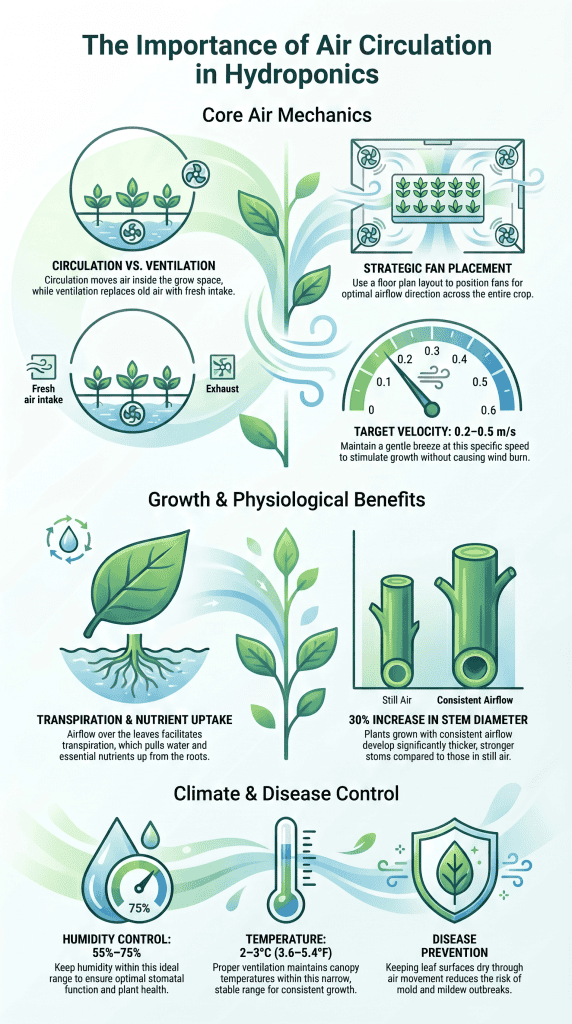
Airflow helps plants get the carbon dioxide they need for photosynthesis. It is also important to keep humidity levels between 55% and 75% for most hydroponic crops. This reduces excess moisture around the leaves. Additionally, airflow regulates temperature. It helps keep the temperature near the plants within 2 to 3°C (3.6 to 5.4°F) across the growing area.
Beyond controlling the climate, airflow is critical for preventing disease. It makes the environment less friendly to mold and fungi. It also helps with the movement of nutrients through the plant and encourages the growth of thicker stems and a sturdier structure.
Many indoor growers aim for 1,000 to 1,200 ppm of carbon dioxide during active growth. This is much higher than the natural level of about 420 ppm. When air stops moving, carbon dioxide levels can change unevenly in different spots, and air quality drops. This shows why both moving the air and bringing in fresh air are so important for hydroponic growers.
How Does Air Circulation Improve Plant Growth?

Air movement helps plants develop stronger stems, healthier leaves, and a more balanced shape.
Outdoors, plants experience constant movement from wind. This movement may seem minor, but it plays an important role in plant development. As stems and leaves move, plants react by building stronger tissues that help them stay upright and support future growth.
Indoor hydroponic systems remove many natural stresses, which is a major advantage for those practicing hydroponics for beginners. Plants receive a steady supply of water and nutrients, which often leads to rapid growth. While this can increase productivity, it can also create weak stems if airflow is limited.
While this can increase productivity, it can also create weak stems if airflow is limited.
In my first few years of indoor growing, I struggled with ‘leggy’ seedlings that would keel over the moment I transplanted them. I realized I was coddling them too much. Now, I treat my fans as a gym for my plants.
By keeping a steady breeze on them from day one, I’ve seen the stem diameter increase by nearly 30% compared to my early ‘still-air’ setups. It isn’t just about movement; it’s about signaling to the plant that it needs to invest energy into structural tissue rather than just vertical height.
This becomes especially important for crops that produce heavy fruits, flowers, or dense foliage.
As noted by Researcher.life
“…promoted radial growth relative to internode length compared to the untreated control, resulting in a more compact and stable plant phenotype… The technique presented should be easily transferable to other plants… where the application of chemical plant growth regulators is still the most common technique for plant growth control.” – Researcher.life
Without adequate airflow, growers may notice:
- Thin or weak stems
- Excessively tall and stretched growth
- Poor canopy structure
- Increased need for stakes or support systems
- Reduced resistance to environmental stress
Air circulation also helps create a more uniform growing environment. When all parts of a plant have similar temperatures and airflow, they tend to grow at a more even rate.
Over time, these small advantages add up. Stronger plants can better support flowers and fruit, recover more easily from stress, and maintain steady growth throughout their life cycle.
Why Is Air Circulation Essential for Nutrient Uptake?
Airflow supports transpiration, the process that moves water and nutrients through the plant.
Plants absorb water and dissolved nutrients through their roots. These nutrients move upward through special tissues to reach the leaves, stems, flowers, and fruits.
The force driving much of this movement comes from transpiration, which occurs through microscopic leaf pores called stomata. As water evaporates from the leaves, it creates a pull that draws more water and nutrients up from the roots.
Air circulation directly affects how efficiently this process works.
When air remains still, a boundary layer forms around leaves, reducing gas exchange and slowing transpiration. This layer, often called a boundary layer, slows evaporation. As evaporation slows, transpiration slows as well.
Insights from UT Extension indicate
“Above 90% RH transpiration is impeded. Without adequate transpiration, the nutrient enriched water at the roots will not reach the stems and fruit… Insufficient transpiration and pollination can result in smaller fruit… which ultimately reduce yields.” – UT Extension
Reduced transpiration can create several problems:
- Slower nutrient movement
- Uneven growth
- Calcium deficiencies
- Poor leaf development
- Lower overall plant vigor
Good airflow removes this humid layer and replaces it with fresh air. This keeps water evaporating at a healthy rate, which helps nutrients move through the plant efficiently.
This is especially important in hydroponics because these plants often grow faster. Fast-growing plants need a constant supply of nutrients to build new leaves, stems, flowers, and fruits.
I’ve spent many nights stressing over ‘perfect’ nutrient pH, only to find my lettuce suffering from tip-burn, a classic sign of calcium deficiency. Consistent hydroponic garden maintenance includes monitoring airflow as much as water chemistry. I once read that calcium moves like water through a straw; if the humidity is stuck at 95% around the leaves, the ‘straw’ stops working.
I once read that calcium moves like water through a straw; if the humidity is stuck at 95% around the leaves, the ‘straw’ stops working.
After installing oscillating fans in that corner of the grow room, the issue vanished in a week. As I’ve documented in my grow logs, airflow is often the missing link that finally allows the nutrients in your reservoir to actually reach the tips of your plants.
Growers who maintain steady airflow often see:
- Better nutrient distribution
- Healthier leaf development
- Stronger growth rates
- Improved crop quality
- Fewer nutrient-related disorders
While many focus on nutrient formulas, airflow is often what actually lets those nutrients reach the parts of the plant that need them most.
What Role Do Stomata Play in Airflow and Plant Health?
Stomata are tiny pores located on leaf surfaces that regulate water loss and gas exchange. Carbon dioxide enters through these openings while water vapor exits during transpiration.
When airflow is insufficient, humid air accumulates around the leaf surface, causing stomata to function less efficiently. This can reduce carbon dioxide uptake, slow photosynthesis, and limit nutrient movement.
Proper air circulation helps maintain efficient stomatal activity by replacing humid air with drier air, supporting both photosynthesis and transpiration.
How Does Air Circulation Help Prevent Mold and Plant Diseases?
Moving air keeps plant surfaces drier, which lowers the chance of pathogens surviving.
Hydroponic systems often run in enclosed spaces where humidity can rise fast. Water reservoirs, irrigation, and thick plant leaves all add moisture to the air.
High humidity is not always the main problem. The real concern is what happens when moisture sits on plant surfaces for a long time.
Many common plant diseases need moisture to spread. Fungal spores often grow on damp leaves, and bacteria thrive in wet conditions.
Poor airflow creates an environment where moisture lingers. Leaves dry more slowly, condensation becomes more common, and disease pressure increases.
Good air circulation reduces these risks by helping moisture evaporate more quickly.
This can help limit problems such as:
- Powdery mildew
- Botrytis (gray mold)
- Leaf spot diseases
- Algae growth
- General fungal outbreaks
Airflow also improves conditions under thick canopies where humidity tends to build up. These lower areas often get less light and dry out slowly, making them common spots for disease to start.
Disease prevention is even more important as plants mature. Larger plants create thicker canopies that trap moisture easily. What worked during the early growth stage may not provide enough air later on.
A fan setup effective for a 4-inch seedling often proves inadequate for a mature, 3-foot tomato plant. As the plant canopy thickens, the dense foliage creates micro-climates at the base that act as humidity traps.
To mitigate this risk, many successful growers follow a canopy-adjustment rule. This involves manually checking the humidity levels deep within the center of the plants every two weeks to ensure adequate airflow reaches the lower, more vulnerable sections of the canopy.
If it’s significantly higher than the ambient room air, I reposition my fans to target that density. Preventive maintenance like this has saved me from losing entire harvests to Botrytis (gray mold).
Why Is CO₂ Distribution Important for Photosynthesis?

(Credits: Elearnin)
Plants need carbon dioxide to produce energy through photosynthesis. Without a steady supply of CO₂, growth can slow even when light, water, and nutrients are available.
Many indoor growers mistakenly view CO₂ enrichment systems as a complete solution for maximizing growth. However, plants in the center of a tray may appear stunted compared to those near an intake source if the air remains stagnant.
This issue occurs when a “stagnation pocket” forms, preventing fresh air from reaching the leaves. Without sufficient velocity to break the thin boundary layer of air surrounding the foliage, plants effectively “breathe” the same depleted air, which limits their ability to process CO₂ regardless of the enrichment levels in the room.
This creates a hidden problem. The room might have enough carbon dioxide overall, but individual leaves may not get enough because fresh air is not reaching them.
Air circulation solves this issue by constantly moving air through the canopy. Fresh CO₂ is delivered to leaf surfaces while depleted air is carried away.
The benefits include:
- Better photosynthesis
- Faster growth rates
- Improved leaf development
- Increased biomass production
- More uniform crop growth
Commercial growers often enrich growing environments with additional carbon dioxide. Even in these systems, you still need circulation. Added CO₂ has little value if it is not spread evenly throughout the grow space.
Good airflow helps every plant reach the resources it needs, rather than letting certain parts of the canopy become stagnant.
How Does Air Circulation Improve Temperature Control?
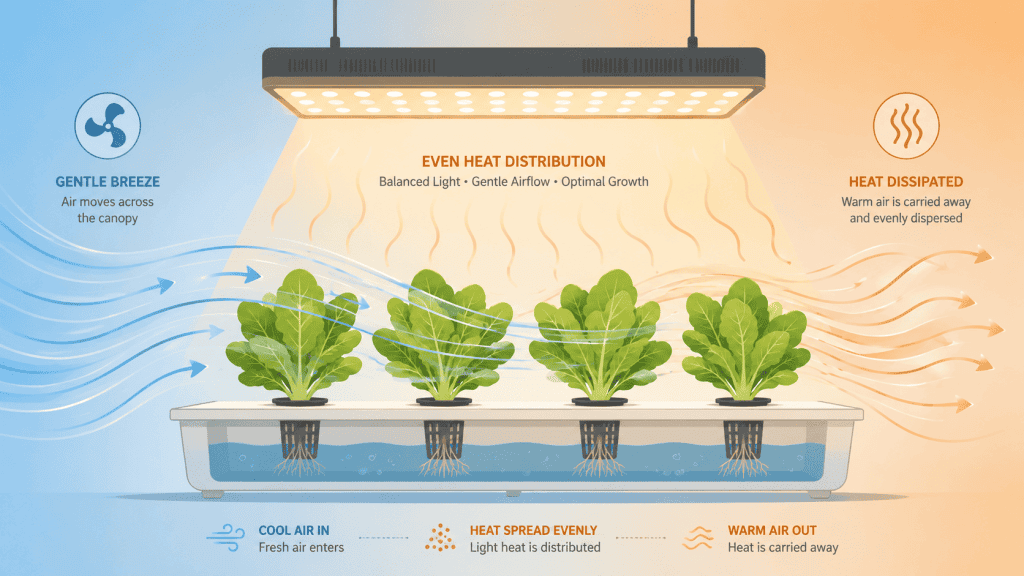
Airflow helps maintain a consistent temperature throughout the growing area.
Heat naturally builds up around grow lights, electrical equipment, and dense plant canopies, especially near LED fixtures operating for 12–18 hours daily. electrical equipment, and dense plant canopies. Without circulation, some parts of the grow room become warmer than others.
These temperature differences may seem small, but they can affect plant performance.
Plants growing in hotter areas often experience:
- Increased water loss
- Greater stress
- Slower development
- Higher risk of leaf damage
Meanwhile, cooler sections may show slower growth and delayed development.
Air circulation helps prevent these problems by mixing warm and cool air together. Instead of having isolated hot spots, the entire growing area remains more uniform.
Benefits of better temperature distribution include:
- More consistent plant growth
- Reduced heat stress
- Better water management
- Improved crop uniformity
- Lower risk of leaf burn
This is especially important in indoor hydroponics, where artificial lights run for long hours every day.
Even energy-efficient LED systems generate heat. Without proper airflow, that heat can accumulate around the canopy and create conditions that limit growth.
Plants perform best when environmental conditions remain stable. Consistent airflow helps maintain that stability.
Air Circulation vs. Ventilation: What’s the Difference?
Many growers use the terms interchangeably, but they perform different jobs.
Air circulation moves existing air around the growth space. Ventilation removes stale air and typically replaces the air volume of a grow room every 1–3 minutes and replaces it with fresh air from outside.
Both are necessary for a healthy growing environment.
| Feature | Air Circulation | Ventilation |
| Main Purpose | Moves air within the room | Replaces indoor air |
| Equipment | Oscillating fans | Intake and exhaust systems |
| Temperature Balancing | Yes | Limited |
| Humidity Reduction | Moderate | Strong |
| Fresh CO₂ Supply | Limited | Yes |
| Air Distribution | Excellent | Limited |
Many indoor gardeners often make the mistake of setting up multiple oscillating fans and assuming the grow room is fully optimized. However, relying solely on internal circulation can lead to significant issues, such as trapped humidity and excessive heat. Without proper ventilation, the system simply rearranges damp, stagnant air rather than refreshing it.
Successful hydroponic setups require both circulation and ventilation to function effectively. Circulation fans distribute carbon dioxide and provide consistent cooling across the canopy, while the exhaust system acts as the “lungs” of the room, venting out waste heat and moisture.
Growers cannot replace one with the other; both systems are essential for maintaining a healthy and productive growing environment.
The most effective hydroponic systems combine both approaches.
Circulation keeps air moving around your plants, while ventilation brings in fresh air to refresh the space.
Together, they create conditions that support healthy growth from seedling to harvest.
What Are the Signs of Poor Air Circulation?
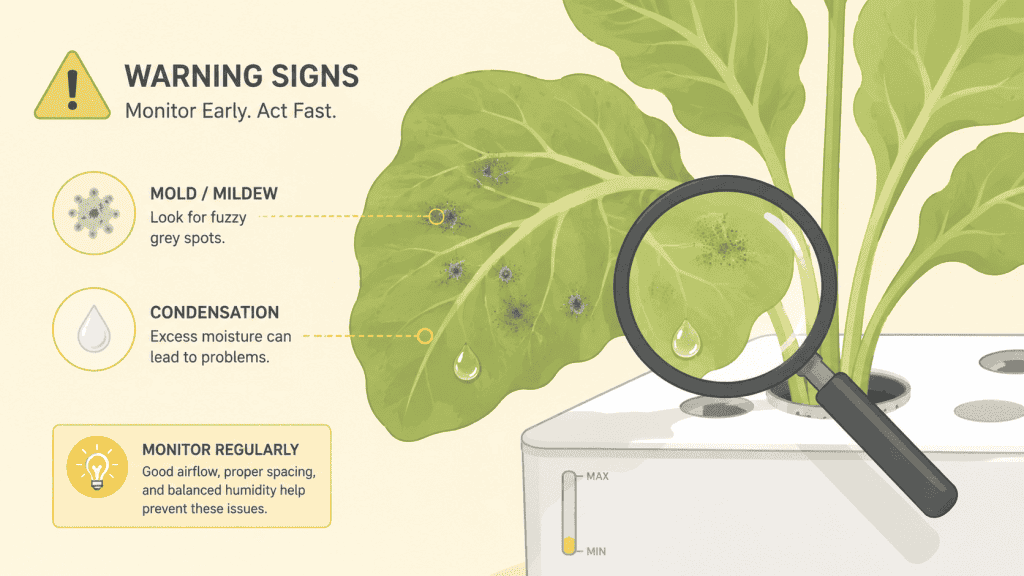
Many airflow problems become visible before they seriously affect yields.
Learning to recognize these warning signs can help growers correct issues early.
Common indicators include:
- Stuffy or stagnant air
- Condensation on walls or equipment
- Excess humidity
- Weak stems
- Slow growth
- Uneven plant development
- Mold or mildew outbreaks
- Persistent dampness on leaves
- Fungus gnats or other moisture-loving pests
- Hot and cold spots throughout the room
Plants often provide some of the earliest clues.
For example, stems may become thin and weak. Leaves might look healthy at first but later show signs of nutrient loss because transpiration has slowed.
Disease outbreaks can also signal airflow problems. If mold keeps appearing despite proper cleaning, poor circulation might be the cause.
Monitoring humidity and temperature in your grow space can help you find areas that need better airflow.
Small adjustments made early often prevent much larger problems later.
What Is the Best Air Circulation Setup for a Hydroponic Garden?
The best setup combines circulation fans, fresh-air intake, and exhaust ventilation.
Each component performs a specific function that contributes to a healthier growing environment.
Oscillating Fans
Oscillating fans help eliminate stagnant air pockets.
Rather than blowing continuously on one plant, they move air across the entire growing area. This creates gentle plant movement without causing wind damage.
Intake Vents
Fresh-air intake systems bring new air into the grow space.
This helps replenish carbon dioxide while supporting temperature and humidity management.
Exhaust Fans
Exhaust systems remove warm, humid, and stale air.
By continuously removing excess heat and moisture, they help maintain stable growing conditions.
Environmental Monitoring
Monitoring tools help growers understand how effectively their system is working.
Useful measurements include:
- Temperature
- Relative humidity
- Vapor pressure deficit (VPD)
- Carbon dioxide levels
Tracking these conditions makes it easier to identify airflow issues before they affect plant health.
Best Practices for Airflow Management
To get the most from your setup:
- Position fans to create gentle canopy movement.
- Avoid aiming strong airflow directly at plants.
- Keep airflow reaching all areas of the canopy.
- Remove obstacles that block air movement.
- Adjust fan placement as plants grow.
- Regularly clean fans and ventilation equipment.
- Monitor humidity and temperature across different areas of the grow room.
The goal is not strong wind. The goal is consistent, balanced air movement throughout the entire growing space. Integrating these practices whenever you maintain a hydroponic system will help you avoid stagnant air pockets and keep your plants thriving from seedling to harvest.
FAQ
How much airflow do hydroponic plants need each day?
Hydroponic plants generally perform best with canopy air velocities between 0.2 and 0.5 meters per second. Throughout the day and night. Air movement should be strong enough to lightly move leaves without causing them to bend excessively. Proper hydroponic airflow supports fresh air exchange, oxygen movement around plants, and healthy transpiration. Most growers position fans to create consistent airflow across the canopy so all plants receive similar growing conditions.
Can proper airflow reduce pest problems in hydroponics?
Yes. Proper air circulation in hydroponics can reduce conditions that attract moisture-loving pests. Fungus gnats often reproduce in damp environments, while poor airflow can increase humidity levels around plants. Preventing stagnant air and reducing excess moisture make the growing environment less favorable for pest populations. Airflow also supports faster leaf drying, which contributes to overall pest prevention in hydroponics.
Why do hydroponic gardens need both circulation and ventilation?
Circulation fans and ventilation systems perform different functions. Circulation fans for hydroponics move air within the growing area to eliminate stagnant zones. Hydroponic ventilation uses intake ventilation systems and exhaust fan systems to replace stale indoor air with fresh outdoor air. Together, they help manage humidity, balance grow room temperature, replenish carbon dioxide, and maintain a healthier growing environment.
Why is airflow important in greenhouses and vertical farms?
Greenhouse air circulation and vertical farming airflow help maintain consistent environmental conditions across large growing areas. Without adequate airflow, humidity, temperature, and carbon dioxide levels can vary between different sections of the facility. Effective airflow management techniques improve air movement around foliage, reduce moisture buildup, support greenhouse humidity management, and help maintain ideal growing conditions for healthy crop development.
Can excessive airflow damage hydroponic plants?
Yes. Excessive airflow can dry plant tissue faster than the roots can replace lost moisture. Plants exposed to constant strong wind may develop curled leaves, slowed growth, or signs of water stress. The goal is to create gentle canopy air movement that supports transpiration in plants, leaf surface drying, and evaporative cooling for plants while maintaining an oxygen-rich growing environment.
Good Airflow Helps Every Part of Your Hydroponic Garden
Poor air circulation can quietly hold your plants back. You may notice slower growth, excess humidity, or plants that don’t look as strong as they should. The impact adds up over time. Healthy airflow supports stronger development and helps create stable conditions that plants can rely on every day.
If you want more consistent harvests, improving airflow is one of the simplest places to start. Small changes can make a noticeable difference. Explore trusted hydroponic resources and growing solutions to build a healthier environment, reduce common growing issues, and help your plants perform at their best.
References
- https://discovery.researcher.life/article/growth-regulation-by-air-stream-based-mechanical-stimulation-in-tomato-solanum-lycopersicum-l-part-ii-phenotypic-and-physiological-responses/40ebba5e7f083e6ea867f2585c70b54a
- http://agwebv01.ag.utk.edu/bess/Extension/ExtProg/Vegetable/year/VegInitReport01/44environmental_control_in_hydropo.htm
Related Articles
- https://tophydroponicgarden.com/hydroponics-for-beginners/
- https://tophydroponicgarden.com/hydroponic-garden-maintenance/
- https://tophydroponicgarden.com/how-to-maintain-a-hydroponic-system/
Was this helpful?

I’m Barrie L., a passionate hydroponic gardening enthusiast dedicated to cultivating thriving, soil-less gardens. With a focus on all things hydroponic, I share my expertise on innovative growing techniques and sustainable practices through my blog, tophydroponicgarden.com. As a seasoned hydroponics specialist, my goal is to inspire and guide fellow gardeners in harnessing the power of water-based cultivation for bountiful and eco-friendly harvests. I’m also an author of the book “Hydroponics For Absolute Beginners: Your Step By Step Guide For How To Create An Hydroponics System At Home Without Soil, For Growing Vegetable, Fruit And Herbs.” which is sold on Amazon. Join me on a journey of redefining the way we cultivate plants, one nutrient-rich solution at a time. Happy growing!