

If your plants aren’t fruiting, the cause is usually one of four things: pollination issues, poor soil nutrition, environmental stress, or bad growing conditions. These problems stop flowers from turning into fruit. The whole process needs specific signals, like proper pollen transfer and enough energy from the plant. Figuring out which issue you have is the first step to fixing it. Let’s break down each problem and how to solve it, so you can get your harvest back on track.
Quick Fruit Production Guide
This section covers the main reasons plants fail to produce fruit, the common causes behind poor fruit set, simple fixes to improve production, and mistakes that can slow down results.
- Why flowers drop or fail to turn into fruit
- The key factors affecting fruit production and plant health
- Simple solutions to fix common fruiting problems faster
Why Plants Flower but Produce No Fruit
Seeing flowers without fruit is enough to make any gardener scratch their head. One week, your tomato plant is covered in blooms. A few days later, the flowers fall off, and there’s still no sign of tomatoes.
It happens all the time.
The confusing part is that the plant usually looks healthy. The leaves are green. New stems keep growing. Everything seems fine until harvest time rolls around.
Here’s what’s really happening. Small visual changes in leaves can sometimes reveal stress earlier, and learning to diagnose plant problems from symptoms like color changes or unusual growth can help identify what is stopping fruit production.
Flowers are only the first step. Before fruit can grow, those flowers have to be pollinated. After that, the plant still needs enough energy to keep the tiny fruit alive. If something gets in the way, the flower drops, and the plant starts over.
That’s why a healthy-looking plant can still produce very little.
The good news? Most fruiting problems have a clear cause. Once you find it, fixing the problem becomes much easier.
The Most Common Reasons Plants Don’t Produce Fruit
Several different issues can stop fruit from forming. Some are easy to fix. Others take a little patience.
| Problem | What You May See | What Usually Helps |
| Poor pollination | Flowers fall off | Improve pollination |
| Too much nitrogen | Lots of leaves | Use balanced fertilizer |
| Heat or cold | Blossoms drop | Protect plants from weather |
| Water stress | Tiny fruit falls | Keep watering steady |
| Young plants | Healthy growth only | Give them more time |
Don’t assume fertilizer is the answer. That’s one of the biggest mistakes beginners make.
Pollination Comes First
No pollination means no fruit.
It’s really that simple.
Most flowers need pollen to reach the right part of the flower before fruit can begin growing. If that doesn’t happen, the flower usually dries up and falls off.
Outside, bees do much of this work. Butterflies, flies, beetles, and even the wind help move pollen between flowers.
Indoor gardens are different.
There may be plenty of flowers but very little movement. Without insects or even a light breeze, pollen stays where it is.
Tomatoes are a good example. They don’t always need bees, but they do need movement. A little vibration helps release pollen inside the flower. That’s why many greenhouse growers gently shake tomato plants every few days.
It’s a small job.
But it can make a big difference.
Poor pollination often looks like this:
- Flowers dropping early
- Tiny fruit stopping growth
- Misshapen vegetables
- Plenty of blooms but very little harvest
For greenhouse trials with indoor nightshades, relying on a light breeze isn’t enough. Various methods exist, and while a small paintbrush works, it’s painfully slow.
Instead, take an old electric toothbrush to the back of the flower stems for two seconds around 10:00 AM, when the humidity drops and pollen sheds best. You will actually see a tiny cloud of yellow dust fall, confirming successful pollination right then and there.
Weather Can Get in the Way
Sometimes the problem isn’t something you did.
It’s the weather.
Hot days, warm nights, sudden cold snaps, and long rainy weeks can all affect fruit production.
Heirloom tomatoes can completely shut down pollen production the moment a digital garden thermometer crosses 85°F, but squash and cucumbers suffer from a different architectural issue.
Early in the season, novice growers often panic because their zucchini flowers fall off without producing a single squash.
If you look closely at the base of those early drops, you’ll see a straight stem instead of a miniature fruit. Those are male flowers, the plant’s way of testing the waters before spending the massive energy required to roll out female blooms a couple of weeks later.
Research from University of Tasmania shows
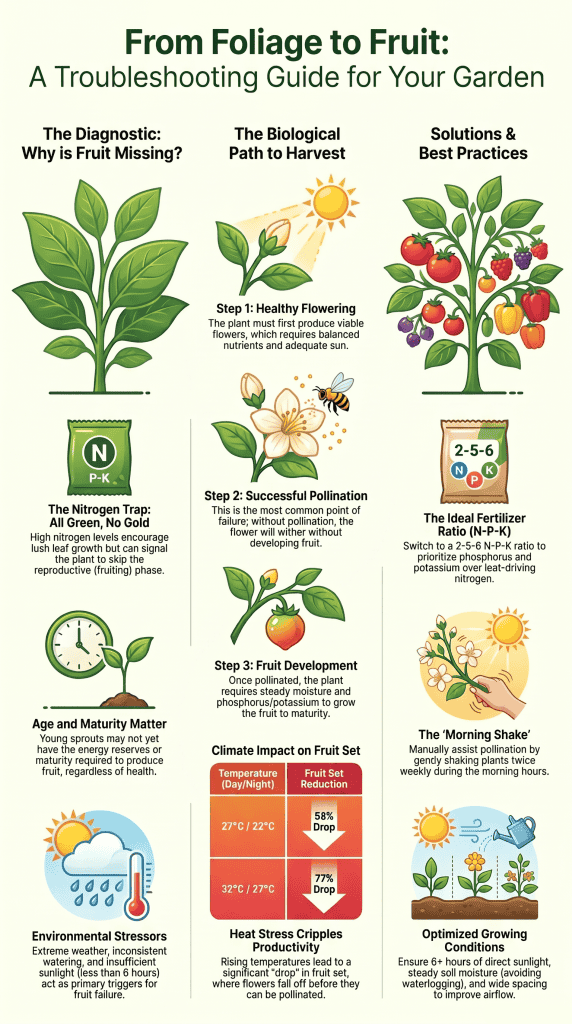
“The study concluded that at high temperatures, fruit set can be significantly reduced. For the ‘Fuyu’ persimmon, fruit set at 27/22°C was reduced by 58%, and by 77% at 32/27°C, compared to cooler temperatures.”
– University of Tasmania
Even if flowers open normally, many never develop into fruit.
Cold weather causes a different problem. Growth slows down. Flowers stay on the plant longer, but pollination becomes less successful.
Sunlight matters too.
Most fruiting vegetables need at least six hours of direct sun every day. More is usually better. Plants growing in heavy shade often spend their energy making leaves instead of fruit.
Humidity also plays a part. The ideal humidity for a fruit set is 40% to 70%. High humidity makes pollen sticky so it won’t shed, while very dry air prevents pollen from properly sticking to the stigma.
You can’t change the weather.
You can make it easier on your plants, though. Shade cloth helps during heat waves. Row covers protect plants when nights turn cold. Planting at the right time of year also improves your chances of getting a better harvest.
Too Many Leaves Usually Mean Too Much Nitrogen

Big plants aren’t always productive plants.
That’s easy to forget.
Nitrogen helps plants grow stems and leaves. Early in the season, that’s exactly what you want. Strong growth gives the plant a good foundation.
Later on, things change. If the plant keeps getting lots of nitrogen, it may keep making leaves instead of flowers and fruit.
Insights from Michigan State University Extension indicate
“Most cucurbit crops and tomatoes do not convert nitrogen to fruit very well. Their response to excess levels of nitrogen is to grow more plants, which potentially leads to increased disease problems and later production.” –
Michigan State University Extension
The signs of nitrogen excess are easy to spot: the plant looks lush, leaves are dark green, and new growth keeps appearing, but there are no fruits.
Conversely, a severe lack of nitrogen does the opposite, resulting in weak, yellowing, spindly vines that lack the energy reserves to hold onto any flowers at all.
When nutrient issues continue, symptoms like leaves turning yellow can appear and signal that the plant needs a closer look before adding more fertilizer.
Fruit?
Not much.
Phosphorus and potassium become more important once flowering begins. They help support flowers, fruit growth, and overall plant health.
Before adding another handful of fertilizer, read the label. Using the right balance is usually more helpful than feeding the plant more often.
Watering Problems Often Show Up Later
Watering mistakes don’t always cause problems right away.
Sometimes everything looks fine for weeks.
Then flowers begin dropping.
Plants like steady moisture. Long dry periods followed by heavy watering create stress, and stressed plants often stop putting energy into fruit.
Too much water causes trouble as well.
Roots need air. Soil that’s always soaked makes it harder for roots to absorb nutrients, even if those nutrients are already there.
Container plants run into this problem more than garden beds. Pots dry out faster on hot days, but they can also stay wet if drainage isn’t good.
Aim for soil that’s evenly moist instead of soaking wet or bone dry.
Your plants will thank you for it.
Plant Age Matters More Than People Think
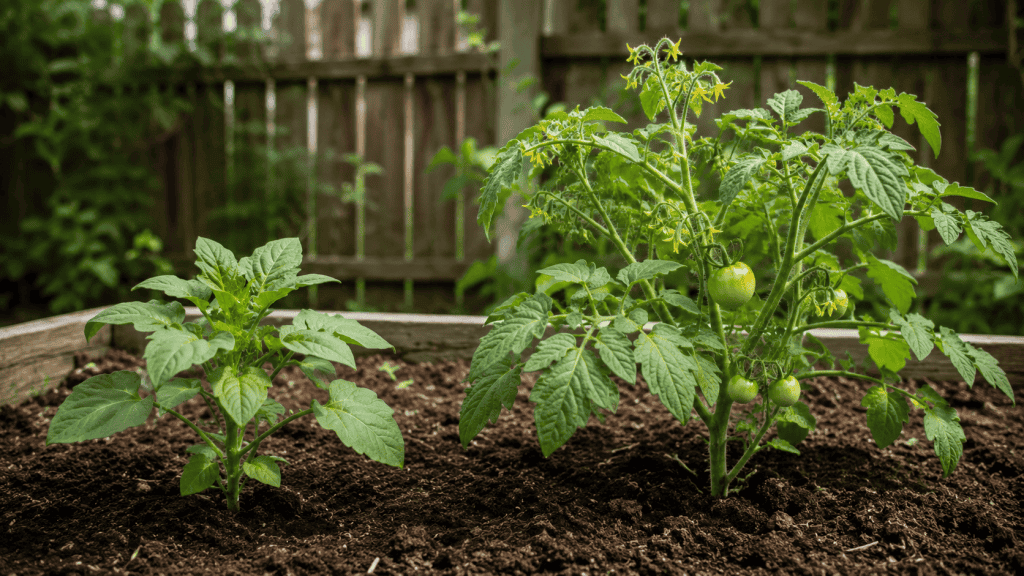
Sometimes the answer is surprisingly simple.
The plant isn’t ready yet.
Young fruit trees often spend years building strong roots before producing much fruit. Trees grown from seed usually take longer than grafted trees.
Vegetables can do something similar.
Early in the season, they focus on growing stems and leaves. Fruit comes later.
Older plants can slow down too. Years of growth, tired roots, or disease can all reduce production.
Not every problem needs fixing.
Sometimes it only takes time.
Pruning and Spacing
Pruning can help. It can also hurt.
Some fruit trees grow flowers on older branches. Cut those branches off, and you’ve removed next season’s fruit before it even had a chance.
Spacing is another thing gardeners overlook.
Plants squeezed too close together compete for sunlight, water, and nutrients. Air doesn’t move well through crowded leaves, making disease more likely.
Crowded or stressed plants may also show physical changes such as plant leaves curling down, which can indicate that growing conditions need adjustment.
A cucumber bed packed with vines may look amazing from a distance.
Walk closer.
You might notice there aren’t many cucumbers hiding underneath.
How to Get More Fruit
Don’t throw every garden product at the problem.
Slow down first.
Check these basics:
- Give plants enough sunlight.
- Water on a regular schedule.
- “Ditch the high-nitrogen blue crystals: Swap your standard 10-10-10 fertilizer for a low-nitrogen, high-potassium organic blend (like a 2-5-6 liquid seaweed or bone meal extraction) the moment you spot the first green flower buds appearing.”
- “Plant a dedicated pollinator strip: Don’t just hope bees show up. Interplant sweet alyssum and blue borage directly into your tomato rows; in my plots, this visual signaling draws twice as many native bumblebees directly to the crop foliage.”
- “Implement the morning shake: Walk your rows every Tuesday and Friday morning between 9 AM and 11 AM, gently rapping the support stakes with a bamboo cane to physically drop the pollen inside self-fertile blossoms.”
- Improve drainage.
- Leave enough space between plants.
- Choose varieties that grow well in your area.
- Use organic mulch around the base of plants to stabilize soil moisture and prevent drastic wet-to-dry swings.
One small change can solve the problem. Making five changes at once usually makes it harder to figure out what worked.
Examples of Content They Can Create
Credits: Daisy Creek Farms with Jag Singh
Tomato plants can grow many leaves and flowers, but still produce little or no fruit. One common reason is weak pollination, especially when the weather is too hot, too cold, or too humid.
Another problem is too much nitrogen, which makes the plant grow green and tall instead of focusing on fruit. Inconsistent watering can also stress the plant and cause flowers to drop before they turn into tomatoes. Poor sunlight is another factor, because tomatoes need plenty of direct light to stay strong and productive.
Pests and diseases may also damage flowers or reduce plant energy. To improve fruiting, gardeners should keep watering steady, give balanced fertilizer, and make sure the plant gets enough sun and airflow. Regular care helps tomato plants shift from leafy growth to healthy fruit production.
FAQ
Why are my plants not producing fruit even when they look healthy?
Plants can have healthy leaves but still fail to produce fruit because of issues with pollination, nutrients, light, watering, or plant maturity. The main reasons plants do not produce fruit include excessive nitrogen, insufficient sunlight, poor growing conditions, or the plant using energy for leaf growth instead of reproductive growth. Identifying the exact problem helps improve fruit production.
Why are my flowers falling off before fruit develops?
Flowers falling off plants before fruit forms is known as blossom drop before fruiting. This can happen because of extreme temperatures, heat stress on fruiting plants, cold weather fruiting issues, inconsistent watering, or humidity affecting pollination. These conditions can prevent flowers from developing into fruit and lead to poor fruit set or fruit set failure.
Why are my plants flowering but no fruit is growing?
When plants are flowering but no fruit is forming, pollination problems in plants are often the cause. Insufficient pollination can stop flowers from becoming fruit, especially in crops that depend on insects or manual pollination. Using hand pollination for plants and improving the growing environment can help increase fruit set and prevent low fruit production.
Can the wrong fertilizer cause plants to stop producing fruit?
Yes, nutrient imbalance and fruiting problems are closely related. Too much nitrogen can encourage leaf growth while reducing fruit production. Plants also need enough phosphorus for fruit production and potassium for fruiting plants to support healthy fruit development. Avoiding overfertilized plants and correcting nutrient shortages can improve fruit sets.
What common mistakes cause plants to produce fewer fruits?
Plants may have low fruit production because of overwatering, underwatering, poor pruning, overcrowding, pests, diseases, or lack of proper sunlight. These problems can weaken roots, reduce airflow, and create stress that affects fruit development. Correct watering, proper spacing, and suitable plant care can help improve fruit production naturally.
Why Your Plants Aren’t Producing Fruit Yet
Seeing flowers but no fruit can feel frustrating. You think everything is on track, then nothing develops. The issue usually comes down to missed basics like pollination, light, water, nutrients, or shifting weather.
Go back to simple checks instead of overthinking it. Adjust one thing at a time and watch how the plant responds. This guide was written by a market gardener with over 12 years of experience managing high-density vegetable rows and passive solar greenhouses.
Every diagnostic step outlined here is drawn directly from field notes, trial crop failures, and soil chemistry adjustments made in zone-appropriate test plots.
References
- https://figshare.utas.edu.au/articles/journal_contribution/Effects_of_temperature_and_pollination_on_growth_flowering_and_fruit_set_of_the_non-astringent_persimmon_cultivar_Fuyu_under_controlled_temperatures/22949579
- https://www.canr.msu.edu/news/vegetable-crops-and-their-response-to-nitrogen
Related Articles
- https://tophydroponicgarden.com/how-to-diagnose-plant-problems-using-leaves-a-complete-guide-to-leaf-symptoms/
- https://tophydroponicgarden.com/why-are-my-hydroponic-plant-leaves-turning-yellow/
- https://tophydroponicgarden.com/why-are-my-plant-leaves-curling-down/
Was this helpful?

I’m Barrie L., a passionate hydroponic gardening enthusiast dedicated to cultivating thriving, soil-less gardens. With a focus on all things hydroponic, I share my expertise on innovative growing techniques and sustainable practices through my blog, tophydroponicgarden.com. As a seasoned hydroponics specialist, my goal is to inspire and guide fellow gardeners in harnessing the power of water-based cultivation for bountiful and eco-friendly harvests. I’m also an author of the book “Hydroponics For Absolute Beginners: Your Step By Step Guide For How To Create An Hydroponics System At Home Without Soil, For Growing Vegetable, Fruit And Herbs.” which is sold on Amazon. Join me on a journey of redefining the way we cultivate plants, one nutrient-rich solution at a time. Happy growing!