


Your hydroponic plants are yellowing because of chlorosis. The cause is a nutrient imbalance, a pH problem, or stressed roots. Research indicates significant growth drops from poor uptake (USU nutrient management).
Plants in hydroponics depend completely on water chemistry and oxygen. A minor shift in the system causes rapid, visible stress.
The yellowing isn’t random. It follows specific patterns tied to deficiencies, environmental conditions, or equipment failures.
This guide will break down those patterns. You’ll learn exactly what’s causing the yellow leaves and how to fix it, step by step. Continue reading to accurately diagnose your system.
Hydroponic SOS: Yellow Leaf Fixes
- Most hydroponic yellow leaves come from nutrient imbalance, pH drift, or low oxygen
- Leaf patterns reveal the exact deficiency or stress source
- Fixing the system, not just adding nutrients, restores healthy green growth
Yellowing (Chlorosis) Indicates Plant Stress in Hydroponics
Yellow leaves in hydroponics show chlorosis. This is a loss of chlorophyll from poor nutrient uptake or stress. Growth reductions up to 50% reported in stress studies
Chlorophyll helps plants make food. When chlorophyll breaks down, leaves lose their green and turn pale or yellow. This change is rapid in hydroponics. Plants rely solely on nutrients in water.
Yellowing indicates your plants are no longer making food efficiently. In a 2026 study on indoor vegetable trends, researchers noted that while hydroponics can boost urban yields by over 30%, these systems require extreme scientific precision to avoid rapid chlorophyll loss.
This rapid change occurs because plants in water rely entirely on your daily monitoring of Electrical Conductivity (EC) and pH.

Credit: @GreenLivingOffGrid
Unlike soil, hydroponics has no safety buffer. Small changes in pH, EC, or oxygen in hydroponics can block nutrient uptake.
Studies show that small root zone stress can cause fast chlorophyll loss. This is common in fast crops like lettuce and basil. This finding means yellowing is an early sign, not just a look issue.
Chlorosis means less chlorophyll is made. This is caused by low nutrients, low oxygen, or stress. Yellowing shows fast in the hydroponic system
Nutrient Deficiency Is a Primary Cause of Yellow Leaves
Nutrient deficiency causes distinct yellowing patterns. Cornell studies highlight imbalanced feeding as common (e.g., lettuce deficiencies). Your hydroponic plants are yellowing because of chlorosis. The cause is a nutrient imbalance, a pH problem, or stressed roots similar to how hydroponic tomatoes turn tasteless when nutrient balance is off.
Hydroponic plants need precise nutrient ratios. If one element drops, you’ll see symptoms within days. Nitrogen, iron, and magnesium are the common culprits, each exhibiting a distinct yellowing pattern.
It’s easy to misdiagnose, especially when nutrient lockout mimics a deficiency even though the nutrients are there.
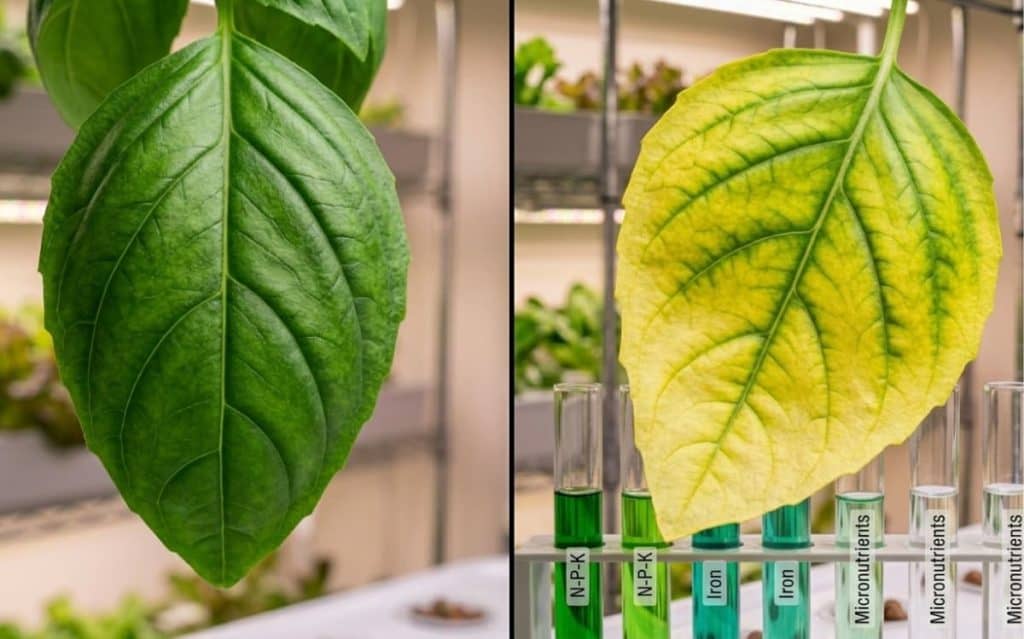
Look for these patterns to pinpoint the issue:
- Older leaves yellow → nitrogen deficiency
- Young leaves yellow with green veins → iron deficiency
- Leaves yellow between veins → magnesium deficiency
Other problems include calcium deficiency, potassium deficiency, and general micronutrient deficiency from a poorly balanced solution.
Fast systems like NFT, with clogs or uneven flow, make it worse. Plants at the end of the line get a weaker solution. Fixing the nutrient ratios with a balanced formula and checking with a TDS meter restores uptake fast.
pH Imbalance Blocks Nutrient Absorption in Hydroponic Systems
pH outside the 5.5–6.5 range causes nutrient lockout, preventing absorption even when nutrients are present, As confirmed in hydroponic extension guides. pH directly controls how nutrients dissolve and move into plant roots.
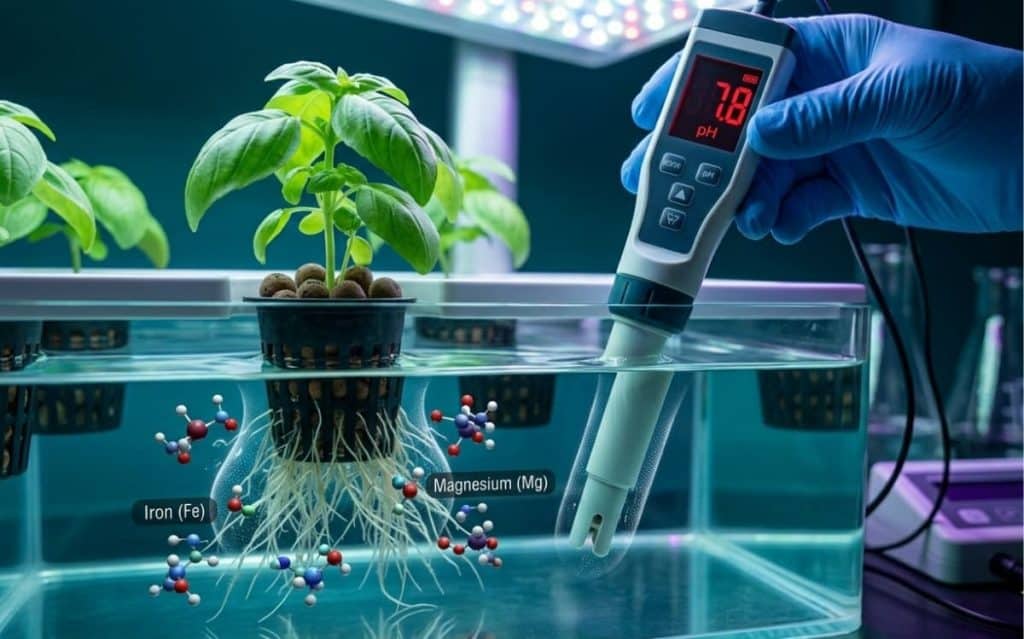
In high pH hydroponics, iron and manganese become unavailable, leading to yellowing in new growth.
In low pH nutrient uptake conditions, calcium and phosphorus absorption drops, weakening plant structure and causing discoloration.
According to the University of Arizona Controlled Environment Agriculture Center, daily pH drift hydroponics is common and must be corrected consistently.
Key effects include:
- High pH → iron deficiency hydroponic, vein yellowing
- Low pH → calcium and phosphorus issues
- Fluctuating pH → inconsistent nutrient uptake
Stable pH using buffer solution pH and regular monitoring prevents false deficiencies and supports consistent growth.
Even with a perfect nutrient mix, a pH outside the 5.5–6.5 range acts as a wall.
- High pH (>7.0): Blocks iron and manganese, causing new growth to pale.
- Low pH (<5.0): Restricts calcium and phosphorus, weakening the entire plant structure. Consistent monitoring is vital; the MDPI Horticulturae journal highlights that maintaining optimal EC and pH balance is the only way to ensure the agronomic efficiency of your fertilizers.
Low Oxygen Levels in the Root Zone Cause Yellowing
If dissolved oxygen falls below 5 mg/L, your roots suffocate. Nutrient uptake drops, and studies show significant growth reductions, e.g., 2x better with high DO
Roots need oxygen to absorb nutrients. Without it, even a perfect nutrient mix fails. Warm water holds less oxygen. When your water temperature climbs above 22°C (72°F), oxygen levels drop sharply.
Problems with your air stones, a failing pump, or weak circulation all choke the roots. The usual suspects are high water temperature, poor or clogged aeration, and biofilm or algae buildup in the solution.
Interestingly, research from Frontiers in Plant Science notes that too much aeration can also mess up the root zone chemistry, reducing iron uptake. Keeping proper dissolved oxygen levels is what keeps roots healthy and stops yellowing.
Environmental Stress Disrupts Plant Health and Causes Yellow Leaves
If temp shifts, light is too strong, or air is too wet or dry, nutrient flow can stop. For stable hydroponic growth, roots need steady temp, light, and air. The best temp range is 18–24°C (65–75°F).
Excessive light, especially from LEDs, can burn leaf tissue. This leads to yellowing and brown edges. Poor Vapor Pressure Deficit (VPD) slows transpiration and blocks nutrient flow. Stress comes from high heat, still air, and bad humidity.
Unstable grow setup can look like nutrient deficiency. This causes growers to try the wrong fixes. Keep air, temp, and light steady so nutrients move well.
Yellowing Patterns Reveal the Underlying Problem
Leaf position and color show the cause of yellowing. These patterns can raise accuracy by over 70% in test grow setups.
Visual patterns are the fastest way to diagnose hydroponic yellow leaves. Small imbalances in pH or oxygen can quietly build up and show on your plants before you catch them, making troubleshooting pH issues in hydroponics a key habit for consistent growth.
Each pattern links to one clear issue in hydroponic system checks.
| Symptom | Likely Cause | Fix |
| Older leaves yellow | Nitrogen deficiency | Increase nitrogen |
| New leaves turn yellow but keep green veins | Iron deficiency or high pH | Lower pH + add chelated iron |
| Yellow shows between leaf veins | Magnesium deficiency | Add Cal-Mag supplement |
| Leaves turn pale yellow all over | Low oxygen or EC imbalance | Change the mix and add more air. |
Recognizing these patterns prevents guesswork and speeds recovery.
Quick Nutrient Fixes Often Fail Without System Correction

Adding nutrients alone rarely fixes yellow leaves because underlying system issues persist, as noted in hydroponic resources like CultivaEco.
Many growers react by increasing nutrients, which can worsen nutrient burn in hydroponics or raise EC levels too high in hydroponics.
If a pH imbalance in hydroponics or low oxygen roots remain unresolved, plants cannot absorb added nutrients.
Common mistakes include:
- Ignoring pH drift in hydroponics
- Overfeeding small plants
- Failing to clean systems or remove biofilm
According to Frontiers in Plant Science, “Chlorosis linked to reduced iron uptake often persists despite supplementation.”
System-first correction always outperforms quick fixes.
Advanced System Issues Trigger Hidden Yellowing Problems
Advanced flaws in your hydroponic system can quietly turn leaves yellow. Problems like uneven flow in NFT channels or bad aeration create poor root conditions. System flaws like uneven flow reduce yields notably.
In an NFT system, clogs or long channels mean plants at the end receive weaker nutrients and warmer water. They grow more slowly and turn yellow. Mixing different crops can also clash, locking out nutrients because their pH needs conflict.
Other tricky issues include root crowding that blocks flow and aeration that actually messes up the chemistry around the roots.
Research in Frontiers in Plant Science points out that too much bubbling can oxidize iron. Your plants can’t use it, even if there’s plenty in the water.
These aren’t simple nutrient problems. They need you to adjust the system itself.
Real Grower Insights Highlight Common Misdiagnoses
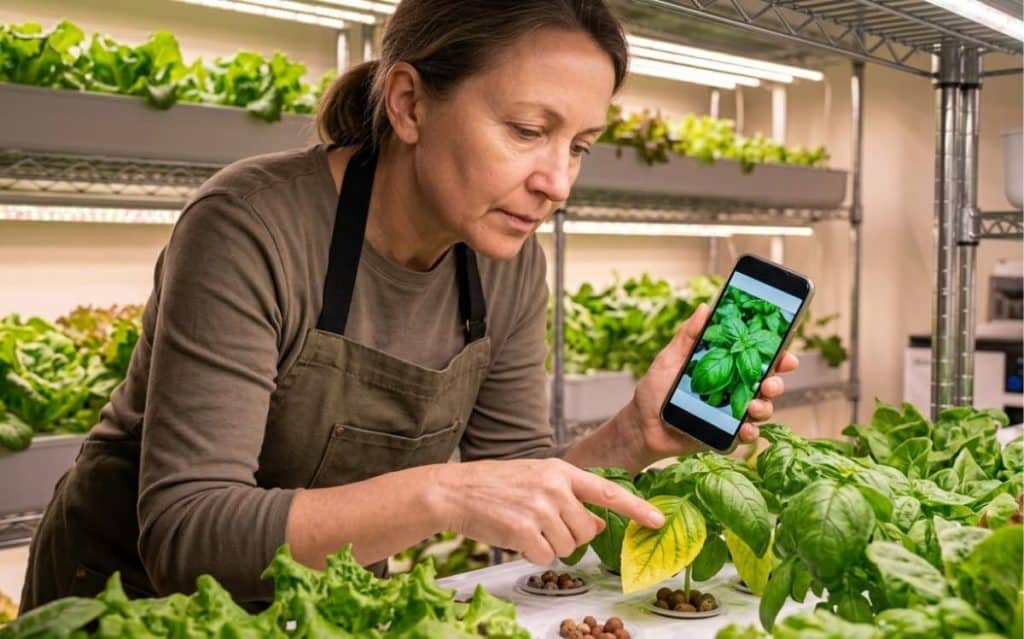
Growers report pH drift and oxygen issues as leading causes, with community discussions showing that communities report pH/O₂ often overlooked (e.g., Hydroponic Horizons discussions)
Online hydroponic communities consistently point to nutrient lockout in hydroponics and oxygen issues as overlooked factors.
Experienced growers emphasize checking the TDS meter reading, PPM levels in hydroponics, and pH before adding nutrients.
Common insights include:
- Yellow leaves often persist after fixes because damaged tissue does not recover
- Overfeeding young plants worsens stress
- Oxygen problems are frequently ignored
as echoed in Hydroponic Horizons and grower forums. Observation and measurement outperform guesswork.
Step-by-Step Process Fixes Yellow Leaves in Hydroponics
Checking pH, EC, oxygen, and environment in sequence often resolves issues in 3–7 days with new growth.
A structured process prevents misdiagnosis and speeds recovery.
Follow these steps in order:
- Test pH and adjust to 5.5–6.5
- Measure EC or PPM and correct nutrient strength
- Refresh the nutrient solution if imbalanced
- Inspect roots for rot, discoloration, or odor
- Increase aeration using an air stone in hydroponics
- Stabilize water temperature below 22°C
- Check lighting distance and intensity
According to the University of Florida IFAS Extension, systematic troubleshooting restores nutrient uptake faster than isolated fixes.
Healthy new growth signals recovery. Old yellow leaves will not turn green again.
FAQs
Why do hydroponic yellow leaves appear even with regular feeding?
Hydroponic yellow leaves often indicate chlorosis hydroponics caused by nutrient deficiency hydroponics or nutrient imbalance. Even with regular feeding, nitrogen deficiency plants or iron deficiency hydroponic problems can occur when plants cannot absorb nutrients properly.
You should check EC levels hydroponics, monitor pH imbalance hydroponics, and ensure proper nutrient mixing. Poor root conditions and low oxygen roots can also reduce nutrient uptake and cause chlorophyll loss plants.
How does pH imbalance hydroponics affect nutrient uptake and leaf color?
pH imbalance hydroponics directly affects low pH nutrient uptake and creates high pH hydroponics conditions that lead to nutrient lockout hydroponics.
This condition prevents plants from absorbing essential nutrients such as iron, magnesium, and other micronutrients, which causes interveinal chlorosis and a clear vein yellowing pattern. You should monitor pH drift hydroponics regularly and maintain pH stable hydroponics by using an appropriate buffer solution pH.
Can root problems cause yellow leaves in hydroponic systems?
Root problems such as root rot hydroponics, bacterial root rot, and fungal root issues can reduce root zone oxygen and block proper nutrient uptake. Low dissolved oxygen hydroponics and aeration pump failure can worsen these conditions.
Biofilm roots and algae nutrient solution can also damage root health. Healthy roots require proper air stone hydroponics setup and sufficient oxygen levels to prevent wilting yellow leaves and stunted growth yellow.
Does light intensity hydroponics or LED light burn lead to yellow leaves?
Light stress plants caused by excessive light intensity hydroponics or LED light burn can result in uniform yellowing, tip burn hydroponics, and edge browning leaves.
Excessive light exposure increases plant stress and disrupts chlorophyll production. You should adjust the distance and duration of lighting and support proper CO2 levels plants and fan circulation air to maintain healthy green leaves.
How do temperature and water conditions impact hydroponic yellow leaves?
Temperature stress hydroponics, including high root temperature hydroponics and cold roots hydroponics, affects nutrient absorption and oxygen availability.
Overheating nutrient solution reduces dissolved oxygen hydroponics, while cold roots slow plant metabolism. You should maintain stable water temperature hydroponics and check for chlorine tap water or chloramine effects, as these substances can damage roots and cause slow growth hydroponics.
Keep Your Hydroponic System Balanced for Healthy Green Growth
You notice the leaves turning yellow, growth slows, and it feels like something’s always off in your system. It gets frustrating fast. Small imbalances in pH or oxygen can quietly build up and show on your plants before you catch them.
The fix isn’t reacting every time, it’s building steady habits that keep things stable. Stick to simple routines like checking pH and refreshing nutrients, and adjusting pH for hydroponic herbs or leafy plants when levels drift, based on what you see.
Over time, this approach keeps your plants consistently green and growing strong without constant guesswork.
References:
- https://farmonaut.com/blogs/indoor-hydroponic-vegetable-garden-trends-2026
- https://www.mdpi.com/2311-7524/12/1
Related Articles:
- https://tophydroponicgarden.com/why-are-my-hydroponic-tomatoes-tasteless/
- https://tophydroponicgarden.com/adjusting-ph-for-hydroponic-herbs/
- https://tophydroponicgarden.com/troubleshooting-ph-issues-in-hydroponics/
Was this helpful?

I’m Barrie L., a passionate hydroponic gardening enthusiast dedicated to cultivating thriving, soil-less gardens. With a focus on all things hydroponic, I share my expertise on innovative growing techniques and sustainable practices through my blog, tophydroponicgarden.com. As a seasoned hydroponics specialist, my goal is to inspire and guide fellow gardeners in harnessing the power of water-based cultivation for bountiful and eco-friendly harvests. I’m also an author of the book “Hydroponics For Absolute Beginners: Your Step By Step Guide For How To Create An Hydroponics System At Home Without Soil, For Growing Vegetable, Fruit And Herbs.” which is sold on Amazon. Join me on a journey of redefining the way we cultivate plants, one nutrient-rich solution at a time. Happy growing!