
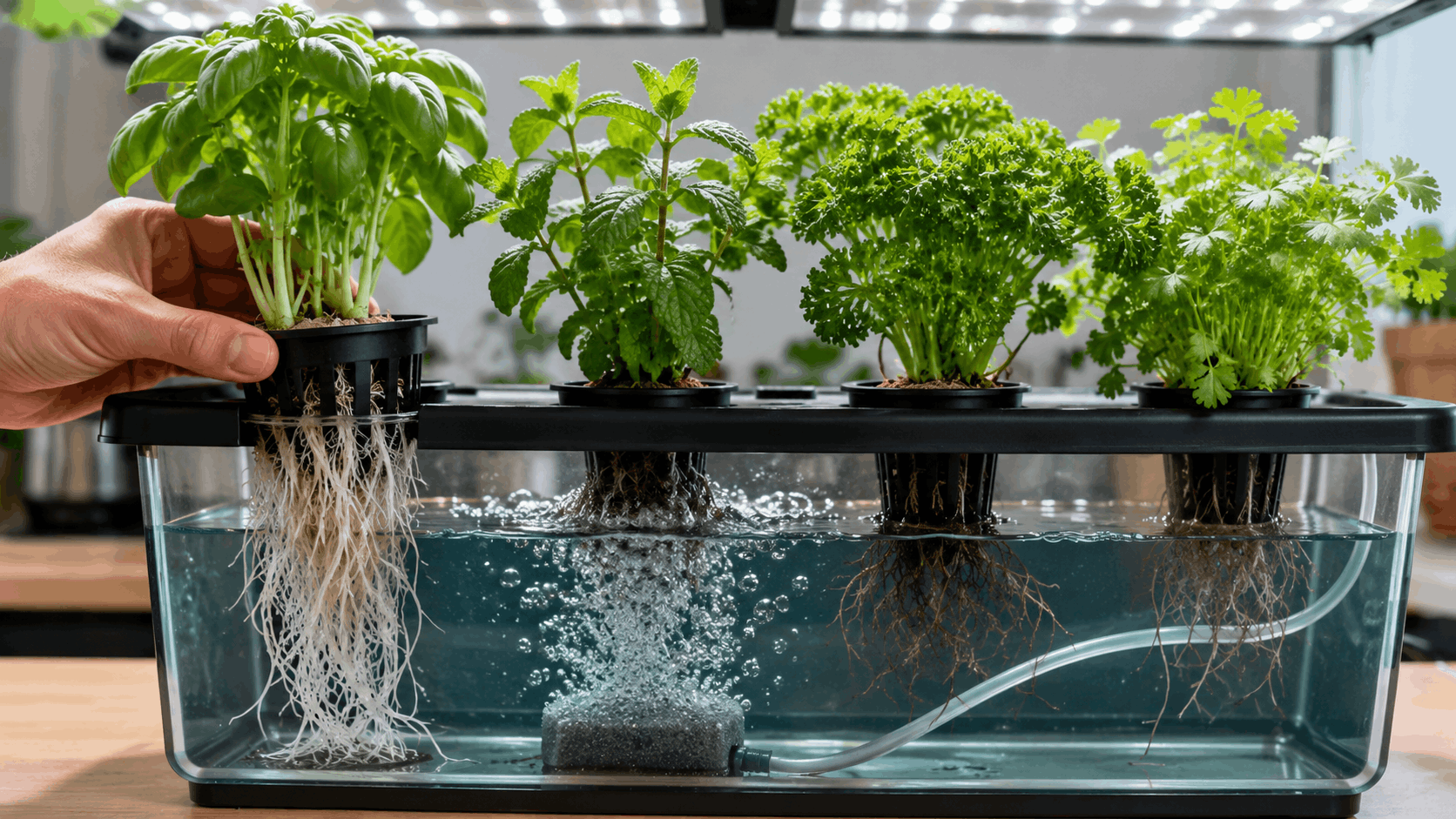
Brown hydroponic herb roots aren’t always a sign of disease. If the roots feel firm, the color is often nothing more than nutrient staining. But slimy roots with a bad smell usually mean Pythium root rot. Cornell University notes that poor root-zone conditions allow root diseases to spread. Keep reading to find the real cause and choose the right fix before treating your plants.
Brown Root Diagnosis at a Glance
- Brown roots are not always hydroponic root rot. Firm, odorless roots often indicate nutrient staining hydroponic roots.
- Slimy, foul-smelling roots usually signal pythium root rot herbs, requiring immediate action.
- Stable water temperature hydroponics, high dissolved oxygen hydroponics, and regular maintenance prevent most cases of brown roots in hydroponics.
Why are my hydroponic herb roots turning brown?
Brown roots usually come from nutrient staining, root rot, algae, or residue left behind by the growing medium. But color doesn’t tell the whole story. Check the roots’ texture, smell, and the plant’s overall condition first. That’s the fastest way to figure out what’s going on.
Years of experience with deep water culture and Kratky systems show that root discoloration in delicate herbs like basil, mint, cilantro, and parsley is often an early sign of low oxygen, weeks before yellow leaves appear on the canopy. When dissolved oxygen drops because water temperatures rise above 72°F, pathogen outbreaks can follow quickly.
Research from University of Guelph
“Infection of roots by Pythium aphanidermatum markedly slows the increase in leaf area and whole-plant carbon gain without significant effect on the efficiency of photosynthesis per unit area of leaf” – University of Guelph
Brown roots, on their own, don’t confirm root rot. Firm roots often have harmless nutrient stains. But soft, slimy roots with a foul smell are a different story. Treating every brown root as disease can do more harm than good.
The four most common causes include:
- Pythium root rot
- Nutrient staining
- Algae buildup
- Growing media residue
Before reaching for hydrogen peroxide or replacing parts of your hydroponic system, stop and diagnose the problem first. It only takes a few minutes, and it can save healthy plants from the wrong treatment.
Is brown always a bad sign?
Brown roots aren’t a problem if they stay firm, fibrous, and free of odor.
Many organic nutrient blends require a balanced nutrient solution recipe for leafy herbs, but ingredients like humic acid, fulvic acid, seaweed extract, or iron chelates naturally stain roots over time. The color change develops gradually while the plant keeps growing as usual. No surprise there.
New root tips usually appear bright white. But they darken as they absorb pigments from the nutrient solution. Even after rinsing, the color often stays because the pigments have bonded to the outer root tissue, not because slime has formed.
The difference between healthy and rotted hydroponic roots becomes clear during a close inspection. Healthy roots feel springy and hold together when handled. Rotten roots turn soft, become slimy, and the outer layer often slips off with light pressure.
Water temperature matters, too. Once the nutrient solution climbs above 72°F (22°C), dissolved oxygen drops. That gives Pythium and other waterborne pathogens a better chance to spread. Cornell University notes that poor root-zone conditions often come first, with infection following afterward.
Of course, dark roots can be unsettling. But don’t judge them by color alone. Check the texture. Smell the roots. Then decide whether you’re looking at harmless staining or a real disease.
What are the four most common causes?
Each cause produces different symptoms and requires a different response.
| Cause | Risk | Primary clue |
| Root rot | High | Slimy, mushy roots |
| Nutrient staining | Low | Firm brown roots |
| Algae | Medium | Brown-green coating rinses away |
| Media debris | Low | Dust or sediment washes off |
Hydroponic root rot develops when pathogens such as Pythium, Phytophthora, or Fusarium exploit stressed roots. These infections commonly appear in deep water culture root rot systems with poor aeration or elevated temperatures.
Nutrient staining usually affects growers using darker organic nutrient programs. Plants remain healthy despite darker roots.
Algae develops after a light leak hydroponic reservoir exposes nutrient solution to light. Although algae rarely attacks roots directly, it consumes oxygen and contributes to oxygen depletion water, increasing disease risk.
Finally, dust from LECA, coco coir, or peat-based media may settle on roots after transplanting. This residue typically rinses away with clean water.
How can you tell if it’s root rot or nutrient staining?

Texture and smell provide a much more accurate diagnosis than color.
Experienced growers often perform a quick inspection before adding chemicals because unnecessary treatments may damage healthy roots or disrupt beneficial microbes.
Performing a touch test provides an immediate diagnosis: gently pinching a section of root and pulling downward reveals that healthy, nutrient-stained roots feel springy like wet thread and remain intact. Conversely, active Pythium infections feel distinctly slimy, causing the outer cortex to slide off completely under light pressure and leaving behind a bare, thread-like vascular strand known as ‘rat-tailing
A careful inspection also helps determine whether root rot treatment is actually necessary.
What does the touch test reveal?
The touch test quickly separates harmless staining from serious disease.
Firm roots resist pressure and remain intact when gently pulled. Even if stained brown, healthy roots continue producing bright white new growth.
Diseased roots behave differently. The outer sheath frequently peels away, leaving only thin inner strands behind. This condition, commonly called root sheath peeling, strongly suggests advanced pythium root rot herbs.
As noted by Plant Health Progress
“Pythium root rot symptoms can manifest in various ways, including root stunting, root discoloration, root necrosis, reduced root growth, crown dieback, and ‘rat-tailing’ when root cortex sloughing leaves only root vascular tissue” – Plant Health Progress
Use this checklist before making treatment decisions:
- Firm and springy = likely healthy
- Slimy texture = possible infection
- Mushy tissue = severe damage
- Outer sheath slides off = advanced root rot
After inspection, rinse a small section under clean water. Nutrient stains remain attached while algae and loose debris often wash away easily.
Why does the smell matter?
Healthy hydroponic roots should have little to no unpleasant odor.
A swampy, sour, or rotten smell usually signals anaerobic bacteria or active root decay. If the reservoir smells bad, inspect the whole system instead of focusing on the roots alone.
Odor can reveal problems before the foliage does. Clean reservoirs with stable pH and EC usually stay fresh, while stagnant water often develops an unpleasant smell as oxygen levels fall. Cornell University notes that healthy root-zone conditions help reduce disease pressure.
Pro Tip: If the roots smell rotten, inspect and treat the entire reservoir, not only the damaged roots.
That said, a mild earthy smell isn’t always bad. Beneficial microbes can produce it, too. Check the root texture, water quality, and overall plant health before deciding whether root rot is the cause.
Could algae be making your roots look brown?

Yes. Algae commonly coats healthy roots when light reaches the nutrient solution.
Unlike hydroponic root rot, algae usually remains on the root surface instead of destroying internal tissue. Removing the source of light often resolves the problem before it becomes serious, especially when learning how to set up a window herb garden where direct sunlight hits the reservoir.
Algae becomes especially common in transparent reservoirs, uncovered net pots, or clear tubing.
How do light leaks create algae?
Algae require light, moisture, and nutrients to thrive.
When sunlight or grow lights reach the reservoir, algae multiply rapidly across water surfaces, tubing, and roots. The resulting coating traps debris while reducing available oxygen for plants.
Common sources of light leak hydroponic reservoir problems include:
- Clear plastic reservoirs
- Transparent airline tubing
- Uncovered net pots
- Poorly sealed inspection lids
Blocking light is one of the fastest ways to slow algae growth. Many home growers wrap reservoirs with reflective insulation or other opaque materials instead of replacing their equipment.
Clear the algae before treating for disease. Algae can leave roots looking brown and slimy, making them easy to mistake for root rot even when no infection is present.
What signs suggest algae instead of root rot?
Algae forms a coating rather than destroying roots.
Healthy roots remain firm underneath the slimy layer. The coating often rinses away with gentle washing, leaving healthy tissue beneath.
Signs that suggest algae include:
- Brown-green surface coating
- Mild earthy smell
- Firm root structure
- Coating rinses away easily
Unlike fungal root infections, algae rarely causes rapid wilting on its own. Problems usually appear only after oxygen levels in the reservoir drop too low.
Research from Upstart Farmers shows that blocking light from reaching the nutrient reservoir helps limit algae growth while supporting healthier oxygen levels for hydroponic herbs.
Why does warm water increase root problems?

Credits: Juvar of Dusa
Warm nutrient solution holds less dissolved oxygen, increasing stress and disease risk.
Even powerful aeration cannot completely overcome excessive root zone temperature, making temperature management one of the most effective forms of root rot prevention.
As water warms, oxygen saturation naturally declines. This creates favorable conditions for Pythium, anaerobic microbes, and root stress.
What reservoir temperature should you aim for?
Keeping nutrient solution cool improves root health.
Most hydroponic growers aim for 65–68°F (18–20°C) to maximize oxygen saturation water while discouraging pathogen growth.
| Water Temperature | Risk Level |
| 65–68°F (18–20°C) | Ideal |
| 69–72°F (21–22°C) | Monitor closely |
| Above 72°F (22°C) | High risk |
Small indoor herb gardens can heat up quickly under grow lights. If you don’t have a water chiller, frozen water bottles offer a simple short-term way to cool the nutrient solution.
Upstart Farmers notes that controlling the growing environment often does more to reduce disease risk than relying on repeated chemical treatments.
Why isn’t extra aeration always enough?
Aeration helps, but it can’t overcome warm water.
Air pumps and air stones increase oxygen exchange. But as water temperature rises, its ability to hold dissolved oxygen drops. Even with strong aeration, warm nutrient solutions can’t maintain the same oxygen levels as cooler ones.
Most hydroponic systems aim for 6-8 ppm dissolved oxygen, although the exact level depends on water temperature, altitude, and system design.
Several factors can contribute to root rot:
- Warm nutrient solution
- Weak water circulation
- Dirty air stones
- Organic debris buildup
Even so, improving aeration is still worth doing. Pair it with cooler water, a clean reservoir, and good circulation. Together, those changes provide far better protection than any single fix.
How do you rescue herbs with root rot?

Remove damaged roots, sanitize the system, and restore healthy growing conditions as soon as possible.
The sooner you act, the better the chances of recovery. That’s especially true for herbs like basil, mint, cilantro, and parsley before the infection reaches the crown.
Recovery isn’t only about cutting away diseased roots. Fix the conditions that allowed the disease to spread in the first place. Otherwise, root rot can return even after the damaged tissue is gone.
Which rescue steps matter most?
Follow a systematic recovery process instead of treating only visible symptoms.
- Trim mushy roots using sterilized scissors.
- Drain the reservoir completely.
- Sterilizing hydroponic system components with an appropriate sanitizer.
- Refill with fresh nutrient solution.
- Improve water pump aeration and lower reservoir temperature.
- Monitor EC and pH hydroponics before returning plants.
Food-grade hydrogen peroxide can temporarily reduce pathogen levels, but it breaks down quickly and won’t fix the conditions that caused the problem. Using too much can also damage delicate root hairs.
Before restarting the system, thoroughly clean the reservoir, tubing, pumps, and air stones. Removing leftover biofilm and debris helps reduce the chance of pathogens returning.
Once the roots begin to recover, shift your focus to prevention. If the underlying environmental problems remain, root rot can come back even after the plants appear healthy.
Should you choose beneficial microbes or a sterile reservoir?
Choose one root management strategy and stay with it. Mixing sterilizers and beneficial microbes usually works against both.
Growers have argued for years over sterile reservoirs versus biological systems. Both approaches can keep roots healthy. But only if they’re managed consistently. Switching back and forth, or trying to combine them, often creates more problems than it solves.
According to Cultiva EcoSolutions, biological systems rely on beneficial microbes to outcompete pathogens before they gain a foothold. Sterile systems use sanitizers instead, keeping microbial activity as low as possible. Different methods, same goal.
That said, consistency beats chasing the latest product. Pick a strategy that fits your setup, your maintenance routine, and the conditions in your grow area. Then stick with it.
Why shouldn’t you combine both approaches?
Beneficial microbes don’t survive repeated exposure to sterilizing agents.
Products containing Bacillus amyloliquefaciens, Trichoderma, and other beneficial microbes colonize the root zone and compete with pathogens. But hydrogen peroxide or hypochlorous acid can quickly destroy them. Avoid using both approaches at the same time.
Common mistakes include:
- Applying peroxide after adding beneficial microbes
- Alternating between sterile and biological methods every few days
- Assuming more products provide better protection
- Ignoring water temperature while relying only on additives
Choose one strategy and allow it to work as intended.
Which systems benefit from each strategy?
Different hydroponic gardens benefit from different management styles.
| Sterile System | Biological System |
| Hypochlorous acid (HOCl) | Bacillus amyloliquefaciens |
| Food-grade hydrogen peroxide | Trichoderma |
| Calcium hypochlorite solutions | Beneficial microbial blends |
| Strict sanitation schedule | Living microbial ecosystem |
Many hobby growers use concentrated biological products like Southern Ag Garden Friendly Fungicide as an alternative to Hydroguard. One reason is its higher concentration of beneficial bacteria compared with some ready-to-use products. Even so, no additive can make up for poor root-zone temperatures.
Pro Tip: Don’t mix sterilizers with beneficial microbes. Pick one strategy and stay consistent.
What maintenance habits prevent brown roots?

Stable temperatures, clean reservoirs, and good aeration prevent most cases of brown roots in hydroponics.
A quick daily inspection can catch small problems before herbs begin to wilt or leaves turn yellow. It’s also far cheaper to prevent root rot than replace mature plants after the damage is done.
Most healthy systems don’t fail overnight. Root problems usually build slowly as maintenance slips or growing conditions drift out of balance.
How often should you inspect the reservoir?
Inspect the reservoir every day and clean the system on a regular schedule.
A few minutes each day can reveal early warning signs before they become serious. Check for foul reservoir odors, rising water temperatures, clogged air stones, or slimy roots. Catching these problems early is much easier than dealing with widespread root rot.
Routine inspections should include:
- Root color and texture
- Reservoir odor
- Water level
- Air stone performance
- Pump circulation
According to Cornell University, early intervention improves disease management because root pathogens become much harder to control after extensive root damage develops.
Which daily habits make the biggest difference?
Simple habits consistently outperform emergency treatments.
A simple five-minute daily maintenance routine prevents most major crop losses: verify that the reservoir holds steady between 65–68°F, skim out fallen leaf debris before it decomposes into organic sludge, and ensure air stones produce a fine, steady fizz rather than large, sluggish air bubbles
Daily maintenance also includes monitoring:
- EC and pH hydroponics
- Water temperature
- Dissolved oxygen
- Reservoir cleanliness
- Root appearance
Of course, no maintenance routine guarantees disease-free growing. Stable environmental conditions simply reduce opportunities for pathogens to become established.
Can Kratky and DWC systems develop different root problems?
Yes. Each hydroponic method creates unique oxygen management challenges that influence long-term root health.
Although both systems grow herbs successfully, they manage oxygen differently. Understanding these differences makes indoor herb garden troubleshooting much easier.
Why do Kratky systems require an air gap?
The Kratky method depends on exposed air roots.
Unlike recirculating systems, root rot in Kratky setups often begins when the nutrient solution stays high enough to submerge the entire root mass. Without an air gap, oxygen becomes limited and roots slowly decline.
Keep a gap between the net pot and the nutrient solution. The upper roots absorb oxygen from the air, while the lower roots continue taking up water and nutrients.
Key Kratky practices include:
- Maintain a visible air gap
- Avoid overfilling reservoirs
- Keep temperatures stable
- Remove decaying roots promptly
Proper water levels often matter more than expensive equipment in passive systems.
What commonly causes DWC failures?
Deep Water Culture (DWC) relies on continuous aeration.
Unlike Kratky systems, deep water culture root rot usually develops after equipment failures, clogged air stones, or warm nutrient solution reduce oxygen availability.
| Kratky | DWC |
| Passive oxygen | Air pump dependent |
| Air gap required | Continuous aeration required |
| No circulation | Constant water movement |
Common DWC problems include:
- Warm reservoirs
- Weak aeration
- Dirty tubing
- Organic buildup
According to Upstart Farmers, maintaining stable oxygen levels remains one of the most effective ways to protect hydroponic herbs from waterborne diseases.
Which myths cause growers to waste time and money?
Many growers treat harmless staining before confirming the actual problem.
Misdiagnosing nutrient staining hydroponic roots as disease leads to unnecessary chemical treatments, wasted money, and stressed plants. A careful inspection usually provides a better answer than buying another product.
Does every brown root need peroxide?
No. Peroxide should never become the default response.
Healthy roots stained by humic acid root stain, seaweed extract root stain, or organic nutrients do not benefit from peroxide treatments. Repeated applications may damage delicate root hairs while offering little advantage.
Always inspect:
- Texture
- Odor
- Root strength
- Plant growth
Only confirmed root rot symptoms justify aggressive treatment.
Is an expensive water chiller always necessary?
Not always.
Small indoor systems often do well with frozen water bottles, better ventilation, reservoir insulation, or moving the reservoir away from heat sources. A water chiller usually becomes worthwhile only when room temperatures stay consistently high.
| Myth | Reality |
| Brown roots always mean rot | Nutrient staining is common |
| More peroxide always helps | Too much can damage roots |
| Chillers are always required | Simple cooling methods often work |
Many growers using Southern Ag Garden Friendly Fungicide point to the same lesson. Stable environmental conditions matter more than relying on additives alone. Fix the cause first, then decide whether supplements are needed.
How do you keep hydroponic herb roots healthy year-round?
Regular inspections, stable conditions, and proactive maintenance provide the best long-term protection.
Maintaining strong root systems ensures you enjoy the full benefits of hydroponic herbs without unexpected setbacks from poor water quality. Preventive care also reduces the need for emergency root rot cure procedures later in the season.
What should your weekly root health checklist include?
A structured inspection catches problems early.
Complete this checklist each week:
- Inspect root texture
- Check for unpleasant odors
- Measure reservoir temperature
- Verify pH and EC
- Clean the reservoir if needed
- Inspect air stones and pumps
- Remove organic debris
Healthy roots should remain firm, fibrous, and produce fresh white growing tips.
Which warning signs deserve immediate attention?
Some symptoms require immediate action.
Watch closely for:
- Brown slimy roots
- Rotten reservoir smell
- Wilting despite adequate water
- Rapid yellowing leaves hydroponics
- Rising water temperature
- Extensive root death hydroponics
According to Cornell University, early diagnosis greatly improves recovery because pathogens spread quickly through shared nutrient solutions in recirculating systems.
Of course, every hydroponic garden experiences occasional setbacks. Consistent observation usually prevents small issues from becoming complete crop failures.
FAQs
Can healthy herbs recover after hydroponic root rot?
Yes, many herbs can recover if you treat the problem early. Remove damaged roots, improve dissolved oxygen hydroponics, and clean the system thoroughly. Keep EC and pH hydroponics within the proper range and monitor root health checks regularly. Early hydroponic root rot often responds well to prompt root rot treatment, allowing healthy white roots to grow during root rot recovery.
Which herbs are most likely to develop root rot?
Some herbs are more sensitive than others. Basil root rot hydroponics, mint root rot hydroponics, cilantro root rot hydroponics, and parsley root rot hydroponics become more likely when root zone temperature rises, oxygen depletion water occurs, or water pump aeration is inadequate. Regular hydroponic maintenance and stable growing conditions greatly reduce the chance of fungal root infection plants.
Does the growing system change root rot risk?
Yes. Each hydroponic system creates different conditions around the roots. Deep water culture root rot usually develops when oxygen levels remain too low. Kratky method root rot can occur if the air gap becomes too small. Nutrient film technique root rot often results from poor water flow. Proper air stone hydroponics, adequate oxygen saturation water, and correct water temperature hydroponics help prevent these problems.
How can I tell staining from a serious root infection?
Check the roots for texture, smell, and firmness instead of color alone. Nutrient staining hydroponic roots, organic nutrient staining, humic acid root stain, and seaweed extract root stain can darken healthy roots without causing damage. However, brown slimy roots, root sheath peeling, a strong root rot smell, and smelly reservoir hydroponics are common root rot symptoms that require immediate root rot diagnosis.
What routine keeps hydroponic herb roots healthy year-round?
A consistent maintenance routine protects herb root health throughout the growing season. Keep a clean hydroponic reservoir, eliminate every light leak hydroponic reservoir, and remove algae in hydroponic reservoir before it spreads. Maintain a stable root zone temperature, monitor nutrient levels, and follow proven root rot prevention tips. Good hydroponic root health management helps prevent root death hydroponics and supports vigorous plant growth.
How to Protect Hydroponic Herb Roots From Root Rot
Brown hydroponic herb roots can be frustrating, but the right diagnosis makes every decision easier. Don’t assume discoloration means disease, because healthy roots can become stained without affecting growth. The real warning signs are soft texture, slime, or a bad smell, so checking your plants often helps you catch problems before they spread.
If you want a simple way to keep your system on track, Tophydroponicgarden offers practical guidance that supports healthier root care and better growing habits. Use the steps in this guide to tell harmless discoloration from real root rot, respond faster when issues appear, and keep your herbs growing strong throughout the season.
References
- https://agris.fao.org/search/en/records/647249a82c1d629bc979b852
- https://apsjournals.apsnet.org/doi/full/10.1094/PHP-07-24-0070-DG
Related Articles
- https://tophydroponicgarden.com/nutrient-solution-recipe-for-leafy-herbs/
- https://tophydroponicgarden.com/how-to-set-up-a-window-herb-garden/
- https://tophydroponicgarden.com/what-are-the-benefits-of-hydroponic-herbs/
Was this helpful?

I’m Barrie L., a passionate hydroponic gardening enthusiast dedicated to cultivating thriving, soil-less gardens. With a focus on all things hydroponic, I share my expertise on innovative growing techniques and sustainable practices through my blog, tophydroponicgarden.com. As a seasoned hydroponics specialist, my goal is to inspire and guide fellow gardeners in harnessing the power of water-based cultivation for bountiful and eco-friendly harvests. I’m also an author of the book “Hydroponics For Absolute Beginners: Your Step By Step Guide For How To Create An Hydroponics System At Home Without Soil, For Growing Vegetable, Fruit And Herbs.” which is sold on Amazon. Join me on a journey of redefining the way we cultivate plants, one nutrient-rich solution at a time. Happy growing!