

Getting pH right in hydroponics isn’t rocket science, but it’s pretty darn close to being that important. Most growers check once a day and call it good, though sometimes you’ll need to test more when it’s blazing hot or your plants start acting weird.
The trick is knowing when to grab that pH meter – usually before dumping in new nutrients, after you’ve tweaked anything, or when your plants look off. Miss the timing and you’re basically throwing money down the drain with locked-out nutrients and stressed plants.
Key Takeaways
- Test pH daily, preferably before adding anything new to the system
- On hot days, bump it up to 2-3 checks (morning and night)
- Watch your plants – they’ll tell you if you need more frequent testing
Optimal Frequency for Testing Hydroponic pH Levels
Any grower who’s been around the block knows pH can go sideways faster than you’d think. The whole nutrient game depends on keeping those levels just right.
Test too little and you’re flying blind, test too much and you’re probably being paranoid.
Recommended Daily pH Testing Frequency for Hydroponic Nutrient Solutions
One solid pH check per day keeps most systems running smooth. You’re looking for that sweet spot between 5.5 and 6.5, where plants can actually use what you’re feeding them.
It’s like checking your car’s oil – do it at the same time every day and you’ll start noticing patterns. [1]
Increased Testing Frequency During Hot Weather Conditions
When temperatures climb past 80°F, everything speeds up. That means checking pH two or three times daily, especially in those finicky deep water culture setups.
The morning-evening routine becomes pretty important since oxygen levels and bacteria activity can make pH bounce around like a ping pong ball.
Adjusted Testing Frequency Based on System Stability and Experience
Sure, some old hands might only test every few days once they know their system inside and out. That’s fine when everything’s running like clockwork – stable temps, consistent nutrients, the whole nine yards.
But the second those leaves start twisting or growth hits the brakes, you better grab that pH meter, it doesn’t matter if you’ve been growing for two months or twenty years. Catching pH problems early means you’re not wasting time chasing phantom nutrient deficiencies or imaginary bugs.
Precise Timing and Conditions for Conducting Hydroponic pH Tests
There’s a right time and a wrong time to check pH in hydroponics, and getting it mixed up can mess with your whole grow. The greenhouse manager at my uncle’s farm learned that one the hard way.
Ideal Timing for pH Testing Relative to Nutrient Additions and Water Top-Ups

Credits : Proponics
Listen, you gotta check pH before dumping anything new in there. It’s kinda like tasting soup before adding more salt – you need to know what you’re working with.
Keeping an eye on levels right before changes can make a big difference in how well your adjustments work, especially when you’re using pH adjusters in hydroponics to fine-tune balance.
Had a buddy who’d always test after adding nutrients, then wonder why his lettuce looked like it went through a war zone.
pH Testing After Nutrient or pH Adjustments and Environmental Changes
Any time you mess with the system, test again. Changed the nutrients? Test. Adjusted pH? Test again in 30 minutes.
Plants starting to flower? Yeah, you better keep an eye on things. These aren’t exactly set-it-and-forget-it machines we’re dealing with here.
Seasonal and Growth Stage-Dependent pH Testing Protocols
Baby plants are needy little things that want constant attention. Once they grow up a bit, they chill out. Summer’s rough though – when it hits 85°F in the grow room, that pH meter better be your best friend.
In this stage, understanding the importance of pH in hydroponics becomes critical, since young plants are more sensitive to even slight pH shifts that can limit nutrient absorption. Winter’s easier, thank god.
Consistent Timing for pH Stability Monitoring in Hydroponic Reservoirs
Pick your time and stick with it. Most people do it first thing in the morning, before the lights come on and before anyone starts messing around with the reservoirs.
Makes sense – you want clean data, not some mixed-up readings.
Hydroponic System-Specific pH Testing Recommendations
Different systems mean different headaches. Some need constant watching, others you can actually sleep on.
Deep Water Culture (DWC) System pH Testing Schedule
DWC systems are drama queens. The pH swings up and down like it’s riding a roller coaster. You’ve gotta check morning and night, minimum. Those roots sitting in water mean everything changes fast.
Nutrient Film Technique (NFT) System pH Testing Recommendations
NFT’s pretty stable most days. Once-a-day checks usually work fine. Of course, if your plants start looking sad (yellow leaves, stunted growth), grab that pH meter quickly.
Impacts of System Type on pH Stability and Testing Needs
Each setup’s got its own personality. Might take a few cycles to really get to know yours.
Effective Methods and Practices for Accurate Hydroponic pH Measurement
Getting a solid pH reading isn’t rocket science, but there’s more to it than just dunking a meter in the water and hoping for the best. The right tools and technique make all the difference.
Comparison of pH Testing Tools: Litmus Strips, Liquid Kits, and Digital Meters
- Digital pH meters are the way to go if you’re serious – they’ll run you about $50-150 but they’re worth every penny
- Liquid test kits work pretty good in a pinch, plus they’re cheap ($15-20) and don’t need batteries
- Those paper strips? They’re okay for rough checks but about as reliable as a weather forecast
Sampling Techniques for Reliable pH Measurement
You can’t just stick your meter anywhere and expect good results. Stay away from spots where fresh water’s coming in or where you just dumped nutrients.
Most folks get the best readings from somewhere in the middle of their reservoir, about 6-8 inches down.
Automation in pH Monitoring for Large-Scale Hydroponic Systems
The big commercial guys use fancy automatic systems that cost thousands. They’re great if you’ve got the cash, but they still need someone checking on them – machines aren’t perfect. [2]
Calibration and Maintenance of pH Testing Equipment
Nobody likes calibrating their meters, but it’s gotta happen every couple weeks. Use those little bottles of 4.0 and 7.0 solution, and don’t let ’em get old – they go bad after about 6 months.
Monitoring pH Impact on Plant Health and Nutrient Absorption
pH isn’t just some random number – it’s the whole ballgame when it comes to whether your plants can actually use the nutrients you’re giving them.
Relationship Between pH Levels and Nutrient Availability in Hydroponics
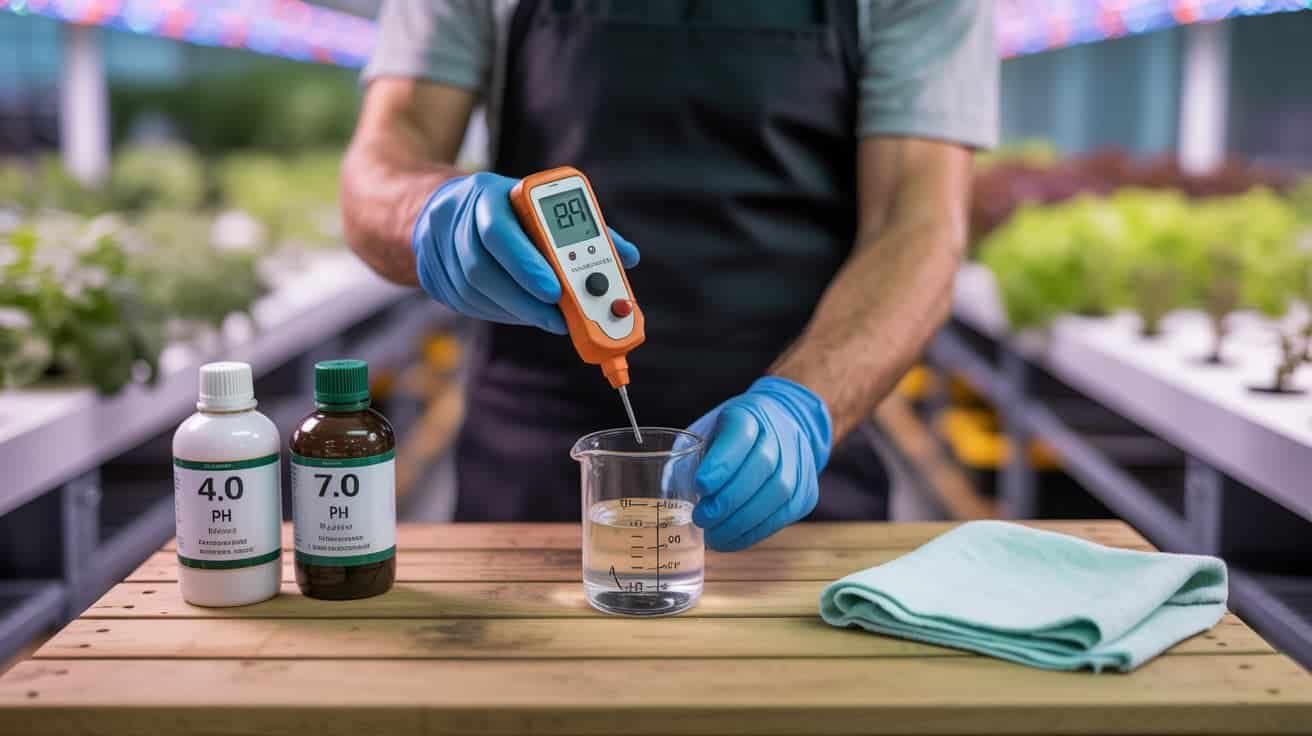
Most plants like their pH between 5.5 and 6.5. Outside that range, things start getting weird – nutrients start locking up or becoming toxic. At pH 7 and above, iron turns into this useless crud that plants can’t touch.
Identifying Plant Stress Symptoms Caused by pH Imbalances
Yellow leaves, weak roots, stunted growth – these are the warning signs. Plants’ll tell you when something’s wrong if you know what to look for.
pH Fluctuations as a Stress Factor in Hydroponic Crop Growth
Plants hate it when pH bounces around. It’s like trying to eat dinner on a roller coaster – nothing good comes from it.
Strategies to Maintain Stable pH for Consistent Plant Performance
Check often, adjust slowly, and don’t mess with things unless you need to.
Some growers follow simple hydroponic pH stability habits like monitoring temperatures and avoiding sudden nutrient changes to keep readings steady.
Adapting pH Testing Practices to Grower Experience and System Scale
Testing Schedule Modifications for Beginner Versus Experienced Hydroponic Growers
New folks should probably check twice a day until they get comfortable. After a few months, once a day’s usually fine.
Scaling pH Monitoring from Home Setups to Commercial Operations
Bigger grows need more attention and better equipment. What works for six plants won’t cut it for six hundred.
Troubleshooting pH-Related Issues Based on Testing Data
Keep notes on what goes wrong and what fixes it. Makes life easier next time around.
Importance of Documentation and Trend Analysis in pH Management
Write stuff down. Seriously. Memory’s not as good as paper, and those numbers tell a story if you’re paying attention.
FAQ
How often should I perform a hydroponic pH test?
Your hydroponic pH test frequency depends on your system, but most growers follow a daily pH testing hydroponics routine to catch changes early. A weekly hydroponic pH check might be enough for very stable setups, but a tighter hydroponic pH testing schedule is safer for beginners.
Frequent pH monitoring in hydroponics helps detect shifts caused by plants or environmental factors before they cause problems. Testing pH in deep water culture or NFT systems may need to be more frequent, since pH fluctuations in hydroponics conditions can happen faster in those systems.
What is the best time to test hydroponic pH during the day?
The best time to test hydroponic pH is usually in the morning, before adding nutrients or water. This gives a clear reading of hydroponic pH stability before changes occur. Checking pH after nutrient addition helps you see how nutrient solution pH testing responds to adjustments.
In commercial setups, time of day for pH testing is part of the standard hydroponic pH test protocol. Consistency matters,testing at the same time each day helps avoid confusion, and some growers also run a hydroponic pH daily fluctuation check midday for extra accuracy.
Why is pH monitoring in hydroponics important for nutrient uptake?
pH monitoring in hydroponics matters because the impact of pH on nutrient uptake is significant, plants can’t absorb nutrients if the hydroponic nutrient solution acidity test shows levels outside the ideal range. Hydroponic pH and plant health are directly linked, and incorrect levels can cause nutrient lockout or stress.
Hydroponic pH balance also affects hydroponic pH and microbial activity in the root zone. Many growers use continuous pH monitoring hydroponics tools to maintain stability, especially for high-value crops where pH measurement accuracy hydroponics can affect both yield and quality.
When should I adjust hydroponic pH levels after testing?
Hydroponic pH correction timing is key, adjusting hydroponic pH levels right after testing is best if readings are outside the hydroponic nutrient pH range. Hydroponic pH adjustment timing becomes even more important when hydroponic pH daily fluctuation check results show big swings. Some growers test pH after adding acid or base, while others test after adjusting nutrient formula to confirm stability.
Checking pH after nutrient addition or a hydroponic pH test after nutrient top-up helps ensure levels stay balanced. The importance of timing in hydroponic pH tests lies in preventing plant stress and keeping a healthy hydroponic pH balance.
Conclusion
Look, pH testing in hydroponics isn’t rocket science, but it’s gotta be done right. Different setups need different approaches – what works for basil might not work for tomatoes.
The basics stick though: test before adding anything new, grab a decent meter (none of those cheap strips), and for heaven’s sake, write down your readings. Your plants’ll let you know if you’re doing it right – healthy leaves and strong growth tell the whole story.
Start with daily checks, then adjust as you learn your system’s personality.
References
- https://extension.okstate.edu/fact-sheets/print-publications/hla/electrical-conductivity-and-ph-guide-for-hydroponics-hla-6722.pdf?
- https://www.mdpi.com/2624-7402/7/2/43?
Related Articles
- https://tophydroponicgarden.com/how-to-use-ph-adjusters-in-hydroponics/
- https://tophydroponicgarden.com/hydroponic-ph-stability-tips/
- https://tophydroponicgarden.com/importance-of-ph-in-hydroponics/
Was this helpful?

I’m Barrie L., a passionate hydroponic gardening enthusiast dedicated to cultivating thriving, soil-less gardens. With a focus on all things hydroponic, I share my expertise on innovative growing techniques and sustainable practices through my blog, tophydroponicgarden.com. As a seasoned hydroponics specialist, my goal is to inspire and guide fellow gardeners in harnessing the power of water-based cultivation for bountiful and eco-friendly harvests. I’m also an author of the book “Hydroponics For Absolute Beginners: Your Step By Step Guide For How To Create An Hydroponics System At Home Without Soil, For Growing Vegetable, Fruit And Herbs.” which is sold on Amazon. Join me on a journey of redefining the way we cultivate plants, one nutrient-rich solution at a time. Happy growing!