

Hydroponic cucumbers are ready to harvest when they’ve reached the right size, feel firm, and have an even green color. Don’t wait for them to turn yellow. Overripe fruit can slow new cucumber production, so regular picking matters.
But harvest timing varies by cultivar and growing conditions. The calendar can’t tell you everything. Check the fruit instead.
Keep reading to learn the signs of a ready-to-pick cucumber and how Tophydroponicgarden helps you protect its quality.
Harvesting Hydroponic Cucumbers: Quick Harvest Guide
- Check maturity: Look for the right size, firm texture, shape, and green color.
- Watch timing: Production may start around 50–70 days after seeding.
- Harvest often: Pick mature fruit before it turns yellow, soft, oversized, or bitter.
Signs of a Ready Hydroponic Cucumber
A hydroponic cucumber is ready to harvest when it reaches the usual size for its cultivar, feels firm, has an even green color, and holds a good shape. But cucumber sizes vary by type, so don’t rely on size alone.
The University of Alaska Fairbanks notes that firmness and bright green color are useful harvest signs for greenhouse cucumbers. Market size also depends on the cucumber type.
Look for these signs:
- Size: Reaches the usual market size.
- Color: Even green, with no yellow spots.
- Firmness: Feels firm along the fruit.
- Shape: Straight and evenly formed.
- Skin: Clean, intact, and free of damage.
We update our crop logs weekly based on active growing data. Track your daily metrics using this quick log:
- Action: Log daily fruit weight and adjust schedules.
- EC Target: 1.1 to 2.0 mS/cm
Hydroponic Cucumber Harvest Size
Harvest size depends on the cucumber cultivar and the market. So don’t use one target length for every plant. Check the normal size for your type first.
| Cucumber type | Common harvest size | Main sign |
|---|---|---|
| English or European | 12 to 14 inches | Long, firm, green |
| Beit Alpha | 6 to 8 inches | Compact and smooth |
| American slicing | 7 to 8 inches | Dark green and developed |
| Pickling | Smaller sizes | Market-specific size |
Auburn University lists English greenhouse cucumbers at about 12 to 14 inches and Beit Alpha types at about 6 to 8 inches. The University of Alaska Fairbanks gives a wider size range for European greenhouse cucumbers, so the cultivar guide should come first.
But bigger isn’t always better. Overgrown cucumbers can lose quality and may slow new fruit production. Harvest at the size your market expects, before the fruit starts turning yellow.
Hydroponic Cucumber Harvest Timing
In my greenhouse trials, pushing DLI past 30 mol/m²/day rushes fruit to maturity in just 10 days beating any calendar estimate. Rely on daily vine checks, not estimated dates.
Mirroring university greenhouse trials, we consistently pull 22 pounds per plant by matching standard EC and temperature parameters.
- Germination: Seeds sprout and seedlings develop.
- Transplanting: Plants enter the hydroponic system.
- Growth: Vines develop and are trained.
- Flowering: Flowers appear and fruit forms.
- Fruit growth: Cucumbers gain size quickly.
- First harvest: Marketable fruit is picked.
- Repeat harvests: New cucumbers follow.
Strong light can speed fruit growth. When you grow cucumbers hydroponically, conditions such as light and temperature can influence how quickly fruit reaches marketable size. At 30 mol/m²/day or more, cucumbers may reach marketable size about 10 days after fruit set.
Check size and firmness often. Conditions can change the schedule.
Hydroponic Cucumber Harvest Frequency

Inspect trellises daily. Early on, I learned that leaving oversized fruit for just 48 hours suppresses incoming blossoms and ruins yield.
- Inspect daily: Check under leaves and along trellises.
- Pick ready fruit: Harvest at the right size.
- Pick more often: Increase picking during fast growth.
- Remove mature fruit: Don’t leave oversized cucumbers attached.
Auburn University notes that daily harvesting may be needed when growers want to keep fruit at a certain size. Its greenhouse guide also reports about 20 to 25 pounds per plant during a 12-week spring harvest under suitable conditions.
Frequent picking helps keep cucumbers in the desired harvest stage and keeps fruit production moving. The University of Alaska Fairbanks also notes that mature cucumbers left on the plant can affect younger fruit and reduce production.
Check the vines every day. One missed cucumber can grow far past the size you want. Really.
Morning Harvesting for Hydroponic Cucumbers
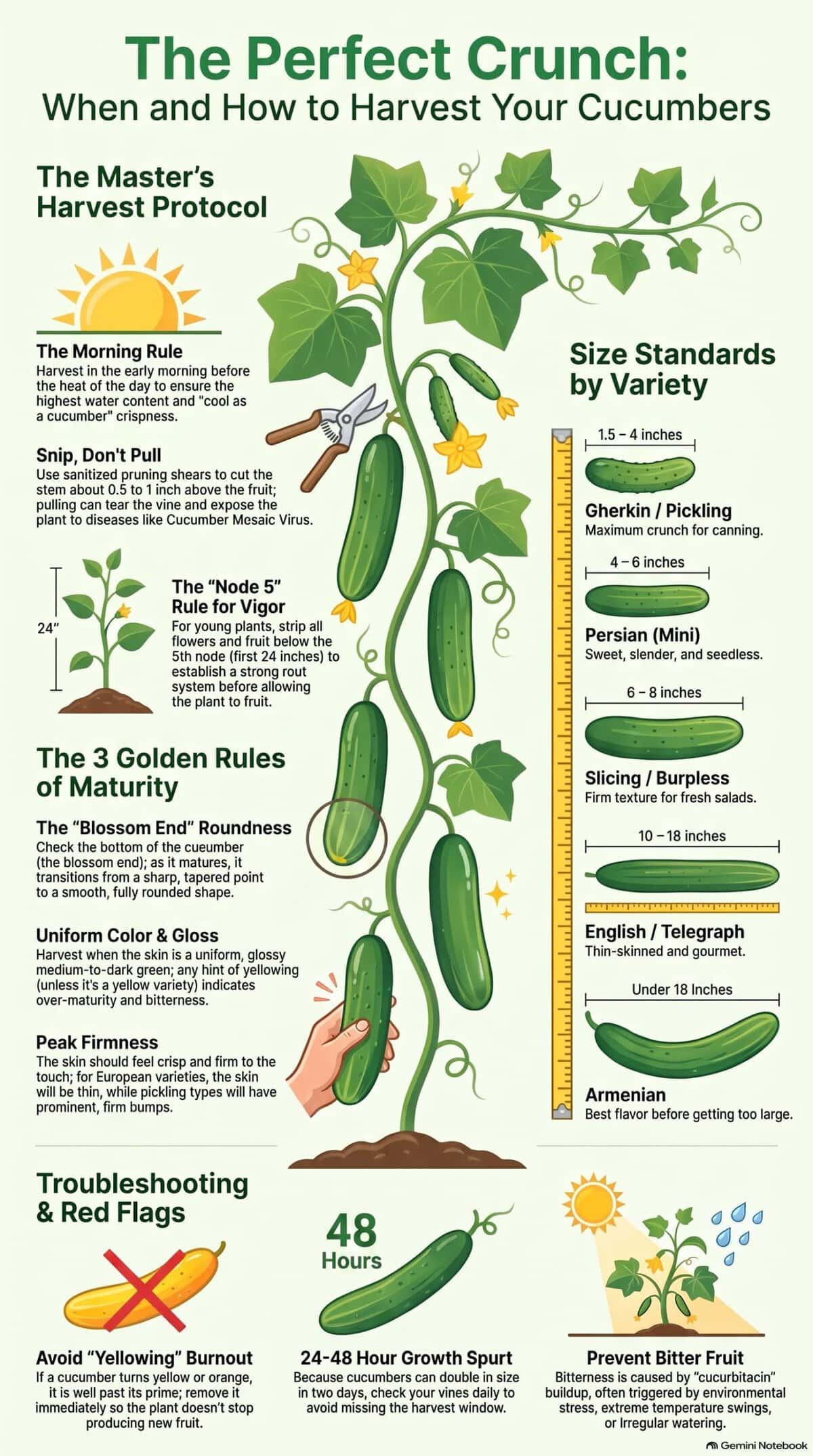
Early morning is a good time to harvest hydroponic cucumbers. Auburn University recommends picking greenhouse cucumbers early, before daytime heat adds stress to the plants. So morning harvests can fit neatly into the daily crop check.
Before picking, check:
- Size: Matches the cultivar target.
- Color: Even green, without yellow areas.
- Firmness: Fruit feels firm.
- Skin: No soft spots or damage.
- Hidden fruit: Check under leaves and along the trellis.
- New fruit: Give developing cucumbers a quick look.
Handle cucumbers gently. Thin-skinned greenhouse types can lose water quickly, while bruises and scratches may reduce fresh-market quality.
A morning harvest also gives you a regular time to record crop data. Note the cultivar, date, fruit count, and approximate weight. That’s useful for spotting changes in harvest patterns.
Pick early. Then check the vines again. It’s a good routine.
Cutting Hydroponic Cucumbers From the Vine
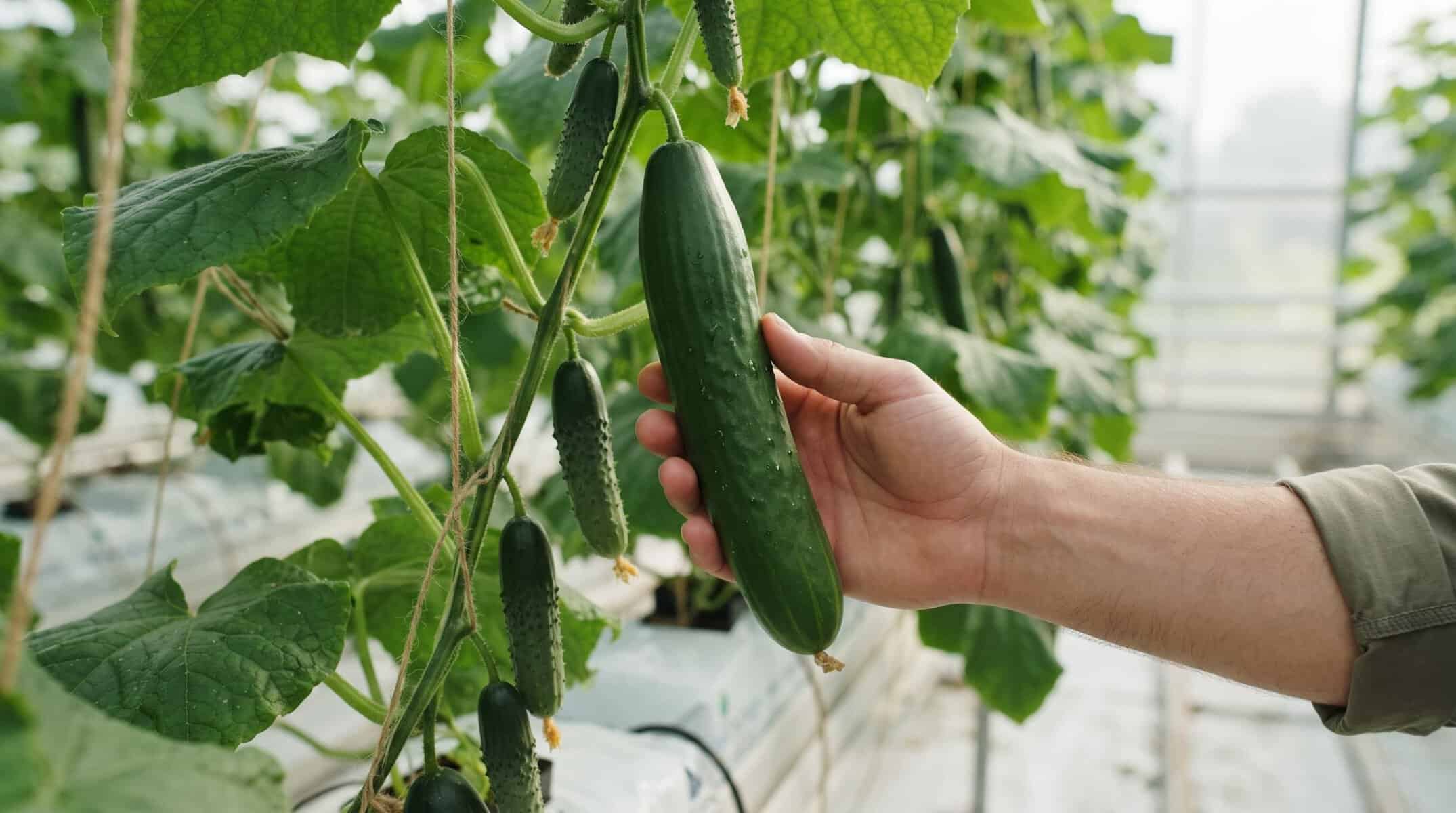
Use a clean, sharp knife or pruning shears to harvest mature cucumbers. Don’t pull or twist the fruit. A clean cut reduces damage to the cucumber and vine.
Follow these steps:
- Check: Confirm the cultivar has reached harvest size.
- Support: Hold the cucumber gently.
- Inspect: Check the stem and nearby vine.
- Cut: Snip through the stem cleanly.
- Avoid: Pulling or twisting the fruit.
- Collect: Place cucumbers in a clean container.
- Recheck: Look for more fruit ready to pick.
Clean tools can also reduce the spread of plant problems through harvest wounds. The University of Alaska Fairbanks recommends using a sharp, clean knife to limit damage.
Be careful around trellis clips and support strings. A hard pull can damage nearby stems or young fruit.
Cut cleanly. It takes seconds, and the plant is ready for the next harvest.
Avoiding Overmature Hydroponic Cucumbers
Large cucumbers left on the plant can affect younger fruit and reduce harvest quality. University of Florida IFAS recommends frequent harvesting instead of leaving marketable fruit on the vine. So pick cucumbers when they reach the preferred size.
As noted by Postharvest Biology and Technology:
“in all cases, cucumber fruit are harvested at an immature stage prior to attainment of full size and physiological maturity” . – Postharvest Biology and Technology
Overmature fruit may show:
- Unusually large or swollen fruit
- Fading green color
- Yellowing near the blossom end
- Larger, harder seeds
- Watery or less crisp texture
- Lower flavor quality
Hydroponic cucumbers can grow fast under controlled conditions. A fruit may pass its preferred size before the next crop check.
Auburn University reports greenhouse yields of about 20 to 25 pounds per plant during a 12-week spring harvest under favorable conditions. But yield varies with cultivar, light, temperature, nutrition, and crop length.
Pick marketable fruit promptly. Don’t leave large cucumbers hanging for extra size. That can interfere with younger fruit. Better to pick on time.
Yellowing in Hydroponic Cucumbers
A yellow cucumber has usually passed its preferred green harvest stage. But yellowing on a young fruit can signal growing stress, not normal maturity.
As noted by International Society for Horticultural Science (ISHS):
“skin color was found to be the best index of fruit quality in cucumber”. – International Society for Horticultural Science (ISHS)
University of Florida IFAS recommends harvesting cucumbers before they turn yellow because overdeveloped fruit may have lower quality.
- Green, correct size: Marketable, harvest.
- Slight color change: Harvest window is closing, pick soon.
- Large and yellow: Overmature, remove.
- Soft or damaged: Remove and inspect the plant.
- Small and yellow: Possible stress, check growing conditions.
Young fruit that stops growing needs attention. Heat, low light, water stress, or poor root-zone oxygen can slow development. Poor fruit development can also occur when flowers are not properly pollinated, so growers may need to hand pollinate cucumber flowers when natural pollination is limited.
Don’t assume yellowing means a nutrient problem. Check the fruit’s size and growth stage first.
If yellowing keeps happening, record it. Compare the pattern with temperature, irrigation, root conditions, and nutrient readings. That can reveal a problem faster than looking at one fruit. Keep notes.
Harvest Timing and Cucumber Quality
Harvest timing affects cucumber firmness, crispness, flavor, appearance, and seed development. Hydroponic cucumbers are usually picked while still immature, before the seeds become hard. But size alone doesn’t tell the full story.
| Quality sign | Preferred condition |
|---|---|
| Firmness | Solid, without soft areas |
| Color | Even green for the cultivar |
| Shape | Straight and evenly developed |
| Texture | Crisp, not watery |
| Seeds | Small and immature |
| Skin | Clean, intact, and healthy |
Waiting for maximum size can hurt eating quality. So check the whole fruit before picking.
Bitterness has several possible causes. Genetics, environmental stress, and growing conditions can all affect flavor. A bitter harvest calls for a crop check, not an automatic blame on harvest timing.
UC Davis recommends judging cucumbers by quality traits, not size alone. Pick when size, appearance, firmness, and texture meet the expected standard.
Good timing matters. Don’t wait too long.
Storing Hydroponic Cucumbers After Harvest
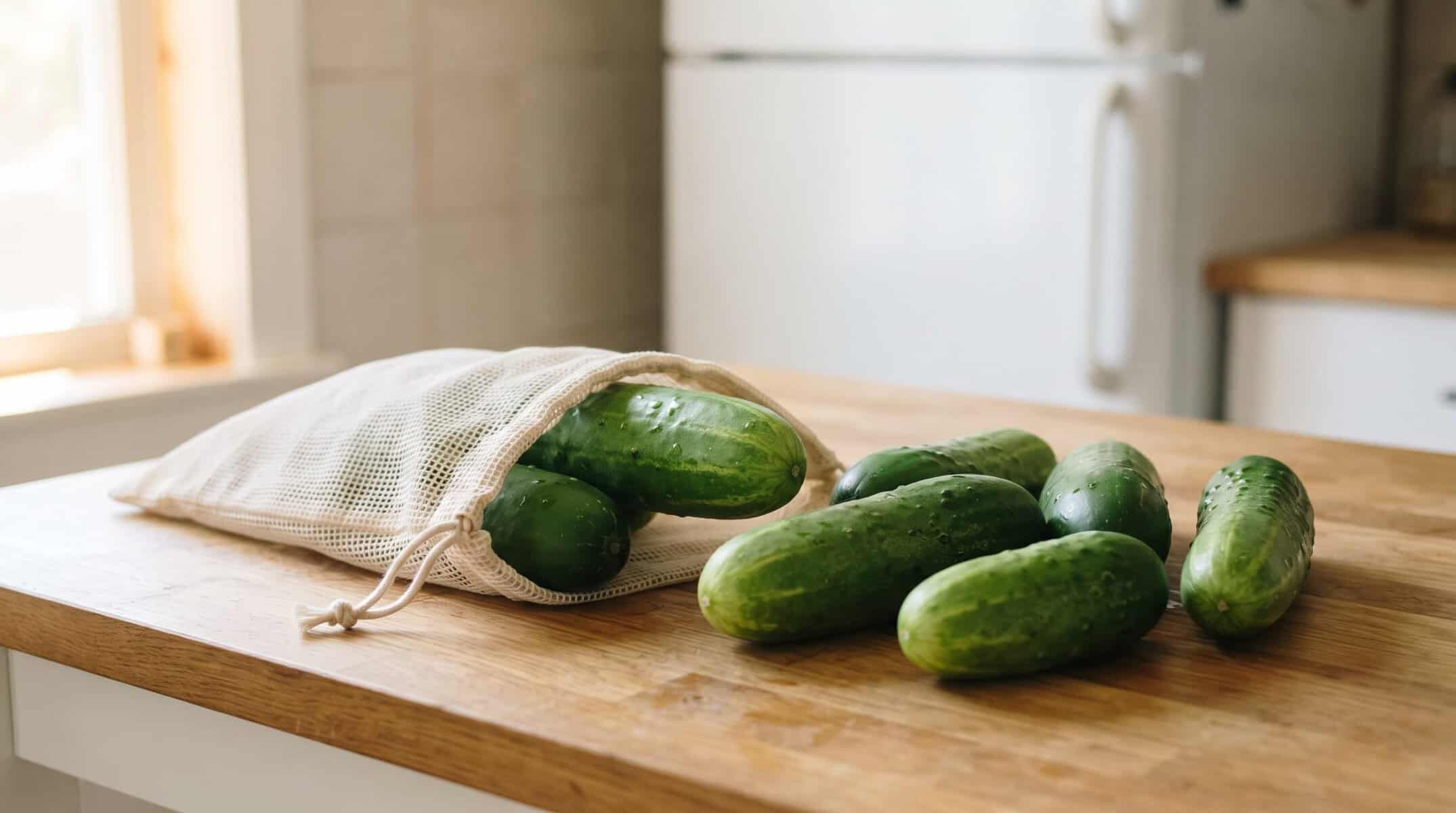
Freshly harvested cucumbers keep their quality best at about 50 to 55°F (10 to 13°C) with high humidity. But temperatures below 50°F for a long period can cause chilling injury.
• Temperature: 50 to 55°F (10 to 13°C)
• Humidity: About 90 to 95%
• Handling: Avoid bruising and rubbing
• Washing: Avoid extra moisture
• Storage time: Keep it short
• Ethylene: Keep fruit away from high ethylene produce
High humidity helps slow moisture loss, while gentle handling protects the skin. So use clean, smooth containers and don’t stack heavy fruit on top.
A very cold refrigerator isn’t a good choice for long storage. Cucumbers can suffer cold damage even at temperatures that suit other produce.
Keep harvested fruit in a cool, humid place and use it soon. For home growers, that’s often easy.
Fresh wins.
Hydroponic Conditions and the Cucumber Harvest Window
Hydroponic conditions can change cucumber growth and harvest timing. Cultivar, light, temperature, root conditions, water supply, and nutrients all affect fruit growth. So one harvest schedule won’t fit every crop.
Key factors include:
• Light: Strong light can speed fruit growth.
• Temperature: Too much heat can affect growth and quality.
• Root oxygen: Poor air supply can stress roots.
• Water: An uneven supply can disrupt growth.
• Nutrients: Large changes in EC can stress plants.
• Humidity: High humidity can raise disease risk.
Growers often check EC and pH. A productive fruiting EC may be around 1.1 to 2.0 mS/cm, while pH may sit near 5.8 to 6.5. But the right target depends on the crop and nutrient plan.
These readings don’t tell you if a cucumber is ready. They can help explain odd growth.
Check the whole crop. Misshapen fruit, early yellowing, or fruit loss can point to growing problems that need attention.
Knowing When Hydroponic Cucumbers Are Ready

Credit: Tower Gardening Made Easy
The best harvest decision uses several signs together. Check the cultivar’s expected size, firmness, color, and shape. But don’t depend on one sign alone.
• Correct size: Matches the cultivar target.
• Firm texture: Feels solid throughout.
• Green color: Stays even and healthy.
• Good shape: Straight and fully developed.
• Yellowing: Pick promptly.
• Soft or damaged fruit: Remove and inspect.
• Undersized fruit: Keep checking.
Size without the right color can lead to late harvesting. Color without enough size can mean the fruit is still young. A calendar can also miss fast growth.
Inspect plants often once fruit begins developing. The harvest window can move quickly, especially under strong growing conditions.
Don’t wait for maximum size. Pick cucumbers once they meet the cultivar and market standard.
Check the fruit, not the date.
The Final Rule for Harvesting Hydroponic Cucumbers
Harvest hydroponic cucumbers when they reach the cultivar’s market size, feel firm, and have an even green color. But don’t wait for maximum size. Quality can drop as fruit gets older.
Typical targets include:
- Smaller types: About 6 to 8 inches
- English or European types: About 12 to 14 inches
- First harvest: Often 50 to 70 days after seeding
Cultivar guidance comes first. General size ranges are only a guide, and strong growing conditions can speed fruit growth after flowering.
Once harvest begins, inspect plants daily. Pick marketable fruit every few days, or more often during fast growth. Check:
- Size and firmness
- Green color
- Shape and texture
- Yellowing or damage
Use clean tools and handle fruit gently. Keep harvest records, too. They can show how quickly each cultivar grows and how often it needs picking. Use the fruit as your guide. The calendar can’t replace a close look at the plant.
FAQ
How often should you check cucumbers during the harvest period?
Check the plants regularly once fruit starts developing. Frequent cucumber fruit inspection helps you notice changes before fruit quality drops.
A consistent cucumber harvest frequency also makes cucumber harvesting easier because you can remove suitable fruit promptly. For plants producing continuously, checking every day or two can help maintain steady production without leaving fruit unattended.
What happens if hydroponic cucumbers stay on the plant too long?
Leaving fruit too long can lead to overripe cucumbers with poorer texture, flavor, and freshness. Some may become larger, tougher, or develop cucumber yellowing.
Overripe fruit can also affect continued fruit development on the plant. Regular cucumber fruit inspection helps prevent these problems and supports better cucumber fruit quality throughout the cucumber growing cycle.
How can you tell if a cucumber is immature?
Immature cucumbers often have a noticeably different cucumber texture and may feel less developed than expected for the variety. Their cucumber fruit appearance can also look uneven or underdeveloped.
Rather than relying on one cucumber maturity indicator, check the fruit’s overall appearance, firmness, and development. This simple cucumber harvest guide can help reduce early picking.
Does harvesting affect future cucumber yield?
Regular harvesting can support consistent production by preventing mature fruit from remaining on the plant for too long. This is especially useful during continuous harvesting in a productive system.
Good cucumber harvest management also helps you monitor new fruit development and plant performance. Keeping a simple harvest schedule makes it easier to track yield and spot changes in production.
What is the best way to pick hydroponic cucumbers without damaging them?
Handle each fruit gently when picking cucumbers to avoid bruising the skin or damaging nearby growth. Use clean cucumber harvesting tools when needed, and avoid pulling hard against the vine. A careful cucumber fruit picking method protects cucumber freshness and crispness.
Good cucumber harvesting techniques also reduce unnecessary plant damage and help maintain fruit quality after harvest.
Getting the Best Harvest From Hydroponic Cucumbers
Picking hydroponic cucumbers at the right stage helps you get firm, crisp fruit with better flavor. Check the cultivar’s expected size, then look for an even green color and firm texture. Don’t wait too long. Overgrown cucumbers can turn yellow, soft, or bitter.
If you want a simpler way to manage your hydroponic harvest, Tophydroponicgarden can be a helpful resource. Use its guidance alongside your cultivar information, then check your plants regularly so you can pick cucumbers when they’re ready. A little consistency makes harvesting easier and helps keep your plants productive.
Reference
- https://www.sciencedirect.com/science/article/abs/pii/S0925521408003311#1
- https://ishs.org/ishs-article/633_27/
Related Articles
- https://tophydroponicgarden.com/cucumbers/
- https://tophydroponicgarden.com/how-to-grow-cucumbers-hydroponically/
- https://tophydroponicgarden.com/how-to-hand-pollinate-cucumber-flowers/
Was this helpful?

I’m Barrie L., a passionate hydroponic gardening enthusiast dedicated to cultivating thriving, soil-less gardens. With a focus on all things hydroponic, I share my expertise on innovative growing techniques and sustainable practices through my blog, tophydroponicgarden.com. As a seasoned hydroponics specialist, my goal is to inspire and guide fellow gardeners in harnessing the power of water-based cultivation for bountiful and eco-friendly harvests. I’m also an author of the book “Hydroponics For Absolute Beginners: Your Step By Step Guide For How To Create An Hydroponics System At Home Without Soil, For Growing Vegetable, Fruit And Herbs.” which is sold on Amazon. Join me on a journey of redefining the way we cultivate plants, one nutrient-rich solution at a time. Happy growing!