

You should adjust your pH only when testing shows it’s out of the ideal range for your system. It’s more important to keep things steady than to obsess over hitting a perfect number. For hydroponics, that range is usually between 5.5 and 6.5.
Small pH fluctuations of 0.1-0.4 points are normal in most hydroponic systems and rarely require immediate correction. Knowing when to fix the pH and when to leave it alone can save your plants a lot of stress. Want to know the right time to make changes? Keep reading.
Quick Windows: The pH Timing Cheat Sheet
Mastering your reservoir chemistry comes down to practicing patience and monitoring your water on a strict, dependable routine.
- Test before you touch: Always measure your water chemistry before making any adjustments. Never add corrective chemicals blindly.
- Follow the mixing order: Only adjust your pH levels after you completely mix your nutrients, and only when your digital meter readings drift completely outside your target ranges.
- Prioritize system stability: Focus on maintaining stable conditions over a long period. Making frequent, aggressive corrections often shocks plant root zones and causes far more harm than slight, natural fluctuations.
When Should You Adjust pH Levels?
Adjust pH when your readings move outside the recommended range for your system or when clear signs of imbalance start to appear. The right timing depends on what you’re managing because pH needs vary widely between plants, pools, aquariums, and the human body.
For example, hydroponic growers actively manage nutrient solution pH because it directly affects nutrient uptake. Living soil systems usually buffer small changes on their own, so adjustments happen less often. In other situations, such as blood or vaginal pH, self-treatment is not recommended. Medical professionals should handle those concerns.
pH adjustment timing by application
| Application | When to Adjust | Target Range |
| Hydroponics | After mixing nutrients and when pH moves outside the target range | 5.5-6.5 |
| Living Soil | Before planting or when deficiency symptoms appear | 6.0-7.5 |
| Swimming Pools | Check daily and adjust when readings fall outside the ideal range | 7.3-7.6 |
| Aquariums | Adjust only if fish show stress and pH exceeds species tolerance | 6.5-8.0 |
| Blood | Under medical supervision only | 7.35-7.45 |
| Vaginal Health | Only after evaluation by a healthcare professional | 3.8-4.5 |
The National Institutes of Health notes that the body tightly regulates blood pH. Trying to change it with supplements or home remedies can be dangerous. Mayo Clinic also advises seeking medical guidance if vaginal pH concerns come with ongoing symptoms.
Hydroponics works differently because growers control the nutrient solution directly. In contrast, soil naturally buffers minor pH changes through organic matter and microbial activity.
Why timing matters
Adjusting pH too soon can lead to unnecessary corrections. Waiting too long may allow nutrient problems to develop. Regular testing helps you respond when needed instead of making changes based on guesswork.
Test pH Before Making Any Adjustments

Always test pH before adding any correction products. Making changes without accurate measurements often creates bigger problems than the original issue.
In hydroponic systems, pH can change quickly as plants absorb nutrients and water levels shift. Without testing, it is easy to overcorrect and create unstable conditions.
Common problems caused by adjusting pH without testing include:
- Overcorrection cycles
- Nutrient lockout
- Unstable water chemistry
- Increased plant stress
- Unnecessary use of pH adjustment products
Plants growing outside their ideal pH range may show symptoms such as:
- Yellowing leaves
- Slow or stunted growth
- Leaf discoloration
- Deficiency symptoms despite regular feeding
As the University of Maryland Extension explains,
“Fertilizers, whether commercial or from manure sources, will not be effective if soil pH isn’t managed.” This is one reason testing before making adjustments is so important. Even a well fed system can develop nutrient availability issues when pH drifts too far from the target range. –University of Maryland Extension.
Testing first also helps rule out other issues. Poor lighting, incorrect nutrient strength, temperature stress, or root problems can sometimes mimic pH-related symptoms.
Don’t assume pH is the problem
A quick pH check takes only a few minutes. That small step can save you from adding unnecessary chemicals and chasing problems that have another cause.
Why Is Stability More Important Than Perfect pH?
Stable pH matters more than hitting the exact same number every day. Plants usually tolerate small fluctuations better than repeated adjustments that cause sudden swings.
Many experienced growers report better results by allowing pH to move naturally within the recommended range. For example, a hydroponic reservoir drifting between 5.8 and 6.3 often performs well without intervention.
Trying to force pH to one exact number can create several problems:
- Frequent chemical additions
- Greater risk of pH shock
- More measurement errors
- Larger pH swings over time
- Increased plant stress
As plants absorb nutrients, they naturally influence the chemistry of the nutrient solution. This process causes normal pH movement throughout the growing cycle.
Allowing small fluctuations within the acceptable range may even improve nutrient uptake because different nutrients become more available at slightly different pH levels.
Good enough is often best
Healthy plants do not need laboratory precision. Focus on keeping pH stable and within the recommended range instead of chasing the perfect number.
The Right Time to Adjust Hydroponic pH
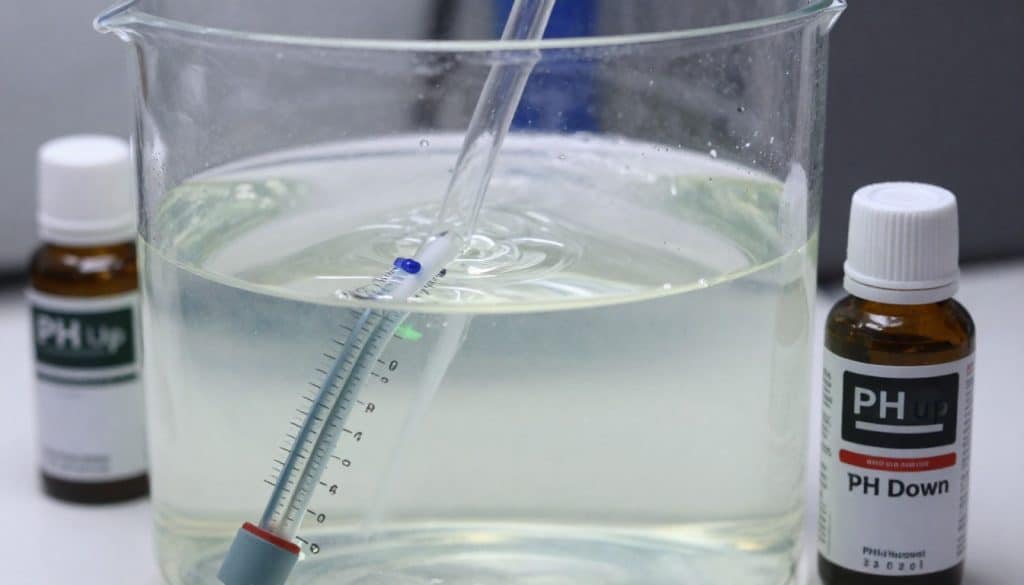
Hydroponic growers should adjust pH only after all nutrients and supplements have been added to the reservoir. Nutrients can significantly change pH, so adjusting plain water first often wastes time and chemicals.
Recommended Workflow
- Fill the reservoir with water
- Add all nutrients
- Add supplements
- Mix thoroughly
- Test pH
- Add pH Up or pH Down if needed
- Allow the solution to circulate for 15–30 minutes
- Retest before making additional adjustments
Why Is the 15-30 Minute Waiting Rule Critical?
After adjusting pH, patience matters. Waiting 15 to 30 minutes before retesting allows the solution to mix completely and stabilize.
Immediate retesting can produce misleading results because the pH adjuster may not yet be fully dispersed throughout the reservoir.
A simple process can help prevent overcorrection:
- Add a small dose (no more than 1 mL per 10 gallons of water) of pH adjuster
- Allow the reservoir to circulate.
- Wait 15-30 minutes.
- Retest using a calibrated pH meter.
- Repeat only if necessary.
This approach helps prevent overshooting your target range and reduces the chance of creating large pH swings.
Many growers run into problems because they rush. Adding more pH adjuster before the first dose fully mixes often creates a cycle of constant corrections.
Slow adjustments work better
Making small changes gives you more control. It is much easier to lower pH a little more than it is to fix an overcorrection caused by impatience.
Why Shouldn’t You Adjust Hydroponic pH Every Day?
Daily pH adjustments often do more harm than good. Constant corrections can create unstable conditions that stress plants and roots.
Many experienced growers check pH every day but only make adjustments when readings move outside the acceptable range. Depending on reservoir size, plant maturity, and water usage, this may mean making changes every few days instead of daily.
Signs that you may be overcorrecting include:
- Adding pH products every day
- Constantly checking and adjusting readings
- pH repeatedly bouncing up and down
- Inconsistent plant growth
- Ongoing nutrient issues despite frequent adjustments
Larger reservoirs usually remain more stable than smaller ones because they buffer changes more effectively. Many growers perform complete reservoir changes every 7 to 14 days or when total top-off volume equals reservoir capacity to maintain consistency.
The goal is not to hit the same number every morning. The goal is to provide a stable environment where plants can grow without unnecessary stress.
Monitor often, adjust less
Checking pH regularly is a good habit. Adjusting only when necessary is often the better strategy. Small, natural fluctuations are normal and usually less harmful than constant intervention.
How Often Should You Check pH in Hydroponic Systems?
How often you check pH depends on your hydroponic system, reservoir size, and how quickly your plants use water and nutrients. Some systems stay stable for days, while others can shift noticeably overnight.
Recirculating hydroponic systems, especially those with smaller reservoirs, often experience faster pH changes. Young seedlings have less impact on water chemistry than mature plants, which typically cause pH to drift more rapidly due to increased nutrient uptake.
Recommended monitoring schedule
| System Type | Suggested Frequency |
| Deep Water Culture (DWC) | Daily |
| NFT Systems | Daily |
| Recirculating Systems | Daily or before top-offs |
| Small Reservoirs | Every 1-2 days |
| Large Reservoirs | Every 2-3 days |
| Drain-to-Waste Systems | Before each feeding |
Several factors can affect how often you need to check pH:
- Temperature fluctuations
- CO2 injection
- Reverse osmosis water use
- Tap water buffering capacity
- Reservoir age
- Plant nutrient uptake
- Rapid plant growth stages
Your water source can also influence how quickly readings change, especially when bicarbonates and dissolved minerals affect buffering capacity.
Keeping a simple log of morning and evening pH readings can help you spot trends early. Over time, you’ll learn how your system behaves and recognize when adjustments are actually necessary.
Smaller systems need more attention
Small reservoirs usually experience faster pH swings because they have less buffering capacity. Larger reservoirs tend to stay more stable, giving growers more time to respond before issues develop.
Five Critical Moments to Check and Adjust pH
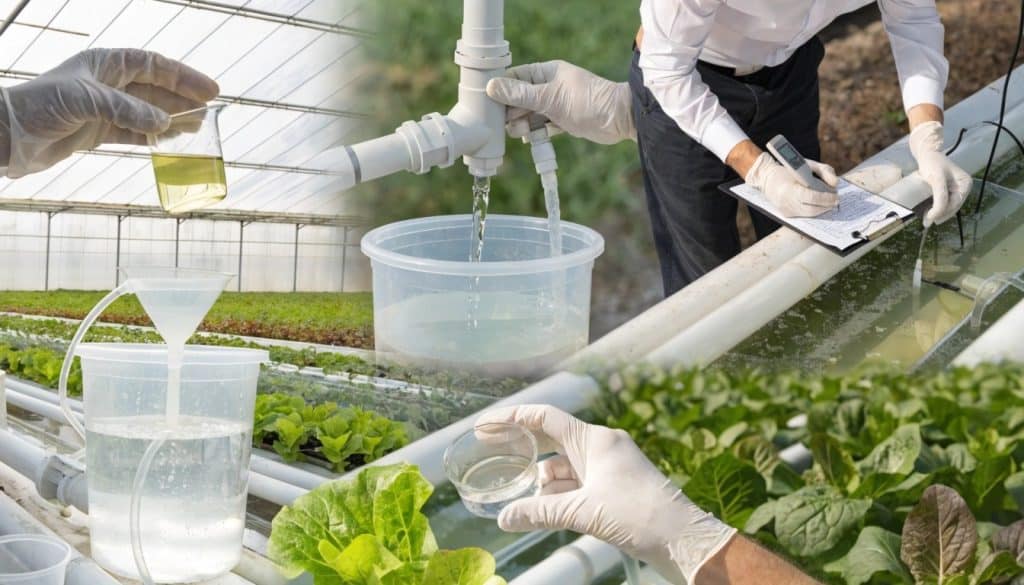
Certain situations naturally cause pH to shift and deserve extra attention. Knowing when to monitor more closely can help prevent nutrient problems before they affect plant growth.
Five important times to check and adjust pH include:
- After mixing nutrients
- After a complete water change
- Following reservoir top-offs that exceed 20% of total tank capacity
- During rapid growth-stage transitions
- Whenever pH moves outside the recommended range
Plants also change nutrient uptake as they grow. During transitions such as vegetative growth, flowering, or fruit production, nutrient demands shift and can influence pH stability.
Regular monitoring during these periods helps you catch gradual changes before plants develop deficiency symptoms.
Watch for predictable changes
Many pH problems are easier to manage because they happen during expected events. Paying extra attention after reservoir changes and nutrient mixing can save time later.
Why Does Rockwool Cause pH Problems Early On?

Credits : Everest Fernandez
Fresh rockwool can temporarily raise pH during the first few days after setup. This often surprises new growers, but it is a common and usually short-term issue.
Rockwool naturally has a higher pH when new. Until it becomes conditioned, it may slowly influence the nutrient solution and cause readings to drift upward.
To reduce rockwool-related pH swings:
- Pre-soak new rockwool in a pH 5.5 solution for 12 to 24 hours before use.
- Monitor pH more frequently during the first few days.
- Avoid making large corrections.
- Make gradual adjustments if needed.
Most systems stabilize naturally after this initial period. Many growers find that the issue resolves itself once the media has been properly conditioned.
Overreacting often creates bigger problems than the rockwool itself.
Give new rockwool time to settle
A small pH rise during the first few days is normal. Consistent monitoring and small adjustments usually work better than aggressive corrections.
Reliable pH Adjustment Products for Hydroponics
Commercial pH products generally provide the most reliable and predictable results in hydroponic systems. They are specifically designed for agricultural use and offer better stability than household alternatives.
Professional pH adjustment products
| Product | Primary Use |
| Phosphoric acid | General pH reduction |
| Nitric acid | Vegetative-stage pH reduction |
| Sulfuric acid | Cost-effective acidification |
| Potassium hydroxide | Raising pH |
| Sodium hydroxide | Alternative pH increase |
| Calcium hydroxide | Increasing pH while adding calcium |
Phosphoric acid remains one of the most popular choices because it works well in many hydroponic systems. Potassium hydroxide is commonly used to safely increase pH when necessary.
Larger operations sometimes use automated pH controllers with dosing pumps to maintain more consistent conditions. However, manual adjustments work well for most home growers.
Why Do Household pH Adjustment Methods Often Fail?
Household products may seem convenient, but they rarely provide pH stability beyond a 4-to-6-hour window in hydroponic systems.
Many growers try kitchen ingredients because they are inexpensive and easy to find. Unfortunately, these products often create short-lived adjustments that rebound quickly.
Common household products to avoid
| Product | Common Issue |
| Vinegar | Temporary effect |
| Lemon juice | Poor stability |
| Citric acid | Frequent pH rebound |
While these options may lower pH briefly, they often break down quickly or contribute to unstable conditions. This can lead to repeated adjustments and unnecessary frustration.
Commercial pH products are formulated to provide more predictable results. They help maintain a stable environment that supports healthy nutrient uptake and plant growth.
Save yourself the extra work
Using products designed for hydroponics usually means fewer corrections, more stable pH levels, and healthier plants over time.
Common pH Adjustment Mistakes to Avoid
Most pH problems happen because growers make changes too quickly or trust inaccurate readings. In many cases, the issue isn’t the nutrient solution itself. It’s how the pH is being measured and adjusted.
A common mistake is trying to fix every small pH change immediately. Hydroponic systems naturally fluctuate as plants absorb nutrients. Small shifts within the recommended range usually aren’t a cause for concern. Constant adjustments often create bigger swings that stress plants and make nutrient uptake less predictable.
Another problem is relying on poorly maintained equipment. pH meters need regular calibration and proper storage to remain accurate. A meter that reads incorrectly can lead to unnecessary adjustments that push the solution further away from the ideal range.
Mistakes and Solutions
| Mistake | Consequence | Solution |
| Dirty testing equipment | False readings | Clean thoroughly after use |
| Excessive pH down use | Overshooting targets | Use small increments |
| Estimating doses | Inconsistent outcomes | Measure accurately |
| Retesting immediately | Misleading results | Wait 15-30 minutes |
| Daily corrections | Instability | Allow natural drift |
Instead of aiming for a “perfect” number every day, focus on consistency. Healthy plants often tolerate slight fluctuations better than repeated corrections.
Maintain Your pH Meter Properly
Many growers assume buying a costly meter solves pH problems. In reality, regular maintenance matters much more.
Proper meter maintenance includes:
- Regular pH electrode calibration
- Using pH calibration 7.0 buffer solutions
- Using pH calibration 4.0 buffer solutions
- Storing digital pH pen probes correctly
- Replacing expired pH buffer solution
Always rinse your testing probes with clean water after each use and keep them wet in a proper storage solution. Letting the glass probes dry out or skipping your calibration routine quickly ruins the tool’s accuracy.
Alternative methods, such as pH drops test kits, can also serve as backup verification tools. Comparing results occasionally helps confirm that digital meters are working properly, which is especially useful when maintaining accurate testing practices across different growing cycles.
Developing a simple testing routine improves confidence and reduces unnecessary adjustments over time.
When Should Soil Growers Adjust pH Levels?
Soil pH should usually be corrected before planting or when plants begin showing signs of nutrient imbalance. Unlike hydroponic systems, soil naturally buffers small pH changes, so frequent adjustments are rarely necessary.
Many gardeners don’t realize that poor growth isn’t always caused by a lack of fertilizer. Sometimes nutrients are present in the soil, but plants can’t absorb them efficiently because the pH is outside the ideal range.
Most garden crops perform well within a pH range of 6.0 to 7.5, although some plants prefer slightly more acidic conditions. These targets can be especially helpful when growing multiple culinary plants together in a herb garden, where nutrient availability needs to remain consistent across different species.
Research from Cornell University notes that,
“Soil pH of 6.5 is usually considered optimum for nutrient availability.” –Cornell University.
This helps explain why many vegetable crops perform best in slightly acidic to near-neutral soils, where essential nutrients are generally more accessible to plant roots.
Common crop targets include:
- Lettuce pH: 5.8-6.5
- Strawberry pH: Around 6.0
- Herb pH: Around 6.2
- Tomato pH: Around 6.3
- Cucumber pH: Around 5.8-6.5
- Pepper pH: Around 6.0-6.8
- Basil pH: Around 5.8-6.5
- Mint pH: Around 6.0-7.0
Testing before planting gives you time to make corrections before nutrient deficiencies affect growth. If plants suddenly develop yellow leaves, slow growth, or reduced production despite proper watering and fertilizing, checking soil pH is often a smart first step.
Signs Your Garden May Need a Soil pH Check
You don’t need to test soil every week, but certain situations should prompt a closer look.
Test soil pH:
- Before planting a new crop
- After heavy fertilizer use
- When leaf chlorosis or yellowing appears
- During unexplained stunted growth
- Following major soil amendments
- When yields decline from previous seasons
If tests show the soil is too acidic, lime products can gradually raise pH. If the soil is too alkaline, sulfur-based amendments may help lower it over time.
Remember that soil corrections work slowly. Unlike hydroponic systems, changes often take weeks or even months to fully affect the root zone. Patience and regular monitoring usually produce better results than aggressive treatments.
Consistent testing helps you spot trends early and maintain healthier growing conditions throughout the season.
FAQ
When should you balance the water after adding specific supplements like calcium or silica to your reservoir?
You must handle your pH adjustment timing after adding calmag or after adding silica to the water. These heavy supplements change your base chemistry right away. Never check your levels immediately after pouring these additives into the tank.
You need to wait at least twenty minutes for everything to mix completely, and then you must remeasure after circulation finishes.
What is the best daily routine for checking water chemistry to catch extreme afternoon temperature shifts?
You should complete a morning pH reading and an evening pH check at the exact same times every single day.
Water temperature directly changes how your digital pH pen reads the liquid. Checking the water twice a day helps you identify unusual pH drift before it affects nutrient availability or a harmful temperature effect on pH before your roots face severe stress.
How do you safely fix your water chemistry when the reservoir levels drift too high overnight?
You should calculate a half dose pH adjust instead of adding a large amount of pH adjuster at once into the tank all at once.
If you find a sudden pH drift, you must practice pH shock prevention to protect your delicate root system. You must apply a slow pH adjustment using a phosphoric acid pH down solution to lower the numbers safely.
Why do your plants show signs of severe nutrient lockout even when you feed them daily?
This problem happens because an unchecked pH swing correction is long overdue, which acts as a major plant deficiency trigger.
When pH moves outside the optimal range, plants may develop chlorosis, nutrient deficiencies, and stunted growth even when nutrients are present in the reservoir. You must check your lines immediately to ensure your plants can actually absorb their food.
When is the absolute best time to calibrate your testing tools to ensure accurate reservoir readings?
You should perform a weekly pH test on your equipment using a fresh pH buffer solution to keep your tools accurate. To guarantee precise data, you must complete a two-point process using pH calibration 7.0 and pH calibration 4.0 fluids.
This regular maintenance stops false readings, so you only take corrective action timing steps when your system actually needs them.
Get Better Results by Adjusting pH at the Right Time
It’s tempting to fix every small pH change, especially when you want your plants to thrive. But making too many adjustments can do more harm than good.
Test your pH first and only take action when the numbers move outside the ideal range. Small, careful changes help keep your system stable and your plants healthier.
Successful growers focus on consistency, not perfect readings. Add nutrients before checking pH, use properly calibrated tools, and give your system time before testing again.
If you want extra support, TopHydroponicGarden offers practical tips and guidance to help you manage pH with confidence and grow healthier plants.
References
- https://www.extension.umd.edu/resource/soil-ph-affects-nutrient-availability/?utm_source
- https://courses2.cit.cornell.edu/cca/soilFertilityCA/CA5/CA5_print.html?utm_source
Related Articles
- https://tophydroponicgarden.com/how-to-set-up-a-window-herb-garden/
- https://tophydroponicgarden.com/how-to-properly-test-your-source-water/
- https://tophydroponicgarden.com/accurate-ph-testing-for-hydroponics/
Was this helpful?

I’m Barrie L., a passionate hydroponic gardening enthusiast dedicated to cultivating thriving, soil-less gardens. With a focus on all things hydroponic, I share my expertise on innovative growing techniques and sustainable practices through my blog, tophydroponicgarden.com. As a seasoned hydroponics specialist, my goal is to inspire and guide fellow gardeners in harnessing the power of water-based cultivation for bountiful and eco-friendly harvests. I’m also an author of the book “Hydroponics For Absolute Beginners: Your Step By Step Guide For How To Create An Hydroponics System At Home Without Soil, For Growing Vegetable, Fruit And Herbs.” which is sold on Amazon. Join me on a journey of redefining the way we cultivate plants, one nutrient-rich solution at a time. Happy growing!