

Hydroponic maintenance requires tools for measuring nutrient conditions, managing water movement, monitoring temperature, and cleaning equipment. pH and EC meters are the core tools, while pumps, calibration supplies, and sanitation equipment help maintain stable plant growth.
For growers looking to maintain their systems with the right supplies, Tophydroponicgarden can also be a useful resource. Keep reading to build a practical hydroponic maintenance toolkit without buying unnecessary equipment.
What are the essential hydroponic maintenance tools?
- pH and EC meters are the most important tools for monitoring nutrient solution.
- Pumps, air stones, timers, and water level tools help maintain stable water movement and oxygenation.
- Cleaning tools, pruning shears, and basic diagnostic equipment help prevent equipment and plant problems.
Why are pH and EC meters the most important tools?
pH affects nutrient availability, while EC (electrical conductivity) shows the level of dissolved nutrient salts. Oklahoma State University recommends monitoring both. High EC can stress plants by making water uptake harder, while low EC may indicate nutrient shortages and slow growth.
A pH meter measures whether the nutrient solution is acidic or alkaline. A general hydroponic range is about 5.0 to 6.0, although the target varies by crop and system. A digital pH tester gives quick readings, but regular calibration is needed for accuracy.
Common pH meter supplies include:
- pH calibration solution
- Probe storage or cleaning solution
- Clean rinse water
- Clean calibration container
An EC meter measures overall nutrient strength. Since dissolved fertilizer salts increase conductivity, EC helps show if the nutrient solution is too strong or too weak. TDS meters estimate dissolved solids, but readings can vary by conversion method. EC is often more consistent for hydroponic nutrient management.
How should you calibrate and care for hydroponic meters?

Calibration solutions are used to verify and adjust pH and EC meter accuracy before routine measurements. pH and EC meters need regular checks to make sure their readings stay accurate.
pH meters are calibrated with buffer solutions, while EC meters are calibrated with a solution of known conductivity.
A calibration routine should begin with a clean probe and fresh calibration solution. The meter should be calibrated according to its manufacturer’s instructions rather than using one universal procedure for every instrument.
The solution should be allowed to stabilize before the final reading is accepted. Oklahoma State University notes that a nutrient-solution reading can take a couple of minutes to stabilize after mixing.
Probe care also deserves attention. A pH electrode is a sensitive component, and poor storage or contamination can shorten its useful life.
For routine maintenance, keep these items together:
- pH buffer solution
- EC calibration solution
- Probe cleaning or storage solution
- Clean rinse water
- Small calibration containers
- Replacement batteries when applicable
A useful habit is to record calibration dates beside the meter. This makes unexplained readings easier to investigate later.
Which calibration supplies should you keep?
A complete calibration kit includes pH buffers, EC calibration solution, cleaning or storage solution, and rinse water. Follow the meter manufacturer’s instructions for buffer values.
Common pH buffer values are 4, 7, and 10, although the required calibration points depend on the meter and target pH range.
Common supplies include:
- pH buffer solution
- EC calibration solution
- Cleaning or storage solution
- Rinse water
Proper calibration helps prevent faulty readings and incorrect nutrient adjustments. Frequency should follow the manufacturer’s guidance and use conditions.
How do temperature and water-level tools improve maintenance?
Temperature and reservoir water levels matter because small changes can affect nutrient delivery and root health.
Oklahoma State University notes that water temperatures around 72 to 75°F are generally suitable for hydroponics. However, the ideal range varies by crop and system, so there is no one-size-fits-all target.
A digital thermometer is a simple, low-cost tool for routine monitoring. It can show temperature changes that pH and EC readings cannot explain. Regular checks can help catch changes before they affect plant growth.
Temperature also affects dissolved oxygen. Warmer water generally holds less oxygen, making temperature control more important when roots remain submerged in nutrient solution.
Research from Annals of Botany shows
“Root-zone temperature affected hydroponic lettuce growth, with both low and high temperatures reducing root growth compared with the 25°C treatment. This supports the use of a digital thermometer as a practical maintenance tool for tracking nutrient-solution and root-zone temperature.” – Annals of Botany
Reservoir level is another simple measurement to track. Plants often use more water as they grow, so regular checks help keep roots supplied with nutrient solution and support stable growing conditions.
Which tools help?
A basic environmental monitoring kit can include these hydroponic tools:
- Digital water thermometer
- Air thermometer
- Hygrometer
- Reservoir level markings
- Water-level sensor
- Float valve
- Auto top-up equipment for larger systems
A float valve maintains the target reservoir level, while a water-level sensor can alert growers when the tank is low. Oklahoma State University describes a float valve for automatic water makeup in hydroponic nutrient management.
These tools are useful when evaporation and plant uptake are high. However, automatic water replacement does not replace nutrient monitoring. Plants may use water and nutrients at different rates, so EC still needs to be checked.
Which pumps and aeration tools does a hydroponic system need?
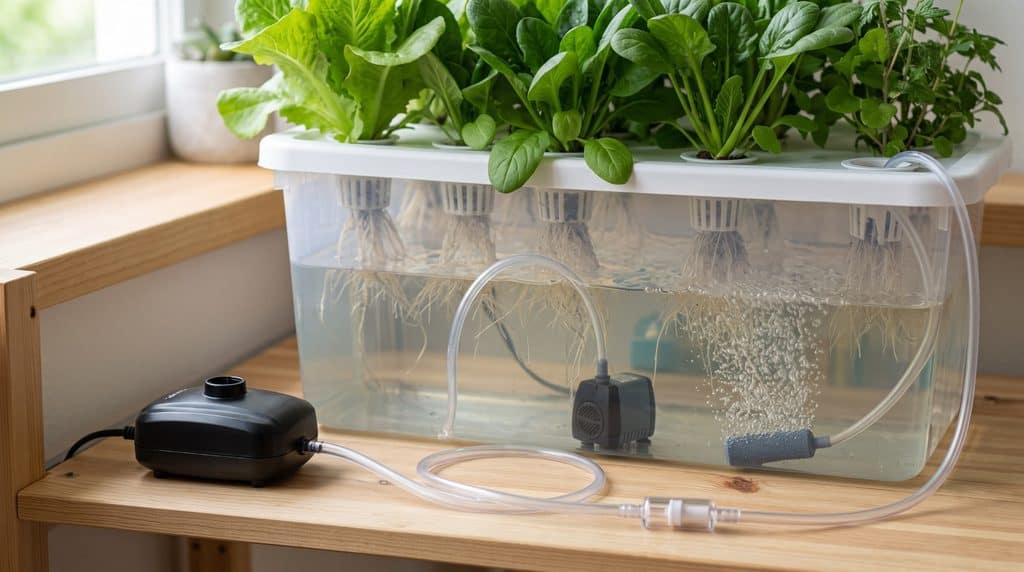
A submersible water pump circulates nutrient solution through tubing, channels, or grow trays in recirculating systems.
Aeration equipment adds oxygen when the setup requires it, especially around the root zone. The hydroponic supplies you need depend on the system, such as NFT, drip irrigation, ebb and flow, DWC, or Kratky. Each method has its own balance of water flow and air.
A submersible pump is common in recirculating systems. It moves nutrient solution from the reservoir through irrigation tubing, drip lines, channels, or grow trays. Regular checks can help find clogged tubing, weak flow, or pump problems before they affect plant growth.
An air pump and air stone have a different job. They add air to the nutrient solution instead of simply moving water. This is especially important when plant roots remain submerged.
The difference matters during maintenance. A water pump may keep running while roots still receive too little oxygen. Utah State University research shows that managing root zone oxygen is important because low oxygen can stress roots and limit plant growth.
What belongs in the circulation toolkit?
A practical circulation kit may contain:
- Submersible water pump
- Air pump
- Air stone
- Airline tubing
- Check valve
- Irrigation tubing
- Drip line
- Drip emitters
- Timer
- Pump timer
- Replacement fittings
The system determines which tools are needed. NFT requires steady channel flow, while DWC focuses more on aeration.
A timer controls when pumps or other equipment operate, but a failed timer can interrupt circulation or aeration.
For larger systems, spare pumps or tubing can help prevent equipment failure from affecting the root zone.
How can you keep hydroponic reservoirs and components clean?
Cleaning tools remove mineral deposits, plant debris, and organic buildup that can affect hydroponic equipment. Oklahoma State University recommends cleaning vertical hydroponic towers with bleach after each crop cycle and maintaining the nutrient tank and water level.
Choose cleaning tools based on your system. A small reservoir may only need a soft brush and bucket, while larger systems may need different brushes for tubing, fittings, channels, and pumps.
A reservoir brush helps remove buildup below the waterline. A small detailing brush can clean pump screens, emitters, connectors, and other narrow areas.
Cleaning is also a good time to inspect equipment. Check for cracked tubing, blocked emitters, damaged air stones, and loose fittings. Regular cleaning helps maintain water flow and reduce buildup that can affect pumps or nutrient delivery.
As noted by Applied and Environmental Microbiology
“A 2024 study published in Applied and Environmental Microbiology found that biofilm-forming bacteria in NFT systems could promote bacterial attachment and colonization on system surfaces. This shows why regular cleaning and sanitization are important parts of hydroponic maintenance.” – Applied and Environmental Microbiology
After cleaning, rinse components properly and check that fittings are secure before restarting the system. Keeping equipment clean makes routine maintenance easier and helps the system run more consistently.
What cleaning tools should you have?

Credit: UrbanAgMike
A useful sanitation kit includes:
- Long-handled reservoir brush
- Small cleaning brush
- Clean buckets
- Soft cloths or sponges
- Gloves
- System-approved disinfectant
- Replacement tubing and fittings
- Filter or screen-cleaning tools
Hydrogen peroxide, bleach, and other disinfectants are not interchangeable. Concentration, contact time, rinsing, and plant presence depend on the product label and system instructions.
Sanitation does not replace mechanical cleaning. Disinfectants cannot remove thick organic buildup. Oklahoma State University recommends cleaning hydroponic towers after each crop round, showing that sanitation should be part of regular maintenance.
Which tools help diagnose plant and root problems?
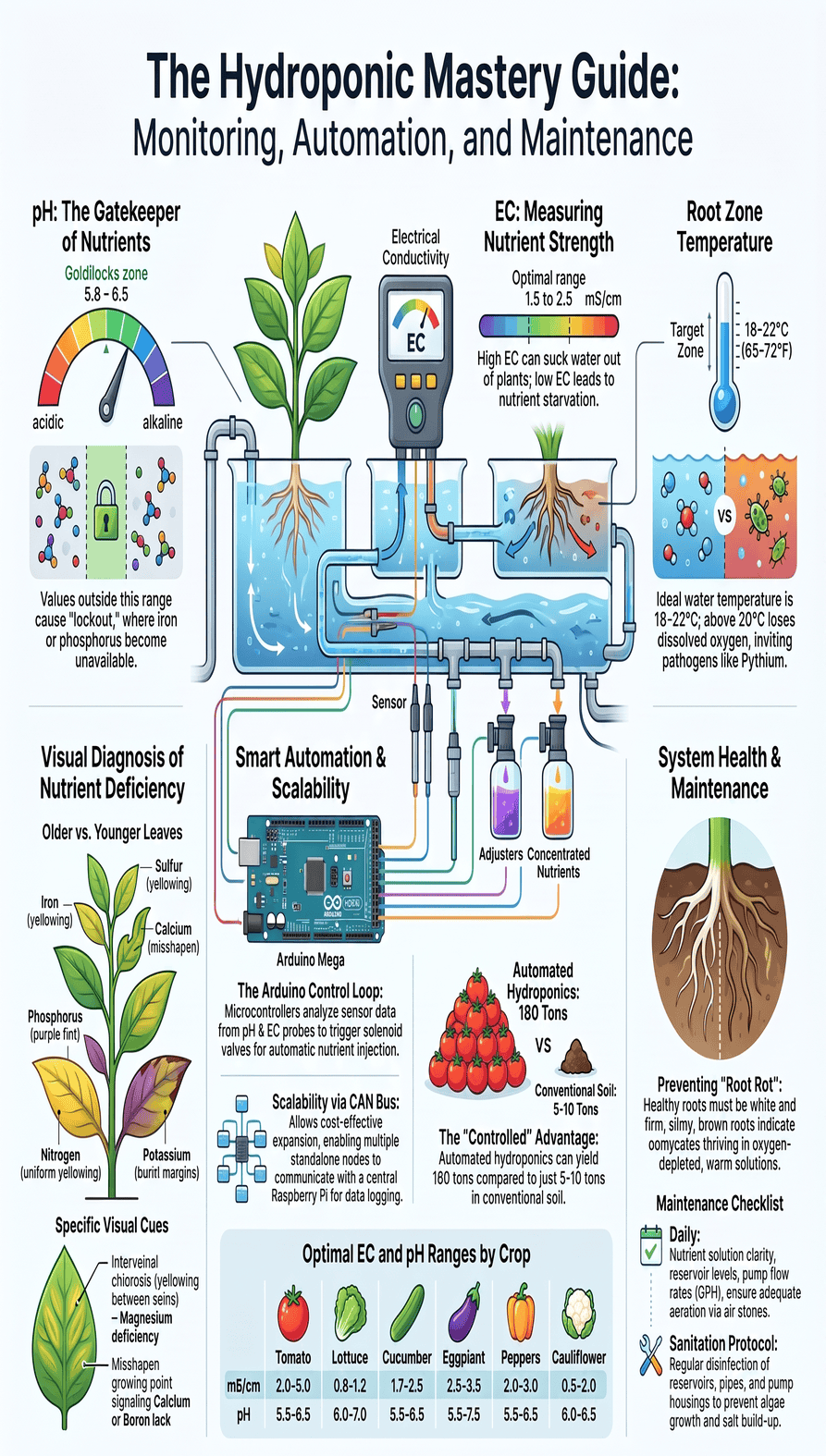
Plant diagnosis becomes easier when you can inspect roots, leaves, water quality, and pests with basic tools before changing the nutrient solution. These checks also help you maintain hydroponic plants before small problems become more serious. Oklahoma State University recommends routine pH and EC monitoring because nutrient problems can appear when water chemistry shifts.
A clean pair of pruning shears helps remove damaged growth without spreading debris. A small inspection light can help reveal leaf damage, algae, or insects around the grow tray and root zone.
Sticky traps provide a simple way to monitor flying pests. A hand sprayer can support an IPM routine when a grower needs to apply an approved treatment according to its label.
Root inspection matters just as much as leaf inspection. Brown, slimy, or foul smelling roots can signal oxygen, temperature, sanitation, or circulation problems.
Useful diagnostic tools include:
- Pruning shears and trimming scissors
- Sticky traps for pest monitoring
- A clean inspection brush
- A thermometer for root zone water
- A TDS or EC meter for nutrient concentration
- A dissolved oxygen meter for advanced systems
Of course, not every grower needs a dissolved oxygen meter. A smaller DWC bucket can often be managed with reliable aeration, consistent water temperature, and regular visual checks.
Do small hydroponic systems need the same tools as commercial systems?
Small hydroponic setups work on the same basic monitoring rules as big commercial ones. But the bigger operations often add automation, backup systems, and keep track of everything all the time. According to Oklahoma State University, automated monitoring systems can cost anywhere from about $500 up to $4,000, depending on how they’re set up.
The core difference is scale. A countertop Kratky container can be checked manually, while an NFT channel or commercial greenhouse may need water level sensors, automatic dosing, pump timers, and backup equipment.
| System size | Essential tools | Useful upgrades |
| Small | pH meter, EC meter, thermometer, measuring cup | Water level sensor |
| Medium | Meters, pump, air pump, timer, cleaning tools | Auto top up, pH controller |
| Commercial | Continuous monitoring, pumps, filters, dosing equipment | Automated doser, EC controller, backup systems |
A small system may use one nutrient mixing bucket and a syringe for accurate dosing. Larger systems benefit from graduated cylinders, automated dosers, reservoir sensors, and separate refill reservoirs.
That said, automation does not replace maintenance. A faulty probe or clogged irrigation tubing can create problems quickly, so commercial growers still need manual testing tools and spare components.
FAQ
How often should you clean hydroponic equipment to prevent algae, residue, and clogged components?
Clean hydroponic equipment whenever algae, mineral residue, or organic debris appears, and perform a thorough cleaning between growing cycles.
Focus on the reservoir tank, grow tray, net pots, irrigation tubing, water pump, and filters. Use a cleaning brush with a suitable food grade disinfectant to remove buildup. Rinse components thoroughly before reconnecting them and adding fresh nutrient solution.
What should you check when hydroponic roots become brown, soft, or develop an unpleasant smell?
Brown, soft roots with an unpleasant smell often indicate poor root conditions or insufficient oxygenation. Check water temperature and inspect the air pump, air stone, and airline tubing for blockages.
A dissolved oxygen meter or DO meter can help confirm oxygen levels. Remove severely damaged roots, clean contaminated equipment, and correct the water and oxygen conditions before continuing normal operation.
How can you automate pH, nutrient levels, and water levels in a hydroponic system?
You can automate several routine tasks with a pH controller, EC controller, automated doser, and water level sensor.
A float valve can maintain the reservoir level, while an auto top-up system can replace water lost through evaporation. Use a timer or pump timer to control scheduled equipment. Check automated systems regularly because sensors and dosing equipment still require maintenance.
Which growing medium should you choose for different hydroponic systems?
Choose a growing medium based on how much moisture, drainage, and root support your hydroponic system requires. Clay pebbles provide strong support and good airflow, while rockwool cubes retain moisture around young plants.
Coco coir, perlite, and vermiculite provide different moisture and drainage characteristics. Match the medium to your system, crop, irrigation method, and root zone requirements.
How can you control algae and pests without creating additional problems for your plants?
Prevent algae by blocking light from reaching exposed nutrient solution and by cleaning surfaces regularly. Use an algae scraper to remove visible growth and sticky traps to monitor flying pests. An IPM spray can help manage confirmed pest problems when used correctly.
Beneficial bacteria or a root inoculant may support root health, but treatments should address specific problems rather than being used unnecessarily.
How Can You Choose the Right Hydroponic Maintenance Tools?
Choosing the right hydroponic maintenance tools starts with knowing what your system needs to monitor and maintain. Accurate pH and EC meters should come first, while temperature monitoring, pumps, aeration, and cleaning tools can help prevent problems before they affect plant growth. More tools aren’t always better.
Match your toolkit to the system, since DWC may need stronger aeration while NFT depends on reliable flow and clean channels. Start with accurate measurement before adding automation. Tophydroponicgarden can also provide practical guidance to help you choose useful tools without spending on equipment your system doesn’t need.
References
- https://academic.oup.com/aob/article/132/3/455/7265388
- https://journals.asm.org/doi/10.1128/aem.00672-24
Related Articles
https://tophydroponicgarden.com/how-to-maintain-hydroponic-plants/
https://tophydroponicgarden.com/hydroponic-supplies-basics/
https://tophydroponicgarden.com/hydroponic-tools/
Was this helpful?

I’m Barrie L., a passionate hydroponic gardening enthusiast dedicated to cultivating thriving, soil-less gardens. With a focus on all things hydroponic, I share my expertise on innovative growing techniques and sustainable practices through my blog, tophydroponicgarden.com. As a seasoned hydroponics specialist, my goal is to inspire and guide fellow gardeners in harnessing the power of water-based cultivation for bountiful and eco-friendly harvests. I’m also an author of the book “Hydroponics For Absolute Beginners: Your Step By Step Guide For How To Create An Hydroponics System At Home Without Soil, For Growing Vegetable, Fruit And Herbs.” which is sold on Amazon. Join me on a journey of redefining the way we cultivate plants, one nutrient-rich solution at a time. Happy growing!