

Hydroponics is growing plants without soil, using nutrient-rich water instead. It’s a method that offers faster growth, bigger yields, and year-round cultivation. Before you buy a single piece of equipment, you need to understand a few non-negotiable fundamentals. The success of your garden hinges on your grasp of water chemistry, system choice, and consistent maintenance.
Get these right from the start, and you’ll bypass the frustration that stops many beginners. Keep reading to learn the critical first steps that separate a thriving garden from a costly disappointment.
Key Takeaway
- System selection shapes your routine, plant choices, and budget.
- Water chemistry drives plant health, so keep pH at 5.5 to 6.5 and watch EC.
- Start small with easy greens. Check the system often and adjust little by little.
You’ve decided to give hydroponics a try. The appeal is obvious. The idea of harvesting crisp lettuce from a corner of your apartment in January is a powerful one. But the array of tubes, pumps, and technical terms can be intimidating. It feels like you need a chemistry degree just to get started.
The truth is more accessible. Hydroponics is a system of logic. It’s about creating a controlled environment where the variables that limit plant growth in soil are managed by you. The biggest hurdle isn’t complexity, it’s understanding the relationship between a few key components. Your plants will tell you what they need, if you know how to listen.
Choosing Your First Hydroponic System

The type of system you choose sets the tone for your entire experience. It determines how much space you’ll need, how often you’ll be tinkering with it, and what you can realistically grow. For a beginner, simplicity and forgiveness are the most valuable features.
Deep Water Culture (DWC) is often the best entry point. Plants are suspended in net pots over a reservoir of oxygenated, nutrient-rich water. The system is simple, with few moving parts. Its main vulnerability is power failure, which stops the air pump and can suffocate roots. But for learning the basics of hydroponic system for beginners nutrient management, it’s unparalleled.
The Nutrient Film Technique (NFT) is another popular choice. A thin film of nutrient solution constantly flows through a sloped channel, bathing the roots. It’s highly efficient with water. The risk here is that a clogged pump or channel can dry out roots very quickly. It requires a bit more vigilance.
- Deep Water Culture (DWC): Ideal for beginners, low maintenance.
- Nutrient Film Technique (NFT): Efficient, good for shallow-rooted plants.
- Ebb and Flow (Flood and Drain): Versatile, can handle larger plants.
- Drip System: Highly controllable, but prone to clogging.
- Wick System: Passive and simple, but limited to small, non-thirsty plants.
Your available space and goals should guide this decision. A deep water culture kit on a kitchen counter is a perfect start. It allows you to focus on the most important part, the water itself [1].
The Non-Negotiables: pH and Nutrients
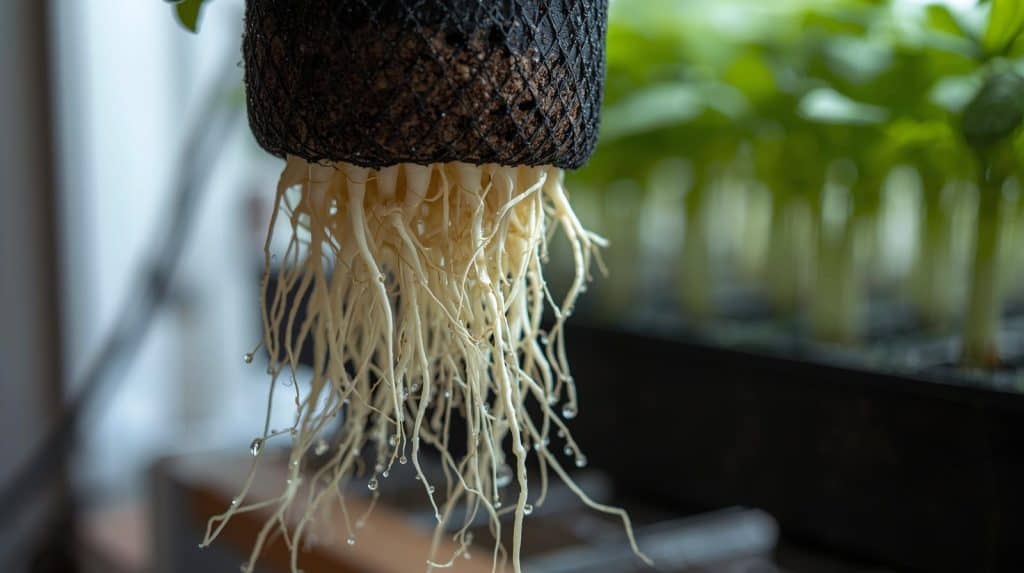
This is the heart of hydroponics. In soil, the medium acts as a buffer, slowly releasing nutrients and stabilizing pH. In a hydroponic system, you are the buffer. The water is the entire environment. You are directly responsible for its balance.
pH is a measure of acidity or alkalinity. For most plants, the sweet spot is between 5.5 and 6.5. Outside this range, plants cannot absorb nutrients effectively, leading to deficiencies even if the nutrients are present. You’ll need a reliable pH meter or test kit. Checking and adjusting pH should become as routine as watering a traditional plant.
Maintaining the correct nutrient concentration and pH is foundational, much like the advice found in getting started with hydroponics at home where precise water chemistry management is emphasized.
Electrical Conductivity (EC) measures the concentration of dissolved salts in your water, which are your nutrients. Too low, and your plants starve. Too high, and you can cause “nutrient burn,” damaging the roots. Start with a weaker solution than the bottle recommends, perhaps half-strength, and observe how your plants respond.
You wouldn’t bake a cake without measuring the ingredients. The same precision applies to your nutrient solution. Use a high-quality, hydroponic-specific nutrient mix and purified water to start with a clean slate. Tap water can contain minerals that throw your careful calculations out of balance.
Picking Your First Plants

Source : The Cannabis Experts
Your initial success will build confidence, so choose plants that are known to be cooperative. Leafy greens are the undisputed champions for beginners. Lettuce, spinach, kale, and Swiss chard grow quickly and are relatively forgiving of minor fluctuations in their environment [2].
Herbs are another excellent choice. Basil, mint, and cilantro thrive in hydroponic systems. They provide quick gratification and practical use. Fruiting plants like tomatoes and peppers are possible, but they demand more light, more precise nutrient ratios, and more experience. They are a goal for your second or third cycle.
Starting with easy plants allows you to make mistakes without catastrophic failure. A lettuce plant might show a little stress if your pH drifts. A tomato plant might abort its flowers. Learn the signals on plants that are resilient. This hands-on education is invaluable.
Your First Steps to a Hydroponic Harvest
The path to a successful hydroponic garden is paved with observation. The most common mistake is to make too many changes at once. If your plants look unhappy, adjust one variable. Change the pH, or dilute the nutrient solution. Then wait a day or two to see the effect. This methodical approach is how you learn what each change truly does.
Cleanliness cannot be overstated. Algae and pathogens love a nutrient-rich environment. Use light-proof reservoirs to block algae growth. Keep your grow area tidy. A simple act like not eating near your plants can prevent introducing pests.
Think of your system as a sterile laboratory for plant growth. For those wondering about project selection, how to choose your first hydroponic project also highlights the importance of starting simple and observing, reinforcing this approach
Keep a simple log. Note the date, pH, EC, and any observations. This record becomes your most powerful troubleshooting tool. When something goes wrong, you can look back and see what changed. Was the EC climbing for a week before the leaves turned yellow. This data turns guesswork into science.
FAQ
What should you check before choosing a hydroponics system?
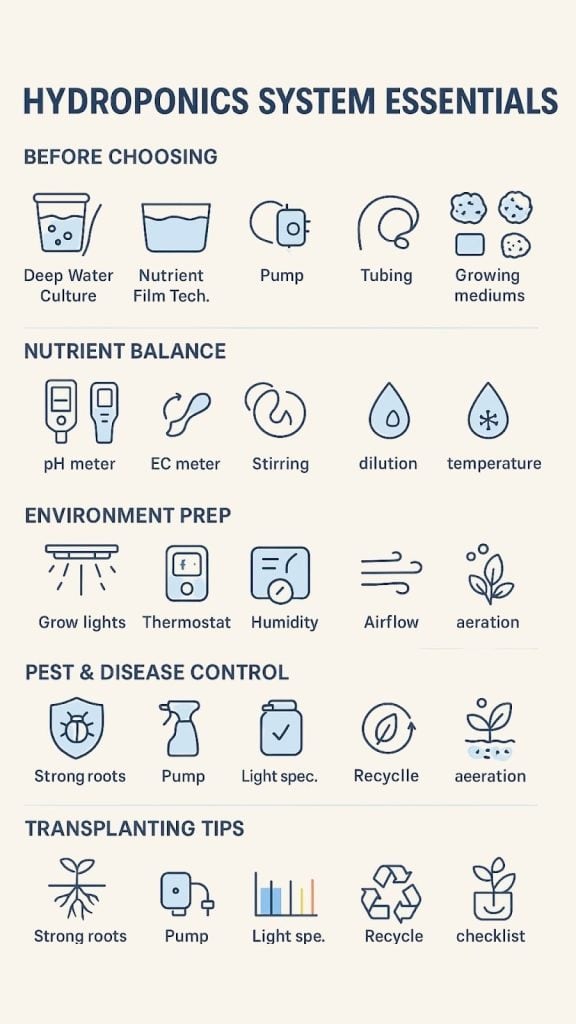
You check how a hydroponics system works and how your hydroponic setup fits your space. You can start with Deep Water Culture or the Nutrient Film Technique. You check the size of the hydroponic reservoir, the hydroponic pump, and the hydroponic tubing. You use clean water. You pick a growing medium like rockwool, perlite, or coconut coir.
How do you keep the nutrient solution balanced?
You track the pH level and electrical conductivity. You add clean water when EC rises. You watch the hydroponic nutrient balance so hydroponic plants grow well. You stir the mix in the reservoir. You use hydroponic sensors if needed. You follow simple hydroponic maintenance so small shifts do not slow plant growth.
What should you prepare for the environment?
You set up grow lights or LED grow lights. You manage temperature control and humidity control so seedling growth stays steady. You improve hydroponic ventilation to give the roots enough oxygen. You keep the hydroponic environment stable. You keep the water cool so the hydroponic growth rate stays on track.
How do you prevent pests and disease?
You start hydroponic pest control early. You use integrated pest management. You clean the system to support hydroponic disease prevention. You sterilize hydroponic containers and the growing medium. You check leaves and roots often. You improve hydroponic aeration so the roots stay healthy. You act fast when you spot a problem.
What should you know before transplanting into a larger system?
You check root strength before hydroponic transplanting. You make sure the hydroponic water pump runs well. You match your hydroponic system design to your plants. You choose a hydroponic light spectrum that fits the new stage. You plan hydroponic water recycling if the setup is big. You pick hydroponic crop selection that fits your space and climate.
Conclusion
The most important step is the first one. Don’t get paralyzed by the details. Set up a simple deep water culture system, plant some lettuce seeds, and start observing. Focus on mastering pH and nutrient balance with these forgiving plants. Your initial harvest, no matter how small, will teach you more than any guide. That hands-on success is the real foundation for everything that follows. Your thriving, soil-less garden is closer than you think.
References
- https://www.biochemjournal.com/archives/2025/vol9issue6/PartC/9-6-15-250.pdf
- https://www.mdpi.com/1424-8220/23/4/1875
Related Articles
- https://tophydroponicgarden.com/getting-started-with-hydroponics-at-home/
- https://tophydroponicgarden.com/how-to-choose-your-first-hydroponic-project/
- https://tophydroponicgarden.com/hydroponic-system-for-beginners/
Was this helpful?

I’m Barrie L., a passionate hydroponic gardening enthusiast dedicated to cultivating thriving, soil-less gardens. With a focus on all things hydroponic, I share my expertise on innovative growing techniques and sustainable practices through my blog, tophydroponicgarden.com. As a seasoned hydroponics specialist, my goal is to inspire and guide fellow gardeners in harnessing the power of water-based cultivation for bountiful and eco-friendly harvests. I’m also an author of the book “Hydroponics For Absolute Beginners: Your Step By Step Guide For How To Create An Hydroponics System At Home Without Soil, For Growing Vegetable, Fruit And Herbs.” which is sold on Amazon. Join me on a journey of redefining the way we cultivate plants, one nutrient-rich solution at a time. Happy growing!