

Act within the first two hours of a hydroponic pump failure to restore water and oxygen to the roots. This short window gives you the best chance to prevent crop damage. The University of Arizona’s Controlled Environment Agriculture Center explains that steady nutrient flow is key for healthy roots in recirculating systems. Whether you use NFT, DWC, aeroponics, drip irrigation, or ebb and flow, a calm, step‑by‑step response can protect your plants while you find the cause. Keep reading for a simple emergency plan and tips to avoid future failures.
Hydroponic Pump Failure Recovery Essentials
- Act within the first 2 hours to maintain root zone hydration and healthy dissolved oxygen levels.
- Diagnose the actual cause before purchasing a hydroponic pump replacement, since many pumps fail because of clogged impellers, airlocks, or electrical issues.
- Build hydroponic system redundancy with backup aeration, preventive maintenance, and monitoring to reduce future downtime.
What Should You Do First When a Hydroponic Pump Stops?
The immediate goal is simple: keep roots moist and supplied with oxygen before you start fixing the equipment.
When a pump stops, nutrient flow stops right away. The University of Arizona Controlled Environment Agriculture Center explains that roots need oxygen to take in nutrients, so every minute counts. Systems that depend on constant water movement can decline quickly.
Plants react differently based on the growing method. NFT and aeroponics leave roots more exposed, so they can dry out fast. In DWC, roots stay underwater, but oxygen levels drop quickly without circulation. Ebb and flow and drip systems fall somewhere in between, depending on how long roots go without fresh solution.
The room environment also plays a role. Lowering the air temperature and dimming grow lights or shortening the light cycle can slow transpiration. This helps plants hold onto moisture a little longer while you address the problem.
Start with these emergency actions before touching the pump:
- Turn off electrical power before handling equipment.
- Mist exposed NFT or aeroponics root drying zones using pH-adjusted water.
- Begin manual reservoir feeding or a hand watering schedule every 2–4 hours.
- Add a backup hydroponic air pump with air stone oxygenation if available.
- Monitor reservoir water temperature, aiming for 65–68°F (18–20°C).
Even if circulation remains unavailable for several hours, maintaining moisture and deep water culture aeration dramatically reduces the risk of static water root suffocation and root rot prevention becomes far easier afterward.
Why Does a Hydroponic Pump Failure Become Serious So Quickly?
Water circulation brings both nutrients and oxygen to the roots, so when flow stops, stress begins right away.
Roots need oxygen just as much as water. Research from NASA’s Controlled Ecological Life Support program showed that oxygen‑rich root zones help plants grow stronger in controlled systems. When water stops moving, dissolved oxygen drops while microbes in the solution keep using it up.
Research from Frontiers in Plant Science shows:
“Without bubbling or solution flow, DO quickly decreases to less than 1 mg per L in planted systems.” – Frontiers in Plant Science
Warm reservoirs make the problem worse. As water temperature rises, it holds less oxygen. That means warm nutrient solution has less oxygen available to roots from the start. This is why many growers lower reservoir temperatures during an emergency.
Different systems face different levels of urgency.
| Hydroponic System | Primary Risk During Pump Failure | Typical Emergency Response |
| NFT | Root dehydration | Emergency root misting |
| Aeroponics | Rapid root drying | Frequent manual spraying |
| DWC | Oxygen depletion | Auxiliary aeration |
| Drip | Dry growing media | Hand watering |
| Ebb and Flow | Reduced nutrient exchange | Manual flooding |
Of course, media-based systems gain a slight advantage. Coco coir moisture retention and rockwool water holding capacity provide a temporary buffer, although those reserves eventually disappear if circulation does not resume.
How Can You Tell Whether the Pump or the Power Is the Problem?

Always check power delivery before assuming the pump has failed.
Electrical problems cause many “dead” pumps, representing some of the most frustrating power-related issues in hydroponic systems. A tripped GFCI outlet, bad timer, or loose plug can stop water flow even though the pump itself is completely fine.
Start at the outlet. Plug in another device to confirm power. If it does not work, check the breaker panel and reset any tripped GFCI. Make sure digital timers did not lose their settings after a power outage.
Airlocks are also common. After cleaning a reservoir or changing water, trapped air can block flow. The motor may hum, but no water moves.
Before replacing the pump, check these items:
- Reset the GFCI breaker
- Confirm timer settings
- Prime the pump by tilting it underwater
- Clean the intake screen
- Check for salt buildup or roots in the impeller housing
A humming motor with no flow often means an airlock, cavitation, or a stuck impeller, not a burned‑out motor.
Is the Pump Physically Jammed?
Many pumps that look completely dead just have a stuck impeller from mineral buildup.
Most submersible pumps use a magnetic drive with a small spinning impeller on a ceramic shaft. Over time, calcium scale, algae, or small roots can block the impeller and stop it from spinning.
Before replacing the whole pump, check the impeller. In many cases, a quick cleaning or a low‑cost replacement part gets the pump running again.
How Do You Clean a Seized Hydroponic Pump?

Credits: Agriculture and Technology
Cleaning the impeller and removing mineral deposits restores many pumps without requiring replacement.
Disconnect the unit completely before beginning. Electrical safety always comes first when working around reservoirs.
Remove the tubing and front housing carefully to expose the rotor assembly. Most aquarium water pump repair procedures are similar because hydroponic submersible pumps often use comparable magnetic impeller designs.
Before disassembly, prepare cleaning supplies so components remain organized.
- Unplug the pump.
- Disconnect plumbing.
- Remove the intake housing.
- Perform pump rotor disassembly by removing the magnetic impeller.
- Inspect the ceramic shaft cleaning area for debris.
- Soak components in warm vinegar for 15–20 minutes using a vinegar soak for water pump.
- For a stubborn mineral scale, perform citric acid descaling if recommended by the manufacturer.
- Rinse thoroughly and reassemble.
- Test the pump inside clean water before reconnecting it to the hydroponic system.
A regular cleaning pump calcium buildup routine every 4–6 weeks greatly reduces emergency failures caused by mineral accumulation. Experienced growers also replace worn aquarium impeller replacement parts instead of forcing cracked components back into service.
What If the Pump Cannot Be Repaired Today?
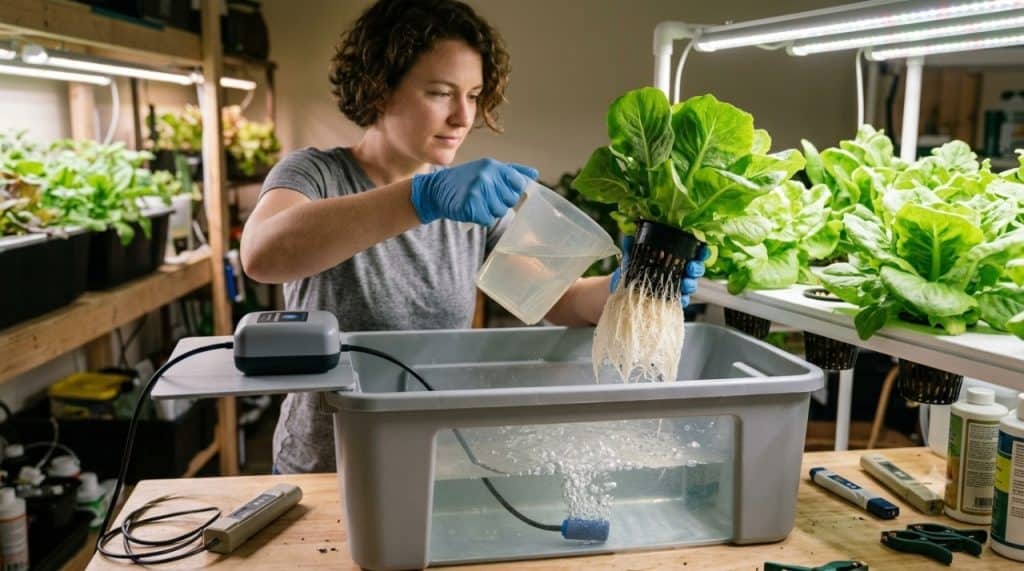
Reducing plant stress while keeping roots moist and oxygenated gives crops the best chance of surviving until a replacement pump arrives.
A pump failure does not always mean crop loss. Short‑term steps can steady the root zone for 24 hours or longer, especially in systems with moisture‑holding media. The University of Arizona Controlled Environment Agriculture Center states that protecting root oxygen is the top priority during extended outages.
Data from BMC Plant Biology demonstrates:
“An increase in the concentration of O2 to 5.3 mg. L[-1] resulted in a significant increase in root fresh and dry mass.” – BMC Plant Biology
Lower plant demand while you wait. Dim grow lights, shorten the light cycle, and keep reservoir water between 65°F and 68°F (18–20°C). Cooler water holds more oxygen and slows depletion.
These steps buy time:
- Manually feed the reservoir every 2–4 hours
- Use a backup air pump with an air stone
- Lower nutrient levels so one‑third of roots stay submerged (temporary Kratky method)
- Add 1–2 mL of 3% hydrogen peroxide per gallon for short‑term oxygen support
- After flow returns, add beneficial bacteria to rebuild root protection
Hydrogen peroxide boosts oxygen and slows harmful microbes for a short period. It does not replace proper circulation. Frequent use can also reduce beneficial microbes, so reserve it for emergencies.
Which Pump Problems Are Often Misdiagnosed?
Airlocks, plumbing restrictions, and excessive backpressure frequently resemble complete pump failure.
Many growers replace pumps that are mechanically sound. Technical discussions from Apex Grow, DIY Solar Power Forum, and Permies show that installation problems often create symptoms identical to motor failure.
Understanding common symptoms speeds diagnosis.
| Symptom | Likely Cause | First Inspection |
| Pump hums without flow | Priming airlocked pump required | Tilt underwater and re-prime |
| Weak circulation | Salt deposit clog or intake blockage | Clean inline pre-filter mesh |
| Hot motor housing | Excessive head height pressure rating | Verify plumbing size |
| Continuous cycling | Pressure switch arcing | Check for leaks and pressure loss |
| Reduced output | GPH friction loss | Evaluate pipe diameter and lift height |
Many growers and system engineers note that oversized pumps pushed through narrow or restrictive plumbing can create excess heat. When resistance is high, the motor works harder but delivers less real flow. Over time, that added strain shortens equipment lifespan, which is a major reason why hydroponics fails unexpectedly during critical growth phases.
Before buying a replacement pump, check the entire plumbing path. Look for clogged intakes, dirty filters, kinked lines, or too much vertical lift. In many cases, reduced flow is caused by blockage or system design, not an electrical failure.
Why Pump Sizing Matters More Than Maximum GPH
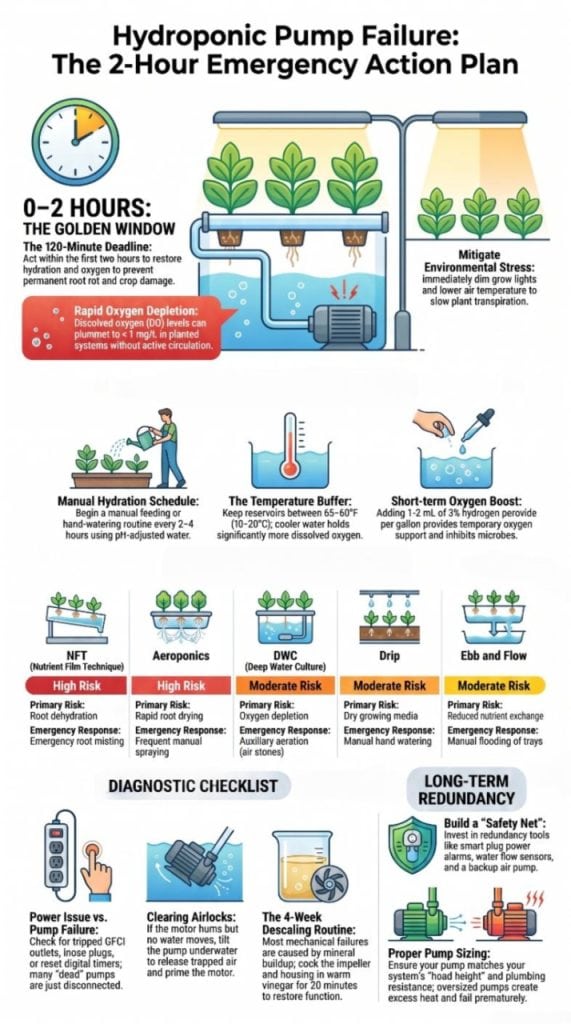
Matching pump size to your system’s resistance improves reliability far more than simply choosing the biggest model available.
Grundfos pump performance guidance explains that every pump runs on a flow curve. As head pressure increases, flow rate drops. If this relationship is ignored, the pump can overheat, waste energy, and wear out faster. Choosing a pump that fits your system’s lift height and plumbing layout helps ensure steady flow and longer service life.
Improper sizing contributes to:
- Excessive pump electrical inrush current
- Increased water pressure drop
- Higher reservoir temperatures
- Premature thermal overload switch activation
- Reduced equipment lifespan
Experienced growers often suggest doing a basic friction loss calculation before upgrading a pump. Add up tubing length, fittings, elbows, and vertical lift to estimate total system resistance. This helps you choose a continuous‑duty pump that truly fits the setup instead of oversizing it.
Buying a larger pump usually won’t boost plant performance if the plumbing can’t handle the extra flow. In fact, it can create more heat, noise, and wear without improving nutrient delivery.
Can Cheap Timers Damage Hydroponic Pumps?
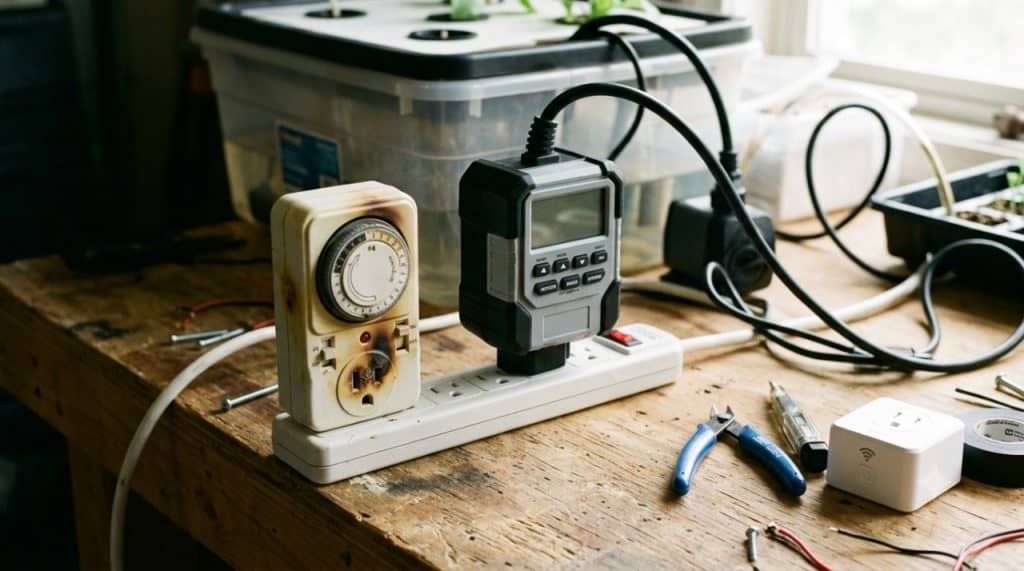
Low‑quality timers often fail because pump motors draw a surge of power at startup.
Submersible pumps use much more electricity when they first turn on than they do while running. This inrush current can be several times higher than the normal load. Cheap timer relays are not built for that stress, and repeated cycling can damage them.
In engineering forums like Permies, growers describe relay contacts welding shut under inductive loads. When that happens, a pump may keep running nonstop. This raises the risk of dry‑run conditions, overheating, or system damage.
Better protection can include:
- Motor‑rated timers
- Industrial relay controllers
- Smart plug power alarms
- Water flow sensors
- Quality surge protection
Monitoring tools that alert you when power drops or flow stops can catch problems early, often before plants show signs of stress.
Preventive Maintenance: Establishing a 4-Week Descaling Routine
Cleaning the impeller and removing mineral buildup restores many pumps without replacing them.
Unplug the pump before starting. Electrical safety comes first around water.
Remove the tubing and front cover to reach the rotor. Most hydroponic submersible pumps use a magnetic impeller design, similar to aquarium pumps.
Stay organized and follow these steps:
- Unplug the pump
- Disconnect plumbing
- Remove the intake housing
- Take out the magnetic impeller
- Check the ceramic shaft area for debris
- Soak parts in warm vinegar for 15–20 minutes
- Use citric acid for heavy scale if the manufacturer allows it
- Rinse well and reassemble
- Test the pump in clean water before reconnecting
Cleaning calcium buildup every 4–6 weeks reduces sudden failures. Replace worn impellers instead of reinstalling cracked or damaged parts.
Should You Upgrade Your Emergency Backup Plan?
Layered protection minimizes downtime and protects valuable crops.
One backup device helps, but multiple independent safeguards provide far greater resilience against common problems with hydroponics that trigger sudden crop loss. Commercial facilities commonly rely on redundant equipment because a single mechanical failure can threaten an entire harvest.
| Backup Equipment | Purpose |
| Spare submersible pump | Immediate circulation restoration |
| Backup air pump | Maintain dissolved oxygen |
| Smart plug power alarm | Notify power loss |
| Water flow sensor | Detect circulation failure |
| Dual stage float switch | Prevent dry-run conditions |
| Check valve installation | Stop backflow |
| Inline pressure bladder tank | Reduce pressure cycling |
| Secondary containment tray | Improve grow room flood prevention |
| Hydro system overflow basin | Capture accidental spills |
| Backup generator hydro | Maintain operation during outages |
| Sump pump emergency | Remove unexpected flooding |
| Bypass plumbing loop | Maintain limited circulation during repairs |
Growers running automated drip or aeroponic systems can cut pump wear by controlling pressure swings. Rapid cycling puts heavy strain on pumps and pressure switches.
Install an inline pressure bladder tank to stabilize pressure and reduce frequent starts. This buffer lowers stress on the system and extends pump life. Inspect float sensors on a regular schedule. A faulty sensor can trigger constant cycling and lead to early pump failure.
FAQs
What should I do before replacing a hydroponic pump?
Before starting a hydroponic pump replacement, determine whether the pump actually needs replacing. Check for a submersible water pump failure, a tripped thermal overload switch, or a GFI circuit breaker reset. If the pump is running but not moving water, try priming an airlocked pump and inspect it for a salt deposit clog. Also, confirm that the pump’s head height pressure rating matches your system requirements. Replace the pump only after these checks fail to restore normal operation.
How can I keep roots alive until the pump works again?
Keep the root zone hydration stable while restoring nutrient solution circulation as quickly as possible. Use manual reservoir feeding to keep roots wet, and apply emergency root misting if the roots are exposed to air. Increase dissolved oxygen levels with air stone oxygenation or a backup hydroponic air pump to reduce the risk of static water root suffocation. If the outage lasts several hours, a temporary passive Kratky conversion can help some hydroponic systems.
Which maintenance steps help prevent another pump failure?
Follow a regular hydro pump maintenance schedule to reduce unexpected breakdowns. Remove mineral deposits by cleaning pump calcium buildup with either a vinegar soak for water pump or citric acid descaling. Inspect the intake screen filter and install an inline pre-filter mesh if debris is common. If the pump loses performance, perform pump rotor disassembly, ceramic shaft cleaning, and unsticking magnetic impeller before deciding that replacement is necessary.
How can I protect my hydroponic system during future pump or power failures?
Improve hydroponic system redundancy by installing a smart plug power alarm, water flow sensor, dual stage float switch, or backup generator hydro. Add check valve installation, a bypass plumbing loop, a secondary containment tray, or a hydro system overflow basin to improve grow room flood prevention. These upgrades reduce equipment damage, shorten recovery time, and help keep plants healthy during unexpected outages.
Why does water flow remain weak after the pump starts again?
Weak flow usually indicates another problem within the system rather than a failed pump. Check for water pump cavitation, insufficient water lift height, incorrect GPH flow rate adjustment, or excessive GPH friction loss. Verify your friction loss calculation, inspect the pump for pressure switch arcing, and confirm that dry run pump protection is functioning correctly. Finish with a system flush hydro to restore efficient water recirculation system performance.
Stay Ready Before the Next Pump Problem
A hydroponic pump can stop without warning, and the damage can build up fast if you wait too long. Check the cause right away, keep roots wet, and fix the problem before it spreads. It matters.
At Tophydroponicgarden, we encourage growers to keep a simple maintenance routine, test backup equipment often, and make sure each pump matches the system it supports. These small steps help avoid downtime and protect healthy crops. When you’re prepared, you’re far more likely to keep your hydroponic system running without costly interruptions.
References
- https://link.springer.com/article/10.1186/s12870-024-04943-7
- https://pmc.ncbi.nlm.nih.gov/articles/PMC12687340/
Related Articles
- https://tophydroponicgarden.com/what-are-3-issues-that-occur-in-hydroponic-systems/
- https://tophydroponicgarden.com/what-are-some-problems-with-hydroponics/
- https://tophydroponicgarden.com/why-does-hydroponics-fail/
Was this helpful?

I’m Barrie L., a passionate hydroponic gardening enthusiast dedicated to cultivating thriving, soil-less gardens. With a focus on all things hydroponic, I share my expertise on innovative growing techniques and sustainable practices through my blog, tophydroponicgarden.com. As a seasoned hydroponics specialist, my goal is to inspire and guide fellow gardeners in harnessing the power of water-based cultivation for bountiful and eco-friendly harvests. I’m also an author of the book “Hydroponics For Absolute Beginners: Your Step By Step Guide For How To Create An Hydroponics System At Home Without Soil, For Growing Vegetable, Fruit And Herbs.” which is sold on Amazon. Join me on a journey of redefining the way we cultivate plants, one nutrient-rich solution at a time. Happy growing!