

What Plants Prefer a Lower pH Level is an important question when certain crops grow poorly even though water, light, and nutrients seem correct. Some plants naturally perform better in acidic conditions, while others only need a mildly acidic hydroponic range.
In hydroponics, pH affects how easily roots can absorb nutrients. If the pH rises too high, acid-loving plants may struggle with iron, zinc, and other micronutrients. The goal is not to push every crop into a very low pH range. The goal is to know which plants prefer lower conditions and how to manage them safely.
The Lower pH Guide for Growers
- Know the plant type: Blueberries, cranberries, azaleas, rhododendrons, and some hydrangeas prefer more acidic conditions than most vegetables.
- Separate soil and hydroponic ranges: Soil acid-loving plants may prefer lower pH than common hydroponic crops.
- Adjust slowly: Sudden pH drops can stress roots, even for plants that prefer acidic conditions.
What Plants Prefer a Lower pH Level should be answered with plant needs, growing method, and root safety in mind. A lower pH can help some crops, but unstable pH can damage almost any plant.
Why Lower pH Matters for Some Plants
A lower pH level means the growing environment is more acidic. Some plants are adapted to acidic soils because those conditions affect how nutrients become available around the roots.
Oregon State Extension explains:
“Blueberries, azaleas and rhododendrons: pH 4.5 to 5.5” – Oregon State Extension
This is why gardeners often call these plants acid-loving plants. They do not simply tolerate acidity. They often need it to avoid weak growth, yellowing leaves, and nutrient uptake problems.
What Plants Prefer a Lower pH Level also depends on whether you are growing in soil, coco, soilless media, or hydroponic nutrient solution. Soil ranges are not always the same as hydroponic ranges.
In hydroponics, most edible crops are not grown at extremely low pH. They usually need a controlled slightly acidic range, not a harsh acidic environment. The safer approach is to understand the crop before adjusting the reservoir.
7 Plants That Prefer a Lower pH Level
| Plant | Preferred pH Style | Why It Matters |
| Blueberries | Strongly acidic | Need acidic conditions for healthy nutrient uptake |
| Cranberries | Strongly acidic | Naturally grow well in acidic environments |
| Azaleas | Acid-loving | Can show yellowing when pH is too high |
| Rhododendrons | Acid-loving | Prefer acidic root conditions |
| Blue hydrangeas | Acidic to mildly acidic | Lower pH can support blue flower color |
| Strawberries | Slightly acidic | Often grow best in a mildly acidic range |
| Herbs and leafy greens | Slightly acidic in hydroponics | Need stable nutrient availability |
Some plants are stronger candidates for lower pH conditions than others. The list below includes acid-loving plants and hydroponic-friendly crops that often perform better in slightly acidic conditions.
What Plants Prefer a Lower pH Level does not mean all of these plants need the same number. Blueberries and azaleas can prefer more acidic conditions, while herbs and leafy greens usually need a gentler hydroponic range.
Blueberries and Cranberries Need Acidic Conditions

Blueberries are one of the clearest answers to What Plants Prefer a Lower pH Level. They are acid-loving plants and often struggle when the root zone becomes too alkaline.
When pH is too high, blueberries may show yellow leaves with green veins. This often happens because iron becomes harder for the plant to use. Adding more fertilizer may not fix the problem if the pH is still wrong.
Cranberries also prefer acidic conditions. Like blueberries, they are better suited to lower pH environments than many common vegetable crops.
These berries are not always the easiest plants for beginner hydroponic systems. They often need careful media choice, water quality checks, and stable root-zone conditions.
If you want to try acid-loving fruit in containers or soilless media, test first and adjust slowly. A sudden pH drop can create stress even for plants that like acidic conditions.
Azaleas, Rhododendrons, and Hydrangeas Prefer Acidic Root Zones
Azaleas and rhododendrons are classic acid-loving ornamentals. They are often used as examples because they can react poorly when the pH rises too high.
What Plants Prefer a Lower pH Level is not only a food crop question. Ornamental plants can be even more sensitive to pH mismatch, especially when iron availability becomes limited.
Hydrangeas are different because pH can also affect flower color. In many blue hydrangeas, more acidic conditions support blue tones. However, hydrangea color also depends on aluminum availability and plant type, so pH is not the only factor.
These plants are better suited to acidic soil or controlled container media than standard hydroponic vegetable setups. If you grow them in containers, choose an acid-friendly mix and test before adding amendments.
The safest habit is to adjust the growing environment based on the plant, not based on one general pH rule.
Lower pH in Hydroponics Is Usually Mild, Not Extreme
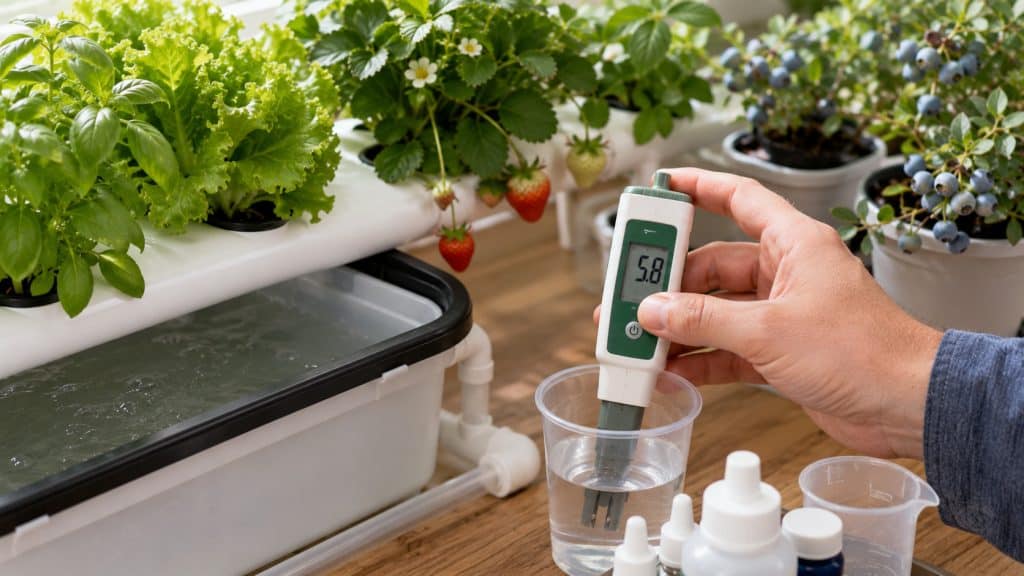
Hydroponic growers need to be careful with the phrase “lower pH.” In soil, some plants may prefer a pH around 4.5 to 5.5. In hydroponics, many crops grow better in a controlled range around mildly acidic conditions.
University of Illinois Extension notes that in home hydroponics, growers should monitor pH because “most plants prefer 5.5–6.5.” – University of Illinois Extension
That range is lower than neutral, but it is not extremely acidic. Neutral pH is 7, so a hydroponic pH around 5.5 to 6.5 is already on the acidic side.
What Plants Prefer a Lower pH Level in hydroponics usually includes herbs, lettuce, leafy greens, strawberries, and some fruiting crops that perform well in a stable slightly acidic nutrient solution.
For hydroponic systems, stability matters more than chasing the lowest number. A pH that jumps up and down can stress plants more than a slightly imperfect number.
Top Hydroponic Garden’s guide to reducing pH swings in hydroponics can help you understand why steady changes are safer than sudden adjustments.
Herbs and Leafy Greens Often Like Slightly Acidic Hydroponic pH
Many herbs and leafy greens grow well in a slightly acidic hydroponic solution. Lettuce, basil, parsley, cilantro, kale, and spinach usually do not need extremely acidic conditions, but they do need pH stability.
What Plants Prefer a Lower pH Level can include these crops when “lower” means below neutral. They often respond well to a controlled range that keeps nutrients available without shocking the roots.
Herbs can show problems quickly when pH drifts. Leaves may turn pale, growth may slow, or flavor may weaken. Since herbs are often harvested for taste, stable nutrition matters.
Leafy greens also depend on clean nutrient uptake. If pH rises too high, iron and other micronutrients may become harder to absorb. If pH drops too low, roots may become stressed.
For herb-focused systems, Top Hydroponic Garden’s guide to adjusting pH for hydroponic herbs is a helpful internal resource to connect pH control with flavor and leaf quality.
Lower pH vs Too Low pH: Know the Difference
Lower pH can be useful, but too low pH is risky. The difference matters because a plant that prefers acidic conditions still has a safe range.
What Plants Prefer a Lower pH Level should never become an excuse to force every plant into acidic conditions. Tomatoes, lettuce, basil, blueberries, and azaleas do not all need the same pH plan.
If the pH is too low, plants may show poor root growth, weak nutrient uptake, or general stress. The symptoms can look like underfeeding, but the real issue may be the root environment.
Top Hydroponic Garden’s article on pH buffer capacity in hydroponics explains why some systems resist change while others swing quickly.
Watch pH Control Before Lowering the Reservoir

Credits: Hoocho
This video is useful for understanding why pH changes matter in hydroponic systems. Use it as a visual guide before lowering your reservoir pH, especially if you are still learning how pH affects nutrient availability.
Do not copy every adjustment blindly. Your water source, nutrients, reservoir size, and plant type may be different.
Common Mistakes When Growing Lower-pH Plants
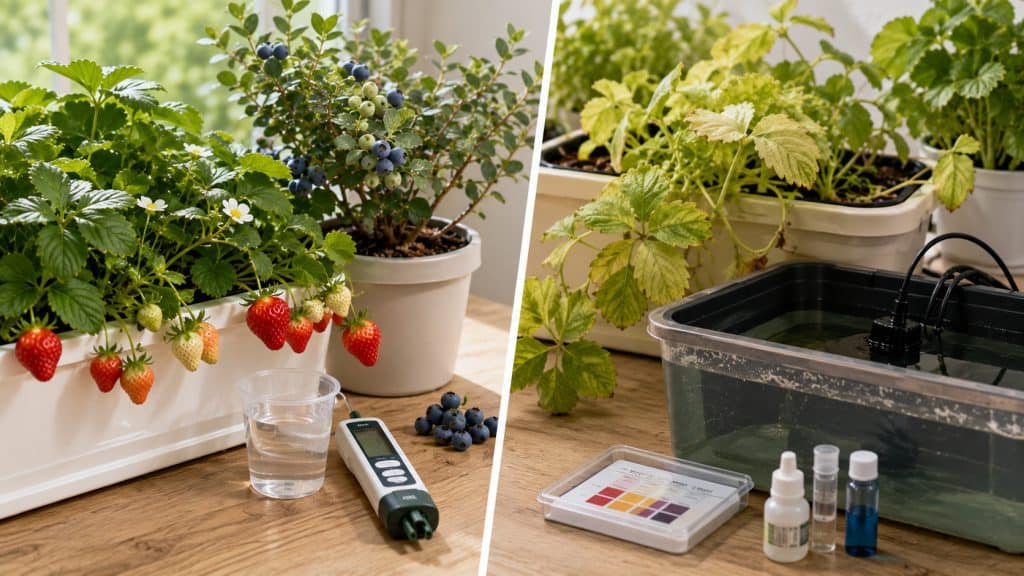
The first mistake is assuming all acidic-loving plants belong in hydroponics. Some acid-loving ornamentals and berries are better suited to soil, containers, or controlled soilless media.
The second mistake is dropping pH too quickly. What Plants Prefer a Lower pH Level still need root stability. A sudden change can shock plants and create new problems.
The third mistake is using one pH target for every crop. Blueberries and lettuce do not need the same pH strategy.
Another mistake is adding more fertilizer when pH is the real problem. If the pH is out of range, nutrients may be present but less available.
The final mistake is ignoring water quality. Hard water can push pH upward and make acidic control harder. Test your water before blaming the plant.
Simple Lower-pH Plant Planning Chart
| Plant Group | Lower pH Need | Best Growing Approach |
| Blueberries and cranberries | High | Acidic soil or controlled containers |
| Azaleas and rhododendrons | High | Acid-friendly media |
| Blue hydrangeas | Medium to high | Soil or container pH management |
| Strawberries | Medium | Slightly acidic hydroponic or container setup |
| Herbs and leafy greens | Mild | Stable hydroponic pH range |
Use this table before deciding whether a plant belongs in a lower-pH plan.
This table helps separate true acid-loving plants from hydroponic crops that simply prefer a slightly acidic nutrient solution.
What Plants Prefer a Lower pH Level is easier to manage when you match the plant to the system instead of forcing one pH number on everything.
FAQ
What Plants Prefer a Lower pH Level?
Blueberries, cranberries, azaleas, rhododendrons, blue hydrangeas, strawberries, and many hydroponic herbs or leafy greens can prefer a lower pH level depending on the growing method.
Do all hydroponic plants prefer a lower pH level?
No. Many hydroponic plants prefer a slightly acidic range, but not an extremely low pH. Most growers should aim for stable pH before trying to lower it aggressively.
Are blueberries good for hydroponics?
Blueberries can be difficult in hydroponics because they need acidic conditions and careful root-zone management. They are often easier in acidic soil, containers, or controlled soilless media.
Can low pH hurt plants?
Yes. Low pH can hurt plants if it drops below the safe range for that crop. Roots may become stressed, and nutrient uptake may become unbalanced.
Should I lower pH before planting acid-loving plants?
Test first. Acid-loving plants may need a lower pH, but adjustments should be based on the current water, soil, or media test instead of guessing.
Choose Lower-pH Plants With Care
What Plants Prefer a Lower pH Level depends on the crop and the growing system. Blueberries, cranberries, azaleas, rhododendrons, and some hydrangeas are stronger acid-loving examples. Herbs, leafy greens, and strawberries usually prefer a milder acidic range in hydroponic or container systems.
The safest method is to test before adjusting. Lower pH can help the right plant, but unstable or overly acidic conditions can stress roots.
For Top Hydroponic Garden readers, the best result comes from matching the plant to the pH range, adjusting slowly, and keeping the root zone stable. When pH is managed with care, lower-pH plants can grow healthier without unnecessary nutrient problems.
References
- https://extension.oregonstate.edu/news/why-soil-ph-matters-how-manage-it-your-garden
- https://extension.illinois.edu/blogs/good-growing/2026-01-16-growing-without-soil-getting-started-hydroponics-home
Related Articles
- https://tophydroponicgarden.com/reducing-ph-swings-in-hydroponics/
- https://tophydroponicgarden.com/adjusting-ph-for-hydroponic-herbs/
- https://tophydroponicgarden.com/ph-buffer-capacity-in-hydroponics/
Was this helpful?

I’m Barrie L., a passionate hydroponic gardening enthusiast dedicated to cultivating thriving, soil-less gardens. With a focus on all things hydroponic, I share my expertise on innovative growing techniques and sustainable practices through my blog, tophydroponicgarden.com. As a seasoned hydroponics specialist, my goal is to inspire and guide fellow gardeners in harnessing the power of water-based cultivation for bountiful and eco-friendly harvests. I’m also an author of the book “Hydroponics For Absolute Beginners: Your Step By Step Guide For How To Create An Hydroponics System At Home Without Soil, For Growing Vegetable, Fruit And Herbs.” which is sold on Amazon. Join me on a journey of redefining the way we cultivate plants, one nutrient-rich solution at a time. Happy growing!