

When discussing what plants are not suitable for DWC, root crops, woody shrubs, succulents, and large vines consistently rank among the poorest performers.
While DWC works great for lettuce and basil, other plants fail because of constant moisture, cramped root space, or long growing times. Picking the right crops helps you avoid poor harvests and wasted effort. Here are the plants you should avoid in a DWC system and better options to grow instead.
DWC Red Flags at a Glance
Not every plant is a good match for Deep Water Culture. Understanding which crops struggle can help you avoid common mistakes and achieve more reliable harvests.
- Root crops, woody perennials, drought-tolerant herbs, giant vines, and deep taproot species are among the most common DWC failures.
- Reservoir temperatures above 22°C (72°F) can increase disease pressure and raise the risk of root problems.
- Leafy greens and moisture-loving herbs remain the most dependable crops for DWC systems.
Which Plants Fail Most Often in DWC?
Plants that need dry spells, underground growth, or heavy support usually fail in DWC.
Many new hydroponic growers assume any plant can grow in nutrient-rich water. While that is technically possible, success and productivity are two different things. Many hydroponics beginners discover this only after experiencing poor crop performance.
Deep Water Culture keeps roots suspended in oxygenated nutrient solution around the clock. Crops that evolved in dry soils, deep ground layers, or harsh environments often react poorly to those conditions.
Warm water can make the situation worse. As reservoir temperatures rise, dissolved oxygen levels drop. At the same time, root diseases become more likely. One of the biggest concerns is Pythium, a waterborne pathogen that can quickly damage healthy root systems.
Data from The Ohio State University and the USDA-ARS demonstrates
“nutrient solution temperature, electrical conductivity (EC), dissolved oxygen (DO), and pH play a significant role in disease symptomology and development” of root rot pathogens like Pythium. –The Ohio State University and the USDA-ARS
The plant groups that fail most often include:
- Root vegetables
- Woody shrubs and trees
- Succulents
- Drought-tolerant herbs
- Large vining crops
- Deep taproot species
Many disappointing DWC harvests can be traced back to growing crops that are poorly matched to the system.
Why Do Some Plants Fail in Deep Water Culture?

DWC works best for plants that naturally grow fast and produce shallow, fibrous root systems.
In a typical setup, roots remain submerged 24 hours a day while an air pump supplies oxygen. Crops such as lettuce, spinach, basil, and bok choy respond well because they naturally prefer steady moisture and rapid growth.
As highlighted by the University of Minnesota Extension
“Although almost anything can be grown hydroponically, short-season crops or crops that do not produce fruit such as herbs and leafy greens are great choices for indoor production.” –University of Minnesota Extension
Other plants have very different needs. Many plants that don’t do well in hydroponics evolved in environments where roots regularly experience periods of drying and greater soil support.
Some depend on periods of drying between waterings. Others require dense soil around developing roots. Some species spend months or years growing large root systems that quickly outgrow standard tanks.
Several factors contribute to poor performance:
- Constant moisture around the roots
- Limited space for root expansion
- Higher disease risk in warm reservoirs
- Structural support challenges
- Long growing cycles
A plant can stay alive in DWC and still produce disappointing results. That is why growers often separate what is possible from what is practical.
Common Warning Signs
Plants that are poorly suited for DWC often show symptoms such as:
- Slow growth
- Yellowing leaves
- Root discoloration
- Frequent wilting despite plenty of water
- Poor fruit or root development
When these problems continue throughout the season, switching crops is often easier than trying to force the plant to adapt.
Why Root Crops Often Struggle in DWC
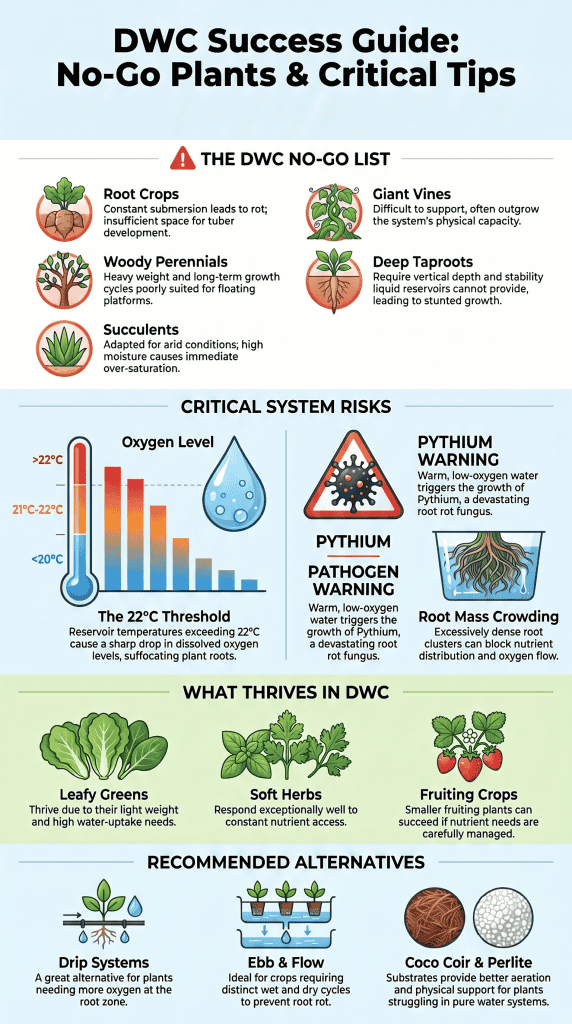
Root vegetables develop their edible portions below ground, which creates challenges in a constantly wet environment.
This is one of the clearest examples of a crop category that struggles in Deep Water Culture.
The leafy tops of carrots, potatoes, beets, and radishes may appear healthy. The problem usually develops where it matters most: below the surface.
Unlike leafy greens, root crops need soil resistance and steady moisture to grow thick, healthy vegetables. In DWC, excessive water exposure can interfere with that process.
Common root crops that perform poorly include:
- Carrots
- Potatoes
- Radishes
- Beetroot
- Turnips
- Garlic
- Onions
- Parsnips
- Sweet potatoes
Growers frequently report issues such as:
- Misshapen roots
- Splitting
- Soft texture
- Rot before harvest
- Reduced starch production
For example, carrots often develop twisted shapes because they lack the natural resistance provided by soil. Potatoes can become waterlogged and susceptible to disease before reaching full size.
The challenge is not a lack of nutrients. It is the way these plants naturally grow.
Many hydroponic growers who want to produce root vegetables choose media-filled systems instead. Coco coir, perlite, or clay pebbles provide the support plants need while still offering hydroponic benefits.
The Challenges of Growing Woody Perennials in DWC

(Credits: Agriculture Academy)
Long-term crops often outgrow standard DWC tanks and create harder maintenance problems as they age.
Trees and woody shrubs can survive in hydroponic systems, but DWC is rarely the simplest option.
The main issue is lifespan.
A lettuce crop may finish in a month. A fruit tree may remain productive for years. That difference creates major demands on the reservoir, root zone, and support structure.
Examples include:
- Citrus trees
- Apple trees
- Fig trees
- Blueberries
- Dwarf fruit trees
- Mature rosemary plants
These crops commonly encounter problems such as:
- Root crowding
- Net pot instability
- Crown rot
- Difficult reservoir maintenance
- Excessive weight above the container
As the trunk thickens and branches expand, the plant becomes increasingly top-heavy. Standard DWC lids and net pots were designed for lightweight vegetables, not woody crops that may weigh several kilograms.
The Support Problem
A young citrus tree may seem manageable at first. After a few seasons, the canopy can place significant pressure on the container.
Even if the roots remain healthy, physical stability becomes a concern. Tipping, stem stress, and root crown damage become much more likely.
For long-term fruit production, drip irrigation systems with coco coir or other growing media are usually easier to manage than traditional DWC setups.
Why Do Succulents and Drought Tolerant Herbs “Melt” in DWC?
Plants adapted to dry climates often react badly to roots that remain wet all day.
This group includes some of the most commonly misunderstood hydroponic plants.
Many people assume that nutrient-rich water should help every crop grow faster. In reality, drought-adapted species evolved under very different conditions.
Lavender, rosemary, cacti, and many succulents naturally experience long periods with limited moisture. Their roots are designed to absorb water quickly and then dry out.
DWC removes that dry period completely.
Common examples include:
| Plant | DWC suitability | Main issue |
| Lavender | Poor | Root stress |
| Rosemary | Poor | Crown rot |
| Cacti | Very poor | Excess moisture |
| Succulents | Very poor | Root collapse |
Typical symptoms include:
- Leaf drop
- Soft stems
- Brown roots
- Slow growth
- Sudden decline after transplanting
Many growers describe the process as the plant “melting” because the decline can happen surprisingly fast.
While some drought-tolerant herbs may survive for a period, they rarely perform as well as they do in well-drained growing media.
Houseplants That Commonly Struggle in DWC
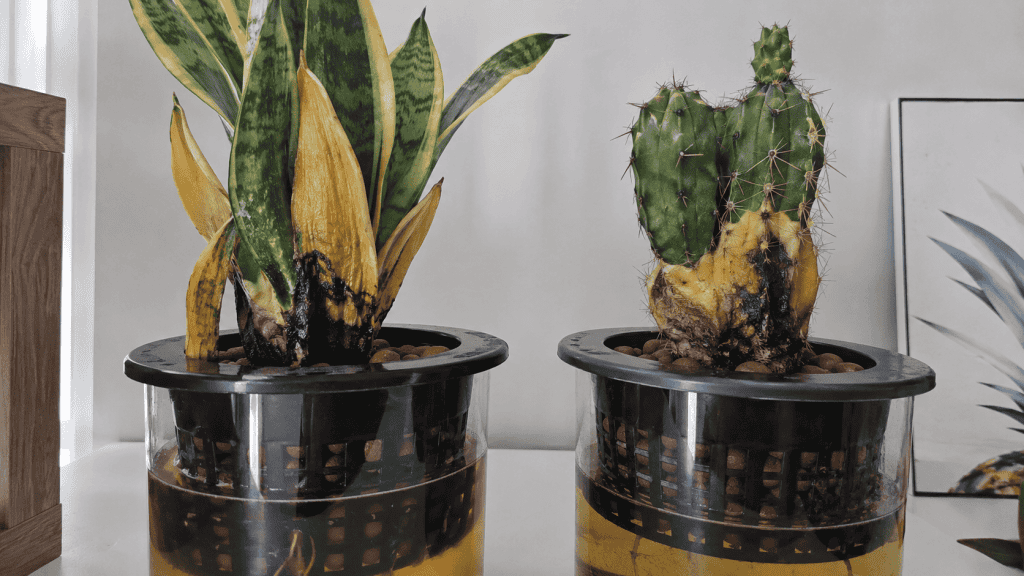
Some houseplants adapt well to water culture, but others struggle once their roots remain submerged full time.
A plant that thrives in a potting mix does not automatically become a good DWC candidate. Many ornamental plants evolved in loose soil where roots get both moisture and air pockets.
Growers often report repeated problems with:
- Calathea
- Goldfish Plant
- Lipstick Plant
- Some fern varieties
- Certain prayer plants
Common causes of failure include:
- Sensitive root systems
- Poor adaptation to permanent water culture
- Transplant shock
- Increased susceptibility to root rot
A plant may look healthy for the first week or two after transplanting. Once the original soil roots begin declining, problems often appear quickly.
This does not mean these plants can never grow hydroponically. Some perform better in semi-hydro systems that use expanded clay or other media rather than direct root immersion.
Are Watermelons, Pumpkins, and Other Giant Vines Worth Growing in DWC?
Large vining crops can grow in DWC, but most standard systems are too small to support them efficiently.
Unlike drought-tolerant plants, melons and pumpkins usually enjoy plenty of water. Their challenge is size.
A single watermelon plant can produce a root mass large enough to dominate an entire reservoir. As roots continue expanding, they reduce water volume and restrict circulation.
Common examples include:
- Watermelon
- Pumpkin
- Cantaloupe
- Large squash varieties
- Zucchini
Growers often encounter:
- Overcrowded reservoirs
- Reduced oxygen circulation
- Heavy nutrient demand
- Complex trellising requirements
- Frequent pruning needs
Advanced growers sometimes succeed with these crops in large recirculating systems that use oversized reservoirs and water chillers. Most hobby DWC buckets, however, are not designed for plants of this scale.
The Reservoir Crowding Effect
As roots fill more of the reservoir, less space remains for nutrient solution.
This creates several problems:
- Faster nutrient fluctuations
- Reduced oxygen availability
- Increased maintenance
- Higher disease risk during warm weather
A plant may survive and even produce fruit, but the amount of work required often outweighs the harvest.
The J Root Problem: Why Deep Taproot Plants Underperform
Plants with strong taproots often become restricted inside standard DWC containers.
Leafy greens develop dense networks of fine roots that spread in many directions. Taproot plants grow differently.
Instead of producing a broad root mass, they focus on a central root that extends downward.
When that root reaches the bottom of a bucket, it has nowhere else to go.
Plants commonly affected include:
- Comfrey
- Daikon radish
- Some perennial herbs
- Deep-rooted medicinal plants
Potential consequences include:
- Root curling
- Restricted growth
- Lower nutrient uptake
- Reduced vigor
Growers call this the “J-root” effect because the taproot bends sharply once it hits the bottom of the container.
The plant may continue growing, but root restriction can reduce overall performance.
Why Root Architecture Matters
Every plant evolved with a particular root structure.
Lettuce and basil adapt easily because their roots naturally spread through the upper soil layers. Deep-rooted plants depend on unrestricted downward growth.
When the root system cannot develop normally, the entire plant may struggle.
Can High-Demand Fruiting Crops Create Reservoir Problems?
Some fruiting plants place extra pressure on water quality and system maintenance.
This topic often sparks debate among growers, but there is a practical reason behind the discussion.
Large fruiting crops consume significant amounts of water, nutrients, and oxygen. Their root systems can also create more organic buildup inside the reservoir.
Examples include:
- Strawberries
- Melons
- Large tomato plants
Potential concerns include:
- Biofilm buildup
- Increased cleaning requirements
- Faster nutrient swings
- Greater pathogen pressure
These challenges become more noticeable when water temperatures climb above the recommended range.
Good airflow, clean tanks, and regular checks help lower these risks, but they require more work than growing leafy greens.
What to Grow vs. What to Avoid
Choosing crops that match the strengths of DWC is one of the easiest ways to improve results.
| Plant category | Examples | DWC rating | Main reason |
| Leafy greens | Lettuce, spinach, kale | Excellent | Fast growth and shallow roots |
| Soft herbs | Basil, mint, cilantro | Excellent | Thrive with steady moisture |
| Fruiting crops | Tomatoes, peppers | Good | Need support but perform well |
| Root crops | Carrots, potatoes | Poor | Underground harvest development |
| Woody perennials | Citrus, figs | Poor | Outgrow typical systems |
| Xeric plants | Lavender, succulents | Very poor | Prefer dry conditions |
| Giant vines | Watermelon, pumpkin | Poor | Excessive root growth |
| Deep taproot plants | Daikon, comfrey | Poor | Root restriction issues |
The closer a crop matches the characteristics of leafy greens and soft herbs, the more likely it is to succeed in DWC.
What Should You Grow Instead?
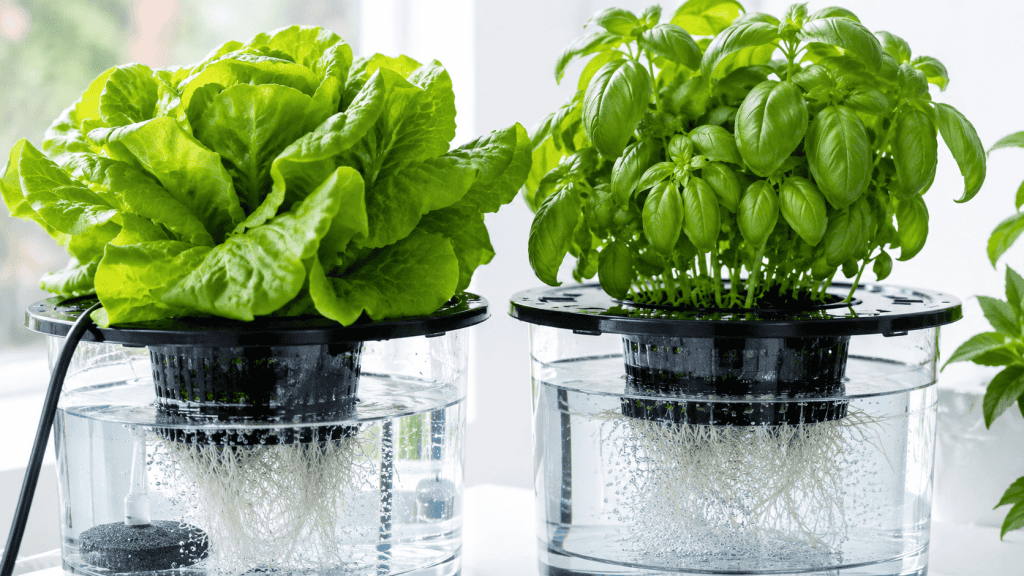
Fast-growing plants with fibrous roots remain the most dependable choices for Deep Water Culture. They are often recommended as a first plant for new DWC growers. These crops naturally handle constant moisture and thrive in oxygen-rich nutrient solutions.
Some of the best options include:
- Lettuce
- Spinach
- Kale
- Swiss chard
- Basil
- Mint
- Cilantro
- Parsley
- Peppers
- Tomatoes
These plants share several traits:
- Fibrous root systems
- Strong moisture tolerance
- Relatively fast growth
- Manageable support requirements
Tomatoes and peppers require staking or cages, but they are still much easier to manage than pumpkins, fruit trees, or large melons.
For most growers, success comes from matching the crop to the system rather than trying to force unsuitable plants into conditions they were never designed for.
FAQ
Can root vegetables grow successfully in a DWC system?
Most root vegetables are not suitable for DWC because they need space and physical resistance to develop properly. Carrots, potatoes, onions, garlic, turnips, parsnips, and beetroot often produce small, misshapen, or poor-quality harvests when grown in Deep Water Culture. Although these crops can survive in nutrient solution, they generally perform better in media-based hydroponic systems that support root development.
How do large root systems create problems in DWC?
Plants with large root systems in DWC can fill a reservoir much faster than many growers expect. As roots expand, they reduce water circulation, limit oxygen availability, and create hydroponic root crowding issues. Crops that produce large root masses can also cause hydroponic reservoir overcrowding, making nutrient management more difficult and increasing the amount of routine maintenance required.
Which hydroponic systems work better for crops unsuitable for DWC?
Many crops unsuitable for deep water culture perform better in systems that provide root support and greater growing space. Root vegetables, woody plants, and large fruiting crops often grow more successfully in drip systems or ebb and flow systems. These systems allow growers to use growing media, improve root stability, and manage moisture levels more effectively than a standard DWC setup.
Why are some plants more likely to develop root rot in DWC?
Plants prone to root rot in DWC often struggle when dissolved oxygen levels decrease or water temperatures become too high. Warm nutrient solution creates favorable conditions for pathogens that attack roots. Root rot susceptible hydroponic plants may develop brown roots, slow growth, yellow leaves, and poor nutrient uptake. Maintaining good aeration and proper reservoir temperatures helps reduce disease pressure and supports healthier root systems.
What is the most common crop selection mistake in DWC?
One of the most common beginner mistakes in DWC plant selection is choosing crops based on popularity rather than compatibility. Many growers attempt to grow plants requiring dry soil conditions, deep rooted plants, or crops that outgrow DWC systems. Successful Deep Water Culture growing depends on choosing plants with fibrous roots, manageable growth habits, and a natural tolerance for constant moisture around the root zone.
Choose the Right Plants for DWC Success
If you’ve ever watched a healthy plant struggle in a DWC system, it can be frustrating. Some crops simply aren’t built for constant root exposure to water. That’s the reality. Root vegetables, woody plants, drought-tolerant herbs, and deep taproot species often run into problems that make growing them in DWC more difficult than it’s worth.
For better results, stick with plants that naturally thrive with steady moisture and fast growth. Leafy greens, herbs, peppers, and tomatoes are usually a much better fit. Before you start your next setup, choose crops that match the strengths of DWC. That simple decision can save time and help you enjoy a more productive harvest.
References
- https://apsjournals.apsnet.org/doi/10.1094/PHP-07-24-0070-DG
- https://extension.umn.edu/how/small-scale-hydroponics
Related Articles
- https://tophydroponicgarden.com/hydroponics-for-beginners/
- https://tophydroponicgarden.com/hydroponic-first-plant/
- https://tophydroponicgarden.com/what-plants-dont-do-well-in-hydroponics/
Was this helpful?
I’m Barrie L., a passionate hydroponic gardening enthusiast dedicated to cultivating thriving, soil-less gardens. With a focus on all things hydroponic, I share my expertise on innovative growing techniques and sustainable practices through my blog, tophydroponicgarden.com. As a seasoned hydroponics specialist, my goal is to inspire and guide fellow gardeners in harnessing the power of water-based cultivation for bountiful and eco-friendly harvests. I’m also an author of the book “Hydroponics For Absolute Beginners: Your Step By Step Guide For How To Create An Hydroponics System At Home Without Soil, For Growing Vegetable, Fruit And Herbs.” which is sold on Amazon. Join me on a journey of redefining the way we cultivate plants, one nutrient-rich solution at a time. Happy growing!