

Hydroponic tomatoes can taste better because growers have more control over how the plants grow. The right mix of nutrients, enough light, a stable growing environment, and harvesting at the right time all play a part.
So, what makes hydroponic tomatoes taste better? It’s not one secret trick. It’s a series of small decisions that help the plant produce sweeter, more flavorful fruit. Keep reading to see what makes the biggest difference.
Key Factors That Improve Hydroponic Tomato Flavor
- Balanced nutrient management supports better sweetness, acidity, and texture.
- Stable growing conditions keep roots healthy and improve overall fruit quality.
- Vine-ripened harvesting allows tomatoes to develop fuller flavor and aroma before picking.
Higher EC Levels for Sweeter and Richer Tomato Flavor
Higher EC can help hydroponic tomatoes develop a sweeter, richer flavor. It does this by increasing the concentration of sugars and natural acids inside the fruit.
EC stands for electrical conductivity. It measures how many dissolved minerals are in the nutrient solution. Maintaining an EC level of 1.8 – 2.2 mS/cm during the vegetative stage supports structural growth.
Once fruit set occurs, systematically elevating the nutrient solution EC to 3.5 – 4.5 mS/cm induces controlled osmotic stress, forcing carbohydrate accumulation in the pericarp tissue without compromising root health.
It works like this. A stronger nutrient solution slows the amount of water moving into the tomatoes. With less water diluting the fruit, sugars and acids become more concentrated. The tomatoes often taste fuller, with a better balance of sweetness and tanginess.
| EC effect | What happens |
| Less water uptake | Fruit stays less watery |
| More soluble solids | Sugar levels increase |
| Higher acid levels | Flavor becomes more balanced |
| Firmer fruit | Texture improves |
Sweetness is only part of the story. Acidity matters too. So does aroma. When those pieces come together, tomatoes usually taste much better.
As highlighted by Journal of Agricultural and Food Chemistry:
“The results showed that higher EC values caused an increase of total soluble solids and organic acids, parameters determining the taste of tomatoes. Furthermore, the study also observed that total fruit yield, single fruit weight, and firmness significantly decreased with rising EC levels. “ – Journal of Agricultural and Food Chemistry
Some growers call this Brix chasing. Brix measures the amount of soluble solids in tomato juice with a refractometer. A higher Brix reading often means a sweeter tomato. But not always. A tomato still needs enough acidity and aroma to have that fresh, well rounded flavor.
Go slow.
Most growers wait until fruit has already formed before increasing EC. Raising it too early can stress the plant and slow healthy growth. Better to make small changes, then watch how the plants respond.
And more is not always better. Push EC too high and tomatoes may end up smaller. Yields can drop too. Finding the right balance usually gives the best results.
Essential Nutrients That Shape Hydroponic Tomato Flavor and Texture
Potassium, magnesium, sulfur, and calcium influence tomato flavor because they affect sugar movement, photosynthesis, aroma compounds, and fruit texture.
Hydroponic tomatoes need balanced nutrition. Adding more fertilizer does not automatically create better fruit. Plants need the right nutrient mix during each growth stage.
The main nutrients include:
| Nutrient | Flavor effect | Role |
| Potassium | More sweetness | Moves carbohydrates into fruit |
| Magnesium | Better flavor compounds | Supports photosynthesis |
| Sulfur | Stronger aroma | Helps form volatile compounds |
| Calcium | Firmer texture | Supports cell structure |
| Phosphorus | Healthy growth | Helps roots and fruit formation |
Adjusting the Potassium-to-Nitrogen (K:N) ratio from 1:1 during foliage development to 2.5:1 during fruit ripening accelerates sugar translocation from foliage to fruit. Excess nitrogen during harvest stages causes rapid cell enlargement through water intake, diluted Brix ratings, and soft fruit texture.
Magnesium sulfate and trace minerals such as iron and manganese also affect aroma. Tomato smell comes from many volatile compounds, including aldehydes and alcohols that create the familiar fresh tomato scent.
Cultivar-specific trials in Phyton reveal that genetic capacity dictates how efficiently a tomato plant converts elevated potassium and sulfur ratios into volatile aroma compounds. High-Brix cherry cultivars exhibit significantly greater flavor accumulation under high-EC regimes compared to large beefsteak varieties under identical nutrient solutions.
Balanced nutrition also reduces common issues. Calcium shortages can weaken fruit structure, while poor micronutrient levels can limit healthy plant growth.
Plants need different feeding plans at different stages. Vegetative growth, flowering, and ripening each require different nutrient priorities.
Choosing Flavor-Focused Tomato Varieties for Hydroponic Growing

The tomato variety often has a bigger impact on flavor than the hydroponic system itself. That’s because genetics decide how sweet, tangy, or aromatic a tomato can become.
As noted by Applied Sciences:
“Ancient tomato varieties selected over decades remain the preferred choice for consumers” – Applied Sciences
Even the best hydroponic setup can’t turn a low-flavor modern variety into an amazing tomato. Some varieties are bred for taste, while others are selected because they grow larger, last longer on store shelves, or handle shipping better.
For home hydroponic gardens, smaller tomatoes are often a smart choice. Many naturally produce higher sugar levels and ripen more reliably indoors.
Popular varieties include:
- Cherry tomatoes with high Brix
- Sweet cocktail tomatoes
- Flavorful heirloom varieties
- Compact indoor cultivars
Sun Sugar and Orange Hat are two varieties that many home growers enjoy because they produce well under LED grow lights. Beefsteak tomatoes can also have excellent flavor, but they’re usually more demanding. They need stronger lighting, more growing space, and extra time before harvest.
Genetic selection establishes the absolute upper boundary for sugar and acid accumulation in hydroponic crops. Utilizing compact, high-Brix cultivars such as ‘Sun Sugar’ or ‘Orange Hat’ ensures superior sensory characteristics under artificial lighting compared to large beefsteak varieties engineered primarily for shipping stability.
Hydroponics can help a good variety reach its full potential, but it can’t create flavor that isn’t there to begin with.
That doesn’t mean hydroponics is always better than soil. A healthy soil-grown tomato can taste fantastic. On the other hand, a poorly managed hydroponic system can produce fruit that’s bland.
The best results usually come from combining a flavorful variety with good growing conditions. Get both right, and the difference is easy to taste.
Vine-Ripening Benefits for Better Hydroponic Tomato Flavor
Vine-ripening helps hydroponic tomatoes develop better flavor because the fruit keeps building sugars and aroma compounds while it’s still attached to the plant.
Many tomatoes sold in stores are picked before they’re fully ripe. This makes them easier to transport without bruising. They may turn red later with the help of ethylene gas, but a red tomato isn’t always a flavorful one.
Home hydroponic growers can often leave tomatoes on the vine longer. Since the growing environment is controlled, there’s less pressure to harvest early. That extra time lets the fruit develop more of the sweetness, acidity, and fresh tomato aroma people enjoy.
Look for these signs before picking:
- Even color across the fruit
- Slight softness
- Fresh tomato aroma
- Easy to twist off the vine
Ripening is more than a color change. As tomatoes mature, sugars, natural acids, and aroma compounds continue to develop. Picking too early can stop part of that process, even if the fruit finishes turning red later.
Wait a little longer. Leaving tomatoes on the vine doesn’t guarantee amazing flavor, though. The plants still need enough light, balanced nutrients, and steady watering throughout the growing season. Healthy plants are much more likely to produce tomatoes that taste rich and well balanced.
LED Lighting for Better Hydroponic Tomato Flavor Development
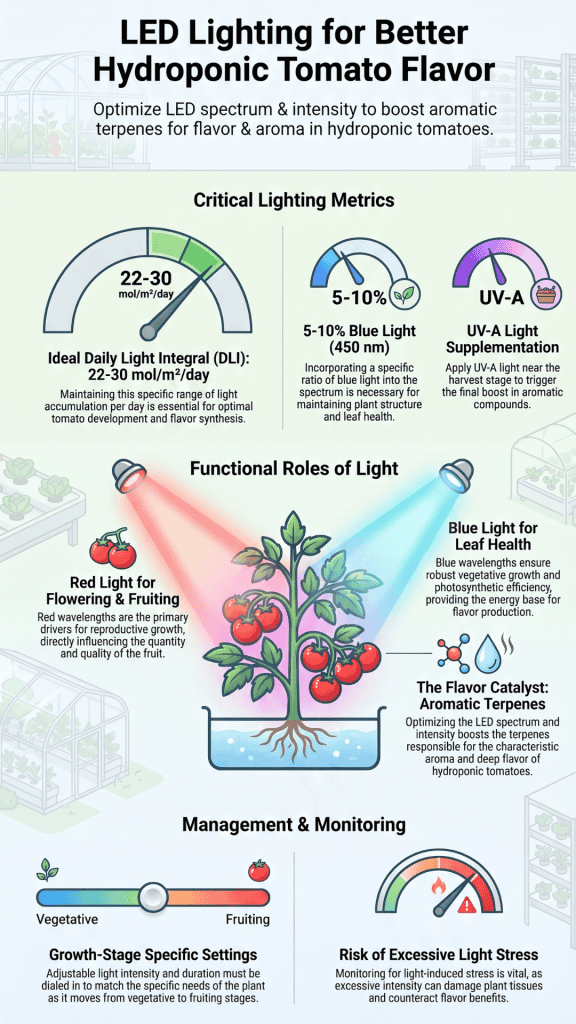
High-intensity LED lighting systems that provide a Daily Light Integral (DLI) of 22 – 30 mol/m²/day help optimize photosynthetic activity during the fruiting stage. Adding 5 – 10% blue light (450 nm) to the light spectrum, along with targeted UV-A exposure at the end of the growth cycle, can stimulate secondary metabolite production. This process improves the development of aromatic terpene compounds in the fruit skin, resulting in better flavor and aroma quality.
Plants rely on photosynthesis to make their own food. Without enough light, they cannot produce as much energy. And if the plant has less energy, the fruit often ends up with less flavor. It really is that simple.
One reason growers like LED lights is the control they offer. Light intensity, color, and the number of hours the lights stay on can all be adjusted as the plants grow. Young plants need one thing. Fruiting plants need another.
A basic lighting setup often includes:
- Red light for photosynthesis
- Blue light for healthy leaves
- Enough daily light
- Consistent lighting hours
Not every color of light does the same job. Red light helps support flowering and fruit production. Blue light encourages sturdy growth and healthy leaves instead of tall, weak plants. Some growers even add a small amount of ultraviolet light near the end of the growing cycle. The extra stress is mild, but it may encourage the plant to produce more flavor related compounds.
Less can be more.
Leaving the lights on at full power all day does not guarantee sweeter tomatoes. Too much light can create excess heat, increase power costs, and put extra stress on the plants. Give tomatoes enough light to grow well, then let them rest. Healthy plants usually reward the effort with better tasting fruit.
Temperature and Humidity Effects on Hydroponic Tomato Taste
Mastering Calcium | Avoid tipburn and blossom end rot
Credit: Hort Americas
Temperature and humidity have a big impact on how hydroponic tomatoes taste. They affect how the plant moves water, absorbs nutrients, and builds sugars inside the fruit.
Even with a well-balanced nutrient solution, the growing environment still matters. If temperatures swing too much or humidity stays too high or too low, plants can struggle. And when the plant struggles, fruit quality usually drops too.
A healthy growing environment includes:
- Warm days
- Slightly cooler nights
- Moderate humidity
- Good airflow
- Balanced VPD
Maintaining a Vapor Pressure Deficit (VPD) between 0.8 kPa and 1.2 kPa helps maintain stable transpiration rates, allowing calcium ions (Ca²⁺) to move effectively into developing fruit tissues. When plants operate outside this VPD range, especially under high electrical conductivity (EC) conditions, calcium transport becomes limited. This can cause cell damage, tissue breakdown, and increase the risk of blossom end rot.
This is especially important for calcium. If the plant cannot move enough calcium into the fruit, problems like blossom end rot become more likely. Everything works together.
For example, some growers raise EC to produce sweeter tomatoes. But if the roots aren’t healthy or the greenhouse is too humid, that extra stress may do more harm than good.
The plant needs enough oxygen around the roots, stable temperatures, and the right humidity before higher EC can pay off. Healthy plants don’t make perfect tomatoes every time. They usually make better-tasting ones, though.
Common Reasons Commercial Hydroponic Tomatoes Taste Less Flavorful
Commercial hydroponic tomatoes sometimes taste less flavorful because many large growers have different goals than home gardeners. Most commercial farms need tomatoes that travel well, stay fresh longer, and produce reliable harvests. Flavor is still important, but it isn’t always the top priority.
That doesn’t mean hydroponics is the problem. In fact, the same growing method can produce outstanding tomatoes when growers focus on taste instead of shipping performance.
| Flavor-focused growing | Commercial production |
| Higher EC during ripening | Moderate nutrient levels |
| Vine-ripened harvest | Earlier harvest |
| Smaller, sweeter fruit | Larger fruit for shipping |
| Flavor-first varieties | Durable commercial varieties |
Growing for flavor often means accepting smaller harvests. Raising EC can increase sugar levels, but it may also reduce fruit size or total yield.
That’s the trade-off. A grower selling tomatoes by weight may choose larger fruit. A home gardener usually cares more about how the tomatoes taste at dinner.
Store-bought hydroponic tomatoes can still be delicious. But growers who focus on flavor instead of shelf life often produce tomatoes with more sweetness, aroma, and texture.
Understanding Molasses in Hydroponic Systems
Adding molasses to a hydroponic system will not make tomatoes sweeter.
This idea comes from soil gardening, where molasses can feed beneficial microbes living in the soil. Hydroponic systems work differently. Tomato roots absorb water and minerals, not complex sugars.
Here’s a quick comparison:
| Common belief | Reality |
| Molasses sweetens tomatoes | Plants make their own sugars |
| Sugar in water helps fruit | Roots absorb nutrients, not sugar |
| Organic additives always help | They can upset water quality |
Plants don’t get sweetness from sugar added to the water. They make their own sugars during photosynthesis using light, water, and carbon dioxide. That’s why healthy plants usually produce better-tasting tomatoes than plants growing in poor conditions.
Direct application of complex carbohydrates like molasses into sterile hydroponic reservoirs fails to enhance fruit sweetness due to the inability of plant roots to absorb unrefined sugars. Introducing organic carbon sources into oxygenated water triggers rapid bacterial blooms, depletes dissolved oxygen levels, and induces severe root rot (Pythium).
A better approach is much simpler. Keep the nutrient solution clean, check your pH and EC regularly, and make sure the plants get enough light. Healthy roots and steady growing conditions will do far more for tomato flavor than adding sugar to the reservoir ever will.
Best Practices for Flavorful Homegrown Hydroponic Tomatoes
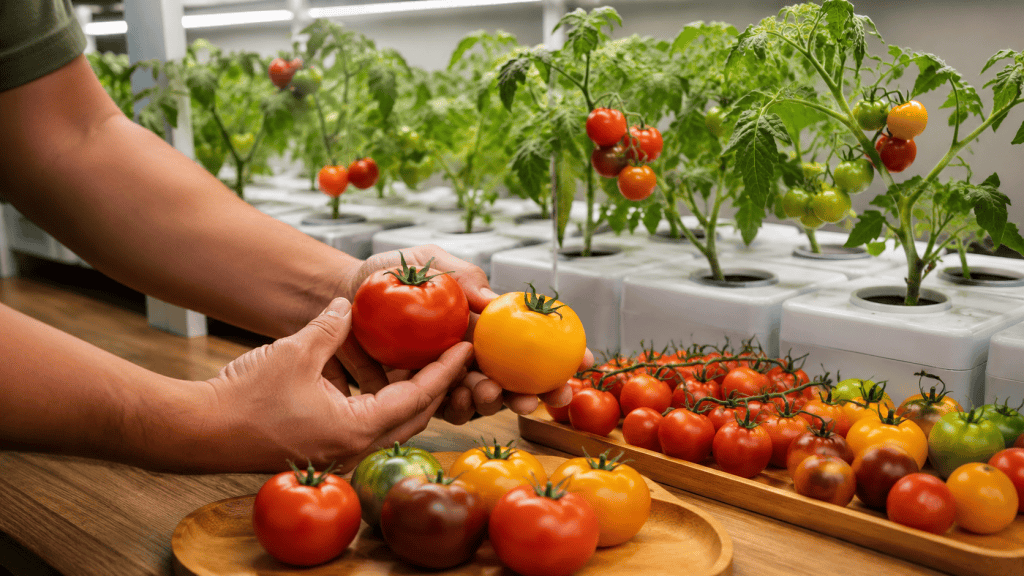
Home growers can improve hydroponic tomato flavor by combining good genetics with careful control of nutrients, lighting, and harvest timing. There is no single trick that creates amazing tomatoes. Flavor comes from several decisions working together.
Focus on:
- Choosing flavorful varieties
- Monitoring pH and EC
- Increasing potassium during fruiting
- Keeping roots oxygenated
- Using suitable LED lights
- Controlling temperature and humidity
- Harvesting ripe fruit
Growers using coco coir, rockwool, drip systems, or Dutch buckets can adjust feeding and watering schedules to improve fruit quality. Some home growers report stronger flavor after increasing fruiting EC from around 1.5 – 2.0 to 3.5 – 4.5, though results depend on the tomato variety and growing conditions.
Don’t chase numbers alone. A tomato with extremely high Brix may not always be the best tasting tomato. Sweetness, acidity, texture, aroma, and plant health all matter.
FAQ
Can LED grow lights improve hydroponic tomato flavor?
Yes. LED grow lights can improve hydroponic tomato flavor by providing the light plants need for photosynthesis. Proper light intensity, light spectrum, and daily light integral help plants produce more carbohydrates, which later influence tomato sweetness and fruit quality. The right lighting schedule also supports healthy growth and more consistent harvests.
How does nutrient balance affect hydroponic tomato taste?
Nutrient balance plays an important role in hydroponic tomato taste because plants need the right amounts of minerals during each growth stage. Proper tomato nutrients, including potassium, calcium, magnesium, and phosphorus, support sugar production, texture, and aroma. A well-managed nutrient solution helps create tomatoes with better flavor and consistent quality.
Do tomato varieties affect hydroponic tomato flavor?
Yes. Tomato variety strongly affects hydroponic tomato flavor because genetics influence sweetness, acidity, aroma, and texture. Varieties like cherry tomatoes, heirloom tomatoes, and some beefsteak types naturally have different flavor profiles. Choosing a variety suited for growing tomatoes hydroponically can help growers produce more flavorful fruit.
What harvest timing creates better-tasting hydroponic tomatoes?
Proper harvest timing helps tomatoes develop better sweetness, aroma, and texture. Allowing fully ripe tomatoes to mature on the plant gives fruit more time to build flavor compounds and improve tomato sugar content. Vine-ripened tomatoes often provide a richer taste compared with fruit harvested too early for storage or transportation.
Better Flavor Starts With Better Growing
Better-tasting tomatoes come from good growing habits, not shortcuts. Choosing a flavorful variety, keeping growing conditions steady, and waiting until the fruit is fully ripe can make a bigger difference than most people expect.
Small improvements add up. Pay attention to nutrients, lighting, temperature, and harvest timing. When those pieces work together, hydroponic tomatoes can be sweet, juicy, and full of flavor.
Want to grow better tomatoes at home? Visit TopHydroponicGarden for practical guides, growing tips, and simple advice to help you get more from your hydroponic garden.
References
- https://pubs.acs.org/jafcau/article-abstract/54/2/441/3709627/TheInfluenceofDifferentElectricalConductivity
- https://scholar-cnki-net-443.webvpn.imac.edu.cn/zn/Detail/index/GARJ2021_5/SJMDA77EB08EF0698EBEF3A985564B5D8FD0
Related Articles
- https://tophydroponicgarden.com/best-tomato-varieties-for-hydroponics-2/
- https://tophydroponicgarden.com/are-commercial-hydroponic-kits-worth-the-investment/
- https://tophydroponicgarden.com/what-is-flushing-a-hydroponic-system/
Was this helpful?
