

You might think soil is just dirt. But that dark material beneath your feet, or the coconut coir in your hydroponic setup, plays a more complex role than you imagine. The role of a growing medium is to act as a plant’s entire world, providing physical anchorage, managing water like a reservoir, and facilitating the crucial exchange of air and nutrients that roots desperately need.
It’s the silent partner in every successful garden, the stage upon which the drama of growth unfolds. Whether you’re a seasoned horticulturist or a weekend gardener, understanding this foundation is the first step toward cultivating healthier, more productive plants. Keep reading to master the art of selecting and managing the ground beneath your plants.
Key Takeaways
- It anchors plants and creates the root zone environment.
- It expertly balances water retention with essential air space.
- It serves as a conduit for delivering nutrients to the roots.
What is a Growing Medium?
At its simplest, a growing medium is any material that supports plant roots. It’s the substance you place in a pot, a raised bed, or a hydroponic channel. Its job isn’t just to hold the plant upright, though that’s part of it. Think of it as a substitute for natural soil, especially in controlled environments where Mother Earth isn’t directly involved.
This medium can be organic, like peat moss or compost. It can also be inorganic, such as perlite or mineral wool. The choice depends entirely on the plant’s needs and the cultivation system. The purpose extends far beyond mere physical support. It creates a microenvironment where roots can breathe, drink, and feed [1].
Why Growing Media Matter
Why Growing Media Matter
Plants are only as healthy as their roots allow them to be. The growing medium is the engine room of the plant, the place where critical processes begin. It matters because it replicates the complex functions of natural soil, often in a more reliable and optimized way. It provides the balance of water, oxygen, and nutrients that roots require to function.
A poor medium leads to stressed roots. Stressed roots lead to a struggling plant. It’s that straightforward. By choosing the right medium , much like when you manage hydroponic seed starting , you give your plants a head start. You control the variables, leading to stronger growth, better yields, and fewer problems with disease. It’s the difference between a plant merely surviving and one that is truly thriving.
Core Functions of a Growing Medium

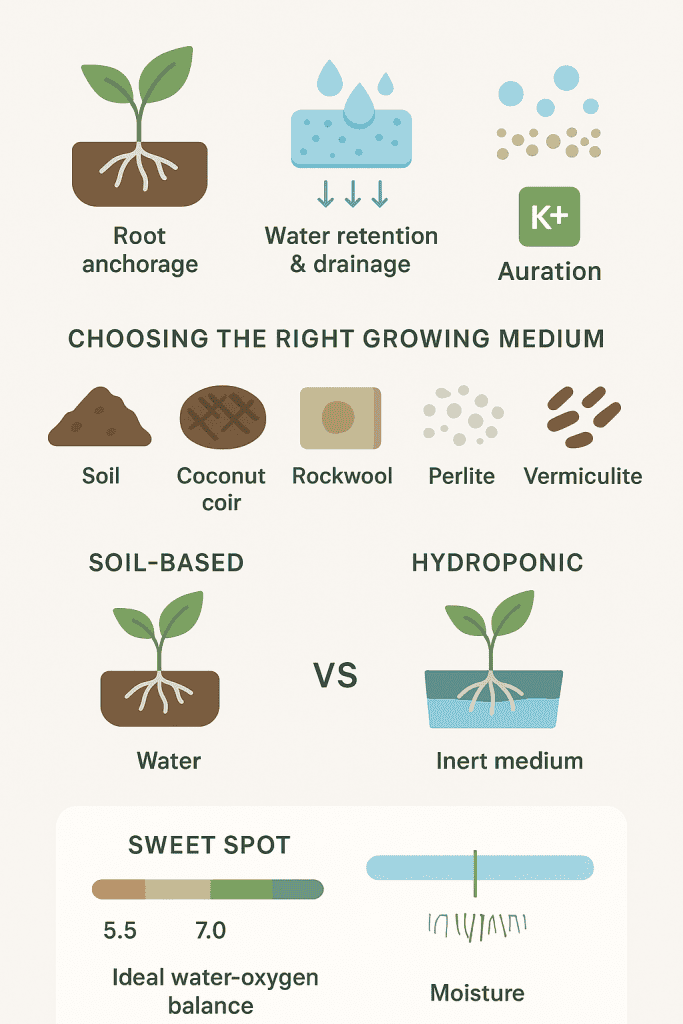
Physical Support and Root Anchorage
First and foremost, a growing medium must anchor the plant. It gives the root system something to grip, keeping the plant stable and upright. Without this anchorage, a plant would simply fall over. The roots need a stable structure to spread through and establish themselves. This support system is non-negotiable.
Water Retention and Management
The medium acts like a sponge. It absorbs water and holds it in tiny pores, making it available to the roots over time. This is its water-holding capacity. But it can’t hold too much. A good medium also allows excess water to drain away, preventing waterlogging.
This balance is the key to avoiding root rot. Understanding how passive hydroponics manages root moisture through capillary action helps maintain this perfect balance without the need for pumps or complex systems.
Aeration and Oxygen Supply
Roots need to breathe. They require oxygen for respiration, the process that fuels their growth. A growing medium must have pores filled with air, not just water. This aeration is vital. Components like perlite or coarse sand create air pockets within the medium, ensuring roots get the oxygen they need to stay healthy and active.
Nutrient Delivery and Reservoir
In soil-based systems, the medium itself can contain nutrients. In soilless mixes, it acts as a reservoir for nutrients you add. It holds these nutrients near the roots, ready for uptake.
Some media, like those with high cation exchange capacity (CEC), can even store and release nutrients slowly, making fertilizing jade plants and other care routines more efficient and effective.
Growing Media in Different Cultivation Systems
Soil-Based Systems
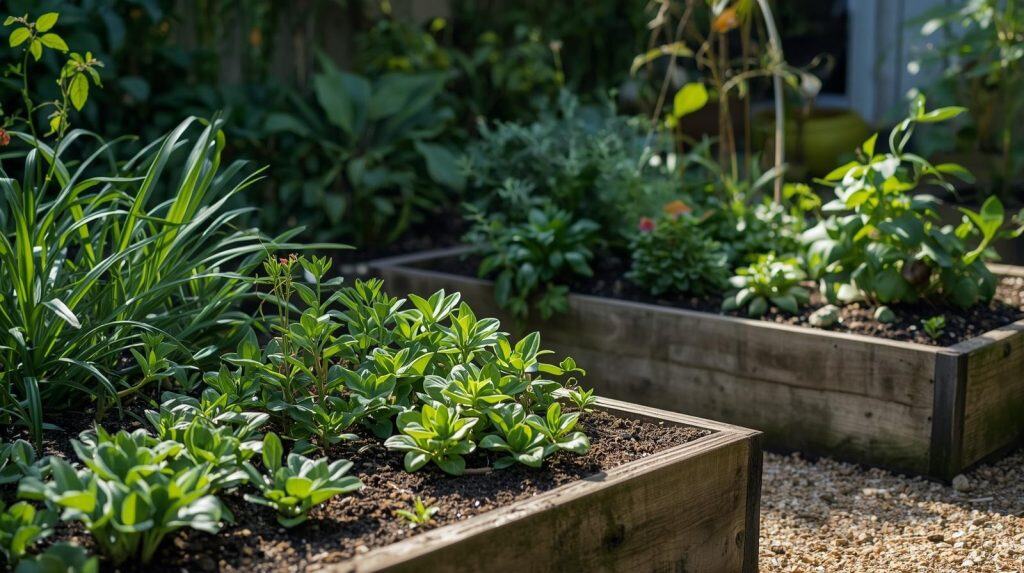
In traditional gardening, the growing medium is soil. It’s a rich, living ecosystem containing organic matter, minerals, and microorganisms. These elements work together to nourish the plant. The soil itself provides nutrients directly to the roots. It’s a complex, symbiotic relationship that has evolved over millennia.
Soilless Systems and Hydroponics
Hydroponics removes soil from the equation. Here, the growing medium is inert. Materials like coconut coir, rockwool, or clay pebbles provide pure physical support. They hold the roots and retain moisture, but all nutrients are delivered via a water solution. This allows for precise control over the plant’s diet.
- Coconut Coir: Excellent water retention and aeration.
- Rockwool: Great for seed starting and holding moisture.
- Perlite: Superb for increasing aeration in any mix.
- Vermiculite: Improves water and nutrient retention.
The goal in soilless culture is to create the perfect physical environment so that nutrient delivery can be perfectly managed.
Additional Benefits of Optimized Growing Media

Credit : Kenneth Saladin
A well-chosen medium does more than the basics. It can enhance your entire growing operation. Media with a high CEC, like those containing compost or coco coir, hold onto nutrient ions (cations like potassium, calcium) and prevent them from washing away. They then release them to the plant roots over time, acting like a slow-release fertilizer.
Modern blends are engineered to optimize both water-holding capacity and aeration simultaneously. This creates an ideal root zone environment, often called the “sweet spot,” where roots have access to both water and oxygen at all times.
You can also find media pre-blended with biostimulants or controlled-release fertilizers. These additions can kickstart plant growth and simplify your feeding schedule, leading to healthier plants and potentially higher yields.
Choosing the Right Growing Medium
Selecting a medium isn’t a one-size-fits-all decision. You need to consider several factors to match the medium to your plants and your system. The first consideration is always the plant type. A cactus requires a fast-draining, sandy mix, while a lettuce plant in a hydroponic system thrives in a moisture-retentive medium like coco coir.
Understanding these concepts is part of the basic terminology hydroponic beginners need to grasp to optimize plant care. The balance between water retention and drainage is perhaps the most critical factor.
You want a medium that holds enough water to sustain the plant between waterings but drains sufficiently to prevent suffocating the roots. The pH level of the medium is also crucial, as it affects nutrient availability. Most plants prefer a slightly acidic to neutral pH range.
- Assess your watering habits.
- Test the pH of a new medium.
- Consider the weight and handling of the material.
Sterility is another key point, especially for seed starting. A sterilized medium reduces the risk of damping-off and other soil-borne diseases. Finally, you have to think about cost, availability, and even the environmental impact of the medium, like the sustainability of harvesting peat moss.
Preparing Your Growing Medium for Planting
You can’t always use a growing medium straight out of the bag. Some preparations are necessary to ensure success. For inert media like coconut coir or rockwool, you often need to pre-charge them with a nutrient solution. They contain no inherent nutrients, so this step is essential for giving young plants a good start.
Adjusting the pH is a common task. Peat moss, for instance, is naturally acidic and often requires the addition of lime to raise the pH to a suitable level. If you’re reusing a medium, sterilization through baking or using a steam method can kill off any pathogens or pest eggs that may be present.
For custom mixes, combining amendments is standard practice. Adding perlite to potting soil improves aeration, while vermiculite can boost water retention. Taking these preparatory steps tailors the medium to your specific needs, setting the stage for optimal plant growth [2].
FAQ
What types of growing medium are best for seed starting?
Seed starting medium should offer gentle root support and proper aeration in growing medium. Common options include peat moss, coconut coir, perlite, or vermiculite.
A good seed starting medium balances moisture retention and drainage in growing medium while maintaining a light texture. This helps roots develop quickly and allows nutrient delivery to young plants without overwhelming them.
How does a hydroponic medium differ from traditional soil?
A hydroponic medium replaces soil with a soil substitute that provides root anchorage and nutrient retention. Hydroponic media like mineral wool, coco coir, or hydroponic substrate focus on root oxygenation, medium porosity, and water-holding capacity.
They support soilless plant culture while allowing precise fertilization medium management and promoting a healthy root zone environment.
Can the growing medium affect root disease prevention?
Yes, the medium structure and substrate characteristics influence root zone health. Proper medium permeability, microbial habitat, and beneficial microbes reduce the risk of root diseases.
Soil-less substrates and controlled substrate sterilization limit harmful organisms while maintaining a sustainable growing medium. Aerobic environment and root aeration also protect roots from stress and decay.
What role does medium pH and nutrient buffering play in plant growth?
Medium pH and medium nutrient buffering determine nutrient availability in plant growing substrate. A balanced pH supports substrate nutrient absorption and efficient nutrient delivery.
Hydroponic growing mixes and organic growing medium can differ in buffering capacity. Properly managed pH ensures root growth optimization and enhances water retention properties for steady plant development.
How do soilless mixes support propagation and root development?
Propagation medium and soilless mix offer excellent root anchorage and root oxygenation. Growing cubes, mats, or rooting medium create a medium structure that supports root zone microclimate and medium moisture content.
These options enhance substrate aeration, capillary action, and medium water availability, promoting strong root development and healthy plant media management.
Conclusion
The growing medium is not a passive bystander. It is an active participant in your plant’s life. It dictates the availability of water, air, and food. Mastering its selection and management is a fundamental skill for any grower. Don’t be afraid to experiment with different mixes.
Observe how your plants respond. A small change in your medium can lead to a significant improvement in your results. Start by evaluating the medium you use now. Does it provide the right balance? Your plants will tell you the answer.
References
- https://www.sciencedirect.com/science/article/pii/S0378377424004384
- https://www.fao.org/4/v9926e/v9926e04.htm
Related Articles
- https://tophydroponicgarden.com/what-does-passive-hydroponics-mean/
- https://tophydroponicgarden.com/can-you-start-seeds-directly-in-hydroponics/
- https://tophydroponicgarden.com/basic-terminology-for-hydroponic-beginners/
Was this helpful?

I’m Barrie L., a passionate hydroponic gardening enthusiast dedicated to cultivating thriving, soil-less gardens. With a focus on all things hydroponic, I share my expertise on innovative growing techniques and sustainable practices through my blog, tophydroponicgarden.com. As a seasoned hydroponics specialist, my goal is to inspire and guide fellow gardeners in harnessing the power of water-based cultivation for bountiful and eco-friendly harvests. I’m also an author of the book “Hydroponics For Absolute Beginners: Your Step By Step Guide For How To Create An Hydroponics System At Home Without Soil, For Growing Vegetable, Fruit And Herbs.” which is sold on Amazon. Join me on a journey of redefining the way we cultivate plants, one nutrient-rich solution at a time. Happy growing!