

The Kratky method is the quietest hydroponic system. It uses no pumps, electricity, or moving parts, so it makes no operational sound. This sets it apart from active systems like NFT or DWC, which generate noise from air pumps and water circulation.
Developed by Dr. Bernard Kratky, this passive technique is ideal for growing quiet crops like lettuce and herbs indoors. Its silence comes from a simple air gap above the nutrient solution, which provides oxygen without machinery. University extensions, including Hawai‘i’s, detail this principle.
Real-world use involves tradeoffs between complete silence and growth rates. See how Kratky compares to modified quiet DWC and NFT systems for apartment-friendly setups.
Low-Noise Hydroponic Essentials
- Kratky is the quietest hydroponic system because it uses no pump and runs at 0 dB.
- NFT and quiet DWC setups can be under 30-45 dB with premium pumps per reviews, though not silent (urbangreenthumbs).
- For apartment hydroponics, opaque 5-gallon passive bucket systems offer the best silence-to-maintenance ratio.
Quick Reads: Kratky as the Quietest Choice
Passive hydroponics stays silent by removing every moving part. It eliminates the hum, bubbling, and vibration of typical systems. The Kratky method suspends roots over a static nutrient solution. This liquid level drops as plants feed. The falling water creates a natural air gap for the roots. This gap replaces the need for noisy air stones or pumps.
Small-space growers enjoy true sleep-friendly gardening this way. You will hear no pump buzz through the walls. There are no dripping returns or timer clicks. The system works best for lettuce, basil, and spinach. These crops often finish in four to six weeks. University trials show high productivity even at a low cost.
This simplicity makes it the best soil alternative for beginners. It fits perfectly on a kitchen counter, especially for growers choosing a system best for beginners in small indoor spaces. It adds no noise to your home. By removing mechanical parts, Kratky offers a “set it and forget it” experience. Busy apartment dwellers can finally value peace as much as fresh food.

Recommended Product: General Hydroponics MaxiGro
- Description: A dry nutrient powder for leafy greens and herbs.
- Pros: Stable pH and easy to store in small apartments.
- Cons: User reports note needs thorough mixing to avoid sediment in static water.
- Consider if: Not for those who prefer “pour and go” liquid plant food.
- Best For: Budget growers who want professional results in silent buckets.
The Kratky Method as a Completely Silent System
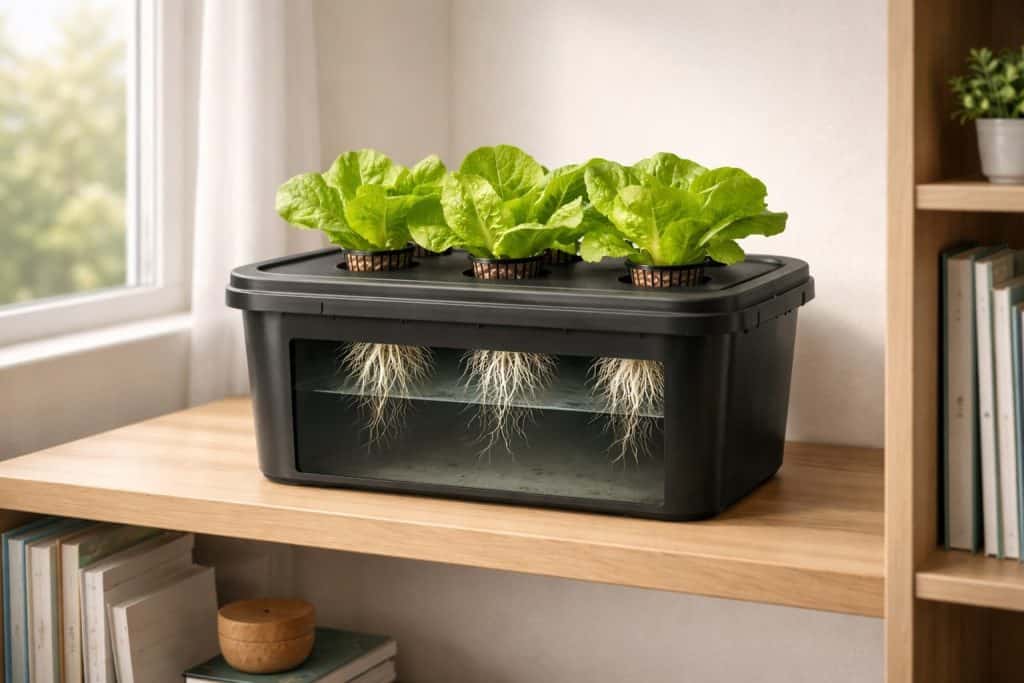
The Kratky method is silent because falling water levels provide oxygen. This passive process replaces all loud hardware. A plant starts with its roots touching the nutrient line. The water drops as the crop drinks.
This creates a natural oxygen zone above the liquid. Experts emphasize this air space for root health. That air gap makes non-circulating hydroponics effective.
You will notice no bubbling or splashing. No vibration moves through your shelving. A five-gallon bucket can grow a full head of lettuce. It requires almost no work after the first fill, which makes it perfect for growers who want to start hydroponics on a budget while keeping the setup fully silent. Many growers harvest within 40 days. This is the ultimate low-maintenance silent system. Top roots stay in the air to breathe.
Lower roots stay in the water to drink. This simple split removes the need for air pumps. It is a biological answer to a mechanical problem. Since there are no moving parts, the system stays at 0 dB. Your bedroom remains a quiet sanctuary.
Recommended Product: AeroGarden Harvest Slim
- Description: A narrow indoor garden with built-in LED grow lights.
- Pros: Fits on thin windowsills and has a quiet water reminder.
- Cons: The small reservoir needs frequent refills for thirsty herbs.
- Consider if: Quiet at ~37 dBA, but uses pump unlike pure Kratky.
- Best For: People who want a stylish garden for a quiet office.
NFT Systems as a Quiet Alternative
NFT systems can be nearly silent with the right setup. They use smooth returns and low-speed pumps. However, they are never truly silent like passive methods. A good build uses a submerged drain to stop dripping sounds.
In a recent analysis by PMC – National Center for Biotechnology Information
“Hydroponic system: A closed circular circuit created with pipes. A pump is used to circulate water from a tank to the rest of the circuit (in contrast to active pumps). This valve controls the passage of the irrigation water through the pipe; it is moved by a solenoid coil and has only two positions: open or closed.” – Smart IoT Planters
Systems like VIVOSUN channels work well in apartments if the flow is low. Still, the pump remains a mechanical sound source. Most builds stay under 30 dB. This is very low but not total silence.
| System | Noise Level | Best Crops | Main Sound Source |
| Kratky | Silent (0 dB) | Lettuce, herbs | None |
| NFT | Low (pump-dependent) | Greens, basil | Pump hum |
| Quiet DWC | Low-mod (pump/air stone) | Greens, peppers | Air pump |
| Standard DWC | Moderate | Fruiting plants | Bubbling |
The maintenance tradeoff is important. NFT grows plants faster and saves space. But roots dry out quickly if the power fails. Passive buckets grow slower but offer total silence. They also handle power outages safely.
If an NFT pump stops, plants may wilt in hours. In a Kratky system, the water is always there. People in areas with bad power grids should choose passive systems. NFT is better for a dedicated room where a slight hum is okay. It is a choice between speed and peace.
Recommended Product: VIVOSUN Hydroponic Grow Kit (NFT)
- Description: A pipe-based system for high-volume leafy green production.
- Pros: Great oxygenation for fast growth and high yields.
- Cons: The pump can buzz and the pipes may splash.
- Consider if: Too noisy for a studio apartment or bedroom.
- Best For: Balcony gardens where harvest matters more than silence.
DWC Noise Reduction for Truly Quiet Performance
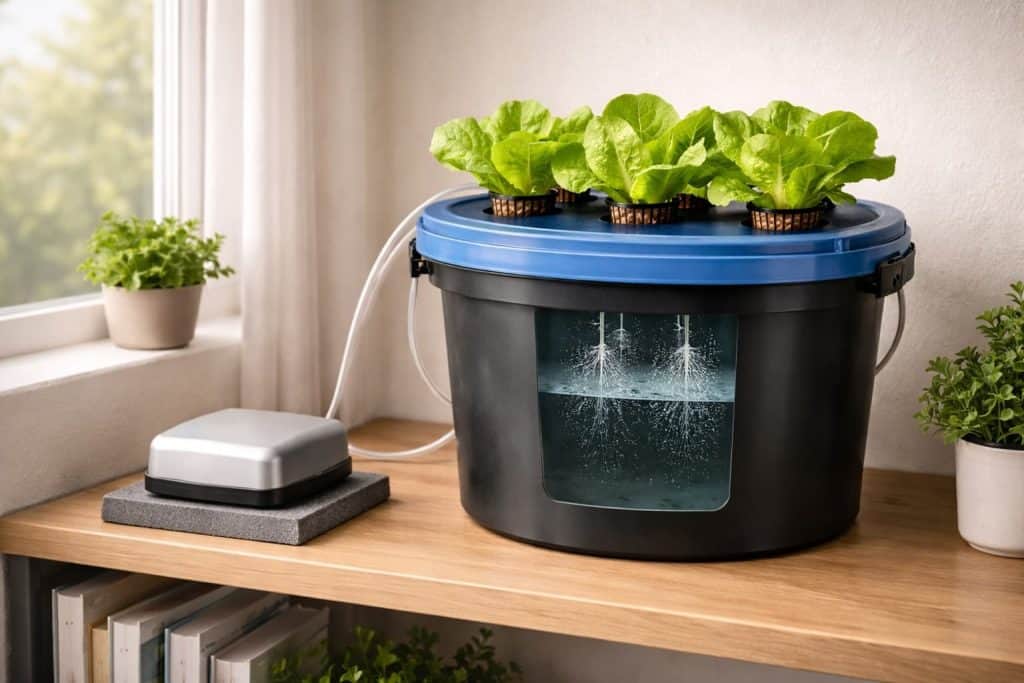
Standard Deep Water Culture is rarely silent. However, you can make it bedroom-friendly with some tricks. The loudest part is usually the air pump vibrating against a wall. This hum is the main problem for apartment dwellers. It is often louder than the water bubbles. A better path uses high-end aquarium pumps. You can also run larger systems at lower power.
Try using rubber feet or hanging the pump with cords. This stops the vibration from moving. Submerged return lines and quiet air stones also help. They dampen the “boiling” sound of the bubbles. Venturi systems remove bubbles but add a slight hiss. DWC is usually office-safe but not always sleep-safe.
Fruiting plants like peppers grow much faster in DWC. This extra speed might justify the slight noise for some. But for simple herbs, Kratky is still the winner. Choosing DWC means you must monitor the noise level constantly.
Recommended Product: Sicce Shark ADV Internal Filter
- Description: A submerged pump that aerates water from the inside.
- Pros: Very quiet because the water muffles the motor sound.
- Cons: It can warm the water, which might hurt the roots.
- Consider if: More expensive and takes up space inside the tank.
- Best For: Growers who want fast growth without a vibrating external pump.
Real Grower Insights on Quiet Hydroponics

Credits: Gardening In Canada
Real growers suggest Kratky for stealth grows. They know that “quiet pumps” still shake the furniture. Many apartment growers report the same issue online. Pump hum travels through thin shelves and laminate floors.
Growers report pump hum travels through walls. This lived experience is why people choose passive designs. The pattern is clear. Use Kratky for bedrooms. Only use NFT with careful changes.
Even “ultra-quiet” pumps become annoying over time. The low-frequency hum can move through walls. It might even bother your neighbors. Small aquarium pumps are better than cheap hydro brands. But they still have a rhythmic pulse.
Venturi systems are different, but the air hiss remains. Thin plastic bins act like speakers. They amplify every tiny vibration. This feedback matches scientific advice on air gaps. It shows why pump-free systems are the top choice. If you live where you grow, silence is a priority.
Recommended Product: Uniclife UL40 Aquarium Air Pump
- Description: A small pump with adjustable air flow for quiet use.
- Pros: Affordable and allows you to turn down the power.
- Cons: It still hums and needs extra padding to stay quiet.
- Consider if: It will get louder as the internal parts wear out.
- Best For: Small herb buckets for owners who like DIY soundproofing.
The Best Quiet Hydroponic System for Apartments
Opaque Kratky containers are best for apartment life. They offer the best mix of silence and simplicity, making them ideal for hydroponic beginners who want an easy apartment setup. You can use mason jars or five-gallon buckets. These setups work well for basil, mint, and kale.
These plants stay small and grow well together. Use lightproof containers to stop algae from growing. Small crops are ideal because they drink slowly. This keeps the silent air gap stable for a long time.
Renters benefit from using zero electricity. There is no nighttime hum and no risk of power failure. You also avoid messy cords on the floor. This is a big win in small homes. Keep the room temperature stable to help the plants. Avoid putting buckets in hot windows. Safe cleaning keeps the system quiet and healthy. When you remove the pump, you remove the stress. Gardening becomes a peaceful activity. It no longer feels like a noisy chore in your living space.
Recommended Product: Hydrofarm HG5GBK Black Bucket
- Description: A thick, food-grade bucket that blocks all light.
- Pros: Thick walls stop water sounds and prevent algae perfectly.
- Cons: It is large and can be hard to hide.
- Consider if: It looks industrial, not like home decor.
- Best For: Growing large, silent heads of lettuce in a corner.
Quiet Hydroponic Setup Mistakes That Add Noise
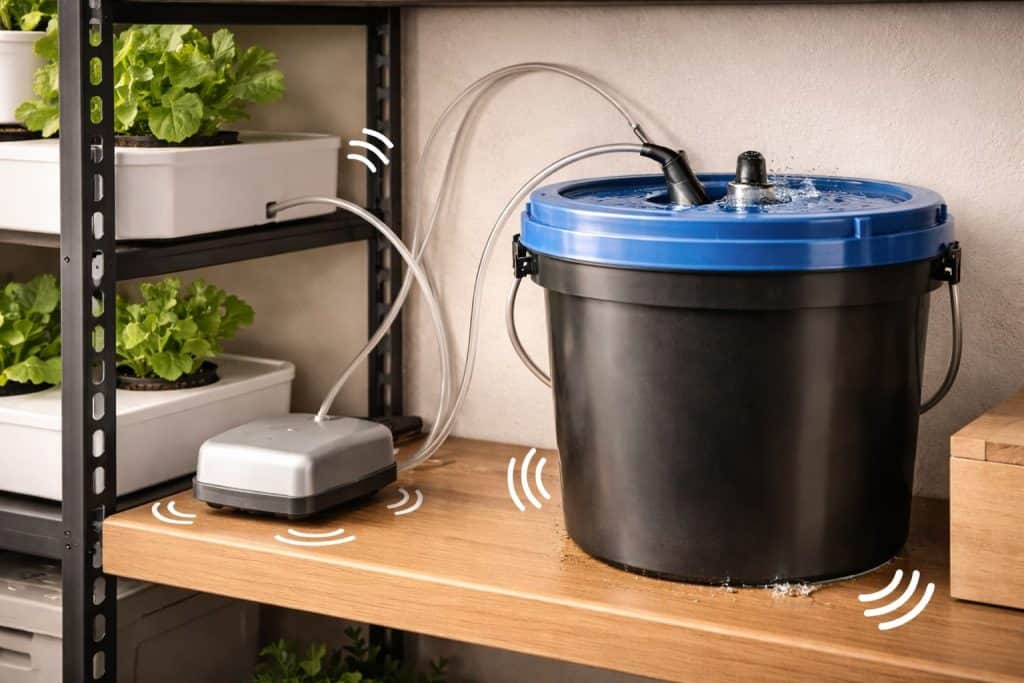
Most noise problems come from vibration, not just the pump. A quiet pump can sound loud if it touches a thin plastic wall. That plastic acts like a speaker and grows the sound. Common mistakes include letting the pump touch the tank.
Insights from PLOS ONE Journal indicate
“The hydrological parameters obtained from the substrate may be affected by emitter discharge, drip operating pressure, and distance from the water source. These factors have all been observed to influence efficiency metrics, such as application efficiency and water retention.” – Rosewood Sawdust Study
Air stones that bubble too hard are also a problem. Drain lines that sit above the water create splashing. Cheap pumps often get louder as they age.
Fast water flow also creates gurgling in the pipes. Thin reservoirs are another mistake because they do not muffle sound. Noise above ~30-40 dB noticeable in quiet rooms. This is very true in a quiet bedroom at night. Larger motors running at low speeds are always quieter.
This rule applies to all hydroponic gardens. Avoid these simple errors to make your system tolerable. However, an active system will never be as quiet as a bucket. Choosing the right materials is the first step to a silent home.
Recommended Product: Acoustic Dampening Rubber Mat
- Description: A heavy foam mat that sits under your garden.
- Pros: Cheap and stops vibrations from moving through the floor.
- Cons: It can look messy and might collect spilled water.
- Consider if: None; it is a vital tool for any noisy pump.
- Best For: Keeping neighbors happy if you use a DWC system.
Final Verdict, Silence Makes Growing Easier
When your setup adds a constant hum, it changes how your whole space feels, especially at night when every small sound stands out. That gets old fast. A passive Kratky setup keeps things simple, quiet, and easier to live with, even if growth is a bit slower.
If you also need better light control and extra sound buffering, the Mars Hydro Grow Tent, Small, is a smart next step because its thick fabric helps soften outside noise while keeping your grow discreet. It just fits real life better.
FAQs
Is the Kratky method the best silent choice for apartment hydroponics?
Yes, the Kratky method is usually the best choice for apartment hydroponics when silence matters most. It uses no pump hydroponics, so there is no motor hum, bubbling, or timer noise.
The static nutrient solution and built-in air gap keep roots oxygenated naturally. This makes it ideal for sleep-friendly bedrooms, desks, and windowsill herb gardens in small living spaces daily.
How do I make a quiet DWC setup truly silent at night?
To make a quiet DWC setup less noticeable at night, use a whisper-quiet air pump with rubber feet and ultra-quiet air stones. Place the reservoir on a soft mat to absorb vibration. Keep splash free returns and maintain a stable water level. These changes reduce humming, rattling, and splashing sounds, creating a comfortable indoor silent grow space for sleeping.
Which plants grow best in a low noise hydroponic garden?
Leafy greens and herbs work best in a low noise hydroponic garden because they stay compact and need minimal support. Lettuce, basil, kale, and spinach grow reliably in passive hydroponics, wick hydroponic system, or quiet DWC designs.
Their smaller root mass also helps keep maintenance simple. This makes them ideal for apartment growers who want harvests without added noise or complexity.
How do I prevent odor in non circulating hydroponics?
To prevent smell and stale water in non circulating hydroponics, keep the container clean, avoid dead roots, and maintain a clear air gap hydroponics zone above the nutrient solution static level.
The roots need oxygen from that gap, not fully submerged water. Stable room temperatures and moderate plant density also reduce rot risk. These steps keep the reservoir fresh, clear, and odor-free for longer periods.
Is passive hydroponics more reliable during outages and hot weather?
Yes, passive hydroponics is safer during power outages because it does not depend on pumps, timers, or electricity. Plants continue growing in a static nutrient reservoir, so there is no sudden oxygen failure risk. In hot weather, a generous air gap roots zone and lower water temperatures help roots breathe. This makes it a reliable quiet option for homes, classrooms, and offices.
References
- https://pmc.ncbi.nlm.nih.gov/articles/PMC7218862/
- https://journals.plos.org/plosone/article?id=10.1371/journal.pone.0336497
Related Articles
- https://tophydroponicgarden.com/which-hydroponic-system-is-best-for-beginners/
- https://tophydroponicgarden.com/how-to-start-hydroponics-on-a-budget/
- https://tophydroponicgarden.com/hydroponic-system-for-beginners/
Was this helpful?

I’m Barrie L., a passionate hydroponic gardening enthusiast dedicated to cultivating thriving, soil-less gardens. With a focus on all things hydroponic, I share my expertise on innovative growing techniques and sustainable practices through my blog, tophydroponicgarden.com. As a seasoned hydroponics specialist, my goal is to inspire and guide fellow gardeners in harnessing the power of water-based cultivation for bountiful and eco-friendly harvests. I’m also an author of the book “Hydroponics For Absolute Beginners: Your Step By Step Guide For How To Create An Hydroponics System At Home Without Soil, For Growing Vegetable, Fruit And Herbs.” which is sold on Amazon. Join me on a journey of redefining the way we cultivate plants, one nutrient-rich solution at a time. Happy growing!