

Hydroponics is a way to grow plants without soil. Many people ask, what is the environmental impact of hydroponics?
This method saves water and land, and lets people grow food in cities or places with poor soil. Hydroponics uses less water than traditional farming by recycling nutrient-rich water.
It also lowers land use, which helps protect soil and nature. But it needs energy for pumps and lights, and uses special nutrients that can cause waste.
This article looks closely at what is the environmental impact of hydroponics, covering water use, energy, pollution, crop growth, and farming methods. Keep reading to learn the main benefits and challenges.
Key Takeaways
- Hydroponics uses 90-98% less water and needs less land, helping protect natural resources.
- It lowers carbon emissions by growing food near cities but can use more energy.
- Nutrients are given directly to plants, reducing chemicals, but managing waste is important.
Hydroponics and Water Conservation: Using Less Water Than Traditional Farming
Hydroponics offers a highly efficient way to reduce water usage. Unlike conventional farming that loses water through soil absorption and evaporation, hydroponic systems recycle water in a closed loop. This technology can reduce water consumption by 90-98%. [1]
This water saving is vital in areas facing water scarcity or drought. Hydroponics reduces pressure on natural water resources and helps maintain water quality by minimizing water pollution from runoff.
Because water and nutrients are recirculated, hydroponics supports sustainable food production with significantly lower water usage compared to traditional farming methods.
Land Usage and Soil Preservation with Hydroponic Farming
Hydroponic farms require much less land than soil-based agriculture. They don’t need arable soil, which helps preserve soil health and prevent soil erosion. Soil erosion causes loss of fertile land and contributes to climate change.
By using vertical farms or deep water culture systems, hydroponics maximizes crop yield per square foot.
Growing plants in urban areas or spaces with poor soil helps reduce deforestation and habitat destruction.
This farming method supports land conservation and creates opportunities for urban agriculture, reducing the need to expand farmland into natural ecosystems.
Carbon Footprint and Energy Consumption in Hydroponic Systems

Hydroponic farms often operate near urban centers, shrinking food miles and cutting greenhouse gas emissions from transportation. This lowers the overall carbon footprint of food production.
However, hydroponic systems depend on energy for pumps, LED lights, and climate control. If energy comes from fossil fuels, it can raise the carbon footprint.
Using renewable energy sources such as solar panels or wind turbines improves energy efficiency and lowers greenhouse gas emissions.
Energy-efficient LED lights and optimized climate control systems help reduce energy consumption, making hydroponic farms more environmentally friendly.
Nutrient Supply and Chemical Inputs: Precision and Challenges
Hydroponics delivers nutrients directly to plant roots in controlled amounts, reducing fertilizer waste and chemical runoff. This precise control helps prevent water pollution and supports plant health.
Most nutrient solutions rely on synthetic chemicals sourced from mining or chemical synthesis, which may have environmental impacts during production.
Proper management of nutrient solutions and waste is necessary to avoid nutrient leaching and water contamination.
Understanding hydroponic nutrients and how to prepare them correctly enhances efficiency and reduces waste.
Growing media like coco coir and clay pebbles must also be recycled or disposed of responsibly to minimize environmental footprints.
Maximizing Crop Yield and Growth Rates with Hydroponics
Hydroponic systems optimize growing conditions such as nutrient levels, water quality, and light intensity to boost crop yields.
Plants grow faster and healthier thanks to precise nutrient uptake and optimal growing environments.
This high yield per area is crucial for feeding a growing global population while using less land and water.
Hydroponic lettuce, leafy greens, herbs, and other crops thrive in these systems, supporting year-round food production and food security.
For beginners, understanding common practices in hydroponics for beginners helps in setting up successful systems that maximize growth and efficiency.
Farmers can experiment with different plant species and nutrient film technique or ebb and flow systems to find the best crop production methods.
Pest Control and Reduced Chemical Pesticides
Growing plants in controlled hydroponic environments reduces pest infestations and disease risk.
This allows farmers to use fewer chemical pesticides and herbicides compared to conventional farming.
Integrated pest management and other control methods can be easier to perform in hydroponic systems, protecting crop health while reducing chemical inputs.
Lower chemical use results in less water pollution and healthier ecosystems around hydroponic farms.
Hydroponics in Urban Areas: A Sustainable Food Supply Solution
Urban hydroponic farms can transform unused spaces like rooftops and warehouses into food production hubs.
These farms reduce food waste by providing fresh produce close to consumers, cutting transport and storage losses.
Vertical farming and controlled environment agriculture enhance food security in cities by supplying nutrient-rich, fresh produce year-round.
The USDA provides technical and financial assistance for hydroponic, aquaponic, and vertical farming operations to support sustainable urban food systems. [2]
This approach supports sustainable food production and reduces the carbon footprint connected to traditional long-distance food supply chains.
Waste Management and Environmental Impacts of Hydroponic Systems
Hydroponic farming produces waste like spent nutrient solutions and growing media. Without proper disposal or recycling, these wastes can cause environmental contamination.
Recycling nutrient-rich water and reusing growing mediums like coco coir or clay pebbles reduce waste and environmental impact.
Life cycle assessment of hydroponic systems highlights the importance of waste management strategies to maintain sustainability.
Good waste handling practices prevent property damage and water pollution, supporting sustainable farming practices.
Energy Efficiency and Renewable Energy Opportunities
Energy consumption remains a key environmental drawback of hydroponic farming. Pumps, artificial lighting like LED lights, and climate control use electricity constantly.
Switching to renewable energy sources can dramatically lower the environmental footprint of hydroponic farms.
Solar panels, wind turbines, and energy-efficient equipment contribute to greener farming systems.
Energy efficiency improvements make hydroponics a more sustainable agricultural sector option, helping address climate change.
Combining Hydroponics with Aquaponic and Circular Farming Systems
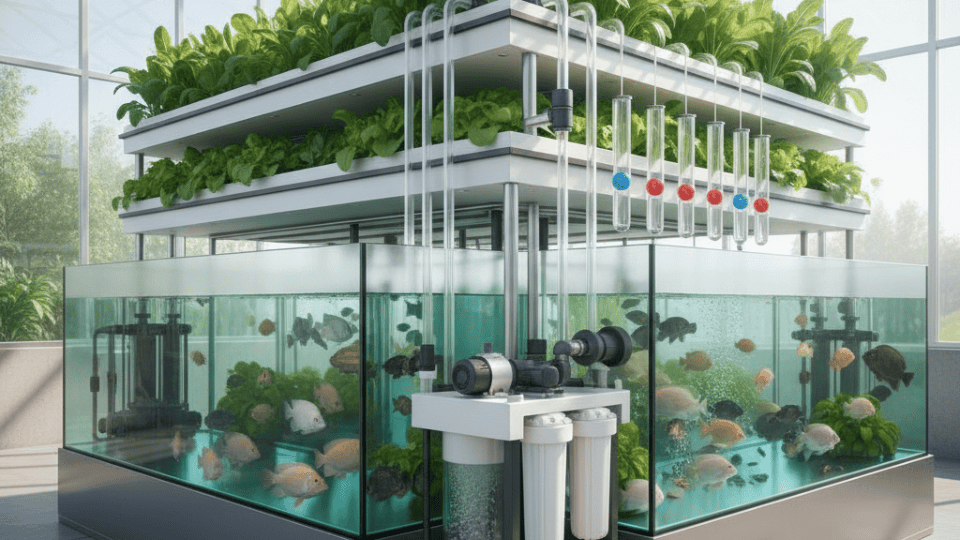
Some farms integrate hydroponics with aquaponic systems, which combine fish farming with plant cultivation. Fish waste provides natural nutrients, reducing synthetic fertilizer use.
Circular farming systems recycle water and nutrients, minimizing waste and pollution. These integrated methods enhance resource efficiency and sustainability.
By adopting such systems, farmers can improve hydroponic farming’s environmental profile and support sustainable agriculture.
Overcoming Challenges: Costs, Technical Knowledge, and Adoption Barriers
Hydroponic systems require technical expertise and significant initial investment. Managing nutrient solutions, monitoring crop health, and maintaining equipment can be demanding.
These factors limit adoption in some regions, especially where resources and knowledge are scarce.
Policy support, training programs, and community initiatives can help farmers overcome barriers and encourage sustainable hydroponic farming practices.
The Role of Growing Medium in Environmental Impact
Hydroponics uses various growing mediums such as coco coir, clay pebbles, and rockwool to support plant roots. The choice of growing medium affects waste generation and resource use.
Coco coir, made from coconut husks, is renewable and biodegradable, making it more environmentally friendly. Clay pebbles and rockwool require energy to produce and are less biodegradable.
Selecting sustainable growing media and recycling them when possible reduces the environmental footprint of hydroponic farming.
Additionally, knowing how to make nutrient solutions tailored for your media can improve plant success and reduce resource waste.
Hydroponics and Climate Change Mitigation
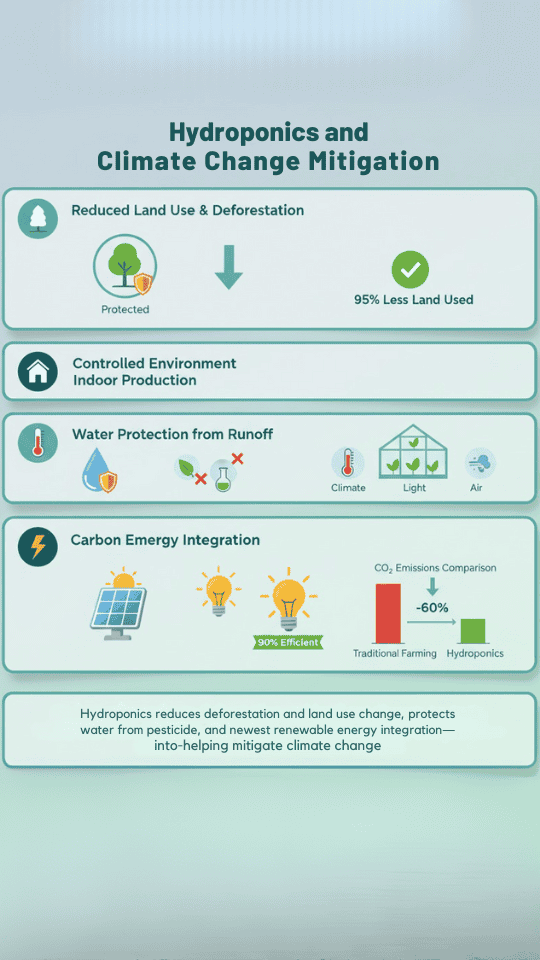
Hydroponics can contribute to climate change mitigation by reducing land use change and deforestation, which release carbon stored in soil and trees.
By producing food in controlled environments, hydroponics limits the need for clearing natural habitats.
Reduced pesticide and fertilizer runoff also protect water bodies from pollution that can worsen climate impacts.
Although energy consumption is a concern, integrating renewable energy and energy-efficient technologies in hydroponic farms can help lower greenhouse gas emissions, supporting broader climate goals.
FAQ
How does hydroponics save water compared to regular farming?
Hydroponics uses way less water than regular farms – up to 98% less! The water gets recycled over and over in a closed system. Regular farms lose lots of water when it soaks into soil or evaporates. With hydroponics, the water and nutrients stay in the system and get reused. This is super helpful in places where water is hard to find. It also stops water pollution because there’s no runoff into rivers and lakes like with traditional farming methods.
Does hydroponics need less land than regular farming?
Yes! Hydroponic systems need much less land because they grow plants without soil. You can set up vertical farms in buildings, on rooftops, or in urban areas where regular farming won’t work. This saves natural land from being cleared for farming. It also stops soil erosion, which happens when farming wears away good soil. Using less land means we can protect forests and wildlife habitats while still growing fresh produce for people.
Does hydroponics use a lot of energy?
This is the biggest challenge with hydroponic growing. The LED lights, pumps, and climate control systems need lots of electricity to work year round. If this power comes from fossil fuels, it can hurt the environment. But many hydroponic farms are switching to renewable energy sources like solar power. New LED lights also use less energy than old ones. Energy efficient equipment is getting better all the time.
Are hydroponic nutrients bad for the environment?
Hydroponic systems give plants exactly what they need through nutrient solutions. This means less waste and water pollution than traditional farming. The nutrients go straight to plant roots, so nothing gets wasted. But making these synthetic nutrients does use energy and resources. The key is managing nutrient delivery properly and recycling used solutions. Some farms use aquaponic systems that use fish waste as natural fertilizer instead.
Conclusion
So, what is the environmental impact of hydroponics? It mostly benefits the environment by conserving water, reducing land use, and lowering chemical inputs. Hydroponics helps protect soil quality and cut greenhouse gas emissions from food transport. Still, energy consumption and nutrient management are challenges that need careful attention. Using renewable energy sources and recycling nutrient solutions are vital steps to improve sustainability.
References
- https://pmc.ncbi.nlm.nih.gov/articles/PMC10625363/
- https://www.usda.gov/topics/urban/innovative-production
Related Articles
- https://tophydroponicgarden.com/understanding-hydroponic-nutrients/
- https://tophydroponicgarden.com/how-to-make-nutrient-solution-for-hydroponics/
- https://tophydroponicgarden.com/hydroponics-for-beginners/
Was this helpful?

I’m Barrie L., a passionate hydroponic gardening enthusiast dedicated to cultivating thriving, soil-less gardens. With a focus on all things hydroponic, I share my expertise on innovative growing techniques and sustainable practices through my blog, tophydroponicgarden.com. As a seasoned hydroponics specialist, my goal is to inspire and guide fellow gardeners in harnessing the power of water-based cultivation for bountiful and eco-friendly harvests. I’m also an author of the book “Hydroponics For Absolute Beginners: Your Step By Step Guide For How To Create An Hydroponics System At Home Without Soil, For Growing Vegetable, Fruit And Herbs.” which is sold on Amazon. Join me on a journey of redefining the way we cultivate plants, one nutrient-rich solution at a time. Happy growing!