
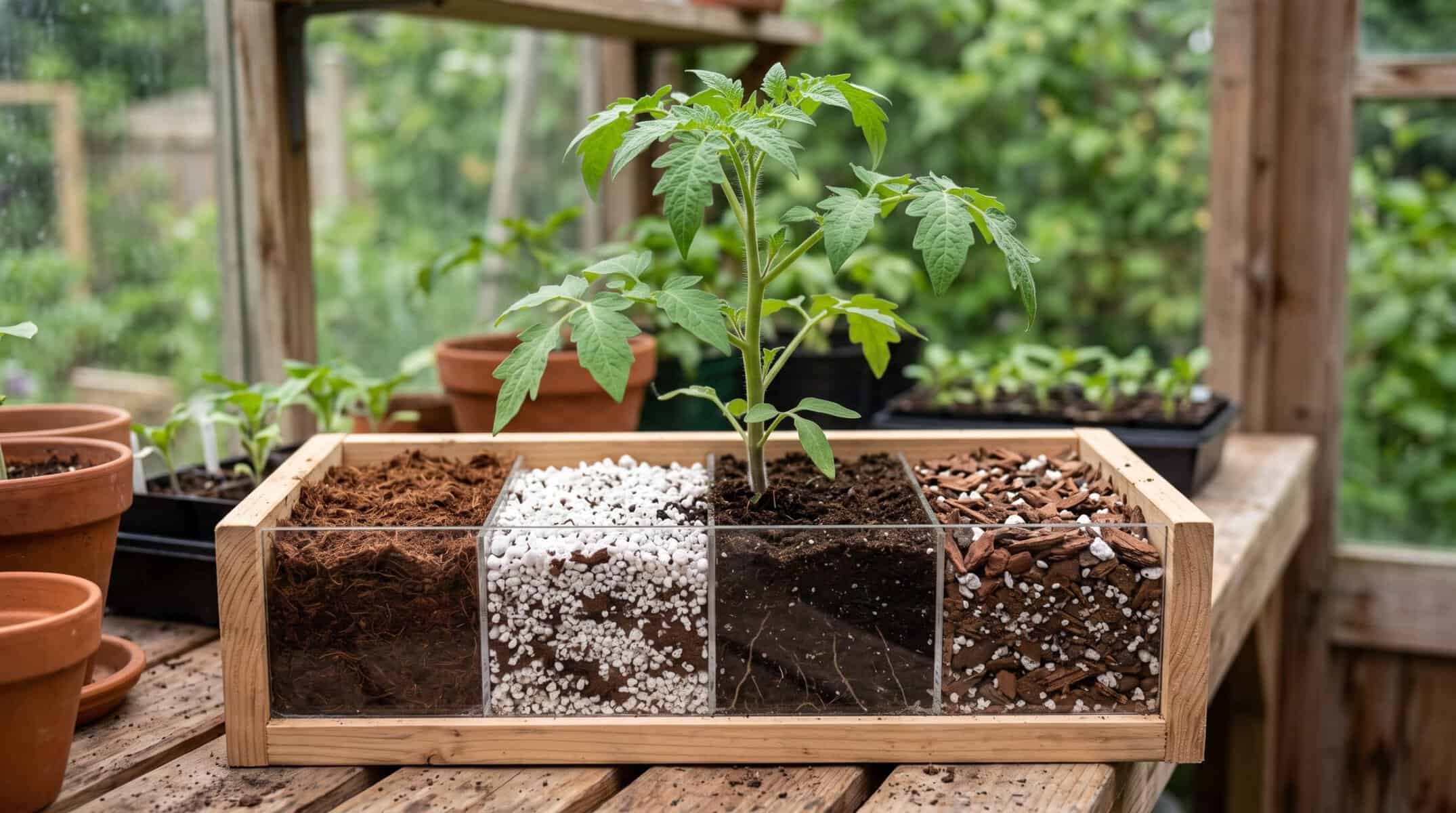
The best grow media for tomatoes depends on your growing system. It should offer good drainage, proper aeration, moisture retention, and enough nutrients for healthy root growth.
Cocopeat-based mixes are a good choice for seedlings and soilless growing, while coco-perlite and rockwool are common options for hydroponic tomatoes. Keep reading with Tophydroponicgarden to find the right growing medium for your setup.
Best Growing Medium for Tomatoes
- Cocopeat + vermicompost is a useful starting medium for tomato seedlings because it combines moisture retention with organic nutrients.
- Coco or peat + compost + perlite provides a practical tomato potting mix for containers.
- Coco-perlite or rockwool fits hydroponic tomatoes, where drainage, aeration, and irrigation control matter most.
Which Tomato Growing Medium Is Best?
The best tomato growing medium depends on the plant’s growth stage and production system. A 2020 soilless tomato study reported 631 g of fruit per plant from a 1:1 cocopeat-sawdust treatment, showing the potential of soilless media.
For seedlings, the medium should be light and able to hold moisture without becoming soggy. Mature container tomatoes need stronger root support, good drainage, and enough air around the roots. Hydroponic tomatoes need steady movement of water and nutrients through the root zone.
Research from ICAR-Central Island Agricultural Research Institute also tested different tomato growing media under tropical conditions. The hybrid used was Arka Rakshak, so its results should be viewed within that specific production environment.
For seedlings, cocopeat with vermicompost can provide moisture and early nutrition. Container tomatoes can use coco or peat with compost and perlite for drainage and aeration.
Grow bags often use coco coir and perlite because the mix is light and airy. Hydroponic systems can use the same combination for balanced water and air movement. Commercial greenhouses may use rockwool or coco coir for controlled fertigation.
What Makes Good Tomato Soil?
Good tomato soil or growing media should hold enough water while leaving air around the roots. The University of Maryland Extension explains that container media need a balance of water, air, nutrients, and physical support.
Tomatoes plants are heavy-feeding plants, but nutrient-rich soil alone can’t guarantee healthy growth. A dense mix may drain poorly and reduce oxygen around the roots. And that can cause root problems over time.
The same idea applies to tomato container soil and tomato raised bed soil. Garden soil can work well in the ground if its structure is suitable. But straight garden soil is usually too dense for containers.
The most useful properties are:
- Good drainage
- Strong aeration
- Moderate water retention
- Stable structure
- Suitable pH
- Reliable nutrient availability
A well-draining soil for tomatoes should become moist after watering without staying saturated for long periods. That balance matters because tomato roots need both moisture and air. So, avoid mixes that hold excess water for too long.
As highlighted by Agriculture
““The importance of a balanced combination of air and water” was demonstrated in tomato propagation, where substrate physical properties affected germination and seedling growth.” – Agriculture
Why Do Aeration and Drainage Matter?
Aeration and drainage keep oxygen available around tomato roots while allowing excess water to leave the growing medium. The supplied research identifies oxygen-starved root zones as a cause of wilting, poor growth, and yield loss.
Perlite, pumice, coarse materials, and suitable coco coir can increase pore space. The exact amount depends on the growing system and irrigation schedule.
Insights from Discover Sustainability
“Maintaining adequate air-filled porosity is a crucial factor in substrate management and has a direct impact on plant growth.” – Discover Sustainability
A medium that remains saturated can create more problems than a medium with slightly lower nutrient content.
What Should Tomato Soil pH Be?
Tomato soil pH should remain within a mildly acidic range suitable for nutrient availability. The supplied research framework commonly places tomato media around pH 6.0–6.8, although the ideal value depends on the production system.
Growers using hydroponic media should also monitor EC because fertilizer salts can accumulate even when the physical structure looks good.
What Is the Best Tomato Soil Mix for Containers?
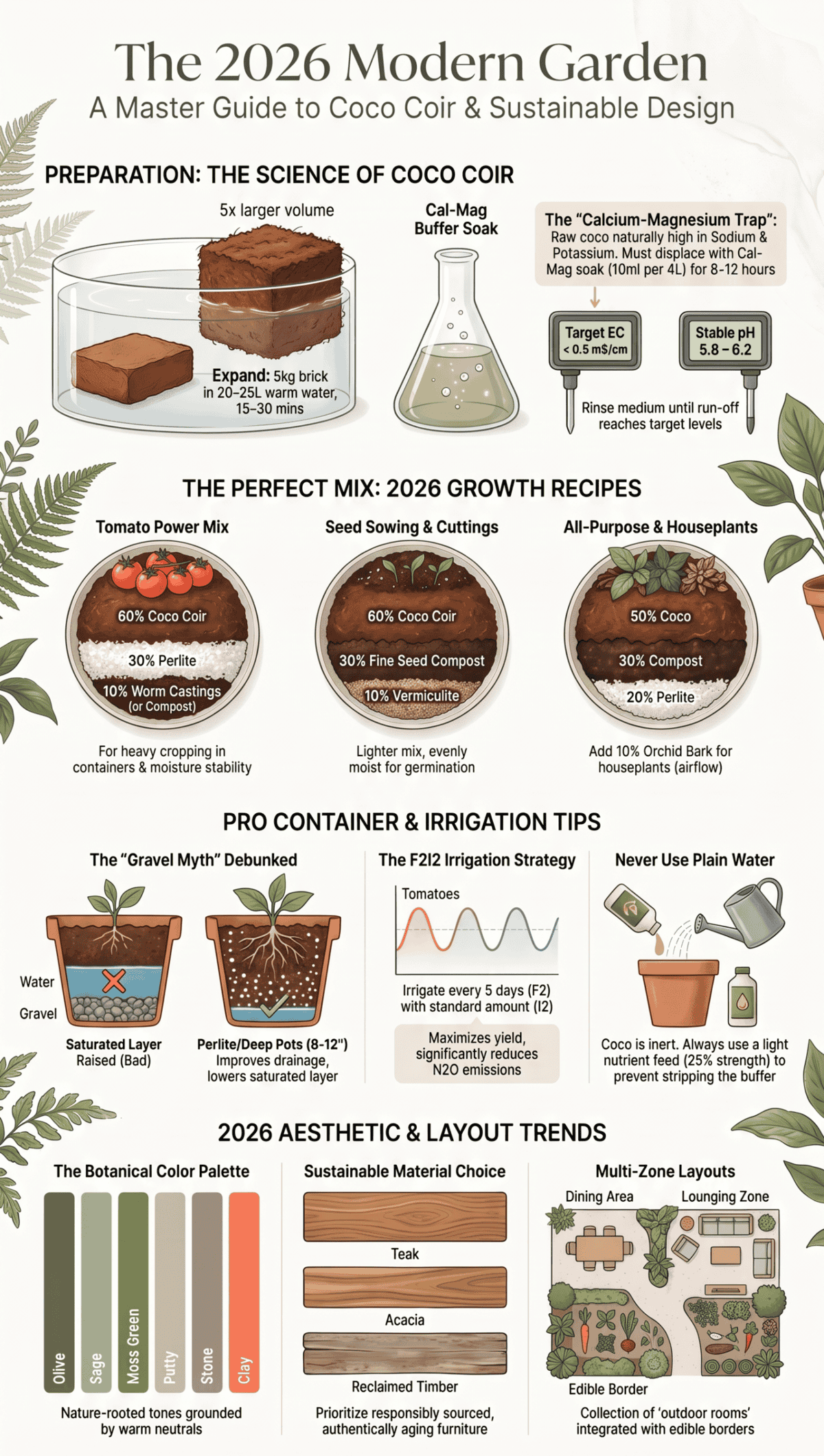
A practical tomato potting mix combines moisture retention, aeration, and nutrients. A common mix uses about 1:1:1 coco or peat, compost, and perlite or pumice.
For a homemade tomato soil mix, use:
- One part coco coir or peat
- One part mature compost
- One part perlite or pumice
Coco coir or peat holds moisture. Compost adds organic matter and nutrients. Perlite or pumice creates air spaces and improves drainage. University of Maryland Extension also lists these materials for container growing media.
Is cocopeat good for tomato plants? Cocopeat can hold moisture while keeping the root zone light. Its performance depends on particle size, quality, moisture, and irrigation. For containers and grow bags, mix it with perlite to improve aeration. Add mature compost or tomato fertilizer based on the growing system.
How much perlite should tomato soil contain? Perlite improves drainage and air space. The supplied research identifies 30% perlite with 70% coco as one hydroponic starting point. Wetter climates may need more aeration, while hot, dry conditions may need more water retention.
Is Cocopeat + Vermicompost Good for Tomato Seedlings?
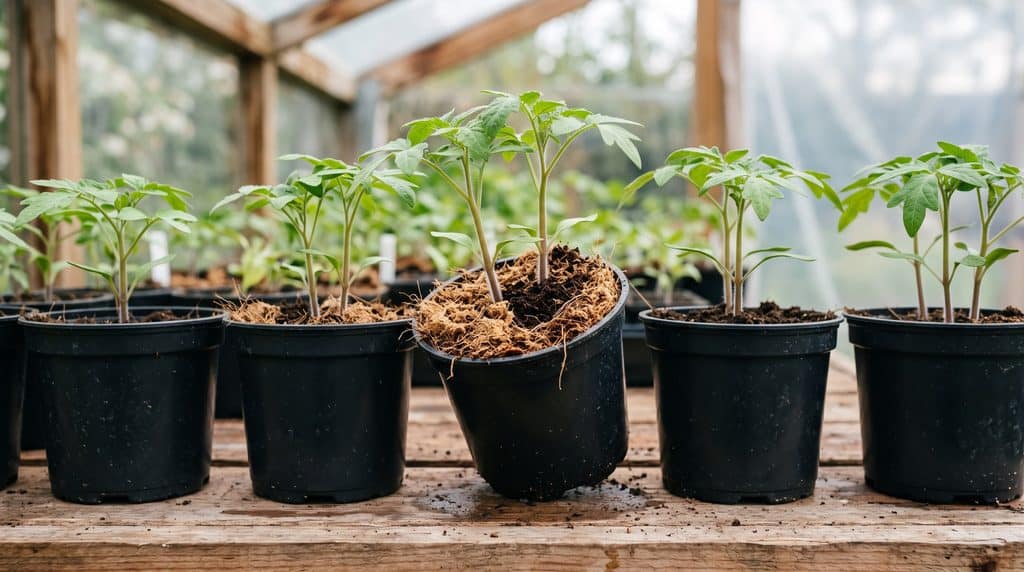
Cocopeat and vermicompost can make a good tomato seedling medium when the ratio and quality are suitable. One study on Srijana tomato seedlings reported a 98.58% plant stand and a maximum seedling length of 20.44 cm with its strongest growing-media treatment.
The same study recorded 13.8 leaves and 1.56 g fresh weight in the measured treatment. The study was conducted in Kaski District, Nepal, so its results may not apply to every tomato variety or climate.
Cocopeat helps seedlings hold moisture without creating a dense growing medium. This makes it useful for germination and early root growth when watering is controlled. When choosing the right media, consider how moisture retention, aeration, and particle structure affect young roots.
Vermicompost adds nutrients and organic matter, while perlite can improve air flow and the structure of the medium.
Garden soil is usually not suitable as the only tomato seedling medium. It can become dense and limit air and water movement. The research supports using clean, soilless media for seedlings with controlled moisture.
Young roots have little space, so problems can develop fast. Use a light seed-starting medium, and don’t keep the surface wet all the time.
What Is the Best Hydroponic Growing Medium for Tomatoes?
Coco coir mixed with perlite is a practical growing medium for tomatoes because it holds moisture while improving air flow. The supplied technical sources list both 70:30 coco-perlite and 1:1 coco-perlite as useful starting mixes, depending on irrigation needs.
A 70:30 mix contains more coco, so it holds more moisture around the roots. A 1:1 mix contains more perlite, which creates more air space. So, the right ratio depends on how often the plants are watered and how much drainage the system needs.
| Hydroponic medium | Suitable system | Main characteristic |
| 70% coco + 30% perlite | Fruiting crops | Moisture plus aeration |
| 50% coco + 50% perlite | Drip or Dutch bucket | Higher aeration |
| Coco slabs | Greenhouse systems | Stable root substrate |
| Rockwool slabs | Commercial hydroponics | Controlled root zone |
Wageningen University & Research has documented the use of substrates such as rockwool and coco coir in greenhouse tomato production. Its supplied research also reports that closed hydroponic systems can use 10-50% less water than open systems when properly managed.
For tomatoes, choose the medium based on irrigation, drainage, and root aeration needs. Get the balance right.
Is Coco Coir Better Than Rockwool?
Coco coir and rockwool can both support hydroponic tomatoes, but they differ in moisture behavior, handling, and irrigation requirements. Commercial greenhouse production commonly uses both substrate types.
Coco coir works well in tomato grow bags, drip systems, and Dutch buckets. Rockwool provides a manufactured and consistent root-zone structure for controlled fertigation.
Is Coco-Perlite Good For Dutch Bucket Tomatoes?

Credit: Hoocho
Coco-perlite is well suited to Dutch bucket tomatoes because the blend can provide both moisture retention and air space around the roots. The supplied research specifically associates coco-perlite blends with drip and Dutch bucket systems.
The grower should adjust irrigation according to drainage and plant demand rather than applying a fixed schedule.
How Can Poor Drainage Kill Tomato Roots?
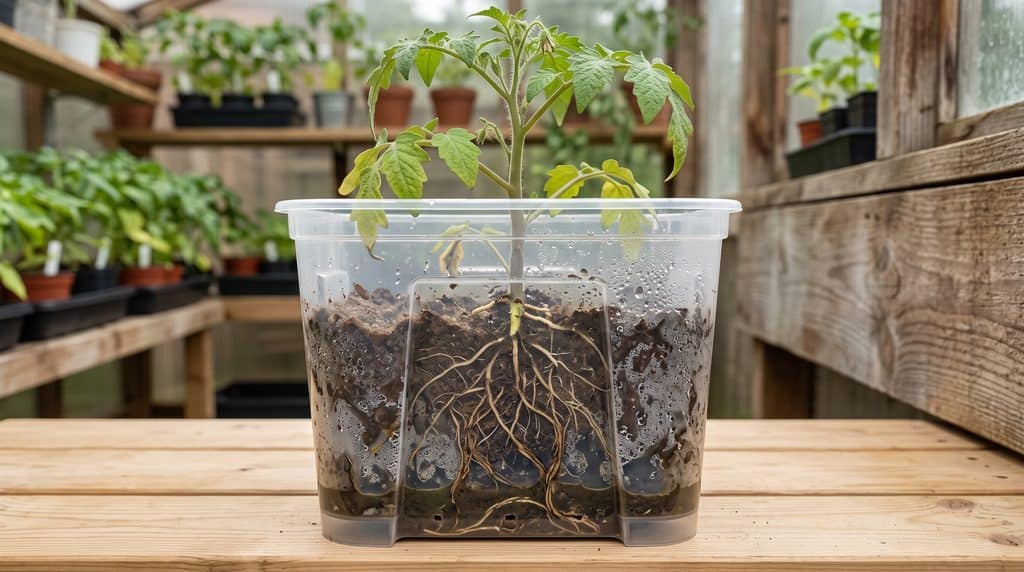
Poor drainage can reduce oxygen around tomato roots, even when the growing medium contains suitable materials. The supplied research links low oxygen in the root zone with wilting, weak growth, and lower yields. Too much water can leave roots without enough air, which can affect plant growth over time.
Common warning signs include:
- Medium stays wet too long.
- Plants wilt while the medium stays moist.
- Roots develop poorly.
- Growth slows despite enough fertilizer.
- Water drains very slowly.
Pythium can also become a concern when excess moisture combines with poor sanitation, especially around young tomato seedlings. Wet conditions can create a better setting for root problems, so drainage needs close attention.
But adding more fertilizer won’t fix poor drainage. The growing medium needs a better balance between water retention and air space. Improve drainage first, then adjust watering as needed.
Good drainage helps tomato roots get the oxygen they need while still holding enough moisture for steady growth. That balance matters more than adding extra nutrients when the real problem is excess water.
FAQ
What is the best growing medium for tomatoes in containers?
The best growing medium for tomatoes should drain excess water while retaining enough moisture for healthy root growth. A balanced tomato potting mix can combine coco coir or peat moss, perlite, and compost or vermicompost.
This combination creates lightweight, aerated tomato container soil that supports healthy roots without becoming waterlogged after watering.
What is a good tomato soil mix ratio for healthy growth?
A practical tomato soil mix ratio is 3 parts coco coir or peat, 1 part perlite, and 1 part vermicompost. This 3 1 1 tomato growing medium balances moisture retention, drainage, and organic matter.
The final mix should hold enough moisture for tomato plants while providing adequate tomato soil aeration around the roots.
Is coco coir or peat moss better for tomatoes?
Both materials can work well in tomato growing media, but they have different properties. Coco coir for tomatoes provides good moisture retention and aeration, while peat moss for tomatoes holds moisture effectively but may become compact when it dries out.
Mixing either material with perlite and compost can create well-draining soil for tomatoes with better root-zone conditions.
What is the best hydroponic substrate for tomatoes?
The best hydroponic substrate for tomatoes depends on the growing system and irrigation method. A tomato hydroponic growing medium should provide root support, drainage, and enough air space around the roots.
Common options include rockwool, LECA, and perlite. The selected medium should also work well with frequent irrigation and nutrient delivery.
How do you make a homemade tomato soil mix?
A basic homemade tomato soil mix can combine coco coir or peat moss, perlite, and mature compost or vermicompost. A cocopeat perlite vermicompost blend can provide moisture retention, aeration, and organic matter.
Before planting, check the tomato soil pH and drainage. The mix should provide suitable conditions for healthy tomato root growth.
What Is the Best Grow Media for Tomatoes?
Choosing tomato grow media can feel confusing when every growing system needs something different. You need a medium that holds enough moisture while still giving roots plenty of oxygen and support. There isn’t one perfect mix for every tomato plant.
The practical choice is to match the medium to your crop stage and growing system. Coco-perlite works well for many hydroponic setups, while coco or peat mixed with compost and perlite can suit containers. For more guidance on choosing and using the right media, Tophydroponicgarden can help you take the next step with confidence.
References
- https://www.mdpi.com/2077-0472/14/3/382?
- https://link.springer.com/article/10.1007/s43621-025-00933-3
Related Articles
- https://tophydroponicgarden.com/tomatoes/
- https://tophydroponicgarden.com/grow-media/
- https://tophydroponicgarden.com/choosing-the-right-hydroponic-media/
Was this helpful?

I’m Barrie L., a passionate hydroponic gardening enthusiast dedicated to cultivating thriving, soil-less gardens. With a focus on all things hydroponic, I share my expertise on innovative growing techniques and sustainable practices through my blog, tophydroponicgarden.com. As a seasoned hydroponics specialist, my goal is to inspire and guide fellow gardeners in harnessing the power of water-based cultivation for bountiful and eco-friendly harvests. I’m also an author of the book “Hydroponics For Absolute Beginners: Your Step By Step Guide For How To Create An Hydroponics System At Home Without Soil, For Growing Vegetable, Fruit And Herbs.” which is sold on Amazon. Join me on a journey of redefining the way we cultivate plants, one nutrient-rich solution at a time. Happy growing!