

EC in hydroponics can seem confusing because it appears as a technical number on a meter. In simple terms, electrical conductivity, or EC, helps estimate how strong your nutrient solution is by measuring dissolved mineral salts in the water.
That number matters because hydroponic plants depend directly on the solution around their roots. If EC is too low, plants may lack nutrients. If it is too high, roots can become stressed. At Top Hydroponic Garden, the safest approach is to read EC together with pH, plant stage, crop type, water level, and visible plant health.
plant health. Once you learn that pattern, EC becomes less intimidating and much more useful for preventing nutrient stress.
The Practical Guide to EC in Hydroponics
- EC shows nutrient strength: A higher EC usually means more dissolved minerals in the nutrient solution, while a lower EC usually means a weaker solution.
- Plant stage changes the target: Seedlings, leafy greens, herbs, and fruiting crops do not need the same nutrient strength, so EC should match growth stage and crop demand.
- EC works best with pH checks: EC tells you concentration, while pH affects nutrient availability, so both readings matter for healthy hydroponic roots.
The goal is not to adjust EC every hour. The goal is to understand whether your nutrient solution is moving in a healthy direction and whether your plants are actually responding well.
Why EC Matters More in Hydroponics Than Soil
EC matters more in hydroponics because the nutrient solution is the plant’s main food source. In soil, organic matter, clay particles, microbes, and natural buffering can slow down nutrient changes. In hydroponics, the roots depend directly on the water you mix, test, and maintain.
This direct control is one reason hydroponics can grow plants quickly. It is also why mistakes show up faster. If the nutrient solution is too weak, plants may grow pale, slow, or thin. If it is too strong, roots can struggle to absorb water, leaf tips may burn, and young plants can become stressed.
EC does not tell you every detail about the solution. It cannot tell whether nitrogen, potassium, calcium, or magnesium is perfectly balanced. It gives you a general reading of dissolved ions. That means EC is a guide, not a full lab report.
Still, EC is one of the most useful numbers a home grower can track. When paired with pH testing, water temperature checks, and plant observation, it helps you avoid guessing. If you already follow Top Hydroponic Garden’s guide to pH control for hydroponic grow media, EC is the next measurement that makes nutrient management more predictable.
What Does EC Actually Measure?

EC measures electrical conductivity in a liquid. Pure water does not conduct electricity well. When minerals and fertilizer salts dissolve into water, conductivity increases. That is why hydroponic growers use EC meters to estimate nutrient strength.
Water quality guidance explains:
“Electrical conductivity (EC) describes how well a charge of electricity crosses 1 cm of water.” – Oklahoma State University Extension
That simple definition helps clear up a common beginner mistake. EC is not measuring plant food directly like a label on a fertilizer bottle. It is measuring the solution’s ability to conduct electricity, which rises as dissolved ions increase.
Most EC meters report readings in mS/cm, or millisiemens per centimeter. Some growers also see ppm or TDS readings. These measurements are related, but they are not always interchangeable because different meters use different conversion factors. For beginners, it is usually easier to stick with EC instead of switching back and forth between EC and ppm.
A stable EC reading gives you a snapshot of the reservoir. A rising EC may mean water is evaporating or plants are drinking more water than nutrients. A falling EC may mean plants are taking up nutrients faster than water is being removed. Neither trend is automatically good or bad, but both tell you something about the system.
EC vs pH: Why They Are Not the Same Thing
EC and pH are both important, but they measure different things. EC tells you how concentrated the nutrient solution is. pH tells you how acidic or basic the solution is. A reservoir can have a perfect EC but a poor pH, and plants may still struggle.
Oklahoma State University Extension explains:
“The pH of a nutrient solution influences the availability of nutrients, so it should be maintained in the optimum range.” – Oklahoma State University Extension
This matters because nutrients can be present in the water but still difficult for roots to use when pH drifts too far. A grower might see yellow leaves and assume the EC is too low, then add more fertilizer. If the real issue is pH imbalance, adding nutrients can make the problem worse.
Think of EC as the strength of the nutrient mix and pH as the access point. EC tells you how much dissolved material is in the solution. pH affects whether plants can use that material efficiently. That is why serious hydroponic growers check both numbers instead of trusting only one.
Top Hydroponic Garden’s article on accurate pH testing for hydroponics is a useful companion topic because pH and EC work together in every reservoir. If one reading is ignored, the other can become misleading.
Common EC Ranges for Hydroponic Crops
Different crops need different EC ranges. Seedlings usually need a weaker solution because their roots are small and sensitive. Leafy greens usually prefer moderate nutrient strength. Fruiting crops like tomatoes and peppers often need stronger feeding once they are established and actively producing.
These ranges are starting points, not strict rules. Variety, light intensity, water quality, growing system, temperature, and plant stage can all change the best reading.
| Crop Type | Common EC Starting Range | Why It Matters | Beginner Note |
| Seedlings | 0.4–0.8 mS/cm | Young roots are sensitive | Start mild and increase slowly |
| Lettuce and leafy greens | 1.0–1.8 mS/cm | Moderate nutrient demand | Watch tip burn and pale leaves |
| Culinary herbs | 1.0–1.6 mS/cm | Usually steady leaf growth | Basil may need stronger light with feeding |
| Strawberries | 1.2–2.0 mS/cm | Needs balance for fruit and leaves | Avoid sudden jumps |
| Tomatoes | 2.0–3.5 mS/cm | Higher demand during fruiting | Needs strong light and stable water |
| Peppers | 2.0–3.0 mS/cm | Fruiting requires more nutrients | Increase gradually after establishment |
The biggest beginner mistake is using a high EC too early. More nutrients do not automatically mean faster growth. If the plant does not have enough light, oxygen, or root health, stronger nutrient solution can increase stress instead of improving growth.
For new growers, leafy greens and herbs are easier crops for learning EC. They respond quickly, stay manageable, and make it easier to see whether the solution is too weak or too strong.
How to Read an EC Meter Correctly
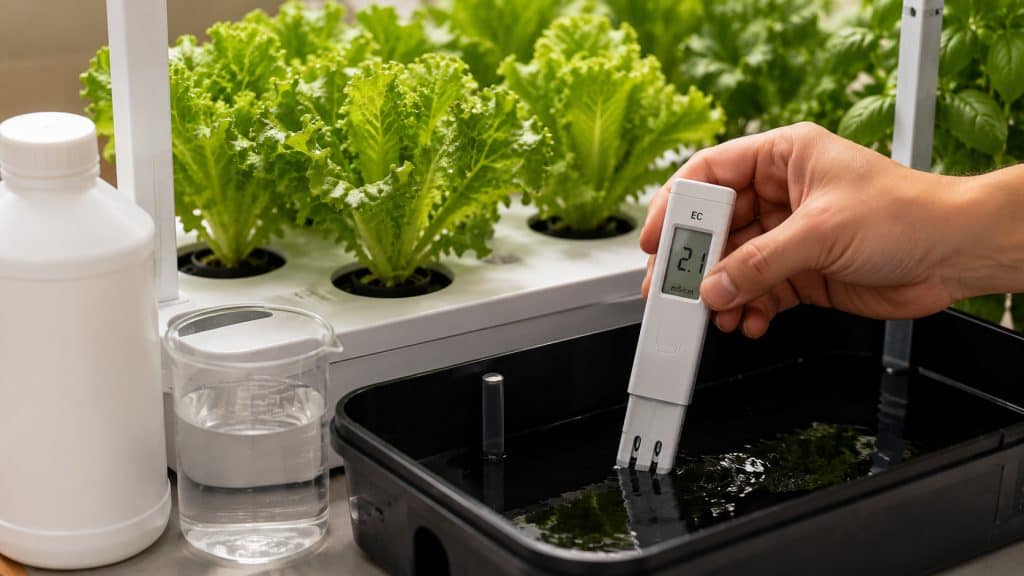
An EC meter is simple to use, but the reading is only useful when the tool is clean and calibrated. A dirty probe, old calibration solution, or air bubbles on the sensor can make the number unreliable. Before testing, rinse the probe with clean water and follow the meter instructions.
Always stir or circulate the nutrient solution before taking a reading. If nutrients are not evenly mixed, one area of the reservoir may test stronger than another. Let the meter stabilize before writing the number down.
Do not panic over tiny changes. A small EC shift can happen as plants drink water, nutrients dissolve, or temperature changes. What matters more is the trend. If EC rises every day while the water level drops, the solution may be becoming too concentrated. If EC falls quickly, plants may be feeding heavily or the reservoir may need a nutrient adjustment.
Keep a simple log. Write down the date, EC, pH, water level, plant stage, and any visible symptoms. After a few weeks, patterns become easier to understand. A reading that looked confusing on day one becomes useful when compared with plant response over time.
What High EC Does to Hydroponic Plants
High EC means the nutrient solution is concentrated. That can be useful for established fruiting plants under strong light, but it can harm seedlings, stressed plants, or crops growing in warm conditions. When EC is too high, roots may struggle to absorb water because the solution outside the roots is too salty.
Plants often show high EC stress through brown leaf tips, curled edges, dark overly firm leaves, or slow growth. In severe cases, roots can look stressed and the plant may wilt even when water is available. This happens because the roots are not absorbing water properly.
High EC can also come from evaporation. If water leaves the reservoir faster than nutrients are used, the remaining solution becomes stronger. This is common in warm rooms, small reservoirs, and systems under strong lights.
The fix is not always to dump the entire system immediately. First, check pH, water level, root health, and meter accuracy. If the EC is genuinely too high, dilute with clean water gradually or change the solution if the reservoir is dirty or unstable.
Avoid jumping from one extreme to the other. A sudden drop from very high EC to very low EC can shock plants too. Make controlled adjustments and watch how the plant responds.
What Low EC Means in a Hydroponic System
Low EC usually means the nutrient solution is weak. This can be normal for seedlings or fresh cuttings, but it may become a problem for established plants that need more nutrients. If EC stays too low, plants may grow slowly, turn pale, or produce weak new leaves.
Low EC is not always caused by forgetting nutrients. It can happen when plants are feeding actively and the reservoir is not replenished. It can also happen after heavy topping up with plain water. If you keep adding water but never restore nutrients, the solution becomes diluted.
Signs of low EC can look like nutrient deficiency, but they should still be checked carefully. Pale leaves, slow growth, and weak stems may also come from low light, cold roots, poor oxygen, or pH problems. That is why EC should be read with other clues.
If the reading is too low for your crop stage, increase nutrient strength slowly. Mix nutrients according to the product label, test again, and avoid adding concentrated fertilizer directly onto plant roots. Let the solution mix fully before retesting.
For home growers, small steady corrections are safer than aggressive feeding. Plants respond better to stable management than repeated swings.
Watch EC and pH Testing Before Adjusting Nutrients

Credits: geekgardener
A visual guide can help beginners understand how EC adjustment works before changing a real reservoir. The important parts to observe are meter use, gradual nutrient adjustment, mixing, and retesting.
Do not copy one exact target from a video without checking your crop. Lettuce, basil, tomatoes, peppers, and seedlings do not all need the same EC. Use the video to understand the method, then match the target to your plant type and growth stage.
EC Changes During the Grow Cycle
EC does not stay fixed throughout the growing cycle. A seedling stage usually starts mild. Vegetative growth may need a stronger solution. Fruiting crops often need a higher nutrient concentration when flowers and fruit develop. Leafy greens may stay in a moderate range for most of their life.
The reservoir also changes as plants grow. A small lettuce seedling uses little water. A mature plant with many leaves can drink much more each day. As water drops, nutrient concentration can shift. That is why checking EC once and never testing again is not enough.
In recirculating systems, EC can drift faster because the same solution is reused. Nutrients are removed unevenly, water evaporates, and plant demand changes. In non-circulating or passive systems, the reservoir can also change as the water level drops.
Top-off water affects the reading too. Adding plain water lowers EC. Adding nutrient mix raises EC. The safest approach is to top up thoughtfully, test after mixing, and avoid large sudden corrections unless the reservoir is clearly wrong.
If you are managing a recirculating setup, Top Hydroponic Garden’s guide to hydroponic garden maintenance can help connect EC checks with water quality, reservoir cleaning, and regular system care.
Common EC Mistakes Beginners Make
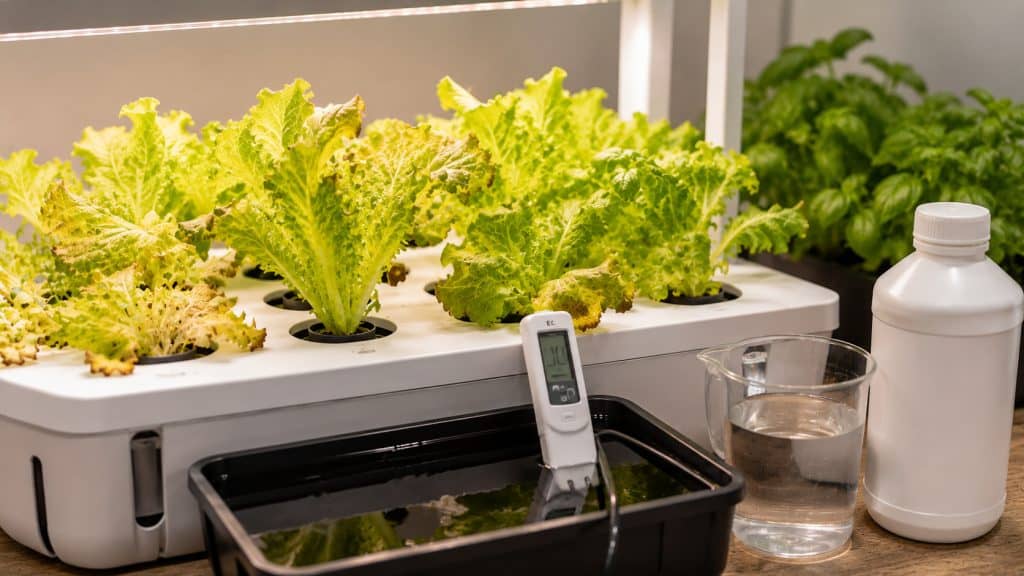
The first mistake is thinking one EC number works for every crop. A reading that works for lettuce may be too weak for fruiting tomatoes or too strong for seedlings. Always match EC to the crop and stage.
The second mistake is adjusting EC before checking pH. If the pH is far outside the useful range, plants may show nutrient stress even when EC looks normal. Adding more nutrients before fixing pH can make the reservoir stronger without solving the real issue.
Another mistake is ignoring source water. Tap water can already contain minerals before nutrients are added. If your starting water has a high EC, your final reading may be higher than expected. In that case, the number includes both your nutrient mix and the minerals already in the water.
Beginners also forget to calibrate meters. An uncalibrated meter can lead to wrong decisions. If the EC reading seems strange compared with plant health, test again, clean the probe, or use a calibration solution.
The final mistake is chasing the number instead of reading the plant. EC is helpful, but plants still tell the real story. Healthy roots, steady growth, good leaf color, and stable water use matter more than hitting a number copied from a chart.
Simple EC Routine for Home Hydroponic Growers
A simple EC routine keeps hydroponics manageable. Start by testing your source water before adding nutrients. This gives you a baseline. Then mix nutrients according to the plant stage, stir well, and test EC again.
Check pH after nutrients are mixed because nutrients can change the solution’s acidity. Adjust pH slowly if needed. Write the readings down so you can compare them over time.
During active growth, check EC regularly. Small systems may need more frequent checks because the reservoir changes faster. Larger reservoirs tend to stay more stable, but they still need monitoring.
If EC rises, check whether water level has dropped. If EC falls, check whether plants are feeding heavily or whether too much plain water has diluted the solution. If EC swings sharply, inspect the reservoir, roots, water temperature, and meter accuracy.
The best routine is steady, not dramatic. Test, record, adjust carefully, and observe the plant before making another change.
FAQ
What is EC in hydroponics?
EC in hydroponics means electrical conductivity. It measures how well the nutrient solution conducts electricity, which helps estimate the amount of dissolved mineral salts in the water.
What should EC be for hydroponics?
The right EC depends on crop type and plant stage. Seedlings need lower EC, leafy greens and herbs usually need moderate EC, and fruiting crops like tomatoes or peppers often need stronger nutrient solutions.
Is EC the same as ppm?
No. EC and ppm are related but not the same. EC measures conductivity directly, while ppm is a converted estimate of dissolved solids. Different meters may use different conversion factors, so EC is usually more consistent.
What happens if EC is too high?
If EC is too high, the nutrient solution can become too concentrated. Plants may show burned leaf tips, curled leaves, slow growth, or wilting because roots struggle to absorb water properly.
What happens if EC is too low?
If EC is too low, established plants may not receive enough nutrients. Growth can slow down, leaves may become pale, and plants may look weak unless the low reading is intentional for seedlings or young plants.
EC Makes Hydroponic Feeding Easier to Understand
EC in hydroponics matters because it turns nutrient strength into a number you can track. Instead of guessing whether the solution is too weak or too strong, you can measure it, compare it with plant response, and adjust more confidently.
The number is useful, but it is not the whole story. EC does not replace pH testing, clean water, oxygen, good light, or healthy roots. It works best as part of a routine that also includes observation and steady record keeping.
For Top Hydroponic Garden readers, the best first step is simple. Test your source water, mix nutrients carefully, record EC and pH together, and avoid sudden changes. Once you understand how your plants respond, EC becomes one of the most practical tools in your hydroponic system.
References
- https://extension.okstate.edu/fact-sheets/turf-irrigation-water-quality-a-reference-guide
- https://extension.okstate.edu/fact-sheets/electrical-conductivity-and-ph-guide-for-hydroponics
Related Articles
- https://tophydroponicgarden.com/ph-control-for-hydroponic-grow-media/
- https://tophydroponicgarden.com/accurate-ph-testing-for-hydroponics/
- https://tophydroponicgarden.com/hydroponic-garden-maintenance/
Was this helpful?

I’m Barrie L., a passionate hydroponic gardening enthusiast dedicated to cultivating thriving, soil-less gardens. With a focus on all things hydroponic, I share my expertise on innovative growing techniques and sustainable practices through my blog, tophydroponicgarden.com. As a seasoned hydroponics specialist, my goal is to inspire and guide fellow gardeners in harnessing the power of water-based cultivation for bountiful and eco-friendly harvests. I’m also an author of the book “Hydroponics For Absolute Beginners: Your Step By Step Guide For How To Create An Hydroponics System At Home Without Soil, For Growing Vegetable, Fruit And Herbs.” which is sold on Amazon. Join me on a journey of redefining the way we cultivate plants, one nutrient-rich solution at a time. Happy growing!