

A Nutrient Film Technique (NFT) system is a hydroponic method where plant roots sit in a shallow, continuously flowing stream of nutrient-rich water. It delivers water, nutrients, and oxygen directly to the roots with remarkable efficiency. This simple yet powerful design allows you to grow plants faster and with far less water than traditional gardening.
If you’ve ever wondered how to maximize a small space for fresh produce, this system offers a compelling answer. Keep reading to learn how this elegant technique works and how you can put it to use.
Key Takeaways
- A thin, recirculating film of water provides constant nutrition and oxygen.
- The system is ideal for fast-growing, lightweight plants like lettuce and herbs.
- Regular monitoring of water flow and pH is critical to prevent crop loss.
The Anatomy of a Flowing Garden
At its heart, an NFT system is an exercise in simplicity. You have three main components working in harmony. A reservoir holds the nutrient solution, a quiet submersible pump pushes that solution to the highest point of the system, and sloped channels guide the water back down in a gentle stream.
The magic happens in those channels. They are typically made from PVC or food-grade plastic and are set at a slight angle, maybe one or two degrees. This incline is just enough to let gravity pull the water along without creating a rushing torrent. Plants are nestled into holes in the top of the channel, their roots dangling into the shallow flow below.
This setup creates a unique environment. The bottom part of the root mass sits in the nutrient film, soaking up water and minerals. The upper part of the roots, however, is suspended in the humid air inside the channel. This exposure is the secret to the system’s speed, allowing roots to breathe freely and absorb oxygen without limitation. Understanding the role of a submersible pump in a hydroponic system is essential for maintaining continuous nutrient flow and avoiding crop loss.
Why This Method Stands Apart

You might be familiar with other hydroponic methods. Deep Water Culture (DWC) submerges roots entirely, which requires careful aeration. Ebb and Flow systems flood the root zone periodically. NFT is different. It provides a constant, low-volume flow.
This continuous trickle is incredibly efficient. It uses a fraction of the water required by soil gardening because almost every drop is recirculated. There’s no waste from runoff or deep percolation. The nutrient solution is constantly monitored and adjusted, so plants get a perfectly balanced diet exactly when they need it.
The lack of a heavy growing medium like soil or coco coir also simplifies things. It reduces costs and mess. More importantly, it makes the root system completely visible. You can easily check for health issues, and there’s no medium to hold onto old salts or become compacted.
This design is not only water-efficient but also lowers the overall costs to run a hydroponic system, making it accessible for home gardeners and commercial growers alike.
- Water Efficiency: Recirculation leads to up to 90% less water use.
- Oxygenation: Air-exposed roots prevent rot and boost growth.
- Space Saving: Channels can be stacked vertically.
- Low Waste: Minimal nutrient solution is needed.
Selecting the Right Plants for the Flow
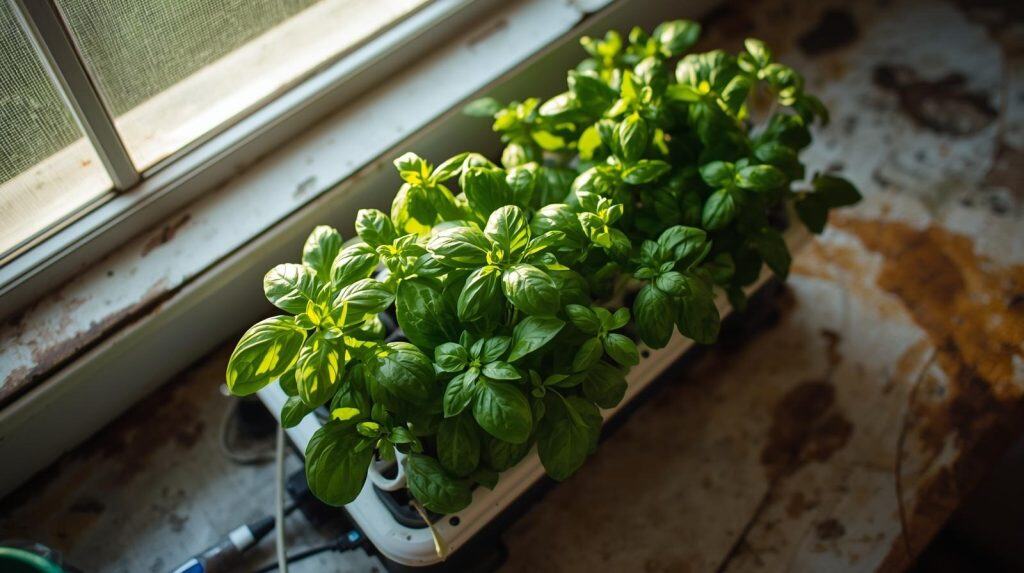
Not every plant thrives in an NFT system. It’s perfectly suited for crops with a modest root system and a relatively short growth cycle. The champions of NFT are undoubtedly leafy greens. Lettuce, spinach, kale, and Swiss chard absolutely flourish in these conditions. Their roots form a dense mat in the channel, and they seem to love the constant, gentle feeding.
Herbs are another excellent choice. Basil, parsley, cilantro, and mint grow vigorously and can be harvested continuously. Their relatively small size and high value make them ideal for a home NFT setup. Some growers have even had great success with strawberries, though they may need a bit of support for the fruit.
It’s best to avoid plants that get too large or heavy. A giant tomato plant or a vining pumpkin simply has too much top weight for the minimal root support an NFT channel provides. Root crops like carrots or radishes are also a poor fit, as their taproots need space to expand downward, something the shallow channel doesn’t provide [1].
Keeping Your System in Harmony
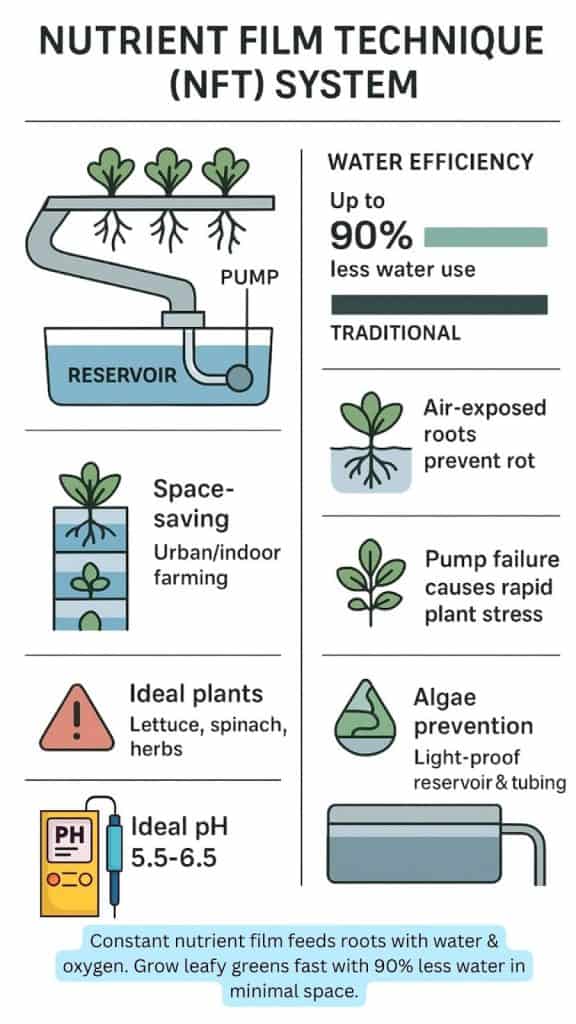
The simplicity of an NFT system requires a commitment to vigilance. The biggest risk is pump failure. Because the roots only have access to a thin film of water, a pump stopping for even a few hours on a warm day can cause plants to wilt and die rapidly. It’s a good idea to have a backup power plan or a battery-operated pump on standby.
You must also become friends with your pH and EC (Electrical Conductivity) meters. The small volume of recirculating water means its chemistry can change quickly. Check these levels at least once a day. The ideal pH for most plants in hydroponics is between 5.5 and 6.5. The EC will tell you the strength of the nutrient solution.
Algae can be a nuisance. It loves light and nutrients, so it will try to grow in any exposed part of the system. Use light-proof materials for your reservoir and channels. Cover any holes or use opaque tubing.
A little algae isn’t a disaster, but a lot can clog channels and compete with your plants for nutrients. Regular maintenance and monitoring are critical, just as a hydroponic system for beginners must carefully manage every component to prevent failure and maximize yields.
The Future is Flowing

Credits : Growth Equation
This technique isn’t static. Innovation continues to make NFT systems smarter and more accessible. Automation is a major trend. Simple timers can be replaced with sensors that monitor pH, EC, and water temperature, making adjustments automatically. This takes much of the guesswork out of maintenance.
For urban farmers, the vertical potential of NFT is a game-changer. Channels can be stacked on racks or A-frames, turning a small balcony or spare room into a highly productive garden. This vertical approach maximizes yield per square foot, a critical advantage in space-constrained environments. The integration of full-spectrum LED grow lights means you aren’t even dependent on sunlight [2].
FAQ
What is a nutrient film technique system in hydroponics?
A nutrient film technique system, or NFT system, uses a thin, continuous layer of nutrient solution flowing through shallow channels. Roots receive oxygen and nutrients efficiently. Plants grow in net pots or rockwool cubes while nutrient solution recirculates from a reservoir tank. This setup supports leafy greens NFT, herbs, and fast-growing crops in small or commercial hydroponics systems.
How does root oxygenation work in a NFT system?
Root oxygenation happens naturally in a recirculating nutrient film. Thin film nutrients allow air to reach roots while they touch the flowing solution. Passive oxygenation and active aeration prevent root rot and support nutrient uptake efficiency. Proper channel slope angle and flow rate control keep roots healthy in shallow channel hydroponics setups.
What materials are used for NFT grow channels and setup?
PVC grow channels or sloped trough systems are common for NFT systems. Net pots hydroponics hold seedlings or transplants. Lightproof tubing and reservoir tanks reduce algae growth. Rockwool cubes support capillary action roots. Automated timers and submersible pump hydroponics maintain continuous nutrient solution flow in DIY NFT build or commercial hydroponics setups.
How do you prevent algae and clogs in NFT systems?
Use lightproof tubing, clean channels regularly, and monitor flow rate control. Recirculating nutrient film reduces stagnant water, limiting biofilm and algae formation. Sterile environment and sanitation hydroponics practices improve microbial balance. Channel slope angle and clog free channels ensure consistent nutrient solution flow in shallow channel hydroponics or vertical NFT setups.
Can NFT systems save water and improve yields?
Yes, water efficiency hydroponics is high because nutrient solution recirculates. Controlled flow, pH balanced nutrients, and EC monitoring boost nutrient uptake efficiency. Hydroponic lettuce yield, basil NFT growth, and leafy greens NFT benefit from oxygen enriched roots and fast-growing crops. Urban farming NFT or greenhouse NFT setups maximize space and reduce water use.
Your Path to a Nutrient Film Harvest
Understanding a Nutrient Film Technique system gives you a tool for remarkably efficient gardening. It demystifies the process of growing food without soil, showing how a continuous flow of water and air can lead to vibrant growth. The key is to start simple, choose the right crops, and maintain a watchful eye on the fundamentals of water flow and nutrient balance.
This method proves that you don’t need vast amounts of space or water to grow your own food. You just need a well-designed system and a consistent routine. The reward is a steady supply of fresh, healthy greens grown right where you are. Ready to see that thin film of nutrients work its magic? Your first harvest of crisp, homegrown lettuce is closer than you think.
References
- https://pmc.ncbi.nlm.nih.gov/articles/PMC11688204/
- https://www.frontiersin.org/journals/plant-science/articles/10.3389/fpls.2024.1504792/full
Related Articles
- https://tophydroponicgarden.com/hydroponic-system-for-beginners/
- https://tophydroponicgarden.com/deep-water-culture/
- https://tophydroponicgarden.com/how-much-does-it-cost-to-run-a-hydroponic-system
Was this helpful?

I’m Barrie L., a passionate hydroponic gardening enthusiast dedicated to cultivating thriving, soil-less gardens. With a focus on all things hydroponic, I share my expertise on innovative growing techniques and sustainable practices through my blog, tophydroponicgarden.com. As a seasoned hydroponics specialist, my goal is to inspire and guide fellow gardeners in harnessing the power of water-based cultivation for bountiful and eco-friendly harvests. I’m also an author of the book “Hydroponics For Absolute Beginners: Your Step By Step Guide For How To Create An Hydroponics System At Home Without Soil, For Growing Vegetable, Fruit And Herbs.” which is sold on Amazon. Join me on a journey of redefining the way we cultivate plants, one nutrient-rich solution at a time. Happy growing!