

Low pH locks nutrients away from your plants. It makes it harder for roots to absorb what they need, and can even cause toxic elements to build up. This often leads to yellow leaves, stunted growth, and lower yields, problems many growers mistakenly treat with more fertilizer.
Indicates low pH reduces crop vigor and development. To fix nutrient absorption and get your plants growing again, you need to address the root zone pH first. The details on symptoms, causes, and solutions are just below.
Quick Read: What Low pH Does to Your Plants
- Low pH in plants commonly causes nutrient lockout, root damage, slow growth, and leaf discoloration.
- Most crops perform best within pH 6.0–7.0 in soil and pH 5.5–6.5 in hydroponics.
- Early testing and gradual correction can prevent stunted plant growth, nutrient deficiencies, and yield loss.
Low Root Zone pH Disrupts Nutrient Uptake and Plant Growth
Low pH changes nutrient chemistry, making some nutrients unavailable while increasing the availability of potentially harmful elements.
The root zone is where plants absorb water and nutrients. When the acidic root zone falls below approximately pH 5.5, nutrient interactions begin changing rapidly. This creates soil acidity stress and disrupts normal plant development.
According to Plant Physiology and Biochemistry
“The acidic pH by itself can cause rhizotoxicity regardless of the prominent factors within the ‘acid soil syndrome’.” – Plant Physiology and Biochemistry
Important nutrients may remain present in the growing medium. However, chemical reactions prevent roots from absorbing them efficiently. This is one of the primary causes of low pH nutrient deficiency symptoms.
At the same time, certain elements become more soluble. Acidic soil doesn’t just lock nutrients away. It can also release aluminum and manganese into the soil water. For many plants, especially sensitive ones, these elements become toxic and damage the roots.
The following changes commonly occur:
- Reduced availability of phosphorus, calcium, magnesium, and molybdenum
- Increased risk of aluminum toxicity in plants
- Increased risk of manganese toxicity in plants
- Lower microbial activity within the root zone
- Reduced root growth and nutrient uptake
These changes create a chain reaction that affects nearly every aspect of plant health.
How Nutrient Availability Changes
Low pH reduces the availability of several essential nutrients. Phosphorus is one of the first nutrients to get locked up in acidic soil. The phosphorus molecules bind tightly with other elements in the soil, forming compounds that plant roots simply can’t take in.
Why Toxic Elements Become More Active
As acidity increases, metals become more soluble. Aluminum attacks the delicate root tips, stunting their growth. Manganese toxicity tricks you, the leaves turn yellow or get brown spots, making it look like the plant is starving, not being poisoned.
Nutrient Deficiency Symptoms Can Appear Even After Fertilizing When Nutrient Uptake Is Restricted
Fertilizer may be present, but roots cannot efficiently absorb nutrients when pH falls outside the optimal range.
Many growers respond to yellow leaves by adding more fertilizer. Adding more fertilizer usually doesn’t fix a low pH problem. The nutrients are already in the soil, but the plant just can’t reach them.
Hydroponic systems illustrate this clearly. Nutrient uptake is generally optimized between pH 5.5 and 6.5. Outside this range, even a nutrient-rich solution can produce deficiency symptoms.
Common examples include:
- Calcium lockout in plants leading to weak new growth
- Magnesium lockout in plants causing interveinal chlorosis
- Phosphorus deficiency symptoms resulting in purple stems
- Molybdenum deficiency in plants showing poor vigor
- General nutrient uptake problems
The result is a plant that appears underfed despite regular fertilization.
What Nutrient Lockout Really Means
Low pH nutrient lockout occurs when nutrients exist in the root zone but are chemically unavailable to roots. The plant cannot use what it cannot absorb.
Which Nutrients Become Harder to Absorb
The most commonly affected nutrients include:
- Calcium
- Magnesium
- Phosphorus
- Potassium
- Molybdenum
This explains why deficiency symptoms often persist after feeding.
Low Plant pH Causes Visible Symptoms That Signal Nutrient and Growth Problems

Plants often develop yellow leaves, purple tints, brown spots, stunted growth, and weak root systems.
Many low soil pH symptoms resemble nutrient deficiencies. That similarity makes diagnosis difficult without testing.
Common leaf symptoms include yellowing leaves from low pH, discoloration, and poor development. Symptoms often begin once pH falls below 5.5.
Watch for these warning signs:
- Yellowing between the veins of older leaves (classic magnesium lockout)
- Brown leaf tips from low pH
- Necrotic leaf margins
- Dark purple or deep reddish hues creeping up the leaf stems and undersides (phosphorus binding)
- Dark green foliage with purple or reddish tones
- Crisp, brown leaf tips and dying edges that look like fertilizer burn but are actually caused by calcium immobility
- Reddish leaf undersides
- Leaf curling from low pH
- Tip burn and dead patches
Growth symptoms are equally important.
- Stunted plant growth
- Slow seedling development
- Weak stems
- Reduced flowering
- Smaller fruit production
- Lower crop yields
Leaf Symptoms to Watch For
Always check the leaves first. Yellowing, curling, or spotting usually points to a shortage of calcium, magnesium, or phosphorus. It’s a clear early sign that your soil pH is off.
Root and Growth Symptoms
When plants can’t get nutrients because of pH lockout, their growth slows right down. They stay small, produce fewer leaves and stems, and often fail to reach their normal size.
Low pH Can Damage Roots and Reduce the Plant’s Ability to Absorb Water
High acidity directly degrades the delicate cellular structure of your root hairs, starting right at the apical meristem (the growing tip).
Once these tips are scorched by acid, the roots lose their osmotic ability to draw up water. This is why you will see your canopy heavily wilting under a grow light even when your medium is completely saturated with water.
Roots are often the first plant structures affected by excessive acidity in soil. As acidity increases, root tips may become damaged, reducing their ability to absorb water and nutrients.
Damaged roots often become:
- Shorter
- Less branched
- Discolored
- Less efficient
This creates an unhealthy root system and contributes to poor plant performance.
How Root Damage Starts
Root damage usually begins at growing tips where nutrient and water absorption are most active. Once these tissues are injured, recovery slows significantly.
Why Plants Wilt Despite Moist Soil
Plants with damaged roots may experience poor water uptake and appear wilted even when plenty of moisture is available.
Low pH Causes More Immediate and Severe Effects in Hydroponic Systems
Hydroponic systems have limited buffering capacity, so pH swings affect roots faster than they do in soil.
Hydroponic systems don’t have soil’s natural buffer. So, the pH in your nutrient tank can drop fast, causing nutrient lockout problems sometimes even before you see any warning signs on the plants.
Soil vs. Hydroponics Comparison
| Factor | Soil | Hydroponics |
| Buffering Capacity | Higher | Lower |
| pH Change Speed | Slower | Faster |
| Risk of Lockout | Moderate | High |
| Correction Time | Days to Weeks | Hours to Days |
The Reality of Hydroponic Swings
In a hydroponic setup, you completely lose the natural Cation Exchange Capacity (CEC) and carbon buffering networks found in organic soil. Your bare root tissue has zero protection.
A minor dosing error or a sudden shift in water temperature can cause your reservoir pH to crash overnight, shocking the root system instantly.
According to HortScience found
“When substrate pH was lowered to 4.5, tissue concentrations of critical macro and micronutrients (P, K, Ca, Mg, S, Cu, Mn, and Zn) plummeted compared to a stable 5.5 control group. In my own facility, when our reservoir drifted down to 4.8 due to an uncalibrated dosing pump, we saw an identical, rapid shutdown of magnesium uptake across our entire canopy within 48 hours. ” – HortScience found
Proper pH Testing Confirms Whether Low pH Is Causing Plant Problems
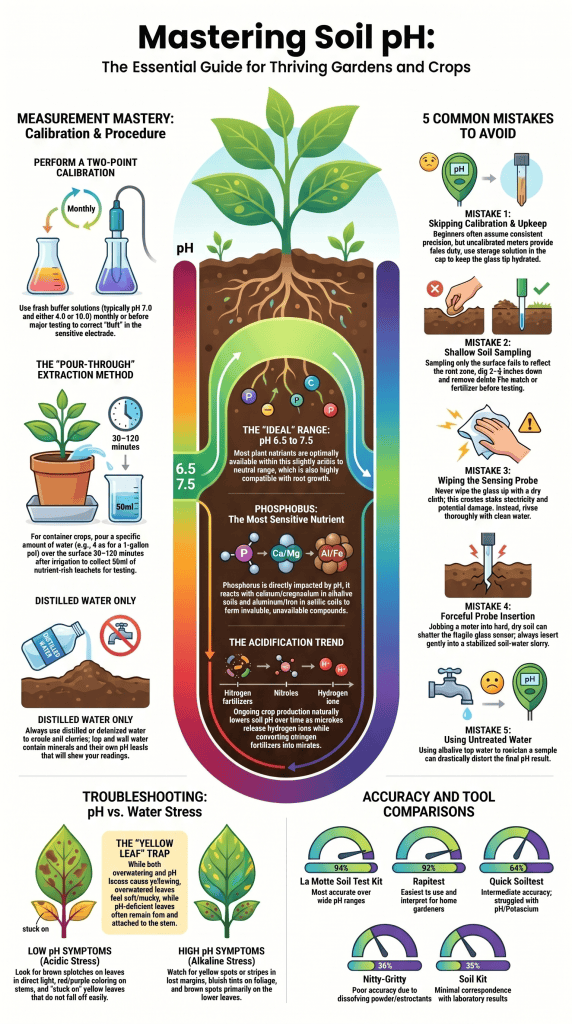
Measure pH first before adding nutrients or treatments to avoid misdiagnosing the issue.
The symptoms of acidic soil can look exactly like a nutrient deficiency, a disease, or even just overwatering. It’s easy to misdiagnose.
Do not guess, and do not rely on cheap color-changing drops. Grab a high-quality, dual-point calibrated digital pH probe. When testing soil or coco coir, I highly recommend using the ‘pour-through’ method:
irrigate your medium with distilled water, collect the first 50 mL of runoff water that drains out the bottom of the pot, and test that directly.
This gives you a highly accurate snapshot of the actual chemical environment surrounding your root hairs, rather than just testing the water going into the pot.
Soil Testing Methods
Soil test kits provide a quick estimate, while laboratory testing offers the most accurate results for soil acidity indicators.
Hydroponic Testing Methods
Digital meters provide continuous monitoring and help identify pH fluctuation plants experience before symptoms appear.
Common Testing Errors
Common mistakes include:
- Using uncalibrated meters
- Testing dry soil
- Ignoring runoff measurements
- Making adjustments before confirming pH
Accurate testing prevents unnecessary treatments.
Gradual pH Adjustments Help Correct Low Plant pH and Restore Healthy Growth
Raise pH gradually using appropriate amendments and retest regularly to avoid overcorrection.
Correcting low pH requires patience. Large adjustments made too quickly can create additional nutrient problems.
For soil systems, Dolomitic Lime is one of the most widely recommended amendments because it raises pH while supplying calcium and magnesium.
Fixing Low pH in Soil
Recommended approaches include:
- Apply Dolomitic Lime according to soil test results
- Incorporate amendments evenly
- Water thoroughly after application
- Retest after several weeks
- Avoid excessive lime applications
Fixing Low pH in Hydroponics
Hydroponic corrections happen faster.
- Use pH Up products in small increments
- Let the nutrient solution sit for about 15 minutes before testing and adjusting pH
- Retest after each correction
- Target pH 5.8–6.2 for most crops
- Monitor for 24 hours after changes
Avoiding the ‘Yo-Yo’ Correction Trap
The biggest rookie mistake is trying to force a perfect 6.0 reading by dumping aggressive amounts of potassium hydroxide (pH Up) into a crashing system.
This causes violent chemical swings that shock the plant worse than the low pH did. If your runoff reads 5.2, do not try to fix it in an hour. Flush with water balanced at 6.2, raise the target incrementally over a few days, and let the substrate buffer adapt naturally.
Some Plants Naturally Grow Better in Lower pH Conditions

Credit: Hydroponics Daily
Yes. Some species naturally thrive in acidic environments and may perform poorly if pH is raised too much.
Not every plant suffers from moderately acidic conditions. Several species evolved in acidic soils and require lower pH levels for optimal performance.
Common acid-loving plants include:
- Blueberry
- Azalea
- Rhododendron
- Camellia
- Gardenia
Many of these species perform well below pH 6.0 and may develop deficiencies if grown in neutral or alkaline soils.
Common Acid-Loving Plants
These plants often prefer pH ranges between 4.5 and 5.8, depending on species and growing conditions.
When Low pH Is Not a Problem
Low pH only becomes a concern when it falls outside the preferred range of the specific plant being grown.
Low pH Plant Problems: Key Lessons for Stronger Growth
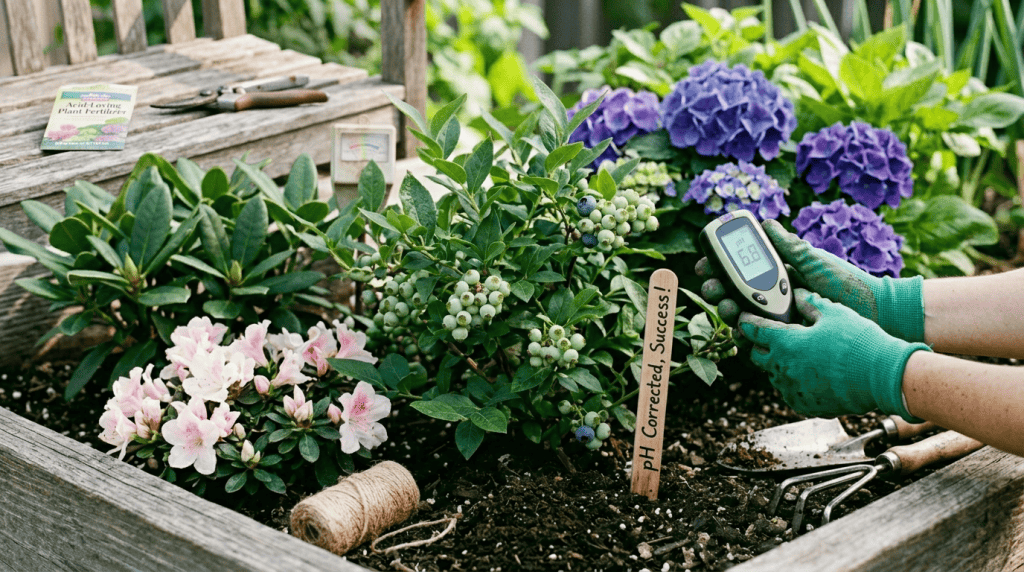
Low pH affects nutrient availability, root health, and yield. Early testing and gradual correction prevent long-term plant stress.
The most important lesson is that plant nutrient imbalance often begins in the root zone rather than in the fertilizer bottle. A plant can sit in nutrient-rich soil and still suffer from poor nutrient availability if pH remains too low.
Key points to remember:
- Low pH in plants causes nutrient lockout and toxicity simultaneously
- Calcium deficiency low pH and magnesium deficiency low pH are common
- Root damage reduces water and nutrient uptake
- Hydroponic systems react faster than soil
- Testing should always come before treatment
- Gradual correction prevents overcorrection problems
- Long-term acidity can reduce yields by 10–30%
Maintaining the ideal pH for plant growth is one of the most effective ways to improve plant health, maximize yields, and support a healthy root zone. Consistent monitoring and smart soil pH correction strategies keep plants productive throughout the growing season.
Can plants starve in nutrient-rich media?
Absolutely. This is the definition of a nutrient lockout. Even if your soil or reservoir is packed with high-end fertilizer, a low pH structurally changes the chemical bonds of those elements. The roots cannot physically absorb them, meaning you are essentially starving your crop in a buffet of food.
As pH drops, roots struggle to absorb nutrients such as calcium, magnesium, and phosphorus.
The result is often low pH nutrient deficiency symptoms, including yellowing leaves, weak growth, and noticeable nutrient uptake problems.
FAQ
How does an acidic root zone affect root health and plant growth?
An acidic root zone can damage root tissues and limit the plant’s ability to absorb water and nutrients. Over time, poor root development and root damage acidic soil conditions can weaken the entire plant.
Many growers notice stunted plant growth, weak plant stems, poor water uptake, and slower overall development. Severe root zone acidity can also reduce crop quality and contribute to reduced crop yield.
What toxicities can occur when pH is too low for plants?
When pH is too low for plants, certain minerals become overly available and may reach toxic levels. Aluminum toxicity plants and manganese toxicity plants are common examples.
Excessive amounts of these elements can damage roots, interfere with nutrient absorption, and worsen acidic soil toxicity. Plants affected by these conditions often show poor growth, leaf discoloration low pH symptoms, and signs of ongoing low pH plant stress.
Why do hydroponic and coco plants show symptoms faster at low pH?
Plants grown in low pH hydroponics or low pH coco coir systems often develop symptoms faster because their roots are surrounded by the nutrient solution. An acidic hydroponic solution or acidic nutrient solution can quickly disrupt nutrient uptake.
As a result, hydroponic pH problems may lead to root zone nutrient lockout, plant nutrient imbalance, yellowing leaves, and rapid declines in plant health within a short period.
What helps support plant recovery from low pH conditions?
Plant recovery from low pH depends on correcting the root zone environment and restoring nutrient availability. Soil pH correction methods, including raising soil pH with suitable amendments, can help reduce excessive acidity in soil.
Consistent pH management for plants allows roots to absorb nutrients more effectively. Maintaining the ideal pH for plant growth also improves root zone health and helps prevent future nutrient lockout symptoms.
Keep Your Root Zone in Balance for Healthier Plants
When plant pH drops too low, the damage often starts below the surface before it becomes visible on the leaves. Yellowing foliage, weak growth, and poor yields can all point to nutrient lockout, even when fertilizer is already present.
That’s the frustrating part. If the root zone stays too acidic, plants struggle to access the nutrients they need and recovery becomes much harder.
The good news is that most low pH problems can be corrected with early testing and steady adjustments. By monitoring pH regularly and fixing issues before they worsen, you can support stronger roots and better nutrient uptake.
As a commercial cultivator who has spent the last decade monitoring thousands of gallons of runoff, I’ve learned that a stable root zone beats an expensive fertilizer recipe every single time. Here at Tophydroponicgarden, we test these exact parameters daily in our research tents so you don’t have to learn these lessons through lost yields.
References
- https://www.sciencedirect.com/science/article/abs/pii/S0981942822004363
- https://journals.ashs.org/view/journals/hortsci/56/6/article-p687.xml
Related Articles
- https://tophydroponicgarden.com/what-plants-prefer-a-lower-ph-level/
- https://tophydroponicgarden.com/choosing-the-right-size-net-pots/
- https://tophydroponicgarden.com/why-are-my-hydroponic-plant-leaves-turning-yellow/
Was this helpful?

I’m Barrie L., a passionate hydroponic gardening enthusiast dedicated to cultivating thriving, soil-less gardens. With a focus on all things hydroponic, I share my expertise on innovative growing techniques and sustainable practices through my blog, tophydroponicgarden.com. As a seasoned hydroponics specialist, my goal is to inspire and guide fellow gardeners in harnessing the power of water-based cultivation for bountiful and eco-friendly harvests. I’m also an author of the book “Hydroponics For Absolute Beginners: Your Step By Step Guide For How To Create An Hydroponics System At Home Without Soil, For Growing Vegetable, Fruit And Herbs.” which is sold on Amazon. Join me on a journey of redefining the way we cultivate plants, one nutrient-rich solution at a time. Happy growing!