

When your EC meter spikes, it means your reservoir is loaded with more dissolved fertilizer salts than your crops can handle. Whether you run a deep water culture setup, coco blocks, or traditional soil, a runaway EC creates an aggressive root-zone environment that actively fights your plant’s ability to drink.
The result is often nutrient burn, stressed roots, and slower growth. To keep your plants healthy, you need to spot the warning signs early. Let’s look at what causes high EC and how you can fix it before it hurts your crop.
High EC Quick Facts: What Your Plants Are Telling You
- High EC means excessive dissolved salts around the roots, creating osmotic stress and water uptake problems.
- Common high EC symptoms include leaf tip burn, brown leaf edges, wilting despite wet soil, and stunted plant growth.
- Correcting EC imbalance early can prevent nutrient lockout, root damage, and yield reduction.
Quick Reads: Key Facts About High EC
High EC increases the salt concentration around a plant’s roots. This creates an imbalance, making it physically harder for the roots to pull in water. High EC creates a salty zone around the roots.
This imbalance makes it difficult for the plant to absorb water, even when the soil or solution is wet. The plant essentially experiences a drought stress while surrounded by moisture..
Plants rely on a natural process called osmosis. Under normal conditions, water moves from the growing medium into root cells. This movement helps keep plants hydrated and supports nutrient transport.
When EC becomes too high, the balance changes. The surrounding solution contains more dissolved salts than the roots can comfortably handle. As a result, water movement slows dramatically and may even reverse in severe situations.
Common effects on roots include:
- Root dehydration.
- Damaged root hairs.
- Reduced nutrient absorption.
- Slower root growth.
- Root-tip burn.
- Increased plant stress.
The Effects of High EC on Plant Roots
High EC increases the salt concentration around roots. When EC is too high, it builds up a lot of salts around the roots. This makes it tough for the plant to actually take in the water that’s there.
This creates a deceptive scenario every grower dreads: physiological drought. Your pots look perfectly saturated, yet your plants are actively wilting from dehydration because the high salt concentration holds the water hostage.
This happens because of osmosis. Normally, water moves from the soil, where salt is low, into the root cells where salt is higher. But if the solution outside gets saltier than inside, the flow reverses. Water is actually pulled out of the roots, leaving the plant dehydrated.
The root zone becomes overloaded with dissolved salts. Instead of drawing water inward, roots struggle to maintain hydration. This creates plant dehydration symptoms even when the growing medium appears moist.
When EC spikes, your roots aren’t just ‘stressed’, they’re effectively under siege. Think of high salt concentration as a sponge that’s trying to drink the water out of your plant. I’ve seen this cause the ‘physiological drought’ effect time and again:
the medium is soaking wet, but the plant is wilting because it literally cannot extract water against the osmotic pressure. The first sign is rarely the leaves; it’s the root tips. If you look at your root zone, the fine hairs, the ones doing the heavy lifting for nutrient uptake, will be the first to brown and die back.
By the time your leaves yellow, the roots have already been starving for days.
The Development of Osmotic Stress
Root damage from high EC often starts at the growing tips. The fine, hair-like roots that absorb nutrients start to struggle. They become less effective, so the plant takes in fewer nutrients. This directly reduces the plant’s overall energy and strength.
The First Signs of High EC Levels in Plants

The first signs usually show up on the leaves and the newest growth. You might see the leaf edges start to brown and curl. The plant’s overall energy and new growth just seem to stall.
One of the most recognizable high EC plant symptoms is leaf tip burn. The ends of leaves begin turning yellow before becoming brown and crispy.
As fertilizer overdose continues, symptoms spread further into the leaf tissue. Plants often appear dark green initially because excess nutrients accumulate in the foliage.
The following warning signs commonly appear:
- Brown leaf edges.
- Crispy leaf margins.
- Scorched leaves.
- Curling leaf tips.
- Yellowing leaves from nutrient burn.
- Leaf necrosis from salts.
- Wilting despite wet soil.
- Stunted plant growth.
The First Leaf Symptoms Caused by High EC Levels
Your leaves will wave the red flag before the whole crop fails. Keep a close eye on the canopy for ‘tip burn’, where the very tips and margins of your newest growth turn yellow, curl up, and quickly go crispy as the excess salts accumulate in the foliage.
The Changes in Plant Growth Caused by High EC Levels
New leaves often emerge smaller than normal. Internode spacing shortens and development slows. Severe cases may show poor root development and root discoloration. Nutrient burn frequently progresses from leaf tips toward the center of the leaf as salt toxicity symptoms worsen.
The Causes of Nutrient Lockout Due to High EC Levels
While beginners often assume throwing more nutrients at a crop accelerates growth, overloading your reservoir triggers nutrient antagonism.
This chemical standoff occurs when an excess of one element, like potassium, directly blocks your roots from absorbing critical minerals like calcium and magnesium, stalling development entirely But when EC gets too high, the opposite happens. The plant slows down. It’s getting too much of a good thing, and it can’t process it all.
Plants absorb nutrients through a balanced exchange system. Excessive amounts of one nutrient can suppress uptake of another. This process is called nutrient antagonism.
I’ve learned the hard way that you can’t force-feed a plant. Nutrient antagonism isn’t just theory; it’s a physical standoff. When you pump your reservoir with excessive Potassium (K) to ‘bulk up’ the flowers, you inadvertently trigger a Calcium (Ca) and Magnesium (Mg) lockout.
It’s a chemical domino effect: the plant’s uptake sites get congested by the excess K, leaving the Ca and Mg ions sitting in the medium, unused. If you see spots on your leaves, don’t reach for more Cal-Mag. Check your EC meter first, you likely don’t have a deficiency; you have a surplus of everything else blocking the door.
The result often includes:
- Nutrient uptake inhibition.
- Deficiency symptoms despite abundant nutrients.
- Weak stems and poor development.
- Increased susceptibility to stress.
The Concept of Nutrient Antagonism
Nutrient antagonism occurs when one nutrient competes with another for uptake sites within the roots. This imbalance frequently contributes to nutrient lockout in high EC environments.
The Causes of Deficiency Symptoms in Plants
This creates a frustrating paradox in the garden: your plant simultaneously exhibits signs of both toxicity and deficiency. When your meter reads sky-high but the canopy shows pale, spotted leaves, adding more fertilizer will only worsen the issue. The roots are fundamentally paralyzed by the surrounding salinity.
The Effects of High EC Levels in Soil, Coco, and Hydroponic Systems
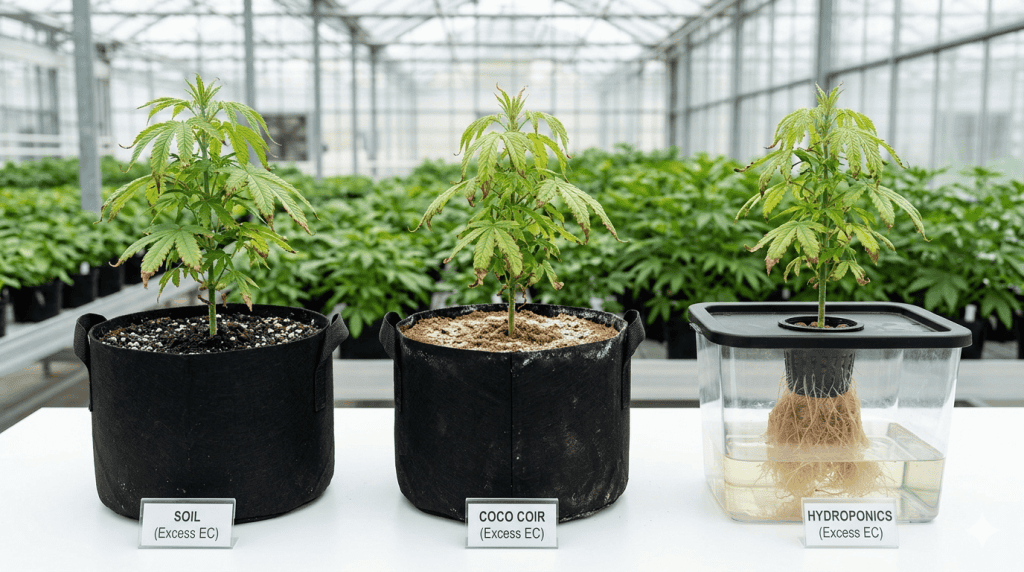
High EC impacts every type of growing system. It doesn’t matter if you’re growing in soil, coco, or a water-based system. The result is the same: salts pile up, the roots suffer, and the plant can’t make good use of the nutrients you’re feeding it.
Growing Medium
| Growing Medium | Common High-EC Issue | Typical Symptoms | Recovery Difficulty |
| Soil | Salt buildup | Burnt tips, slow growth | Moderate |
| Coco Coir | Calcium and magnesium imbalance | Deficiencies plus burn | Moderate |
| Hydroponics | Rapid nutrient concentration changes | Wilting, root stress | Fast if corrected |
In my experience, substrate choice completely dictates how you manage a spike. Soil acts as a buffer, meaning salt accumulation sneaks up on you gradually over weeks.
Coco coir, however, is a different beast; its natural cation exchange sites aggressively lock up calcium and magnesium, meaning an EC imbalance here will trigger severe secondary deficiencies almost overnight if your media isn’t properly buffered. This means your nutrient balance and EC need even more careful attention.
In Hydroponics, EC fluctuations can occur quickly. A nutrient solution too strong may stress roots within days.
The Impact of High EC on Yield and Crop Quality
Yes. When a plant is under constant salt stress, it wastes energy just coping. This leads to smaller plants, fewer fruits or flowers, and a harvest that’s generally lower in both quantity and quality.
Plants experiencing long-term osmotic stress devote more energy to survival and less energy to growth. This shift reduces biomass production and overall performance.
Root zone health gradually declines under elevated EC levels. Nutrient uptake becomes less efficient, further slowing development.
The consequences often include:
- Reduced vegetative growth.
- Smaller harvests.
- Lower nutrient-use efficiency.
- Reduced flower or fruit production.
- Greater susceptibility to environmental stress.
The Effects of High EC on Plant Yield
Plants remain smaller and produce less marketable yield. In commercial horticulture, even modest salinity increases can lead to measurable production losses.
The Effects of High EC on Crop Quality
Quality often declines alongside yield. Flavor, texture, appearance, and shelf life may suffer.
According to Harvard Health
”Excess salt can disrupt water balance in biological systems, illustrating the broader effects of salinity stress.” – Harvard Health
The Reasons Why Growers Experience High EC Despite Following Feeding Charts
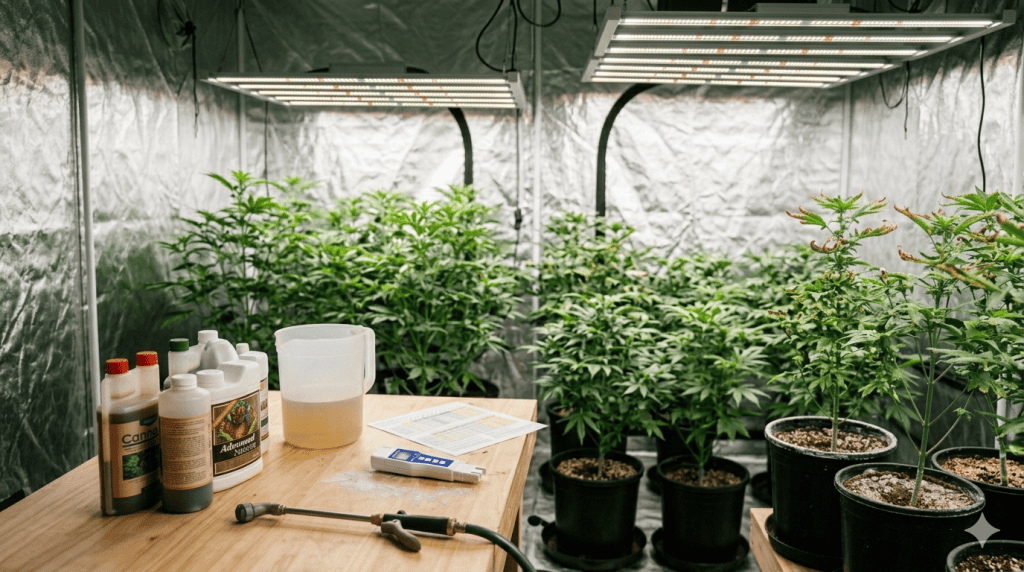
The biggest rookie mistake? Treating the feeding chart on the back of your nutrient bottle like a legal document. Those charts assume a ‘perfect world’ usually a lab environment with distilled water at 70°F and 50% humidity.
My grow room rarely looks like that. If your baseline tap water is already at 0.4 EC, and you add the full nutrient dose, you’re hitting your plants with a brick wall of salt on day one. I’ve found that the best growers treat those charts as a suggestion, not a mandate. Start at 60% of the recommended dose.
Your plants will tell you if they’re hungry. They’ll never tell you they appreciate the excess salts. These charts are formulated for pristine laboratory conditions, they cannot account for your specific room temperature, relative humidity, or baseline tap water hardness.
The temperature, humidity, and light in your space are different. Your tap water isn’t the same as someone else’s. Your plants have their own genetics. A one-size-fits-all chart can’t cover all that.
A grower using hard tap water may begin with a much higher baseline EC than someone using Reverse Osmosis (RO) water.
Several factors can unexpectedly raise EC:
- Aggressive feeding schedules.
- High baseline tap-water EC.
- Excessive fertilizer application.
- Drying media that concentrates salts.
- Reservoir EC rising in recirculating systems.
- Poor runoff management.
The Causes of Unexpected EC Increases
As water evaporates, salts remain behind. Over time, nutrient solution concentration increases even when nutrient additions stay constant.
The Reasons Why Generic Feeding Charts Fail
Different cultivars tolerate different EC levels. Temperature, humidity, and how strong your lights are all change how a plant uses water and nutrients. A safe feeding level on a cool, cloudy day might be too much when it’s hot and bright.
The Methods to Safely Lower High EC Levels
When correcting a runaway root zone, avoid crashing the EC too rapidly, which can cause the roots to cells to burst from sudden osmotic shifts.
Instead, step your input concentration down gradually, or flush the substrate using a mild, quarter-strength nutrient solution rather than pure water to safely strip away accumulated salts without shocking the plant. You can’t manage what you don’t measure.
Use a reliable meter to check the EC of your nutrient solution and the runoff from your pots.. Many hydroponic feeding problems result from poor monitoring rather than nutrient formulation itself.
The following process is widely used by growers:
- Confirm readings with a calibrated EC Meter.
- Measure runoff EC too high conditions or reservoir EC.
- Compare readings against crop-specific EC range targets.
- Flush high EC media using low-EC water.
- Remove accumulated fertilizer salts.
- Reintroduce nutrients at reduced strength.
- Monitor recovery and plant response.
- Adjust irrigation frequency if needed.
- Track conductivity meter measurements regularly.
After correction, growers should monitor EC and water uptake trends closely to prevent future spikes.
According to the United States Department of Agriculture
”Salinity management remains one of the most important factors affecting plant productivity in intensive cultivation systems” – United States Department of Agriculture
The Factors That Determine a Safe EC Range
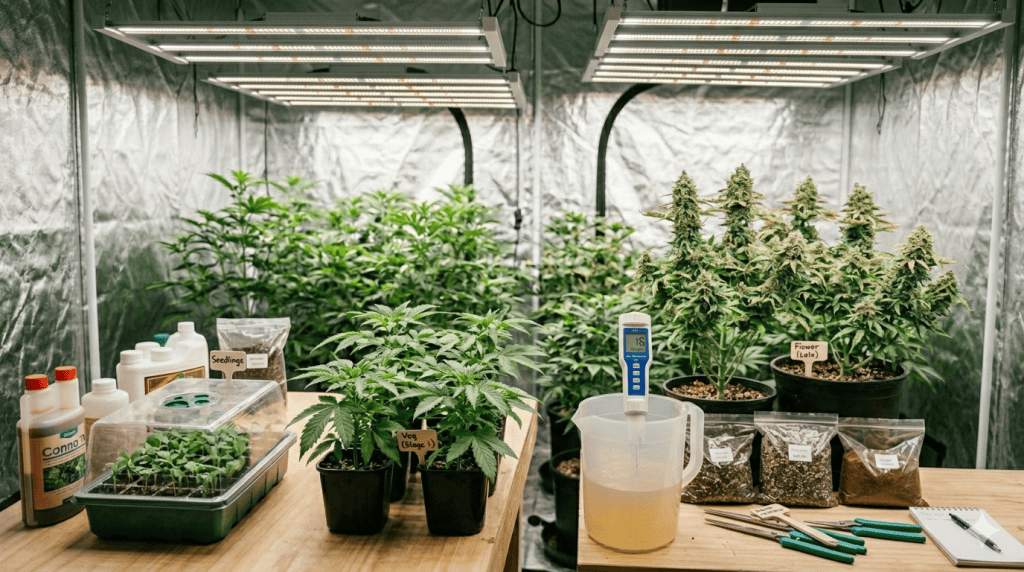
There is no universal EC target because ideal ranges depend on crop type, growth stage, environmental conditions, and water quality.
Nutrient tolerance varies dramatically across species and life cycles; for instance, a light-feeding crop like lettuce will quickly burn at an EC level that a heavy-feeding tomato plant would easily tolerate.
Furthermore, a plant’s threshold scales with age, meaning a delicate seedling requires only a fraction of the nutritional strength needed by a mature, flowering canopy.
Important variables include:
- Plant species.
- Growth stage.
- Light intensity.
- Temperature.
- Humidity.
- Water source.
- Growing medium.
- Irrigation frequency.
- Nutrient formulation.
- Root-zone oxygen levels.
The Variables That Matter Most in Determining EC Levels
The interaction between environmental conditions and nutrient concentration control often determines whether elevated EC levels become problematic. Monitoring both Electrical Conductivity and runoff trends provides a more accurate picture than nutrient recipes alone.
Tophydroponicgarden emphasizes that runoff measurements frequently reveal salt buildup before visible symptoms appear.
High EC: The Key Lessons for Healthier Plants

Credits: Humble Growth
High EC is usually a sign that nutrient concentration has surpassed what roots can efficiently handle, leading to water stress, nutrient imbalance, and reduced performance.
High EC does not mean plants are receiving better nutrition. It usually means roots are facing excessive dissolved salts that interfere with normal water and nutrient uptake.
Growers who consistently monitor nutrient reservoir monitoring data and runoff readings often catch problems before serious damage occurs.
Key lessons include:
- High EC equals higher salt concentration.
- More nutrients do not always mean more growth.
- Root-zone health matters more than feeding strength.
- Monitor both input and runoff EC.
- Correct issues early to avoid yield losses.
- Watch for nutrient burn recovery after adjustments.
Tophydroponicgarden and experienced hydroponic growers consistently highlight the same principle: balanced EC supports growth, while excessive nutrient strength creates stress. Healthy plants depend on stable root-zone conditions, not maximum nutrient concentration.
FAQ
Can high EC damage roots before leaves show symptoms?
Yes. Root damage from high EC often develops before visible leaf symptoms appear. Excessive dissolved salts around the roots create high salinity stress, which reduces water uptake and oxygen availability.
As a result, roots may become discolored, weak, or underdeveloped. These root stress symptoms can reduce nutrient absorption and slow plant growth before any leaf damage becomes visible.
Why does runoff EC stay high after reducing nutrients?
Runoff EC can remain high because fertilizer salt accumulation is still present in the growing medium. Salts from previous feedings can continue dissolving into the water even after you lower nutrient strength.
This problem is common when excessive fertilizer application has occurred over time. A thorough flushing process is often required to remove the remaining salts and lower runoff EC.
What causes reservoir EC to rise unexpectedly?
A reservoir EC rising unexpectedly usually means water is leaving the system faster than nutrients. Water can evaporate, or plants can absorb water more quickly than dissolved minerals.
As water levels drop, the nutrient solution becomes more concentrated, causing elevated EC levels. In some cases, topping off the reservoir with nutrients too frequently can also increase EC.
Can plants recover from nutrient burn caused by high EC?
Yes, many plants can recover from nutrient burn if corrective action is taken quickly. High EC can cause leaf tip burn, brown leaf edges, and scorched leaves because the concentrated nutrient solution damages plant tissue.
Lowering EC, flushing excess salts, and restoring proper nutrient levels can stop further damage. New growth often returns healthy, although damaged leaves usually do not recover.
How often should EC be checked during active growth?
EC should be checked at least once per day in hydroponic systems and several times per week in soil or coco growing systems. Regular EC meter readings help identify nutrient solution changes before they cause hydroponic feeding problems.
Frequent monitoring also helps maintain ideal EC levels, prevent nutrient lockout, and support healthy root zone conditions throughout active plant growth.
Keep High EC From Holding Your Plants Back
When EC climbs too high, your plants struggle to take up water even when moisture is available. The result is often burnt leaf tips, weak growth, and stressed roots that can’t use nutrients properly. That’s the problem. If high EC goes unchecked, it can reduce both yield and crop quality long before the damage becomes obvious.
The good news is that high EC is usually easy to manage when you catch it early. Regular monitoring, balanced feeding, and checking runoff can help you stay ahead of salt buildup. If you want practical guidance on nutrient management and hydroponic growing, Tophydroponicgarden offers simple resources that can help you keep your root zone healthy and your plants growing strong.
References
- https://www.health.harvard.edu/
- https://www.usda.gov/
Related Articles
- https://tophydroponicgarden.com/how-to-test-the-ph-of-your-nutrient-solution/
- https://tophydroponicgarden.com/how-to-fix-nutrient-lockout-in-hydroponics/
- https://tophydroponicgarden.com/what-is-the-most-water-efficient-system/
Was this helpful?

I’m Barrie L., a passionate hydroponic gardening enthusiast dedicated to cultivating thriving, soil-less gardens. With a focus on all things hydroponic, I share my expertise on innovative growing techniques and sustainable practices through my blog, tophydroponicgarden.com. As a seasoned hydroponics specialist, my goal is to inspire and guide fellow gardeners in harnessing the power of water-based cultivation for bountiful and eco-friendly harvests. I’m also an author of the book “Hydroponics For Absolute Beginners: Your Step By Step Guide For How To Create An Hydroponics System At Home Without Soil, For Growing Vegetable, Fruit And Herbs.” which is sold on Amazon. Join me on a journey of redefining the way we cultivate plants, one nutrient-rich solution at a time. Happy growing!