

What flowers can you grow with hydroponics? These days, growing in water with nutrients works just as well, maybe even better. Those orange marigolds everyone’s grandmother grows? They amazingly grow hydroponically. Same goes for petunias and zinnias, they don’t care if there’s soil or not, they just want the right food and water.
The best part is you’re not gambling with dirt quality. Some flowers are definitely easier to start with than others though.
Want to know which ones won’t die on you in your first hydroponic setup? Let’s find out.
Key Takeaways
- Many flowers like orchids, carnations, marigolds, petunias, and zinnias grow well in water with nutrients instead of soil.
- Using the right hydroponic system helps flowers grow stronger and bloom better.
- Flowers need enough light, the right nutrients, and regular trimming to stay healthy and bloom all year round.
Hydroponic Flowers Suitability and Selection
Orchid Hydroponic Adaptability
Orchid Root System Characteristics
Orchid roots are different from other plants. They grow mostly above ground and like to have air around them. These roots take in water and nutrients from the air and rain in nature.
Because orchid roots need air, they cannot stay too wet for long. Hydroponics suits orchids well because it gives their roots water and oxygen at the same time, making hydroponic growing an ideal method for these plants.
Orchid Preferred Hydroponic Media
Orchids grow best in materials that hold some water but also let air pass through. Clay pebbles are a good choice because they keep roots moist without soaking them. This helps avoid root rot and keeps orchids healthy. The pebbles also leave space for air to reach the roots, providing an excellent growing medium for orchids.
Orchid Environmental Requirements
Orchids like warm temperatures from 65 to 80 degrees Fahrenheit. They need high humidity and bright but indirect sunlight. Too much direct sun can burn their leaves. A place with soft light or light shade works best. Good air flow is important to keep orchids free from mold and fungus.
Popular Ornamental Flowers for Hydroponics
Carnation Nutrient and Root Needs
Carnations have small, tight roots that grow well in hydroponic systems. They need a steady supply of nutrients to bloom well. Nutrient film technique (NFT) systems work well because they keep a thin layer of nutrient water flowing over the roots all the time. This gives carnations the steady feeding they need.
Petunia Growth and Bloom Traits
Petunias bloom best when they get steady nutrients and plenty of light. They produce many colorful flowers and respond well to hydroponic growing. Keeping nutrient levels steady helps keep their blooms bright and healthy. Petunias also like good air flow around their leaves to avoid diseases.
Gerbera Daisy Nutrient Management
Gerbera daisies have big, bright flowers that need careful nutrient care. Deep water culture (DWC) systems work well for gerberas because their roots stay moist and get plenty of oxygen. This helps keep blooms healthy and stops root problems. Gerberas also need steady pH levels and balanced fertilizer for big, colorful flowers.
Marigold Pest-Repellent Properties
Marigolds grow easily in hydroponics and also help keep pests away. Their small roots fit well in nutrient film technique or deep water culture systems. Marigolds bloom well with steady nutrients and moderate light. Adding marigolds to your garden can help protect other plants from bugs.
Additional Ornamental Flowers with Hydroponic Success

Zinnia Growth Rate and System Compatibility
Zinnias grow fast and bloom for a long time. They do well in wick or raft hydroponic systems that keep roots moist but not too wet. Their bright, large flowers add a cheerful splash of color. Zinnias respond well to regular pruning to keep flowers coming.
Begonia Varieties and System Suitability
Begonias, especially wax and tuberous types, adjust easily to hydroponic growing. They like steady moisture and nutrients, making them good for indoor systems. Begonias come in many shapes and colors, adding variety to your garden.
Chrysanthemum Hardiness in Hydroponics
Chrysanthemums are tough, long-lasting flowers. They do well in passive or active deep water culture systems. Their classic, full blooms bring charm and color to any flower collection.
Poppy Ease of Cultivation
Poppies are simple to grow using raft or wick systems. They need little care and produce delicate, pretty blooms. Poppies prefer moderate light and steady moisture but do not like their roots to stay soggy.
Edible Flowers Suitable for Hydroponics
Nasturtium Edibility and System Preference
Nasturtiums have bright, edible flowers and leaves. They grow best in nutrient film technique or shallow raft systems.[1] Their trailing vines add softness and interest to your hydroponic garden. Plus, they add a peppery flavor to salads and dishes.
Pansy and Viola Growth Attributes
Pansies and violas have shallow roots and grow compact. They do well in small indoor hydroponic systems with steady moisture and nutrients. These flowers brighten indoor spaces with their cheerful colors.
Calendula Maintenance and Blooming Pattern
Calendulas are easy to care for and bloom a lot. They grow well with regular nutrients and moderate light. Calendulas add long-lasting yellow and orange flowers to your hydroponic setup.
Lavender Environmental and Lighting Needs
Lavender likes steady light and good air flow. Smaller hydroponic systems like Kratky setups suit lavender well. Lavender adds fragrance and beauty but needs care to avoid too much moisture on roots.
Hydroponic Methods Matched to Flower Species

Credits: Grow Kratky
Deep Water Culture (DWC) for Flowers
DWC Compatibility with Orchids and Gerberas
Deep water culture is one of the many hydroponic systems that effectively provide adequate moisture and oxygen to promote healthy root development, this method keeps roots in oxygen-rich nutrient water.
Orchids and gerberas like this because their roots stay moist and get enough air. This helps keep roots healthy and supports strong flowers.
DWC Suitability for Hyacinths, Tulips, and Begonias
Bulb flowers like hyacinths and tulips grow well in DWC. Begonias also do well because their roots stay moist and well-oxygenated. This method fits many flowering plants with bigger roots.
Nutrient Film Technique (NFT) Applications
NFT Benefits for Carnations and Marigolds
NFT systems flow a thin layer of nutrient solution over roots always. Carnations and marigolds grow well this way because their roots get steady moisture without drowning. This steady feeding helps them grow and bloom.
NFT Use with Nasturtiums and Zinnias
Nasturtiums and zinnias also do well in nutrient film technique systems. The moving water gives them fresh nutrients and oxygen, helping them grow fast and bloom longer.
Wick and Raft Systems for Specific Flowers
Wick System Suitability for Poppies and Zinnias
Wick systems bring nutrients to roots by wicking solution up. Poppies and zinnias grow well in these simple, low-care setups. They are good for beginners or small spaces.
Raft System Applications for Pansies and Violas
Raft systems float plant roots on nutrient solution. Pansies and violas, with shallow roots like this system, it gives them steady moisture and nutrients.[2]
Ebb and Flow System Adaptations
Ebb and Flow Use for Marigolds and Calendulas
Ebb and flow systems flood roots with nutrient water, then drain it away. Marigolds and calendulas like this cycle because it copies natural wet and dry times. This helps roots grow strong.
Environmental Management in Ebb and Flow
Controlling moisture, oxygen, and nutrients is important in ebb and flow systems. Keeping these balanced helps roots stay healthy and avoids disease.
Essential Hydroponic Flower Care Parameters
Lighting Requirements for Hydroponic Flowers
Sunlight Duration and Intensity Needs
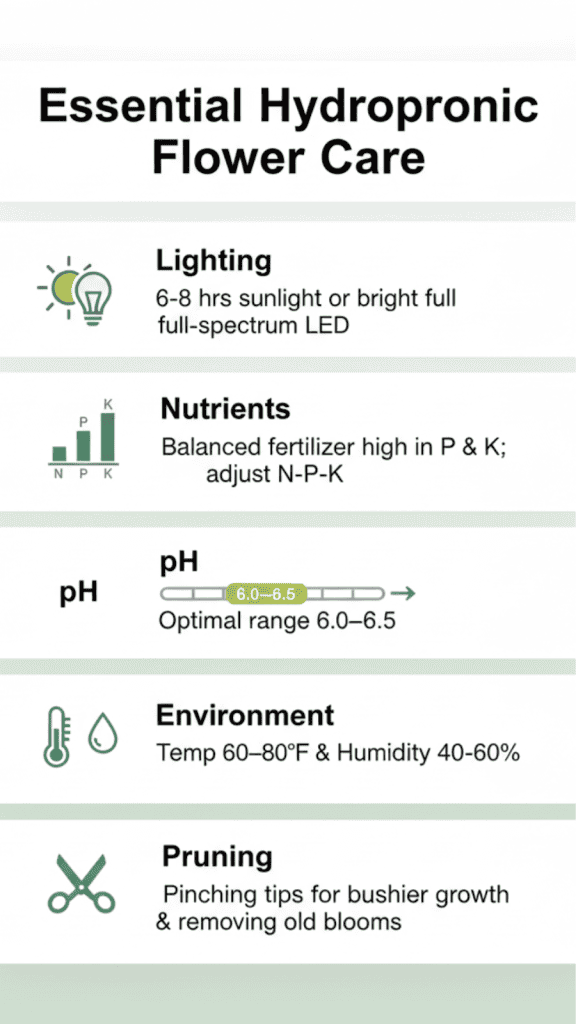
Most hydroponic flowers need six to eight hours of direct sunlight or bright LED light every day. Light helps flowers grow and bloom well. Without enough light, plants get weak and may stop blooming.
LED Lighting Specifications for Optimal Blooming
When sunlight isn’t available, full-spectrum LED lights work well. They give the right light types to help flowers grow strong and bloom. LEDs use less energy and make less heat.
Nutrient Solution Management
Balanced Fertilizer Composition for Flowering
Flowering plants need nutrient solutions rich in phosphorus and potassium. These nutrients help flowers grow and keep roots strong. Nitrogen is also needed but in the right amount.
Periodic Nutrient Adjustments During Growth Phases
Changing nutrient levels as plants grow is helpful. Young plants need more nitrogen for leaves. When flowers form, more phosphorus and potassium help blooms grow.
pH and Environmental Controls
Optimal pH Ranges per Flower Species
Most hydroponic flowers grow best in pH between 6.0 and 6.5. Keeping pH steady helps plants take in nutrients well. Some flowers can handle small changes but close to this range is safest.
Temperature and Humidity Control Standards
Temperatures between 60 and 80 degrees Fahrenheit and humidity from 40 to 60 percent work well. These conditions help flowers stay healthy and avoid sickness.
Pruning and Growth Maintenance
Pinching Techniques for Bushier Growth
Pinching flower tips on plants like daisies and zinnias helps them grow bushier. This makes the plant produce more flowers and look fuller.
Pruning Frequency for Prolonged Blooming
Cutting off old flowers regularly encourages new blooms. This keeps plants blooming longer and looking fresh.
Expanding Hydroponic Flower Cultivation Scope
Bulb Flower Hydroponic Cultivation
Tulip and Hyacinth Growth Practices
Tulips and hyacinths grow well in deep water culture systems. They need steady moisture and good oxygen around roots. Proper care helps bulbs grow strong flowers.
Root Oxygenation for Bulb Flowers
Giving bulb flowers enough oxygen prevents root rot. Air around roots keeps them healthy and growing. Without it, bulbs may not bloom.
Rose Hydroponic Challenges and Solutions
Substrate Selection for Rose Root Systems
Roses need a growing medium that holds moisture but drains well. Clay pebbles or similar materials support rose roots in hydroponics. The medium cannot hold too much water or roots could rot.
Oxygenation and Nutrient Strategies for Roses
Roses want well-oxygenated roots and balanced nutrients. Keeping these right helps roses grow strong and bloom a lot. Checking these conditions often is important.
Dwarf and Large Flower Varieties in Hydroponics
Dwarf Sunflower Adaptations
Dwarf sunflowers do well in bigger hydroponic systems. They need plenty of light and space to grow healthy and flower.
Dahlias, Gladiolus, and Impatiens Environmental Needs
These flowers can grow hydroponically if you give them the right light, temperature, and humidity. Managing their environment carefully is key.
Year Round Indoor Flower Gardening Benefits
Seasonal Blooming Control Techniques
Controlling light and temperature indoors lets you decide when flowers bloom. This means you can have fresh, colorful flowers all year round.
Space Optimization for Indoor Hydroponic Flowers
Hydroponic systems don’t take much room. You can grow many flowers indoors, even in small spaces like apartments or closets.
FAQ
How much direct sunlight do hydroponic flowers need to stay healthy?
Hydroponic flowers usually need six to eight hours of direct sunlight each day, although strong artificial lights can be used indoors if natural light is limited. Without enough light, plants cannot process the nutrient solution properly, and growth slows.
When growers provide adequate sunlight or lighting alternatives, flowering plants develop stronger stems, brighter colors, and longer-lasting blooms.
What is the role of a nutrient solution when you grow flowers in a hydroponic system?
A nutrient solution provides the essential minerals that plants normally take from soil. When you grow flowers in a hydroponic system, roots absorb nutrients directly from the water. Balanced nutrient levels are critical, since both deficiencies and excesses can harm flowering plants.
With the right formula and proper monitoring, hydroponic flowers grow faster, produce more blooms, and stay healthier throughout the season.
How can you provide adequate care for flowering plants grown hydroponically?
To provide adequate care, growers must monitor light, nutrient solution strength, water quality, and oxygen levels. Hydroponic flowers thrive when all these elements are balanced. Too little or too much of any factor can weaken plants. Simple checks on nutrient levels, regular cleaning of the hydroponic system, and steady lighting schedules all help flowering plants stay strong and produce beautiful flowers.
Is it possible to grow flowers year round using hydroponic systems?
Yes, hydroponic systems make it possible to grow flowers year round, even in areas with harsh weather. Because the plants are grown hydroponically indoors or in greenhouses, they are not limited by soil or seasons. With proper lighting, a steady nutrient solution, and consistent temperature, flowering plants can continue to produce fresh, beautiful flowers every month of the year.
Conclusion
Hydroponics offers a way to grow flowers indoors all year round. Choosing the right flowers and system matters if you want strong, colorful blooms. With enough light, nutrients, and some pruning here and there, hydroponic flowers can look just as good as those grown in soil. It’s a clean method, no dirt involved, and pretty straightforward too. Start small, maybe a few plants, and see how your indoor garden takes shape.
References
- https://letpot.com/blogs/hydroponics-system-knowledge-and-tips/10-best-edible-flowers-for-hydroponic-indoor-growing-systems
- https://ponicslife.com/edible-flowers-a-complete-list/
Related Articles
- https://tophydroponicgarden.com/hydroponics-for-beginners/
- https://tophydroponicgarden.com/items-needed-for-hydroponic-system/
- https://tophydroponicgarden.com/hydroponic-first-plant/
- https://tophydroponicgarden.com/ebb-and-flow/
Was this helpful?

I’m Barrie L., a passionate hydroponic gardening enthusiast dedicated to cultivating thriving, soil-less gardens. With a focus on all things hydroponic, I share my expertise on innovative growing techniques and sustainable practices through my blog, tophydroponicgarden.com. As a seasoned hydroponics specialist, my goal is to inspire and guide fellow gardeners in harnessing the power of water-based cultivation for bountiful and eco-friendly harvests. I’m also an author of the book “Hydroponics For Absolute Beginners: Your Step By Step Guide For How To Create An Hydroponics System At Home Without Soil, For Growing Vegetable, Fruit And Herbs.” which is sold on Amazon. Join me on a journey of redefining the way we cultivate plants, one nutrient-rich solution at a time. Happy growing!