

You don’t need soil to grow food, you just need the right gear. Hydroponics replaces dirt with a precisely controlled system of water, nutrients, and support. The core components are universal: a water reservoir, a pump for circulation, a growing medium to anchor roots, and lights for energy.
But the specific equipment you need depends entirely on which type of hydroponic system you choose. Getting this foundation right is the difference between struggling plants and a harvest that feels like magic. Let’s break down exactly what you need to build your own.
Key Takeaways
- The system type dictates the specific gear, but all setups need a reservoir, nutrients, and plant support.
- Monitoring tools like pH and EC meters are non-negotiable for managing plant health.
- Aeration is critical for most systems, often requiring an air pump and airstone.
The Universal Toolkit for Every System

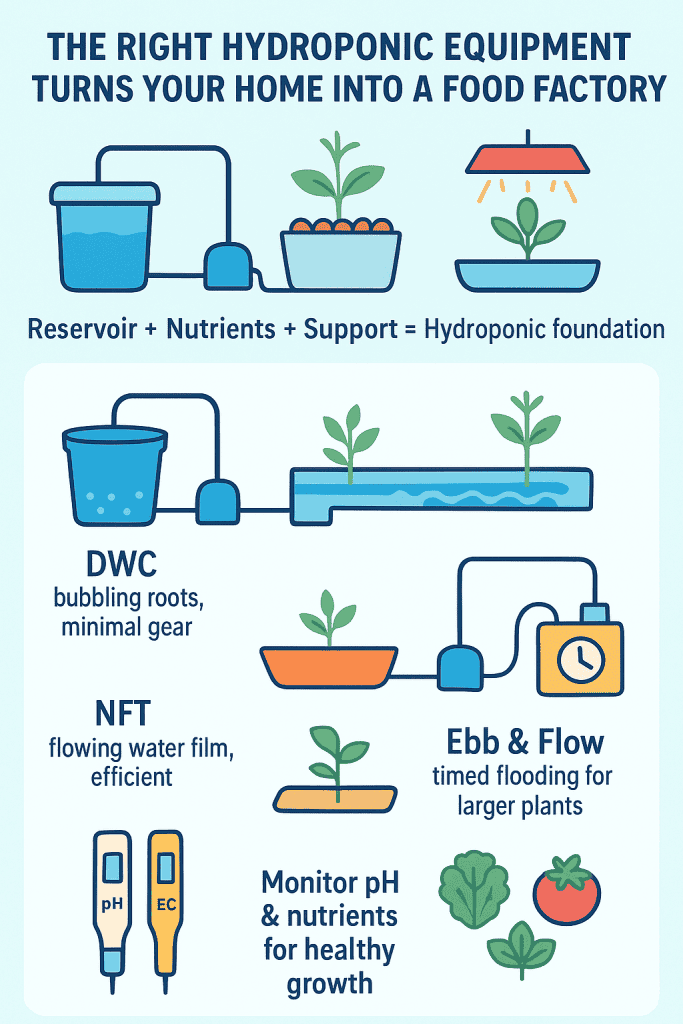
Before you get into the specifics of an ebb and flow or a deep water culture setup, there’s a baseline list of equipment that applies to nearly every hydroponic garden. Think of this as your starter pack. You need a container to hold the nutrient solution, your reservoir.
A simple 5-gallon bucket from a hardware store works, but an opaque tote is better to block light and prevent algae. You need a growing medium, something like clay pebbles or rockwool cubes, to give the plant roots something to anchor to since there’s no soil. Choosing the right setup can be the first step in any hydroponic project to maximize growth potential.
You also need the lifeblood of the system: the nutrient solution. This isn’t just plant food dissolved in water, it’s a carefully balanced mix of macro and micronutrients. And because you’re playing the role of nature, you need tools to monitor that balance.
A pH meter tells you if your solution is too acidic or alkaline for the plants to absorb their food. An EC meter measures the concentration of nutrients in the water. These two tools prevent most common growing problems before they even start.
Deep Water Culture (DWC): The Simple Bubbling Bucket
If you’re looking for a low-maintenance entry point, Deep Water Culture is your best bet. The concept is beautifully simple. Plants sit in net pots, their roots dangling directly into a highly oxygenated nutrient solution. The key piece of equipment here, beyond the bucket and net pots, is the aeration system.
You must have an air pump connected via tubing to an airstone. The pump pushes air through the stone, which breaks it into a cloud of tiny bubbles that dissolve into the water. Proper aeration is key to maintaining a healthy system, just like maintaining the right water level in a simple hydroponic setup ensures roots don’t drown or dry out.
This constant bubbling does two things. It provides vital oxygen to the roots, preventing them from drowning, and it keeps the nutrient solution moving, so it doesn’t become stagnant. DWC systems need very little extra equipment.
There are no timers for flooding cycles or complex networks of tubes. You just need to top off the water and check your pH and nutrient levels every few days. It’s an incredibly effective system for leafy greens and herbs.
- Core DWC Gear: Reservoir, lid with holes, net pots, air pump, air tubing, airstone.
- Plant Picks: Lettuce, kale, basil, mint, plants that don’t get too top-heavy.
Nutrient Film Technique (NFT): The Flowing River

Credit : The Plant Enthusiast
NFT systems are a study in elegant efficiency. Instead of submerging roots, they use a shallow, constant stream of nutrient solution that flows down a sloped channel. The roots sit in this thin “film” of water, absorbing what they need while the top parts of the root system get ample oxygen from the air.
The main equipment you’ll need here are the channels themselves. You can buy specialized NFT gutters or get creative with PVC pipes.
A low-pressure water pump sits in the reservoir and pushes the solution to the high end of the channels. Gravity then pulls it down the slope, past all the roots, and it drains back into the reservoir to be recirculated.
Because the water flow is continuous, you don’t typically need a timer for the pump. This system is fantastic for fast-growing, lightweight plants with smaller root systems. Larger plants can clog the channels [1].
Ebb and Flow (Flood and Drain): The Tidal System
The ebb and flow system mimics the tides. Plants are grown in a large tray filled with a growing medium like clay pebbles. Below this tray sits the nutrient reservoir. A submersible water pump, controlled by a timer, floods the grow tray at set intervals, soaking the roots and medium.
After a short period, the pump turns off and the water drains back into the reservoir. This cycle repeats throughout the day.
The timer is the brains of this operation. It automates the entire process, making it very hands-off once it’s dialed in. The flood-and-drain action ensures the roots get a heavy drink of nutrients, but also have a dry period to access oxygen.
This makes it versatile, capable of supporting larger plants like tomatoes and peppers that might be too big for DWC or NFT. You need a sturdy flood tray, a reliable pump, and a quality timer [2].
Your Hydroponic Setup Strategy
Choosing your equipment isn’t just about picking a system. It’s about matching the gear to your goals. How much space do you have? A vertical NFT system might be perfect for a small apartment balcony. What do you want to grow? A DWC bucket is great for herbs, but an ebb and flow table is better for a hearty tomato plant.
Your budget matters, too. A simple wick system, which uses no pumps, just capillary action in a wick, costs almost nothing to build. Adopting sustainable hydroponic gardening practices includes selecting systems that minimize water and energy use, aligning perfectly with eco-friendly home growing.
Don’t overlook the environment. If you’re growing indoors, your lighting is a major equipment decision. LED grow lights are the modern standard, energy-efficient and cool-running. You might also need small fans for air circulation to strengthen plant stems and prevent disease.
The most successful gardeners see their hydroponic system as an ecosystem. Every piece of equipment, from the air stone to the fan, works together to create the perfect conditions for growth.
FAQ
What tools help you check the nutrient solution in a simple setup?
You can use a pH meter, EC meter, pH testing kit, and water testing kit to check your nutrient solution. These tools help you see if the mix is safe for plant roots. You can also use a hydroponic monitor or hydroponic controller to track readings. These tools help you fix problems before plants show stress.
How do you manage water flow in a beginner hydroponic system?
You can set up a water reservoir with a submersible pump or water pump that moves water through hydroponic tubing. A timer for pumps helps you control the cycle. Some people use a nutrient delivery system with tubing connectors or PVC pipe. These parts keep water moving so roots get steady food and oxygen.
What parts help roots get air in water based systems?
You can add an air pump, airstones, or a submersible air pump to improve root zone oxygenation. Some setups use an oxygenation system or water circulation to keep water fresh. In aeroponics equipment, a root misting system with mist nozzles gives roots fine droplets. Good airflow helps roots grow strong.
What do you need to start seedlings for hydroponics?
You can use a growing medium like rockwool, rockwool cubes, clay pebbles, perlite, vermiculite, coco coir, pumice, or gravel substrate. Seedling trays and net pots hold young plants in place. Plant support or plant clips help stems stay upright. These items help seedlings grow before you move them into the main system.
How do you control lighting and climate in indoor setups?
You can use LED grow lights, fluorescent grow lights, high-pressure sodium lights, grow light timers, reflectors, and a ballast to manage light. A grow tent creates a closed space. You can add grow room fans, a humidifier, a heater, a humidity controller, a temperature controller, and hydroponic climate control tools to manage air, heat, and moisture.
Conclusion
The path to a harvest is clearer when you know which tools to gather. Your reservoir becomes the heart, your pump the circulatory system, and your monitoring tools the nervous system. Start with the framework that fits your life, the steady bubble of DWC, the constant flow of NFT, or the reliable cycle of ebb and flow.
Then add the essential monitors to keep everything in balance. With these components in place, you’re not just assembling equipment. You’re building a resilient, soil-free garden ready to produce.
References
- https://ouci.dntb.gov.ua/en/works/4a5obgk4/
- https://soilandseed.info/index.php/2025/01/09/comparing-traditional-farming-vs-modern-hydroponic-systems-profitability/
Related Articles
- https://tophydroponicgarden.com/how-to-choose-your-first-hydroponic-project/
- https://tophydroponicgarden.com/how-to-build-a-simple-hydroponic-setup/
- https://tophydroponicgarden.com/is-hydroponic-gardening-sustainable/
Was this helpful?

I’m Barrie L., a passionate hydroponic gardening enthusiast dedicated to cultivating thriving, soil-less gardens. With a focus on all things hydroponic, I share my expertise on innovative growing techniques and sustainable practices through my blog, tophydroponicgarden.com. As a seasoned hydroponics specialist, my goal is to inspire and guide fellow gardeners in harnessing the power of water-based cultivation for bountiful and eco-friendly harvests. I’m also an author of the book “Hydroponics For Absolute Beginners: Your Step By Step Guide For How To Create An Hydroponics System At Home Without Soil, For Growing Vegetable, Fruit And Herbs.” which is sold on Amazon. Join me on a journey of redefining the way we cultivate plants, one nutrient-rich solution at a time. Happy growing!