

Hydroponic plants wilt because they lose water faster than their roots can replace it.
Even with roots sitting in nutrient solution, poor oxygen, unhealthy roots, or unbalanced nutrient chemistry can slow water uptake and leave plants stressed.
Checking nutrient solution pH regularly helps too, since most hydroponic systems perform best between 5.5 and 6.5. Small problems can turn into wilt surprisingly fast.
Keep reading to learn the most common causes and what to do before the damage gets worse.
Hydroponic Wilting Quick Fix Checklist
Most wilting problems become easier to solve when you check the basics before making major changes to your system.
- Inspect the roots first, then verify the reservoir temperature, dissolved oxygen, and pump operation.
- Test the pH, EC, and water temperature before adjusting the nutrient solution or adding supplements.
- Fix environmental stress early, since preventing root damage is much easier than restoring unhealthy root systems.
Why do hydroponic plants wilt even with plenty of water?
Plants in hydroponic systems wilt even when their roots are surrounded by water. The problem isn’t the amount of water, but how fast the roots can take it up compared to how quickly the leaves lose it.
Leaves lose water through tiny openings called stomata, a process called transpiration. This helps cool the leaves and move nutrients up through the plant. But when the environment makes leaves lose water faster than the roots can supply, the plant starts to droop.
Even if plants sit in water, they can still struggle to stay hydrated if certain conditions aren’t right. For example, the pH of the water matters a lot.
According to the University of Arizona, hydroponic plants do best when the pH is between 5.5 and 6.5. Outside this range, the plants can’t absorb nutrients well, making it seem like they’re thirsty even though they have water.
Roots need more than just water, they need oxygen dissolved in that water, the right balance of nutrients, and a good temperature. Without those, the roots don’t work well.
Here are some common reasons water doesn’t move through plants properly:
- Healthy roots pull in water and nutrients easily.
- Roots need oxygen to breathe; without enough, they slow down.
- If the nutrient solution is too concentrated (high electrical conductivity), it’s harder for roots to take up water.
- Warm water holds less oxygen, which hurts the roots.
- Damaged roots can’t move water well.
Think about lettuce in a Deep Water Culture system. On a hot day, it might wilt even though its roots are underwater. The real problem usually isn’t lack of water but low oxygen in the water.
So before adding more fertilizer or supplements, check the roots, water temperature, and oxygen levels. These factors often cause plants to wilt suddenly.
Are unhealthy roots the most common cause?
Damaged roots are often the silent culprits behind sudden wilting in hydroponic setups because they handle water uptake and nutrient absorption directly.
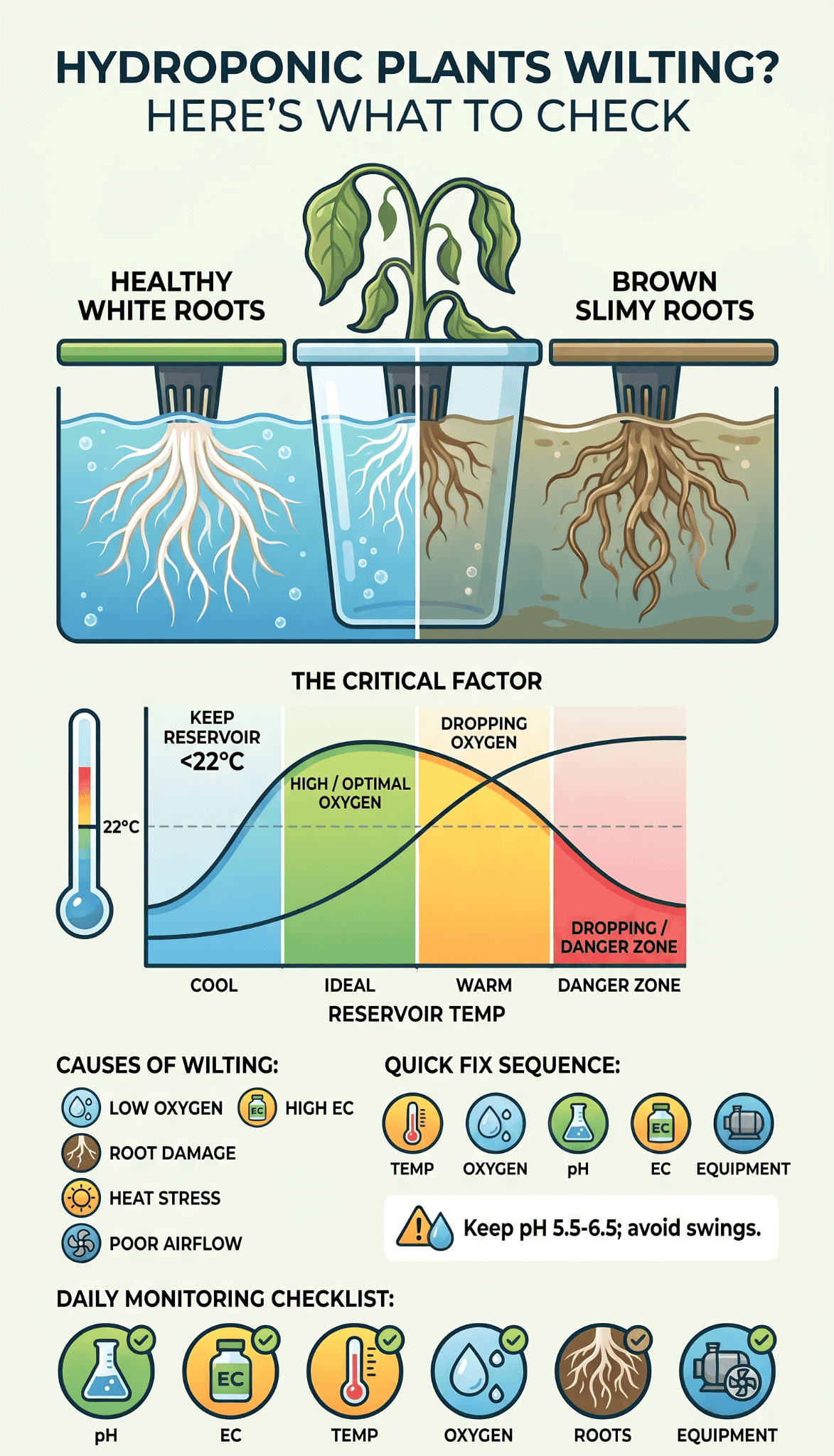
When roots are healthy, they look bright white or cream-colored, feel firm, and shouldn’t have any smell. But once they turn brown, become slimy, or soft, the whole plant shows stress fast.
The most common root trouble is hydroponic root rot, usually linked to Pythium, a sneaky waterborne pathogen that targets weakened roots. Various university extension studies agree: root rot spreads faster when oxygen drops and water temperatures climb.
As noted by the Technion Israel Institute of Technology
“The oxygen consumption rate of infected plants was significantly lower than that of healthy plants, and this reduction occurred before any significant decrease in shoot fresh weight.” – Technion Israel Institute of Technology
Here’s what to watch for:
- Brown or black roots
- Slimy feel
- Foul odor from the reservoir
- Wilting despite plenty of water
- Slow or stopped growth
- Yellowing leaves
Pythium damages the root’s outer layers, making it hard for water and nutrients to flow into the plant. It looks a lot like drought stress, except the roots are still wet in nutrient solution.
A good quick check: healthy roots stay firm, white, and odor-free.
Water temperature matters more than you might think. Above about 22–24°C (72–75°F), water can’t hold as much oxygen, which both harms root breathing and opens the door for diseases.
Roots can be hurt mechanically too, thick root balls clog pumps, air stones, or water channels. That cuts off oxygen in spots, causing pockets with no air.
Not every brown root is a red flag, though. Some nutrient mixes stain roots tan or light brown. Texture and smell tell you more than color alone.
Keeping reservoirs clean, moving water well, and checking roots often go a long way in keeping roots healthy and your hydroponic system running smooth.
If you also notice cloudy hydroponic water, treat it as an early warning that something in the reservoir may be affecting root health.
How does low oxygen affect hydroponic roots?

Roots can’t breathe without oxygen, and not getting enough slows how they absorb water. That’s why plants wilt even when their roots are soaked in nutrient solution.
Hydroponic systems depend entirely on dissolved oxygen in water, unlike soil where roots pull air from the ground too. Oxygen fuels the roots as they convert sugars into energy needed to move nutrients around and grow new cells.
In Deep Water Culture systems, an air stone attached to a pump keeps oxygen levels steady by bubbling air into the reservoir. But if the pump stops working or the air stone clogs, oxygen vanishes quickly.
Warm water, broken or blocked air stones, pump failures, stagnant water, and roots growing too thick all cut down oxygen availability.
Sometimes roots get so crowded they block fresh water flow to parts of themselves, so even though the reservoir looks full, some roots don’t get enough oxygen.
Many growers see stress signs when water temperatures rise above 22°C, especially during summer. Less oxygen makes roots weaker and helps pathogens like Pythium take hold, creating a cycle that worsens root health.
Just putting in a bigger pump won’t fix the problem if the water stays warm. You have to balance good aeration with cool water temperatures to keep roots healthy.
Before changing nutrient mixes, make sure your aeration equipment runs without interruption and that water circulation reaches all parts of the root system; otherwise, you’re just treating symptoms while the real problems keep going unnoticed.
Can high reservoir temperatures trigger rapid wilting?
Warm nutrient solution is a hidden enemy in hydroponics. As water heats up, it holds less oxygen, turning the reservoir into a tough place for roots to breathe.
Once the temperature passes about 22°C, root respiration slows down, and diseases find a friend. Many experienced growers watch the thermometer closely once the water climbs above 24–27°C because wilting tends to follow fast after that.
Before changing nutrient mixes, it’s smart to check a few basics: keep reservoir temperatures below 22°C, make sure the air pump is running non-stop, and look for white, healthy roots.
| Check | Target |
| Reservoir temperature | Below 22°C |
| Air pump | Running continuously |
| Root color | White and healthy |
Growers often call this situation an “oxygen-temperature death spiral.” Higher water temps cause oxygen to drop, roots get stressed, they pull in less water, and pathogens like Pythium spread fast.
The plant then wilts even more, fueling the cycle. Cooling does not have to be complicated; insulating reservoirs, tossing in frozen water bottles for a quick fix, improving air circulation around tanks, or installing chillers for bigger setups all help.
Yet, the most important thing is knowing that temperature comes before nutrients. Many problems that look like nutrient deficiencies actually start with low oxygen from warm water. Check the conditions first to avoid chasing the wrong solution.
Could pH and EC be preventing water uptake?
I’ve noticed how easily wrong pH and electrical conductivity (EC) can throw a hydroponic system out of balance. Even when the nutrient solution looks fine, plants can wilt if these factors aren’t right.
Water moves into roots by osmosis, driven by differences in water concentration, but if the nutrient concentration gets too high, things flip. Instead of soaking up water, roots start losing it to the solution around them.
The University of Florida advises keeping pH between 5.5 and 6.5 for most crops, where nutrients like calcium, magnesium, and iron stay available.
In a recent analysis by ASCI Database
“Root growth was significantly greater at higher pH levels, while stem osmotic potential and leaf greenness were positively correlated with pH.” – ASCI Database
If pH strays too far, plants experience what’s called nutrient lockout, it’s like the minerals are there but your plant can’t use them. High EC means the nutrient salts are bunched up too much. As water evaporates, EC climbs unless plain, pH-adjusted water refills the reservoir.
Wilting when the reservoir is full, leaf tip burn, slower growth, nutrient deficiency warnings, and salt crusts on equipment are common signs problems are brewing. Why pH? Because it keeps nutrients soluble.
Without the right pH, roots struggle to absorb the essentials, even when they’re in the solution. And too-high EC cranks up osmotic pressure, pushing water out of root cells, think reverse osmosis, and that leaves plants thirsty in a pool of water.
A daily checklist helps: measure pH before tweaking anything, track EC especially after topping off, add plain pH-balanced water during heat, refresh nutrient solutions regularly, and clean reservoirs to stop salt buildup.
One more thing, avoid big pH swings all at once. Slow and steady wins the race, easing plant stress and helping their nutrient intake stay on track.
How do environmental conditions speed up wilting?
You can see it clearly when a hydroponic plant wilts on a hot day, even though the roots seem fine. High temperatures, low humidity, and weak airflow make leaves lose water faster than roots can keep up.
Even the healthiest roots won’t keep a plant hydrated if the air is working against it. Hot, dry air pushes moisture out of tiny pores on leaves, stomata, making roots scramble to replace lost water.
NASA’s research into controlled environments shows that temperature, humidity, airflow, and light all shape how plants use water in these closed systems.
Grow lights, especially strong ones, heat things up quickly, and without good ventilation, that heat builds around the canopy. To save itself, a plant closes stomata to hold onto water, but that also cuts down photosynthesis and slows growth.
We often see these problems: high air temperatures, low humidity, lousy air circulation, uneven temperatures across the leaf canopy, and lights that are too intense.
Warm air speeds up evaporation off leaves, ramping up transpiration beyond what roots can replace. Air that just sits there traps heat near leaves and causes spots with different humidity, adding stress.
Fixing airflow and keeping conditions steady usually helps more than jumping straight to stronger fertilizers.
Environmental stress tends to show up before nutrient problems do, so getting the temperature and humidity right first often brings plants back without tweaking nutrient mixes.
Can equipment failures cause plants to wilt within hours?
Mechanical failures cause wilting faster than you might expect in hydroponics. Unlike soil gardens, these systems rely completely on pumps, timers, and constant water movement. When one part breaks down, roots can dry out or lose oxygen in just a few hours.
Take Nutrient Film Technique systems, roots rest in a thin, flowing layer of nutrient solution. Stop that flow for even a short time, and the roots get exposed to air, dry out, and start to suffer.
Common failures include pump breakdowns, timer glitches, blocked tubing, clogged emitters, and air pump problems.
NFT setups are especially fragile because there’s almost no standing water holding roots steady. A failed pump on a hot afternoon can cause plants to wilt long before the grower notices.
The fix lies in regular maintenance, checking pumps, tubes, air stones, and filters every week keeps the system running smoothly and prevents unexpected root drying.
Why is transplant shock often overlooked?
Wilting right after transplant is a story many growers know well. Young plants struggle because their roots suddenly have to adjust to a completely new world.
Moving seedlings from cozy spots like Rockwool or coco plugs into flowing nutrient solutions cuts water uptake for a bit while new roots get settled.
Transplant shock shows up early and often, especially with peppers, tomatoes, and leafy greens. Choosing suitable tomato varieties for hydroponics can also reduce stress during establishment and improve early root development.
What causes it? Roots get disturbed, humidity often drops, lights get brighter, water moves faster, and nutrient concentrations shift, all at once. It’s a lot for tiny roots to handle.
The best way to ease shock? Keep humidity high for a couple of days, dim the lights, treat roots gently, avoid changing nutrients, and hold steady with reservoir conditions.
More often than not, patience is the best medicine. Healthy seedlings bounce back once their roots start growing again.
Which supplements actually help stressed plants?
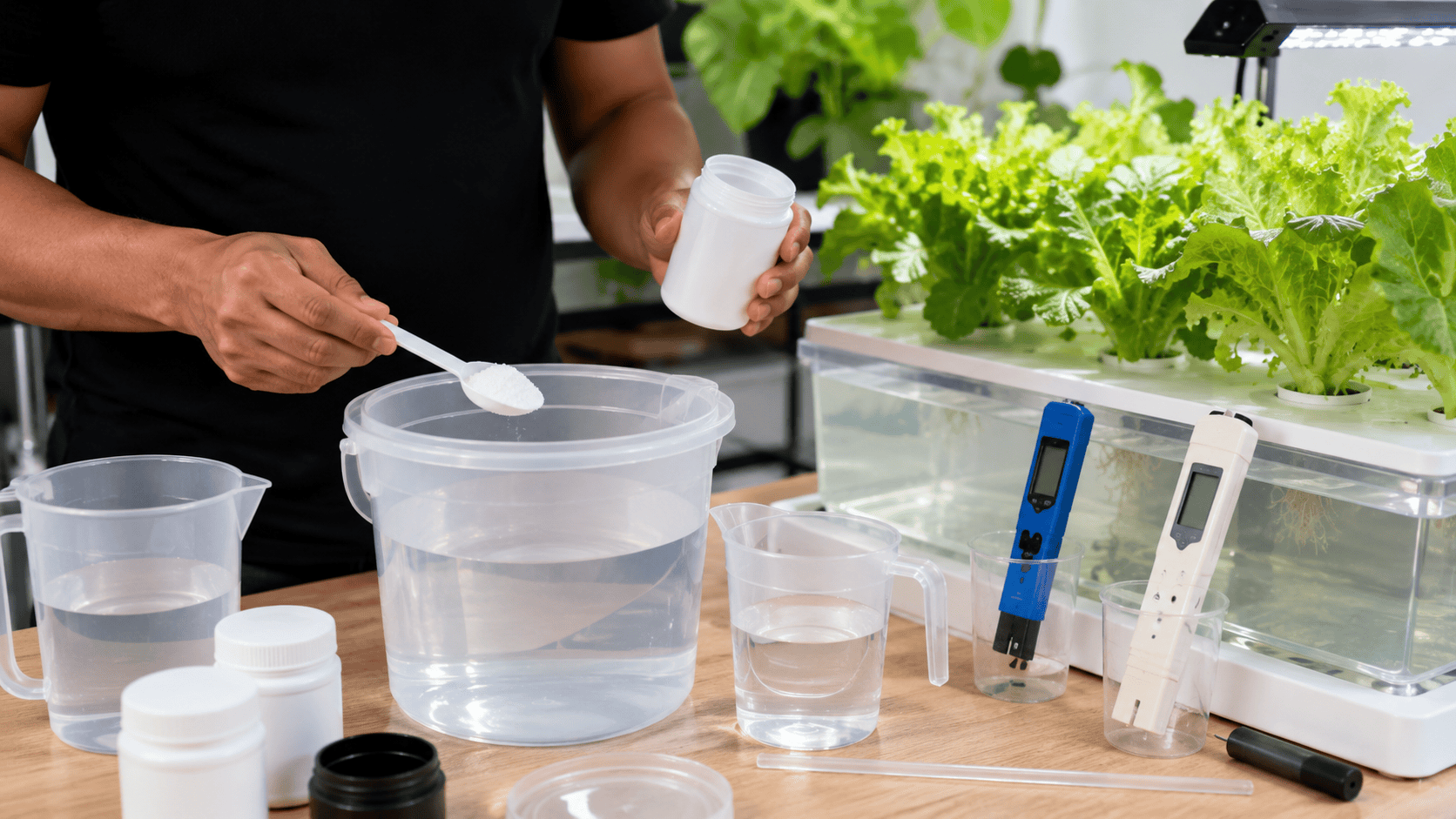
Supplements can lend a hand in helping plants recover, but they’re no substitute for getting the basics right. Experienced growers almost always stress fixing temperature, oxygen, pH, and EC before reaching for specialty products.
Take silica, for example. It’s known to boost heat tolerance and strengthen stems, but it’s most effective as part of a balanced nutrient plan, not a quick fix.
Then there’s hydrogen peroxide, which might give roots a temporary oxygen boost in emergencies. Beneficial microbes support root health over time, but none of these should sneak ahead of solid environmental care.
Troubleshooting comes first: reservoir temperature, dissolved oxygen levels, pH balance, EC, and water circulation all need to be in check.
Growers who focus on steady, consistent conditions tend to see healthier plants lasting longer than those chasing recovery with supplements alone.
What is the fastest troubleshooting order?
A steady inspection routine saves time and stops unnecessary changes, it gets to the heart of the problem faster. Start by looking at roots: their color, feel, and any smell. Then check reservoir temperature to make sure it’s not too warm.
Next, verify pumps and aeration are running smoothly. After that, measure pH, followed by EC or nutrient PPM. Don’t forget to check the room’s temperature and humidity, and finally, inspect tubing for any blockages.
Changing nutrients should come only after you’ve confirmed all the environmental factors and equipment are working as they should. This step-by-step process is often the fastest way to revive a dying hydroponic plant before the damage becomes permanent.
Many seasoned growers swear by the order temperature → oxygen → pH → EC, since it tackles the usual suspects before adding new variables. That sequence is a solid way to keep plants healthy without chasing shadows.
How can you prevent hydroponic plants from wilting long term?
Credits : The Ripe Tomato Farms
Watching plants closely every day can stop wilting before it starts. Hydroponic success isn’t about rushing to fix things when trouble shows up, it’s about steady care.
When water quality, oxygen levels, and nutrient strength stay steady, roots stay tough and ready for whatever comes.
Good habits include recording pH and EC daily, keeping an eye on reservoir temperature, making sure aeration never stops, inspecting roots every week, and cleaning pumps, tubing, and reservoirs regularly.
It’s also smart to top off lost water with plain, pH-balanced water and swap out nutrient solution on a set schedule.
Why does consistency matter? Because steady conditions lower plant stress, keeping roots breathing deep and pulling up water as they should.
It’s much easier to make small fixes each day than to nurse a plant through root rot or oxygen starvation.
Refill evaporated water first with plain pH-balanced water before adding nutrients. That way, you avoid spikes in EC that can stress plants even more.
FAQ
Can reverse osmosis water cause nutrient deficiency in hydroponic plants?
Yes. Reverse osmosis water contains very few minerals, so growers must prepare the hydroponic nutrient solution correctly. An unbalanced nutrient solution can cause nutrient deficiency, poor nutrient absorption, and plant wilting. Check reservoir pH, EC levels, and nutrient ppm after mixing nutrients. Consistent water quality and balanced nutrition support healthy roots, proper plant hydration, and steady growth.
How does transplant shock affect hydroponic plant health?
Transplant shock temporarily reduces water uptake while roots adapt to a new hydroponic setup. As a result, plants may develop wilting leaves, slower growth, and visible hydroponic plant stress. Keep water temperature stable, provide adequate root zone aeration, and avoid sudden environmental changes. Consistent hydroponic maintenance helps plants recover and restores normal root function more quickly.
What happens if hydroponic reservoir temperature stays too warm?
A high hydroponic reservoir temperature reduces dissolved oxygen in the water, which can lead to hydroponic oxygen deficiency, poor root health, and slower growth. Warm conditions also encourage Pythium and other pathogens that cause hydroponic root rot. Maintaining the correct water temperature improves root oxygenation, supports plant respiration, and promotes long-term hydroponic plant health.
How can I tell the difference between nutrient lockout and high electrical conductivity?
Nutrient lockout occurs when a pH imbalance prevents roots from absorbing nutrients, even though nutrients are present. High electrical conductivity indicates excessive hydroponic nutrient concentration, which increases osmotic pressure and can reduce water uptake. Regular hydroponic water monitoring of EC levels, pH, and nutrient strength helps identify the problem and prevents unnecessary adjustments.
Why is airflow important in a hydroponic system besides controlling temperature?
Proper hydroponic system airflow improves plant transpiration, regulates humidity levels, and supports a healthy plant water balance. Good airflow also reduces excess moisture that contributes to environmental stress and disease. Combined with an air stone, effective hydroponic water circulation, and proper hydroponic reservoir aeration, airflow creates healthier growing conditions and supports consistent plant development.
Keep Your Hydroponic Plants Healthy Year Round
When your hydroponic plants start to wilt, the problem often begins below the surface.
Healthy roots help plants take up water and nutrients, so checking them first can save you time and avoid bigger issues. It matters.
If you want an easier way to keep your system running well, TopHydroponicGarden offers practical guides that help you spot problems early and keep your plants growing with confidence.
A simple routine, along with trusted advice, can make it much easier to keep your hydroponic garden healthy all year round.
References
- https://cris.technion.ac.il/en/publications/detection-of-root-disease-in-hydroponic-spinach-by-monitoring-dis/
- https://ascidatabase.com/ascidetail.php?doi=ajps.2005.348.355
Related Articles
- https://tophydroponicgarden.com/why-is-my-hydroponic-water-cloudy/
- https://tophydroponicgarden.com/how-to-revive-a-dying-hydroponic-plant/
- https://tophydroponicgarden.com/best-tomato-varieties-for-hydroponics-2/
Was this helpful?

I’m Barrie L., a passionate hydroponic gardening enthusiast dedicated to cultivating thriving, soil-less gardens. With a focus on all things hydroponic, I share my expertise on innovative growing techniques and sustainable practices through my blog, tophydroponicgarden.com. As a seasoned hydroponics specialist, my goal is to inspire and guide fellow gardeners in harnessing the power of water-based cultivation for bountiful and eco-friendly harvests. I’m also an author of the book “Hydroponics For Absolute Beginners: Your Step By Step Guide For How To Create An Hydroponics System At Home Without Soil, For Growing Vegetable, Fruit And Herbs.” which is sold on Amazon. Join me on a journey of redefining the way we cultivate plants, one nutrient-rich solution at a time. Happy growing!