

Hydroponic plants can die fast when the root zone becomes unstable.
A drop in oxygen, poor water quality, equipment failure, or a sudden change in growing conditions can damage roots long before the leaves show obvious signs.
That catches a lot of growers off guard. In my view, root problems are still the first place to check because they can spiral quickly.
Keep reading Tophydroponicgarden to see the most common causes, how to spot them early, and what to do before the rest of the crop is affected.
Hydroponic Rescue Checklist: Catch Problems Before They Spread
Most sudden plant death in hydroponics can be traced to a few critical root-zone issues. Focusing on these checks first helps you identify the real cause faster and protect healthy plants.
- Inspect the root zone first for discoloration, slime, odor, or other signs of root damage before focusing on leaf symptoms.
- Check dissolved oxygen, reservoir temperature, pH, EC, and confirm pumps are running properly before adjusting nutrients.
- Remove plants showing suspected root pathogen infections and monitor the system daily to prevent problems from spreading.
Why Do Hydroponic Plants Die Suddenly?
Sudden losses in plants often happen when roots stop absorbing water and nutrients all of a sudden. This can occur because the roots don’t get enough oxygen, get sick, face nutrient imbalances, or go through environmental shocks.
Unlike regular soil, hydroponic systems don’t have much room for error. Even a small drop in dissolved oxygen, a shift in pH levels, or a failure in the hydroponic pump can cause plants to fail overnight.
The University of Arizona’s Controlled Environment Agriculture Center points out that managing the root zone directly affects how well crops grow and survive. Since roots stay submerged, you usually don’t see problems until damage is severe.
For example, leaves may start to wilt even when there’s plenty of water, and stems can lose their firmness in just a few hours.
Before changing fertilizers or supplements, always check the roots first. The earliest warning signs include sudden wilting, rapid yellowing, stems drying out, roots turning brown and slimy, a rotten smell from roots, and leaves dropping unexpectedly.
Early wilting in hydroponic plants often develops before root damage becomes obvious, making daily observation one of the easiest ways to catch problems before they spread.
Knowing how roots normally look is key to spotting trouble. Healthy hydroponic roots are white, firm, and don’t smell.
Brown, slimy roots often mean root rot or an infection caused by oomycetes. Dry and brittle roots usually hint at clogged drip emitters, dry sections in NFT systems, or problems with aeroponic misters. Black roots often signal that roots are starved of oxygen for too long.
Research shows that even a short time without enough oxygen at the roots slows plant growth dramatically. Checking roots is the fastest way to diagnose what’s going wrong.
Is Root Rot Killing Your Hydroponic Plants?

Hydroponic root rot often hits hard and fast, wiping out healthy plants before growers can react. It’s mostly caused by a Pythium outbreak , a type of pathogen that thrives when the nutrient solution is warm, oxygen levels are low, and sanitation falls short.
Pythium goes straight for the tender root tissue, turning once-white roots into soggy, brown slime that can’t move water or nutrients.
Research in plant pathology makes it clear: warm and oxygen-poor conditions are basically an all-you-can-eat buffet for Pythium.
This pathogen spreads quick, especially in recirculating systems where water moves around. Catching it early can save your crop, but conditions need close monitoring.
As noted by Europe PMC
“severe root rot and/or plant death occurred within 3-4 days after inoculation with Pythium aphanidermatum at 21 and 27°C.” – Europe PMC
Here’s how the main environmental factors line up with what happens to your plants:
| Cause | Effect |
| Warm nutrient solution | Pathogen growth speeds up |
| Low dissolved oxygen | Roots suffocate |
| Dirty reservoir | Disease spreads faster |
| Organic additive biofilm | Raises oxygen demand |
Before a plant completely crashes, symptoms show up: slimy roots, brown mush instead of firm roots, a bad smell coming from the root area, and wilting leaves even though the roots are wet.
But don’t jump to conclusions if roots look brown. Some nutrient mixes color the roots naturally without harming them. Texture and smell give better clues than color alone.
So, how do you spot root rot early? Look for roots that feel soft instead of crisp, give off a foul odor, and plants that aren’t pulling in nutrients like they should.
For those using treatments like Hydroguard or maintaining sterile hydroponic setups, mixing beneficial bacteria with harsh sterilizers (hydrogen peroxide washes, for example) can backfire.
It kills helpful microbes and unrests the balance in your reservoir, which you definitely don’t want.
Watching roots closely is your best bet to stay ahead of root rot and keep your hydroponic garden thriving.
Could Low Oxygen Be Suffocating the Roots?
Without enough dissolved oxygen, roots simply can’t do their job, they stop respiring and struggle to take in nutrients.
This oxygen dip often happens after the reservoir heats up, there’s a power outage, an air pump quits, or circulation slows down. Cornell University points out that warmer water holds less oxygen naturally, so plants quickly face oxygen starvation when temperatures rise.
As oxygen levels drop, root respiration grinds to a halt. Water uptake slows, plant cells lose their firmness, and the whole system collapses faster than you might expect.
Research from FAO shows
“mature plants wilted two days after aeration interruption and died rapidly,” while their photosynthetic rate and water use efficiency declined sharply. – FAO AGRIS
Here’s what usually causes these drops:
- Reservoir water getting too warm
- Hydroponic pump failures
- Too many plants crowding the reservoir
- Poor water circulation
Thankfully, most oxygen issues can be avoided with steady, simple maintenance.
Fixing low oxygen means better root aeration, add more air stones, boost water circulation, keep root zone temperatures down, and clean blocked equipment regularly. Some growers use water chillers, like Active Aqua Chiller, to keep things steady.
Just remember: pumping in extra oxygen won’t help if organic matter in the water is gobbling oxygen faster than you can replace it. Clean reservoirs are just as critical as bubbles and cool temps.
Can Incorrect pH Cause Rapid Plant Death?
Hydroponic plants are picky about pH. Unlike soil, their nutrient solution offers no buffer, so if pH drifts too far off, roots can’t soak up what they need.
This leads to nutrient lockout and plants start breaking down fast. Maintaining pH stability also helps reduce sudden nutrient availability changes that place additional stress on already vulnerable root systems.
The University of Florida IFAS Extension says most hydro crops do best with a pH between 5.5 and 6.5. Outside that, even the best nutrients become useless.
Iron disappears from reach. Calcium and magnesium lockout kick in. Plants slow down long before you see yellowing or leaf spots.
Checking pH daily beats scrambling once symptoms pop up.
What goes wrong when pH is off?
- Iron lockout
- Calcium and magnesium shortages
- Potassium might climb to toxic levels
- Overall nutrient uptake drops
And here’s something many miss: your pH meter might be the problem. If it’s not calibrated regularly, it lies. Many unexplained nutrient issues come from a faulty meter, not bad fertilizer.
Keep your pH and ppm meters fresh with proper calibration solutions, makes all the difference between chasing shadows and steady growth.
Are Nutrient Imbalances Causing the Problem?

Credits : Urbanhouseandgarden
Both nutrient shortages and overloads can knock hydroponic plants off balance, especially when they’re growing fast. Electrical conductivity (EC) is the go-to measure for nutrient strength.
The Royal Horticultural Society highlights that keeping an eye on EC helps growers keep nutrient levels steady while stopping dangerous salt buildup.
Too much feeding is just as damaging as too little. When EC runs high, roots face osmotic shock, basically, they lose water through plasmolysis instead of taking it in.
If nutrients aren’t mixed well, you can get hot spots that burn roots hard and fast, sometimes within hours.
The usual suspects include nitrogen, calcium, magnesium, potassium, and iron. But often, what looks like a deficiency is really off pH messing with nutrient uptake. Diagnosing correctly before adding supplements is crucial.
In practice, calcium and magnesium lockouts, along with potassium toxicity, show up most after pH shifts or sudden EC spikes. One warning: don’t rush to fix everything at once. Tweaking multiple things simultaneously can hide what’s really going on, making the problem harder to solve.
Could Equipment Failure Destroy an Entire System?
Hydroponic setups lean heavily on machines, and when those machines falter, even briefly, plants can suffer quickly. Unlike soil roots, hydroponic roots need a nonstop supply of water, oxygen, and nutrients.
A pump failure, a timer glitch, or a power outage can cause lasting damage in minutes, especially in systems without growing media.
NFT systems are delicate; roots dry out almost immediately if water stops flowing. Aeroponic foggers failing mean moisture disappears just as fast. Vertical towers risk collapse when water distribution halts entirely.
Regularly checking key equipment, water pumps, air pumps, timers, and having a solid backup plan can make all the difference.
Some growers rely on continuous monitors for pH and nutrient levels and keep spare pumps on hand. Staying vigilant helps avoid disaster in a system that demands precision.
Does Water Temperature Matter More Than Growers Expect?
Reservoir temperature is one of those silent factors that shape everything, the oxygen in the water, how fast pathogens spread, and how well roots absorb nutrients.
When water gets warmer, it holds less oxygen, but at the same time, harmful microbes multiply faster. Ohio State University points out that keeping root-zone temperatures steady is key to healthy plants in hydroponics.
Most growers aim for around 18 to 22°C (65 to 72°F). If it climbs higher, the risk of pythium outbreaks rises, roots start suffocating, and the nutrient solution breaks down quicker.
Swings between hot and cold aren’t any better, those ups and downs put stress on the roots just as much.
To keep things steady, growers shade reservoirs from direct sun, add chilling systems (like an Active Aqua Chiller for bigger setups), insulate tanks, and check temperatures every day.
Stable reservoir temps don’t just keep diseases at bay, they also help the water hold onto oxygen longer, so plants can breathe easier throughout their cycle.
Can Pests or Diseases Spread Overnight?
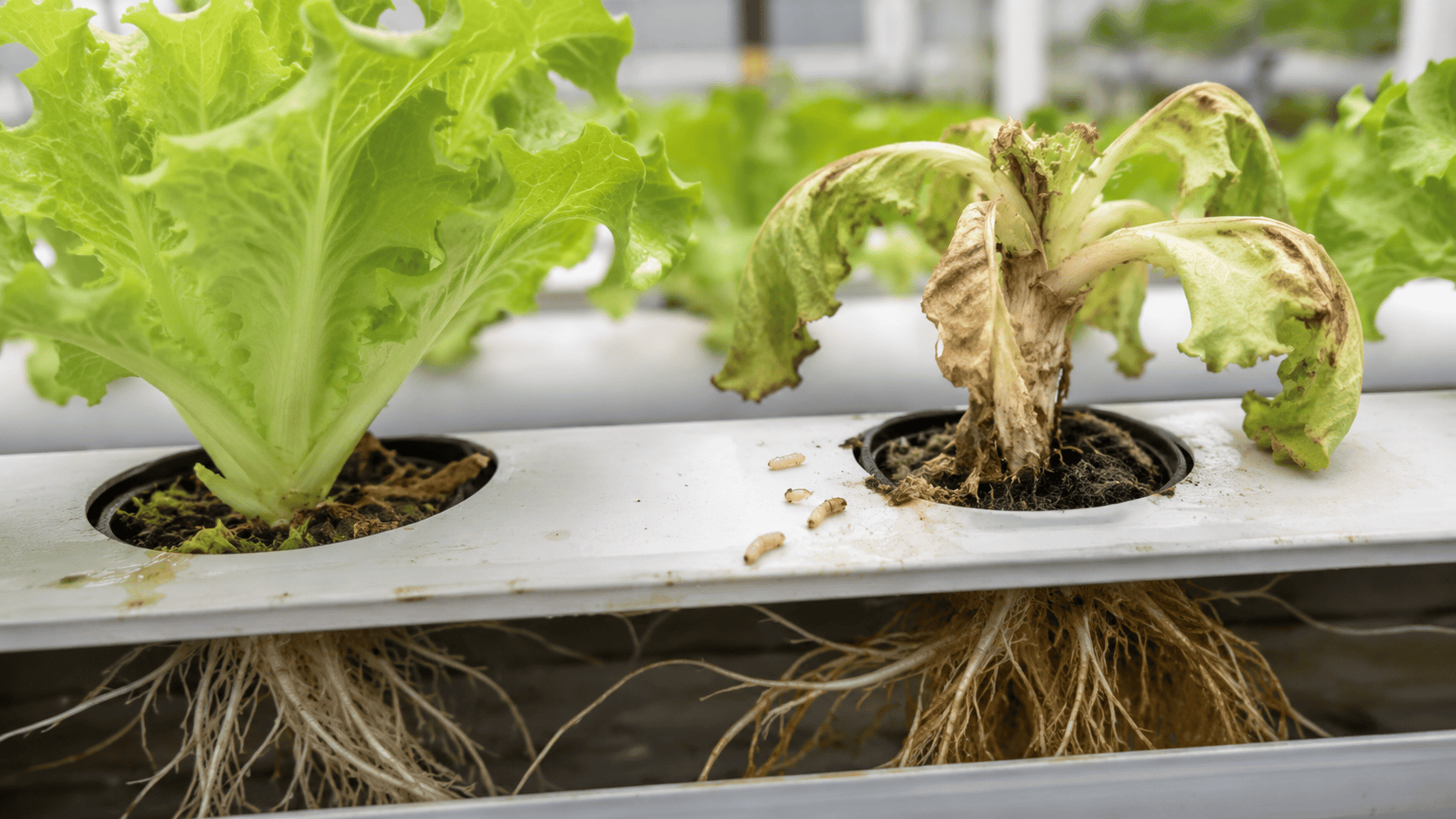
Waterborne pathogens spread fast in hydroponic systems because the nutrient solution is shared. Just one infected root can contaminate an entire recirculating system.
Pathogens like Pythium and Fusarium slip through reservoirs easily, causing root slime, brown slimy roots, foul odors, and plants collapsing overnight.
Stopping outbreaks early means good sanitation is a must. Removing infected plants as soon as possible, replacing the nutrient solution, and cleaning every reservoir thoroughly can prevent the problem from spreading.
Plumbing should be sanitized between crops, and fungal gnat larvae eliminated before they carry pathogens to healthy roots.
Most growers pick one clear approach: either keep the system sterile with products like hypochlorous acid, UC Roots, or Clear Rez, or build a healthy beneficial microbe community using something like Hydroguard.
Mixing sterilizers with beneficial bacteria tends to weaken both, so it’s best to avoid juggling both strategies at once.
How Can You Troubleshoot Sudden Hydroponic Plant Death?
The University of California Agriculture and Natural Resources highlights this approach for a reason: changing multiple factors at once usually just muddies the waters and makes fixing issues slower and more frustrating.
Start with the basics. First, confirm that all your pumps are working. It’s surprising how often a simple pump failure causes a cascade of issues, such as oxygen depletion or uneven nutrient delivery, that show up later as wilting or discoloration.
This same troubleshooting approach is useful for many hydroponic crops, including strawberry problems where root-zone conditions often determine overall plant health.
Next, check your water levels. A low reservoir might not seem like a big deal at first, but it throws off the balance and stresses roots quickly.
Once your pumps and water are confirmed, take a closer look at the roots. Healthy roots are your best road map; abnormal colors, slimy textures, or odd smells can tell you if disease or oxygen deprivation is at play well before leaf problems appear.
From there, move on to measuring reservoir temperature. As water warms, oxygen levels drop and pathogens gain ground, so temperature spikes might be the hidden culprit behind a sudden decline.
Testing pH and electrical conductivity (EC) next lets you assess nutrient availability and concentration. Both can move outside safe ranges quickly in hydroponic systems, and subtle shifts might stall growth or cause lockout before you notice.
Finally, scan for pests or algae which often sneak in unnoticed, affecting root health and nutrient uptake.
Equipment maintenance is also overlooked, clogged emitters, fouled pumps, or dirty reservoirs can cause slow declines that look like nutrient issues but aren’t. And of course, adding multiple supplements at once is a classic mistake.
It’s like trying to fix a painting by slapping new colors over it without knowing what’s wrong underneath.
The payoff to steady, consistent diagnosis? You avoid wasting time and resources on unnecessary changes, reduce stress for your plants, and can often catch problems early when they’re easier to fix.
It’s tempting to rush fixes when your crop looks sick, but stepping back to observe, measure, and understand puts you in control. Slow and careful wins the day in hydroponics, this is a system that rewards patience just as much as know-how.
How Do You Prevent Sudden Hydroponic Plant Death?
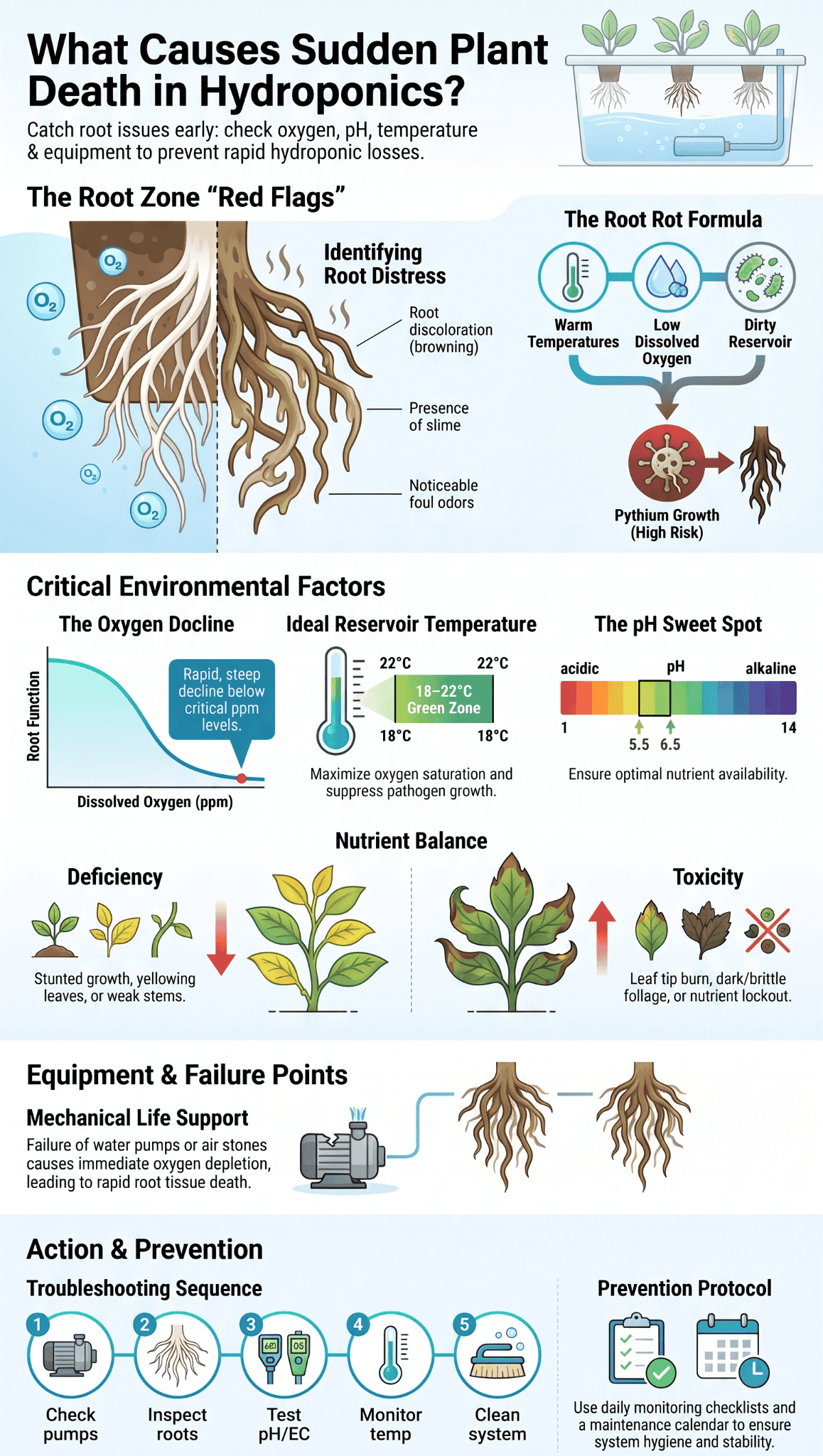
Keeping a hydroponic garden healthy over the long haul isn’t about scrambling for quick fixes when things go wrong. Instead, it’s about steady, everyday habits that catch problems early and keep the system running smoothly.
Real success comes from consistency, good sanitation, and routine monitoring, not emergency interventions after disease or breakdowns have taken hold.
A healthy hydroponic setup stays stable because growers notice small issues before they grow into serious failures. This kind of observation isn’t complicated, but it requires discipline.
Checking pH every day, keeping a close eye on electrical conductivity (EC), and recording water temperature regularly form the backbone of effective care. Reservoir cleanliness matters too, dirty water invites trouble in the form of algae blooms and pathogens.
Inspecting roots weekly helps catch early signs of disease or oxygen stress, and staying ahead of equipment wear, like replacing pumps or air stones before they fail, keeps the system reliable.
All these small steps combined create an environment where plants thrive, not just survive. This reduces the chance of sudden collapse and boosts overall crop quality and yields.
Take an example from TopHydroponicGarden’s approach: they stick to a strict maintenance schedule. Every day, growers log pH, EC, dissolved oxygen, and temperature data, building a clear picture of system health over time.
Before anyone adjusts nutrient mixes, roots get a look-over to make sure problems aren’t hiding beneath the surface. Aging equipment gets swapped out proactively and reservoirs are sanitized thoroughly after each growing cycle.
These steady practices keep environmental conditions stable and help avoid the frantic chasing of symptoms that too often plagues reactive growers.
It’s a simple truth: hydroponics works best when you care for it day by day, not just when plants are begging for help. Routine wins the race, bringing healthier crops and far fewer headaches.
FAQ
Can a dissolved oxygen drop kill hydroponic plants overnight?
Yes. A dissolved oxygen drop can quickly create root hypoxia, especially in deep water systems. When roots cannot get enough oxygen, they stop absorbing water and nutrients, leading to sudden plant wilting hydroponics growers often notice. Check for hydroponic pump failure, dirty reservoir conditions, or an anoxic root zone before plants suffer permanent root death symptoms.
How do I know if pH drift or EC changes caused my plants to die?
Watch for nutrient lockout symptoms, nutrient burn symptoms, or uneven plant growth before complete collapse. pH drift hydroponics issues, an ec spike hydroponics event, or an uncalibrated pH pen can all produce incorrect readings. Confirm values with calibrated meters and inspect for nutrient ratio imbalance, calcium deficiency lockout, magnesium lockout, or iron lockout.
What conditions increase the risk of hydroponic root rot?
Hydroponic root rot often develops when water temperature in hydroponics stays too warm, oxygen levels remain low, and root zone pathogens multiply. A pythium outbreak in hydroponics may also follow a dirty reservoir, algae bloom hydroponics, or organic additive biofilm buildup. Good root zone temperature control and regular cleaning greatly reduce these risks.
Can a power outage damage a hydroponic system that quickly?
Yes. A power outage hydroponics event can stop pumps and aeration within minutes. Hydroponic pump failure, nft system dry out, aeroponic fogger failure, ebb and flow timer failure, or blocked drip emitters may leave roots without water or oxygen. Fast hydroponic troubleshooting helps limit damage before plant collapse overnight becomes widespread.
What should I check first after plants suddenly collapse?
Start by examining the roots for brown slimy roots, root slime, or a strong root rot odor. Then inspect water temperature, dissolved oxygen, pH, EC, and equipment performance. Look for reservoir temperature spike, nutrient solution degradation, or flooding timer stuck problems. A systematic hydroponic troubleshooting process helps identify the true cause more quickly.
Keep Your Hydroponic Garden Thriving
If your hydroponic plants suddenly start dying, it usually means something in the root zone needs attention.
The sooner you find the cause, the better your chances of saving the rest of your plants. Small issues can turn into bigger problems fast.
TopHydroponicGarden makes it easier to stay ahead with practical guides that help you keep your system running well and avoid common mistakes.
A little regular care can save time and protect your harvest, so you can grow with more confidence.
References
- https://europepmc.org/article/AGR/IND85050623
- https://agris.fao.org/search/en/records/65dfc05f4c5aef494fe505df
Related Articles
- https://tophydroponicgarden.com/what-causes-wilting-in-hydroponic-plants/
- https://tophydroponicgarden.com/hydroponic-ph-stability-tips/
- https://tophydroponicgarden.com/troubleshooting-common-strawberry-problems/
Was this helpful?

I’m Barrie L., a passionate hydroponic gardening enthusiast dedicated to cultivating thriving, soil-less gardens. With a focus on all things hydroponic, I share my expertise on innovative growing techniques and sustainable practices through my blog, tophydroponicgarden.com. As a seasoned hydroponics specialist, my goal is to inspire and guide fellow gardeners in harnessing the power of water-based cultivation for bountiful and eco-friendly harvests. I’m also an author of the book “Hydroponics For Absolute Beginners: Your Step By Step Guide For How To Create An Hydroponics System At Home Without Soil, For Growing Vegetable, Fruit And Herbs.” which is sold on Amazon. Join me on a journey of redefining the way we cultivate plants, one nutrient-rich solution at a time. Happy growing!