
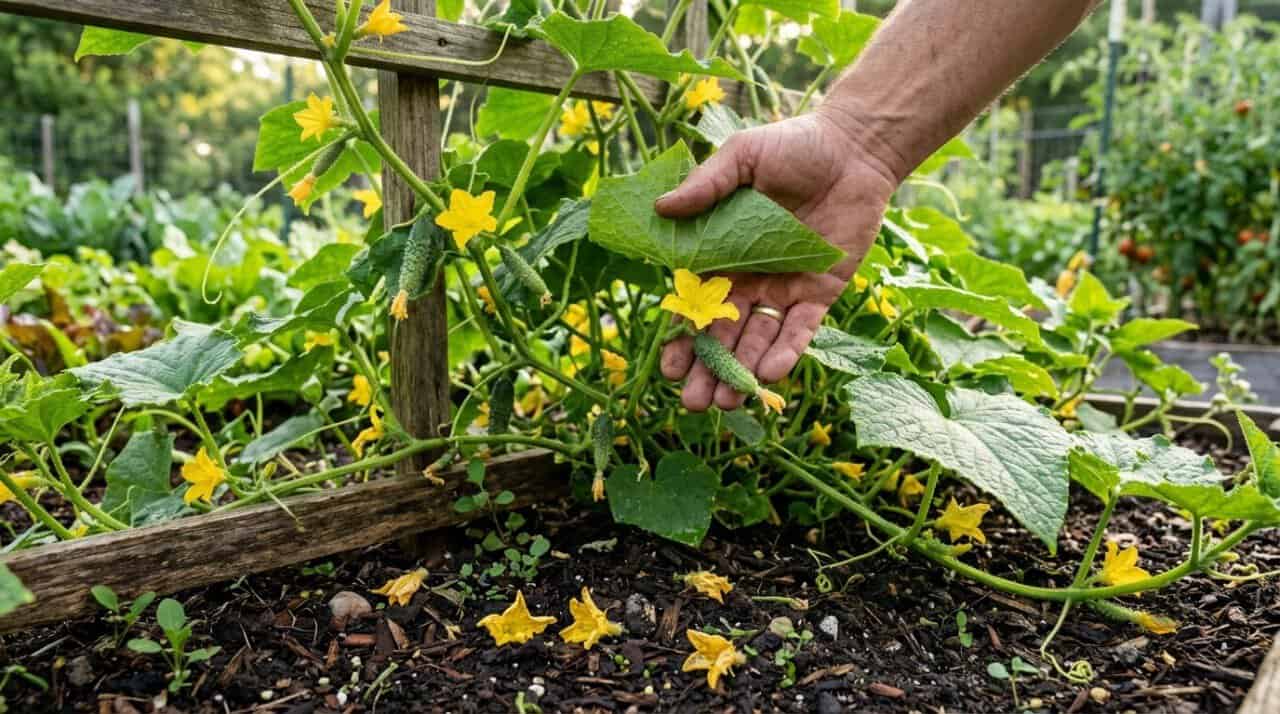
Blossom drop on cucumbers isn’t always a problem. Male flowers are meant to fall after they release pollen. But if female flowers keep dropping, something’s off. Poor pollination is the usual reason, though heat, watering issues, or other plant stress can also get in the way.
That surprised me the first time I saw it, because the plant still looked healthy. Fix the cause, and fruit often follows. Keep reading to find out what’s behind the flower drop and what to do next.
Quick Checks for Healthier Cucumber Harvests
Cucumber blossom drop usually happens because of pollination problems, environmental stress, or plant care mistakes. Check the type of flower, growing conditions, and plant health before making changes.
- Male flowers naturally fall after releasing pollen, while female flowers with a small cucumber behind the petals should stay attached after successful pollination.
- Pollination failure, heat stress, watering issues, and nutrient imbalance are the main causes of cucumber blossom drop, so identify the symptom before adjusting fertilizer or care routines.
- Indoor and protected growers may need extra help with pollination, such as hand pollinating cucumber blossoms or growing parthenocarpic cucumber varieties that set fruit without pollination.
Is Blossom Drop Normal or a Sign of Trouble?
Male flower drop is normal. Female cucumber flowers usually fall because pollination failed or the plant is under stress.
Cucumbers are monoecious, which means each plant grows separate male and female flowers on the same vine. It’s common for the first wave of blooms to be male. In fact, the University of Minnesota Extension notes that a plant may produce around 10 to 15 male flowers before the first female flower even opens.
That early stage catches plenty of gardeners off guard. Flowers appear, then start dropping one after another. But in most cases, those are only male flowers. They’ve already released their pollen, so falling off is part of the plant’s normal cycle.
Female flowers tell a different story. Look closely and you’ll see a tiny cucumber behind the bloom. That’s the ovary, and it’s the part that develops into fruit after successful pollination. Giving vines proper vertical structure when you build a diy cucumber trellis keeps these delicate female blossoms off the damp ground, making them easier to inspect.
If the tiny ovary turns yellow, stops growing, and drops, the plant has gone through cucumber blossom abortion, not normal flower shedding. That’s the point where it’s worth looking for the cause instead of waiting it out.
| Flower Type | What Happens? | What It Means |
| Male flower | Falls after releasing pollen | Normal lifecycle |
| Female flower | Tiny cucumber yellows and drops | Pollination failure or stress |
Before assuming disease or nutrient problems, identify the flower correctly.
How can you identify female flowers?
Female flowers are easy to recognize once gardeners know what to look for.
- Female flowers have a miniature cucumber behind the petals.
- Male flowers grow on thin stems.
- 10–15 male flowers commonly appear before females.
- This flowering pattern is normal in monoecious cucumber varieties.
Most early blossom drop involves male flowers, so there is often no reason to panic.
Why shouldn’t you panic after the first flowers fall?
The first “male wave” attracts pollinators before the plant invests energy in fruit production.
That early shedding is part of normal cucumber development rather than cucumber blossom drop causes linked to stress or disease.
Why Do Female Cucumber Flowers Drop Before Fruit Forms?

Female flowers usually drop because they weren’t fully pollinated.
A lot of gardeners ask, “Why are my cucumber blossoms dropping off?” Most of the time, the answer is an unpollinated female flower. That tiny cucumber behind the bloom can be misleading. It’s only the ovary. It forms before pollination happens, so seeing it doesn’t mean a cucumber is on the way.
Timing matters, too. Female flowers stay open for only a short window, often just one morning. According to the University of California Agriculture and Natural Resources, fertilization needs to happen soon after the flower opens. If it doesn’t, the small ovary often starts turning yellow within a day or two before dropping from the vine.
Weather can make the problem worse. Bees fly less during rain, strong winds, or cool conditions, so fewer flowers get pollinated. High humidity creates another problem. Instead of staying loose and powdery, cucumber pollen can become sticky, making it harder to move from the male flower to the female flower. Very dry air isn’t much better because it can reduce pollen viability.
Insights from UGA Extension indicate
“Commonly occurs during periods of cool weather, when the temperature dips to 55 degrees at night, and during periods of heavy rainfall. Insects typically don’t pollinate during this type of weather” – UGA Extension
Several conditions can interfere with pollination:
- Too few bees visiting flowers.
- Rain or strong winds.
- High humidity causing sticky pollen.
- Very dry air reducing pollen viability.
Indoor gardens are a different story. Greenhouses, grow tents, and hydroponic systems don’t usually have enough natural pollinators. In those setups, hand pollination often becomes the easiest way to improve fruit set and reduce flower drop.
Can you hand-pollinate cucumbers?
Yes. Learning how to hand pollinate cucumber flowers is one of the most dependable ways to stop female cucumber flowers from dropping, especially when bees are scarce.
The timing matters more than many people realize. Pollinate early in the morning, ideally between 6:00 and 8:00 AM, when fresh flowers are open and pollen is most viable. By afternoon, flowers may begin closing, and successful pollination becomes less likely.
You don’t need special tools. A soft paintbrush or a cotton swab works well. Another option is to pick a freshly opened male flower, remove its petals, and gently brush the pollen onto the sticky center of a female flower. It only takes a few seconds per bloom.
Some gardeners also use a vibrating toothbrush to shake loose pollen. It can help in some situations. Still, many experienced growers prefer transferring pollen directly with a soft brush or the male flower itself. Cucumber pollen is naturally sticky, so direct contact often gives more reliable results.
If you’re growing parthenocarpic cucumbers, this step usually isn’t necessary. Varieties such as Diva, Corinto, and several Japanese greenhouse cultivars can produce seedless fruit without insect pollination. That makes them a good choice for greenhouses, balconies, and other places where pollinators are limited.
How Does Heat Cause Blossom Drop?

Credits: Balcony Roots
High temperatures can stop cucumbers from setting fruit, even when the plants look healthy. Instead of putting energy into new cucumbers, the plant shifts its focus to getting through the heat.
As noted by N.C. Cooperative Extension
“Flower and fruit abortion are common responses to heat stress” – N.C. Cooperative Extension
Research from the University of Florida IFAS Extension, along with years of grower experience, shows that fruit set often drops once daytime temperatures climb above 90°F (32°C). Push temperatures to 95°F (35°C) or higher, and pollen is much more likely to become sterile. At that point, female flowers may open, but many won’t develop into fruit.
It’s not only extreme heat that causes problems. Sharp temperature swings can also interfere with pollination. A hot day followed by a much cooler night may slow pollen tube growth after pollination begins. Long stretches of hot afternoons add another challenge by increasing ethylene production, a natural plant hormone that encourages flowers and young fruit to drop.
Many gardeners notice flowers falling during the late afternoon of a heat wave. It looks alarming. In most cases, though, the plant is reacting to heat and moisture loss, not necessarily because the soil is bone dry.
To reduce heat-related flower drop:
- Water deeply in the early morning.
- Use 30% to 50% shade cloth during heat waves.
- Mulch to keep the soil cooler.
- Improve airflow around the vines.
Even with good care, there’s a limit to what watering can do. Once pollen becomes sterile from excessive heat, it can’t recover. The good news is that cucumber plants often bounce back on their own. As temperatures become more moderate, fresh flowers usually produce healthy fruit again.
Could Watering Habits Be the Problem?
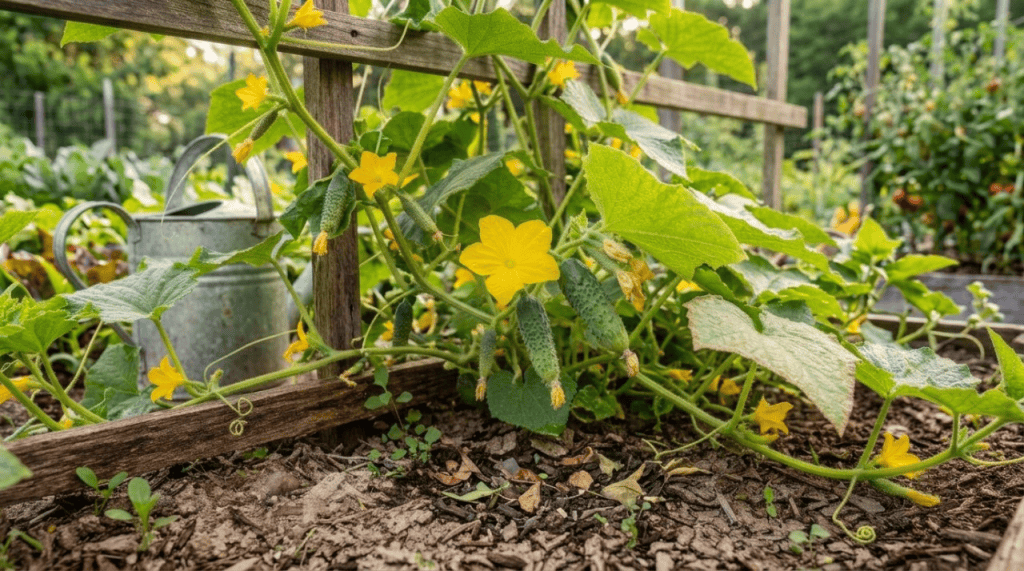
Both underwatering and overwatering can cause female cucumber flowers to drop. The symptoms may look similar, but the cause isn’t.
Cucumber plants have shallow roots, so they rely on a steady supply of moisture near the soil surface. According to the Royal Horticultural Society, most plants need about 1 to 1.5 inches of water per week, although that amount changes with rainfall, temperature, and soil type.
The biggest problem is inconsistency. Soil that dries out completely, then gets soaked, puts the plant under stress. Water can’t move through the plant evenly, so it may shed flowers or tiny developing cucumbers to conserve energy. No surprise there.
Too much water creates a different set of issues. Saturated soil pushes oxygen out of the root zone, making it harder for roots to function. Over time, root rot becomes more likely, and the plant struggles to absorb the water and nutrients it needs. The result can be yellowing leaves, weak growth, and female flowers that never develop into fruit.
A good watering routine is usually simple:
- Water deeply, not lightly.
- Keep soil evenly moist.
- Make sure excess water drains away.
- Add organic mulch to slow evaporation.
Keep an eye on containers, raised beds, and greenhouse plants. They often dry out much faster than cucumbers growing in the ground, especially during hot or windy weather. Checking the soil with a finger before watering is often more useful than following a fixed schedule. If the top inch feels dry, it’s usually time to water.
Why Does Too Much Nitrogen Cause Blossom Drop?
Excess nitrogen encourages leaves instead of flowers and fruit.
One of the most overlooked cucumber blossom drop causes is cucumber nitrogen toxicity blossom drop. According to Cornell Cooperative Extension, excessive nitrogen produces lush vines with dark green foliage while reducing flower retention and fruit production.
Plants also need balanced phosphorus and potassium for flowering.
| Nutrient | Too Little | Too Much |
| Nitrogen | Weak growth | Excess foliage, poor fruit set |
| Phosphorus | Poor flowering | Rarely problematic |
| Potassium | Weak fruit development | Can contribute to imbalance |
When flowering begins:
- Reduce nitrogen-heavy fertilizers.
- Increase phosphorus and potassium.
- Avoid repeated high-nitrogen liquid feeding.
- Monitor nutrient strength in hydroponic systems.
Hydroponic growers should also watch electrical conductivity, as resolving common issues in hydroponic cucumbers often involves catching nutrient lockout before it mimics phosphorus, calcium, or magnesium deficiencies that drop blooms.
Some experienced growers report improved balance after correcting magnesium with carefully measured Epsom salt, but it should only be used when a confirmed deficiency exists rather than as a universal cure.
Can the Vine Carry Too Many Cucumbers?

Yes. Healthy vines sometimes sacrifice new flowers to mature existing fruit.
As cucumbers enlarge, the plant reallocates sugars, water, and nutrients toward developing fruit. This cucumber vine energy deficit flower drop becomes more noticeable when several cucumbers mature simultaneously.
Harvesting regularly encourages continuous production.
Ways to reduce over-burdened cucumber vine flower drop include:
- Harvest mature cucumbers every day or two.
- Remove damaged fruit.
- Maintain even watering.
- Avoid allowing oversized cucumbers to remain on the vine.
Frequent harvesting signals the plant to continue producing flowers instead of slowing reproduction.
Should You Grow Parthenocarpic Cucumbers Instead?
Parthenocarpic varieties are excellent when pollinators are scarce.
Unlike traditional cucumbers, parthenocarpic cultivars produce fruit without fertilization, making them ideal for cucumber blossom drop hydroponics, cucumber blossom drop Aerogarden systems, greenhouses, balconies, and indoor gardens.
| Variety | Best For |
| Diva | Outdoor gardens |
| Corinto | Greenhouses |
| Beit Alpha | Hot climates |
These varieties reduce dependence on bees while minimizing cucumber pollinator failure.
They are especially useful where weather, enclosed growing spaces, or limited insect activity make natural pollination unreliable.
Could Pests or Diseases Trigger Blossom Drop?

Yes, although they are less common than pollination or environmental stress.
Healthy-looking flowers can still fail if pests damage blossoms or disease affects water transport. Erwinia tracheiphila, the bacterium responsible for bacterial wilt, spreads through cucumber beetles and eventually blocks the plant’s vascular system.
Potential causes include:
- Cucumber beetle blossom damage.
- Bacterial wilt cucumber blossom drop.
- Root rot.
- Powdery mildew.
- Heavy cucumber ant blossom damage.
- Copper spray flower burn.
- Sulfur spray blossom damage.
Always inspect stems, leaves, and roots before assuming fertilizer is responsible.
What Mistakes Do Gardeners Make Most Often?
Most blossom drop treatments fail because they target the wrong problem.
Gardeners often confuse normal male flower shedding with failed fruit production or assume the tiny cucumber guarantees pollination.
| Myth | Reality |
| Tiny cucumber means pollinated | It is only the ovary |
| More fertilizer fixes blossom drop | High nitrogen often makes it worse |
| More water solves heat stress | Heat may sterilize pollen |
| Every dropped flower is harmful | Male flower drop is normal |
Another common mistake is applying copper or sulfur sprays during hot afternoons. These products can burn delicate blossoms when temperatures exceed 80–85°F (27–29°C).
Correct diagnosis almost always produces better results than adding more fertilizer.
How Can You Prevent Blossom Drop All Season?
Consistent growing conditions prevent most avoidable blossom loss.
A simple routine dramatically reduces cucumber flower drop solutions becoming emergency fixes later in the season.
Daily prevention checklist:
- Water consistently.
- Encourage bees with borage, cosmos, and marigolds.
- Avoid excessive nitrogen.
- Harvest frequently.
- Install shade cloth during heat waves.
- Inspect flowers every morning.
- Hand pollinate when necessary.
Morning observation allows gardeners to catch pollination problems before flowers abort.
FAQs
What causes cucumber flowers to fall off without fruit?
A cucumber flower falling off is normal when male flowers finish releasing pollen. However, female cucumber flowers dropping can signal problems with pollination, plant stress, or growing conditions. Common cucumber blossom drop causes include cucumber pollinator failure, extreme heat, inconsistent watering, and nutrient imbalance. These issues can prevent successful pollination and lead to cucumber fruit set problems.
Why are my cucumber blossoms dropping off in hot weather?
Cucumber high temperature flower drop occurs when excessive heat affects pollen production and flower development. Temperatures around 90°F or higher can reduce cucumber pollen viability and increase flower loss, especially during hot afternoons. Consistent watering, proper mulching, and cucumber blossom drop shade cloth can help reduce cucumber heat stress flower drop during periods of high temperature.
How can I fix female cucumber flowers dropping?
Female cucumber flowers dropping often happens because of poor pollination or environmental stress. First, check male vs female cucumber flowers to identify whether female blooms are receiving enough pollen. If pollinators are limited, use cucumber hand pollination methods in the morning. A soft bristle paintbrush, cotton swab, or gentle vibration method can help hand pollinate cucumber blossoms and improve fruit set.
Why are my cucumber plant flowers yellowing and dropping?
Cucumber plant flowers yellowing and dropping can result from watering problems, nutrient imbalance, or plant health issues. Excess nitrogen can cause cucumber nitrogen toxicity blossom drop, while low phosphorus may contribute to cucumber phosphorus deficiency blossom drop. Poor root health, including cucumber root rot blossom drop, can also affect flowering. Correct watering, balanced fertilizer use, and healthy soil conditions support better flower retention.
What are the best ways to stop cucumber blossom drop?
The best cucumber blossom drop fix depends on the reason flowers are falling. Maintain consistent moisture to avoid cucumber moisture stress flower drop, improve pollination to prevent unpollinated female cucumber flower loss, and monitor plants for pests or diseases. Removing excess fruits, improving airflow, and correcting nutrient issues can help reduce cucumber blossom drop and support healthier cucumber fruit production.
Preventing Blossom Drop Leads to Better Cucumber Harvests
Seeing cucumber flowers fall before fruit forms is frustrating, especially when you expect a harvest. You need to find the cause and fix the issue early.
For hydroponic growers, Tophydroponicgarden can be a simple resource to support better growing decisions. It helps you move forward with a practical approach, so you can focus on healthier cucumber production.
References
- https://site.extension.uga.edu/murraygrown/archives/45
- https://union.ces.ncsu.edu/news/summer-vegetables-heat/
Related Articles
- https://tophydroponicgarden.com/common-issues-in-hydroponic-cucumbers/
- https://tophydroponicgarden.com/how-to-build-a-diy-cucumber-trellis/
- https://tophydroponicgarden.com/how-to-hand-pollinate-cucumber-flowers/
Was this helpful?

I’m Barrie L., a passionate hydroponic gardening enthusiast dedicated to cultivating thriving, soil-less gardens. With a focus on all things hydroponic, I share my expertise on innovative growing techniques and sustainable practices through my blog, tophydroponicgarden.com. As a seasoned hydroponics specialist, my goal is to inspire and guide fellow gardeners in harnessing the power of water-based cultivation for bountiful and eco-friendly harvests. I’m also an author of the book “Hydroponics For Absolute Beginners: Your Step By Step Guide For How To Create An Hydroponics System At Home Without Soil, For Growing Vegetable, Fruit And Herbs.” which is sold on Amazon. Join me on a journey of redefining the way we cultivate plants, one nutrient-rich solution at a time. Happy growing!