

Growing plants without soil sounds futuristic, but hydroponics makes it real and rewarding. This method offers faster growth, better yields, and uses water more efficiently than traditional gardening. If you’re curious about diving into hydroponics, understanding the six main types of hydroponic systems is a great place to start.
Each system delivers nutrients uniquely, suits different plants, and fits varying budgets and skill levels. Ready to find out which hydroponic system matches your needs? Keep reading.
Key Takeaways
- Hydroponics is soil-free plant growing using nutrient-rich water.
- Six main systems: Wick, Deep Water Culture, Ebb and Flow, Nutrient Film Technique, Drip, and Aeroponics.
- System choice depends on space, budget, plant type, and grower experience.
Understanding Hydroponics and Its Benefits

Hydroponics means growing plants in water packed with nutrients instead of soil. Picture roots dangling directly into a nutrient solution, absorbing exactly what they need without having to search through dirt. It’s a straightforward swap that changes how fast plants grow and how much they produce.
The benefits stack up quickly. Plants thrive faster because their roots don’t waste energy pushing through soil, they grab nutrients straight from the water.
Harvests jump noticeably higher when conditions stay consistent. Water usage drops dramatically, sometimes by 90% or more compared to traditional gardening, which matters in places where water’s scarce or expensive [1].
Where does hydroponics shine? Indoors, mostly. City apartments with limited space. Regions where the soil’s too salty or contaminated to farm properly.
Even deserts or areas facing droughts. The system works anywhere you can set up containers and manage the water cycle, which opens doors for growing fresh vegetables and herbs where it shouldn’t really be possible.
The setup requires some attention, you’ll need to monitor nutrient levels, pH balance, and water temperature, but once you understand the rhythm, the returns speak for themselves.
The Six Main Types of Hydroponic Systems
1. Wick System
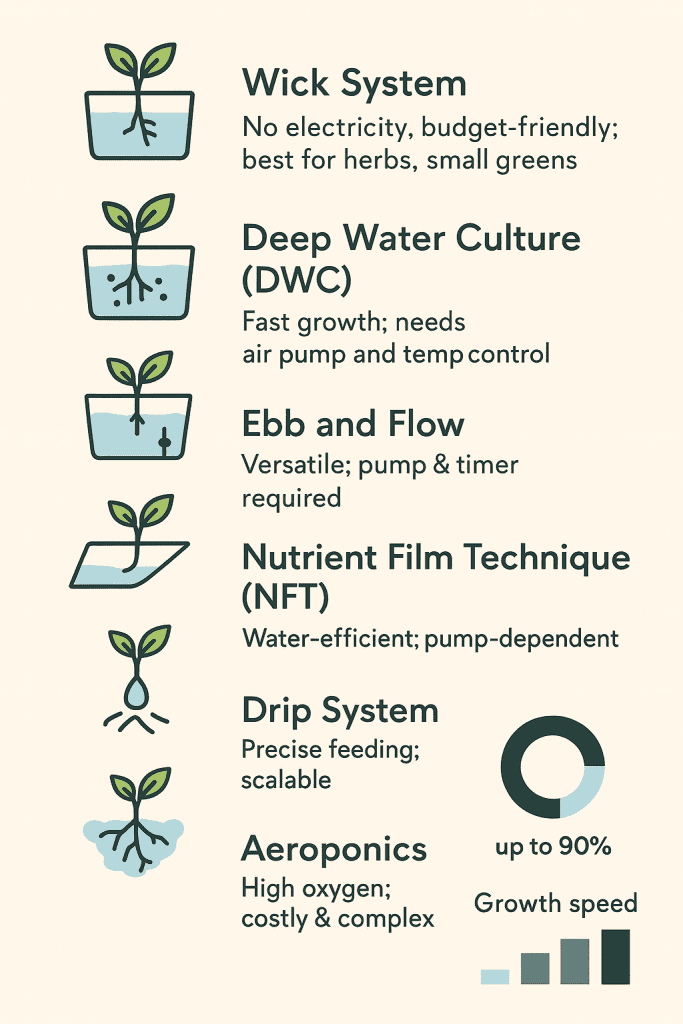
The wick system is the simplest and most passive hydroponic method. Here, a wick draws nutrient solution from a reservoir up to the plant roots by capillary action. No pumps or electricity are needed, making it budget-friendly and easy to maintain.
However, this simplicity means nutrient delivery is limited, so it’s best for small plants with low water needs, like herbs and baby greens.
- Best for: Herbs, small leafy greens
- Pros: No electricity, inexpensive, easy to set up
- Cons: Not suitable for larger plants or heavy feeders
💡 Pro Tip: Slightly elevate your nutrient reservoir to improve the wick’s capillary action.
2. Deep Water Culture (DWC)
In DWC systems, plant roots hang submerged in oxygen-rich nutrient solution. An air pump pushes bubbles through an air stone to keep roots oxygenated, encouraging rapid growth. This setup perfectly illustrates how hydroponic gardening is sustainable by maximizing oxygen delivery and minimizing water waste.
DWC is popular for fast-growing leafy greens like lettuce and spinach. But it needs constant aeration and temperature control to avoid root problems.
- Best for: Lettuce, spinach, herbs
- Pros: Fast growth, straightforward design
- Cons: Requires air pumps and temperature monitoring
💡 Pro Tip: Keep water temperatures between 65-70°F (18-21°C) to maximize oxygen uptake.
3. Ebb and Flow (Flood & Drain)
This active system floods the plant grow bed with nutrient solution at intervals, then drains it back into a reservoir. This cycle delivers nutrients and oxygen efficiently to the roots.
Ebb and Flow suits many plants, including tomatoes and peppers, but it requires a timer and pump. Overwatering can be a risk if timing isn’t right.
- Best for: Tomatoes, peppers, herbs
- Pros: Versatile, good oxygenation
- Cons: Needs automation, risk of root rot if mismanaged
4. Nutrient Film Technique (NFT)
NFT systems send a thin, continuous film of nutrient solution flowing over plant roots in slightly sloped channels. Roots absorb nutrients and oxygen without standing water.
NFT is water-efficient and saves space, ideal for commercial growers and small spaces. However, it depends heavily on pumps; if the flow stops, roots can dry out. Channels can also clog, so maintenance is key. This method is an excellent example of getting started with hydroponics at home in limited space.
- Best for: Lettuce, basil, fast-growing greens
- Pros: Efficient water use, excellent oxygenation
- Cons: Vulnerable to pump failure, requires cleaning
💡 Pro Tip: Keep the nutrient flow low enough so it just coats the channel bottom, maximizing oxygen exposure.
5. Drip System
This system drips nutrient solution directly to each plant’s base via tubes and emitters. It offers precise nutrient control and scales well for large operations.
Drip systems suit a wide variety of crops, especially fruiting plants like tomatoes and cucumbers. Emitters can clog, so regular monitoring is necessary.
- Best for: Tomatoes, cucumbers, fruiting plants
- Pros: Precise feeding, flexible, scalable
- Cons: Emitters may clog, requires upkeep
6. Aeroponics
The most high-tech system, aeroponics suspends plant roots in air inside an enclosed chamber. Nutrient solution is misted onto roots regularly, providing high oxygen exposure [2].
Aeroponics can speed growth dramatically but is complex and costly. It’s sensitive to pump failures, which can quickly harm plants.
- Best for: Advanced growers, research, experimental setups
- Pros: Fast growth, max oxygen, water-efficient
- Cons: Expensive, complex maintenance
💡 Pro Tip: Install a battery backup or power-loss sensor to protect your plants during outages.
Choosing the Right Hydroponic System

Source : Everything Hydrophonics
When deciding which hydroponic system to use:
- Think about your available space. Vertical systems like NFT or Aeroponics work well in tight areas.
- Consider your budget. Simpler systems like Wick or DWC cost less.
- Match the system to your plants. Some crops need stable moisture; others thrive on frequent nutrient cycles.
- Factor in your experience. Beginners may prefer low-tech systems to start.
Understanding these factors helps clear up common myths about hydroponic growing and ensures you pick a system that fits your goals.
FAQ
What are the six types of hydroponic systems?
You will find six main hydroponic systems. Wick system. Deep water culture. Ebb and flow system. Nutrient film technique. Drip hydroponics.
Aeroponics system. These systems use soilless cultivation and rely on hydroponic nutrient delivery, hydroponic reservoirs, and hydroponic oxygenation to support plant growth.
Which system works best for beginners?
Wick system and deep water culture fit beginners. You only manage simple hydroponic pumps, hydroponic air stones, and basic hydroponic nutrient solution tasks. You also learn hydroponic pH control and EC control in a simple setup.
How does deep water culture help plant growth?
Deep water culture keeps roots in oxygen rich water. You use hydroponic oxygen pumps and maintain strong hydroponic root aeration. Many growers report faster hydroponic growth rate and stable hydroponic plant nutrition when the water circulation stays consistent.
What is the benefit of nutrient film technique?
Nutrient film technique uses shallow hydroponic channels that move a thin layer of nutrient solution under the roots. You get efficient hydroponic water usage. You also improve yield when you combine good hydroponics lighting, temperature control, and humidity management.
How does ebb and flow system work?
Ebb and flow floods the grow tray and then drains it. You get steady hydroponic flood and drain cycles. You use hydroponic grow media that support plant roots during each cycle. Many growers choose this method for its simple hydroponics maintenance.
Conclusion
Hydroponics provides a modern, sustainable way to grow fresh food faster. Whether you’re a hobbyist or commercial grower, understanding six key hydroponic systems helps ensure thriving plants and bountiful harvests. Ready to start your hydroponic journey? Simply choose a system, prepare your nutrient solution, and grow plants without soil. Embrace this future-forward method for efficient, healthy growth. Happy growing!
References
- https://www.botanyjournals.com/assets/archives/2021/vol6issue5/6-4-192-690.pdf
- https://documents.worldbank.org/curated/en/103361524057787356/pdf/RWSAT-AUS.pdf
Related Articles
- https://tophydroponicgarden.com/is-hydroponic-gardening-sustainable/
- https://tophydroponicgarden.com/getting-started-with-hydroponics-at-home/
- https://tophydroponicgarden.com/common-myths-about-hydroponic-growing/
Was this helpful?

I’m Barrie L., a passionate hydroponic gardening enthusiast dedicated to cultivating thriving, soil-less gardens. With a focus on all things hydroponic, I share my expertise on innovative growing techniques and sustainable practices through my blog, tophydroponicgarden.com. As a seasoned hydroponics specialist, my goal is to inspire and guide fellow gardeners in harnessing the power of water-based cultivation for bountiful and eco-friendly harvests. I’m also an author of the book “Hydroponics For Absolute Beginners: Your Step By Step Guide For How To Create An Hydroponics System At Home Without Soil, For Growing Vegetable, Fruit And Herbs.” which is sold on Amazon. Join me on a journey of redefining the way we cultivate plants, one nutrient-rich solution at a time. Happy growing!