

Strawberry plants reveal overwatering through yellow leaves, wilting while the soil remains wet, soft berries, and rotting roots. Their fragile roots demand well-drained soil more than constant watering, poor drainage harms them fast, as the University of Minnesota Extension highlights. Spotting these signs early can save your harvest. Keep reading to learn how to tell overwatering from underwatering and help your strawberries thrive all season long.
Quick Check – First Clues of Overwatering
Excess water often causes problems below the soil long before the leaves show severe damage. Keep these three signs in mind before making changes to your watering routine.
- Look at the soil first. Constantly soggy soil is often a stronger warning sign than drooping leaves alone.
- Pair leaf symptoms with soil conditions. Yellow strawberry leaves in wet soil usually point to overwatering rather than drought.
- Check the roots for confirmation. Healthy roots are firm and light colored, while dark, soft roots suggest excess moisture and possible rot.
Why Are Strawberry Plants So Easy to Overwater?
Strawberry plants are easy to overwater because their roots stay close to the surface, where soil can lose oxygen quickly if it stays too wet. Without enough air, roots can’t absorb water or nutrients properly, even if the soil is soaked.
Most strawberry roots stretch only 6 to 12 inches deep. This shallow setup helps plants soak up rain fast but also means extra water fills the tiny air pockets roots need far sooner than in deeper soils.
The University of Minnesota Extension explains that strawberry roots need both moisture and oxygen. When soil gets waterlogged, roots can’t breathe, and that lack of oxygen harms the plant more than not watering enough.
Good soil holds tiny air pockets that roots breathe through. Too much water pushes out this air, slowing down the flow of nutrients and water inside the plant.
Some conditions make overwatering more likely to cause problems:
- Clay soil holds water longer, keeping roots too wet.
- Containers without good drainage trap moisture.
- Pots missing drainage holes keep water standing.
- Peat-heavy soil dries out more slowly, holding moisture too long.
Improving heavy soils with organic matter and pairing with deep-rooted strawberry companion plants helps break up clay and naturally improve bed aeration around shallow root zones. Even gardeners with experience can get fooled. When leaves wilt during hot days, it looks like the plant is thirsty, but it might actually be drowning. The trick is to check the soil’s dampness before adding water.
How do shallow roots increase the risk?
Shallow roots pick up on soil moisture changes quickly because they live right where water from rain or irrigation pools first. Unlike tomatoes or peppers, which send roots deep, strawberries keep their roots close together near the surface. When that space stays soaked, oxygen drops fast, sometimes within hours, setting the stage for waterlogging.
Good drainage is crucial. Adding perlite or coco coir helps keep air flowing around roots. Many growers mix about 30 to 40 percent perlite with coir in container soil to boost drainage and keep roots healthy.
Why does wet soil damage roots?
Water alone is not the problem. Oxygen deprivation is.
As noted by International Journal of Molecular Sciences
“Waterlogging triggers a molecular stress response in strawberry roots. The study found that a key regulatory protein, FaSnRK1α, plays a positive role in regulating anaerobic respiration to cope with low-oxygen conditions, by upregulating enzymes such as alcohol dehydrogenase and enhancing the plant’s ability to quench harmful reactive oxygen species.” – International Journal of Molecular Sciences
Without oxygen, beneficial root cells die first. Opportunistic pathogens such as Phytophthora and other water molds then invade weakened tissue, eventually causing strawberry root death.
What Are the First Signs of Overwatering Strawberries?

Yellow leaves and wilting appear well before roots get seriously damaged. Spotting these signs early gives the plant a fighting chance to bounce back.
Usually, the first sign is yellowing on older leaves. Roots that can’t take in nitrogen properly cause this slow yellowing from the bottom up. Unlike leaves starving from lack of fertilizer, overwatered leaves stay soft, not dry or crispy.
The Royal Horticultural Society points out that even if the soil holds nutrients, soggy roots can’t absorb them well. That means dumping more fertilizer won’t fix plants drowning in water.
Watch for these early warning signs:
- Yellow strawberry leaves
- Strawberry leaves drooping in wet soil
- Soft foliage rather than crisp leaves
- Slower growth despite regular watering
- Wet soil remaining damp for several days
Of course, weather also matters. Extended rainfall may produce identical symptoms without any irrigation mistakes.
Why do leaves turn yellow?
Roots deprived of oxygen cannot absorb nutrients efficiently.
Nitrogen shortages appear first, causing older leaves to fade before younger growth. Iron uptake may also decline, contributing to chlorosis strawberry leaves.
Why do plants wilt in wet soil?
Wilting during overwatering surprises many gardeners.
Although water surrounds the roots, damaged tissue cannot transport moisture upward. The result is a strawberry plant wilting wet soil, which closely resembles drought stress despite saturated ground.
Which Leaf Symptoms Mean the Problem Is Serious?
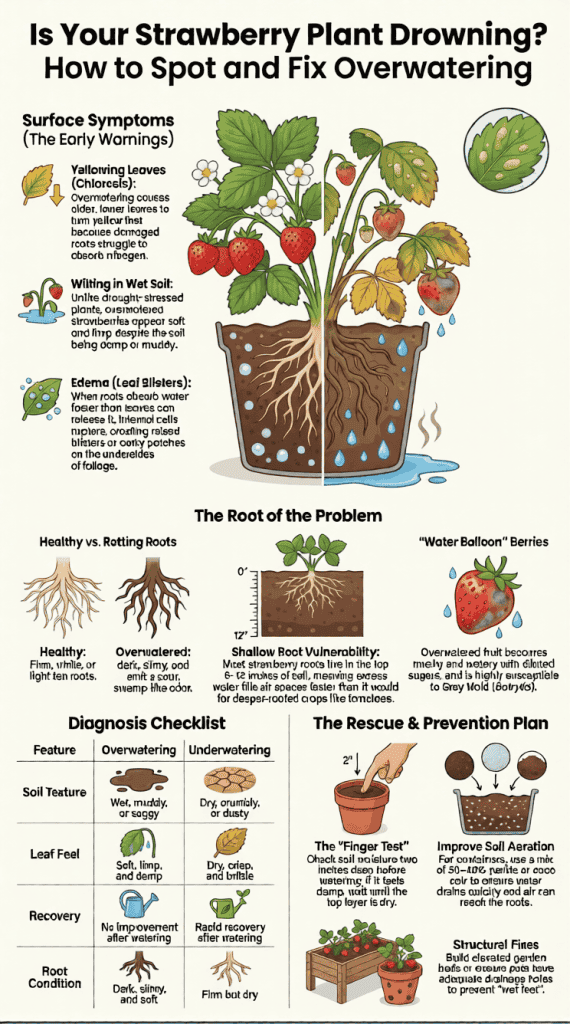
Soft leaves, blackened tips, edema, and widespread browning usually mean a plant has been sitting in too much water for a while, not just a one-time watering slip.
What starts as leaf discoloration often grows into brown tips as nutrient flow slows through the plant. The edges die first, then bigger parts of the leaf follow.
A clear sign to watch for is strawberry edema. That’s when water pressure inside leaf cells builds up faster than moisture can leave through normal sweating, causing raised blisters or water-soaked patches.
Before digging up roots, look for these clues:
- Raised blisters on the underside of leaves
- Water-soaked spots
- Leaves turning brown and curling
- Tip burn on leaf edges
- More leaves falling off than usual
Calcium moves around the plant through steady transpiration. Too much water can mess with this, trapping calcium and causing tip burn, even if there’s enough calcium in the soil. But tip burn might also show up because of too much heat or unbalanced nutrients, so checking the roots comes next to know for sure.
What is edema on strawberry leaves?
Edema occurs when roots absorb water faster than leaves release it.
The trapped water ruptures internal cells, leaving blister-like bumps and corky patches beneath the foliage.
When do black leaf tips appear?
Black or dark brown tips usually appear after roots have experienced oxygen deprivation for an extended period.
Dead tissue expands gradually, especially when wet feet strawberry plants persist for several days.
How Does Overwatering Affect Strawberry Fruit?
Too much water doesn’t just make strawberries soft, it dulls their flavor. Overwatered plants still produce fruit, but those berries turn watery and weak, missing the sweet taste you expect.
Fungal diseases take hold when leaves stay wet for days, especially during blooming and fruit growth. Research from several universities shows that this wetness creates the perfect conditions for fungi like Botrytis to spread quickly.
There’s also the risk of fruit splitting. After a dry spell, heavy rain or too much watering causes berries to soak up water fast, swelling so quickly their skins crack, ruining the harvest.
The following comparison highlights common fruit symptoms.
| Symptom | Cause | What It Means |
| Soft mushy strawberries | Excess water uptake | Lower sugar concentration |
| Strawberry fruit splitting | Rapid water absorption | Shorter shelf life |
| Watery strawberries | Diluted sugars | Reduced flavor |
| Gray mold | High humidity + wet fruit | Increased fruit decay |
Before assuming disease, check whether irrigation timing leaves fruit wet overnight. Moisture lingering on blossoms and berries creates ideal conditions for gray mold botrytis strawberries.
Why do berries become mushy?
Water dilutes sugars stored inside developing fruit.
As a result, berries feel softer, bruise more easily, and lose the sweetness gardeners expect from homegrown strawberries.
Why does gray mold spread faster?
The fungus Botrytis cinerea thrives in humid, poorly ventilated conditions.
What Happens to the Crown and Roots?

Credits: Blossom – Plant Care & Growing App
Healthy strawberry roots start pale, white or light tan, and feel firm to the touch. When overwatering takes hold, those roots darken, turning brown and slimy. They lose their strength and start falling apart. The roots tell the whole story about how well the plant is really doing.
Research from University of California Integrated Pest Management program shows
“When soil becomes saturated with water, the water mold Phytophthora can release zoospores that swim through the soil to infect plant tissue, leading to brown to black root rot.” – University of California Integrated Pest Management program
The central crown deserves equal attention. Diseases such as phytophthora crown rot strawberry frequently begin where excess moisture surrounds the plant base.
Inspect for these symptoms:
- White, firm roots indicate healthy growth.
- Dark brown or black roots indicate decay.
- A soft crown suggests crown rot strawberries.
- A sour smell points toward oxygen-starved soil.
- The strawberry root sheath sliding test may reveal advanced decay if the outer tissue slips off easily.
If most feeder roots have disappeared, recovery becomes unlikely. Once extensive strawberry root death occurs, plants cannot supply enough water to sustain foliage or fruit.
That said, partial damage may still recover after drainage improves and healthy roots begin forming again.
How can you identify healthy roots?
Healthy roots should be:
- White or cream colored
- Firm when gently squeezed
- Fresh smelling
- Covered with fine feeder roots
When does crown rot become irreversible?
A completely soft, dark crown usually indicates irreversible damage.
Advanced strawberry crown rot symptoms often end with total strawberry plant collapse, even after watering stops.
Can Soil Tell You the Plant Is Overwatered?
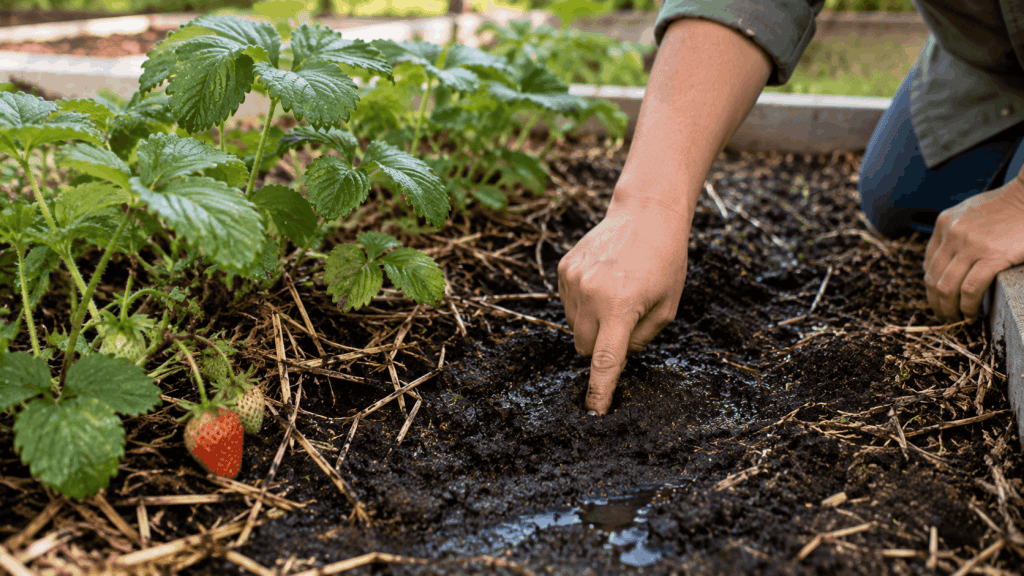
Persistent wet soil, algae, fungus gnats, and sour odors are strong indicators that drainage needs improvement.
Healthy growing media gradually dry between waterings. If soil remains saturated for several days, roots remain deprived of oxygen.
Visible clues include:
- Surface algae strawberry soil
- Fungus gnats strawberry plants
- Stagnant soil smell
- Standing water after irrigation
- Constantly damp mulch
Poor drainage usually develops because of heavy soil structure rather than watering alone. Poor soil drainage strawberries commonly affects garden beds with compacted clay, while containers suffer from perched water table strawberry pots when drainage holes become blocked.
Improving airflow around the root zone often works better than reducing irrigation alone.
Why are fungus gnats a warning sign?
Adult gnats prefer moist organic matter where larvae feed.
Although they rarely kill healthy plants directly, they often indicate excessive moisture that encourages root diseases.
What does foul-smelling soil mean?
A swamp-like odor usually signals anaerobic bacteria growing in oxygen-starved soil.
Healthy soil should smell fresh and earthy instead.
Is It Overwatering or Underwatering?
Soil moisture and root condition provide a more accurate diagnosis than leaf appearance alone.
Both problems produce drooping foliage, which is why gardeners frequently misdiagnose stressed plants.
| Feature | Overwatering | Underwatering |
| Soil | Wet or muddy | Dry and crumbly |
| Leaves | Soft, yellow, limp | Dry, crisp |
| Recovery after watering | Little improvement | Rapid improvement |
| Roots | Dark, soft, slimy | Firm but dry |
Simple checks often provide immediate answers.
- Perform the finger test strawberry soil two inches deep.
- Use a soil moisture meter strawberry for consistent readings.
- Lift containers to judge weight.
- Inspect roots whenever symptoms persist.
Of course, weather influences watering frequency. Plants growing in raised beds during hot summers dry much faster than those planted in heavy clay.
Which quick tests work best?
The finger test remains one of the easiest methods.
A moisture meter offers greater consistency, especially for beginners growing strawberries in containers.
How Can You Save an Overwatered Strawberry Plant?
Stop watering right away. Fix the drainage and check the crown before root diseases get worse.
How fast you act can make all the difference.
Here’s what to do:
- Hold off watering until the top of the soil starts to dry out.
- Empty any standing water from trays or pots.
- Boost airflow around the leaves.
- Look at the roots carefully for signs of rot.
- If drainage is still poor, repot your strawberries into fresh soil.
For container growers, adding perlite or coco coir to the soil mix helps air reach the roots better.
While a diluted hydrogen peroxide soil drench is sometimes used to kill anaerobic pathogens, correcting physical soil drainage is the primary long-term solution. Experts usually say fixing drainage works better than chemicals.
There’s also talk about using cornmeal to stop crown rot, but clear proof that it works is still missing.
When is recovery unlikely?
Recovery becomes unlikely when:
- The crown feels completely soft.
- Most roots have rotted away.
- New leaves stop emerging.
- The plant emits a sour odor.
How Can You Prevent Overwatering in the Future?
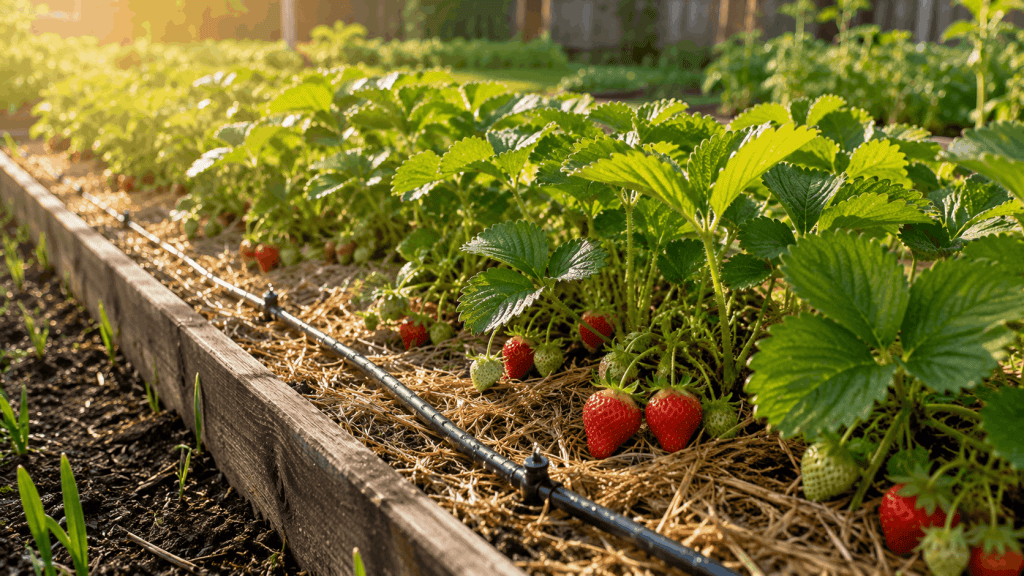
Water according to soil moisture instead of a fixed calendar schedule.
Successful strawberry growers monitor plants rather than following rigid weekly watering routines.
The Royal Horticultural Society recommends adapting irrigation according to rainfall, temperature, and soil conditions.
Effective prevention includes:
- Build elevated strawberry beds for better drainage.
- Choose containers with adequate drainage holes.
- Practice bottom watering strawberries only when soil requires moisture.
- Install strawberry drip irrigation timing that delivers water early in the day.
- Keep organic mulch straw strawberry elevation slightly away from crowns.
- Avoid burying the crown below soil level during planting.
Hydroponic growers should monitor strawberry hydro drip cycle frequency carefully. While the benefits of hydroponic strawberries include precise control over water and nutrition, excessive irrigation in these systems can still cause aerogarden overwatering and indoor strawberry tip burn.
What Mistakes Do Strawberry Growers Most Often Regret?
Gardeners often share the same story: watering too much hurts strawberries more than watering a bit too little. Across community forums, many mention picking what they call “water balloon berries”, soft, flavorless, and easily squished, only to find root rot lurking beneath the soil. It’s a reminder that a little caution with watering goes a long way.
Several recurring mistakes appear repeatedly:
- Watering on a fixed schedule regardless of weather.
- Ignoring raised bed drainage strawberries.
- Using heavy potting mixes without perlite.
- Leaving saucers full beneath containers.
- Confusing wet-soil wilting with drought.
Beyond that, experienced growers repeatedly recommend checking soil first instead of watering automatically. That small habit prevents many common strawberry problems before they start affecting your harvest.
FAQs
How can I tell overwatering from underwatering in strawberries?
Strawberry overwatering vs underwatering can be confusing because both conditions cause wilting. The easiest way to tell the difference is by checking the soil. Soggy soil strawberries, strawberry leaves drooping in wet soil, and a consistently damp root zone usually indicate an overwatered strawberry plant. Dry, loose soil suggests underwatering. Use the finger test strawberry soil method or a soil moisture meter strawberry to confirm moisture before watering again.
Why do strawberry roots rot after too much watering?
Too much water fills the air spaces in the soil and reduces strawberry root respiration. As root hypoxia strawberries develops, oxygen deprived strawberry roots cannot function normally. This stress often leads to strawberry root death and encourages disease. During a strawberry plant root inspection, look for dark brown strawberry roots, slimy strawberry roots, and confirm damage with the strawberry root sheath sliding test. These are common strawberry root rot symptoms.
Which soil conditions increase the risk of overwatering?
Several soil conditions increase the risk of overwatering. Poor soil drainage strawberries, clay soil overwatered strawberries, and high peat soil moisture retention strawberry keep roots wet for extended periods. The result can be an anaerobic soil strawberry environment with a noticeable stagnant soil smell. Improve drainage by adding perlite soil aeration strawberry, using a balanced perlite to coir ratio strawberries, choosing coco coir strawberry drainage, and planting in elevated strawberry beds.
Can overwatering damage strawberry flowers and fruit?
Yes. Excess moisture can cause strawberry blossom drop, soft mushy strawberries, watery strawberries, strawberry fruit splitting, and strawberry fruit decay. Wet conditions also increase the risk of gray mold botrytis strawberries, especially during periods of high humidity strawberry mold. Following a consistent strawberry watering schedule and keeping fruit off constantly wet soil helps reduce disease and improves fruit quality.
What is the best way to revive an overwatered strawberry plant?
To encourage strawberry plant revival after overwatering, stop watering until the top layer of soil begins to dry. Improve container strawberry drainage, clear blocked strawberry pot drainage holes, and prevent wet feet strawberry plants by allowing excess water to drain freely. If the growing medium stays compacted, mix in a perlite soil mix strawberries. Then adjust watering container strawberries or strawberry drip irrigation timing to prevent repeated overwatering.
Catch the Problem Early for Healthier Strawberry Plants
Overwatered strawberry plants can go downhill fast, and you’ll often notice the warning signs before it’s too late. Yellow leaves, wet soil that won’t dry, mushy berries, sour-smelling soil, or dark roots all point to too much water. Act quickly. Improving drainage and letting the roots breathe can help your plants recover before the damage gets worse.
Healthy strawberry plants need the right amount of water, not constant moisture. Water only when the soil needs it, then keep an eye on how your plants respond. If you want more growing guides, watering tips, or simple fixes for common problems, TopHydroponicGarden is a helpful place to keep learning and grow stronger strawberry plants.
References
- https://ipm.ucanr.edu/agriculture/strawberry/phytophthora-crown-and-root-rot/#gsc.tab=0
- https://www.google.com/search?q=https://openurl.ebsco.com/c/t4a2lo/EPDB%253Agcd%253A10%253A225258/detailv2%3F
Related Articles
- https://tophydroponicgarden.com/what-are-the-best-strawberry-companion-plants/
- https://tophydroponicgarden.com/what-are-the-benefits-of-hydroponic-strawberries/
- https://tophydroponicgarden.com/troubleshooting-common-strawberry-problems/
Was this helpful?

I’m Barrie L., a passionate hydroponic gardening enthusiast dedicated to cultivating thriving, soil-less gardens. With a focus on all things hydroponic, I share my expertise on innovative growing techniques and sustainable practices through my blog, tophydroponicgarden.com. As a seasoned hydroponics specialist, my goal is to inspire and guide fellow gardeners in harnessing the power of water-based cultivation for bountiful and eco-friendly harvests. I’m also an author of the book “Hydroponics For Absolute Beginners: Your Step By Step Guide For How To Create An Hydroponics System At Home Without Soil, For Growing Vegetable, Fruit And Herbs.” which is sold on Amazon. Join me on a journey of redefining the way we cultivate plants, one nutrient-rich solution at a time. Happy growing!