

Hydroponics lets you grow plants without soil, using water mixed with nutrients to feed the roots directly.
Instead of wrestling with bad dirt or limited yard space, you use simple systems that control light, water, and air so plants can focus on growing.
Some setups are as basic as a bucket and a wick, others use pumps, flowing water, or fine mist to reach every root.
Each method has its own strengths, costs, and learning curve, so the best choice depends on your space and patience. Keep reading to see which hydroponic system actually fits your life.
Key Takeaways
- Hydroponic systems are categorized by how they deliver nutrients and oxygen, either passively or actively.
- Simpler methods like the Kratky technique are great for beginners, requiring minimal equipment.
- Active systems like DWC and NFT offer faster growth but need pumps and closer monitoring.
Understanding the Hydroponic Landscape

You see it in urban apartments and sprawling commercial farms alike. Plants thriving without a speck of dirt in sight. The secret isn’t magic, it’s method.
Hydroponics isn’t one single thing. It’s a family of techniques, each with its own personality. Some are quiet and self-sufficient. Others are bustling and high-performance. The choice depends entirely on what you want to grow and how much attention you’re willing to give [1].
The Simple Starters: Passive Hydroponic Systems
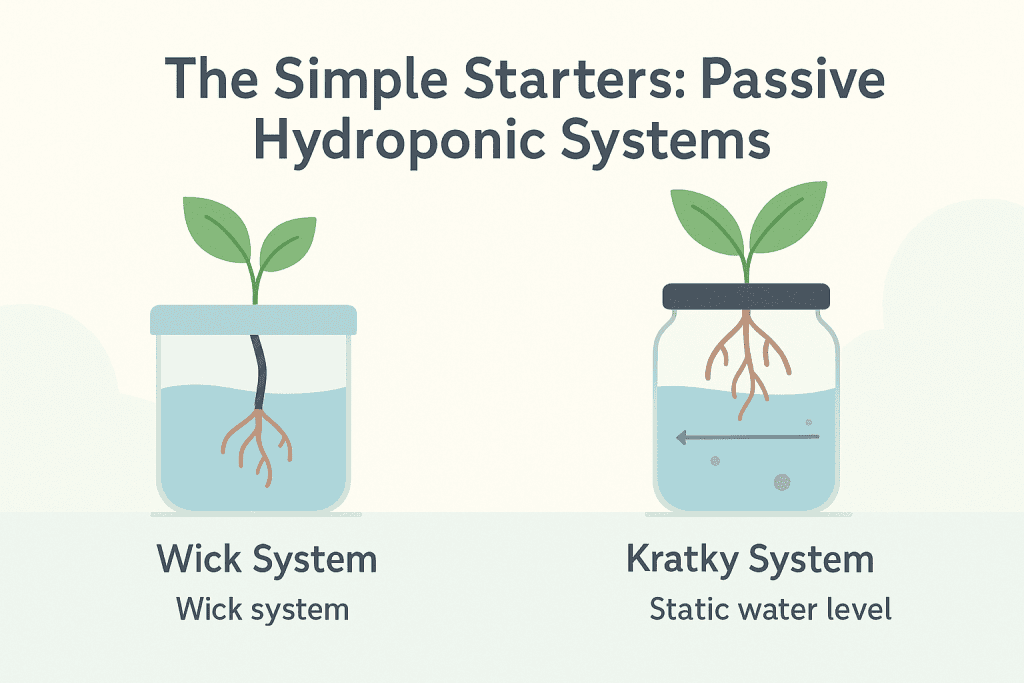
These methods are the entry point. They don’t use any moving parts like pumps. They’re quiet, reliable, and forgiving for a first-time grower. The trade-off is they tend to be best for smaller, less demanding plants.
This makes it an ideal choice for beginners interested in understanding what is hydroponics and starting with simple, low-maintenance setups.
The Wick System: Set It and Forget It
Imagine a candle wick drawing up wax. This system works the same way. One or more wicks, often made of felt or nylon rope, connect a reservoir of nutrient solution to the plant’s root zone, which is held in a medium like perlite or vermiculite.
The solution travels up the wick through capillary action, keeping the roots consistently moist. It’s brilliantly simple.
There are no pumps to fail, no timers to set. You just need to keep the reservoir topped off. This makes it ideal for growing small herbs on a windowsill, things like basil or mint.
The limitation is the wick’s delivery rate. It can’t supply nutrients fast enough for large, thirsty plants like tomatoes, though optimized wicks can handle smaller fruiting plants. It’s a gentle, steady system for gentle, steady growers.
- Pros: No electricity or pumps needed, low maintenance, inexpensive.
- Cons: Slower growth, not suitable for large, water-hungry plants.
- Best for: Beginners, small herbs, educational projects [2].
The Kratky Method: The Easiest Path to Harvest
Dr. Bernard Kratky developed this non-circulating technique, and it’s a game-changer for simplicity. A plant is suspended in a net pot over a reservoir filled with nutrient solution. The roots dangle down, but they aren’t fully submerged. An air gap is left between the water surface and the net pot.
Initially, the roots touch the solution, and the plant drinks. As the water level drops, the air gap grows, exposing the upper roots to oxygen.
The plant essentially regulates its own environment. You set it up once, and aside from refilling the reservoir maybe once during its life, you just watch it grow.
It’s perfect for leafy greens like lettuce from start to finish. The main thing to watch is never letting the roots become fully submerged again after the air gap has formed, as it can suffocate them.
| System | Water Movement | Electricity Needed | Maintenance Level | Best Crops |
| Wick System | Capillary action through wicks | No | Very low | Small herbs, leafy greens |
| Kratky Method | Static nutrient solution | No | Very low | Lettuce, spinach, herbs |
The Active Growers: Constant Flow Systems

When you’re ready for faster growth and bigger plants, active systems are the next step. They use pumps to constantly circulate and oxygenate the nutrient solution, supercharging plant development. They require more initial setup and vigilance.
Deep Water Culture (DWC): Rapid Results
This is a popular choice for its impressive results. Plants are held in net pots on a floating lid atop a reservoir. The roots hang directly down into the nutrient solution. The key ingredient is an air pump connected to an air stone, which bubbles oxygen into the water 24/7.
Ensuring proper hydroponic water management is crucial here, as water quality dramatically affects plant health and nutrient uptake in active systems like DWC.
The roots have constant access to water, nutrients, and, most importantly, oxygen. This leads to explosive growth, especially for leafy greens and herbs.
The system is relatively simple, but it has a single point of failure. If the air pump stops, the roots quickly drown and rot. It’s a system that rewards attention. Many commercial lettuce operations use large-scale DWC, often called “raft” systems.
Nutrient Film Technique (NFT): A Thin Stream of Life
Picture a shallow, slightly sloped channel. A thin film of nutrient solution, no more than a few millimeters deep, is pumped to the high end and flows down the channel. Plants sit in small cups along the channel, with their roots dangling into this flowing film.
The roots get a constant flow of nutrients while the top part of the root mass, exposed to the air in the channel, gets ample oxygen. It’s a very efficient use of water and nutrients. It works exceptionally well for fast-growing, lightweight crops like herbs and strawberries.
The vulnerability here is the pump. If the flow stops, the delicate roots dry out and die in a matter of hours. It also requires clean water to prevent clogs in the narrow channels.
The Versatile Workhorses: Flood and Drip Systems

Credits:Everything Hydroponics
These methods offer a middle ground, combining periods of feeding with periods of rest. They are highly adaptable and can support a wide variety of plants, making them a favorite for home gardeners.
Ebb and Flow: The Tidal Garden
Also known as Flood and Drain, this system uses a timer. A submersible pump in a reservoir is set to turn on periodically, flooding a large grow bed filled with a medium like clay pebbles or rockwool.
The nutrient solution soaks the roots and the medium. After a short period, the pump turns off, and the solution drains back into the reservoir.
This cycle mimics natural wet and dry periods. The flooding delivers nutrients, and the draining pulls fresh air down to the roots, providing excellent oxygenation.
It’s versatile enough for everything from lettuce to peppers. The downside is the need for a reliable timer and the potential for salt buildup in the medium over time. It’s a system that feels active and involved.
Drip Systems: Precise and Scalable
This is likely the most recognizable hydroponic method, often seen in commercial greenhouses. A pump sends nutrient solution through a network of tubes to individual drip emitters placed at the base of each plant.
The solution drips slowly onto the root zone, which is typically held in an inert medium like coco coir or clay pebbles.
There are two types: recovery and non-recovery. Recovery systems collect the excess runoff and return it to the reservoir, making them very water-efficient.
Non-recovery systems let excess drain away, demanding precise emitter tuning to minimize waste.
Drip systems are fantastic for larger plants like tomatoes and cucumbers because they deliver a targeted, measured amount of solution. The main maintenance task is ensuring the emitters don’t get clogged by sediment or algae.
The High-Tech Peak: Aeroponics
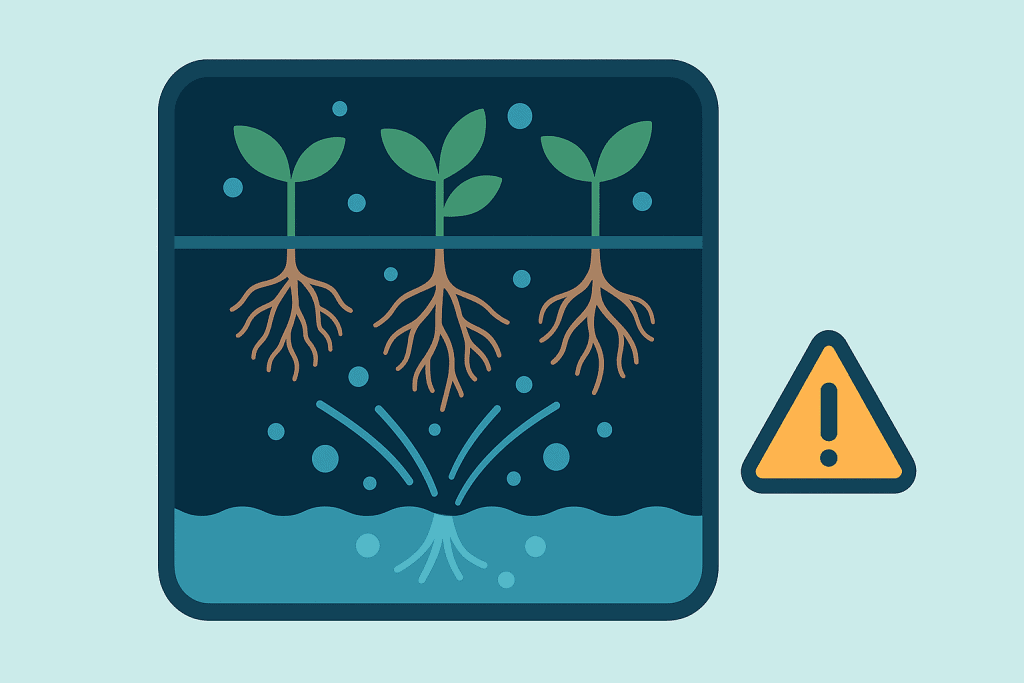
For maximum growth speed and efficiency, aeroponics is the cutting edge. The plant roots are suspended in a dark, enclosed chamber.
They are not immersed in water at all. Instead, high-pressure misting nozzles spray a fine aerosol of nutrient solution directly onto the roots every few minutes.
This setup provides an incredible amount of oxygen to the roots, which dramatically accelerates growth. NASA has studied aeroponics for space missions because of its efficiency.
However, it’s the most demanding system. The misters must be kept perfectly clean, and the pump must be extremely reliable. A power outage or a clogged nozzle can cause roots to dry out and die faster than in any other system. It’s a high-risk, high-reward technique for the dedicated enthusiast.
Finding Your Hydroponic Path
So, which path do you take? It comes down to your goals. If you want to dip a toe in the water, start with the Kratky method for some lettuce. It’s cheap and almost foolproof.
If you’re ready to commit to faster growth, a Deep Water Culture (DWC) bucket is a fantastic project. For a diverse garden, ebb and flow or drip irrigation can be great options.
Maintaining the balance of nutrients and consistent water circulation is key, so having knowledge of how hydroponics work helps ensure success across all systems.
The beauty of hydroponics is that there’s a technique for every level of interest. Your soilless garden is waiting to be built.
FAQ
How do hydroponic systems move water and nutrients to plant roots?
Hydroponic systems deliver nutrients through nutrient solution delivery that feeds hydroponic plant roots directly.
In water-based plant growing, roots absorb food from an oxygenated nutrient solution stored in hydroponic reservoirs.
Some hydroponic growing methods use air pump hydroponics to add oxygen, while others rely on gravity flow. This process supports soilless cultivation by keeping roots nourished, moist, and well oxygenated.
Which hydroponic techniques for beginners need the least equipment?
Hydroponic techniques for beginners often use a passive hydroponic system such as the Kratky method. These non-recirculating hydroponics do not require pumps, timers, or electricity.
A basic home hydroponic setup can support hydroponic gardening with simple containers, light, and nutrient water. These types of hydroponics allow new growers to learn core skills with low cost and low risk.
How do active hydroponic growing methods differ in water circulation?
Active hydroponic growing methods move water continuously or on a schedule using recirculating hydroponics.
A DWC system, also called deep water culture hydroponics, keeps roots submerged in moving, oxygenated water. Nutrient film technique and NFT hydroponics send a thin stream through hydroponic channels.
An ebb and flow system, also known as flood and drain hydroponics, fills and drains hydroponic grow trays on timed cycles.
What growing media and environment controls matter most in indoor systems?
Indoor hydroponic systems use grow media hydroponics to support plants and roots. Common options include clay pebbles hydroponics, rockwool growing medium, and coco coir hydroponics.
Stable growth depends on hydroponic water management, including pH control hydroponics and EC monitoring hydroponics. Proper hydroponic lighting systems, LED grow lights hydroponics, and hydroponic climate control help plants grow evenly indoors.
Which hydroponic techniques work best for food production at different scales?
Hydroponic lettuce production and hydroponic herbs growing work well in small indoor hydroponic systems and urban farming hydroponics.
Hydroponic tomatoes and hydroponic strawberries often perform better in drip irrigation hydroponics or an aeroponics system.
Vertical hydroponic systems and hydroponic towers save space. Large commercial hydroponics support sustainable agriculture hydroponics by producing food consistently year-round.
Conclusion
Hydroponics shows that growing healthy plants doesn’t depend on soil or large outdoor space, only on choosing the right system.
From passive options like the Wick and Kratky methods to active setups such as DWC, NFT, Ebb and Flow, Drip, and aeroponics, each technique balances simplicity, speed, and control differently. Start with what fits your space and routine, then scale up as your skills and confidence grow.
References
- https://www.swasyaliving.com/post/advantages-of-hydroponic-vertical-farming
- https://www.sciencedirect.com/science/article/abs/pii/S0378377421004480
Related Articles
- https://tophydroponicgarden.com/what-is-hydroponics-2/
- https://tophydroponicgarden.com/what-type-of-water-to-use-for-hydroponics/
- https://tophydroponicgarden.com/how-does-hydroponics-work-simply/
Was this helpful?

I’m Barrie L., a passionate hydroponic gardening enthusiast dedicated to cultivating thriving, soil-less gardens. With a focus on all things hydroponic, I share my expertise on innovative growing techniques and sustainable practices through my blog, tophydroponicgarden.com. As a seasoned hydroponics specialist, my goal is to inspire and guide fellow gardeners in harnessing the power of water-based cultivation for bountiful and eco-friendly harvests. I’m also an author of the book “Hydroponics For Absolute Beginners: Your Step By Step Guide For How To Create An Hydroponics System At Home Without Soil, For Growing Vegetable, Fruit And Herbs.” which is sold on Amazon. Join me on a journey of redefining the way we cultivate plants, one nutrient-rich solution at a time. Happy growing!