

Curious about what are the benefits of hydroponic tomatoes? This modern farming method is transforming how we grow and enjoy fresh produce. By replacing soil with nutrient-rich water, hydroponics delivers faster growth, bigger yields, and tastier fruits, all while saving water and reducing pesticides.
Let’s dive into why hydroponic tomatoes are becoming a top choice for growers and consumers alike.
Key Takeaways
- Hydroponic tomatoes yield 30-50% more fruit with faster growth in controlled environments.
- Water savings up to 90% and reduced pesticide use make hydroponics an eco-friendly choice.
- Enhanced vitamin, antioxidant content, and fresh flavor improve tomato quality consistently.
Yield Optimization in Hydroponic Tomato Cultivation
Controlled Nutrient Delivery Enhances Growth Rates
Growing tomatoes without dirt might sound strange, but there’s something pretty incredible about watching roots dangle in nutrient-rich water. The real magic happens when those plants start growing like they’re on fast-forward.
Unlike regular garden soil, which can be hit-or-miss depending on what the weather’s doing or what lived there before, hydroponic systems feed plants exactly what they need, when they need it. This precise nutrient delivery is a key part of maximizing tomato yield and boosting growth efficiency.
Numbers don’t lie – these water-fed tomatoes typically pump out 30-50% more fruit in the same space as their dirt-dwelling cousins.
It’s actually pretty straightforward: the roots aren’t fighting through soil trying to find food, they’re just floating there soaking up exactly what they need (mostly nitrogen, phosphorus, and those essential minerals). Plus, they’re getting perfect amounts of oxygen, which means they can photosynthesize like champions.
Most growers say their hydroponic tomatoes mature about two weeks faster than traditional ones. The plants don’t waste energy pushing through dirt or dealing with soil-borne pests, so all that energy goes straight into making fruit.
Even in smaller spaces, like a garage or spare room, these systems can produce enough tomatoes to keep a family in pasta sauce all year round. Sure beats waiting for the perfect weather and dealing with weeds.
Year-Round Production Enabled by Environmental Control
Anyone who’s tried growing tomatoes knows Mother Nature doesn’t always play nice. But stick those same plants in a hydroponic setup, and suddenly the weather outside doesn’t matter much.
Farmers running these systems (mostly in converted warehouses or high-tech greenhouses) keep their crops happy by tweaking a few basic things:
- Temperature stays between 65-80°F
- Humidity hovers at 60-70%
- LED lights run 14-16 hours daily
- Nutrients mix into water at 800-1200 ppm
The plants don’t care if there’s a blizzard or drought outside – they just keep pumping out tomatoes like it’s peak summer. For the folks growing commercially, this means they’re not stuck explaining to grocery stores why they can’t deliver in February. And for people who want fresh tomatoes in their salad? They don’t have to settle for those pale, tough ones that got shipped from 2,000 miles away. Pretty neat setup, when you think about it.
Vertical Farming and Space Efficiency

Credit: Green Living Off Grid
Growing up, not out. That’s what smart farmers are doing with their tomatoes these days. They’re taking those traditional garden rows and turning them on their head – literally.
The math isn’t complicated: stack six levels of plants where one used to grow, and you’ve got six times the harvest from the same patch of ground. Picture those leafy towers reaching toward warehouse ceilings, each level dripping with red fruit (each plant needs about 4 square feet in traditional gardens, but only about 1 square foot in these vertical systems).
These setups are popping up in old warehouses and empty lots across cities like Detroit and Chicago. Makes sense – why truck tomatoes 1,500 miles when they can grow right down the street? The produce doesn’t have to spend days bouncing around in a semi-truck, and city folks get tomatoes that actually taste like tomatoes, not cardboard.
Some of these operations look kind of like giant Lego sets, with pipes and pumps moving water and nutrients up and down. Pretty weird at first glance, but it works. And in places where land costs more than a new pickup truck per acre, going vertical might be the only way to make the numbers work.
Resource Efficiency and Environmental Sustainability
Water Usage Reduction through Closed-Loop Systems
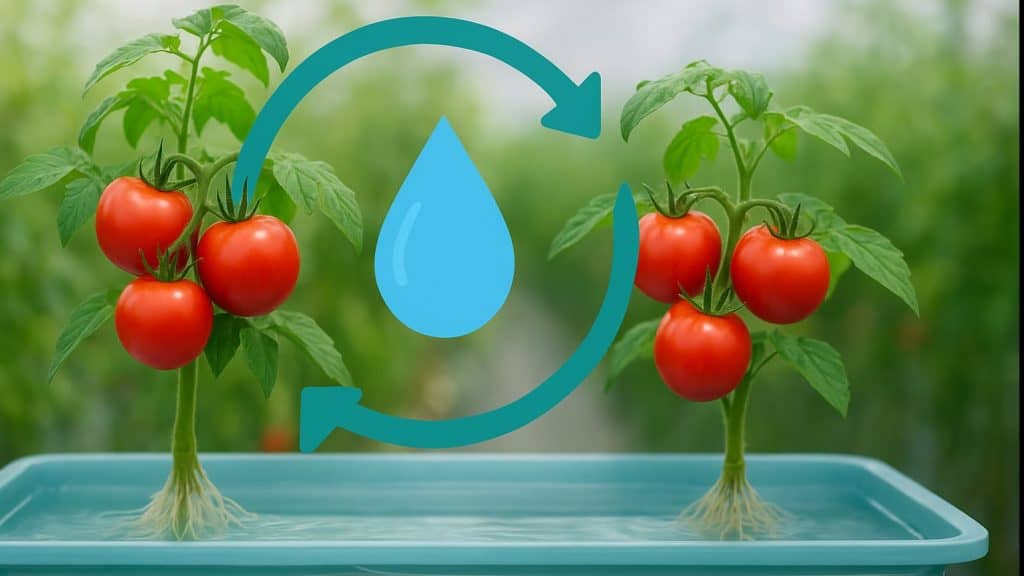
Fresh water matters more than ever these days, and tomato growers who’ve switched to hydroponics get it. Their systems keep reusing the same water over and over – no more watching it soak into dirt or disappear into thin air.
This closed-loop water-efficient tomato growing method leads to remarkable hydroponic tomato water savings, slashing water use by 90%, which seems almost unbelievable until you see it in action.
The whole thing works like a carefully planned circuit. Water mixed with nutrients (mostly nitrogen, phosphorus, and potassium) flows past the roots, then gets collected, filtered, and sent right back through. Nothing goes to waste. Pretty smart, right?
For places like California or Arizona where every drop counts, this could be huge. Even better? These closed systems work just about anywhere – from desert greenhouses to urban rooftops. Makes you wonder why we didn’t start doing this sooner.
Minimized Pesticide and Herbicide Application
Growing tomatoes without dirt makes a huge difference when it comes to keeping bugs and diseases away. The plants sit in their clean, controlled setup (typically indoors or in greenhouses) where pests can’t easily take hold. It’s like they’re in their own protected bubble, away from the usual garden troublemakers that love to munch on tomato leaves.
Farm workers don’t need to spray nearly as many chemicals – maybe 75% less than traditional farms. They might use a small amount here and there, but nothing like the regular dousing that happens in soil-based operations.
It’s better for everyone, really. The workers don’t breathe in all those fumes, and there’s no runoff seeping into nearby streams or groundwater.
These tomatoes are pretty much what you’d expect from something grown in such a controlled space. Clean fruit, no weird residues, no need to wash them three times before eating. Just what you’d want if you’re trying to cut down on the chemicals in your food. That’s probably why so many grocery stores are stocking more of them these days.
Reduced Land Requirement and Soil Independence
Forget soil , tomatoes don’t need it anymore. A 40-foot shipping container filled with hydroponic equipment can match the output of a quarter-acre field, and that’s not counting the vertical stacking possibilities. Just picture old warehouse rooftops in Brooklyn or empty lots in Phoenix, places where you’d never expect to see a tomato plant thrive, now pumping out fresh produce year-round.
The math adds up quick: a standard hydroponic setup needs about 90% less land than traditional farming methods, and it doesn’t care if the ground below is toxic, sandy, or paved over.
This means cities can grow their own food right where people live, rather than shipping it across states (or oceans). Some growers are already doing this in Abu Dhabi, where they’re literally growing tomatoes in the middle of the desert.
The best part? While these systems crank out tomatoes, they’re leaving good farmland alone. No more clearing forests or draining wetlands just to grow food, a pretty big deal when you think about how much natural habitat we’ve already lost to agriculture. [1]
Nutritional and Quality Advantages of Hydroponic Tomatoes
Enhanced Vitamin and Antioxidant Content
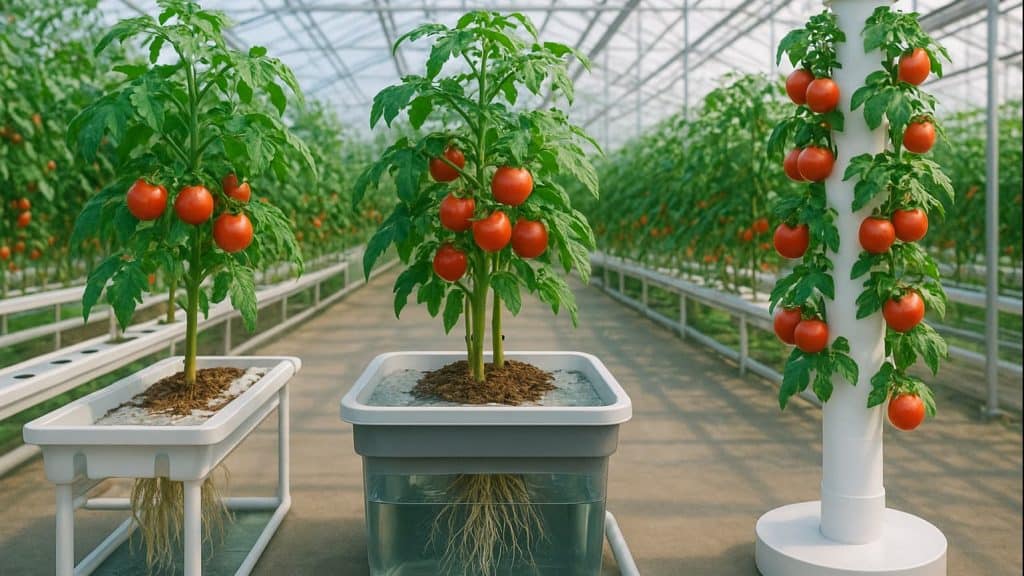
Tomatoes grown in water-based systems probably don’t look much different from their dirt-dwelling cousins, but they’re packing some serious nutrition under that smooth skin.
Each hydroponic tomato (usually weighing between 4-6 ounces) carries a concentrated dose of good stuff – we’re talking about vitamin C levels that can hit 25% higher than traditional growing methods, and lycopene that’s through the roof.
The science checks out here. When farmers control every drop of nutrients these plants get, following expert nutrient recommendations and tips ensures the tomatoes end up packed with more of what our bodies need.
The numbers don’t lie – potassium levels reaching 250-300 mg per tomato, antioxidant content that matches or beats conventional growing, and vitamin C that holds steady at 15-20 mg per 100 grams of fruit. Pretty impressive for plants that never touched soil.
And here’s something most people don’t think about – since these tomatoes go from vine to plate so fast, those nutrients don’t have time to break down. They stay fresh, they stay potent, and they might just help keep hearts beating strong and immune systems ready for action.
Lab tests keep showing the same thing – these water-grown wonders are at least as good as their traditional counterparts, sometimes even better.
Superior Freshness and Flavor Profile
The proof lies right there in the first bite. Local hydroponic tomatoes hit different – they’ve got that unmistakable sweetness you just don’t get from the ones that spend a week bouncing around in trucks. These tomatoes, grown just a few miles from their final destination, go from vine to kitchen in less than 24 hours (compared to 7-10 days for cross-country shipping).
When you slice into one of these beauties, they’re firm but not hard, and the flesh has this perfect give that grocery store tomatoes rarely match. Most chefs around here won’t touch anything else for their caprese salads.
The taste is balanced, not that one-note sourness you get with forced-ripened fruit, and there’s this natural sugar content that makes them almost candy-like when they’re really ripe. Some farmers even claim they can adjust the sweetness by tweaking the nutrient solution, though that might be stretching it a bit.
Consistent Quality through Controlled Cultivation
Watching water trickle through hydroponic channels might not seem like much, but it’s changing how we grow our tomatoes. Those hanging vines, stretching up in perfect rows under LED lights, pump out fruits that could’ve been stamped from the same mold – and that’s exactly what grocery stores want.
These water-grown tomatoes stick around 25% longer on shelves than their dirt-raised cousins. Instead of dealing with Mother Nature’s mood swings, farmers punch in exact numbers for water pH (usually between 5.5 and 6.5) and nutrients (like 150-200 ppm nitrogen). No more crossing fingers about rain or worrying about soil patches that just won’t grow right.
The tomatoes come out looking like they’re all from the same family tree. Same size, same color, same taste – probably sounds a bit boring to garden purists, but for stores trying to keep their produce section looking fresh, it’s pretty much perfect. The fruits hold up better in shipping too, which means less gets tossed in the dumpster between farm and table.
For shoppers who just want their BLT to taste the same way twice, these controlled-environment tomatoes hit the spot. Sure, they might not have that backyard garden charm, but they’ll still be firm and fresh when the weekend rolls around. That’s just math and science doing their thing.
Implementation and Practical Considerations in Hydroponic Tomato Farming
System Selection and Setup
You wouldn’t believe the amount of thought that goes into picking the right setup for growing tomatoes without soil. It’s not rocket science, but there’s definitely more to it than throwing some plants in water and hoping for the best.
System Choices
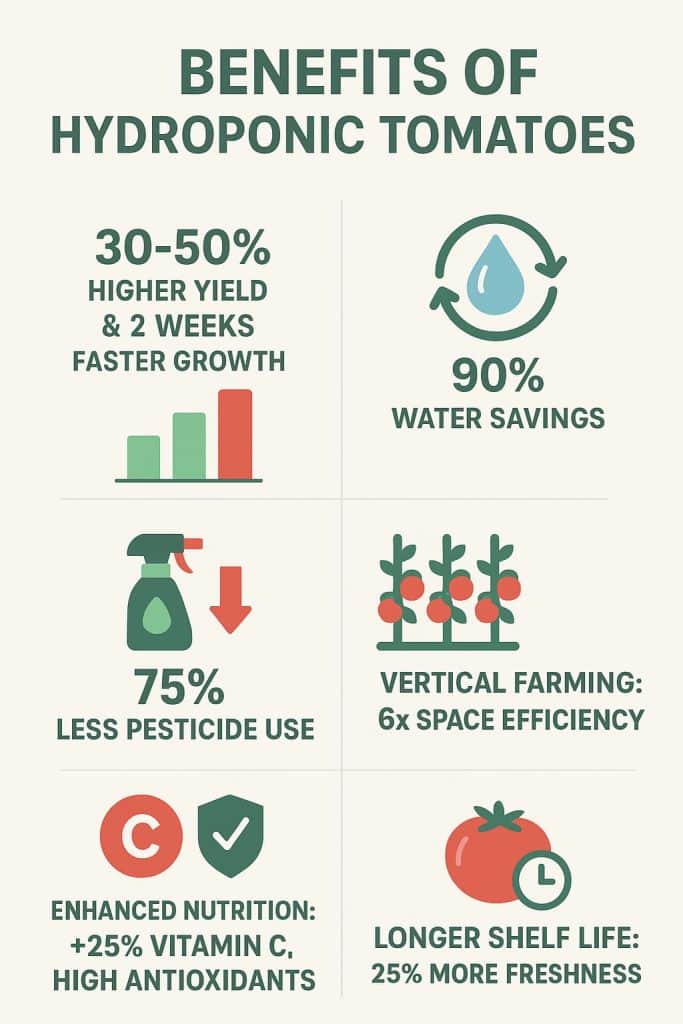
- Deep Water Culture (DWC) – roots hang in nutrient solution ($200-500 startup)
- Nutrient Film Technique (NFT) – thin film of water flows past roots ($400-800 startup)
- Aeroponics – roots misted with nutrients (pricey at $800-1500)
A decent DWC system might be the way to go for beginners, and honestly it’s probably the most forgiving when you’re learning the ropes. Don’t get too caught up in the fancy stuff at first
Most growers go with either coco coir (made from coconut husks) or rockwool cubes. Both work pretty well, and they’re not too expensive. The coco coir holds moisture better, which gives you a bit more wiggle room if something goes wrong with your watering schedule.
What really makes or breaks a system is keeping an eye on the basics – pH should stay between 5.5 and 6.5, and the EC (that’s electrical conductivity) needs checking daily. Yeah, it’s kind of a pain, but those numbers tell you if your plants are getting what they need.
Trust me, the setup might look complicated at first, but once you’ve got everything running, it’s mostly just regular checkups and tweaks here and there. Like anything worth doing, it takes some practice to get it right.
Root Health Management
The thick, white roots dangling beneath hydroponic tomato plants tell the real story of crop success. These roots can’t survive without enough oxygen, and they’ll rot fast in stagnant water – a nightmare for any grower trying to turn a profit.
Smart growers prop up their roots with plastic mesh spacers (about 1-2 inches wide) or add air stones that pump 6-8 liters of oxygen per minute into the nutrient solution. The bubbles dance around the roots, keeping them strong and reaching for nutrients.
Nobody likes cleaning the systems, but it’s got to happen every 14-21 days. Dump the old solution, scrub everything down, and start fresh. Those dark spots growing on reservoir walls? They’re probably pythium or fusarium – nasty organisms that’ll choke out roots if left unchecked.
When roots stay healthy, they suck up nitrogen and calcium like a vacuum, and the plants above show it. Stems grow thick as thumbs, leaves spread wide, and tomatoes swell up sweet and heavy. Just the way they should. [2]
Pollination Strategies and Crop Support
Nature’s usual pollinators – bees, butterflies, wind – don’t make it into most indoor gardens. That’s why someone’s got to step in and play matchmaker for the plants. Commercial growers bring in boxes of bumblebees (around 50-75 bees per hive) and let them do what comes natural. Home growers might use a small electric toothbrush to give those flowers a gentle shake, mimicking a bee’s wing beats.
Those tomato vines, they’ll stretch six feet or higher if you let them. Can’t have them sprawling everywhere. A decent trellis setup (metal or bamboo, doesn’t matter much) keeps everything tidy, plus it makes grabbing those ripe tomatoes a whole lot easier than hunting through a mess of tangled vines.
Smart growers know to keep their scissors handy. Snipping off the little shoots that pop up between branches, that’s just good sense. It’s like giving the plant a haircut – lets more light hit the leaves, helps air move around better. Less chance of mold taking hold, and the tomatoes end up bigger since the plant’s not wasting energy on extra leaves. Not rocket science, just basic plant care that makes a real difference.
FAQ
What are hydroponic tomatoes benefits and hydroponic tomato advantages compared to hydroponics vs soil tomatoes?
Hydroponic tomatoes benefits show clearly when matched with soil farming. Hydroponics vs soil tomatoes highlights faster tomato growth hydroponics because roots get nutrients directly without soil stress. This leads to higher tomato yield hydroponic and soil-less tomato yield that is reliable each season.
Hydroponic tomato advantages also include steady tomato growth rate hydroponic and less risk of pests. With soilless tomato cultivation, farmers achieve healthier plants, shorter cycles, and better resource use.
These methods provide consistent harvests, reduce waste, and ensure crops stay strong while meeting the growing demand for fresh hydroponic tomatoes in different environments.
Why is soilless tomato cultivation with hydroponic gardening tomatoes good for water-efficient tomato growing and hydroponic tomato water savings?
Soilless tomato cultivation supports hydroponic gardening tomatoes that grow without soil. These systems recycle water, leading to water-efficient tomato growing and significant hydroponic tomato water savings.
By using closed-loop tomato growing setups, nutrients stay in the system, preventing runoff that damages soil and rivers. This eco-friendly tomato growing approach helps conserve resources and improves sustainability.
Farmers can keep yields high while using less water, which is critical in dry regions. The method also supports sustainable tomato farming by lowering input waste, reducing environmental pressure, and keeping production reliable across seasons regardless of local weather conditions.
Can hydroponic tomato nutrition, hydroponic vitamins in tomatoes, and hydroponic tomatoes antioxidants improve hydroponic tomato flavor quality?
Hydroponic tomato nutrition is carefully managed by growers. This boosts hydroponic vitamins in tomatoes and enhances hydroponic tomatoes antioxidants like lycopene content. These compounds improve hydroponic tomato flavor quality, making fruit sweeter and fresher.
Hydroponic tomatoes freshness is stronger too, since controlled environments protect plants from soil stress. Tomato nutrient control hydroponics ensures consistent size, texture, and taste. Improved tomato quality hydroponics delivers fruit with balanced nutrients and better shelf life.
The result is nutrient-rich hydroponic tomatoes that give both health benefits and flavor advantages, appealing to consumer preference for clean, fresh, and tasty produce grown sustainably.
How does hydroponic tomato disease control help produce pesticide-free tomatoes and clean tomato production hydroponics?
Hydroponic tomato disease control reduces risks by removing soil where pests and pathogens thrive. With hydroponic tomato pest resistance, plants face fewer attacks and need fewer sprays. This creates pesticide-free tomatoes and supports clean tomato production hydroponics.
Chemical-free tomato production means safer food for consumers and less damage to the environment. Hydroponic tomato plant health also improves in controlled systems, reducing losses and ensuring reliable yields.
Farmers benefit from steady harvests while lowering costs. Consumers gain peace of mind with tomatoes grown under conditions that reduce chemicals, waste, and risk while improving sustainability and long-term food safety.
Conclusion
Hydroponic tomatoes represent a leap toward sustainable, efficient, and high-quality food production. By harnessing precise nutrient control, water savings, and space optimization, growers can produce more and better fruit with less environmental impact.
This method offers a promising path forward for urban agriculture and food security in a changing world. Whether you’re a commercial farmer or a home grower, the benefits of hydroponic tomatoes are well worth exploring.
References
- https://hydroponicsystems.eu/advantages-of-tomato-growing-in-hydroponic-systems/
- https://pmc.ncbi.nlm.nih.gov/articles/PMC7885021/
Related Articles
- https://tophydroponicgarden.com/tomatoes/
- https://tophydroponicgarden.com/tips-and-tricks-for-hydroponic-tomatoes/
- https://tophydroponicgarden.com/hydroponic-tomatoes/
Was this helpful?

I’m Barrie L., a passionate hydroponic gardening enthusiast dedicated to cultivating thriving, soil-less gardens. With a focus on all things hydroponic, I share my expertise on innovative growing techniques and sustainable practices through my blog, tophydroponicgarden.com. As a seasoned hydroponics specialist, my goal is to inspire and guide fellow gardeners in harnessing the power of water-based cultivation for bountiful and eco-friendly harvests. I’m also an author of the book “Hydroponics For Absolute Beginners: Your Step By Step Guide For How To Create An Hydroponics System At Home Without Soil, For Growing Vegetable, Fruit And Herbs.” which is sold on Amazon. Join me on a journey of redefining the way we cultivate plants, one nutrient-rich solution at a time. Happy growing!