

Growing herbs in soil works until you’re dealing with pests, inconsistent harvests, and plants that take forever to produce anything usable.
Hydroponic herbs solve most of those problems at once. If you’ve been wondering what are the benefits of hydroponic herbs, the core answer is straightforward: faster growth, higher yield, year-round growing, and no soil needed to get consistent results.
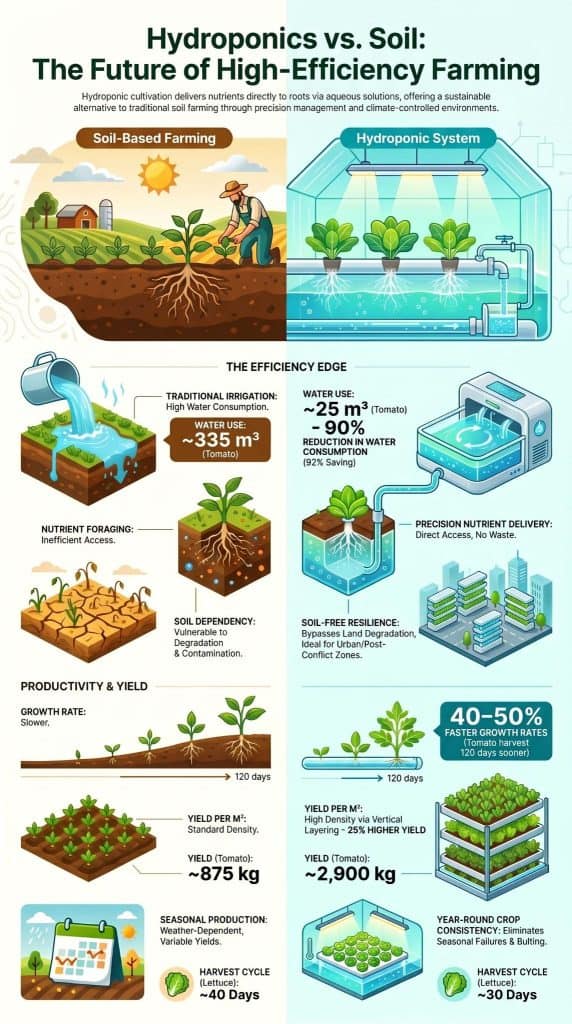
Herbs like basil, mint, parsley, and cilantro grow significantly faster in a well-managed hydroponic system than in traditional soil gardens. Water conservation is another major advantage hydroponic systems use up to 90 percent less water while delivering nutrients directly to the root zone.
Keep reading to see exactly how each benefit works and which herbs respond best to hydroponic growing.
Hydroponic Herbs Outperform Soil Growing Here Is Why the Numbers Back It Up
The advantages of growing herbs hydroponically go beyond convenience the data on growth speed, water use, and harvest consistency make a compelling case on their own.
- Hydroponic herbs can grow 30–50% faster than soil-grown herbs under optimal conditions.
- Recirculating systems may use up to 95% less water than traditional gardening methods.
- Growers gain year-round harvests, cleaner plants, and greater control over quality and production.
Quick Facts Before You Start
Hydroponic herbs can grow up to 30–50% faster and use up to 95% less water than traditional soil gardening.
Several industry sources, including TopHydroponicGarden, report substantial gains in growth speed and resource efficiency when herbs are grown in controlled environments. While results vary depending on the system, lighting, and growing conditions, many home gardeners notice that hydroponic herbs establish quickly and produce harvestable growth sooner than expected.
Hydroponics also appeals to people who have limited outdoor space. Whether you live in an apartment, want fresh herbs year-round, or simply enjoy experimenting with new gardening methods, hydroponic systems offer a practical alternative to traditional gardening.
Key facts include:
- Up to 50% faster growth
- Up to 10× higher production density
- Up to 95% less water usage
- No soil needed
- Year-round growing potential
- Reduced pests and weeds
- Suitable for indoor farming and apartments
These benefits explain why hydroponics continues gaining popularity among home gardeners, restaurants, schools, and urban agriculture projects.
Looking at the larger scale, understanding why is hydroponics the future of farming makes the combination of efficiency, convenience, and consistent production an even more attractive option for anyone interested in growing fresh herbs at home.
Why Do Hydroponic Herbs Grow Faster Than Soil-Grown Herbs?
Nutrients are delivered directly to roots, reducing energy spent searching for resources and accelerating growth.
In traditional gardens, plants invest a significant amount of energy building extensive root systems to locate water and nutrients. Hydroponic systems simplify this process by placing nutrients directly within reach of the roots. Instead of searching for resources, the plant can focus more energy on producing leaves, stems, and new growth.
According to an agricultural development study
“Hydroponic systems offer high water use efficiency (WUE) and are particularly beneficial in water-limited regions. This efficiency, along with direct nutrient delivery, supports optimal growth and improved crop quality including better leaf color, flavor, and texture.” –Agricultural development study.
Basil offers a good example of this advantage. Under optimized hydroponic conditions, basil often produces larger leaves and reaches harvest size more quickly than similar plants grown in soil. Many growers notice shorter growing cycles and more frequent harvests throughout the year.
Several factors contribute to faster growth:
- Direct nutrient access
- Consistent moisture levels
- Optimized root oxygen
- Stable temperature conditions
The result is shorter harvest cycles and more frequent production throughout the year. Faster growth also means gardeners can replace harvested herbs more quickly, maintaining a steady supply of fresh ingredients.
How Direct Nutrient Delivery Improves Growth
Plants no longer need to search extensively for nutrients. Through nutrient precision, pH control, and EC management, growers can provide exactly what herbs need during each growth stage.
This targeted approach supports efficient root function and healthy leaf development. By reducing environmental stress and nutrient fluctuations, plants can dedicate more energy to vegetative growth rather than survival.
This approach supports faster root development, higher chlorophyll production, and stronger vegetative growth.
Why Root Oxygen Levels Matter
Healthy roots require oxygen as much as they require water. Hydroponic systems continuously deliver oxygen-rich nutrient solutions, supporting rapid nutrient uptake.
When roots receive adequate oxygen, they absorb nutrients more efficiently and remain healthier over time. Poor oxygen levels can slow growth even when nutrient concentrations appear ideal.
Better oxygen availability often translates into stronger growth, healthier roots, and faster harvests.
How Hydroponic Herbs Produce Higher Yields in Less Space

Credits : Petani Kota87
Vertical systems and dense planting allow more herbs to grow in a smaller footprint. One of the biggest advantages of hydroponics is production density.
Traditional gardens require spacing between plants, rows, and pathways for maintenance. Hydroponic systems reduce these space requirements by using more efficient layouts and vertical growing methods.
Many commercial growers report production levels reaching up to 10 times more crops per square foot through vertical gardening systems. Home gardeners can benefit from these same principles on a smaller scale.
Mint demonstrates this advantage particularly well. In soil gardens, mint spreads outward and can quickly occupy large areas. In hydroponic towers or stacked systems, growers can harvest substantial amounts while using only a fraction of the space.
Key reasons for higher yields include:
- Faster growth cycles
- Increased planting density
- Continuous harvest opportunities
- Reduced environmental stress
Hydroponics allows more plants to occupy the same growing area without competing heavily for resources. Since each plant receives direct access to water and nutrients, growers can maximize available space more effectively.
Vertical Growing Advantages
Vertical systems maximize growing area by stacking plants upward rather than outward.
Benefits include:
- Smaller footprint
- Better use of indoor space
- Ideal for urban agriculture
- Suitable for apartments and balconies
Vertical systems make fresh herb production possible in places where traditional gardening would be difficult or impractical. Many indoor gardeners successfully grow substantial quantities of herbs using only a small corner of their home.
This approach helps growers produce more food within limited spaces.
More Harvest Cycles Per Year
Because herbs grow faster and conditions remain stable, growers can achieve more harvests annually.
Outdoor gardeners often rely on seasonal weather patterns and shorter growing windows. Hydroponic systems remove many of these limitations by providing controlled conditions throughout the year.
Instead of waiting for seasonal weather, hydroponic growers maintain continuous production throughout the year. This steady production allows households, restaurants, and small businesses to enjoy fresh herbs regardless of the season.
Are Hydroponic Herbs More Water-Efficient?
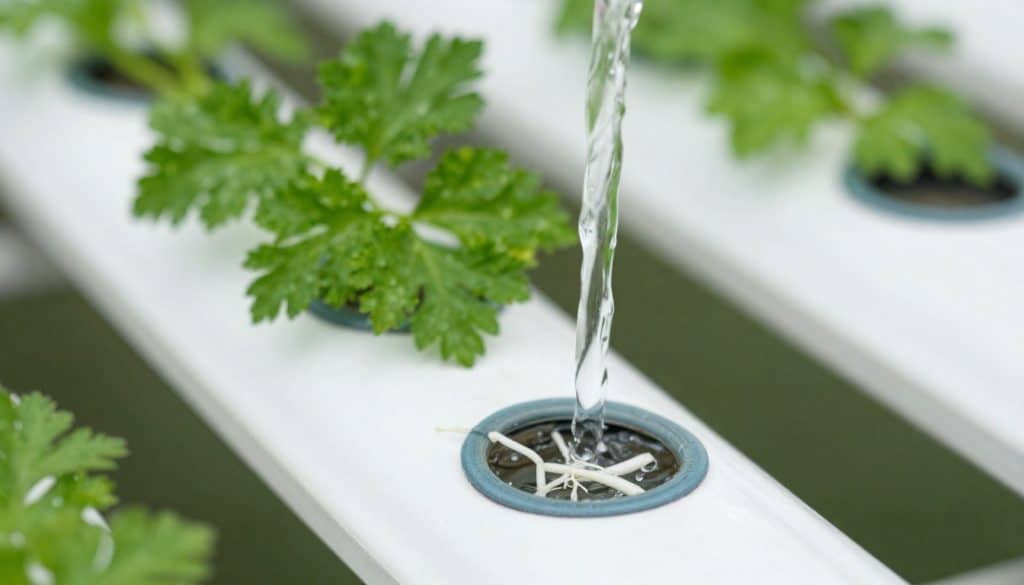
Recirculating systems reuse water, dramatically reducing waste compared with traditional gardening.
Water efficiency is one of the most recognized advantages of hydroponics. When examining the key benefits of hydroponic farming, the contrast is stark: unlike conventional gardening, where much of the water is lost through runoff, evaporation, or deep drainage into the soil, many hydroponic systems capture and reuse water that plants do not immediately absorb.
This closed-loop approach allows growers to provide herbs with a steady supply of moisture while using far less water overall. For home gardeners living in areas with water restrictions or frequent drought conditions, this efficiency can be especially appealing.
As noted in an environmental resource evaluation,
“Hydroponic cultivation, particularly closed-loop systems, can drastically reduce water consumption by recycling the nutrient solution. This water-saving capacity makes it a sustainable alternative to conventional agriculture, especially in arid regions.” –Environmental resource evaluation.
Parsley, like many herbs, requires consistent moisture to grow well. Hydroponic systems supply this moisture directly to the roots while minimizing unnecessary waste. Instead of repeatedly watering soil and losing excess moisture, the system recycles unused nutrient solution back into the reservoir.
Important water-saving advantages include:
- Water conservation
- Less water usage
- Closed-loop recirculation
- Reduced evaporation
- Lower runoff losses
Many hydroponic systems use up to 95% less water than traditional outdoor gardens. Although actual savings vary by setup, the overall reduction in water use remains one of hydroponics’ strongest advantages.
How Water Recycling Works
A recirculating system continuously pumps nutrient solution through plant roots and returns excess water to the reservoir.
The process is relatively straightforward. Plants absorb the water and nutrients they need, while the remaining solution flows back into the system to be reused. This cycle repeats throughout the day, creating an efficient system that minimizes waste.
Because less water escapes the system, growers spend less time watering and often use fewer resources over the long term. Regular monitoring still matters, since evaporation and plant uptake gradually change nutrient concentrations.
This process dramatically reduces waste while improving nutrient efficiency.
Why Water Efficiency Matters for Home Growers
Lower water use helps reduce utility costs and supports drought adaptation in regions facing water shortages.
For many urban gardeners, water efficiency is a major reason for choosing hydroponics. Apartment dwellers, homeowners with limited outdoor space, and people living in dry climates often appreciate a gardening method that uses resources carefully.
Using less water can also make herb gardening more practical for beginners. Once the system is established, growers typically spend less time worrying about daily watering schedules while still providing plants with consistent access to moisture.
Why Hydroponic Herbs Taste Better and Stay Fresher
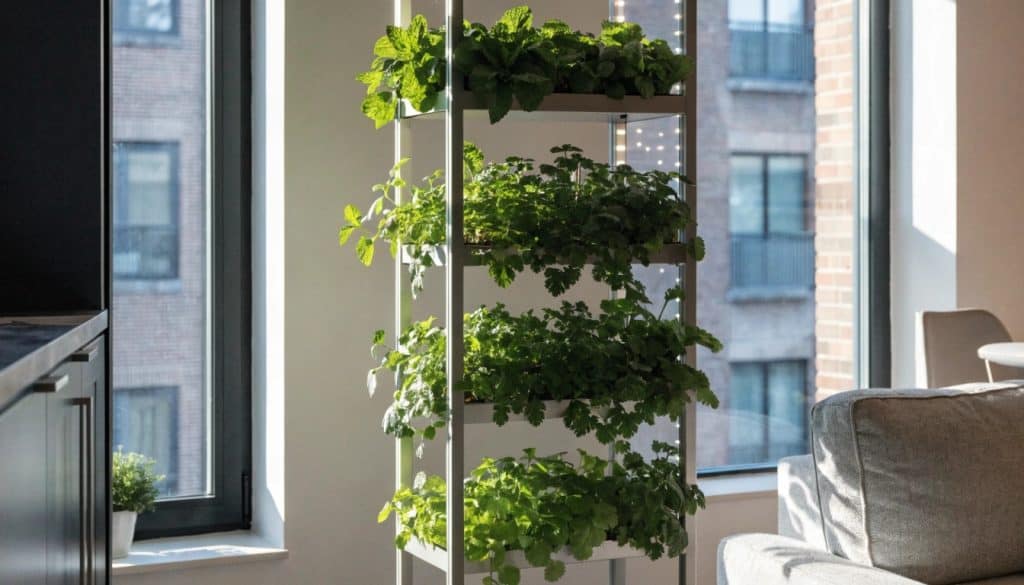
Harvesting herbs immediately before use helps preserve aroma, flavor, and freshness.
Flavor is one of the main reasons many people start growing hydroponic herbs. Fresh herbs begin losing some of their aroma and quality soon after harvest. Having basil, mint, parsley, or thyme available just steps away from the kitchen makes it easy to use them at their peak.
Controlled growing conditions may also contribute to more consistent quality. Stable light exposure, balanced nutrients, and healthy root systems support vigorous growth and can help herbs develop strong aromas and flavors.
Herbs such as thyme, mint, and basil often respond particularly well to these conditions. Many home growers notice that freshly harvested herbs taste brighter and more fragrant than packaged herbs purchased at the grocery store.
Factors that influence quality include:
- Fresh harvest timing
- Light intensity
- Nutrient balance
- Temperature control
Many growers report stronger aromas and more vibrant flavors compared with store-bought herbs that may have spent days in transport. While taste remains subjective, freshness often makes a noticeable difference.
Fresh Harvest vs. Store-Bought Herbs
Store-bought herbs often travel hundreds or even thousands of miles before reaching consumers.
During transportation and storage, herbs gradually lose moisture and aromatic compounds that contribute to their flavor. Even refrigerated herbs may have been harvested several days earlier.
Hydroponic herbs can be harvested moments before use, supporting:
- Fresh herbs daily
- Reduced spoilage
- Better flavor retention
- Less wilting
This freshness advantage is particularly valuable for restaurants and home chefs who rely on herbs to elevate dishes. Picking only what you need also helps reduce food waste.
Factors That Influence Flavor and Aroma
Flavor quality depends on several growing conditions working together.
Flavor quality improves through:
- Strong lighting
- Proper nutrient balance
- Healthy root systems
- Consistent growing conditions
Healthy plants generally produce stronger aromas and better flavor. Adequate light supports essential oil production, balanced nutrients encourage vigorous growth, and healthy roots allow plants to absorb resources efficiently.
These factors help produce culinary-grade quality and stronger aromatic compounds. While no growing method guarantees perfect flavor, maintaining stable conditions gives hydroponic herbs the best chance to reach their full potential.
Why Are Hydroponic Herbs Easier to Grow Indoors?
Controlled lighting, temperature, and nutrient delivery reduce many common outdoor gardening challenges.
Hydroponics removes much of the guesswork that comes with traditional gardening. Outdoor plants must deal with changing weather, unexpected temperature swings, heavy rain, drought conditions, and seasonal limitations. Indoor hydroponic systems allow growers to create a more stable environment where herbs can thrive year-round.
Because you control factors such as light exposure, nutrient delivery, and temperature, herbs often grow more predictably indoors. This consistency can be especially helpful for beginners who want reliable results without constantly adapting to outdoor conditions.
Modern hydroponic systems have also become more compact and user-friendly. Many setups fit comfortably on a kitchen countertop, bookshelf, or windowsill. Even people living in apartments or homes without outdoor space can enjoy growing fresh herbs.
Popular indoor herbs include:
- Rosemary
- Basil
- Mint
- Parsley
- Chives
These herbs adapt well to indoor hydroponic environments and provide a steady supply of fresh ingredients for cooking.
The combination of compact systems and environmental control supports reliable indoor production. Instead of waiting for the right season, growers can harvest herbs whenever they need them.
Year-Round Production
Artificial lighting and environmental controls enable:
- Winter herbs
- Summer herbs
- Tropical herbs indoors
- Seasonal independence
Outdoor gardening often depends on frost dates, changing daylight hours, and local climate conditions. Hydroponics removes many of these limitations by providing a controlled growing environment throughout the year.
For home cooks, this means fresh basil in the middle of winter or a continuous supply of mint without waiting for spring planting season. Consistent growing conditions also support steady plant growth and more predictable harvest schedules.
Growers no longer depend entirely on outdoor weather patterns.
Growing in Apartments and Small Spaces
Hydroponics supports:
- Windowsill herbs
- Kitchen garden setups
- Balcony growing
- Urban agriculture projects
Many hydroponic systems occupy less space than a small bookshelf. Vertical designs and compact countertop units make it possible to grow herbs in places where traditional gardens would not fit.
This flexibility has contributed to the growing popularity of hydroponics in urban areas. People with limited outdoor access can still enjoy the satisfaction of harvesting fresh herbs at home.
How Hydroponics Reduces Common Gardening Problems
Eliminating soil removes many weeds, soil-borne diseases, and contamination risks.
Traditional gardening often requires time spent pulling weeds, preparing soil, and managing pests that thrive in outdoor environments. Hydroponic systems eliminate many of these routine tasks because they do not rely on soil.
Without soil, weeds have little opportunity to establish themselves. Growers also avoid many soil-related issues that can affect plant health and productivity.
Because there is no soil, growers avoid many common pathogens such as Fusarium, Rhizoctonia, and certain forms of Pythium that originate in contaminated growing media.
Advantages include:
- No weeds
- Reduced pests
- No soil-borne diseases
- Cleaner harvests
- Reduced herbicide requirements
Plants also benefit from a cleaner root environment. Since roots develop in controlled conditions, growers can monitor plant health more closely and address problems before they become severe.
Fewer Weeds and Soil Pests
Without soil, weeds have no place to establish themselves.
This reduces:
- Labor
- Competition for nutrients
- Water competition
- Maintenance demands
Many gardeners appreciate spending less time weeding and more time enjoying the growing process. Reduced competition also allows herbs to access nutrients and moisture more consistently.
The result is a simpler growing experience.
Cleaner Root Environment
Hydroponic herbs often grow in sterile or low-contamination media such as rockwool, coco coir, or clay pebbles.
Selecting the best grow medium for hydroponic herbs helps minimize exposure to soil debris and some common soil-borne problems, while making it significantly easier to inspect root health regularly.
Healthy roots are essential for vigorous growth. Clean root zones support efficient nutrient uptake and can contribute to stronger overall plant performance.
This supports healthier roots and cleaner harvests with less dirt and debris.
Hydroponic Herbs vs Soil-Grown Herbs: Which Is Better?
Hydroponics excels in speed, efficiency, and control, while soil gardening may offer lower startup costs.
The best choice depends on your goals, available space, budget, and gardening style. Some people enjoy the traditional experience of working with soil outdoors, while others value the convenience and consistency that hydroponics provides.
Comparison Table
| Factor | Hydroponic Herbs | Soil-Grown Herbs |
| Growth Speed | Faster | Slower |
| Water Usage | Lower | Higher |
| Space Efficiency | Higher | Lower |
| Weed Pressure | Minimal | Common |
| Year-Round Growing | Yes | Climate dependent |
| Nutrient Control | Precise | Variable |
| Harvest Cleanliness | Cleaner | Dirt and debris possible |
| Maintenance Type | Monitoring required | Traditional garden tasks |
Hydroponics offers precise control over nutrients, water, and environmental conditions. This often leads to faster growth and more efficient use of resources. However, hydroponic systems usually require an initial investment in equipment and regular monitoring of pH and nutrient levels.
Soil gardening remains attractive because it typically involves lower startup costs and fewer technical components. Many gardeners also appreciate the simplicity of planting directly outdoors when climate conditions allow.
Neither method is universally better. The right choice depends on what matters most to you. If you prioritize year-round harvests, efficient use of space, and consistent production, hydroponics offers significant advantages. If you prefer a lower-cost approach with traditional gardening practices, soil may be a better fit.
For growers prioritizing output and consistency, hydroponics often provides a significant advantage. For those who enjoy a more hands-on outdoor gardening experience, soil-based growing continues to be a rewarding option.
Are Hydroponic Herbs Worth It for Home Gardeners?
For growers seeking fresh herbs year-round with limited space, hydroponics often delivers strong long-term value.
More home gardeners are adopting hydroponics because it combines convenience, efficiency, and steady production. Instead of depending on seasonal weather, growers can harvest fresh herbs throughout the year from compact indoor systems. Many people appreciate having basil, mint, parsley, or chives readily available for everyday cooking.
Hydroponic setups also work well in apartments and homes with limited outdoor space. Many systems fit on countertops or shelves, making fresh herb gardening accessible to more households.
The systems scale easily from a single countertop unit to larger installations supplying families or restaurants.
People who benefit most include:
- Apartment dwellers
- Home cooks
- Restaurant owners
- Educators
- Urban gardeners
- Sustainability-focused households
While hydroponics requires some initial learning, many growers find that routine maintenance becomes manageable once the system is established.
Who Benefits Most From Hydroponic Herb Gardening?
Hydroponics works especially well for people seeking:
- Fresh herbs daily
- Limited-space gardening
- Reliable year-round harvests
- Educational STEM projects
- Therapeutic hobbies
Home cooks enjoy having fresh ingredients available whenever they need them. Educators often use hydroponic systems to teach plant science and sustainability concepts. Many people also find indoor gardening relaxing and rewarding.
The technology is flexible enough for beginners and commercial operators alike.
Situations Where Hydroponics May Not Be Ideal
Hydroponics may be less suitable when:
- Electricity is unreliable
- Initial setup budgets are limited
- Large staple crops are the primary goal
- Technical monitoring is undesirable
Most systems rely on equipment such as pumps or grow lights, making a stable power supply important. The upfront investment can also be higher than traditional container gardening.
While hydroponic systems become easier to manage with experience, they still require occasional monitoring of pH, nutrient levels, and equipment performance. For growers seeking a completely hands-off approach, traditional gardening may be a better fit.
FAQ
Can hydroponic herbs really taste better than soil-grown herbs from the store?
Yes. Home hydroponics delivers a superior flavor and higher essential oils because nutrient precision and root zone optimization allow plants to focus energy on taste.
Unlike store-bought produce that undergoes long-distance transit, harvesting fresh herbs daily from a controlled environment agriculture setup eliminates flavor degradation, ensuring maximum aromatic potency and culinary-grade quality right in your kitchen.
Do hydroponic herbs need pesticides to stay healthy indoors?
No. Because this method requires no soil needed, using a sterile medium eliminates no soilborne diseases and overwintering insects.
This allows for a completely pesticide-free, cleaner harvest with no dirt mess. Maintaining proper fan circulation and simple environmental management ensures a low-maintenance once tuned system that is perfect for safe, indoor local food production. (56 words)
How much water does a home hydroponic herb system actually save compared to a garden?
It saves up to 95 percent. A recirculating system continuously reuses the nutrient solution instead of letting it drain away.
This efficient water conservation results in significantly less water usage than traditional dirt beds. It provides an excellent framework for drought adaptation, creating a high-yield kitchen garden with a much lower environmental footprint.
Can you grow tropical herbs indoors hydroponically during winter without a greenhouse?
Absolutely. Utilizing energy efficient LEDs and water pump systems provides complete seasonal independence. You can grow winter herbs or tropical herbs indoors regardless of the freezing weather outside.
This indoor farming method ensures a continuous harvest and reliable year-round growing, allowing you to bypass the outdoor climate and maintain your fresh food supply. (54 words)
Is hydroponic herb growing realistic for someone with no gardening experience?
Yes, it is ideal for beginners. Home hydroponics removes unpredictable variables by requiring no tilling, no weeds, and no crop rotation limits.
Once the system is running, pH control and EC management are straightforward. It is a highly accessible, therapeutic hobby and a great educational tool for STEM learning on a tiny windowsill herbs setup.
Why More Growers Are Choosing Hydroponic Herbs
Growing herbs can be frustrating when weather changes, pests show up, or harvests stay inconsistent. Many gardeners want fresh herbs more often but struggle with limited space or growing conditions. That’s a common challenge.
Hydroponics makes the process more predictable by giving you greater control over how herbs grow. With consistent care and the right setup, you can enjoy fresh harvests throughout the year while using less water and space.
Tophydroponicgarden can help simplify the process and support growers who want reliable results without unnecessary complexity.
Reference
- https://www.mdpi.com/2073-4441/17/17/2637
- https://www.mdpi.com/2073-4441/13/21/2973
Related Articles
- https://tophydroponicgarden.com/best-grow-medium-for-hydroponic-herbs/
- https://tophydroponicgarden.com/why-is-hydroponics-the-future-of-farming/
- https://tophydroponicgarden.com/key-benefits-of-hydroponic-farming/
Was this helpful?

I’m Barrie L., a passionate hydroponic gardening enthusiast dedicated to cultivating thriving, soil-less gardens. With a focus on all things hydroponic, I share my expertise on innovative growing techniques and sustainable practices through my blog, tophydroponicgarden.com. As a seasoned hydroponics specialist, my goal is to inspire and guide fellow gardeners in harnessing the power of water-based cultivation for bountiful and eco-friendly harvests. I’m also an author of the book “Hydroponics For Absolute Beginners: Your Step By Step Guide For How To Create An Hydroponics System At Home Without Soil, For Growing Vegetable, Fruit And Herbs.” which is sold on Amazon. Join me on a journey of redefining the way we cultivate plants, one nutrient-rich solution at a time. Happy growing!