

You can absolutely grow plants without soil, and it’s already happening in greenhouses, warehouses, and even city apartments. This method raises important questions: what are the advantages of soilless culture?
Hydroponics and aeroponics feed nutrients straight to the roots, in a tightly controlled space where weather, pests, and soil quality don’t get the final say.
That means big cuts in water use, faster growth, and higher yields in places where soil is too poor or land is too limited.
It isn’t just a tech experiment, it’s a quiet shift in how we grow food. Keep reading to see how soilless systems can change the way you think about growing.
Understanding these benefits is key to leveraging modern agricultural practices.
Key Takeaways
- Soilless systems are exceptionally resource-efficient, using up to 90% less water.
- Plants grow faster and produce higher yields, often doubling output.
- This method eliminates soil-borne diseases and allows farming in any location.
The Logic of Leaving Soil Behind

The idea is simple. Soil is just a medium. It holds water, nutrients, and provides anchor for roots. But it’s also inconsistent, prone to disease, and inefficient. Soilless culture cuts out the middleman [1].
It delivers a perfectly balanced nutrient solution straight to the root zone. Plants don’t have to search for what they need.
Their energy goes entirely into growth. You see this in the speed of development. A lettuce plant that might take two months in soil can be ready in just over a month with hydroponics.
The difference is dramatic. It’s about giving the plant exactly what it wants, precisely when it wants it.
Understanding what are the advantages of soilless culture can help you realize its potential in modern agriculture.
This precision creates a cascade of advantages. Water and fertilizer aren’t wasted soaking into unproductive ground. Pests that live in soil are simply absent. The variables are reduced, and control is increased.
For anyone who has battled weeds or watched a crop succumb to a mysterious blight, the appeal of a clean, controlled root zone is powerful. Its farming is reduced to its essential elements: light, water, nutrients, and oxygen.
Unmatched Resource Efficiency
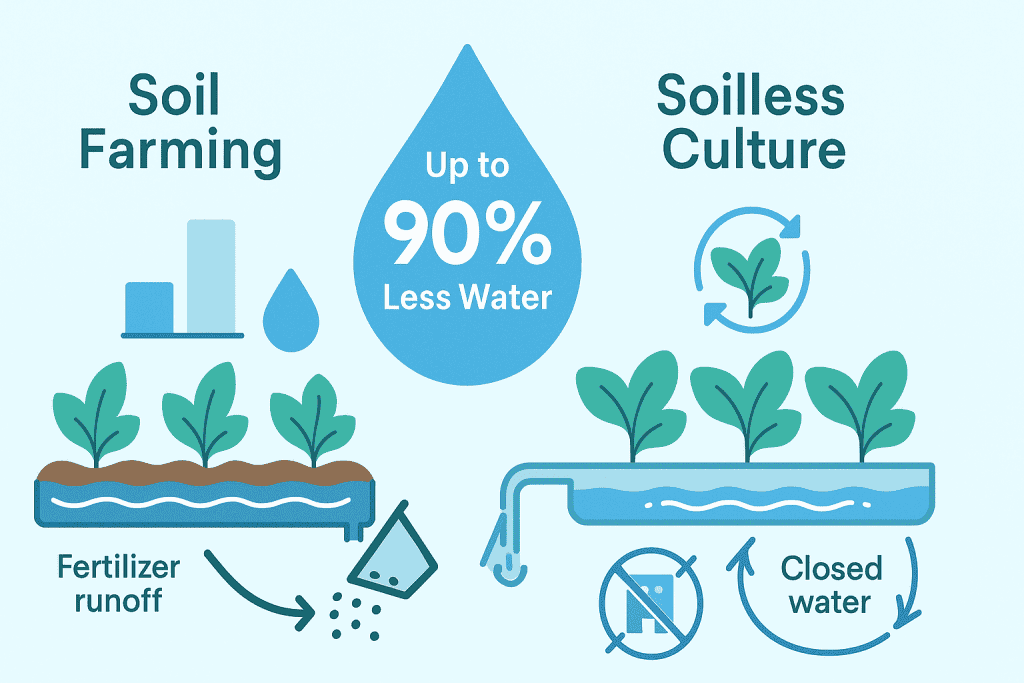
Water scarcity is a defining challenge of our time. Traditional agriculture is a thirsty endeavor, with much of the water applied to fields lost to evaporation or percolation deep beyond the root zone.
Soilless culture flips this model on its head. These are typically closed-loop systems. The water and nutrient solution that isn’t immediately taken up by the plants is captured and recirculated. There’s very little waste.
This leads to staggering efficiency gains. A hydroponic system can use up to 90% less water than a conventional soil-based farm to produce the same amount of food.
In a world where every drop counts, this isn’t just an advantage. It’s a necessity. The same principle applies to fertilizers.
Nutrients are dissolved in the water, so the plants get a perfect diet with no runoff to pollute nearby waterways. You’re not just growing plants. You’re stewarding resources with a level of precision that soil can never match.
This precision and focus on hydroponic nutrient mixing ensure plants get exactly what they need without waste, an essential part of successful soilless growing.
- Dramatic Water Savings: Closed systems recirculate every drop, minimizing loss.
- Precise Nutrient Delivery: Plants receive a perfect balance, eliminating guesswork.
- Zero Agricultural Runoff: Fertilizers stay in the system, protecting the environment.
- Ideal for Arid Regions: Makes food production possible where water is scarce.
This efficiency isn’t just good for the planet. It’s good for your bottom line. You spend less on water and expensive fertilizers because almost everything you input is used by the crop. It’s a leaner, more intelligent way to grow.
Accelerated Growth and Heavier Harvests
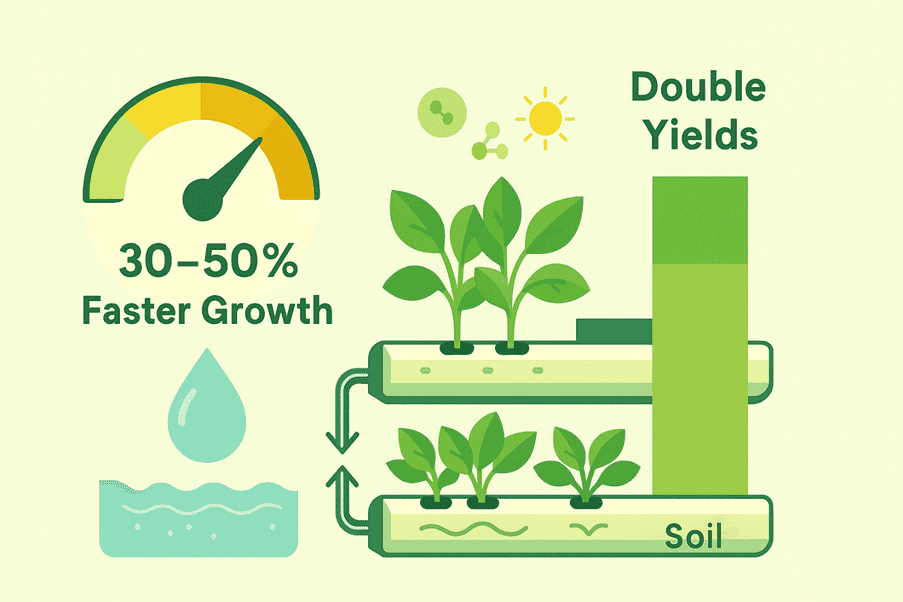
When a plant’s roots are suspended in a nutrient-rich solution or a moist, inert medium like rockwool, they don’t have to expend energy searching for food and water.
All that saved energy is redirected into upward growth and fruit production. The result is a plant that grows 30% to 50% faster than its soil-grown counterpart.
A tomato plant, for instance, will reach maturity and begin fruiting in a fraction of the time. This speed translates directly into higher yields.
Farmers consistently report yields that are double what they could achieve in soil for crops like lettuce, herbs, and tomatoes.
This is compounded by the ability to grow year-round. Since soilless systems are usually housed in greenhouses or indoor facilities, seasons become irrelevant.
You can have a continuous harvest cycle, producing food 365 days a year. This reliability and abundance change the economics of farming. It turns gardening from a seasonal hobby into a consistent source of fresh produce.
Beginners might find that starting hydroponics with fast-growing, forgiving plants like lettuce or herbs is the best way to experience this rapid growth firsthand.
The controlled environment ensures each plant has ideal access to light, nutrients, and CO2. There’s no competition from weeds.
There are no droughts or waterlogged periods to stunt growth. Every plant in the system grows at a similar, optimized rate.
This leads to a uniformity in size and quality that is difficult, if not impossible, to achieve in an open field. The harvest isn’t just bigger. It’s more predictable and of a higher, more consistent standard.
Liberating Farming from the Land

Credits: Soul Fire Farm
One of the most revolutionary aspects of soilless culture is its independence from terrain. You don’t need fertile land.
You don’t even need land at all. This opens up incredible possibilities for urban agriculture. Rooftops, vacant warehouses, and even underground spaces can be transformed into productive farms using vertical stacking techniques [2].
This vertical farming approach multiplies the growing area per square foot of building space, making it possible to produce significant amounts of food in the heart of a city.
This has profound implications. It shortens the supply chain, reducing the carbon footprint of transportation.
It brings fresh food directly into urban food deserts. For the individual, it means you can set up a productive garden on a balcony, in a basement, or in a spare room. The system is portable and scalable.
This flexibility also makes agriculture more resilient to climate change. Crops are protected from extreme weather events like floods, droughts, and unseasonable frosts. The farm is no longer at the mercy of the sky.
A Cleaner, Healthier Growing Environment
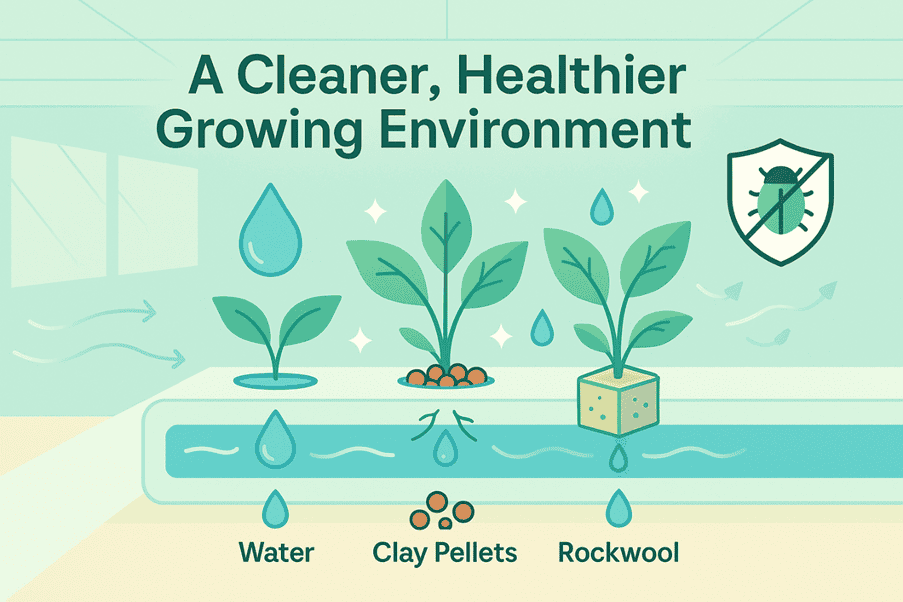
Soil is teeming with life, and not all of it is beneficial. Fungal pathogens, nematodes, and bacteria that cause plant diseases are a constant threat in traditional agriculture.
These soil-borne diseases are completely eliminated in a soilless system. The growing medium is sterile, whether it’s water, clay pellets, or rockwool. This single fact drastically reduces the need for pesticides and fungicides.
The food produced is cleaner and safer. With fewer chemicals applied, there’s less residue on the final product.
Many growers find that the controlled stress and optimal nutrition of hydroponic systems can even improve nutrient uptake; flavor varies of the crops.
The reduction in chemical use is also a significant labor saver. There’s no need for soil tilling, weeding, or complex crop rotation schemes to manage soil health.
The labor shifts from battling the environment to monitoring and fine-tuning a controlled system. It’s a more focused, less physically demanding form of cultivation.
The Future is Rooted in Control
Soilless culture isn’t about rejecting nature. It’s about refining it. It takes the fundamental requirements for plant life and provides them in the most efficient way possible. The advantages form a powerful, interconnected web.
Saving water leads to more sustainable operations. Faster growth leads to greater abundance. Freedom from land and soil-borne problems leads to resilience and accessibility.
This method represents a move toward precision agriculture, where every input is measured and every outcome is optimized. It’s a practical response to global challenges like water shortage and urbanization.
For anyone interested in growing plants, whether on a small scale at home or a large commercial venture, the benefits of soilless culture offer a compelling reason to look beyond the dirt.
The path to a more productive and sustainable harvest might just be cleaner than you thought. Start by exploring a simple hydroponic kit for herbs on your kitchen counter. You’ll see the difference firsthand.
Introducing kids or newcomers to hydroponics can be fun and educational by showing how plants grow without soil, making it easier to grasp the core principles of how to explain hydroponics to a child and spark curiosity.
FAQ
What are the most common soilless cultivation benefits for new growers?
New growers often prefer these systems because they offer water efficiency in hydroponics, improved nutrient control, and clean root zone advantages. These methods support faster plant growth in hydroponics and reduced soil-borne diseases.
Growers also see reduced pesticide use in soilless culture and consistent crop quality in soilless systems. Together, these soilless cultivation benefits make growing easier and more predictable.
How do hydroponic advantages compare with aeroponic benefits for daily care?
Hydroponic advantages and aeroponic benefits both support better nutrient uptake efficiency and enhanced oxygen availability to roots.
Hydroponics often provides closed-loop irrigation efficiency, while aeroponics offers sterile growing environment benefits that help protect roots.
Both systems improve root health in soilless culture and minimize weed issues. They also reduce labor in soil management, making daily care steady and manageable for growers.
Why do people say the advantages of growing without soil help farms in tight spaces?
The advantages of growing without soil include space-saving agriculture benefits, higher density planting benefits, and vertical farming soilless benefits.
These features allow farms to operate in limited areas. Urban farming advantages also matter, since systems suitable for urban food production rely on scalable soilless production benefits.
Reduced agricultural land need and reduced soil compaction problems further support productive growing in tight or crowded spaces.
How do controlled environment agriculture benefits support reliable harvests?
Controlled environment agriculture benefits create steady results by improving plant health monitoring and supporting controlled pH management benefits.
These systems provide optimal resource utilization in hydroponics, efficient greenhouse integration, and predictable harvest cycles.
Growers also see reduced crop growth variability, improved growth uniformity, and optimized microclimate for plants. These factors strengthen year-round crop production benefits and support rapid crop turnover benefits.
Can soilless systems help farms handle climate stress and protect the environment?
Yes. Many climate-resilient farming advantages come from sustainable soilless farming benefits, eco-friendly agriculture benefits, and sustainable horticulture advantages.
These methods support reduced water runoff issues, reduced nutrient leaching, and less environmental contamination.
They also offer water-conserving agriculture methods, high water recycling rates, and efficient resource recycling. Together, these practices support reduction of soil erosion, minimal land degradation, and higher profitability in soilless systems.
Conclusion
Soilless culture redefines what’s possible in food production by making growing cleaner, faster, and dramatically more efficient.
By removing the limitations and inconsistencies of soil, it empowers growers to conserve water, boost yields, and cultivate nearly anywhere.
The precision and control of these systems create healthier plants, predictable harvests, and a more sustainable path forward. Whether for home gardeners or commercial farms, soilless growing offers a clear, practical blueprint for the future of agriculture.
References
- https://climate-woodlands.extension.org/basic-soil-components/
- https://www.internationalscholarsjournals.com/articles/growing-more-with-less-the-sustainable-benefits-of-soilless-farming-103514.html
Related Articles
- https://tophydroponicgarden.com/what-to-know-before-starting-hydroponics/
- https://tophydroponicgarden.com/is-hydroponics-difficult-to-learn/
- https://tophydroponicgarden.com/how-to-explain-hydroponics-to-a-child/
Was this helpful?

I’m Barrie L., a passionate hydroponic gardening enthusiast dedicated to cultivating thriving, soil-less gardens. With a focus on all things hydroponic, I share my expertise on innovative growing techniques and sustainable practices through my blog, tophydroponicgarden.com. As a seasoned hydroponics specialist, my goal is to inspire and guide fellow gardeners in harnessing the power of water-based cultivation for bountiful and eco-friendly harvests. I’m also an author of the book “Hydroponics For Absolute Beginners: Your Step By Step Guide For How To Create An Hydroponics System At Home Without Soil, For Growing Vegetable, Fruit And Herbs.” which is sold on Amazon. Join me on a journey of redefining the way we cultivate plants, one nutrient-rich solution at a time. Happy growing!