

Beneficial bacteria for hydroponics are plant associated microorganisms that can support root growth, nutrient uptake, and overall plant health without soil. Research published through PubMed Central has explored bacterial groups such as Bacillus, Pseudomonas, and Azospirillum in soilless growing systems.
For growers exploring these benefits, Tophydroponicgarden can also be a useful resource for learning more about hydroponic plant care. Keep reading to discover which strains matter, what they actually do, and how to use beneficial bacteria wisely in hydroponics.
What Should Hydroponic Growers Know?
- Beneficial bacteria can support root development, nutrient uptake, stress tolerance, and biological protection.
- Bacillus and Pseudomonas have useful research evidence in hydroponic crops, while other groups such as Azospirillum have more specific roles.
- Results depend on the strain, crop, hydroponic system, dose, and growing conditions, so microbial products should complement good system management.
What Are Beneficial Bacteria in Hydroponics?
Beneficial bacteria live near plant roots and support plant growth. They can improve nutrient uptake and help plants handle stress such as drought or poor growing conditions. Researchers featured on PubMed Central describe these plant growth promoting bacteria (PGPB) as important members of the microbial community around plants.
Hydroponic systems differ from soil because roots grow in water or an inert substrate rather than a natural soil microbiome. This makes the root zone easier to influence, but introduced bacteria still need to interact successfully with the crop and its environment.
PGPB is a broad term for bacteria with different functions. They may:
- Colonize roots or plant tissues.
- Produce compounds that support growth.
- Improve access to certain nutrients.
- Compete with harmful microorganisms.
- Influence plant defense and stress responses.
One example is Pseudomonas psychrotolerans IALR632. In hydroponic lettuce research, treatment with this strain produced a maximum 55.3% increase in shoot fresh weight in Green Oakleaf lettuce. This result came from one strain and crop, so it is not a universal effect.
The key point is that “beneficial bacteria” does not describe one organism or function. Bacillus, Pseudomonas, Azospirillum, and Azotobacter can behave differently depending on the strain and growing conditions.
How Do Beneficial Bacteria Help Hydroponic Plants?
Beneficial bacteria improve nutrient availability, root growth, plant signals, stress tolerance, and natural protection against pests and diseases.
Research from The Use of PGPB to Promote Plant Hydroponic Growth shows
“PGPB are organisms that can significantly increase crop yields via a wide range of mechanisms, including stress reduction, increases in nutrient uptake, plant hormone modulation, and biocontrol” – The Use of PGPB to Promote Plant Hydroponic Growth – PMC
Bacillus subtilis is one example. A hydroponic lettuce study reported up to 25% higher shoot fresh mass with one bacterial treatment. Results varied, showing why strain and application conditions matter.
Beneficial bacteria can support plants through:
- Nutrient access: Phosphate-solubilizing bacteria can make phosphorus easier to absorb. Siderophores may also help roots access iron.
- Root development: Azospirillum brasilense has been studied for root development and nitrogen-related processes. Auxin-producing rhizobacteria may affect lateral roots and root hairs, while balanced hydroponic nutrients still provide the foundation for healthy plant growth.
- Plant defense: Some bacteria compete with harmful microbes and trigger the plant’s own defenses.
- Stress support: Bacteria may help plants manage drought and high salt levels.
The hydroponic rhizosphere is a living system shaped by roots, nutrients, oxygen, and other microbes. Bacterial inoculants may work differently across crops.
Which Beneficial Bacteria Are Commonly Used?
In hydroponic studies, bacteria like Bacillus, Pseudomonas, and Azospirillum often take center stage. But they’re not alone, other microbes also join in, each bringing specialized skills to the root zone.
| Bacteria | Main role to explain | Common research interest |
| Bacillus | Growth promotion and biological protection | Root health, nutrient use, pathogen competition |
| Pseudomonas | Root colonization and growth promotion | Root architecture, siderophores, defense |
| Azospirillum | Nitrogen-related functions and root development | Nitrogen fixation, auxin activity |
| Azotobacter | Nitrogen-related support | Nitrogen fixation and growth promotion |
| Paenibacillus | Growth promotion and nutrient activity | Phosphorus availability and root development |
In one lettuce study, Pseudomonas psychrotolerans IALR632 produced 164% greater lateral-root development in Green Oakleaf lettuce. This does not mean every Pseudomonas product will produce the same response.
Other studied organisms include Pseudomonas fluorescens, Pseudomonas putida, Bacillus megaterium, Azotobacter vinelandii, and Paenibacillus species. Their proposed roles include siderophore production, phosphate solubilization, nutrient cycling, root colonization, and growth regulation.
Rhizobium is more closely linked to legumes and nodulation, so it should not be treated as a universal inoculant for non-legume crops. Mycorrhizal fungi such as Glomus are also different because they are fungi, not bacteria, and their usefulness depends on the hydroponic setup and available substrate.
Why Is Bacillus Popular in Hydroponics?

Bacillus species are popular because researchers have linked selected strains with plant growth promotion, nutrient acquisition, root colonization, and biological protection in controlled growing systems.
- Root colonization: Some Bacillus strains can colonize root surfaces and form biofilms, helping them stay close to the plant and interact with the root environment.
- Nutrient support: Certain strains can help make nutrients such as phosphorus and iron more available. Some also produce compounds linked to plant growth.
- Plant growth: Research has linked selected Bacillus strains with improved root and shoot growth in hydroponic crops. One lettuce study reported a 25% increase in leaf yield after Bacillus subtilis inoculation.
- Biological protection: Some strains produce antimicrobial compounds or compete with harmful microorganisms for space and nutrients.
- Why they suit products: Bacillus can form durable endospores, which can improve bacterial survival during product storage and formulation.
Still, not every Bacillus strain works the same way. Results depend on the strain, crop, growing system, and environmental conditions. For hydroponic growers, the specific strain and supporting research matter more than simply seeing “Bacillus” on a product label.
What can Bacillus subtilis do?

Credit: Nurture Growth Bio Fertilizer Inc.
Bacillus subtilis can support plant growth through several mechanisms, including production of biologically active compounds and interactions with roots. Some strains can form durable spores, which helps them survive conditions that may be difficult for less resilient microorganisms.
Hydroponic research provides a concrete example. A study of lettuce published in PubMed Central found that one B. subtilis treatment produced approximately 25% higher shoot fresh mass than the relevant control.
The finding matters because it shows measurable plant responses can occur in hydroponics. It does not establish a fixed yield increase for all B. subtilis products.
What did hydroponic research find?
The same research tested different bacterial concentrations and plant responses, showing that more inoculant does not always mean better growth.
- When choosing a microbial inoculant hydroponics product, consider the strain, concentration, application method, crop, and growing conditions.
- Bacillus amyloliquefaciens is widely studied for biological control, root colonization, and plant growth.
- Its presence in a product does not guarantee protection against Pythium, Fusarium, or other root problems.
- Still, Bacillus is a practical starting point for growers exploring biological inputs.
How Should You Choose a Beneficial Bacteria Product?
The best microbial product should list the organism and strain, state its purpose, provide clear application instructions, and include evidence for the target crop and growing system.
A label that only says “beneficial microbes” gives less useful information than one that names organisms such as Bacillus subtilis, Bacillus amyloliquefaciens, Pseudomonas fluorescens, or Azospirillum brasilense.
First, identify what you want the product to do. A product for phosphate-solubilizing bacteria in hydroponics may have a different purpose from one used for root disease suppression.
Check viable counts, storage conditions, application rates, and compatibility with other inputs. Poor storage can reduce microbial viability.
As highlighted in scientific literature regarding microbial agricultural inputs,
“A lack of adequate formulations and the concomitant low inoculant quality is still regarded as one of the major constraints to the successful, widespread use of microbial inoculants” – Maintenance and assessment of cell viability in formulation of non‐sporulating bacterial inoculants – PMC
For Bacillus spore formulations in hydroponics, spores can make some products more stable. But stability in the bottle doesn’t guarantee successful root colonization.
Commercial growers can run small trials by comparing treated plants with an untreated control under actual farm conditions. This helps test product claims with real results.
How Can Hydroponic Growers Use Beneficial Bacteria Effectively?
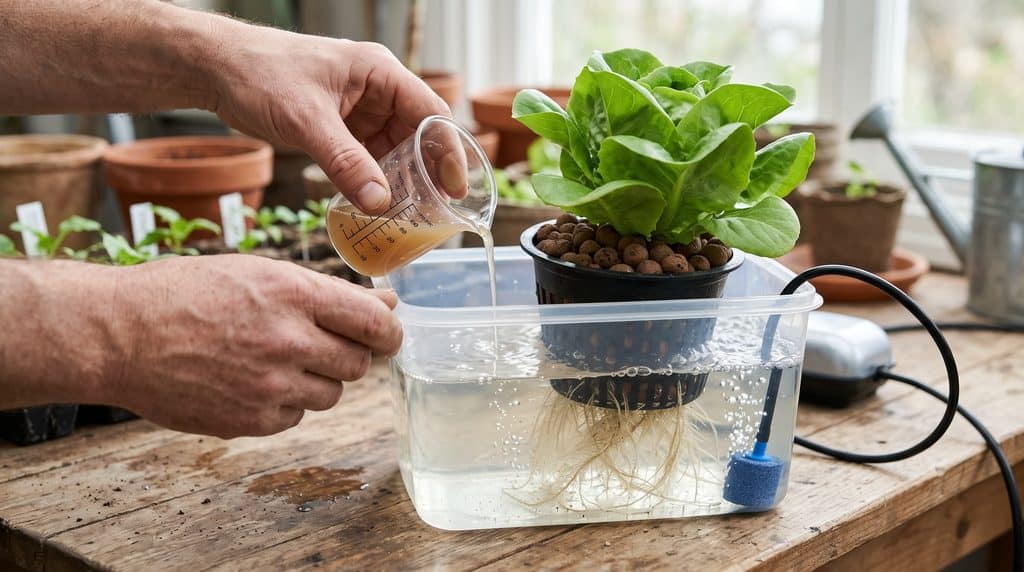
Hydroponic growers should match beneficial bacteria to the crop and system, then follow the product’s recommended dose. Having the right hydroponic supplies in place also makes it easier to maintain consistent water, oxygen, and root conditions.
A practical approach:
- Identify the crop and system. NFT lettuce differs from substrate tomatoes.
- Choose a relevant strain. Look for evidence from similar crops.
- Use the recommended dose. More bacteria won’t always mean better results.
- Monitor the root zone. Check roots, water, oxygen, and growth.
- Use a control. Compare treated plants with untreated plants.
- Change one variable. This makes results easier to track.
Bacillus subtilis research shows that bacterial concentration can affect plant growth and nutrient traits. So, higher doses aren’t automatically better.
Microbes can be applied through seed treatment, root dips, substrate, or reservoir dosing. The right method depends on the product and strain.
For NFT microbial inoculants, exposed roots give bacteria direct access to the root zone. In substrate systems, bacteria may establish around the roots.
Azospirillum inoculation in hydroponic strawberries doesn’t replace complete fertilizer. Essential nutrients still need to be supplied.
Keep sanitation, nutrient chemistry, and reservoir conditions consistent. Otherwise, it’s harder to know what caused a change.
What Should Growers Avoid When Using Beneficial Bacteria?
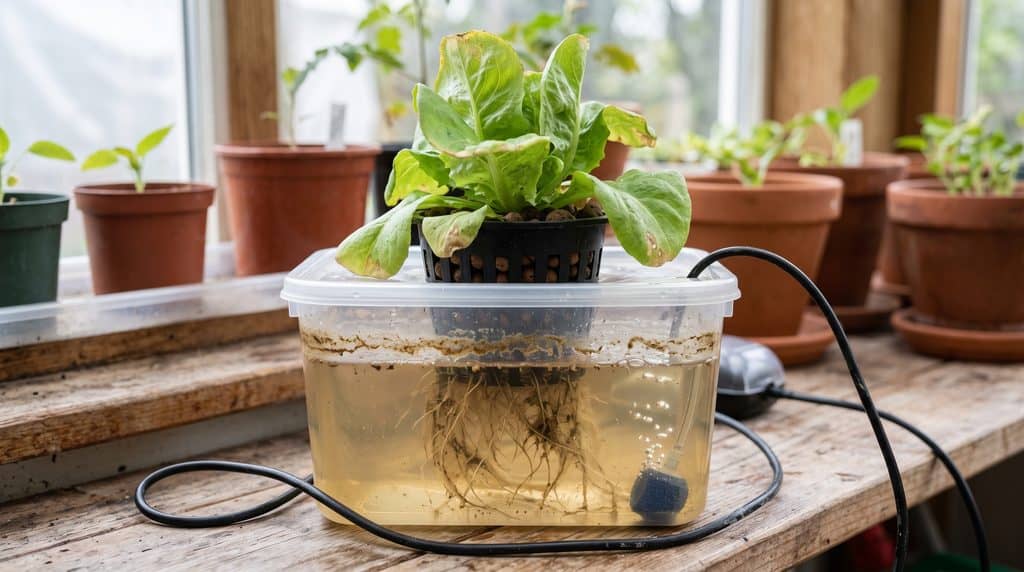
Growers shouldn’t treat microbial inoculants as universal solutions. Higher doses aren’t always better, and soil-based advice may not apply directly to hydroponics.
First, check the microbial contents. “Probiotic bacteria for plants hydroponics” can describe different organisms with different functions.
Soil and hydroponic systems also behave differently. Hydroponics changes nutrient availability, root exposure, oxygen levels, and microbial habitats.
The physical environment matters, too. Poor aeration, high temperatures, dirty equipment, light leaks, or unstable nutrients can harm roots and increase the risk of root rot regardless of the bacteria used.
Common mistakes include:
- Choosing products without strain information.
- Assuming all Bacillus species act alike.
- Exceeding the recommended dose.
- Ignoring existing root disease.
- Overlooking crop-specific evidence.
- Changing several variables at once.
- Treating microbes as a replacement for sanitation.
Strong oxidizers, UV, ozone, and sanitizers can also affect living microbes. Check the current product label before combining treatments.
The goal isn’t a sterile reservoir or the largest bacterial population. It’s a stable root environment where the selected microbes can perform their intended function.
FAQ
Can beneficial bacteria hydroponics be combined in the same system?
Yes, but combining strains requires attention to their functions and growing conditions. Rhizobium nodulation hydroponic legumes serves a different purpose from PGPR hydroponic systems for lettuce or tomatoes.
Some bacteria may compete for root surfaces or nutrients. Microbial consortia hydroponics can work when compatible strains are selected. Growers should verify compatibility before combining Bacillus, Pseudomonas, Azospirillum, or other bacteria.
How can growers tell whether beneficial bacteria are helping hydroponic plants?
Growers can compare treated plants with untreated plants under identical growing conditions. Root colonization beneficial bacteria hydroponics may support healthier roots, while enhanced nutrient uptake bacteria hydroponics may improve growth.
Useful measurements include root appearance, plant height, leaf development, nutrient consumption, and harvest weight. Tracking these results over several growing cycles provides stronger evidence than judging microbial activity by appearance alone.
Does using more beneficial bacteria always improve hydroponic plant growth?
No. Higher microbial concentrations do not automatically produce better plant growth. Bacillus subtilis hydroponics may behave differently from Pseudomonas fluorescens root colonization or Azospirillum brasilense nitrogen fixation.
The crop, bacterial strain, concentration, oxygen level, nutrient solution, and root environment can change results. Growers should follow tested application rates instead of increasing microbial inoculant hydroponics doses without evidence from comparable growing conditions.
Can hydroponic sanitation be used alongside beneficial microbes?
Yes. Sanitation remains important when beneficial microbes are present because unwanted organisms can still enter the system. Hydroponic system sanitation with probiotics should include cleaning reservoirs, tools, and surfaces between crop cycles while avoiding unnecessary disruption during active growth.
Good sanitation can support microbial stability in hydroponic reservoirs by reducing unwanted contamination and giving selected beneficial bacteria a more controlled environment.
Can beneficial bacteria help hydroponic plants handle environmental stress?
Some bacterial strains can improve plant responses to environmental stress, although results depend on the strain and growing conditions. ACC deaminase bacteria hydroponics may influence stress related ethylene responses, while siderophore production hydroponics can improve iron availability.
Phytohormone producing bacteria hydroponics may also affect plant development. These functions can support stress tolerance, but they cannot replace proper nutrient, temperature, oxygen, and irrigation management.
What Should You Remember About Beneficial Bacteria?
Beneficial bacteria can help hydroponic crops by supporting root growth, nutrient uptake, and plant responses to stress. But results depend on the strain and growing conditions. That’s the key point. Not every microbial product will work the same way.
For growers, the best approach is to match the microorganism to your crop and hydroponic system, then follow the application guidance and watch how plants respond. Good system management still matters. Tophydroponicgarden offers clear, evidence-based guidance to help you understand microbial hydroponics and make more informed choices.
References
- https://pmc.ncbi.nlm.nih.gov/articles/PMC9611108/#1
- https://pmc.ncbi.nlm.nih.gov/articles/PMC5812248/
Related Articles
- https://tophydroponicgarden.com/hydroponic-supplies-basics/
- https://tophydroponicgarden.com/roots-rot-in-hydroponics/
- https://tophydroponicgarden.com/what-are-hydroponic-base-nutrients/
Was this helpful?
I’m Barrie L., a passionate hydroponic gardening enthusiast dedicated to cultivating thriving, soil-less gardens. With a focus on all things hydroponic, I share my expertise on innovative growing techniques and sustainable practices through my blog, tophydroponicgarden.com. As a seasoned hydroponics specialist, my goal is to inspire and guide fellow gardeners in harnessing the power of water-based cultivation for bountiful and eco-friendly harvests. I’m also an author of the book “Hydroponics For Absolute Beginners: Your Step By Step Guide For How To Create An Hydroponics System At Home Without Soil, For Growing Vegetable, Fruit And Herbs.” which is sold on Amazon. Join me on a journey of redefining the way we cultivate plants, one nutrient-rich solution at a time. Happy growing!