

Meta description: Explore why water pumps for vertical farming keep water and nutrients moving, support healthy plants, and help hydroponic systems run more efficiently.
Water pumps keep a vertical farm alive. Every drop of nutrient rich water has to travel from the reservoir to the highest point of the system before it flows back down again. Without that steady movement, plants miss out on the water and nutrients they need. And that matters more than many beginners expect.
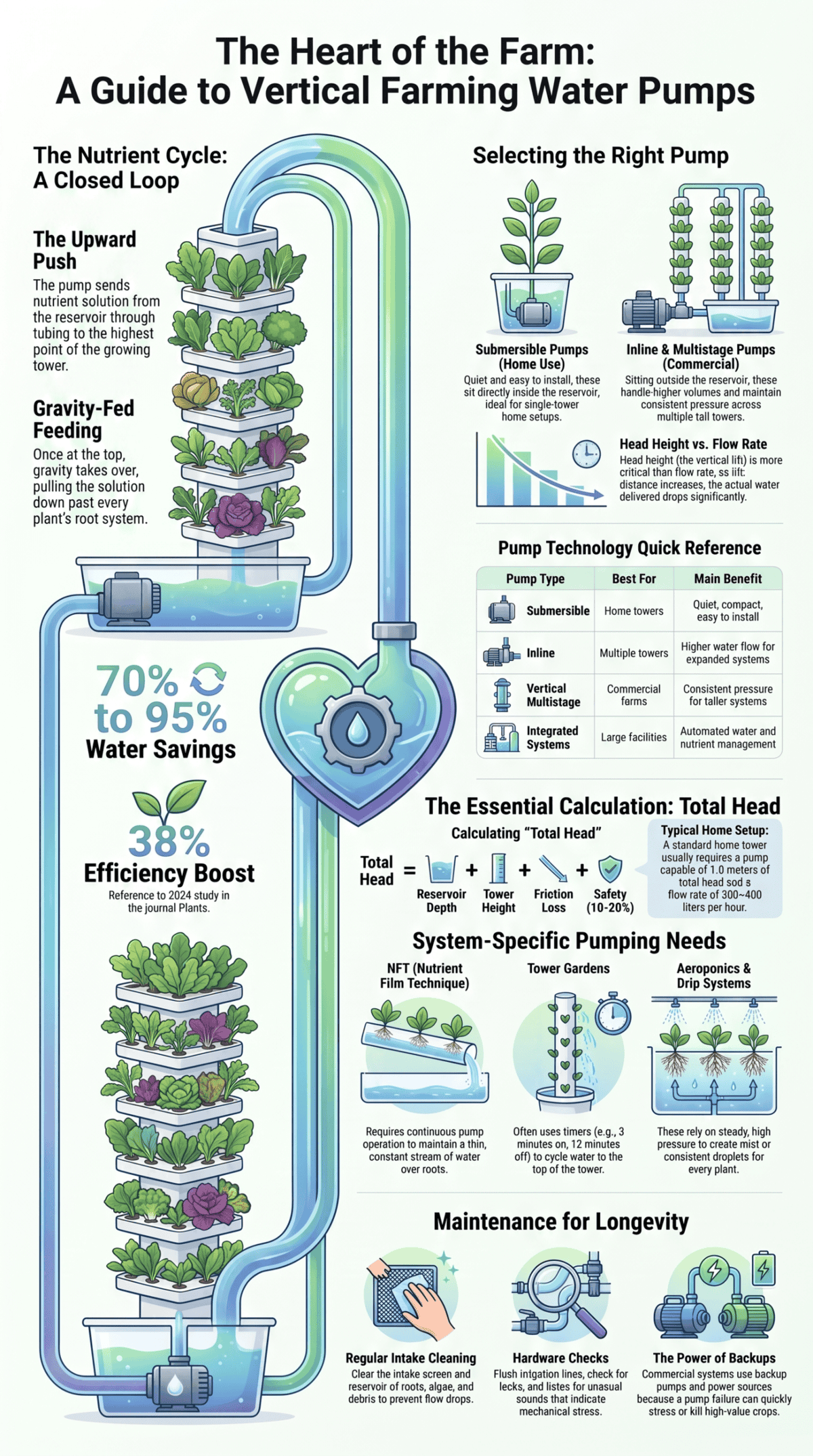
Research on recirculating agriculture shows that well designed vertical farms can cut water use by 70 to 95 percent compared with traditional farming. Pumps from brands like Grundfos and Sicce are common in both commercial farms and home hydroponic setups because they’re built for continuous use.
Pick the right one, and the whole system runs with fewer headaches. Plants stay healthier too. Read on.
Keep Your Vertical Farm Flowing Smoothly
- Choose a water pump with the right head height and flow rate for your vertical farming system.
- Keep the pump clean and maintain it regularly to ensure reliable daily operation.
- Plan for future expansion by selecting a pump that can support a larger growing system.
Why Do Vertical Farms Need Water Pumps
A vertical farm doesn’t work like a backyard garden.
There’s no soil holding moisture around the roots. Plants grow in stacked layers, so the nutrient solution has to move upward before gravity carries it back through the system.
That’s the pump’s job.
It pushes nutrient solution from the reservoir to the top of the tower. Once it reaches the highest point, gravity takes over. Water flows past every plant, then returns to the reservoir where the cycle begins again.
Over and over.
This closed loop is one reason vertical farming uses far less water than traditional agriculture. Studies have found that water use can drop by as much as 70 to 95 percent in well planned systems, especially when growing leafy greens that thrive in recirculating hydroponic systems.
That’s a huge difference, especially where water isn’t easy to come by.
Without steady circulation, nutrients don’t spread evenly. Plants at the top usually fall behind first. Then the rest of the system starts showing signs of stress.
Not ideal.
Research from the journal Plants shows
“A 2024 study in the journal Plants found that a specific intercropping strategy in a vertical hydroponic system improved water use efficiency by 38% .” – FAO AGRIS
How Nutrient Recirculation Works

The process is easier than it sounds. Water and nutrients stay mixed inside the reservoir. The pump sends that solution through tubing until it reaches the top of the growing tower. After that, gravity does the rest.
The solution flows past every root system, feeds the plants, then drains back into the reservoir. It gets used again and again, so very little water goes to waste. Pretty efficient.
Why Gravity Is Not Enough
Gravity only moves water one way, down. Once the nutrient solution reaches the reservoir again, something has to lift it back to the top. Otherwise the cycle ends after one trip.
A pump keeps everything moving. Without it, plants lower down may still get enough moisture while the ones higher up slowly dry out. Nobody wants that.
Which Pump Type Should You Choose
There isn’t one pump that’s right for every setup. A small tower in a spare room has very different needs from a commercial farm with hundreds of plants. Bigger equipment isn’t always the smarter choice either.
For many home growers, a submersible pump makes the most sense. It sits inside the reservoir, runs quietly, and doesn’t take much effort to install. Larger systems often rely on inline pumps or vertical multistage pumps because they keep water pressure more consistent across several towers.
Here’s a quick comparison.
| Pump Type | Best For | Main Benefit |
| Submersible | Home towers | Quiet, compact, easy to install |
| Inline | Multiple towers | Higher water flow |
| Vertical multistage | Commercial farms | Better pressure for taller systems |
| Integrated systems | Large facilities | Automatic water management |
Think about the system you have today. Then think about where it’ll be in six months. Buying a little extra capacity often saves money later. Buying far more than you need though, rarely pays off.
Submersible Pumps
Submersible pumps sit inside the nutrient reservoir. Installation is usually quick. There’s less plumbing too.
That’s one reason they’re so popular with home growers. Most people don’t need industrial equipment. They need something dependable that keeps water moving every day without filling the room with noise.
That’s where submersible pumps shine. I think they’re hard to beat for smaller systems.
Inline and Commercial Pumps
As a vertical farm grows, the pump has to work harder. An inline pump sits outside the reservoir and can move larger volumes of water through several towers at the same time. Commercial growers often choose vertical multistage pumps because they hold pressure more consistently, even across taller systems.
They cost more. But they’re built for long operating hours and heavier workloads. Choosing a model with better energy efficiency can also help reduce operating costs over time. People forget that.
Why Head Height Matters More Than Flow Rate
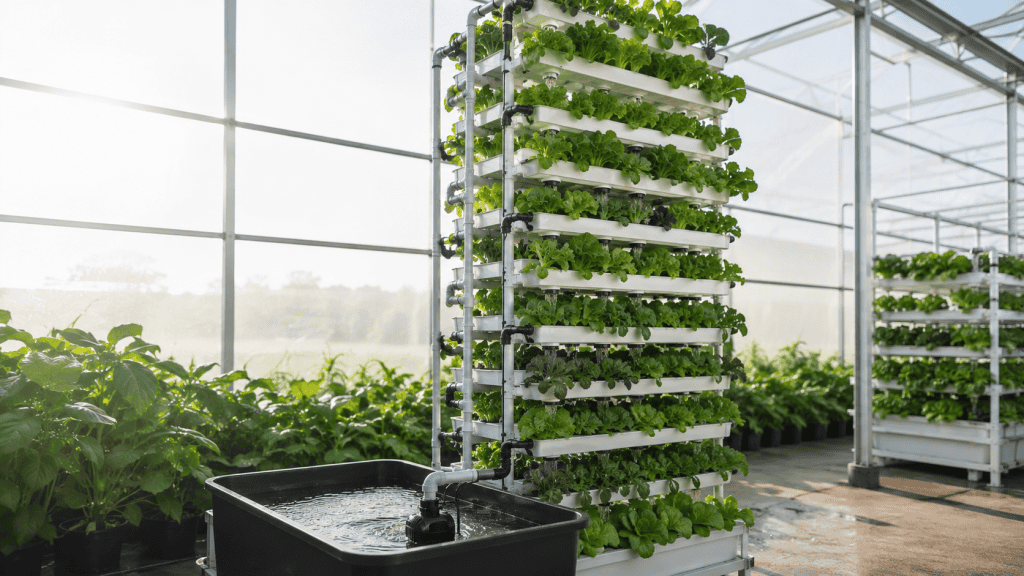
Flow rate gets most of the attention. Head height deserves more. Head height tells you how high a pump can lift water. As that lifting distance increases, the amount of water delivered begins to drop. Every pump works this way.
So a pump rated at 400 liters per hour might produce much less once it’s pushing nutrient solution to the top of a tall tower. That catches a lot of beginners off guard.
How to Calculate Head Height
Measuring the tower is only part of the job. Water loses pressure as it moves through pipes and fittings. Those losses count too. Add together.
- Reservoir depth
- Tower height
- Pipe friction
- Elbows and fittings
- Small safety margin
The calculation looks like this.
Total Head = Reservoir Height + Tower Height + Friction Loss + Safety Margin
Many growers add another 10 to 20 percent for extra capacity. It gives the pump a little breathing room. And if the system grows later, you’re already prepared. Worth it.
How Much Flow Rate Do You Need
Flow rate tells you how much water moves through the system each hour.
For many home vertical farms, somewhere between 200 and 400 liters per hour is enough for a single tower. The right number depends on the system design, not only what’s printed on the box.
Think about things like these.
- Number of plants
- Irrigation outlets
- Watering schedule
- Reservoir size
- Future expansion
It’s tempting to buy the biggest pump on the shelf. But that doesn’t usually fix the problem.
Match Flow Rate to Head Height
Always check the pump’s performance chart before buying. That chart shows how much water the pump delivers at different lifting heights. It’s far more useful than the maximum flow printed on the packaging.
Two pumps may advertise the same flow rate. Once they’re lifting water though, the real performance can look very different. Spend a few extra minutes comparing the charts. It’ll save frustration later.
What Features Matter Besides Flow and Head
Performance matters. Reliability does too. A pump may run for hours every day. It needs to handle that workload without constant repairs.
Look for features like these.
- Adjustable flow
- Corrosion resistant materials
- Food safe components
- Quiet operation
- Continuous duty design
- Easy cleaning
None of those sound exciting. Until the pump quits halfway through the growing season.
Data from Justia Patents demonstrates
“A 2020 patent for a commercial vertical farm irrigation system describes the use of a dual pump system to ensure the effective and efficient removal of excess nutrient solution, providing a backup in case one pump fails.” – Justia Patents
How Different Vertical Farming Systems Use Pumps
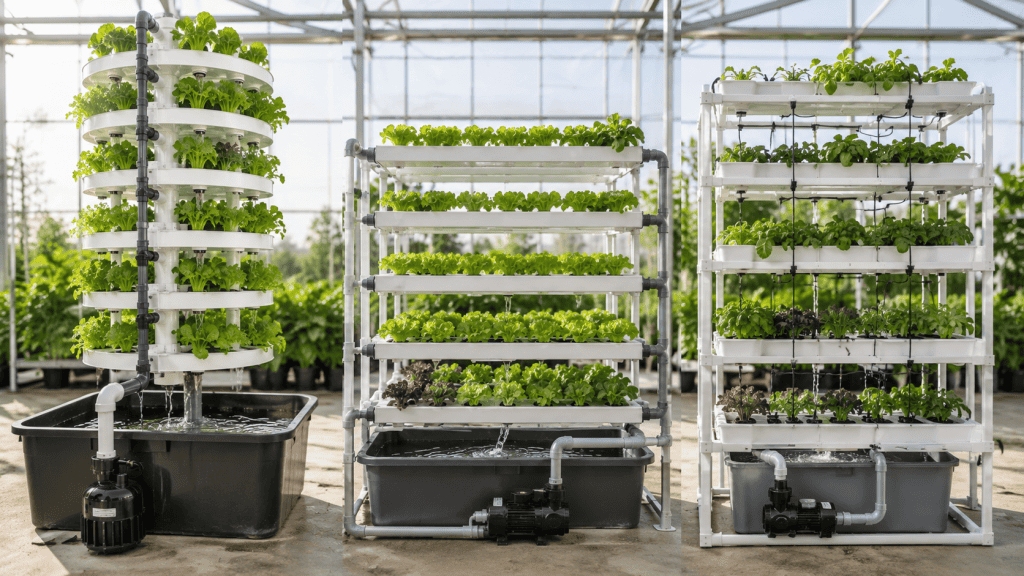
Not every hydroponic system moves water the same way. Some pumps run almost nonstop. Others switch on only during watering cycles. The growing method changes what the pump needs to do.
Tower Gardens
Tower gardens lift nutrient solution to the top of the tower. Gravity carries the water through every planting pocket before it returns to the reservoir.
Many growers use a timer instead of running the pump all day. Three minutes on and twelve minutes off is a common schedule. The exact timing depends on the crop and the growing conditions. Simple. It works.
NFT Systems
NFT stands for Nutrient Film Technique. These systems keep a thin stream of nutrient solution flowing through narrow channels instead of soaking the roots.
Because the roots depend on continuous water movement, the pump often runs all the time. Even a short interruption can stress the plants.
Drip and Aeroponic Systems
Drip systems deliver nutrient solution through small tubes placed near each plant. Aeroponic systems spray a fine mist directly onto the roots.
Both depend on steady pressure. If pressure drops, some plants receive less water than others. Leave that problem long enough and growth across the system starts becoming uneven. Not good at all.
How to Choose the Right Pump
Don’t rush. Take a few measurements first.
- Measure the total head height
- Estimate the flow rate
- Compare performance charts
- Check power use and noise
- Leave room for expansion
Sounds like extra work. It’ll save time. Money too.
What Works Best for Home Vertical Farms?
Most home systems are fairly simple. One tower. One reservoir. One pump.
A compact submersible pump is often the best choice because it runs quietly, installs without much fuss, and provides enough flow for daily growing. Choosing reliable water pumps with the right specifications also makes it easier to maintain consistent nutrient circulation as the system expands.
A typical setup might include.
- Around 1.5 meters of tower height
- About 1.8 meters of total head
- Between 200 and 400 liters per hour
- Capacity for 40 to 50 plants
- Adjustable flow control
For most people, that’s plenty.
What Changes for Commercial Farms
Commercial farms operate on a much larger scale. Instead of feeding one tower, they may supply dozens or even hundreds from the same reservoir. Water pressure has to stay consistent across the whole system.
That often means adding.
- Multiple irrigation zones
- Backup pumps
- Pressure controls
- Automatic scheduling
- Flow monitoring
- Shared reservoirs
If one pump fails, another takes over. That backup alone can protect an entire crop. It’s money well spent.
How to Keep Your Pump Running Well
youtube : https://youtu.be/zoSK8hcuETs?si=9Id7tB5aoS6-caOK
credits : Everything Hydroponics
A little maintenance goes a long way. Roots, algae, mineral deposits, bits of debris, they all build up over time. Ignore them for too long, water flow starts dropping. Not fun.
Check these items regularly.
- Clean the intake screen
- Flush irrigation lines
- Look for leaks
- Remove reservoir debris
- Listen for unusual sounds
- Check water flow
Nothing complicated. Stay consistent.
FAQ
Are water pumps for vertical farming expensive to operate?
The operating cost of water pumps for vertical farming depends on the pump size, how many hours it runs each day, and the overall system design. Small hydroponic systems usually use relatively little electricity, while larger commercial setups consume more. Selecting the correct pump size and performing regular maintenance can reduce energy consumption and lower long term operating costs.
How long do water pumps for vertical farming usually last?
Most water pumps for vertical farming can last for several years when they are installed correctly and maintained on a regular schedule. Their lifespan depends on water quality, daily operating hours, and proper cleaning. Preventing the pump from running dry, removing debris, and replacing worn parts when needed can significantly extend its service life.
Can one water pump support multiple vertical farming towers?
Yes, one pump can support multiple growing towers if it provides enough flow rate and pressure for the entire system. Before connecting several towers, calculate the total water demand, pipe length, and elevation. Choosing a pump with sufficient capacity ensures that every tower receives an even supply of water and nutrients.
How can I tell if my water pump is too small for vertical farming?
A pump may be too small if plants on the upper levels receive less water, nutrient flow becomes inconsistent, or irrigation cycles take longer than expected. Measuring the flow rate throughout the system can help identify these problems. Replacing the pump with the correct size improves water circulation and provides more consistent irrigation for every plant.
Do water pumps for vertical farming need backup power?
Backup power is recommended, especially for larger vertical farming systems or high value crops. When electricity is interrupted, the pump stops circulating water and nutrients, which can stress plant roots and reduce oxygen availability. A backup power source helps maintain water circulation during outages and protects crops from unnecessary damage.
Choose the Right Water Pump for Long Term Success
A pump that doesn’t match your system can lead to uneven water flow and slower plant growth, even if everything else is set up well. It adds up. Picking the right pump, matching the head height, and checking the flow rate help your vertical farming irrigation system stay reliable with fewer problems over time.
If you want more practical tips for building an efficient hydroponic setup, TopHydroponicGarden is a helpful place to start. You’ll find easy guides that help you choose the right equipment and keep your irrigation system working smoothly, so your plants receive steady water from top to bottom.
References
- https://patents.justia.com/patent/20210084850
- https://agris.fao.org/search/en/records/68877acd7fd4d06c32a8bc6e
Related Articles
- https://tophydroponicgarden.com/leafy-greens/
- https://tophydroponicgarden.com/water-pumps/
- https://tophydroponicgarden.com/energy-saving-water-pumps-for-hydroponics/
Was this helpful?

I’m Barrie L., a passionate hydroponic gardening enthusiast dedicated to cultivating thriving, soil-less gardens. With a focus on all things hydroponic, I share my expertise on innovative growing techniques and sustainable practices through my blog, tophydroponicgarden.com. As a seasoned hydroponics specialist, my goal is to inspire and guide fellow gardeners in harnessing the power of water-based cultivation for bountiful and eco-friendly harvests. I’m also an author of the book “Hydroponics For Absolute Beginners: Your Step By Step Guide For How To Create An Hydroponics System At Home Without Soil, For Growing Vegetable, Fruit And Herbs.” which is sold on Amazon. Join me on a journey of redefining the way we cultivate plants, one nutrient-rich solution at a time. Happy growing!