

Your aquaponics pump is basically the heart of the whole system. It keeps the water moving, which keeps your fish alive and your plants fed. Get the right pump, and everything works smoothly.
Get the wrong one, and you’ll have problems fast. The tricky part? Bigger isn’t always better. You need to match the pump to your actual setup: the size of your tank, how high the water needs to go, and how many pipes it has to push through.
Through my years of designing backyard ecosystems, I have learned that perfect circulation prevents common filtration failures. Finding the right balance ensures your beneficial bacteria thrive and your crops grow at their maximum potential. Want to know how to pick a pump that actually works for your specific configuration? Read on!
Quick Wins: Aquaponics Pump Selection Guide
Getting the right aquaponics water pump is less about brand and more about matching flow rate, lift height, and plumbing resistance to the actual system being built.
- A quality aquaponics water pump should circulate system water efficiently while matching actual lift height and plumbing resistance.
- Most backyard systems perform well with pumps in the 400 to 800 GPH range, depending on tank size and elevation.
- Reliable operation depends on proper sizing, regular impeller cleaning, backup planning, and separate aeration support.
Why Water Pumps Are the Heart of Every Aquaponics System
Here’s what happens if your pump stops working: The water stops moving. Your fish get stressed. The bacteria that turn fish poop into plant food can’t do their job.
The plants stop getting nutrients. Everything falls apart pretty fast. The pump’s job is simple. It pushes water from the fish tank up to the grow beds and filters. Then gravity brings it back down.
As long as water keeps flowing, the whole system stays alive. The bacteria that do the heavy lifting turning ammonia from fish waste into nitrate that plants can eat need that constant water movement. Without it, they get sluggish and the system gets out of balance. Moving water also stops dead zones from forming.
When water sits still too long, oxygen levels drop. That’s bad news for both your fish and your plants.
So basically, your pump does five big things:
- Moves nutrient-rich water to the plants
- Helps the filters do their job
- Prevents nasty buildup and dead zones –
- Spreads oxygen around
- Keeps the water clean and balanced
A well-designed water pump setup connects everything into one working system. Your fish, plants, and bacteria all depend on continuous circulation to stay in balance.
How Water Flow in Aquaponics Actually Works
Here’s the basic idea: Your pump pushes water UP. Gravity brings it back DOWN. That’s it. Most aquaponics systems operate on a straightforward principle: the pump moves water upward, and gravity brings it back down.
The water takes this path through your system:
| Component | Purpose |
| Fish Tank | Makes the dirty water (full of fish waste) |
| Mechanical Filter | Removes the big chunks |
| Biofilter | Bacteria turn ammonia into nitrates |
| Grow Beds | Plants eat the nutrients and clean the water |
| Return Line | Water flows back down by gravity |
| Sump Tank | Catches the water and holds it |
Each part does one job. By the time the water gets back to the fish, it’s cleaner. Here’s the problem though: The number on the pump box? It’s not accurate.
Not really a lie, but it’s tested in perfect conditions with nothing blocking the water. Real life is messier. Once you add bends in pipes, valves, filters, and vertical lift, the pump can’t deliver as much water as the box says.
For example, a pump that says “800 gallons per hour” might only actually push 600 or even 400 gallons through your real system.
The water has to work too hard to get through everything. If your pump isn’t strong enough, your filters won’t work right, oxygen won’t spread evenly, and your plants won’t get enough nutrients. So pick a pump with a little extra power built in, just in case.
How Much Flow Do You Actually Need?
As noted by Oklahoma State University Extension
“It is generally recommended to select a flow rate that can cycle the entire system in about an hour and make sure the head pressure is high enough to pump water to the height needed. It is important the pumps do not leak anything into the water, therefore it is a good idea not to cut costs when selecting pumps.”, – Oklahoma State University Extension
Of course, every system is different. If you’re growing a ton of fish or have a big garden, you need more water moving. If it’s a small system, you need less.
Here’s a ballpark guide:
- Small indoor systems: 100–300 gallons per hour
- Backyard systems: 400–800 gallons per hour
- Multiple gardens: 800–1,500+ gallons per hour
- Commercial farms: Custom setup (get an engineer involved)
But remember: These are starting points, not hard rules. Your real system will tell you what it needs. Forget the pump box number. What matters is how much water actually comes out once it’s hooked up to your system.
Many experienced growers buy a pump that’s a bit more powerful than they technically need. That way, as the system gets older and gunk builds up inside the pipes, the pump can still do its job.
Pump Head Height Aquaponics Explained
“Head height” is just a fancy way to say “how high does your pump have to push the water?” Here’s the thing: A pump rated for 800 gallons per hour assumes the water barely has to go up.
But if your grow bed is 4 feet above your fish tank, that pump has to work a lot harder. And when pumps work harder, they push less water.
When you’re picking a pump, you need to think about:
- How many feet the water has to rise
- How long your pipes are
- How many corners and bends in the pipes
- Any valves or screens
- Your filters Every single one of these things makes the pump work harder and slows down the water flow.
Most pump companies have charts that show you how much slower your pump gets at different heights. Look at those charts before you buy.
It could save you from getting the wrong pump. Also, over time, gunk builds up inside your pipes and filters. Slime, sand, dead plant bits all that stuff gradually slows things down. So get a pump that’s a little oversized. That way, even after a year or two of buildup, it can still do its job.
Submersible or External: Picking the Right Type

There are basically two kinds: submersible (sits in the water) and external (sits outside the tank). These are small pumps that sit right in your fish tank.
Submersible Water Pump Aquaponics Systems
They’re super popular with beginners because they’re simple, you just drop them in and plug in a hose.
Benefits include:
- Simple setup
- Lower initial cost
- Quiet operation
- Compact footprint
Potential drawbacks include:
- More difficult servicing
- Heat transfer into water
- Greater exposure to solids
Most people starting out use submersible pumps. They work fine for small and medium backyard systems.
External Water Pump Aquaponics Systems
External pumps sit outside the tank and move water through connected plumbing. They are commonly used in larger backyard systems and commercial operations where higher flow rates are required.
Advantages include:
- Easier maintenance
- Better cooling
- Higher flow capability
- Longer service life in some applications
Disadvantages include:
- More plumbing complexity
- Higher purchase cost
- Potential leak points
Because external pumps remain accessible, routine maintenance can often be completed without shutting down major parts of the system. This becomes increasingly valuable as system size grows.
For commercial aquaponics pump systems, external pumps are often the preferred choice. The higher upfront investment is frequently offset by easier servicing, improved efficiency, and the ability to handle larger water volumes over extended periods.
Is a Bigger Pump Always Better?
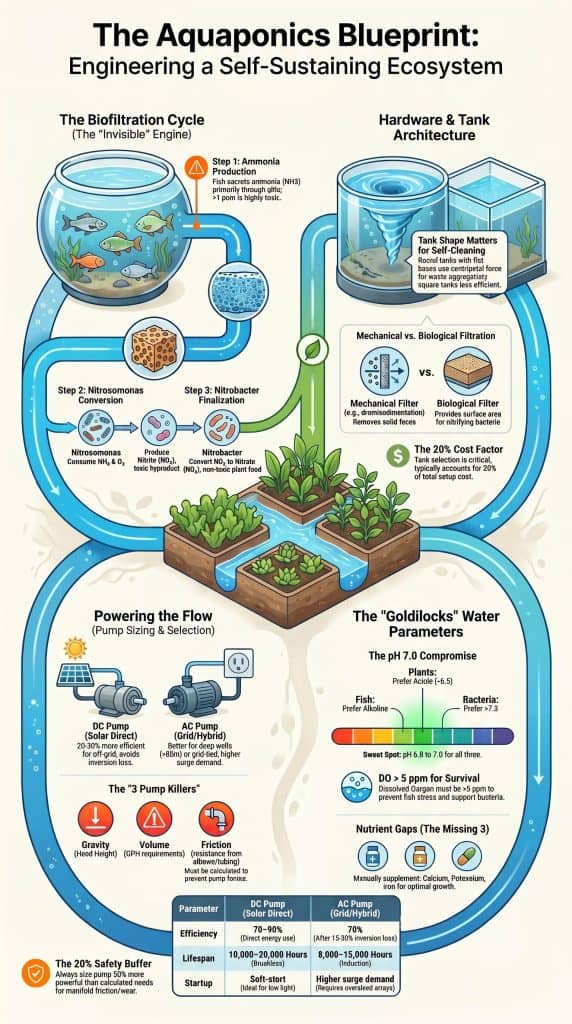
Most aquaponics pump failures are not caused by defective equipment. In many cases, the pump itself is still functional, but reduced flow and poor maintenance gradually create system-wide problems.
Growers frequently discover that circulation issues begin with small restrictions that build up over time. Snails can block intake screens, roots can grow into plumbing, algae can narrow water passages, and fish waste can accumulate in areas that are rarely inspected.
Common causes of pump failure include:
- Clogged intake screens
- Dirty impellers
- Running dry
- Debris accumulation
- Water level fluctuations
What makes these problems difficult to spot is that they often develop slowly. A system may appear to be working normally while flow rates steadily decline over several weeks.
One maintenance recommendation comes up repeatedly among experienced aquaponics growers: clean the impeller on a regular schedule.
The impeller is the part responsible for moving water through the pump. Even a thin layer of slime, debris, or mineral buildup can reduce performance significantly. In some cases, growers replace a pump they believe has failed, only to discover that a simple impeller cleaning restores normal operation.
Transitioning from theory to daily operation reveals a simple reality. Most circulation problems start as maintenance problems long before they become equipment problems.
How Snails, Solids, and Impellers Quietly Kill Flow
A frustrating situation occurs when a pump continues running but no longer delivers enough water. The motor sounds normal. The water is still moving. Yet the system begins showing signs of poor circulation.
Common symptoms include:
- Weak grow bed filling
- Poor flood and drain performance
- Reduced filtration efficiency
- Plant nutrient deficiencies
- Fish stress
Because these symptoms can resemble nutrient or water quality problems, reduced flow is sometimes overlooked during diagnosis.
Staying on top of water pump maintenance means regular inspections that cover intake cleaning, impeller inspection, flow verification, and leak checks.
Many growers find it helpful to occasionally measure how long it takes to fill a known container. Comparing the result to previous measurements can reveal declining pump performance before visible problems appear elsewhere in the system.
A clog-resistant water pump can reduce maintenance frequency, but no pump is completely immune to buildup. Routine cleaning remains part of long-term system care.
Backpressure, Valves, and Why Bigger Is Not Always Better
Bigger sounds better until water starts blasting through the system.
Too much flow can overwhelm grow beds, create unnecessary splashing, and make water levels harder to manage.
Many new aquaponics growers assume that buying the biggest available model provides a comfortable safety margin. In practice, excessive flow can create its own set of challenges.
Water moving too quickly through the system may overwhelm filtration components, disturb media beds, increase splashing, or create unstable water levels.
Some grow beds simply cannot process water as fast as an oversized pump can deliver it. A better approach is controlled flow management.
Useful flow control methods include adjustable-flow settings, ball valves, bypass return lines, and a timer for water pumps where appropriate.
Among experienced builders, one common recommendation is to redirect excess flow back to the fish tank rather than heavily restricting the pump’s discharge line. This approach allows the pump to operate more efficiently while still delivering the desired circulation rate.
The objective is not maximum circulation. The objective is consistent, balanced circulation that supports fish, plants, and filtration equally well.
Why Aeration Is Not Optional

Credits : ThinkTech Hawaii
Water movement and oxygenation are closely connected, but they are not the same thing. A fish tank circulation pump helps distribute oxygen throughout the system by keeping water moving.
However, circulation alone rarely provides enough dissolved oxygen to fully support fish, plant roots, and beneficial bacteria, especially in heavily stocked systems. For that reason, many growers use separate aeration equipment.
A typical setup may include:
- Water pump for circulation
- Air pump for aeration
- Air stones or diffusers
- Oxygen support within the biofilter
The beneficial bacteria responsible for converting ammonia into plant nutrients require oxygen-rich conditions to function effectively. Fish also depend on adequate dissolved oxygen levels to remain healthy and active.
Low oxygen levels can cause slow plant growth, reduced filtration performance, and increased stress on fish, even when water quality appears acceptable in other areas.
As noted by the Food and Agriculture Organization of the United Nations
“Use water and air pumps to make sure that the water has high levels of dissolved oxygen and good water movement so that your animals, bacteria and plants are healthy. Five key water quality parameters are important to monitor and control: dissolved oxygen at 5 mg per litre, pH between 6 and 7, and temperature between 18 and 30 degrees Celsius.” Food and Agriculture Organization
This distinction explains why many experienced growers install both a dedicated circulation pump and a separate aeration system. Each performs a different job, and together they help create a more stable and resilient aquaponics environment.
Energy Efficient Water Pump Selection
Aquaponics pumps often operate 24 hours a day, making electricity one of the largest ongoing expenses in the system.
Because of this, choosing a pump based solely on its flow rating can be costly in the long run. Two pumps may deliver similar performance while consuming very different amounts of power.
A smarter approach is to evaluate efficiency alongside flow capacity.
Key evaluation criteria include:
- Wattage
- Flow at operating head
- Reliability
- Noise levels
- Spare parts availability
| Pump Type | Typical Efficiency | Best Use |
| AC Submersible | Moderate | Hobby systems |
| DC Water Pump Aquaponics | High | Solar and off-grid systems |
| External Pump | High | Commercial systems |
| Solar Water Pump Aquaponics | Variable | Remote installations |
When comparing pumps, calculate the long-term operating cost rather than focusing only on the purchase price. A pump that uses 20 fewer watts may not seem significant at first, but over several years of continuous operation, those savings can add up.
Energy efficient pumps also tend to run cooler, which may help reduce unwanted heat transfer into the system during warmer months.
For growers planning a long-term installation, a low-watt water pump aquaponics setup often proves more economical despite the higher upfront cost.
Why Cheap Pumps Don’t Always Save Money
The least expensive pump is not always the most affordable option over time. Some growers report years of reliable service from basic pond or fountain pumps. Others experience failures after only a few months of operation. The difference often has less to do with the price tag and more to do with how the pump is used.
Several factors influence pump lifespan:
- Water cleanliness
- Duty cycle
- Maintenance frequency
- Temperature
- Head pressure
A pump operating in clean water with proper maintenance can last far longer than the same model running under difficult conditions.
Characteristics commonly found in durable pumps include:
- Continuous-duty ratings
- Easy impeller access
- Available replacement parts
- Proven brand history
One overlooked factor is repairability. A pump with replaceable impellers, seals, and components can often remain in service for years after a lower-cost model would need complete replacement.
For systems containing valuable fish, reliability should carry more weight than the initial purchase price. The cost of losing livestock due to a failed pump often exceeds the price difference between pump models.
The safest strategy is maintaining a backup unit that can be installed quickly if a failure occurs. Even the most dependable continuous-duty water pump can stop working without warning.
Redundancy may seem unnecessary until the first unexpected outage occurs.
How to Build a Reliable DIY Aquaponics Pump Setup
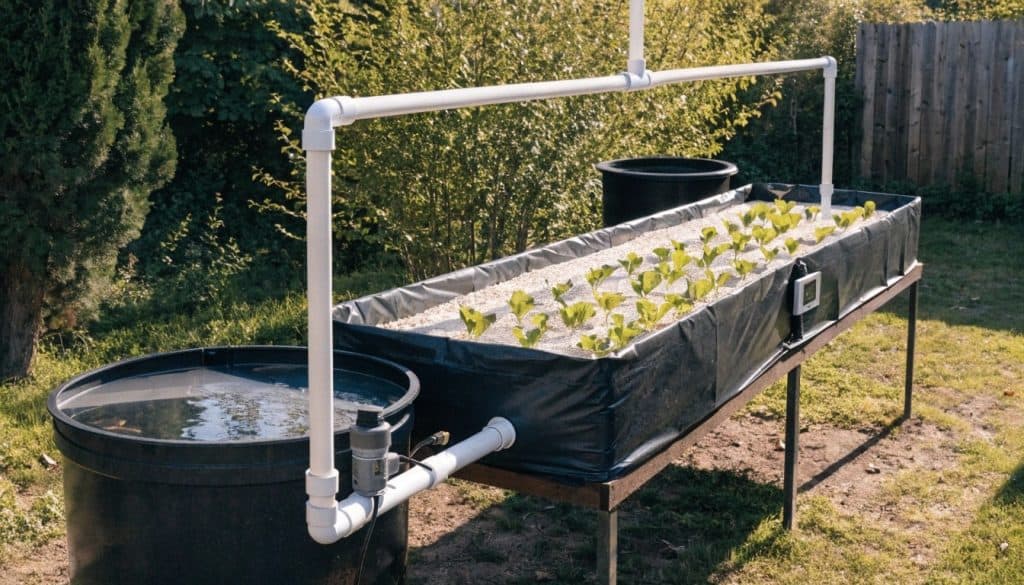
Successful DIY aquaponics systems usually have one thing in common: simplicity. While complex plumbing designs can look impressive, every additional fitting, valve, and connection introduces another potential failure point.
Simpler systems are easier to troubleshoot, easier to maintain, and often more dependable over time.
A common setup sequence is:
- Fish tank
- Solids filtration
- Biofilter
- Grow beds
- Gravity return
- Sump reservoir
- Pump chamber
This arrangement allows water to move through each stage efficiently while making maintenance tasks more predictable.
Key design principles include:
- Minimize pipe bends
- Match hose size to pump output
- Install easy-access cleaning points
- Include backup power if possible
Many circulation problems begin with undersized plumbing. Even a powerful pump can struggle if connected to pipes that restrict flow. Matching pipe diameter to the pump’s specifications helps maintain efficiency and reduces unnecessary strain.
Access is equally important. Filters, valves, and pump chambers should be positioned where they can be inspected and cleaned without dismantling large sections of the system.
For locations prone to power interruptions, a backup battery, generator, or secondary power source can provide valuable protection.
Fish and beneficial bacteria depend on continuous water movement, and even a few hours without circulation can create problems in heavily stocked systems.
Whether using a fish tank to grow bed pump, an aquaponics sump pump system, or a vertical aquaponics pump system, the same principle applies: simpler designs are often the most reliable. Consistent flow, easy maintenance, and straightforward plumbing usually outperform complicated setups over the long term.
FAQ
How do I connect standard PVC pipes directly to a submersible water pump aquaponics setup?
To connect a PVC aquaponics water flow line to your submerged pump, avoid forcing unthreaded pieces together. Use a threaded-to-slip adapter that matches your pump’s outlet thread size exactly.
Secure the connection using Teflon tape on the threads for a watertight seal, then use PVC primer and cement to attach your main aquaponics tubing pump connection lines smoothly.
Can I run an adjustable flow water pump on a continuous timed water pump aquaponics system?
Yes, running a low watt water pump aquaponics unit on a timer for a water pump is common for an ebb and flow aquaponics pump setup. However, constant starting and stopping increases wear on the impeller aquaponics pump components.
For a highly resilient recirculating aquaponics system pump setup, running a continuous duty water pump non-stop with a manual pump flow adjustment valve is safer.
What causes a quiet water pump aquaponics unit to suddenly start making loud vibrating noises?
An uncharacteristically loud fish tank circulation pump usually signals a clogged intake or air trapped inside the impeller chamber. Debris from fish waste circulation pump actions can bypass screens and jam the spinning blades.
Unplug the unit, open the casing, and perform a thorough impeller aquaponics pump cleaning to remove sludge, which instantly restores a quiet aquarium water pump aquaponics environment.
Does a solar water pump aquaponics setup require a specific plumbing layout to function safely?
A solar water pump aquaponics system operates on a variable DC water pump aquaponics framework, meaning flow drops when clouds pass. To prevent system starvation, use a gravity feed aquaponics pump assist design.
The pump pushes water to an elevated header tank when the sun is bright, ensuring steady, oxygen rich aquaponics water flow down to grow beds during low-light hours.
How does vertical pump head height aquaponics calculation change if my grow beds sit outdoors?
When calculating water pump sizing aquaponics metrics for backyard setups, wind resistance and pipe length matter.
You must calculate total dynamic head, which combines the vertical aquaponics pump system distance with the friction loss from long horizontal PVC runs.
A standard backyard aquaponics pump setup requires a higher gallons per hour pump aquaponics rating outdoors than an indoor system at identical heights.
Invest in the Right Aquaponics Water Pump for Better Results
Choosing the right water pump for your aquaponics system can make a noticeable difference in daily performance. An undersized or inefficient pump can lead to poor water circulation, weaker filtration, and unnecessary operating costs. Over time, those issues can affect both fish health and plant growth.
By matching pump flow rate, head height, and energy efficiency to your system’s needs, you can create a more reliable setup that performs consistently year after year.
If you’re looking for more expert guidance on aquaponics equipment, system design, and maintenance, Tophydroponicharden offers practical resources to help you build a productive and sustainable aquaponics system.
Reference
- https://extension.okstate.edu/fact-sheets/aquaponic
- https://www.fao.org/newsroom/story/Seven-rules-of-thumb-to-follow-in-aquaponics/en
Related Article
- https://tophydroponicgarden.com/using-a-timer-for-lights-and-water-pumps/
- https://tophydroponicgarden.com/water-pump-maintenance-tips/
- https://tophydroponicgarden.com/water-pumps/
Was this helpful?

I’m Barrie L., a passionate hydroponic gardening enthusiast dedicated to cultivating thriving, soil-less gardens. With a focus on all things hydroponic, I share my expertise on innovative growing techniques and sustainable practices through my blog, tophydroponicgarden.com. As a seasoned hydroponics specialist, my goal is to inspire and guide fellow gardeners in harnessing the power of water-based cultivation for bountiful and eco-friendly harvests. I’m also an author of the book “Hydroponics For Absolute Beginners: Your Step By Step Guide For How To Create An Hydroponics System At Home Without Soil, For Growing Vegetable, Fruit And Herbs.” which is sold on Amazon. Join me on a journey of redefining the way we cultivate plants, one nutrient-rich solution at a time. Happy growing!