

Water Pump Placement Tips matter because pump position affects how evenly hydroponic leafy greens receive nutrients. From checking beginner systems, I usually look at three things first: where the pump sits, how the tubing bends, and whether the reservoir is easy to clean.
Good placement keeps water moving without starving roots, overheating the reservoir, or pulling debris into the pump. Poor placement creates weak flow, noisy operation, clogs, and uneven lettuce growth. Read below to set up your pump in a cleaner, safer way.
The Pump Placement Basics for Leafy Greens
- Keep the pump low but not buried: A submersible pump should sit low enough to stay covered, but not directly in sludge, roots, or loose debris.
- Protect steady flow: Short tubing, gentle bends, and a clear intake help nutrient solution move evenly to leafy greens.
- Make maintenance easy: Place the pump where you can lift, inspect, and clean it without disturbing plant roots or rebuilding the system.
These water pump placement tips work best when the pump stays submerged, the intake stays clean, and the tubing path stays short enough to keep flow steady.
The goal is not to hide the pump completely. The goal is to place it where it can run reliably, stay accessible, and support consistent nutrient delivery.
Why Pump Placement Changes Nutrient Flow
Water pump placement matters because hydroponic plants depend on the movement of nutrient solution. In soil, water spreads through the growing medium. In active hydroponic systems, the pump often controls how water reaches roots, channels, or grow trays.
The USDA National Agricultural Library explains:
“Hydroponics is the technique of growing plants using a water-based nutrient solution rather than soil.” – USDA National Agricultural Library
That definition matters for pump placement. If water-based nutrients are not moving properly, leafy greens can show stress even when your nutrient mix is correct.
For lettuce, kale, spinach, and other leafy greens, the problem usually starts small. One end of a channel may get strong flow while another stays dry. A pump may run loudly because it pulls air. Tubing may kink behind the reservoir. These small layout problems can turn into uneven growth, weak leaves, or root stress.
Best Place to Put a Submersible Water Pump

A submersible water pump usually belongs inside the reservoir, near the bottom, where it stays fully covered by nutrient solution. This keeps the pump primed and helps it move water consistently.
Do not place it directly on top of settled debris. If the reservoir collects plant bits, loose growing media, or algae, the pump intake can pull that material in and clog. A small pump stand, clean tile, or raised surface can help keep the intake slightly above the dirty bottom layer.
Keep the pump away from loose roots. In small leafy-green systems, roots can grow into unexpected places. If roots reach the pump intake, flow drops and the pump may strain.
Also avoid pushing the pump tight into a corner where tubing has to bend sharply. A smooth tubing path usually gives better flow than a hidden pump with a kinked outlet.
Submersible vs External Pump Placement
Submersible pumps and external pumps need different placement. Most small home growers use submersible pumps because they are simple, compact, and easy to install. External pumps sit outside the reservoir and are more common in larger systems where growers want easier service access or stronger flow.
| Pump Type | Best Placement | Works Best For | Mistake to Avoid |
|---|---|---|---|
| Submersible pump | Inside the reservoir, fully covered by solution | Small NFT, ebb and flow, compact leafy-green systems | Letting the pump sit in debris or run partly dry |
| External pump | Outside the reservoir with secure intake and outlet tubing | Larger systems or layouts needing more pump power | Poor sealing, leaks, or long tubing runs |
| Inline pump | Along the tubing path outside the tank | Custom recirculating systems | Installing it without enough access for cleaning |
| Small fountain-style pump | Low in a compact reservoir | Beginner kits and small trays | Choosing too weak a flow rate for the channel height |
A submersible pump is usually easier for beginners. It sits in the reservoir, connects to tubing, and pushes solution toward the grow area. The tradeoff is maintenance. You need to remove and clean it regularly because it lives inside the nutrient solution.
External pumps can be cleaner to access, but they need better plumbing. Loose fittings, air leaks, or poor intake placement can create problems faster than the pump itself.
Pump Placement for NFT Leafy Greens
Nutrient film technique, or NFT, depends heavily on pump placement because the system needs a steady, shallow stream moving through the channels. The pump should send nutrient solution to the high end of the channel, then gravity should help it return to the reservoir.
Virginia Tech Extension explains:
“A thin film of nutrient solution is pumped through these channels to provide water and fertilizer to the roots of the plants.” – Virginia Tech Extension
That means the pump should not be treated as an afterthought. If the pump sits too far from the channel inlet, tubing length and height can reduce flow. If the pump is too weak, the first channel may get water while the last channel struggles.
For leafy greens, the flow should be steady, not violent. Lettuce roots need moisture and nutrients, but they should not be blasted by a strong stream. Gentle, consistent circulation is usually better than aggressive flow.
If you are still comparing equipment, Top Hydroponic Garden’s guide to water pumps for nutrient delivery can help connect pump strength with nutrient movement.
Pump Placement for Ebb and Flow Systems
Ebb and flow systems use a pump differently. Instead of running a thin stream continuously, the pump floods a tray for a set period and then lets the solution drain back. In this setup, the pump should sit where it can fill the tray evenly without sucking air before the flood cycle finishes.
The reservoir should hold enough solution to cover the pump intake during the whole cycle. If the pump runs dry near the end of the flood, it can overheat, make noise, and shorten its life.
Place the pump where the tubing can rise smoothly to the tray. Avoid sharp bends, long loops, or crushed tubing behind shelves. These restrictions reduce flow and make the pump work harder.
A filter or intake screen can help, but it must be cleaned. A blocked screen can create the same problem as a weak pump. For leafy greens, check flow during the first few cycles before trusting the timer completely.
Keep the Pump Easy to Reach
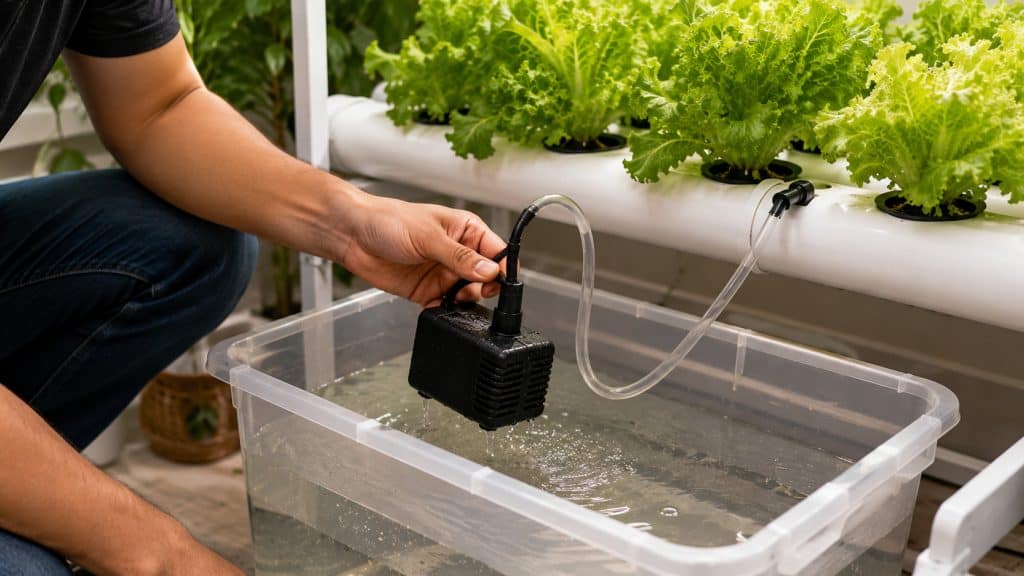
A hidden pump may look neat, but it becomes a problem when maintenance starts. Leafy-green systems grow quickly, and roots, algae, and nutrient residue can build up faster than expected. If the pump is hard to reach, growers often delay cleaning until flow becomes weak.
Place the pump where you can remove it without pulling out plants. Leave enough slack in the tubing to lift the pump gently. Avoid zip-tying the pump so tightly that basic cleaning becomes a full system teardown.
The power cord also matters. Keep electrical connections away from spills and avoid stretching cords across wet walking areas. Use drip loops where appropriate so water does not travel along the cord toward an outlet.
A good layout feels boring but practical. You should be able to check the pump, wipe the intake, inspect tubing, and restart the system without disturbing the leafy greens.
Tubing Length, Height, and Flow Loss
Pump placement is not only about where the pump sits. It is also about how far and how high the pump must push water. Every extra bend, vertical rise, and long tubing run can reduce flow.
A pump that looks strong in the box may perform poorly if it has to push water too high. This is called head height. If your grow channels sit far above the reservoir, check whether the pump can handle that lift.
Keep tubing as short and direct as possible. Avoid tight turns, pinched lines, or tubing that loops below and above the reservoir for no reason. A smooth path helps the pump maintain steady flow.
| Layout Factor | What It Does | Better Placement Tip |
|---|---|---|
| Long tubing | Reduces flow before water reaches plants | Keep the reservoir close to the grow area |
| Sharp bends | Restricts water movement | Use gentle curves and secure tubing loosely |
| High lift | Makes the pump work harder | Match pump head height to system height |
| Loose outlet tube | Can leak or spray water | Secure tubing at the channel inlet |
| Dirty intake | Weakens flow over time | Place pump above debris and clean intake often |
If flow looks weak, do not immediately buy a larger pump. First check tubing, height, debris, and intake position. Many flow problems come from layout, not pump size.
Watch a Pump and Reservoir Layout Before Adjusting Yours

Credits: RangerRob Country Living
A visual setup can help you see how pump placement, return lines, and tubing layout work together. Watch how the reservoir sits below the grow channels and how the pump sends nutrient solution upward before gravity brings it back.
Do not copy every measurement exactly. Your shelf height, reservoir size, tubing diameter, and crop type may be different. Use the video as a layout reference, then adjust based on your own flow rate and leafy-green system.
Common Water Pump Placement Mistakes
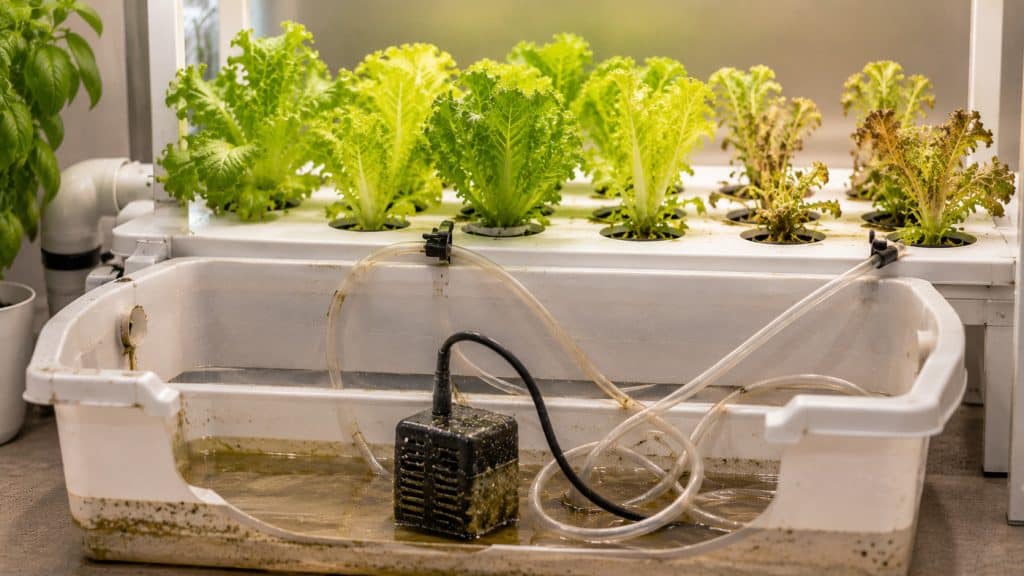
Many water pump placement tips focus on pump size, but placement mistakes often come from debris, low water levels, and tubing that blocks flow before nutrients reach the plants.
The first mistake is placing the pump directly in debris. Loose roots, clay pebbles, plant pieces, and algae can block the intake. Once the intake is restricted, flow drops even if the pump is still running.
The second mistake is letting the pump run partly dry. A submersible pump needs enough water around it. If the reservoir level drops too low, the pump can pull air, make noise, heat up, or stop moving solution properly.
Another common issue is overhiding the pump. When growers bury it under rafts, baskets, tubing, or roots, cleaning becomes difficult. A pump that never gets cleaned eventually becomes the weak point of the whole system.
Too much pump power can also cause trouble. Strong flow may splash, warm the solution, or disturb lightweight seedlings. Leafy greens usually need steady delivery, not aggressive water movement.
Pump Placement Troubleshooting Chart
Use this chart when leafy greens look uneven or the system sounds different than usual. Start with simple placement checks before replacing equipment.
| Problem | Likely Placement Cause | What to Do First |
|---|---|---|
| Pump makes grinding noise | Water level is too low or air is entering intake | Top up reservoir and confirm pump stays submerged |
| Weak flow at channel inlet | Tubing is too long, kinked, or clogged | Straighten tubing and clean the pump intake |
| One channel grows better than another | Uneven flow distribution | Check manifold, outlet height, and tubing balance |
| Pump overheats | Pump is running dry or working against too much lift | Lower system height or use a pump with suitable head rating |
| Roots grow into pump | Pump is too close to exposed root mass | Move pump intake away from roots or add a clean intake guard |
| Algae clogs intake | Light reaches reservoir | Block reservoir light and clean intake screen |
Troubleshooting should be slow and practical. Change one thing, watch the flow, then adjust again. If you move the pump, tubing, and timer all at once, it becomes harder to know what actually fixed the problem.
Leafy Greens Need Steady Flow, Not Maximum Flow
Leafy greens are fast-growing, but they are not heavy fruiting crops. Lettuce, spinach, kale, bok choy, and arugula usually respond best to consistent moisture, oxygen, and nutrients. They do not need a violent stream running through the system.
Strong flow can create splashing, noise, and unnecessary heat. Weak flow can leave roots dry or underfed. The best placement supports a middle ground: enough circulation to feed the roots, but not so much movement that the system becomes unstable.
This is especially important in small indoor setups. A tiny reservoir changes quickly. If the pump warms the water or creates too much turbulence, leafy greens may show stress sooner than expected.
For crop planning, Top Hydroponic Garden’s leafy greens guide can help you match pump layout with plants that stay compact and grow quickly.
Clean Placement Helps Prevent Clogs
Pump placement affects cleaning. A pump placed in a dark, covered reservoir with a clear intake usually stays cleaner than one sitting under loose media and light exposure. Light encourages algae, and algae can collect around pump screens.
Keep the reservoir covered when possible. Use dark containers or lids to reduce light entering the nutrient solution. Avoid letting falling leaves, starter plug crumbs, or broken roots collect around the pump.
If the pump has a removable intake cover, clean it during regular reservoir checks. Do not wait until flow nearly stops. Leafy greens can react quickly when nutrient delivery changes, especially in NFT systems with little buffer.
If you are planning a new setup, the article on what equipment is needed for hydroponics can help you organize the pump, reservoir, tubing, and basic testing tools before planting.
FAQ
Where should a water pump be placed in hydroponics?
A submersible water pump should usually sit inside the nutrient reservoir, low enough to stay covered but not buried in debris. It should be easy to remove, clean, and reconnect without disturbing plant roots.
Should a hydroponic pump run all the time?
It depends on the system. NFT systems usually need continuous flow, while ebb and flow systems use timed cycles. Always match pump timing to the system type and check whether roots stay properly supplied.
Can a water pump be too strong for leafy greens?
Yes. Too much flow can splash, disturb young roots, add heat, or create uneven water movement. Leafy greens usually need steady circulation, not maximum pump power.
Why is my hydroponic pump losing flow?
Common causes include low water level, clogged intake, algae, root blockage, kinked tubing, long tubing runs, or too much vertical lift. Check placement and tubing before replacing the pump.
Should the pump touch the bottom of the reservoir?
It can sit near the bottom, but avoid placing it directly in sludge or debris. Raising the pump slightly can protect the intake while still keeping it submerged.
Better Pump Placement Keeps Leafy Greens Stable
Good water pump placement keeps hydroponic leafy greens easier to manage. The pump should stay covered, pull from a clean part of the reservoir, and send nutrient solution through tubing without sharp bends or unnecessary height.
The best setup is simple and reachable. If you can inspect the intake, clean the screen, check water level, and confirm flow without tearing the system apart, your leafy greens have a better chance of growing evenly.
For Top Hydroponic Garden readers, the smartest move is to test pump placement before planting heavily. Run the system, watch the flow, adjust tubing, and make sure maintenance feels easy. Stable flow now prevents bigger problems later.
References
- https://www.nal.usda.gov/farms-and-agricultural-production-systems/hydroponics
- https://pubs.ext.vt.edu/SPES/spes-463/spes-463.html
Related Articles
- https://tophydroponicgarden.com/water-pumps-for-nutrient-delivery/
- https://tophydroponicgarden.com/what-equipment-is-needed-for-hydroponics/
- https://tophydroponicgarden.com/leafy-greens/
Was this helpful?

I’m Barrie L., a passionate hydroponic gardening enthusiast dedicated to cultivating thriving, soil-less gardens. With a focus on all things hydroponic, I share my expertise on innovative growing techniques and sustainable practices through my blog, tophydroponicgarden.com. As a seasoned hydroponics specialist, my goal is to inspire and guide fellow gardeners in harnessing the power of water-based cultivation for bountiful and eco-friendly harvests. I’m also an author of the book “Hydroponics For Absolute Beginners: Your Step By Step Guide For How To Create An Hydroponics System At Home Without Soil, For Growing Vegetable, Fruit And Herbs.” which is sold on Amazon. Join me on a journey of redefining the way we cultivate plants, one nutrient-rich solution at a time. Happy growing!