

Regular water pump maintenance stops breakdowns before they happen. It cuts costs and can boost a pump’s working life by 30% or more if you combine scheduled checks with modern monitoring tools. Studies, including one from ACS Omega, and data from field crews show pumps don’t just wear out from age.
They fail quicker when heat, dirt, or electrical problems are ignored. For any system, a home well, farm irrigation, or a factory line, a steady maintenance routine defends your performance and avoids costly stops. The steps below cover hands-on service tasks, new predictive tech, and setup tips to make your pump last. Read on for the details.
Quick Maintenance Wins for Longer Pump Life
Simple, consistent care keeps water pumps running efficiently, reduces sudden failures, and supports stronger long-term system performance.
- Routine inspections, filter cleaning, and dry run prevention remain the most effective breakdown prevention strategies.
- Predictive maintenance tools such as vibration sensors and thermal monitoring can forecast failures up to 7 days early.
- Modern pump longevity depends on full system resilience, including valves, power supply stability, and environmental control.
Simple maintenance that makes pumps last longer

A few easy habits make a big difference. Regularly checking your water pump, stopping it from running dry, making sure it’s the right pump size, and using simple monitoring can prevent most breakdowns.
A smart maintenance routine that includes regular pump cleaning and monitoring flow rate ensures your hydroponic pump keeps working smoothly for longer. A 2022 study in ACS Omega showed that predictive models can spot major failures in submersible pumps up to a week before they happen.
This changes everything. Instead of waiting for something to break, you get a warning. Maintenance becomes something you control, not just react to.
A quick daily look can find leaks, rust, strange shaking, or worn seals early. Cleaning the intake screen every week keeps water flowing smoothly and stops the motor from overheating.
Every month, descaling and adding the right lubricant protects the parts inside. This is critical in areas with hard water or in systems, like hydroponics, that use lots of nutrients.
Focus on these priorities to see results fast:
- Clean intake screens and pre-filters weekly.
- Install a simple sensor or float switch to prevent dry running.
- Check the impeller for debris each month.
- Follow the manufacturer’s guide for lubricating bearings every few months.
- Keep an eye on pressure, vibration, and power draw for unusual changes.
- Prepare the pump for storage or freezing weather each season.
Predictive tools add a smart new layer of protection. They work alongside your normal routine, they don’t replace it.
Your pump won’t fail if you check it
A sudden pump breakdown usually isn’t so sudden. If you look at it regularly, you’ll see the clues: a little grit in the water, some rust forming, or a seal starting to wear. Catching these things early means you can fix them before they wreck the motor. Research from Jurnal Ilmiah SINERGI shows:
“Implementing a structured preventive maintenance plan for critical industrial pumps resulted in an estimated maintenance cost saving of around 70% compared to historical costs.” – Jurnal Ilmiah SINERGI
Research backs this up. Reliability-Centered Maintenance (RCM) principles show that scheduled inspections can reduce catastrophic failures by addressing wear before it compounds.
It starts with small stuff. A leaf stuck in the intake screen. A seal that’s not as tight as it was. A new, faint vibration. Ignore them, and the pump’s small problems become big ones. The motor strains, overheats, and eventually dies.
Talk to anyone who uses a pump at home, on a farm, or for hydroponics. They’ll tell you the same story. The fastest way to kill a pump is to forget about the intake screen and the spinning impeller inside. In gardening forums, people connect that slimy film in their water tanks directly to pumps that conk out in less than two years.
For the people who fix pumps for a living, a schedule is everything. It’s simple math. Replacing a ten-dollar seal during a monthly check is nothing compared to the cost of rebuilding a pump from scratch after it fails.
Here’s a basic checklist to follow:
- Daily: Look for any drips or wet spots.
- Weekly: Pull out and rinse the filters and strainers.
- Monthly: Make sure the impeller inside spins without anything stuck in it.
- Monthly: Check the rubber seals and the pump casing for any hairline cracks.
- Monthly: Write down the pressure and flow numbers. If they change, you know something’s different.
Stick to this, and you’re in control. You’re not waiting for a disaster.
The intake needs to stay clear
A blocked intake is like asking the pump to breathe through a straw. The motor groans, works way too hard, and gets dangerously hot. It’s begging to burn out.
Every manual and experienced grower will say the same thing: clean the intake every week, no excuses. Algae, dirt, sand, and limescale build up on the screen. This chokes the water flow, forcing the pump to operate in a stressed, inefficient zone.
Your job is straightforward:
Clean the intake screen every week. Scrape off any sludge, green algae, or hard white crust. Check that the pre-filter isn’t packed with gunk.
Good flow keeps the water moving and, just as important, keeps the pump’s temperature down.
An impeller has to spin
If the pump is humming but not moving much water, the impeller is probably jammed. This also makes the nearby seals overheat.
Safety first: always unplug the pump. Then, the impeller should turn freely by hand. There shouldn’t be any sand, string, or goo in the way. More reports are coming in about “nutrient slime” from hydroponic solutions gumming up the works.
Taking care of it is easy:
Clear out any debris once a month. Spin it with your fingers to test it. Look at the metal shaft for any grooves or wear.
A pump is useless if its impeller is locked up.
Look at the outside, too
Regular visual inspections are essential for effective pump maintenance. Small cracks, corrosion, or worn seals can quickly lead to costly damage if overlooked.
Pay close attention to critical areas like the power cord entry to ensure seals are intact and prevent moisture from damaging internal components.
Make it a habit to:
Look over the whole pump housing each month. See if any seals are weeping water. Verify the cable entry point is still sealed tight.
A pump’s longevity often depends on the strength of its shell. If the outside fails, the inside doesn’t stand a chance.
Quiet Pump Failures and the Warning Signs to Watch For
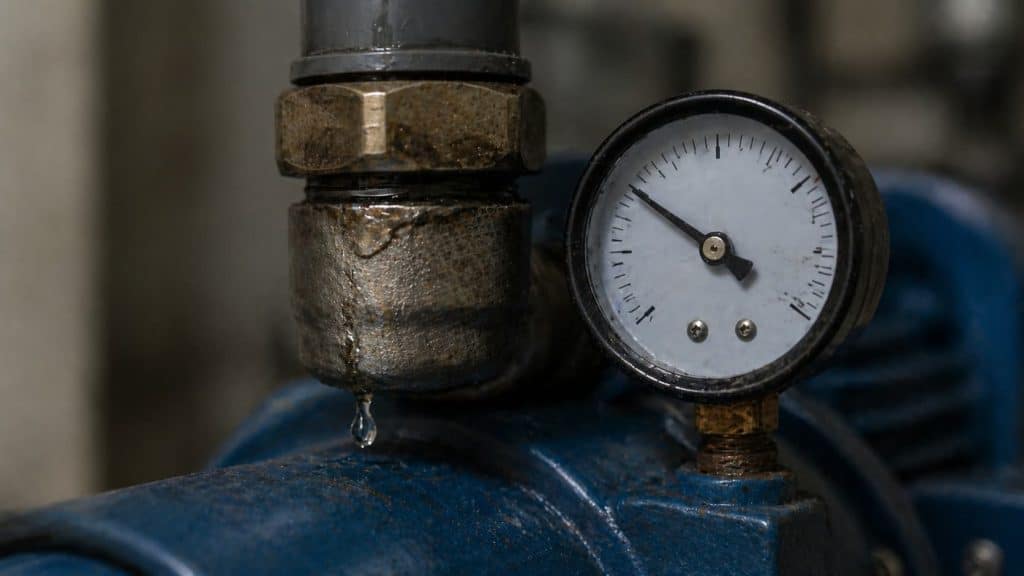
Voltage that’s not steady, damaged power cords, parts that aren’t lined up right, and worn-out bearings can all kill a pump. The tricky part is that these problems often give little warning before the pump overheats or just stops.
On electrical forums, technicians keep pointing to one issue: using power supplies that are too small, especially for 12V or 24V pump systems. A safe rule of thumb is to use a power supply with 25% to 50% more wattage than the pump’s rated power to handle the startup ‘inrush current’.
This extra capacity handles the big power surge when the motor starts. Without it, the pump might keep shutting itself off to protect the circuit, or it can burn out much sooner. Mechanical problems make this worse. Vibration, misalignment, and tired bearings add stress that the electrical system has to fight against.
You can cut these risks down by doing a few things each month:
- Check the power cord and its insulation for damage.
- Plug the pump into a dedicated, stable circuit.
- Listen for unusual grinding or humming from the bearings.
- Make sure the pump and motor couplings are properly aligned.
- Tighten the bolts that hold the pump in place.
Good electrical practices protect the motor’s heart. Solid mechanical setup protects everything attached to it.
Check the cord and keep water out
A frayed wire or a broken seal isn’t just a small issue, it’s a direct safety hazard. For pumps that go underwater, the seal where the cable enters the pump is the most critical spot. If the plastic insulation gets brittle, a plug cracks, or moisture gets inside, a short circuit is usually the next step.
Make these checks a priority:
Inspect all wiring every month. Replace any cracked or worn insulation right away. Verify that waterproof seals are intact and flexible.
A little damage to a cord can turn into a complete failure very quickly.
Listen to vibration and check alignment
If the pump is rattling or shaking more than usual, it’s trying to tell you something. That vibration often means a bearing is wearing out, the shaft is off-balance, or the pump isn’t mounted securely.
Don’t just ignore the noise. Treat it as useful data, a sign that something is wrong. In bigger systems, technicians use vibration sensors to track wear long before a bearing seizes up.
A few simple steps help a lot:
Mount the pump on a level, solid surface. Use rubber or foam pads to dampen vibration. Listen for changes in bearing noise during monthly checks.
A pump that runs smoothly puts far less strain on its bearings, helping them last for years.
Steady power is everything
Power that dips and surges will burn out a pump’s motor windings. It’s a major cause of startup failures. A specific problem comes up with DC pumps: people often try to run them with power supplies meant for LED lights. These supplies can’t handle the motor’s startup surge.
To protect the pump:
Use a dedicated electrical circuit just for the pump. Get a power supply with plenty of extra capacity for surges. Have an electrician check that control panels are calibrated correctly.
The quality of the electricity a pump gets often matters more for its lifespan than how hard you work it.
The Real Causes of Early Pump Failure
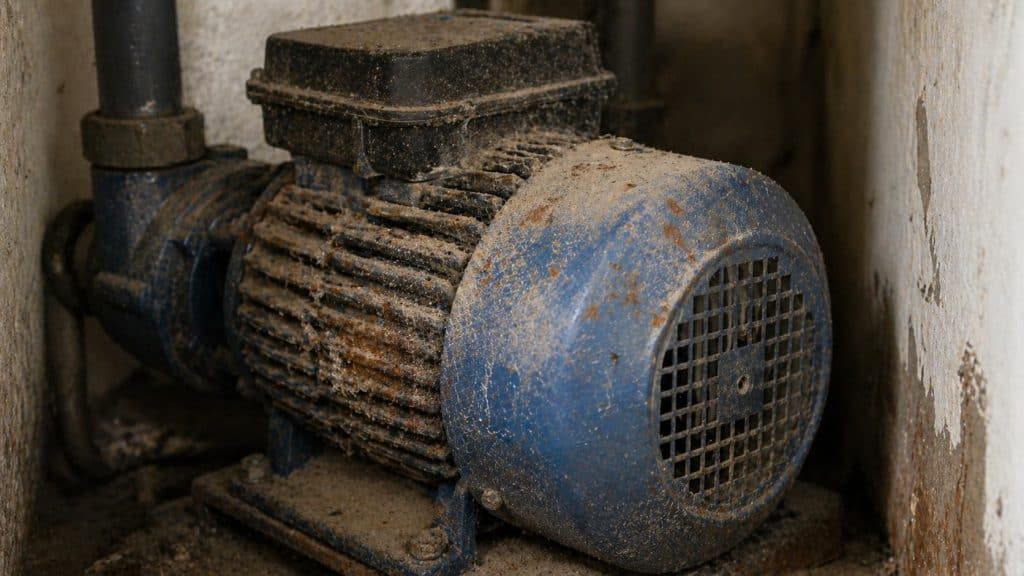
Pumps often fail prematurely because they are either improperly sized, run without sufficient water, or operate under excessive pressure. These conditions cause unnecessary strain on the pump’s internal parts. Selecting the right size and flow rate for your system is key to improving pump durability and ensuring long-term, reliable operation.
Running a pump without water is especially brutal. The water isn’t just being moved; it’s also cooling the pump and lubricating its seals.
The biggest threats to a pump’s lifespan are:
- A pump that’s too big or too small for the system.
- Letting it run dry.
- Cavitation (which is like tiny, damaging bubbles forming inside).
- A blocked or pinched outlet pipe.
- Letting it get too hot.
Sometimes, how you use the pump matters just as much as how well it was built.
Getting the size and pressure right
If you ask a pump to push water higher than it was designed for, it wears out much faster. Picking the right pump means matching it to the actual job: how high it needs to lift the water, how much pressure is needed, and how much flow you want. It shouldn’t have to work at its absolute limit all day.
The basics of sizing come down to a few things:
Figure out the total “head” or pressure the pump must overcome. Don’t let it operate in an overload condition. Keep an eye on the pressure gauge on the discharge side.
A correctly sized system protects every single part inside the pump casing.
Never let it run dry
A pump running without water can ruin its seals in a matter of seconds.
For any pump, whether it sits in a tank or above ground, simple safety devices are crucial. Low-water cutoff sensors, float switches, and automatic controllers can shut the pump off before damage happens.
It’s smart to use these protections:
Install a sensor that detects when the water is too low. Test float switches regularly. Keep an eye on reservoir levels.
Adding a dry-run prevention device is one of the most cost-effective things you can do for a pump.
The hidden heat of low flow
Here’s a strange problem: a pump can overheat on the inside even if the outside motor feels cool. This happens when the flow is very low or blocked, often in centrifugal pumps. The water isn’t moving enough to carry the heat away from the internal seals, so the heat just builds up in one spot.
Technical discussions online point to this as a common but overlooked issue.
You can guard against it:
Install a small bypass loop to keep some water moving. Test the flow rate occasionally. Avoid leaving a valve almost closed for long periods.
Even when you don’t need much water, the pump still needs enough flow to stay cool.
Modern Advances in Pump Care for Early Problem Detection

Credit: HTG Supply
By 2026, a sensor-based approach is changing everything. This method, called predictive maintenance, spots trouble long before a pump actually breaks down.
The idea isn’t just theory. Back in 2022, a study in ACS Omega proved it works. Researchers used a specific machine learning model (XGBoost) fed by data from sensor arrays. Their system could accurately predict a major pump failure up to a full week in advance. As noted by ACS Omega:
“A robust PCA model has managed to identify 20 failure events before the actual failure time out of the 47 failure cases when monitoring electrical submersible pump systems.” – ACS Omega
How does it do that? It watches for subtle clues. It continuously checks four key things: temperature changes, variations in electrical current (amperage), unusual vibrations, and shifts in water pressure. By combining this data, the system finds patterns that point to a part wearing out or a failure brewing.
This technology isn’t just for big factories anymore. You’ll find it being used in:
- Large-scale farm irrigation
- Commercial hydroponic setups
- Heavy industrial pumping stations
- Modern city water and treatment systems
The tools making this possible are now common:
Vibration sensors attached to the pump housing. Monitors that track flow rate in real time. Thermal probes to detect hot spots. Software that sends smart alerts to a phone or computer. Diagnostic features built into the pump’s control panel.
The old way was to fix things after they broke. The new way is to use data to prevent the breakdown from ever happening. Maintenance is becoming less about reaction and more about prediction.
The quiet killers: slime and scale
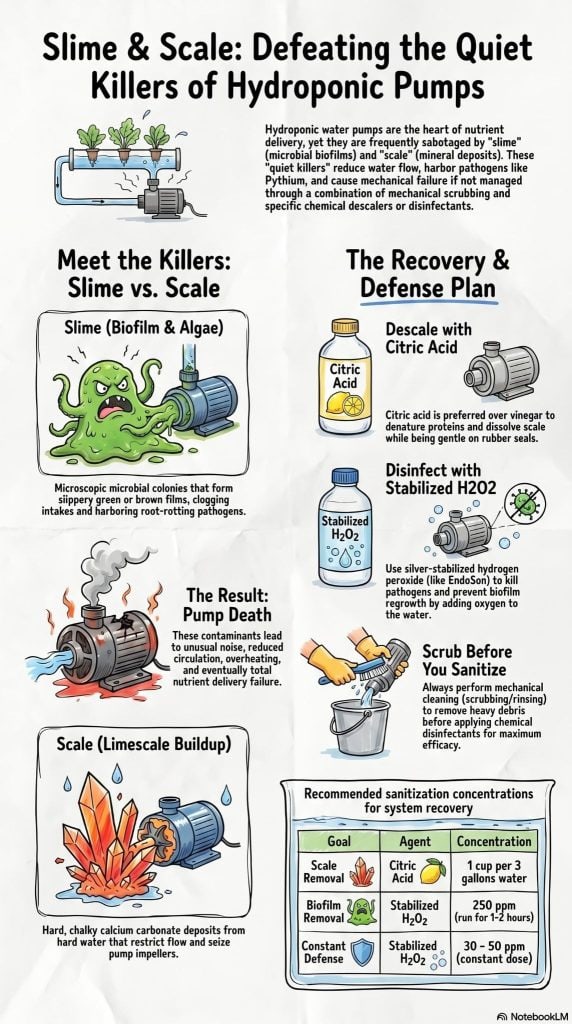
For modern pumps, the biggest enemies aren’t always broken parts. They’re often things you can’t see at first: sticky biofilm, chalky calcium scale, and thick nutrient slime. In places with hard water or in hydroponic systems, this buildup is cutting pump lifespans shorter than ever.
Growers running hydroponic setups keep reporting the same issue. A layer of biological “gunk” coats the insides of pumps. This slime makes the motor work harder, causing it to overheat. It also creates drag on the impeller, slowing it down.
In areas with hard water, a different problem occurs. Minerals, mainly calcium, form a crusty cement on the pump shaft and seals. This requires frequent, aggressive cleaning to remove. The importance of managing minerals is well-documented in water treatment standards (such as EPA guidelines), as calcium buildup (limescale) is a primary cause of mechanical friction.
Stopping this buildup isn’t complicated, but it needs to be consistent. A good prevention plan includes:
- Descale the pump monthly using a solution like citric acid.
- Always check that cleaning chemicals won’t damage the pump’s rubber O-rings or seals.
- Keep the water reservoir itself clean to reduce the source of contamination.
- In some hydroponic systems, adding a silicon supplement can help reduce slime formation.
The trend is clear. More and more, pumps are failing because of what’s in the water around them, not because the pump itself was poorly made. The environment is becoming the main factor in a pump’s survival.
Proper Pump Storage for Reliable Performance Next Season
If you put a pump away for months without preparing it, you’re asking for trouble. Cracked casings, rusted electrical contacts, and seized-up seals are common results of seasonal neglect.
To avoid this, a few key steps, draining all the water, letting it dry completely, adding lubricant, and preventing freeze damage, make all the difference. In places that get cold, winterizing the pump isn’t a suggestion; it’s mandatory.
Here’s a simple guide for what to do and when:
| What to do | Why it matters | How often |
| Deep descaling | Gets rid of mineral crust and scale. | Every 3 to 6 months. |
| Seal lubrication | Keeps rubber seals from drying out and sticking. | At the start and end of each storage period. |
| Winterization | Stops leftover water from freezing and cracking the housing. | Before the first hard frost. |
| Dry storage | Prevents internal rust and stops mold or slime from growing. | For the entire time the pump is not in use. |
The process is straightforward. First, disconnect the pump from power. Then, drain every last bit of water you can from the intake, output, and any internal chambers. Let the pump air-dry completely in a warm, dry place for a day or two.
Once it’s dry, apply a pump-safe lubricant to the main shaft seal and any other moving seals according to the manufacturer’s instructions. Finally, store it in a clean, dry location, ideally in its original box or covered with a cloth to keep dust out.
Taking the time to store a pump correctly preserves its value and function. It ensures that when you need it again, it starts right up instead of becoming a costly paperweight.
Don’t ignore these pump warning signs
When a pump starts acting up, it’s talking to you. A drop in water pressure, a constant humming noise, a surging pulse, or the pump shutting itself off are all clear signals. You need to check it now, not later. A lot of people wait until the pump is completely dead, but catching these symptoms early can stop a simple fix from turning into a full, expensive rebuild.
Here’s what to listen and look for, what’s probably causing it, and what to do right away:
| Symptom | Likely Cause | Immediate Action |
| Reduced flow | The intake is clogged, or something is stuck in the impeller. | Turn off the pump. Clean the intake screen and filter. Check the impeller for debris. |
| Humming with no flow | The impeller is jammed and can’t spin, or there’s a problem with the capacitor or power supply. | Disconnect power. Manually try to spin the impeller. Check for correct voltage at the outlet. |
| Surging (pulsing water) | There’s an air leak in the suction line, or the pump is losing its prime. | Inspect all pipe fittings and seals for cracks or loose connections. Make sure the pump is fully primed with water. |
| Automatic shutoff | The motor is overheating, often from a blocked discharge or running dry. | Let the pump cool down completely. Check that the outlet pipe isn’t blocked. Verify the water source hasn’t run dry. |
The key is to act fast. A small problem, like a clog, can quickly cause bigger damage, like a burned-out motor from overheating. Addressing the symptom immediately almost always limits the damage and cost.
Build a Water Pump System That Lasts
When your pump starts losing pressure, running hotter, or breaking down early, the costs add up fast. You’re not just dealing with repairs, you’re facing wasted energy and constant setbacks. That gets expensive.
A smart maintenance plan helps you stay ahead before small issues turn serious. With the right maintenance habits, stronger performance and lower costs become much easier to achieve over time.
FAQ
What should a proper pump servicing schedule include for long-term pump reliability?
A proper pump servicing schedule should include daily visual inspections, monthly pressure logs, quarterly lubrication tasks, and a detailed annual service checklist. It should also cover bearing inspection tips, seal replacement procedure timing, filter cleaning routine checks, and documentation logging. Following a preventive schedule template improves pump lifespan extension, reduces repair costs, and supports breakdown prevention strategies.
How do leak detection methods help prevent major water pump failures?
Leak detection methods help identify flange leak inspection concerns, gasket wear, packing gland adjustment issues, and mechanical seal failures before they cause severe damage. Regular inspections support hydraulic isolation safety and improve mechanical seal care. Early leak detection reduces water flow restriction risks, lowers repair expenses, and strengthens pump efficiency optimization for domestic and commercial systems.
Why is a regular filter cleaning routine essential for pump performance?
A regular filter cleaning routine prevents sediment buildup, debris clog prevention issues, and water flow restrictions that can reduce pump performance. Clean filters improve suction line optimization, protect internal components, and support accurate flow rate testing. This maintenance practice improves energy saving maintenance, lowers operational costs, and significantly contributes to pump lifespan extension.
Which bearing inspection tips help reduce vibration and motor overheating?
Effective bearing inspection tips include checking for unusual noise, monitoring operating temperature, applying proper lubrication guidelines, and performing vibration analysis techniques consistently. Regular thrust bearing care and shaft alignment checks help reduce excessive wear. These practices support motor overheating prevention, improve mechanical stability, and strengthen predictive maintenance tools for reliable pump operation.
How do pressure monitoring tools improve water pump maintenance results?
Pressure monitoring tools help track system performance, detect hidden blockages, and identify valve testing protocol or discharge pipe inspection problems early. When combined with monthly pressure logs and performance benchmarking, they improve pump efficiency optimization and support preventive maintenance planning. Accurate pressure monitoring reduces unexpected failures and helps maintain consistent operational reliability.
References
- https://en.wikipedia.org/wiki/Water_pumping
- https://mpofcinci.com/blog/complete-guide-to-water-pump-maintenance/
Related Article
- https://tophydroponicgarden.com/water-pumps/
- https://tophydroponicgarden.com/maintaining-your-hydroponic-water-pump/
- https://tophydroponicgarden.com/choosing-durable-water-pumps/
Was this helpful?
