

Quiet Pumps for Hydroponic Systems matter when your grow setup runs near a bedroom, desk, kitchen, or living room. From checking indoor systems, I’ve learned that “pump noise” is often not just from the pump. It can come from the shelf, reservoir wall, low water level, loose tubing, or water splashing back too hard.
A quiet pump setup should still keep nutrient solution moving properly. The goal is not to make the system silent by weakening flow. Read below to build a calmer setup without putting roots at risk.
The Calm Pump Checklist for Indoor Growers
- Find the real sound source: Listen to the pump, reservoir, tubing, shelf, and return water separately before replacing anything.
- Match quietness with flow: A quiet pump still needs enough flow rate and head height for the grow system.
- Stop vibration early: Soft pads, stable placement, clean intake screens, and smooth tubing help reduce noise before it spreads.
The goal is to create a setup that feels calm in the room and still supports healthy nutrient movement. A quiet hydroponic system should not become a weak hydroponic system.
Why Quiet Pump Choice Starts With the Room
A pump that sounds acceptable in a garage may feel annoying in a bedroom or home office. Sound changes depending on the room surface, shelf material, reservoir shape, and distance from people.
Noise guidance explains:
“The traditional definition of noise is ‘unwanted or disturbing sound’.” – EPA
That definition fits indoor hydroponics well. A pump does not need to be extremely loud to become unwanted. A small repeated hum can still disturb sleep, study, or daily comfort when it runs for hours.
If your setup is a compact indoor kit, Top Hydroponic Garden’s review of top home hydroponic kits can help you compare comfort, reservoir size, and pump noise before choosing a system.
Before buying a new pump, listen from different spots in the room. If the sound changes when you touch the shelf or reservoir, the issue may be vibration transfer instead of motor quality.
What Makes a Pump Feel Quiet?

A quiet pump setup usually comes from several small details working together. The pump needs the right size, the water level must stay high enough, tubing should move water smoothly, and the return line should not splash loudly.
The pump body also matters. Rubber feet, suction cups, or a soft base can stop vibration from spreading into hard plastic. A pump that slides around inside the reservoir will usually sound louder than one that stays stable.
Clean parts help too. A clogged intake makes the pump work harder. When roots, algae, or small plant pieces block the screen, the pump may hum, grind, or lose flow.
The quietest system is often not the newest one. It is the setup where the pump is stable, submerged, clean, and not forced to push water through a messy path.
Quiet Pumps for Hydroponic Systems should feel stable in the room, not just quiet on the product label. The real result depends on pump size, reservoir contact, tubing path, and how gently water returns to the system.
Quiet Pump Features Worth Checking
Not every pump labeled quiet will work well in every hydroponic system. A pump that fits a small herb kit may struggle in a taller NFT rack. A strong pump may also become noisy if the flow is too aggressive for the reservoir.
| Feature | Why It Helps | What to Check |
|---|---|---|
| Adjustable flow | Reduces turbulence and splashing | Do not lower flow below plant needs |
| Rubber feet or suction cups | Limits vibration transfer | Make sure the pump sits firmly |
| Enough head height | Prevents strain when lifting water | Check real vertical distance |
| Removable intake cover | Makes cleaning easier | Clean it before flow drops |
| Proper outlet size | Keeps tubing stable | Match tubing to the pump outlet |
| Continuous-use design | Supports long run times | Avoid pumps made for short cycles only |
A quiet pump should not be judged only by the product label. It should be judged by how it performs inside your actual reservoir, tubing layout, and room.
For indoor growers comparing complete systems, Top Hydroponic Garden’s guide to indoor hydroponic kits shows why pump and fan noise can matter in small living spaces.
When comparing Quiet Pumps for Hydroponic Systems, do not choose only by price or flow rate. A better choice is the pump that gives enough circulation without adding extra vibration, splash, or pressure noise.
Submersible, Inline, and Air Pumps Sound Different
Submersible water pumps are often easier to quiet in small systems because water surrounds the pump body. That water can soften some motor sound, but the pump may still rattle if it touches the reservoir wall.
Inline pumps sit outside the reservoir. They may be easier to service, but the motor sound is more exposed. If an inline pump sits on a hard shelf without padding, the surface can amplify vibration.
Air pumps create a different kind of sound. They do not move nutrient solution the same way water pumps do. They push air through tubing and stones, so the noise may come from vibration, buzzing, or bubbles.
| Pump Type | Common Sound | Best Quieting Move |
|---|---|---|
| Submersible water pump | Hum or wall vibration | Keep it submerged and away from hard walls |
| Inline water pump | Motor buzz or shelf vibration | Mount it on a soft stable surface |
| Air pump | Buzzing and bubble noise | Use a soft pad and check air stone resistance |
| Adjustable pump | Splash or reduced flow if misused | Tune flow slowly and check roots |
| Oversized pump | Strong water movement and turbulence | Reduce flow or choose a better match |
If your system has both a water pump and an air pump, do not assume the water pump is the loud one. Turn each component off briefly, one at a time, only if it is safe for the setup, to identify the real source.
Quiet Pumps for Hydroponic Systems can be submersible, inline, or part of a mixed setup, but each type needs different noise control. The quietest option is usually the one that fits the reservoir and room layout best.
How to Place a Quiet Pump Without Weakening Flow
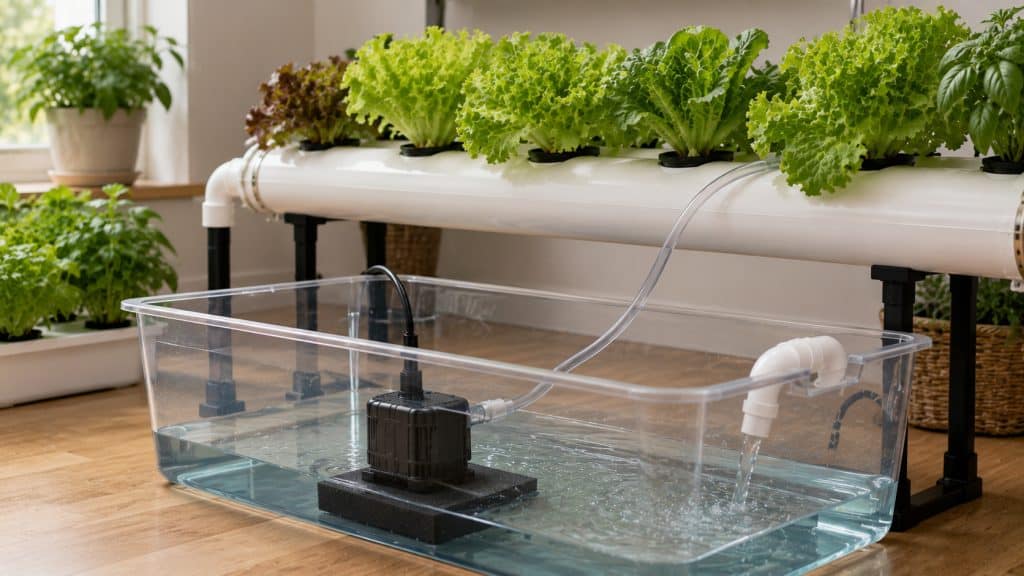
Quiet placement starts with stable contact. A submersible pump should sit flat, stay covered by nutrient solution, and avoid pressing against the reservoir wall.
Use a clean soft pad if the pump vibrates against plastic. The pad should not shed material, block intake flow, or trap debris. The goal is to soften vibration, not create a dirty spot in the reservoir.
Route tubing with gentle curves. Sharp bends make the pump work harder and can cause tubing to twitch or tap against the lid. Secure loose tubing lightly so it does not rattle.
Return water should enter the reservoir gently. If water falls too far, the splash can sound louder than the pump. Lower the return outlet or angle it against the reservoir wall to soften the sound.
The best quiet setup still moves water clearly. If the system becomes silent because flow is weak, the roots may suffer.
Quiet Pumps for Hydroponic Systems work better when they sit flat, stay submerged, and avoid direct contact with hard reservoir walls. Small placement changes can reduce noise without lowering nutrient flow.
Quiet Pumps for DWC, NFT, and Drip Systems
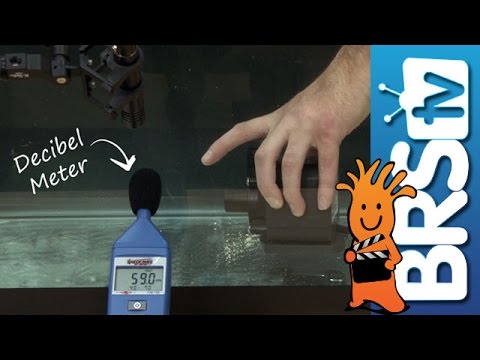
Credits: Bulk Reef Supply
Different hydroponic systems create different sound problems. NFT systems often make noise from return water. Drip systems may produce tapping or pressure sounds. DWC setups may be louder because of the air pump and bubbling.
WHO environmental noise guidance notes:
“Excessive noise can cause annoyance.” – World Health Organization
That is why indoor hydroponic comfort matters. Even if the pump is not dangerously loud, a constant hum can make the system harder to live with.
If your main noise problem comes from a DWC air pump instead of a water pump, Top Hydroponic Garden’s guide to choosing the right size air pump for DWC can help you avoid oversizing and vibration problems.
For NFT, focus on quiet return flow. For drip systems, check pressure, emitters, and tubing clips. For DWC, separate pump vibration from bubble noise before replacing the wrong part.
Common Quiet Pump Mistakes
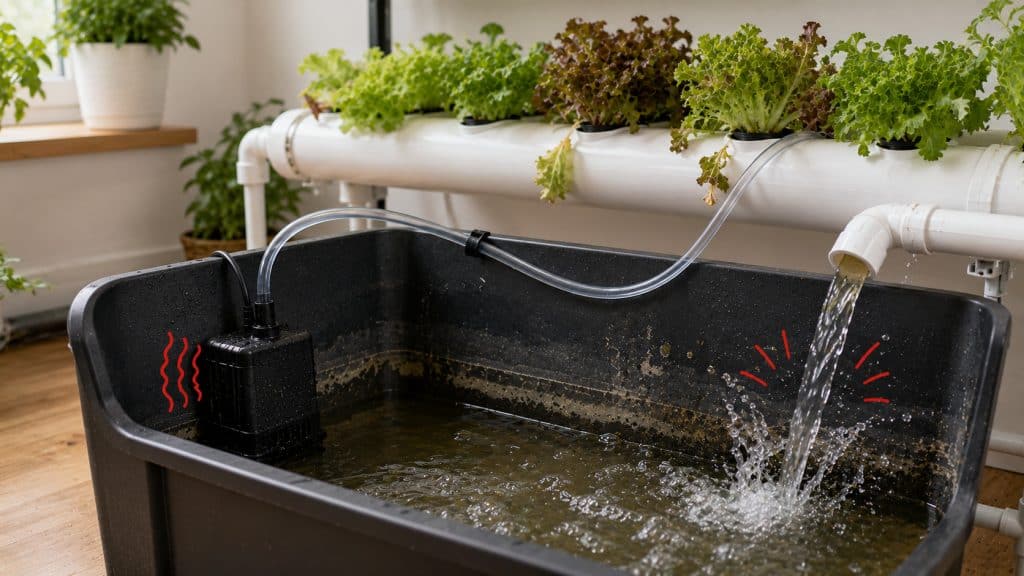
The first mistake is buying a new pump before checking the setup. A hollow shelf, loose lid, or hard reservoir wall can make almost any pump sound louder.
The second mistake is choosing too much power. Extra flow may look useful, but it can create splashing, heat, vibration, and return noise.
The third mistake is running the water level too low. A submersible pump that pulls air can gurgle, rattle, or wear faster.
Another mistake is ignoring tubing. A kinked tube can make a good pump work harder, while a loose tube can tap against the system all day.
The last mistake is hiding the pump where it never gets cleaned. A dirty intake often turns a quiet pump into a loud one.
Quiet Pump Troubleshooting Table
Use this table to check Quiet Pumps for Hydroponic Systems before replacing the pump. Many noise problems come from water level, vibration, tubing, or clogged intake parts.
| Sound You Hear | Likely Cause | First Fix |
|---|---|---|
| Deep hum | Vibration moving through tank or shelf | Add a soft pad and move pump away from hard walls |
| Gurgling | Pump is pulling air | Raise water level and keep the intake covered |
| Rattling | Loose tubing, lid, or pump body | Secure tubing and reseat the pump |
| Splashing | Return water drops too far | Lower the return outlet |
| Buzzing | Pump is under strain | Check head height, tubing bends, and clogged intake |
| Grinding | Debris or worn impeller | Clean the pump and inspect moving parts |
Change one thing at a time. If you fix everything at once, you will not know what actually reduced the sound.
A quiet setup should stay quiet after a few days. If the same sound returns quickly, add pump cleaning and water-level checks to your regular routine.
When a Quiet Pump Is Worth Replacing
A pump does not need replacement just because it has a soft hum. Most pumps make some sound. Replacement makes sense when the noise changes suddenly, flow drops, the pump overheats, or cleaning no longer helps.
Also consider replacement when the system grows. If you add more channels, raise the outlet, or increase tubing length, the old pump may start working too hard.
Do not replace a noisy pump with the strongest model you can find. Choose one that matches reservoir size, flow needs, head height, and room comfort.
Quiet Pumps for Hydroponic Systems work best when the pump fits the system and the setup prevents vibration from spreading.
Quiet Pumps for Hydroponic Systems are worth replacing when cleaning, repositioning, and tubing fixes no longer reduce the sound. At that point, the pump may be worn, undersized, or no longer suitable for the expanded setup.
FAQ
What are Quiet Pumps for Hydroponic Systems?
Quiet Pumps for Hydroponic Systems are pumps selected or set up to reduce hum, vibration, splashing, and rattling while still moving enough nutrient solution for healthy roots.
Why is my hydroponic pump loud at night?
A pump may feel louder at night because the room is quieter and vibration becomes easier to notice. Check the shelf, reservoir wall, tubing, and return water before replacing the pump.
Are submersible pumps quieter than inline pumps?
Submersible pumps are often quieter in small indoor systems because water surrounds the pump body. Inline pumps can work quietly too, but they need stable mounting and secure plumbing.
How do I make a hydroponic pump quieter without buying a new one?
Keep the pump fully submerged, move it away from hard surfaces, add a soft vibration pad, clean the intake, smooth the tubing path, and reduce return-water splash.
Can a quiet pump still be strong enough?
Yes. A quiet pump can be strong enough if it is sized for the system’s flow rate, head height, tubing length, and crop needs. Quiet should not mean weak.
Build a Calmer Hydroponic System That Still Feeds Roots
Quiet Pumps for Hydroponic Systems should make indoor growing calmer without weakening nutrient movement.
Start with the simple fixes. Check water level, tubing, pump contact points, return splash, and intake cleanliness. These small changes often reduce noise without replacing the pump.
For Top Hydroponic Garden readers, the smartest choice is a pump that fits the system and the room. When flow, placement, and maintenance work together, the garden can run calmly in the background.
References
- https://www.epa.gov/clean-air-act-overview/clean-air-act-title-iv-noise-pollution
- https://www.who.int/tools/compendium-on-health-and-environment/environmental-noise
Related Articles
- https://tophydroponicgarden.com/top-5-home-hydroponic-kits/
- https://tophydroponicgarden.com/best-indoor-hydroponic-kits/
- https://tophydroponicgarden.com/choosing-the-right-size-air-pump-for-dwc/
Was this helpful?

I’m Barrie L., a passionate hydroponic gardening enthusiast dedicated to cultivating thriving, soil-less gardens. With a focus on all things hydroponic, I share my expertise on innovative growing techniques and sustainable practices through my blog, tophydroponicgarden.com. As a seasoned hydroponics specialist, my goal is to inspire and guide fellow gardeners in harnessing the power of water-based cultivation for bountiful and eco-friendly harvests. I’m also an author of the book “Hydroponics For Absolute Beginners: Your Step By Step Guide For How To Create An Hydroponics System At Home Without Soil, For Growing Vegetable, Fruit And Herbs.” which is sold on Amazon. Join me on a journey of redefining the way we cultivate plants, one nutrient-rich solution at a time. Happy growing!