

Credit: Pixabay.com (Photo by rahmatnovianto071191)
Getting pH right in hydroponics isn’t rocket science, but it’s close. The real key is pH buffer capacity in hydroponics, how much your solution resists sudden swings when acids or bases are added. Think of it as the system’s stubborn streak, and in this case, stubborn is good.
Plants demand a steady pH, usually between 5.5 and 6.5, and without soil’s natural buffering, things can spiral fast. Nutrient lockout, root stress, stunted growth. These are the headaches growers face. Here’s what really matters about buffer capacity and how to keep pH from wrecking your crop.
Key Takeaways
- Strong buffers mean your pH won’t go bonkers every time a plant decides to drink. Plus, your nutrients stay available instead of turning into expensive colored water.
- Those carbonates floating around in your solution? They’re like tiny pH stabilizers. RO or demineralized water has almost no buffering capacity (near 0 ppm alkalinity), meaning even small additions of acid or base can cause major pH swings.
- Smart growers often use potassium bicarbonate (KHCO₃) to boost alkalinity in RO/soft-water systems. It’s fast-acting and soluble. Calcium carbonate (CaCO₃) can buffer too, but dissolves slowly and may cause precipitation if overused.
- KHCO₃ is widely recommended for quick buffering; CaCO₃ works but has solubility/precipitation concerns They’re not magic bullets, but they’ll save your plants from pH drama that could wreck your whole crop.
pH Buffer Capacity in Hydroponics
Let me break this down real simple. Buffer capacity isn’t complicated. Your nutrient solution’s either tough enough to handle pH changes or it isn’t. When something tries to make it more acidic or basic, a good buffer just shrugs it off. Pretty straightforward stuff.
How Plants Mess With pH
Plants are always doing chemistry in your reservoir. They grab some nitrate here, dump some ammonium there. Each time they do, they’re pushing your pH around. Good buffers can take it. Bad ones? They fold faster than a cheap lawn chair.
Why Stable pH Matters
Listen. You can dump a fortune into fancy nutrients, but pH determines if your plants can actually use them. Iron checks out when pH gets too high. Low pH (below 5) can impair magnesium uptake in some crops, and high pH can reduce availability of calcium and other nutrients.
That’s why keeping a stable hydroponic pH is key to avoiding silent nutrient failures that creep up on growers.Low pH hinders Mg uptake, and higher pH reduces availability of K, P, Ca, Mg (with micronutrients, especially iron that significantly impacted).
The Sweet Spot
Keep your pH between 5.5 and 6.5. That’s where plants can actually eat what you’re feeding them. Not rocket science. But man, keeping it there sometimes feels like trying to balance a marble on a bowling ball.
Soil vs Hydro Buffering
Soil growers got it easy. All that organic matter and clay does the work for them. But hydro? One wrong move and your whole system goes sideways. You’re basically working with fancy water, so you gotta stay sharp. No days off when it comes to pH management.
Factors Affecting pH Buffer Capacity in Hydroponic Nutrient Solutions

credit: Hoocho
Nobody walks into hydroponics thinking about buffer capacity. But man, once you see your pH numbers bouncing around like a ping pong ball, you start paying attention real quick.
Influence of Dissolved Minerals on Buffering Capacity
Water’s complicated stuff in hydroponics. Sure, it looks simple enough. Wet, clear, splashes when you drop it. But it’s carrying around this invisible chemistry lab that either keeps your pH rock steady or lets it go completely wild.
Role of Carbonates in Hard Water
People love to complain about hard water. Moderate alkalinity, roughly 50 to 100 ppm CaCO₃, depending on crop and system, can help buffer pH. Levels over 75 ppm may push pH upward and require more management, which notes high-alkaline water (over 75 ppm) tends to raise pH and demands closer monitoring (1).
Impact of Low Mineral Content in RO Water
And then there’s RO water. Looks pure as snow, right? Well that’s exactly the problem. Strip out all those minerals and you’ve basically got pH chaos in a bottle. One tiny change and boom, your numbers are all over the place.
Effect of Plant Ion Uptake on pH Fluctuations
Plants are sneaky little chemists. They’re always up to something in that nutrient solution.
Ion Absorption Rates
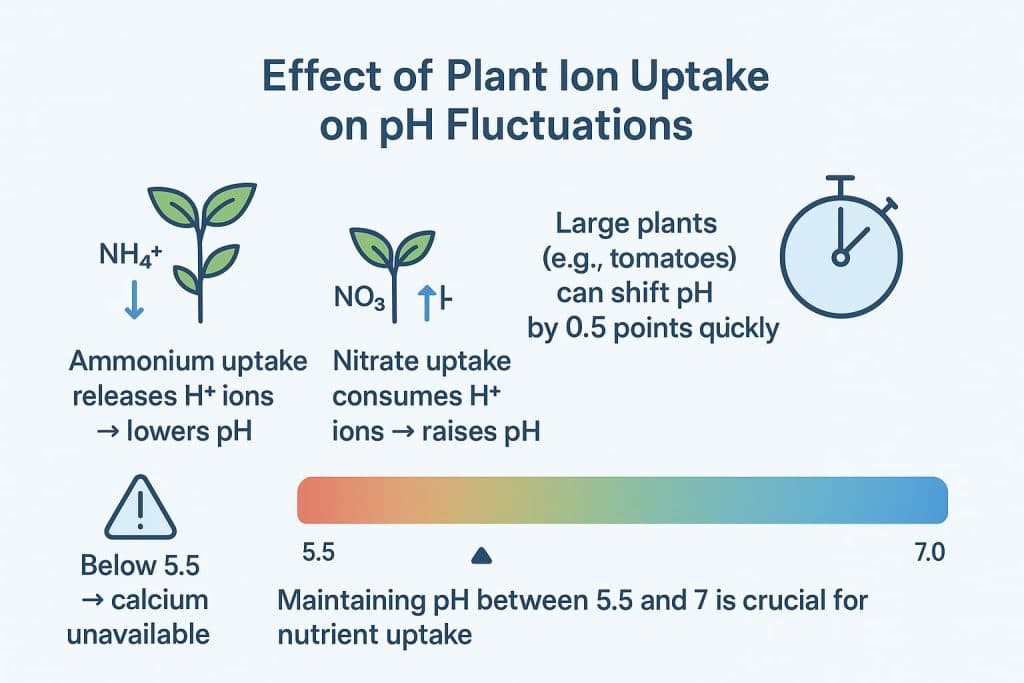
Watch a plant grab some ammonium ions and suddenly it’s spitting out hydrogen ions like it found them on sale somewhere. Switch to nitrate and now it’s doing the opposite. A big tomato plant? It’ll push your pH around by half a point before you even finish your morning coffee.
Consequences of pH Changes
Let that pH drift and your plants are gonna have a bad time. Doesn’t matter if you dumped a fortune into premium nutrients. Above 7.0? Iron’s gone. Below 5.5? Good luck finding any calcium. Your plants end up looking like they’re trying to diet in an all you can eat buffet. Trust me. Get this stuff sorted out early. Your plants will thank you for it.
Management Practices to Optimize pH Buffer Capacity in Hydroponics
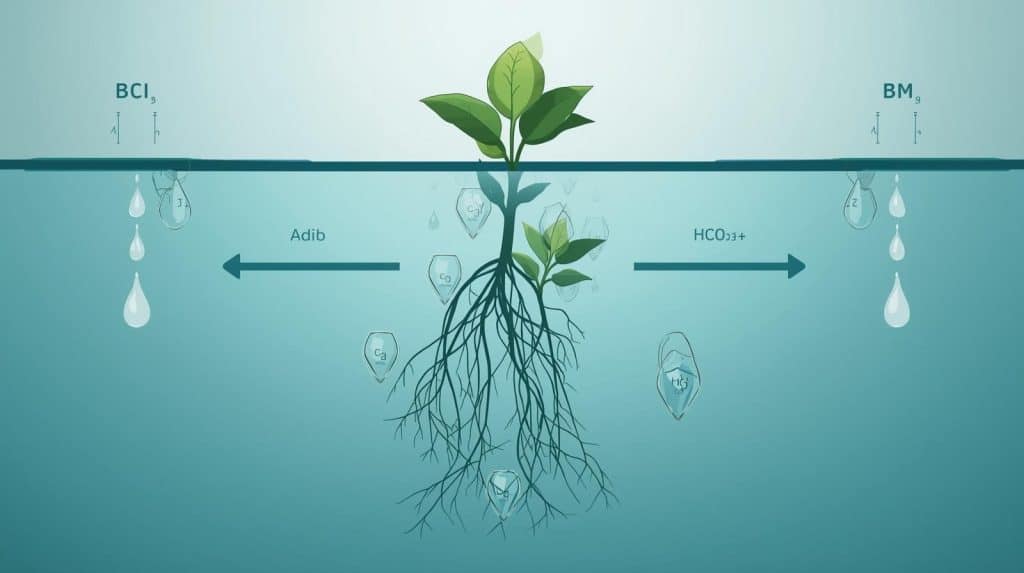
Nobody wants to babysit their hydroponic system 24/7. Getting buffer capacity right means less time fixing problems and more time watching plants grow.
Monitoring and Adjusting pH Levels Regularly
There’s no getting around it. You’ve got to check that pH. A decent pH meter’s cheaper than replacing dead plants.
Techniques for Accurate pH Measurement
Look, your pH meter isn’t magic. Calibrate the thing. Seriously. I don’t care if it cost you five hundred bucks, an uncalibrated meter is about as useful as a chocolate teapot.
Check everywhere too. The reservoir might read perfect, but dig deeper. Those roots could be sitting in something completely different down there. Seen it a hundred times. Perfect readings up top, root rot below because nobody bothered to check.
Funny thing about pH meters. People love bragging about their expensive ones. But here’s the truth: give me a hundred dollar meter that’s calibrated over some fancy unit that hasn’t seen a calibration solution since last Christmas. Numbers don’t lie, but uncalibrated meters sure do.
Basic stuff really. But you’d be amazed how many people skip it. Then they wonder why their plants look like they’re trying to survive the apocalypse. Just check your spots and keep that meter honest. Simple as that.
Scheduling pH Adjustments
Nobody likes constantly messing with pH. But a little adjustment each morning beats the heck out of watching your numbers go crazy. Some folks let their pH drift for days, then panic and dump half a bottle of pH down in there.
Seriously? That’s just asking your plants to hate you. The smarter move is to adjust pH in hydroponics steadily instead of hitting plants with harsh swings.
Managing Your Minerals
Here’s something most people don’t get. Those minerals floating around in your solution? They’re doing double duty. Sure, they feed your plants. But they’re also keeping your pH from bouncing all over the place.
Starting with good water makes life so much easier. Everyone loves talking about their fancy RO systems. But straight RO water’s about as stable as a three legged chair. Give me tap water with around 100 ppm hardness any day. At least it won’t throw a fit every time you look at it funny.
When you’re adding buffers, think of it like making soup. Little bit here, little bit there. Taste as you go. Well, don’t actually taste it. But keep checking that EC meter because anything over 2.4 means you’re probably just wasting money. Nobody wants that.
Impact on Plant Health
When your buffers are working right, your plants can actually focus on growing instead of surviving pH swings. No more mystery deficiencies showing up overnight. No more stressed-out plants looking like they’re trying to survive a drought in the middle of your perfectly good nutrient solution.
System Design Smarts
The best growers I know? They nail their buffer game before filling the first reservoir. Sort your water source first, know your nutrients, and consider an automated pH system if you can swing it.
Precision setups are backed by a booming market, with the global hydroponics sector valued at around USD 6.23 billion in 2025, projected to hit USD 18 billion by 2034. Fixing buffer issues mid-stream? It’s about as fun as performing surgery on yourself. (2)
FAQ: pH Buffer Capacity in Hydroponics
How do low pH and high pH affect the root zone and plant growth in a hydroponic system?
Low pH or high pH in hydroponic systems can upset the root zone, making it harder for plants to get nutrients. When ph levels drift outside the optimal ph range, nutrient uptake slows and nutrient deficiencies appear. Keeping the ph in hydroponics steady helps plant growth stay strong.
Why is monitoring the ph level with ph meters or a litmus test important for nutrient solutions?
When you test the ph of a hydroponic nutrient solution, you see how close it is to the right spot on the ph scale. Using ph meters or even a simple litmus test lets growers catch ph changes early. Accurate ph testing helps protect nutrient availability and keeps solution ph in balance.
How do buffer solution and buffering agent choices like potassium bicarbonate improve ph control in hydroponic systems?
A buffer solution helps soften ph fluctuations that happen inside hydroponic solutions. Adding a buffering agent such as potassium bicarbonate can stabilize the ph of the nutrient solution. These tools improve ph control, making sure nutrient solution ph stays steady, which supports healthy crop production and strong hydroponic nutrient solution performance.
What role do hydrogen ions and phosphoric acid play in adjusting the ph of hydroponic nutrient solution?
Hydrogen ions drive ph changes in hydroponic nutrient solutions, shifting the balance of the solution ph. When growers adjust the ph, they often add acids like phosphoric acid. This changes hydroponic nutrient solution ph to keep it within the best ph range. Proper ph control is vital for nutrient uptake and avoiding nutrient deficiencies.
How do nutrient solution ph, electrical conductivity, and water use efficiency affect nutrient availability in soilless culture?
In soilless culture, nutrient solution ph works hand in hand with electrical conductivity to guide nutrient availability. Poor ph control can cause nutrient deficiencies and wasted water. When hydroponic systems hold a stable hydroponic solution and hydroponic nutrient solution ph, water use efficiency improves, nutrient solutions stay balanced, and controlled environment farming gives better results.
How do you use a ph kit, ph test kit, or digital ph probe to test ph values and check the ph level in hydroponic systems?
Using a ph kit, ph test kit, or a digital ph probe helps growers measure ph values and check the ph level of nutrient solutions. These ph tests give a clear idea of whether the solution is acidic ph, neutral ph, or outside the preferred ph ranges. Testing ph often ensures plant health and keeps crop growth steady.
Why does ph buffering matter for plant roots, root growth, and crops grown in small scale or large hydroponic systems?
Ph buffering helps stabilize ph so plant roots don’t face sudden ph changes. Without ph buffers, crops grown in hydroponic systems may struggle with nutrient use and root growth. Testing ph with a testing kit or ph paper makes it easier to keep ph in the optimal range, supporting healthy crops and steady crop growth.
How do weak acid sources like acetic acid or citric acid help adjust ph and stabilize ph in source water for plants grown in hydroponics?
Weak acid inputs such as acetic acid or citric acid are sometimes used to lower the ph of source water. These acids adjust ph gently, helping growers reach the desired ph and keep solution ph stable. By using these acids to raise the ph or lower the ph within the optimal range, plants grown in soilless systems can avoid stress and keep good plant health.
What role do ph ranges, common ph values, and optimal range play in leafy greens and other crops grown in hydroponic grow kits or test kits?
Different crops grown in hydroponic systems have their own preferred ph. Leafy greens often thrive in a narrow optimal range, while other plants grown in grow kits may handle wider ph ranges. Knowing these common ph values and measuring ph regularly with test kits helps growers reach the ideal ph needed for crop growth and strong plant health.
Conclusion
Getting pH buffer capacity right isn’t some mystical art – it’s just good hydroponics. The water you start with, what your plants are doing, and which buffers you throw in the mix all push and pull on your solution’s stability. Most hydroponic headaches trace back to pH gone wild, but they don’t have to.
Look, if you’re running a system or thinking about starting one, grab a water test kit first. About $30 at any decent grow shop will tell you what you’re working with. Many growers only realize after struggling that most pH issues in hydroponics could have been avoided with consistent monitoring and early corrections.
Under 50 ppm? You’ll need to add some muscle to keep that pH steady. This isn’t about making things complicated – it’s about growing better plants with less hassle. A stable pH means your expensive nutrients actually feed your plants instead of just making pretty colors in the reservoir. That’s real money in your pocket at harvest time.
Related Articles
- https://tophydroponicgarden.com/hydroponic-ph-stability-tips/
- https://tophydroponicgarden.com/how-to-adjust-ph-in-hydroponics/
- https://tophydroponicgarden.com/troubleshooting-ph-issues-in-hydroponics/
References
- https://extension.okstate.edu/fact-sheets/electrical-conductivity-and-ph-guide-for-hydroponics.html
- https://www.precedenceresearch.com/hydroponics-market
Was this helpful?

I’m Barrie L., a passionate hydroponic gardening enthusiast dedicated to cultivating thriving, soil-less gardens. With a focus on all things hydroponic, I share my expertise on innovative growing techniques and sustainable practices through my blog, tophydroponicgarden.com. As a seasoned hydroponics specialist, my goal is to inspire and guide fellow gardeners in harnessing the power of water-based cultivation for bountiful and eco-friendly harvests. I’m also an author of the book “Hydroponics For Absolute Beginners: Your Step By Step Guide For How To Create An Hydroponics System At Home Without Soil, For Growing Vegetable, Fruit And Herbs.” which is sold on Amazon. Join me on a journey of redefining the way we cultivate plants, one nutrient-rich solution at a time. Happy growing!