

An NFT system grows strawberries by flowing a thin, nutrient-rich film over their roots, giving steady water, oxygen, and nutrients.
This approach fits strawberries well because of their shallow roots and helps maximize space, water use, and control. Unlike soil, the nutrient solution cycles continuously, keeping fruit cleaner and growth consistent.
Varieties like Albion, Seascape, and Tristar thrive here, especially in vertical setups. Interested in how to build and run your own NFT system for strawberries? Keep reading.
Quick Flows – NFT Strawberry Growing Made Practical
Get your channel angle right, keep nutrients and your system clean, and you’ll have Albion and Seascape strawberries coming in steady.
- NFT systems use a thin stream of nutrients that keeps roots dry enough to breathe that’s the whole magic.
- Your channel slope, how you manage nutrients, and staying on top of cleaning separate the growers who succeed from the ones who struggle.
- Albion and Seascape are your best bets in NFT setups. They just work.
How NFT Systems Work for Growing Strawberries: A Complete Setup Guide
Understanding how a Nutrient Film Technique (NFT) system operates is your first step to unlocking massive strawberry harvests. Unlike setups that submerge roots, an NFT system runs a continuous, shallow stream of water through slightly sloped channels.
The bottom of your strawberry roots brush against a 1-2 mm nutrient film depth, while the upper root zone stays exposed to air for maximum oxygenation. This balance gives plants unlimited access to both food and oxygen simultaneously.
Strawberries love oxygenated root zones. Stagnant water triggers root rot, while dry channels stall growth. NFT systems elegantly bypass both traps by keeping a steady flow.
The basic loop runs 24/7:
- A reservoir stores your mixed nutrient solution.
- A submersible pump pushes it to the high end of the growing channels.
- A thin film of nutrients glides smoothly beneath the roots.
- Gravity carries excess water down the slope, draining it back into the reservoir.
This space-saving loop keeps fruit elevated, clean, and rot-free. Plus, monitoring root health is incredibly easy. Healthy strawberry roots always look bright white or cream-colored. If you spot brown slime or notice a foul odor, you know instantly that something needs fixing.
Why Do Strawberry Roots Benefit From NFT Systems?

Strawberry roots need constant access to fresh air just as much as they need water. In a traditional backyard garden, roots find tiny air pockets trapped between bits of soil. NFT systems replicate this natural balance perfectly without using any dirt, letting your plants drink all day long without ever feeling suffocated.
Maintaining dissolved oxygen levels above 6 mg/L directly supercharges your strawberry roots’ ability to absorb nutrients. This steady supply of oxygen accelerates vegetative growth rates and builds a much stronger root structure.
As long as you keep your reservoir settings stable, you will notice that NFT strawberries grow much faster and stay significantly cleaner than soil-grown crops. Because the running water stays highly oxygenated and flows continuously, it prevents the stagnant, anaerobic environments that harmful pathogens love.
This active flow protects your plants, resulting in almost zero root diseases or crop failure throughout the entire growing season.
Essential Components You Need for a Successful NFT Strawberry System
Every great NFT setup relies on a few core pieces of hardware. Choosing high-quality, dependable gear right from the start will save you from major headaches down the road.
Most system failures happen because of simple math errors like buying a pump rated below 3 GPH, using narrow channels that invite root clogging, or running a reservoir under 5 gallons that swings wildly in temperature and pH.
The checklist below outlines the exact gear you need to buy:
| Component | Purpose | Recommended Option |
| NFT Channels | Houses the root zone and guides water | Food-grade PVC or UV-resistant HDPE |
| Reservoir | Stores your water and nutrient mix | Any heavy-duty, light-proof container |
| Submersible Pump | Circulates the water around the clock | A reliable, continuous-duty pump |
| Feed Lines | Delivers water to the top of channels | Dark, UV-resistant tubing |
| Return Drain | Returns excess water via gravity | Standard gravity-fed PVC plumbing |
| Net Pots | Holds your plants securely in place | 2 to 3-inch plastic net pots |
| Growing Media | Anchors the roots inside the net pots | Rockwool cubes or loose coco coir |
| Air Pump & Stone | Pumps vital dissolved oxygen into water | Any aquarium-grade aeration kit |
| EC Meter | Measures exact nutrient strength | Digital pen tester |
| pH Meter | Measures water acidity/alkalinity | Calibrated digital pen tester |
When it comes to your growing media, you have a few great choices to hold your plants steady:
- Rockwool cubes
- Coco coir
- Clay pebbles (Hydroton)
- Perlite blends
For the best results, buy bare-root strawberry plants instead of trying to sprout them from seeds. Bare-roots wake up and establish themselves in a hydroponic system much faster than delicate seedlings, and they handle the transition shock incredibly well.
Lastly, do not cheap out on your digital pH and EC meters. Getting crisp, accurate readings lets you spot minor nutrient imbalances early, allowing you to fix them long before your leaves turn yellow or your plants show signs of distress.
Which Components Matter Most?
If you are building your system on a tight budget, spend your money on three things: a high-quality reservoir, a rock-solid pump, and accurate water testers. A dependable pump ensures your plants never go thirsty, while a large, properly sized reservoir keeps your water chemistry stable.
High-end upgrades can wait. Having reliable digital meters to catch shifts in your water chemistry will do far more for your harvest yields than any expensive cosmetic add-on. Stick to the fundamentals first, and the plants will reward you.
Building an NFT Strawberry System from Scratch: Step-by-Step Instructions
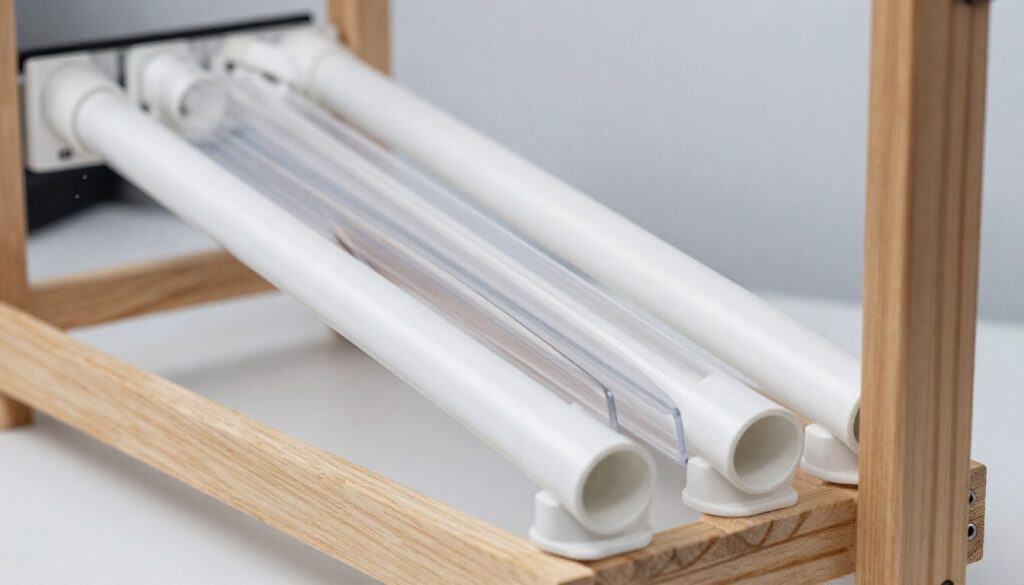
Growing strawberries becomes much easier when you break the process into manageable steps. Careful planning during setup can prevent issues with drainage, uneven nutrient flow, and root health later in the growing season.
Step 1: Select the Location
Select an environment delivering 6 to 8 daily sunlight hours or install full-spectrum LED grow lights set to a 14 to 16-hour daily photoperiod.
The location should also offer:
- Easy access to electricity
- A nearby water source
- Protection from strong winds
- Enough room for maintenance and harvesting
Step 2: Build the Support Frame
Create a sturdy frame using treated lumber, metal supports, or PVC materials.
The frame needs to support:
- Growing channels
- Nutrient solution weight
- Mature strawberry plants
- Developing fruit
Before continuing, confirm that the frame sits level from side to side.
Step 3: Install the NFT Channels
Position the channels with a gentle slope to allow smooth water movement.
Recommended materials include:
- Food-grade PVC
- UV-resistant HDPE channels
- Commercial NFT growing channels
Avoid channels that are too narrow. Strawberry roots expand over time and may restrict water flow if space is limited.
Step 4: Connect the Plumbing
Attach feed lines from the reservoir to the upper end of each channel.
Then install return drains that allow nutrient solution to flow back into the reservoir freely.
Take time to check all connections carefully. Fixing leaks now is much easier than repairing them after plants are established.
Step 5: Install the Reservoir and Pump
Place the reservoir below the growing channels so gravity can assist with drainage.
Connect the submersible pump and verify that water reaches every channel evenly.
Maintain a strict reservoir capacity ratio of 5 to 10 gallons per 10 to 15 strawberry plants to ensure system chemistry stabilization. Larger reservoirs usually provide better pH and nutrient stability.
Step 6: Test Water Flow
Run the system for several hours before adding plants.
Check for the following:
- Smooth nutrient flow
- No standing water inside channels
- Proper drainage back to the reservoir
- No leaks in plumbing connections
- Even distribution across all channels
Only add plants after confirming that everything operates correctly.
A few extra hours spent testing can prevent weeks of troubleshooting later.
Why Is Testing So Important?
Many NFT problems trace back to small setup mistakes that go unnoticed during installation. Poor drainage, uneven channel slopes, or weak pump performance can stress plants quickly.
Running the system before planting gives you time to make adjustments without risking your strawberry crop. Once the system runs smoothly, maintaining healthy plants becomes much easier.
What Is the Ideal Channel Slope and Flow Rate for NFT Strawberry Growing?
NFT channels need a gentle slope and steady water flow to keep strawberry roots healthy without drowning them or letting them dry out.
According to Virginia Cooperative Extension,
“The flow rate from the pump should be 3 to 5 gallons per hour into each channel.” This consistent flow maintains the thin nutrient film that keeps roots oxygenated while delivering steady nutrients. Too fast and water rushes past roots without proper absorption; too slow and roots can dry out or become oxygen-starved. – Virginia Cooperative Extension.
The most commonly recommended slope for NFT systems is about 1:100, which means the channel drops 1 inch for every 100 inches of length. This slight angle allows the nutrient solution to move smoothly through the channel without rushing past the roots.
If the slope is too steep, the water may flow too quickly, giving roots less time to absorb nutrients. If the slope is too shallow, water can collect in low spots and create oxygen-poor conditions that increase the risk of root problems.
The goal is to maintain a thin, continuous film of nutrient solution across the bottom of the channel.
| Parameter | Recommended Range |
| Channel Slope | 1:100 |
| Nutrient Film Depth | 1-2 mm |
| Flow Type | Continuous thin stream |
| Water Temperature | 68°F (20°C) |
| Dissolved Oxygen | Above 6 mg/L preferred |
Several common mistakes can interfere with proper flow:
- Making the channel slope too steep
- Allowing water to pool inside channels
- Installing channels unevenly
- Ignoring blocked return drains
- Using a pump that delivers excessive flow
The ideal flow rate creates a thin stream that lightly bathes the roots instead of flooding them. Healthy roots should receive a steady supply of nutrients while remaining exposed to oxygen.
Many new growers assume faster flow is better. In reality, consistency matters more than speed. A properly adjusted system creates stable growing conditions that support strong root growth and healthy fruit production.
How Can You Tell if the Flow Rate Is Correct?
Check the roots and channels regularly. If roots look white and healthy, and water moves smoothly without pooling, your flow rate is likely appropriate.
If you notice standing water, brown roots, or dry sections within the channel, it’s time to inspect the slope, pump output, and drainage system. Small adjustments often solve problems before they affect plant health.
Best Strawberry Varieties That Thrive in NFT Hydroponic Systems
Day-neutral and everbearing strawberries usually perform best in NFT systems because they produce fruit over longer periods.
NFT systems provide stable conditions that support continuous flowering and fruit development. Varieties that naturally produce berries throughout the season make the most of this controlled environment.
Commercial growers often choose cultivars specifically developed for extended production cycles because they help maximize harvests throughout the year.
| Variety | Type | Why It Works in NFT |
| Albion | Day-neutral | High yield and excellent flavor |
| Seascape | Day-neutral | Reliable production |
| Tristar | Everbearing | Compact growth habit |
| Monterey | Day-neutral | Strong vigor and productivity |
| San Andreas | Day-neutral | Consistent harvests |
Other varieties that many home growers enjoy include:
- Mara des Bois
- Portola
- Evie-2
- Quinault
Day-neutral strawberries are especially popular because they continue producing flowers and fruit under stable temperatures and adequate lighting. This makes them a great choice for indoor systems and year-round growing.
Choosing the right variety often has a bigger impact than upgrading equipment. Even a well-designed NFT system performs better when paired with genetics suited to controlled environments.
Which Variety Is Best for Beginners?
Seascape is often one of the easiest varieties for beginners to grow. It adapts well to different hydroponic setups and tends to produce reliably even when growing conditions are not perfect.
Albion is another excellent option for growers who want larger berries with outstanding flavor. Starting with proven varieties helps build confidence and leads to more consistent harvests.
Optimal Nutrient, pH, and EC Levels for Growing Healthy NFT Strawberries
Stable nutrient levels and pH are essential because NFT-grown strawberries rely entirely on the circulating nutrient solution.
Unlike soil-grown plants, strawberries in NFT systems cannot draw nutrients from stored reserves in the growing medium. Small changes in nutrient concentration or pH can affect growth, flowering, and fruit quality more quickly.
Regular monitoring with calibrated pH and EC meters helps prevent nutrient deficiencies and lockout issues before they become serious.
The following ranges work well for most NFT strawberry systems:
| Parameter | Recommended Range |
| pH | 5.5-6.5 |
| EC | 1.2-2.0 mS/cm |
| Fruiting EC | 1.6-2.0 mS/cm |
| Water Temperature | 68°F (20°C) |
| Dissolved Oxygen | Above 6 mg/L |
The system requires a complete hydroponic mineral profile consisting of Macronutrients (N, P, K, Ca, Mg) and Chelated Micronutrients (Fe, Mn, Zn, B, Cu, Mo).
Essential nutrients include:
- Nitrogen
- Phosphorus
- Potassium
- Calcium
- Magnesium
- Iron
- Chelated micronutrients
Many complete nutrient programs contain ingredients such as:
- Calcium nitrate
- Magnesium sulfate
- Potassium nitrate
- Chelated micronutrient blends
During heavy fruit production, many growers maintain an EC around 1.8 mS/cm. This level often supports healthy berry development without creating excessive salt buildup.
Consistent nutrient management influences more than plant growth. It also affects berry sweetness, firmness, shelf life, and overall fruit quality.
Instead of making frequent large adjustments, focus on maintaining steady conditions. Small corrections made regularly usually lead to better results than constantly changing nutrient recipes.
Why Is pH So Important in NFT Systems?
pH affects how easily plants absorb nutrients.
When pH drifts too far outside the recommended range, strawberries may struggle to take up important nutrients even when those nutrients are present in the reservoir. This can lead to yellowing leaves, slow growth, poor flowering, and reduced fruit quality.
Checking pH several times each week helps catch changes early and keeps plants growing consistently.
Why NFT Strawberry Systems Fail: Common Problems and Prevention Strategies
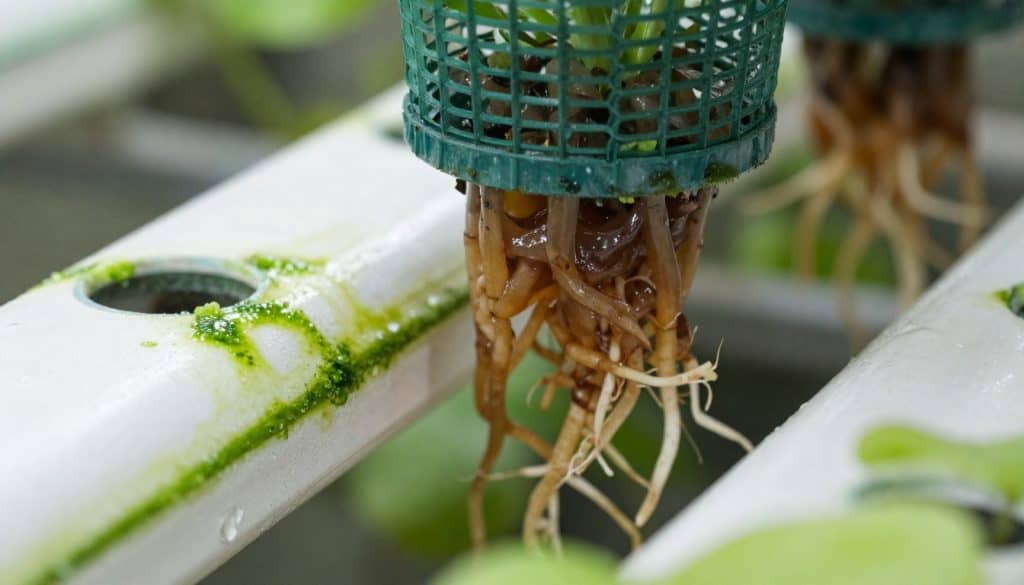
Most NFT strawberry system failures happen because of pump problems, root issues, poor sanitation, or incorrect nutrient management.
According to research published in Frontiers in Plant Science,
“Despite early commercial adoption in Europe during the 1970s, NFT was largely abandoned for strawberry production by the 1980s following systematic failures whose physiological basis remains incompletely characterized.” –Frontiers in Plant Science.
NFT strawberries can grow quickly, but they also depend heavily on stable conditions. Unlike Deep Water Culture (DWC) systems, NFT roots are exposed to air and rely on a steady flow of nutrient solution.
Due to negligible water retention in the channels, pump downtime exceeding 2 to 3 hours causes catastrophic root desiccation
Many common problems develop slowly at first, which is why regular checks matter. Catching small issues early is much easier than dealing with a major system failure later.
Common Failure Points
- Green slime and algae growth
- Root clogging inside channels
- Pump failure
- Poor sanitation
- Incorrect EC levels
- Low dissolved oxygen
- Reservoir overheating
One grower report found success by maintaining an EC of 1.5, a pH of 6.25, and dissolved oxygen levels around 7.67 mg/L. The grower also emphasized the importance of healthy roots and consistent nutrient management.
Real-World Warning Signs
Pay attention to early warning signs before they turn into larger problems.
- Brown roots
- Wilting plants
- Slow growth
- Sour reservoir odors
- Yellow foliage
- Blossom end rot symptoms linked to calcium deficiency
Poor sanitation and warm nutrient solutions can increase the risk of root rot and Pythium infections. Regular inspections help you spot these problems before they affect the entire system.
How Do You Maintain an NFT Strawberry System to Prevent Common Problems?

Credits : Figgin’ Around.
Regular maintenance helps prevent small problems from becoming expensive or time-consuming repairs.
Experienced growers often spend more time checking their systems than fixing emergencies. Small, steady adjustments usually work better than making major changes too often.
A few minutes of routine maintenance each week can improve plant health, support fruit production, and extend the life of your equipment.
Weekly Maintenance Checklist
Set aside time each week to inspect the system and make minor adjustments as needed.
- Check pH levels
- Measure EC levels
- Calibrate meters
- Inspect roots for discoloration or slime
- Verify nutrient flow rates
- Remove old or damaged leaves
- Prune runners when necessary
- Inspect trellis netting and supports
- Confirm pumps are operating correctly
- Monitor reservoir temperature
Regular maintenance also improves airflow around plants and helps reduce the risk of crown rot.
Monthly Maintenance
Monthly cleaning keeps the system running efficiently and lowers the risk of disease buildup.
- Flush the reservoir
- Sanitize plumbing lines
- Inspect fittings and connections
- Clean pumps and filters
- Replace damaged tubing
- Remove algae buildup
Some growers also use products such as:
- Hydroguard
- Beneficial bacteria inoculants
Keeping the system clean is one of the best ways to reduce the risk of root diseases and maintain healthy roots throughout the growing season.
NFT vs Other Hydroponic Systems for Strawberries: Which Works Best
NFT can be an excellent system for growing strawberries, but it requires more attention than simpler hydroponic methods. This setup stands out because many commercial growers choose it to produce more strawberries in a smaller space while using water efficiently.
If you want to understand the science behind it, learning how this continuous water loop operates will show you exactly why it drives such fast growth.
The system works especially well for growers who want cleaner fruit, efficient nutrient delivery, and high planting density.
NFT systems also pair well with:
- Vertical NFT systems
- A-frame NFT structures
- Stackable channels
- Balcony hydroponic setups
- Greenhouse production systems
Before choosing NFT, it’s helpful to understand both its strengths and its challenges.
| Advantage | Limitation |
| Excellent root oxygenation | Sensitive to pump failures |
| Efficient water use | Roots can dry out quickly |
| Easy to automate | Requires regular monitoring |
| Cleaner fruit | Potential for channel clogging |
| High-density production | More technical management |
Growers who monitor nutrients regularly, maintain proper flow rates, and keep their systems clean often produce larger harvests and better-quality fruit.
NFT is not necessarily the easiest hydroponic system for beginners, but many growers find that the extra effort pays off with reliable production and efficient use of space.
FAQ
How do you maintain the perfect water flow rate inside your NFT gutter?
You need to tune your submersible pump to keep a steady flow rate liters per minute running past your plants.
Angling your grow channel slope correctly ensures the liquid glides smoothly instead of pooling up, which maximizes root zone oxygenation. If the stream gets too deep, you will drown the plant roots and trigger a Pythium outbreak.
What is the best way to prevent algae growth inside a DIY NFT build?
You must use a light proof reservoir and food grade PVC or UV resistant HDPE pipes that completely block out the sun. Make sure you fill or cover every empty net pots opening so light cannot leak inside. Algae steals the vital dissolved oxygen from your strawberry hydroponics system, which suffocates the roots and causes a severe nutrient lockout.
How do you balance the nutrient levels to stop blossom end rot calcium issues?
You need to watch your nutrient solution EC closely by checking your reservoir every single day with an EC meter.
Keep your electrical conductivity 1.8 target stable and blend in calcium nitrate alongside magnesium sulfate to power your berries. Maintaining a pH 5.5 sweet spot ensures your plants can actually drink up these essential minerals.
Do you need to keep the water running constantly in a nutrient film technique setup?
Yes, you must run your pump twenty-four hours a day because this is a continuous flow system. The thin film depth at the bottom of the pipe holds almost no extra moisture, so your bare root strawberry plants will dry out and die within hours if the water stops. Constant movement keeps nutrient recirculation working to feed your crop.
How do you successfully manage pollination for an indoor berry garden using A frame NFT channels?
You have to tackle the hand pollination strawberry steps yourself because indoor rooms lack the wind and bumblebees that outdoor gardens rely on.
Wait until the flowers open up completely, then use a soft paintbrush pollination trick to gently swirl the inside of each bloom. This spreads the pollen perfectly to secure a high density planting harvest.
Building an NFT Strawberry System That Delivers Consistent Results
NFT strawberries can be incredibly productive, but small problems tend to add up fast. Poor water flow, unhealthy roots, or inconsistent nutrient levels can slow growth and reduce fruit production. That’s the challenge.
The best systems keep things simple and consistent. Focus on steady nutrient circulation, clean equipment, healthy root conditions, and regular monitoring.
When you get those basics right, strawberry plants reward you with stronger growth and better harvests. Tophydroponicgarden provides practical guidance to help growers build reliable NFT systems without making the process more complicated than it needs to be.
References
- https://www.frontiersin.org/journals/plant-science/articles/10.3389/fpls.2026.1829367/full
- https://www.pubs.ext.vt.edu/SPES/spes-463/spes-463.html
Related Articles
- https://tophydroponicgarden.com/growing-strawberries-in-an-nft-system/
- https://tophydroponicgarden.com/what-is-a-nutrient-film-technique-system/
- https://tophydroponicgarden.com/nutrient-film-technique/
Was this helpful?

I’m Barrie L., a passionate hydroponic gardening enthusiast dedicated to cultivating thriving, soil-less gardens. With a focus on all things hydroponic, I share my expertise on innovative growing techniques and sustainable practices through my blog, tophydroponicgarden.com. As a seasoned hydroponics specialist, my goal is to inspire and guide fellow gardeners in harnessing the power of water-based cultivation for bountiful and eco-friendly harvests. I’m also an author of the book “Hydroponics For Absolute Beginners: Your Step By Step Guide For How To Create An Hydroponics System At Home Without Soil, For Growing Vegetable, Fruit And Herbs.” which is sold on Amazon. Join me on a journey of redefining the way we cultivate plants, one nutrient-rich solution at a time. Happy growing!