

Hydroponic pump maintenance keeps water flowing, nutrients moving, and plants healthy.
Skip it for too long, and small issues can turn into clogged lines, weak circulation, or a pump that quits when it’s needed most.
Regular checkups don’t take much time, but they can help avoid expensive repairs and keep the system running day after day. That’s worth it, in my opinion.
Keep reading for a practical maintenance routine that can help your pump stay reliable for years.
Pump Care Essentials for Long-Term Performance
A well-maintained pump delivers steady water flow, healthier roots, and fewer unexpected breakdowns. Following a simple inspection and cleaning routine helps your hydroponic system run efficiently while extending the life of key pump components.
- Follow a monthly inspection routine and perform a quarterly deep cleaning to maximize water pump lifespan.
- Prevent mineral scale, biofilm, overheating, and dry running before they damage critical pump components.
- Build a practical long-term maintenance schedule for Tophydroponicgarden systems that minimizes breakdowns and improves hydroponic system efficiency.
Why Is Long-Term Care for Your Hydroponic Pump Essential?
Hydroponic pumps keep water moving, protect roots, and help avoid surprise breakdowns. You can’t run a hydroponic system without steady water flow.
Whether it’s Nutrient Film Technique (NFT), deep water culture, or drip irrigation, the pump delivers oxygen-rich nutrients through the pipes and reservoir. When the pump stops, oxygen drops fast, and plant roots start to suffer.
The University of Minnesota Extension points out that steady circulation keeps nutrients available and root zones healthy. It also stops algae and slimy biofilm from building up in still water pockets.
Maintenance isn’t just about saving the motor, it also helps keep water clean, lowers how much electricity the pump uses, and makes sure plants get enough oxygen all the time.
Stable circulation is equally important throughout a plant’s life cycle, when consistent nutrient delivery supports healthy growth. Taking care of your pump over the long haul costs less, too, since many problems come from things you can avoid, not from defects.
Here’s what good pump maintenance does for you:
- Keeps water flowing well in your system
- Cuts down the chance the pump motor will break
- Stops the pump from overheating
- Boosts oxygen in the nutrient solution
- Makes your submersible pump last longer
Staying on top of pump upkeep means healthier plants, and fewer surprises.
What Causes Hydroponic Pumps to Fail Over Time?
Hydroponic pumps rarely fail all at once. Most breakdowns creep in, caused by mineral buildup, clogged screens, biofilm growth, overheating, or running dry, each one adding strain over time.
Take mineral deposits, for example. Little by little, calcium carbonate gathers around the pump’s ceramic shaft and magnetic impeller, making them rub harder together.
That friction slows water flow and raises resistance inside the pump housing. You might notice the pump isn’t pushing water as well as before, but by then, the damage has been building for a while.
Biofilm is another sneaky foe. This slimy layer loves warm, nutrient-rich water and sticks to the insides of pumps and pipes. It chokes water movement, making the pump work harder and run hotter. On top of that, biofilm invites algae growth, which can clog up the system even more.
As noted by National Center for Biotechnology Information,
“Academic research on microbial contamination in hydroponic farms highlights that biofilm formation in pumps and tubing presents “critical challenges and risks” as pathogens can persist even through standard cleaning methods . This underscores why deep cleaning is vital for more than just pump efficiency, it’s a food safety issue.” – National Center for Biotechnology Information
And don’t forget root bits and algae that block the intake screen. These clog-ups force the motor to strain while pushing less water, sort of like running a marathon uphill with a backpack full of rocks.
One problem many growers miss? Dry running. Submersible pumps depend on water not just to move nutrients but also to keep parts cooled and lubricated. Letting the pump run without enough water, even for a moment, risks cracking delicate ceramic shafts or ruining plastic parts for good.
Before setting a maintenance routine, it helps to know how these contaminants hit your pump’s parts.
Why does mineral scale reduce pump efficiency?
Hard minerals build up over time, making the pump work against growing friction. Calcium and magnesium coat the impeller and shaft, upping resistance and cutting water pressure.
The motor ends up working harder and using more power, and the whole system slows down.
The University of Minnesota Extension points out that water quality plays a big role in how long hydroponic gear lasts. Using reverse-osmosis water can cut down how often you need to clean, saving time and trouble.
How does biofilm affect pump performance?
Biofilm not only slows water flow but also causes heat to build inside the pump. As this slimy layer thickens on internal surfaces, the impeller struggles against added resistance, leading to weaker circulation and lower oxygen levels.
That’s a red flag for stressed roots. Biofilm also encourages algae, which spreads through reservoirs and pipes, making sanitation a key part of keeping your system healthy.
Keeping these problems in check is how your pump, and plants, stay on track.
How Often Should You Maintain a Hydroponic Pump?
I’ve noticed that keeping a hydroponic pump running smoothly is less about fixing problems and more about regular check-ins.
Treat maintenance like a routine, don’t wait for something to break. A monthly inspection paired with a deep clean every three months tends to keep pumps humming along longer and with fewer surprises.
Here’s a straightforward schedule that makes sense whether you’re a hobbyist or aiming for something closer to commercial upkeep.
| Frequency | Maintanance Task | Purpose |
| Weekly | Check reservoir water level | Avoid dry running |
| Monthly | Inspect pump and clean intake screen | Keep water flowing smoothly |
| Quarterly | Deep clean pump parts | Remove mineral scale and biofilm |
| Yearly | Replace seals, impeller, or shaft if worn | Stop sudden breakdowns |
Weekly checks are quick, just make sure the pump stays fully underwater, listen for odd noises, and watch that the flow keeps steady.
Monthly, focus on clearing out the intake screen and checking for blockages or buildup before it causes real trouble.
Then quarterly, go deep: take the pump apart, scrub off mineral deposits, keep the magnetic impeller in good shape, and check seals for wear and tear.
If your system uses organic nutrients or hard water, these intervals might need to be tighter. Nutrient buildup and calcium deposits pile on faster, making more frequent cleanings worth the effort.
Following this rhythm isn’t just about pump health; it’s about protecting your whole hydroponic setup from slow declines masked by small, avoidable issues.
Which Monthly Maintenance Tasks Deliver the Biggest Benefits?

Credits : Aquaponics Revolution
I’ve found that small monthly pump inspections catch most problems before they grow into costly repairs.
These quick checks don’t take much time but give you early clues, like unusual noises, weaker water flow, or clogged intake screens, that something’s going wrong. Plus, routine inspections help keep plumbing clean since debris rarely gets the chance to build up into serious blockages.
Before you dive into deep cleaning, making monthly inspections a regular habit is key for every grower. Here’s what to focus on:
- Water flow consistency
- Pump vibration or wobbling
- Strange or loud pump noises
- Intake screen blockages
- Pump housing condition
- Wiring and electrical safety
- Cleanliness of the reservoir
Each of these points paints a fuller picture of your system’s health. For example, if water slows down a little, it usually means some debris is building up, not that the motor is about to quit. That’s a chance to act early before things get worse.
Why spend time cleaning the intake screen? Because it protects nearly every moving part inside the pump. A clear screen:
- Keeps water flowing smoothly
- Reduces strain on the motor
- Stops root debris from piling up
- Saves the impeller from getting clogged and damaged
When the intake stays clear, it also helps maintain steady pressure throughout your whole hydroponic setup, especially in NFT systems and drip irrigation. It’s a small step with big benefits that keeps everything running without hiccups.
How Do You Deep Clean a Hydroponic Pump Without Damaging It?
There’s a careful balance to cleaning a hydroponic pump, you want to clear away mineral buildup and biofilm without harming the delicate parts that keep it working. These deposits, like calcium carbonate, don’t just disappear with a quick rinse.
Start by unplugging the pump and pulling it out of the reservoir to drain. Open it up slowly, keeping track of each piece so you don’t get lost putting it back together. Take out the impeller and ceramic shaft gently.
Then, soak these parts in a mixture of half white vinegar and half water for about half an hour, or longer if buildup is stubborn. Citric acid works well, too, especially for tougher scale, it cleans faster and doesn’t leave a strong smell.
After soaking, use a soft toothbrush to carefully loosen deposits. Rinse everything well with clean or reverse-osmosis water to avoid leftover residue.
Before putting the pump back, check parts for cracks or worn seals. These fragile pieces, the ceramic shaft, magnetic impeller, seals, and housing, take the most damage, and a little wear can cause big problems like low pressure or strange noises.
Being gentle, patient, and consistent with this cleaning routine not only keeps your pump running smoothly but also protects your whole hydroponic system from unexpected hiccups.
Taking the same care whenever you clean a hydroponic system also helps reduce buildup that can shorten pump life.
Why Is Dry Running So Dangerous?
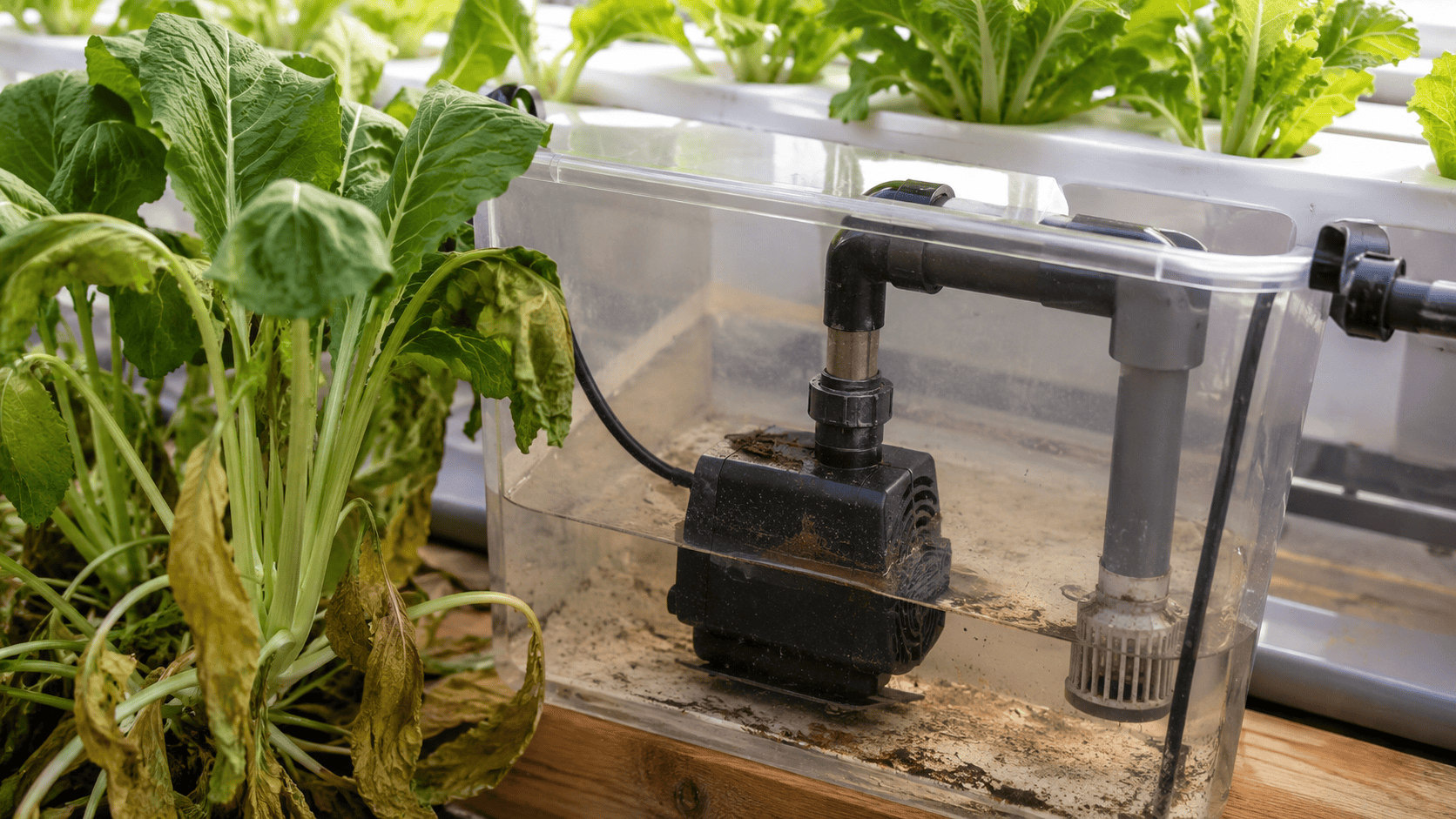
I keep coming back to one thing: water is life, for hydroponic pumps, literally. These pumps rely on being submerged to keep cool and lubricated.
Dry running, when the pump runs without enough water, is one of the fastest ways to ruin the motor and its bearings.
Submersible pumps transfer heat into the water around them. When the water level drops too low, heat builds quickly, and friction on the ceramic shaft and impeller spikes.
According to a technical guide, even seconds without water can crack the ceramic shaft or warp the plastic housing. That’s not a risk worth taking.
Dry running wears seals unevenly, starving parts of lubrication. Over time, this leads to cavitation, a nasty bubble effect that damages internal components, slows water flow, and eventually kills the motor.
The good news? Avoiding dry running is mostly about paying attention.
Keep an eye on reservoir levels every day. Don’t start the pump unless the water fully covers the intake. For extra safety, install automatic float switches or smart power plugs that send alerts. Regularly check your system’s valves, too, for anything blocking flow or causing leaks.
Even if your setup is automated, a quick visual check can catch problems sensors might miss. Remember: a pump dry for just a few seconds can mean a costly repair later on. So be cautious. Keep it wet, keep it working.
Warning Signs That Means Your Pump Needs Immediate Attention
Small changes in your pump’s performance often whisper warnings long before it gives out completely. Ignoring those early signs turns what could be a quick fix into a costly replacement.
Sounds, vibrations, or slower water flow usually mean something inside is wearing down, but if you catch them early, there’s still time to save the pump.
When you troubleshoot your hydroponic system, pay attention to how water moves, the temperature of the pump, and any odd noises.
Here’s a simple way to decode what your pump might be telling you:
- Grinding noise? That’s likely a worn impeller. Get it inspected right away.
- Weak flow? Probably a clogged intake or impeller. Time for a thorough cleaning.
- Excessive heat? The motor’s working too hard, check for overheating or restricted water circulation.
- Intermittent flow? Electrical wiring might be the culprit. Check all connections carefully.
As highlighted by Universitas Pendidikan Indonesia,
“Research on pump reliability in irrigation systems identifies “impeller waterjet wear” and “cavitation damage” as primary causes of performance degradation . These studies stress that even the best cleaning routine cannot reverse significant impeller wear, making careful handling and regular inspection of these delicate parts essential for extending pump lifespan.” – Universitas Pendidikan Indonesia
Grinding sounds point to ceramic shaft issues waiting to happen. Slow water often means clogging from debris or mineral scale. When the pump’s hot to the touch, it’s straining, usually because water isn’t flowing like it should.
And if the flow flickers on and off, look to the wiring; don’t overlook electrical health during your checks.
Watching for these subtle signals keeps your system steady and saves you from emergency repairs down the line.
How Do Water Quality and Reservoir Conditions Affect Pump Life?
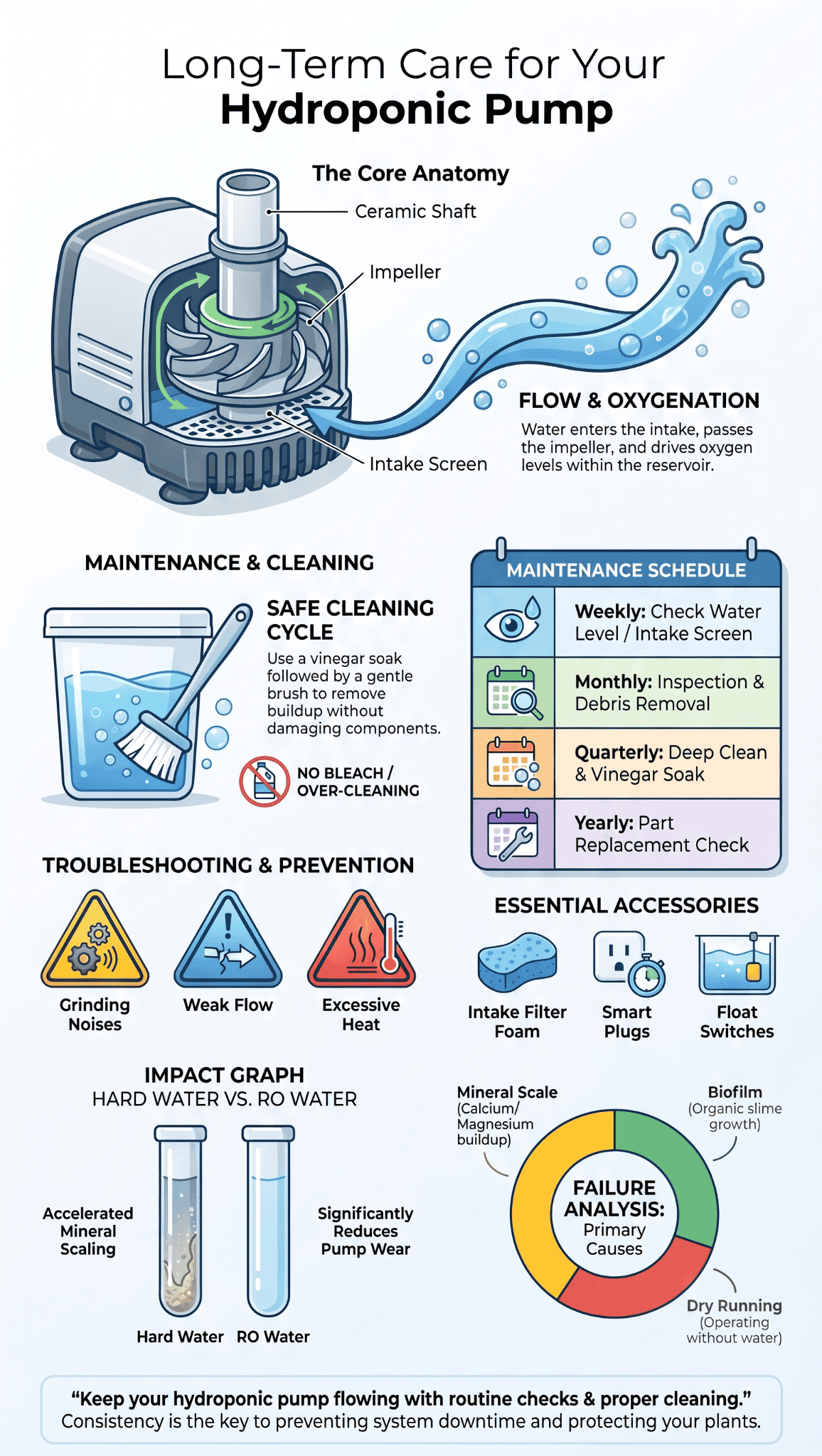
Water isn’t just a carrier in hydroponics, it’s the hidden force shaping how often you’ll need to clean and care for your pump. The chemistry of that water drives how quickly mineral deposits form and biological growth takes hold.
Hard water brings on calcium carbonate scale faster, clogging things up from the inside. Warm nutrient reservoirs create the perfect playground for algae and biofilm, both of which invite blockages and make pumps work harder. That means more frequent maintenance.
Reverse-osmosis (RO) water changes the game. Though setting up an RO system costs more up front, many seasoned growers swear it’s worth it.
RO water cuts mineral buildup dramatically, stretching the time between deep cleans and shielding delicate pump parts from extra wear. Plus, it tends to improve overall water quality, something your plants will appreciate.
Temperature plays its part, too. Warmer reservoirs speed up algae growth and biofilm formation, which lowers oxygen levels and drags pump efficiency down.
Keeping your reservoir cool and steady not only helps plants thrive but also keeps your pump from overheating or clogging too quickly.
So how big a deal is water quality and temperature? They’re both quietly steering how long your pump lasts and how often you have to get your hands dirty. Better water and stable temps pay dividends in smoother operation all season long.
This becomes even more noticeable when growing hydroponic herbs, which rely on steady water flow and healthy root conditions for consistent harvests.
Accessories Which Help Your Pump Last Longer
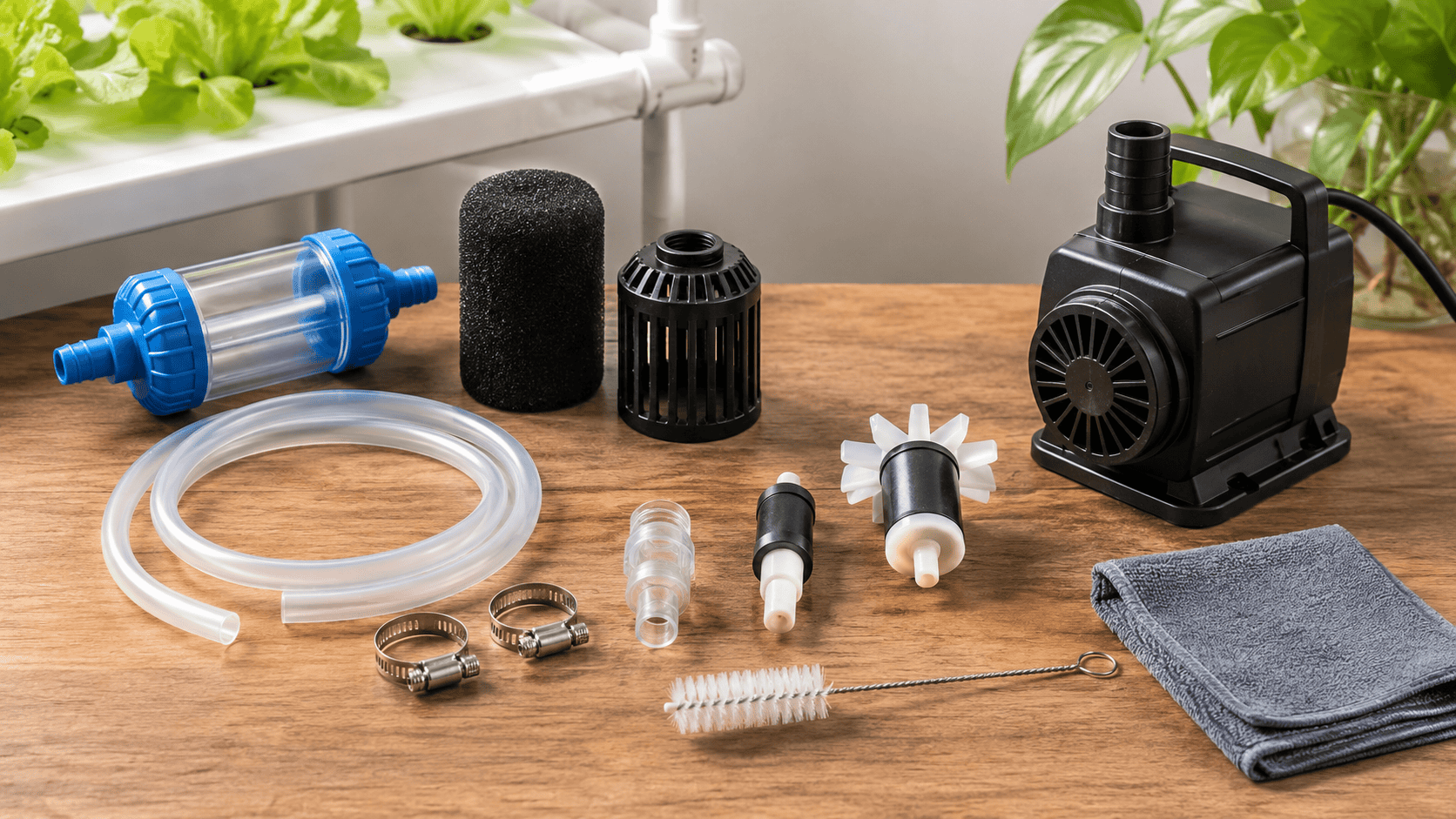
You’d be surprised how a few modest accessories can save a lot of headaches down the line. Instead of waiting for the pump to falter, experienced growers lean on preventive gear to cut down on debris buildup and keep a close eye on performance.
These small additions often stretch the life of a pump far beyond what replacing parts again and again would cost.
Here’s a shortlist of what’s really worth adding:
- Intake filter foam to catch root bits before they choke your pump
- External pump filters acting like a second line of defense
- Smart power plugs that manage schedules and let you monitor remotely
- Flow indicators to spot changes before they become serious
- Backup batteries, just in case power cuts try to ruin the show
- Float switches that prevent dry running by shutting off when water levels drop
Take the Kasa Smart Plug, for example. It doesn’t just turn your pump on and off, you can set timers, get alerts, and control it from anywhere. When paired with intake filter foam, it means less root clogging and fewer pointless pump starts.
These aren’t flashy or expensive gadgets; they’re thoughtful tools that make maintenance easier and your system more reliable. Sometimes the best upgrades are the simplest.
What Maintenance Mistakes Shorten Pump Lifespan?
I’ve noticed that well-meaning maintenance can sometimes do more harm than good. Harsh chemicals, skipping regular checks, over-cleaning, and letting debris pile up all chip away at pump life in different ways.
Take bleach, for example. It might seem like a good disinfectant, but it brings avoidable risks: it damages seals, weakens plastic parts, leaves behind harmful residues, and ultimately shortens how long components last.
Then there’s the temptation to clean too often. Excessive cleaning strips away helpful microbes that naturally keep the system balanced.
It nudges growers into unnecessary takedowns, which speed up wear on fragile parts. Plus, it burns out your patience, maintenance fatigue can lead to missed steps or rushed jobs.
The trick is moderation. Sticking to a steady, scheduled routine, neither overdoing nor neglecting cleaning, builds real reliability. A pump cared for with balance and attention lasts longer than one treated with either neglect or excess.
How Can You Create a Long-Term Maintenance Plan?
A steady maintenance schedule is like a map for the whole growing season, it keeps your hydroponic system reliable and cuts down on surprise repairs.
Instead of scrambling when something breaks, good growers treat maintenance like feeding their plants: regular, planned, and predictable.
Writing down each check makes it easier to spot patterns, like when the pump starts vibrating more or flow slips slowly, or if mineral buildup shows up again and again.
Whether you’re tending a hobby setup or running a commercial system, a simple maintenance plan can make all the difference.
Here’s what a yearly checklist might look like:
- Logging monthly inspections to catch early signs of trouble
- Doing quarterly deep cleans to clear away buildup and biofilm
- Inspecting impellers once a year to keep moving parts in shape
- Keeping spare parts on hand for quick fixes
- Having a backup pump ready in case the first one fails
- Scheduling regular reservoir sanitization to keep water fresh
At Tophydroponicgarden, a good maintenance program breaks down further into clear routines: a monthly cleaning timeline, reservoir inspection checklists, preventive care calendars, reminders for seasonal replacements, water quality tracking, and performance logs for the pump.
Following this steady rhythm helps avoid costly downtime and keeps your system humming efficiently through every crop cycle. It’s less about reacting and more about staying one step ahead.
FAQ
How often should I perform hydroponic water pump maintenance?
A regular pump maintenance schedule helps keep your system reliable. Inspect the pump every week, clean it every few weeks, and adjust the routine if roots or debris build up faster. Routine pump inspection, pump housing inspection, and pump filter maintenance also improve water pump performance, support submersible pump longevity, and extend overall water pump lifespan.
Can pump flow rate reduction affect plant growth?
Yes. Pump flow rate reduction can lower hydroponic water circulation, reduce nutrient solution aeration, and create water circulation problems around plant roots. Check for a clogged pump impeller, blocked pump intake screen, dirty external pump filters, or pump pressure loss. Good water flow optimization keeps nutrients and oxygen moving evenly throughout the system.
What’s the best way to remove mineral deposits from a hydroponic pump?
If you notice calcium carbonate scale or other deposits, use a white vinegar pump soak to help with cleaning mineral deposits and water pump scale removal. Rinse every part well before reinstalling. Regular mineral buildup prevention and hydroponic reservoir sanitization also reduce organic nutrient buildup, reservoir biofilm, and improve hydroponic water quality over time.
Which signs mean my pump needs repair or replacement?
Watch for unusual sounds, weak flow, or frequent shutdowns. Pump noise diagnosis can reveal pump vibration issues, pump cavitation, or pump overheating symptoms. Other warning signs include pump motor failure signs, mechanical seal failure, worn water pump seals, damaged water pump gasket care points, or the need for water pump replacement parts and pump impeller replacement.
How can I make my hydroponic pump last longer?
Avoid running the pump without water by practicing dry run prevention, and always follow pump wiring safety and water pump electrical safety guidelines. Keep up with submersible pump cleaning, ceramic shaft maintenance, magnetic impeller care, pump motor care, root clog prevention, hydroponic plumbing maintenance, and system plumbing hygiene to improve hydroponic system efficiency and protect your hydroponic gardening equipment.
Keep Your Hydroponic Pump Running for Years
A reliable hydroponic pump keeps water moving, but even a good pump won’t last if you ignore basic maintenance. Small problems can build up fast, and that often leads to weak water flow or costly repairs. It’s easier to stop them early.
If you’re using a Tophydroponicgarden system, or just want better results from your setup, following a simple maintenance routine is a smart move.
Regular checks and timely part replacements help your pump last longer while keeping your plants growing with fewer interruptions.
Visit Tophydroponicgarden for more practical guides that make hydroponic care easier.
References
- https://www.ncbi.nlm.nih.gov/sra/SRX24172686[accn]
- https://vm36.upi.edu/index.php/ijost/article/download/85476/pdf#2#1
Related Articles
- https://tophydroponicgarden.com/how-to-properly-clean-a-hydroponic-system/
- https://tophydroponicgarden.com/how-to-manage-a-plants-life-cycle-hydroponically/
- https://tophydroponicgarden.com/what-are-the-benefits-of-hydroponic-herbs/
Was this helpful?

I’m Barrie L., a passionate hydroponic gardening enthusiast dedicated to cultivating thriving, soil-less gardens. With a focus on all things hydroponic, I share my expertise on innovative growing techniques and sustainable practices through my blog, tophydroponicgarden.com. As a seasoned hydroponics specialist, my goal is to inspire and guide fellow gardeners in harnessing the power of water-based cultivation for bountiful and eco-friendly harvests. I’m also an author of the book “Hydroponics For Absolute Beginners: Your Step By Step Guide For How To Create An Hydroponics System At Home Without Soil, For Growing Vegetable, Fruit And Herbs.” which is sold on Amazon. Join me on a journey of redefining the way we cultivate plants, one nutrient-rich solution at a time. Happy growing!