

The Kratky method is the better starting point for most beginners. It’s a simple, passive setup that needs no pumps, no electricity, and almost no day‑to‑day care, so you can focus on the plants instead of the hardware.
You mix the nutrients, place the plant, and let the water level slowly drop as the roots grow, it feels almost like cheating.
Deep Water Culture (DWC) can grow plants faster with an air pump, but it does add cost and moving parts. Keep reading to see which system truly fits your space, budget, and gardening plans.
Key Takeaways
- Kratky is simpler: No pumps or electricity, making it ideal for a first-time, low-maintenance setup.
- DWC grows faster: Constant aeration boosts growth, especially for larger plants like tomatoes.
- Your choice depends on goals: Kratky for easy greens, DWC for higher yields if you don’t mind the equipment.
The Core Philosophy of Each Method

You see it on social media, plants thriving in glass jars or buckets of water, their roots dangling like pale lace. It looks like magic, a clean break from the dirt and weeds of traditional gardening.
This is hydroponics, and for a beginner, the first real choice is between two methods: the set-it-and-forget-it Kratky system or the more vigorous Deep Water Culture. The right choice isn’t about which is objectively better, it’s about which is better for you right now.
The Kratky method is the essence of simplicity. It’s a passive, non-circulating system. You get a container, like a mason jar or a five-gallon bucket.
You fill it with a nutrient solution, place your plant in a net pot with a growing medium like clay pebbles, and let the roots reach down into the liquid.
There are no moving parts. As the plant drinks the water, the water level drops. This naturally creates an air gap, providing oxygen to the upper roots while the lower roots stay fed. It’s brilliantly hands-off.
- Absolutely no pumps, timers, or electricity.
- This method exemplifies the simplicity that hydroponics enthusiasts often seek when they consider what is hydroponics, emphasizing minimal hardware and maximum focus on the plants.
- Extremely low cost, often using recycled containers.
- Minimal monitoring required after the initial setup.
Deep Water Culture, or DWC, is a different beast. It’s an active system. The plant’s roots are also suspended in a nutrient solution, but they remain fully submerged. The key difference is the air pump.
A small aquarium-style pump pushes air through a tube to an air stone sitting at the bottom of the reservoir.
This stone bubbles oxygen directly into the water, creating a highly oxygenated environment that supercharges root growth.
This leads to faster plant development, but it introduces points of potential failure. The pump needs power, it can be noisy, and if it stops working, your plants can suffocate quickly.
The Real-World Differences for a Beginner
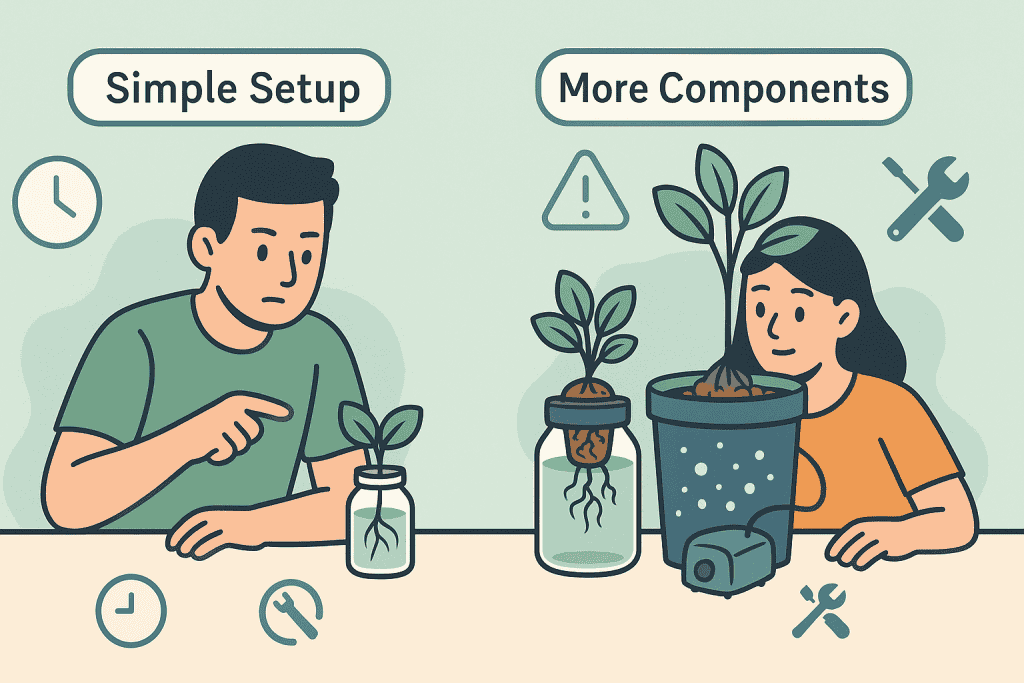
Think about setup. A Kratky system is something you can assemble on your kitchen counter in twenty minutes.
A bucket, a lid, a net pot, some hydroponic nutrients, and you’re done. There’s nothing to plug in, no tubes to connect.
A DWC setup requires those same components plus the air pump, air stone, and tubing. You have to ensure the pump is positioned correctly, that the connections are airtight, and that the bubbles are distributed well.
It’s not rocket science, but it’s more steps, more things to buy, and more things that can go wrong initially.
This aligns with the common debate around deep water culture vs kratky, where DWC demands more technical involvement but promises enhanced root oxygenation.
Maintenance is where the philosophies truly diverge. A Kratky system is largely a one-and-done affair.
You mix the nutrients to the right concentration at the start, and the plant consumes it. For shorter-cycle plants like lettuce, you often won’t need to add more water or nutrients until harvest.
You just watch it grow. DWC requires more attention. Because the water is constantly aerated, evaporation happens faster.
You’ll need to top off the reservoir with plain water periodically to maintain the water level. You also need to check the pH and nutrient strength (EC) more frequently, as the active environment can cause faster shifts.
Cost and Complexity

Your wallet will feel the difference. A basic Kratky setup for a single lettuce plant can cost under five dollars if you reuse a jar.
Scaling up to a bucket for a larger herb is still very cheap. DWC has a higher entry cost. A reliable air pump and accessories might cost $20-50, depending on quality.
Add the cost of air stones and tubing, and your initial investment is significantly higher. This makes Kratky a fantastic, low-risk way to experiment without a major financial commitment.
For beginners questioning if the extra equipment is worth it, many find that it’s just easier to use Kratky method over deep water culture, especially when starting out with small plants and limited budgets.
What can you grow? This is a crucial deciding factor. The Kratky method shines with fast-growing, water-hungry plants that don’t get too large. It’s perfect for:
- Lettuce and other leafy greens.
- Herbs like basil and mint.
- Small, quick-growing plants.
Its limitation is the static nutrient solution, which depletes over time without refills, best sized for cycle length. This makes it less ideal for long-term, heavy-feeding plants like tomatoes or peppers, though it can be used for their early seedling stage.
DWC, with its continuous oxygen and nutrient supply, can handle these larger, fruiting plants with ease. The vigorous root growth supports bigger plants and higher yields.
Making Your Choice: Kratky or DWC?
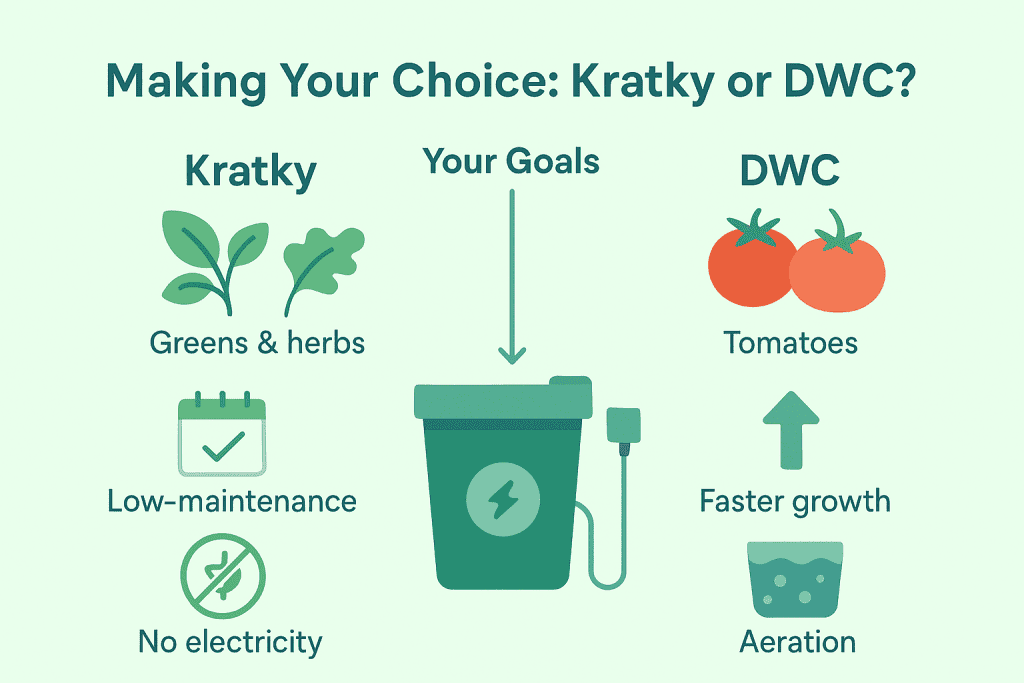
So, which path should you take? Your choice hinges on your patience, your budget, and your ambitions.
Choose the Kratky method if you value simplicity above all else. If you want to dip your toes into hydroponics with zero technical fuss, this is your system [1].
It’s perfect for a sunny windowsill garden of fresh lettuce, for a classroom project, or for anyone who wants a truly low-maintenance growing experience.
You get the satisfaction of hydroponic growth without the worry of power outages or pump failures. It’s the gentlest introduction possible.
Opt for Deep Water Culture if you’re ready for a slightly steeper learning curve in exchange for faster results.
If you dream of growing large tomato plants or prolific pepper bushes indoors, DWC is the way to go. The constant aeration translates directly into accelerated growth rates.
Choose DWC if you don’t mind the hum of an air pump and are willing to perform weekly checks on your water chemistry. The reward is a more productive, scalable system.
Your First Hydroponic Step

Credits: BuildersSA
There is no single right answer, only the right answer for you. The beauty of these systems is that they are not mutually exclusive.
You can start with a simple Kratky jar of basil on your counter. Enjoy the success of that harvest. Then, feeling more confident, you can graduate to a DWC bucket for a tomato plant [2].
This progression allows you to learn the fundamentals of nutrient mixing and plant care on an forgiving system before tackling the more demanding one.
The goal is to get growing, to learn by doing, and to enjoy the clean, efficient magic of raising plants in water. Your first harvest is waiting.
FAQ
How do I choose between Kratky hydroponics and deep water culture as a beginner?
You can choose a beginner hydroponic system choice by looking at how much work you want to handle.
Kratky hydroponics uses passive hydroponics with a static nutrient solution and no-pump hydroponics, which keeps tasks simple.
Deep water culture uses an aerated nutrient solution and has an air pump requirement. Compare hydroponic cost comparison, plant root oxygen needs, and hydroponic scalability before deciding.
What problems do beginners face with water level management in passive systems like the Kratky jar method?
Water level management in non-circulating hydroponics is important because a DIY Kratky setup can face Kratky nutrient depletion, slow growth Kratky issues, and unstable hydroponic pH stability.
A small hydroponic reservoir size increases nutrient top-up frequency and can raise the chance of hydroponic beginners mistakes. Careful checks help maintain steady hydroponic plant health.
Can I grow tomatoes or leafy greens in small spaces like a balcony hydroponics setup?
Yes, you can grow both. The lettuce Kratky method works well for space-saving hydroponics and small-scale hydroponics. Leafy greens DWC also grows well in a 5-gallon DWC bucket.
A tomato DWC system needs DWC continuous aeration to prevent oxygen deprivation in roots. You must also meet hydroponic light requirements and use LED lights for hydroponics if growing indoors.
How do I keep roots healthy in a DIY DWC setup and avoid hydroponic root rot issues?
A DIY DWC setup needs strong hydroponic oxygenation to protect roots. You can use an aeration stone setup to improve DWC oxygen saturation and maintain healthy hydroponic dissolved oxygen levels.
Consistent hydroponic water temperature control and regular reservoir cleaning tips help prevent hydroponic root rot prevention problems and algae growth control issues in any home hydroponic garden or hydroponic hobby systems.
What should beginners watch for when mixing nutrients and maintaining systems long-term?
Beginners should pay attention to hydroponic nutrient solution mixing, EC monitoring beginners, NPK for hydroponics, and correct hydroponic nutrient levels.
A hydroponic bucket system or other hydroponic container choices still require steady hydroponic system maintenance.
If you explore a wicking hydroponics alternative or nutrient film technique alternative, expect a clear hydroponic learning curve. These habits support sustainable hydroponics and a water-efficient growing method.
Conclusion
Hydroponics begins with choosing the method that fits your goals, not someone else’s. Start simple with Kratky if you want effortless success and minimal equipment.
Choose DWC when you’re ready for faster growth and larger, more demanding plants. Both systems open the door to clean, efficient gardening, and you can progress at your own pace.
What matters most is taking that first step and discovering the satisfaction of growing your own harvest.
References
- https://urbanhouseandgarden.com/kratky-vs-wick-beginner-guide/
- https://kratkymethodofhydroponics.com/hydroponic-gardening/deep-water-culture-dwc-hydroponic-gardening/
Related Articles
- https://tophydroponicgarden.com/what-is-hydroponics-2/
- https://tophydroponicgarden.com/deep-water-culture-vs-kratky/
- https://tophydroponicgarden.com/isnt-it-just-easier-to-use-kratky-method-over-deep-water-culture
Was this helpful?
