
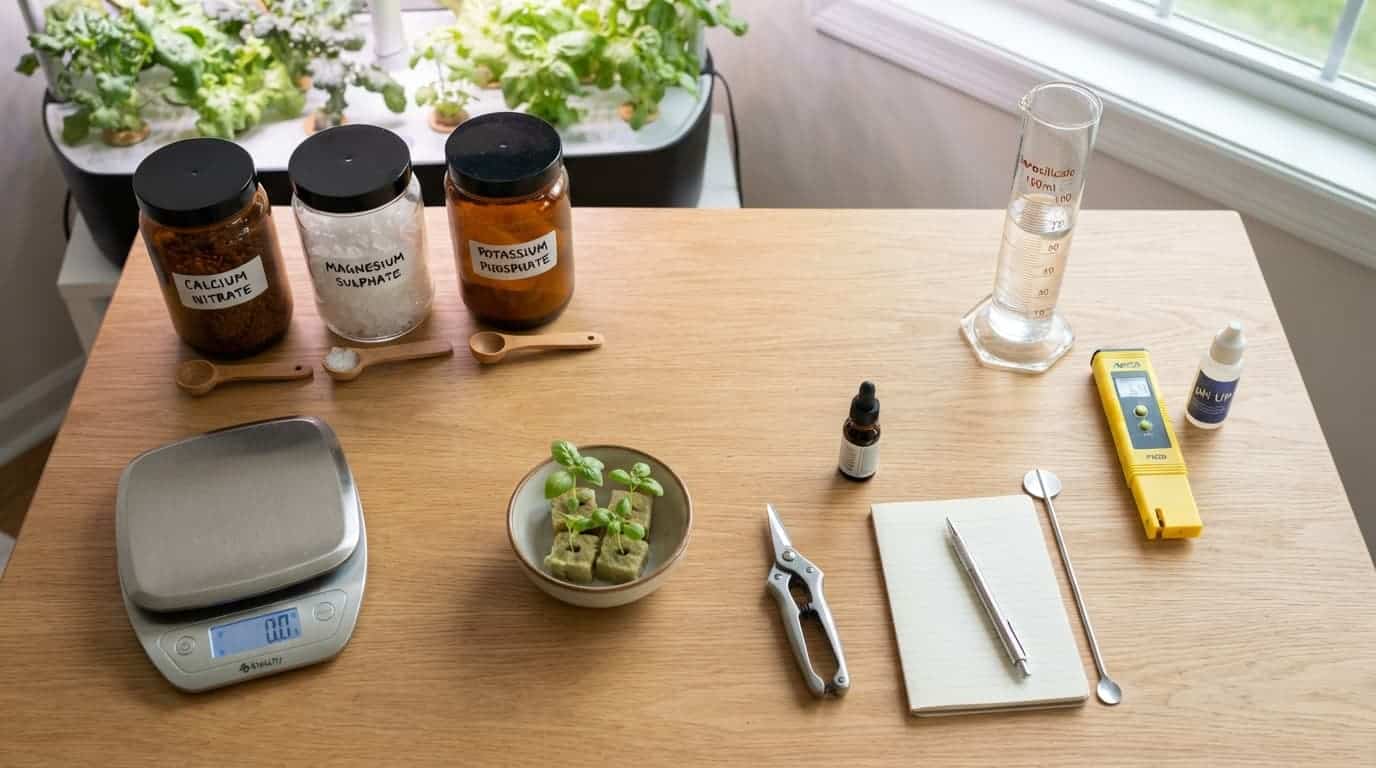
Making your own hydroponic nutrients can cost less than buying premixed products, but the savings depend on more than fertilizer prices. You’ll also need to account for testing, mixing equipment, labor, waste, and getting the formula right. So compare the full cost before switching to homemade blends.
Read on to find out if the transition to custom-blended fertilizer salts makes financial sense for your specific growing scale with Tophydroponicgarden.
Quick Reads: When Does DIY Nutrient Mixing Save Money?
DIY nutrient mixing can reduce fertilizer expenses, but the savings depend heavily on scale, accuracy, and how much work the grower can handle.
- Compare finished-solution costs: Individual fertilizer salts can cost less than premixed nutrients when used efficiently.
- Consider scale: A large or frequent growing operation can spread equipment and ingredient costs across more nutrient solutions.
- Count hidden costs: Testing, measuring, storage, labor, waste, and formulation errors can reduce the apparent savings.
What Makes DIY Hydroponic Nutrients Cheaper?
DIY nutrients can be cheaper because you buy water-soluble fertilizer salts suited to hydroponic nutrient preparation, instead of paying for pre-diluted water and brand packaging.
Check each product’s manufacturer analysis and specifications to confirm it dissolves fully and supplies the nutrients you need. This also gives you more control, since you can choose salts that match what your plants need.
The trade-off is time. You have to measure, calculate, mix, and store everything. For a small garden, that extra work can eat up your savings. Premixed products cost more, but you’re paying for convenience and fewer chances to make a mixing mistake.
| Cost factor | DIY nutrients | Commercial nutrients |
| Ingredients | Individual fertilizer salts | Premixed formulation |
| Mixing | Grower-managed | Usually handled by manufacturer |
| Flexibility | Higher | More limited |
| Labor | Higher | Lower |
| Formulation responsibility | Grower | Manufacturer |
How Much Can You Save by Buying Individual Fertilizer Salts?
How much you save by mixing your own nutrients depends on a few things, including ingredient prices, how much you buy at one time, the formula you use and how much you grow. DIY mixing can reduce ingredient costs because growers can buy individual fertilizer salts instead of a finished formulation.
However, price per pound is not the whole story. What matters is how much usable nutrients each product actually gives you. Prices also shift with shipping, supply, and production costs, so what you pay today may not match what you paid before. Check current prices before you plan your budget.
Does DIY Nutrient Mixing Make Sense for Small Hydroponic Gardens?
Mixing your own nutrients usually won’t save much if you only make small batches. A little extra time spent measuring, testing, and storing can cancel out the savings on ingredients. Growers with several reservoirs use more fertilizer, so the savings add up and the prep time is spread across more solutions.
Still, fertilizer is only one part of your total budget. If DIY means buying testing tools or wasting leftover materials, a small grower may not come out ahead.
| Grower type | Main consideration |
| One small system | Time and simplicity |
| Several reservoirs | Ingredient savings matter more |
| Commercial operation | Bulk buying and formula flexibility |
What Ingredients Do You Need to Make Your Own Nutrients?
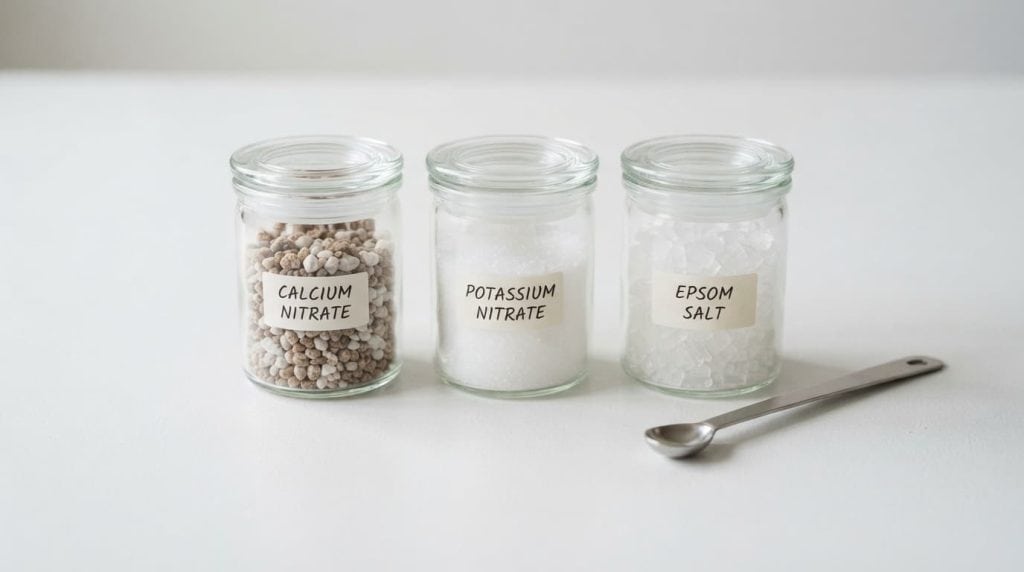
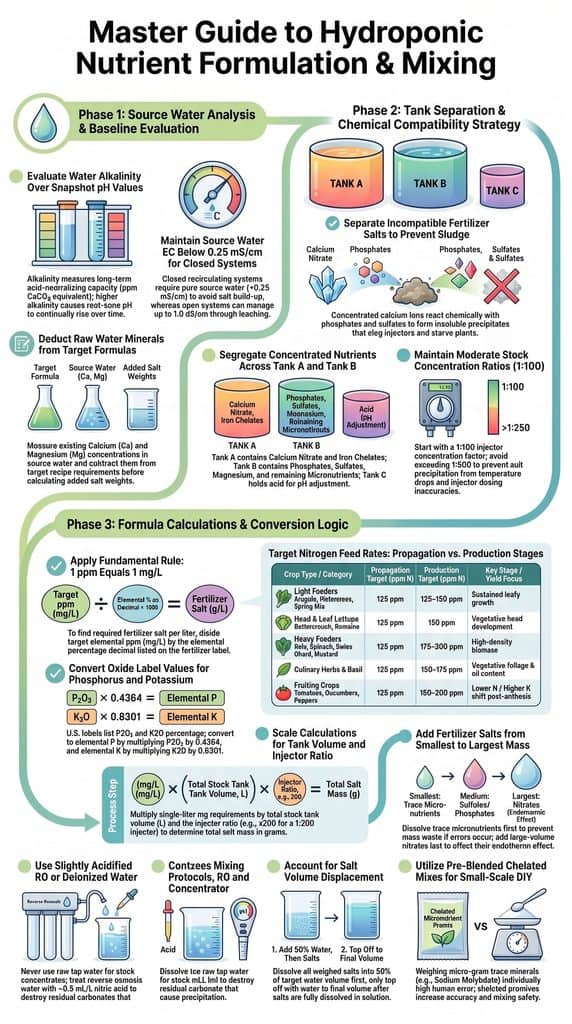
DIY nutrient mixes usually combine several fertilizer salts to give plants everything they need. Common ones include potassium nitrate, monopotassium phosphate, calcium nitrate, and magnesium sulfate. Together, they cover big needs like nitrogen, phosphorus, potassium, calcium, magnesium, and sulfur.
Plants also need tiny amounts of iron, manganese, zinc, copper, boron, and molybdenum. Buying salts one by one can lower your costs, but it also puts you in charge of getting the balance right, and that’s where DIY gets more technical.
Why Does Your Target Nutrient Formula Matter More Than Bottle Price?
A fair cost comparison looks at what each product actually makes, not just the price on the package. A $20 bag of fertilizer and a $20 bottle of nutrients may produce very different amounts of usable solution.
Crops matter too, since a mix that works for lettuce may not suit other plants or growth stages. A cheap blend with the wrong balance can hurt plant growth and cost you more later. The best question to ask is how much a finished liter of properly balanced solution costs.
| Comparison | What to match |
| DIY vs. premix | Nutrient strength |
| Different brands | Amount of finished solution |
| Different crops | Crop-specific needs |
| Different growth stages | Changing nutrient needs |
Can Mixing Errors Erase the Savings?
Cheap fertilizer isn’t always cheap once you start mixing it. If you combine the wrong concentrated salts, some nutrients can bind together and form solids that plants can’t absorb. That means a wasted batch, or plants that struggle even though the nutrients are technically in the water.
Good DIY mixing takes careful measuring, compatible ingredients, clean water, and regular pH testing. The real goal isn’t spending the least on fertilizer. It’s getting a reliable, balanced mix at the lowest total cost, including mistakes you avoid.
How Much Do Measurement and Testing Add to DIY Costs?
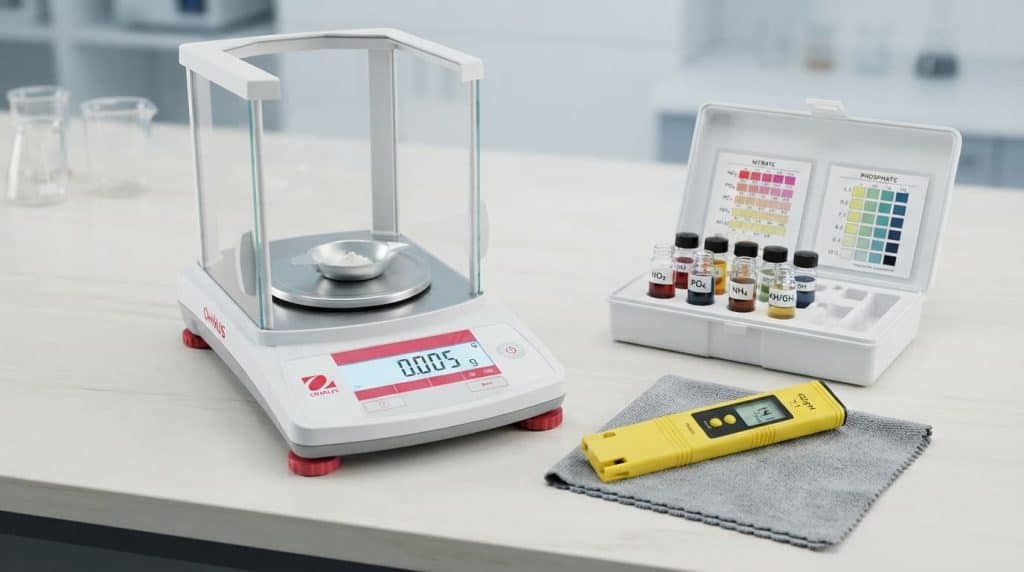
Testing and measuring add costs that are easy to miss when you compare DIY nutrients with store-bought ones. Common expenses include:
- Accurate scales
- Water-quality testing
- Nutrient-solution testing
- Storage containers
- Mixing time
- Record keeping
- Replacement ingredients after mistakes
Each fertilizer adds more than one nutrient, so DIY mixing is more than dumping ingredients together. Good testing can reduce the risk of ruined batches and plant problems, which may justify the equipment cost for frequent growers. Your time also has value, even if no one pays you for it.
Does Water Quality Change the Cost of Homemade Nutrients?
Your water matters more than most people expect. Tap or well water often already contains minerals that change how much fertilizer you need, so growers should measure nutrient strength before finalizing the mix.
Irankunda, G., Mndeme, D., Feng, X., & Jia, X. (2026) found that
“Hydroponic systems substitute soil with nutrient solutions, making water quality a primary production concern.” – (Irankunda, G., Mndeme, D., Feng, X., & Jia, X., 2026).
Before you work out DIY costs, check these:
- Calcium and magnesium already in the water
- Alkalinity
- pH
- EC (how much dissolved salt is in the water)
- Other nutrient levels
- Harmful ions
Two growers using the same recipe can get different costs and results because their water is different. Start with a water test, or your ingredient estimate may not match your real setup.
Why Can Commercial A/B Nutrients Still Be Worth the Extra Cost?
Store-bought A/B nutrients cost more, but you’re paying for a mix that’s already figured out. Many hydroponic recipes use two or more separate parts, so knowing how to mix A and B nutrient solutions helps prevent nutrients from reacting with each other.
For a small system, that convenience can be worth more than a small ingredient saving. Larger growers may gain more from buying in bulk and controlling the formula. There’s no single winner, so the best choice depends on how much solution you use and how much time you have.
| Commercial advantage | DIY trade-off |
| Easier preparation | More measuring |
| Consistent formula | More calculation |
| Simpler mixing | More ingredients to manage |
| Lower compatibility risk | More formulation responsibility |
How Should You Calculate the True Cost of DIY Nutrients?
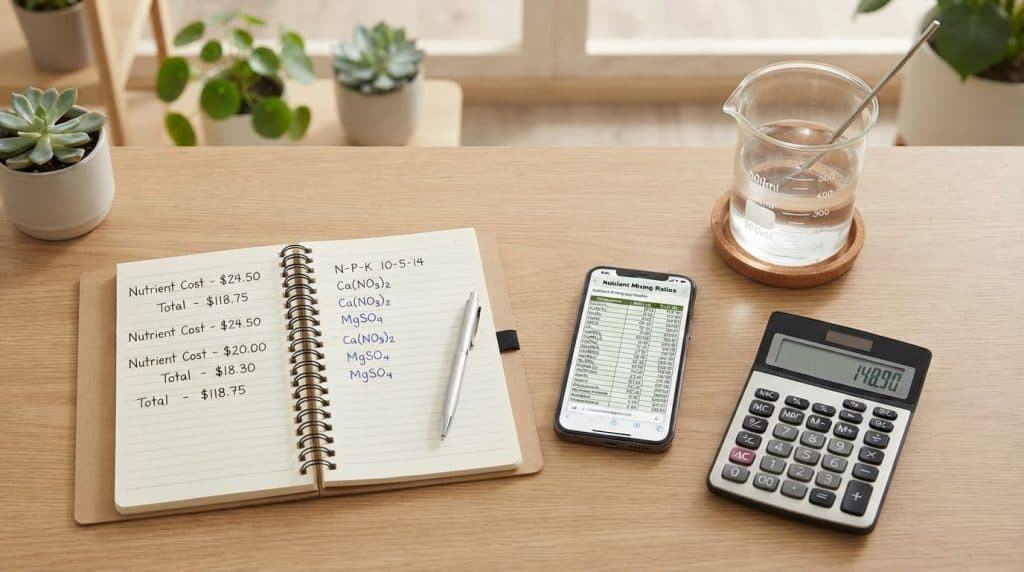
The most accurate way to judge true cost is to find the price per finished liter. Start with the total cost of your dry fertilizer salts, such as calcium nitrate and monopotassium phosphate. Then divide it by the liters of usable solution they make at your target PPM (parts per million).
For example, a standard 3-part formula tends to save the most money for growers who run several reservoirs.
Which Costs Should You Include Beyond the Fertilizer?
The lowest ingredient price doesn’t always lead to the lowest growing cost. Fertilizer is just one piece of the budget. If you’re starting from scratch, you may need scales, test kits, containers, and storage space, while an experienced grower may already own them.
Waste counts too. Buying more than you can use can backfire if it expires or gets contaminated. Prices change over time so be sure to check out current costs before you decide.
| Cost category | Include it? |
| Fertilizer salts | ✓ |
| Water testing | ✓ |
| Measuring equipment | ✓ |
| Mixing labor | ✓ |
| Storage | ✓ |
| Wasted ingredients | ✓ |
| Crop losses from formulation errors | ✓ |
| Commercial convenience | ✓ |
When Should You Choose DIY Nutrients Over Premixed Products?
DIY nutrients make sense when the savings are bigger than the extra work. They tend to fit growers who:
- Use nutrients often
- Can buy ingredients in useful amounts
- Have accurate scales and test tools
- Know what their crop needs
- Can monitor water and solution quality
Premixed nutrients fit better if you:
- Run a small system
- Value convenience over savings
- Want less mixing work
- Don’t own testing equipment
Scale matters most. The more solutions you use, the easier it is to save with individual salts. At small volumes, simplicity is often worth the extra cost.
How Does Nutrient Storage Affect the Cost of DIY Mixing?
Saving money on DIY nutrients doesn’t end at the checkout. Fertilizer salts can clump, absorb moisture, or become contaminated if they are stored in a damp or messy spot. Moisture and poor storage can also make salts harder to measure accurately. When that happens, you may have to throw them out and buy more, which wipes out the savings you were hoping for.
This is an easy fix. Keep each fertilizer separately in a clearly labeled container in a cool, dry place. Keep different products separate to avoid accidental mix-ups. A little attention up front will help your ingredients last, keep your mixes consistent, and protect your savings.
What Should You Consider When Storing Fertilizer Salts?
DIY nutrient mixing usually means keeping several separate fertilizers on hand, so storage matters. Keep them dry, sealed, and clearly labeled so they don’t pick up moisture, get contaminated, or get mixed up by accident.
Buying in bulk can lower the price per pound, but only if you actually use it all. Extra stuff takes up space, and can get wasted. When you figure out your true costs, include storage. More ingredients means more containers, more labels and more tracking. More time, more effort.
Can Buying in Bulk Always Make DIY Nutrients Cheaper?
Buying in bulk can cut your ingredient costs, but it doesn’t always lower your total spending. It works best when you use the same fertilizers often. If you only grow now and then, leftover material can cancel out the savings.
A simple way to check is to take what you’d pay at retail, subtract what you paid in bulk, then subtract the value of anything you won’t use. Also think about storage space and whether the ingredients will still be good next season. The cheapest fertilizer isn’t always the cheapest one to own.
How Can You Compare DIY Nutrients With Commercial Nutrients Over Time?
Credits: DIY & GARDEN WITH BIBI
One purchase doesn’t tell the whole story. A bag of fertilizer salts might look pricey at first, but if it lasts through many growing cycles, the cost per batch drops. A bottle of store-bought nutrients may look cheaper on day one, yet you’ll keep buying it again and again.
Judge the cost over several crop cycles. Equipment such as a milligram scale and a water test kit costs money up front. Over many harvests, that cost is spread out, and the cost per liter of a well-made DIY solution can drop.
What Should You Track During Each Growing Cycle?
Keeping simple records shows whether DIY nutrients are really saving you money.
Data from Bannon, S. P., Thomas, J., Webster, R. J., & Whitby, H. (2026)
“Half strength Hoagland’s solution cost £0.12 per litre to prepare.” (Bannon, S. P., Thomas, J., Webster, R. J., & Whitby, H., 2026)
Write down:
- What fertilizer you bought and how much you used
- How much solution you made
- Testing and equipment costs
- Wasted ingredients
- Time spent mixing
- What store-bought nutrients would have cost for the same amount
Look at the numbers after several crop cycles, not just one. Your first batch may seem costly because you bought equipment up front, but later batches usually cost less. Calculating what your plants actually need beats guessing from package prices.
When Does the Long-Term DIY Cost Become More Attractive?
DIY mixing can become more economical over multiple batches because one-time equipment costs are spread across more nutrient mixes. A scale or test kit can feel expensive at first, but you only buy it once, and its cost gets spread across every batch you mix afterward.
Using the same fertilizer salts often also helps, since you’ll use them up instead of letting them sit on a shelf. The catch is accuracy. If mistakes keep ruining batches or causing plant problems, the savings disappear fast. The best number to track is cost per crop cycle, not the price of one bag.
How Can Tophydroponicgarden Help Readers Compare Nutrient Costs?
Tophydroponicgarden can help you compare the real costs of nutrients, not just the sticker price. We don’t claim homemade nutrients are always cheaper. Instead, we suggest you compare:
- DIY ingredient cost vs. premixed cost
- Cost per liter and per crop cycle
- Mixing time and testing needs
- Waste and storage
Your water quality, crop stage, and nutrient strength all change the math. So rather than asking whether DIY is cheaper in general, you can figure out whether it’s cheaper for your own system, and make a choice that fits your budget.
FAQ
Is it cheaper to make your own hydroponic nutrients?
It can be cheaper, especially for growers who use nutrients regularly and can buy individual fertilizer salts in useful quantities. However, the real cost also includes testing, equipment, mixing time, storage, and wasted ingredients.
How much can you save by making your own hydroponic nutrients?
There is no single savings figure because prices vary by fertilizer, location, purchase quantity, and nutrient formula. A better comparison is the cost per liter of correctly formulated DIY nutrient solution versus an equivalent commercial product.
What ingredients are needed to make hydroponic nutrients?
DIY nutrient formulas commonly use individual fertilizer salts such as calcium nitrate, magnesium sulfate, potassium nitrate, and monopotassium phosphate, along with sources of micronutrients. The exact combination depends on the crop and target nutrient concentrations.
Are homemade hydroponic nutrients safe for plants?
They can be used successfully when the formulation is accurate and the nutrient solution is properly monitored. Mixing incompatible concentrated fertilizers can cause precipitation and reduce nutrient availability, so growers need to understand fertilizer compatibility before preparing their own formulas.
Should beginners make their own hydroponic nutrients?
Beginners may find commercial nutrients easier because they reduce measuring and formulation work. DIY nutrients become more attractive after a grower understands nutrient management, has suitable measuring and testing equipment, and grows enough plants for ingredient savings to outweigh the added effort.
Calculate the Real Cost
Homemade hydroponic nutrients can save money, but the cheapest ingredients do not always mean the lowest overall cost. Consider formulation, water quality, testing, equipment, labor, waste, and crop requirements before deciding.
Compare the cost of a correctly mixed nutrient solution per finished liter with commercial alternatives. For small growers, convenience may win; for larger operations, DIY mixing can offer meaningful savings.
References
- https://journals.ashs.org/view/journals/hortsci/61/10/articlep2122.xmlisSearchtrue
- https://onlinelibrary.wiley.com/doi/10.1002/fes3.70220
Related Articles
- https://tophydroponicgarden.com/how-to-test-the-ph-of-your-nutrient-solution-easily/
- https://tophydroponicgarden.com/how-to-measure-nutrient-strength-with-a-tds-meter/
- https://tophydroponicgarden.com/how-to-mix-a-and-b-nutrient-solutions/
Was this helpful?
