

Hydroponics isn’t as expensive as you might think. For beginners, a functional setup can cost less than a week’s grocery bill. The secret lies in starting small and smart, focusing on systems that deliver maximum value for minimal investment.
While commercial kits might flash big price tags, DIY approaches and strategic buying make hydroponics accessible to anyone with a windowsill and some curiosity. The initial investment pays off quickly through faster growth and higher yields compared to soil gardening. Keep reading to learn exactly how to start your hydroponic journey without draining your wallet.
Key Takeaways
- Beginner systems can start under $100 with DIY methods
- Monthly operating costs range from $20-50 for small setups
- Hydroponics offers faster returns through increased yield
The Truth About Startup Costs

You look at those shiny commercial hydroponic kits with their sleek designs and promises of effortless growing. The prices make you hesitate, 500, 600, even 1,000 for a complete system. It seems like a luxury purchase for serious gardeners with deep pockets.
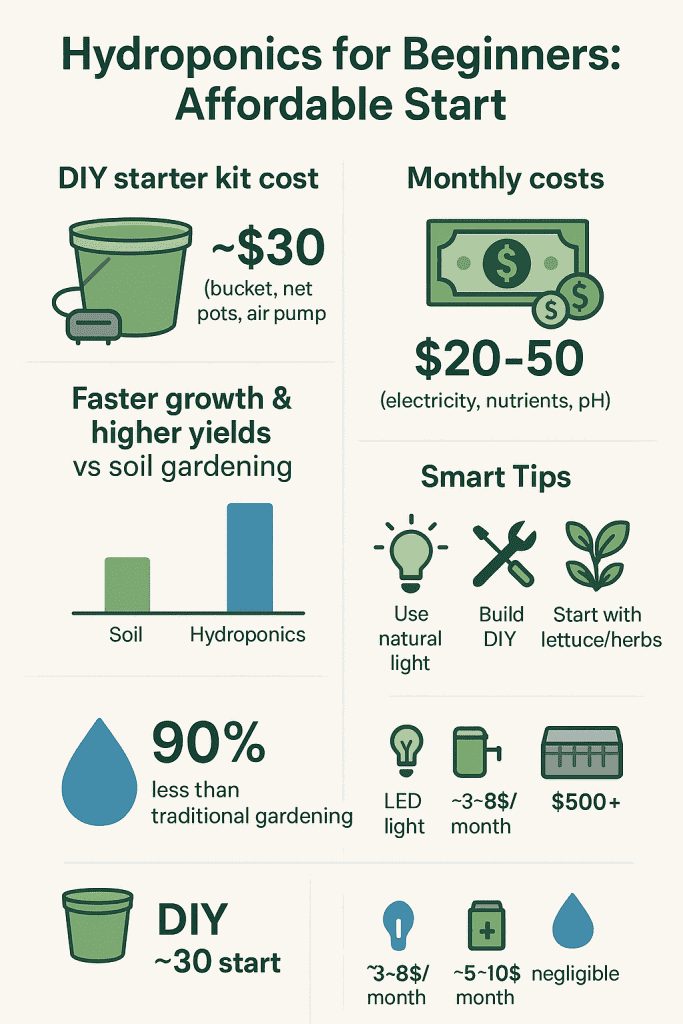
But here’s what the glossy advertisements don’t show you: A simple deep water culture system, the kind that grows lush lettuce and fragrant herbs, can be built for about thirty dollars.
The components are basic, things you might already have around your home. A five-gallon bucket from the hardware store costs maybe five dollars. Net pots are a dollar each. An air pump suitable for a small system runs about fifteen dollars.
Add some tubing and an air stone, and you’ve got the foundation of a productive garden. The real expense comes with lighting, but if you have a sunny windowsill, even that cost disappears.
This low-cost setup is a perfect example of treating hydroponics as an investment, where strategic choices in equipment and setup pay off through higher yields and faster growth. The price spectrum for beginner hydroponics is wider than most people realize. On one end, you have the DIY approach that keeps costs remarkably low.
On the other, you have pre-packaged convenience with higher price tags. Your choice depends on your comfort with building things versus your desire for plug-and-play simplicity. Neither approach is wrong, but your budget will feel the difference immediately.
Essential components for any system:
- Container or reservoir
- Growing medium like clay pellets
- Nutrient solution
- pH testing kit
- Light source (natural or artificial)
Ongoing Expenses Demystified
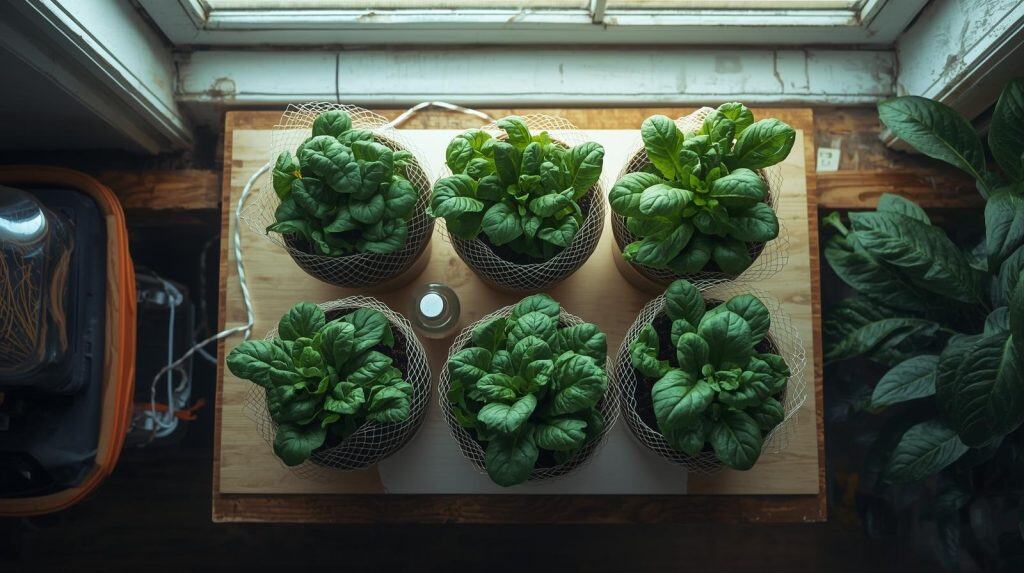
Your hydroponic system hums along quietly in the corner. The lights glow on a timer, the air pump bubbles nutrients to the roots. You might wonder what this constant operation does to your electricity bill. For a small beginner setup, the impact is surprisingly mild. A typical LED grow light for a compact system consumes about 30 watts.
Running it 16 hours daily adds roughly 3 to your monthly bill. The air pump uses even less energy, maybe 1 per month. The nutrients seem mysterious at first. Bottles of liquid with strange chemical names. But they’re actually quite economical for small-scale growing.
Using an efficient LED light system and optimizing growing conditions reflects key benefits of hydroponic farming, such as energy savings and resource efficiency, making it sustainable for indoor use. A quart of concentrated nutrient solution might cost 15−15-15−20. That same bottle could last your beginner system six months or more.
You use only a few milliliters per gallon of water, and you change the water every week or two. pH adjustment chemicals are even cheaper, with a bottle of pH up and pH down costing under $15 and lasting through many growing cycles.
Water usage becomes almost negligible compared to soil gardening. Because the system is closed, water only leaves through evaporation and plant uptake. You’ll add water to maintain the level, but you’re not pouring it through soil where most drains away unused.
Studies show hydroponics uses about 90% less water than traditional agriculture. Your water bill won’t show a noticeable increase, even with regular top-offs [1].
Monthly cost breakdown for a small system:
- Electricity: 4−4-4−8
- Nutrients: 5−5-5−10
- Water: Negligible
- pH maintenance: 2−2-2−5
Smart Savings Strategies

Credit : The Cannabis Experts
You don’t need to buy the most expensive equipment to get started. In fact, some of the best hydroponic gardeners began with repurposed materials. That plastic storage bin in your garage could become a nutrient film technique system with some simple modifications. Old PVC pipes can be transformed into a vertical growing tower.
The hydroponics community thrives on innovation and resourcefulness, with countless forums sharing budget-friendly builds. Hydroponics is an accessible form of urban agriculture that emphasizes sustainability and smart reuse, making it suitable even for beginners looking to grow fresh produce efficiently indoors.
Lighting often represents the largest investment. But you can mitigate this cost significantly. Position your system near a south-facing window to supplement artificial light. Choose energy-efficient LED fixtures over older technology like fluorescent or HPS lights.
LEDs have higher upfront costs but last longer and use less electricity. They also produce less heat, reducing your cooling needs in summer months. It’s a classic case of spending more now to save later.
Start with what gardeners call “forgiving” plants. Lettuce, kale, herbs like basil and mint. These plants don’t require perfect conditions to thrive. They’re less fussy about nutrient levels and pH fluctuations than fruiting plants like tomatoes or peppers.
By starting with easy crops, you reduce the risk of losing plants to beginner mistakes. You gain confidence without watching expensive investments wither away. Success with simple plants builds skills for more challenging crops later.
Ways to reduce initial investment:
- Use natural light whenever possible
- Build your own system from common materials
- Start with a single plant type
- Buy nutrients in smaller quantities initially
Making Your Final Decision
Hydroponics costs what you want it to cost. That’s the fundamental truth many beginners miss. You control the expenses through your choices about system size, complexity, and automation. A simple Kratky method setup (a passive form of hydroponics) requires no electricity at all.
Just a container, some nutrient solution, and a plant. It’s the ultimate low-budget introduction to soilless growing.
Consider what you value most. Is it the convenience of a pre-assembled kit? Is it the satisfaction of building something yourself? Is it the potential for year-round fresh produce? Your priorities should guide your spending.
If you hate DIY projects, buying a complete system makes sense despite the higher cost. If you enjoy tinkering, the DIY route saves money and provides its own reward. There’s no single correct path into hydroponics.
The question isn’t really whether hydroponics is expensive for beginners. The question is whether the benefits justify your particular investment. For many people, the answer becomes clear after tasting their first home-grown hydroponic lettuce.
The flavor intensity, the crisp texture, the knowledge that it grew without pesticides in their own home. That experience often transforms the question from “Can I afford this?” to “Why didn’t I start sooner?”
Your hydroponic journey awaits. Begin with a single lettuce plant in a mason jar. Watch how roots develop in water instead of soil. Notice how quickly leaves grow with constant access to nutrients. That small success will likely spark curiosity about what else you could grow. The costs stop feeling like expenses and start feeling like investments in your food independence [2].
FAQ
What is the typical hydroponics beginner cost?
Hydroponics beginner cost varies by system size and equipment. A small hydroponic kit cost can start low, while medium or high tech hydroponics budget increases expenses. Factors include hydroponic nutrients price, lighting, water pump hydroponics expense, and grow medium hydroponics budget. Beginners often balance diy hydroponics cheap ideas with initial investment in a reliable hydroponic setup.
How much does a beginner hydroponic system price affect ongoing costs?
Beginner hydroponic system price impacts ongoing hydroponics costs like nutrient solution refill price, hydroponics electricity bill, and maintenance. Low tech hydroponics cheap setups save money on equipment reuse hydroponics, while high tech hydroponics budget can reduce labor.
Understanding hydroponics vs soil cost helps beginners anticipate potential savings from higher yields and space saving hydroponics setups.
Are indoor hydroponics beginner setups expensive compared to traditional gardening?
Indoor hydroponics beginner setups often have higher hydroponics startup budget than traditional gardening comparison. Costs include hydroponic lighting costs, ph meter hydroponics beginner, air pump hydroponics price, and net pots hydroponics cheap.
Indoor systems like countertop hydroponic kit or nft hydroponics beginner can save water and space but require initial investment and ongoing hydroponic maintenance expense.
Can small hydroponic kits or passive hydroponics cheap methods reduce initial investment?
Small hydroponic kit cost and passive hydroponics cheap methods help lower beginner hydroponics investment. Options like wick system cheap hydroponics, kratky method free, or low tech hydroponics cheap setups minimize hydroponic reservoir expense, grow medium hydroponics budget, and nutrient costs.
Beginners can explore second hand hydroponics gear or local hydroponics kits Indonesia to stay within rupiah hydroponics budget.
What equipment contributes most to hydroponic setup expenses?
Hydroponic setup expenses often include led grow lights price, hydroponic reservoir expense, timer hydroponics expense, humidity controller price, and co2 enrichment cost. Deep water culture cost, ebb flow system price, and aeroponics starter expense add to the total.
Using equipment reuse hydroponics and scalable hydroponic systems can optimize hydroponic gardening affordability for beginners.
Conclusion
The initial sticker shock fades when you realize hydroponics is an investment, not just an expense. Your upfront costs are offset by faster growth, greater yields, and the pure satisfaction of harvesting food you nurtured.
Start small with a single DIY bucket or a sunny windowsill setup. Let your first successful harvest build the confidence to expand. The real value isn’t just in the savings, it’s in the fresh, flavorful produce growing right in your home. Your garden is waiting.
References
- https://journal.iahs.org.in/index.php/ijh/article/view/2932
- https://pubmed.ncbi.nlm.nih.gov/36850471/
Related Articles
- https://tophydroponicgarden.com/what-is-hydroponics-2/
- https://tophydroponicgarden.com/key-benefits-of-hydroponic-farming/
- https://tophydroponicgarden.com/is-hydroponic-gardening-sustainable/
Was this helpful?

I’m Barrie L., a passionate hydroponic gardening enthusiast dedicated to cultivating thriving, soil-less gardens. With a focus on all things hydroponic, I share my expertise on innovative growing techniques and sustainable practices through my blog, tophydroponicgarden.com. As a seasoned hydroponics specialist, my goal is to inspire and guide fellow gardeners in harnessing the power of water-based cultivation for bountiful and eco-friendly harvests. I’m also an author of the book “Hydroponics For Absolute Beginners: Your Step By Step Guide For How To Create An Hydroponics System At Home Without Soil, For Growing Vegetable, Fruit And Herbs.” which is sold on Amazon. Join me on a journey of redefining the way we cultivate plants, one nutrient-rich solution at a time. Happy growing!