

No, hydroponics isn’t actually hard, it just plays by different rules than soil gardening. Once you learn those rules, step by step, it feels less like science class and more like a calm routine.
Most people get overwhelmed because they try to understand every system, every nutrient chart, and every gadget at the same time.
You don’t need that. If you start with a simple setup and an easy crop like lettuce, you can get a harvest on your first try. This guide walks you through that path, so keep reading and see how manageable hydroponics can be.
Key Takeaways
- Start with a passive Kratky system to eliminate pumps and complex parts.
- Focus on just two things at first: pH balance and basic nutrient mixing.
- Choose fast-growing, forgiving plants like lettuce and basil for quick wins.
The Truth About the Hydroponic Learning Curve

You look at the diagrams of intricate piping and the lists of acronyms, EC, TDS, DWC, and it feels like you need an engineering degree. That’s the illusion.
The reality of starting hydroponics is closer to following a recipe. You gather a few specific ingredients, follow some basic steps, and get a result. The difference is your ingredients are water, nutrients, and light, and your result is a head of lettuce you grew on your countertop [1].
The learning curve isn’t a steep cliff. It’s a gentle slope regular checks build the routine quickly as you walk up by tackling one small concept at a time.
Your First System Should Do the Work For You
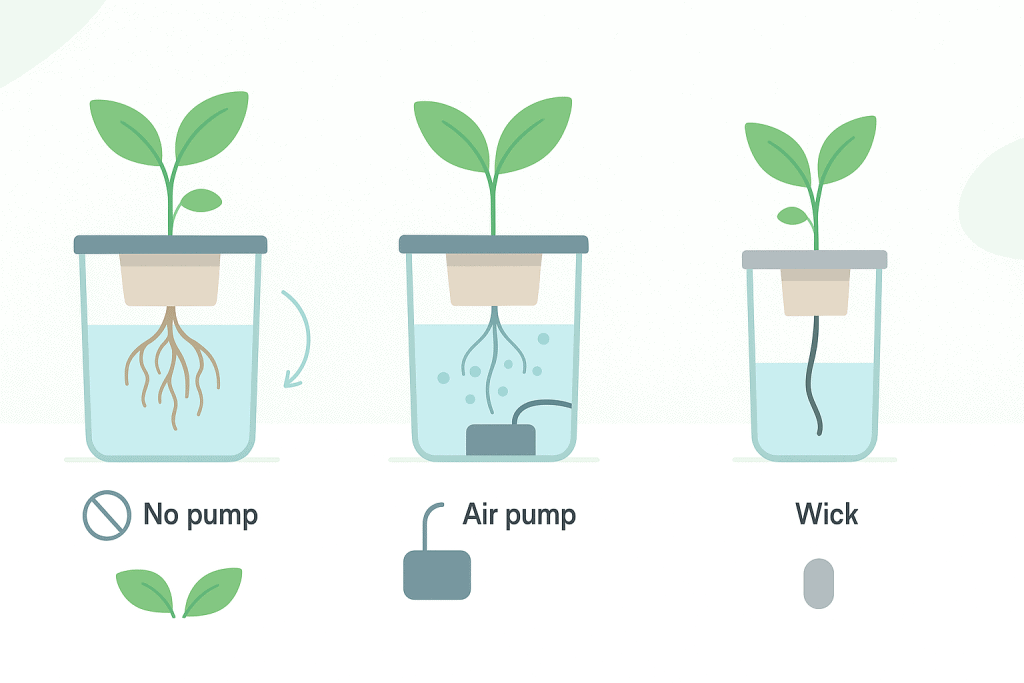
Forget the complex setups you see in commercial farms. Your goal as a beginner is to choose a system that requires the least amount of intervention.
This is where passive hydroponic systems shine. They have no moving parts, no electricity, and very little that can go wrong mechanically.
The Kratky method is the perfect example. You take a container, fill it with a nutrient solution, and suspend a plant in a net pot just above the water.
The roots grow down to drink. As the plant consumes the water, an air gap forms, naturally oxygenating the roots. You literally set it and forget it, only adding water when the level gets very low. It’s the most forgiving entry point possible.
If you want a slight step up, a Deep Water Culture (DWC) hydroponic system is also beginner-friendly.
It involves an air pump and air stone to bubble oxygen into the water, which the roots love. It’s a bit more active than Kratky, but the principle is the same: simplicity reigns.
- Kratky Method: Best for leafy greens over a single harvest cycle. Set-up and maintenance are minimal.
- Deep Water Culture (DWC): Excellent for longer-growing plants like herbs. Requires a simple air pump.
- Wick System: Another passive option where a wick draws nutrients up to the plant. Very low-tech.
The common thread here is the removal of complexity. By starting with one of these, you focus on the plants, not the plumbing.
The Two Numbers You Actually Need to Watch
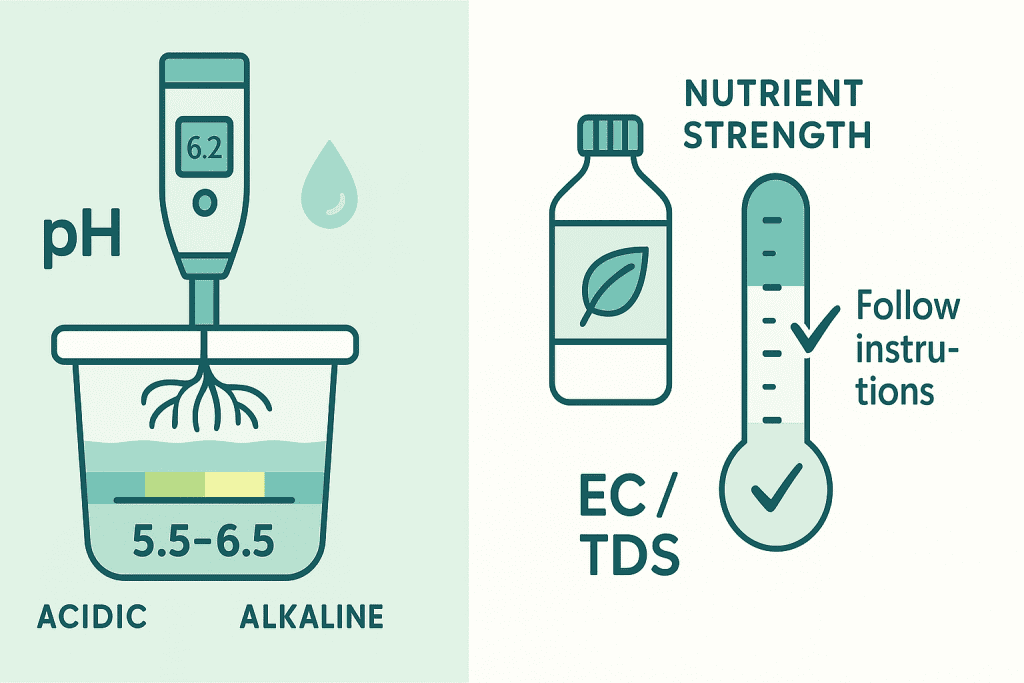
Talk of hydroponics often spirals into a vortex of technical measurements. It can be overwhelming. But for your first growth, you only need to pay close attention to two things: pH balance and nutrient strength.
pH is a measure of how acidic or basic your water is. Plants can only absorb nutrients when the pH is in a specific range, usually between 5.5 and 6.5 for most greens and herbs. If the pH is off, your plant can be sitting in a nutrient-rich soup and still starve.
This is called nutrient lockout. It’s the most common beginner mistake. Testing is easy. A cheap pH meter, costing around fifteen dollars, gives you a digital readout in seconds.
If the number is too high, you add a drop of “pH Down” solution. Too low, a drop of “pH Up.” It feels like a science experiment, but it’s a simple one.
Nutrient strength is often measured as EC (Electrical Conductivity) or TDS (Total Dissolved Solids). This tells you how much fertilizer is in the water.
Beginners often think more food means faster growth, but it’s the opposite. Overfeeding burns the roots and stresses the plant. The easiest path is to follow the mixing instructions on your bottle of hydroponic nutrients precisely.
Don’t eyeball it. Use a measuring spoon or syringe. A TDS meter can confirm your mix is correct, but strictly following the recipe is a reliable starting strategy. Solves most nutrient-related problems (about 80%).
Pick Plants That Want to Grow
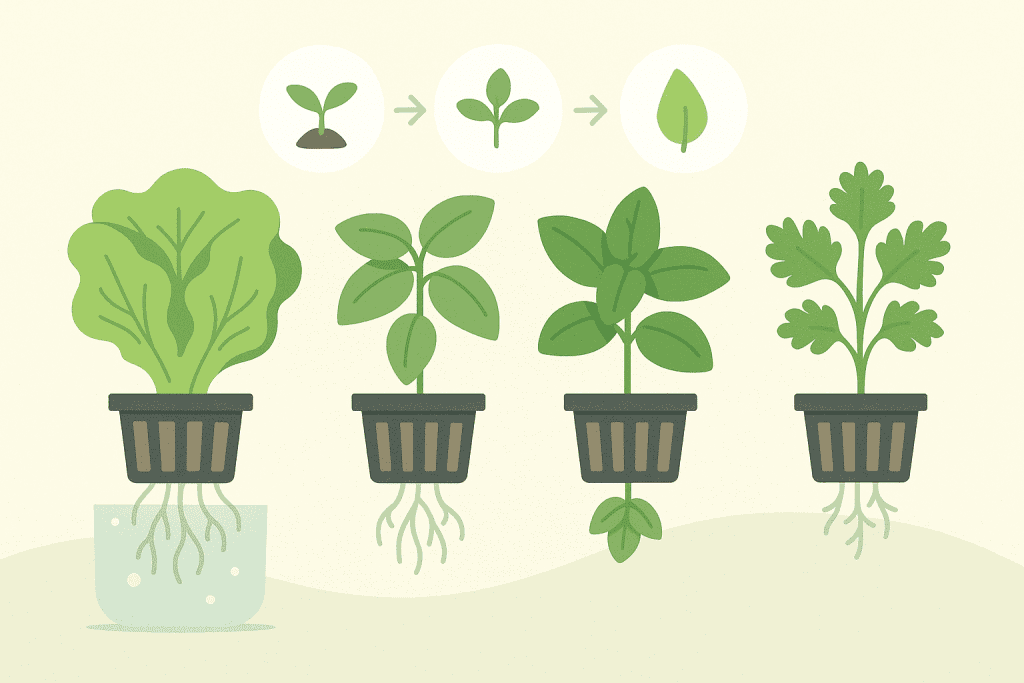
Your choice of plant is critical to early success. You wouldn’t learn to drive in a Formula 1 car. Similarly, don’t start your hydroponic journey with finicky plants like tomatoes or peppers. You need something resilient and fast-growing.
Leafy greens are your best friends. Lettuce, spinach, and kale are practically designed for hydroponics.
They have short growth cycles, so you see results in weeks, not months. This rapid feedback is encouraging. Herbs are another great option. Basil, mint, and cilantro thrive in water-based systems and are very tolerant of minor fluctuations in their environment.
These plants are forgiving. If you make a small mistake with pH or nutrients, they’ll show signs of stress, giving you time to correct the issue before it’s fatal.
A tomato plant might give up on life overnight, but lettuce will fight to survive. Starting with these easy growers builds your confidence and your fundamental skills in sustainable hydroponic gardening.
These plants are forgiving. If you make a small mistake with pH or nutrients, they’ll show signs of stress, giving you time to correct the issue before it’s fatal.
A tomato plant might give up on life overnight, but lettuce will fight to survive. Starting with these easy growers builds your confidence and your fundamental skills.
Your First Hydroponic Setup in Action
Credits: Planted in the Garden
So, what does this look like in practice? Imagine a Saturday morning project. You get a five-gallon bucket, a lid with a hole for a net pot, a small bag of clay pebbles, a bottle of liquid nutrients, and a lettuce seedling from a local garden center.
You mix the nutrients with water in the bucket according to the bottle’s directions. You check the pH and adjust it to around 6.0 [2].
You place the seedling in the net pot with the clay pebbles for support and set the pot into the lid, so the roots dangle into the solution.
You place the bucket under an affordable LED grow light set on a 14-hour timer. Then, you watch it grow.
You’ll check the pH every couple of days, top off the water with plain water as it evaporates, and in about three to four weeks, you’ll harvest a fresh, crisp head of lettuce that you grew yourself.
The difficulty wasn’t in the doing. It was in the initial fear of the unknown. By focusing on a simple system, mastering two key measurements, and choosing the right plant, you transform a technical-looking hobby into a hands-on, deeply satisfying practice.
The complexity can come later, if you even want it. The joy of harvesting your first hydroponic plant, however, comes quickly.
FAQ
What should I know before starting hydroponics at home?
If you’re exploring hydroponics for beginners and wondering how hard it is hydroponics, start with a small, simple setup.
A hydroponic setup guide can teach you basic hydroponic skills such as simple hydroponic methods and hydroponic water management.
Pay close attention to hydroponic plant care and hydroponic water quality. These steps help you avoid beginner hydroponic mistakes and build confidence early.
How do I fix common issues when learning hydroponics?
Hydroponic troubleshooting tips often address hydroponic common issues such as hydroponic pH problems, hydroponic nutrient imbalance issues, and hydroponic algae control.
Using hydroponic learning resources helps you understand hydroponic nutrient basics and hydroponic plant health.
Many hydroponic new grower problems come from skipping routine checks. Identifying issues early makes low maintenance hydroponics more realistic and easier to manage.
Which systems work best when I want an easy start?
If you want hydroponics made easy, consider easy hydroponic systems such as a beginner-friendly DWC system, a wick system for beginners, or an easy NFT system setup.
These systems match the hydroponic system setup for novices and support hydroponic do’s and don’ts. They reduce the hydroponic learning curve and improve hydroponic success for first timers who need a smoother start.
How should I handle nutrients and water as a new grower?
Most hydroponic beginner questions involve hydroponic nutrient mixing, hydroponic nutrient schedule planning, hydroponic pH adjustment, and hydroponic EC management.
These tasks shape hydroponic growing conditions and support hydroponic plant nutrition basics. Follow hydroponic water testing tips and learn hydroponic pH control to avoid preventable issues.
Consistent management improves hydroponic system stability and supports steady, healthy plant growth.
How can I stay consistent while learning indoor farming basics?
A hydroponic step by step guide helps you build hydroponic gardening skills without confusion. You can practice with a hydroponic DIY setup or a hydroponic indoor setup if you enjoy hands-on projects.
Use hydroponic system monitoring and follow a clear hydroponic maintenance schedule to stay organized. These habits support hydroponic hobby learning and keep your hydroponic gardening simplified as you improve.
Conclusion
Hydroponics becomes simple the moment you stop viewing it as a technical challenge and start treating it as a step-by-step process.
With the right beginner system, a focus on pH and nutrients, and easy plants that grow quickly, success comes far sooner than most expect.
What looked complicated turns into a routine you can master in days, not months. Start small, stay consistent, and enjoy the confidence that grows with every harvest.
References
- https://lancasterfarmlandtrust.org/blog/a-beginners-guide-to-hydroponics/
- https://www.instructables.com/Kratkys-non-circulating-hydroponics/
Related Articles
- https://tophydroponicgarden.com/what-are-the-six-types-of-hydroponic-systems/
- https://tophydroponicgarden.com/hydroponics-vs-aeroponics-key-differences/
- https://tophydroponicgarden.com/is-hydroponic-gardening-sustainable/
Was this helpful?

I’m Barrie L., a passionate hydroponic gardening enthusiast dedicated to cultivating thriving, soil-less gardens. With a focus on all things hydroponic, I share my expertise on innovative growing techniques and sustainable practices through my blog, tophydroponicgarden.com. As a seasoned hydroponics specialist, my goal is to inspire and guide fellow gardeners in harnessing the power of water-based cultivation for bountiful and eco-friendly harvests. I’m also an author of the book “Hydroponics For Absolute Beginners: Your Step By Step Guide For How To Create An Hydroponics System At Home Without Soil, For Growing Vegetable, Fruit And Herbs.” which is sold on Amazon. Join me on a journey of redefining the way we cultivate plants, one nutrient-rich solution at a time. Happy growing!