

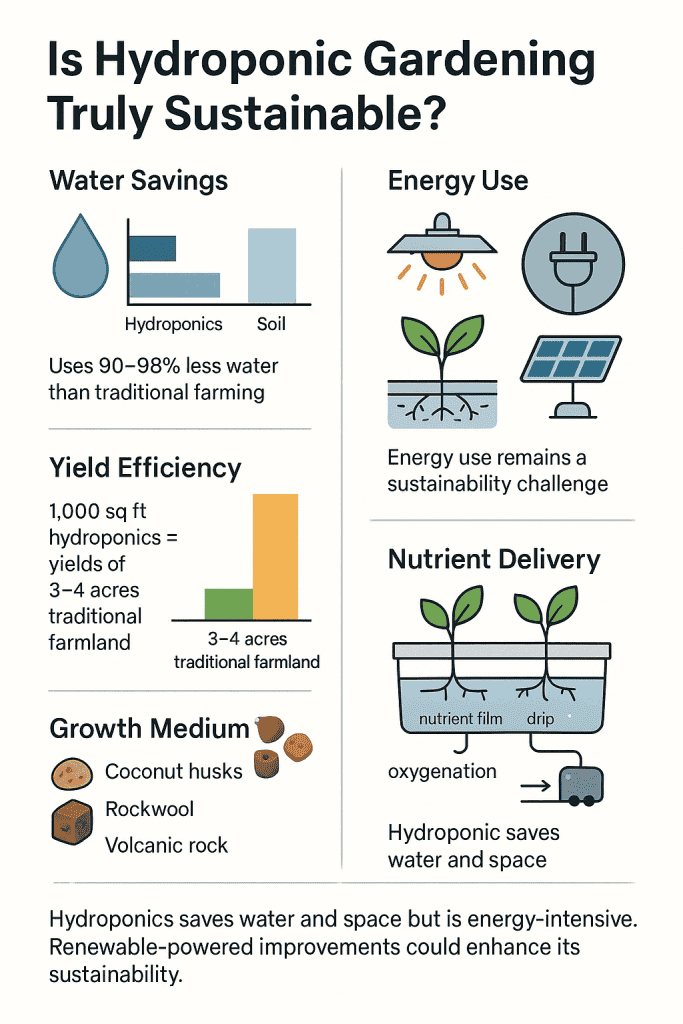
Yes, hydroponic gardening can be sustainable,but it’s not the ultimate solution some hope it to be. The method is straightforward: plants grow in nutrient-rich water instead of soil, saving an impressive 90–98% more water than traditional farming. In fact, one thousand square feet of hydroponic space can yield as much as three to four acres of conventional farmland, especially with leafy greens. Still, the catch is energy use,LED grow lights and climate controls can drive costs and carbon footprints up. Curious whether the benefits outweigh the drawbacks? Keep reading to explore the science behind hydroponics.
Key Takeaways
- Hydroponic gardening drastically reduces water usage and land dependence compared to traditional farming.
- Energy consumption, especially from lighting and climate control, remains a sustainability hurdle.
- Advances in renewable energy and smart controls are improving hydroponic farms’ environmental impact.
Hydroponic System Components and Operational Features
The magic of hydroponic systems comes down to three main parts working together. First, there’s the feeding system – imagine a tiny river carrying vitamins straight to plant roots. Without having to search through soil for food, plants grow way faster. Then there’s climate control, keeping everything at the perfect temperature like nature’s thermostat. Finally, special grow lights act as mini suns, especially useful when growing indoors. Simple stuff that gets impressive results.
Hydroponic farms are cranking out food like nobody’s business – picture getting 10 times the lettuce from a space that’d normally grow just one crop. [1] The whole system is clever. Water flows in circles. Plant nutrients stay in the system. They do not flow into local creeks. But there’s a catch – all those lights and climate controls sure love to eat electricity. Kind of feels like solving one problem by creating another. Still, they’ve got these neat ways of feeding the plants (they call one the “nutrient film technique” and another’s a drip system) that work like a charm. Just don’t look at the power bill.
- Maintaining optimal pH and nutrient levels is critical for healthy plant roots and maximum growth.
- Nutrient film technique and drip systems are common for delivering nutrients efficiently.
- Air pumps oxygenate the nutrient solution, enhancing nutrient uptake by roots.
Now you can see why these water farms work so well in cities or places where soil’s no good for growing. They don’t need perfect farmland – just some space and power. Think about growing fresh lettuce in old warehouses or on rooftops, right where people need it. That’s the beauty of hydroponics it brings the farm to you, no matter where you live.
Nutrient Delivery and Management Systems

Feeding plants in hydroponics needs exact control. Growers must measure nutrients with care. Water mixed with plant food flows past the roots, either constantly or on a schedule. Some setups use the NFT method, basically a tiny stream of nutrients that keeps roots happy but not drowning. Others drip-feed each plant exactly what it needs. The tricky part?, Keeping the water’s chemistry just right (usually between 5.5 and 6.5 pH). But don’t worry – smart sensors do most of the work these days.
- Nutrient film technique (NFT) supports oxygen supply to roots by maintaining a thin nutrient layer.
- Drip systems allow tailored nutrient delivery to diverse plant species.
- Regular monitoring keeps nutrient levels balanced, promoting healthy plant growth.
Unlike regular farms where excess fertilizer runs into streams and rivers, these water farms keep things clean and precise. Think of it as a closed loop – plants get exactly what they need, no more, no less. The result? Less waste and cleaner waterways. Pretty smart way to grow food, when you think about it.
Artificial Lighting and Energy Use
Hydroponic farms often depend on artificial lighting to supplement or replace sunlight. LED grow lights have become the standard due to their efficiency and spectral tuning abilities, which support photosynthesis effectively. However, energy consumption from lighting and climate control remains a sustainability concern. Renewable energy integration appears promising.
Some hydroponic operations pair solar panels or wind turbines with their systems to offset electricity use. Still, initial setup costs for these technologies can be high.
- LED grow lights offer efficient light with lower heat output, reducing cooling needs.
- Integrating renewable energy can significantly lower the carbon footprint of hydroponic farms.
- Energy consumption for lighting and climate control must be balanced against water and land savings.
Running a hydroponic farm takes a lot of juice – those lights and climate controls eat up power like crazy. If you’re not careful with the electric bill, you might end up worse off than regular farming. Smart farmers keep an eye on their meters and look for ways to cut back where they can.
Oxygenation and Root Health
Air pumps play a subtle but vital role in hydroponic systems by oxygenating the nutrient solution. Roots need oxygen to absorb nutrients effectively and prevent diseases like root rot. Providing a steady oxygen supply improves nutrient uptake and overall plant vigor. Inadequate oxygen can stunt growth or cause plants to wilt, negating the benefits of nutrient-rich solutions. This aspect highlights the delicate balance hydroponic growers must maintain.
- Oxygen supply to roots supports faster plant growth and healthier crops.
- Air pumps ensure the nutrient solution is well-aerated, preventing root stress.
- Proper oxygenation reduces disease risk, helping maintain consistent crop production.
When roots get everything they need, plants just take off – that’s the magic of hydroponics. A single room can grow as much as a small field, using just a fraction of the water. It’s pretty wild how far we’ve come from just sticking seeds in dirt. These plants don’t mess around – they grow fast and strong, roots happy as can be in their watery home.
Growing Medium and System Types
Instead of dirt, hydroponic plants hang out in stuff like coconut husks, volcanic rock, or those white cubes made from melted rock (rockwool). Each setup’s different – kinda depends on what you’re growing and where. Most folks either go with the shallow stream method or the flood-and-drain approach. That stream thing works great for leafy greens like lettuce – just a thin film of water running past the roots.
The flood-and-drain’s more like giving plants a bath, then letting them dry off a bit. Both ways keep roots happy. Sure, lettuce loves these setups, but don’t sell hydroponics short. Tomatoes and herbs do just fine too – you just gotta tweak things a little. Each plant’s got its sweet spot.
- Thin film technique suits fast-growing crops like lettuce and spinach.
- Flood and drain systems provide flexibility for various plant species.
- Choice of growing medium affects water retention and root health.
Picking the right setup makes all the difference between wasting resources and growing food smart. It’s like matching the right tool to the right job – when you nail it, everything just works better. These days, with food security on everyone’s mind, getting these details right isn’t just nice – it’s necessary.
Environmental and Economic Impact Considerations

Source: Hydroponic Way
Growing food with hydroponics is pretty green when you break it down. The water keeps going round and round instead of soaking into the ground, there’s no fertilizer running into rivers, and you don’t need acres of land. Mother Nature probably approves. But here’s the catch – all those lights and heaters gulp down electricity like there’s no tomorrow. If your power comes from coal or gas, you might not be doing the planet any favors. Plus the electric bill? Ouch.
Setting up a hydroponic garden isn’t cheap either – pumps, lights, and all that tech adds up fast. But most farmers figure it’s worth it. The plants grow like crazy, and you’re not wasting water or chemicals. Give it time, and the math usually works out in your favor.
- Water savings can reach up to 90-98% compared to soil farming.[2]
- Nutrient runoff is minimized through controlled delivery systems.
- Energy costs and equipment investments require careful planning.
Good hydroponics must balance two goals. It should help the planet. It should also make money. The sweet spot’s there somewhere – but you’ve got to crunch those numbers and watch those meters. That’s what’ll make or break these water-growing operations in the long run.
Technical Expertise and System Maintenance
Operating a hydroponic system demands ongoing attention to detail. Monitoring pH, nutrient levels, and environmental conditions ensures plants remain healthy and productive. This requires some technical knowledge and experience. Growers must regularly calibrate sensors, maintain pumps, and adjust lighting schedules.
Training and education are necessary for sustainable operation at scale, and focusing on proper hydroponic garden maintenance helps prevent costly setbacks while keeping systems efficient.
- Monitoring systems provide real-time data on water quality and nutrients.
- Routine maintenance prevents system failures and crop losses.
- Specialized knowledge helps optimize growth conditions and resource use.
The complex tech may block some farmers. But it also creates chances for new tools and auto systems.
Advancements and Integration for Sustainable Hydroponics
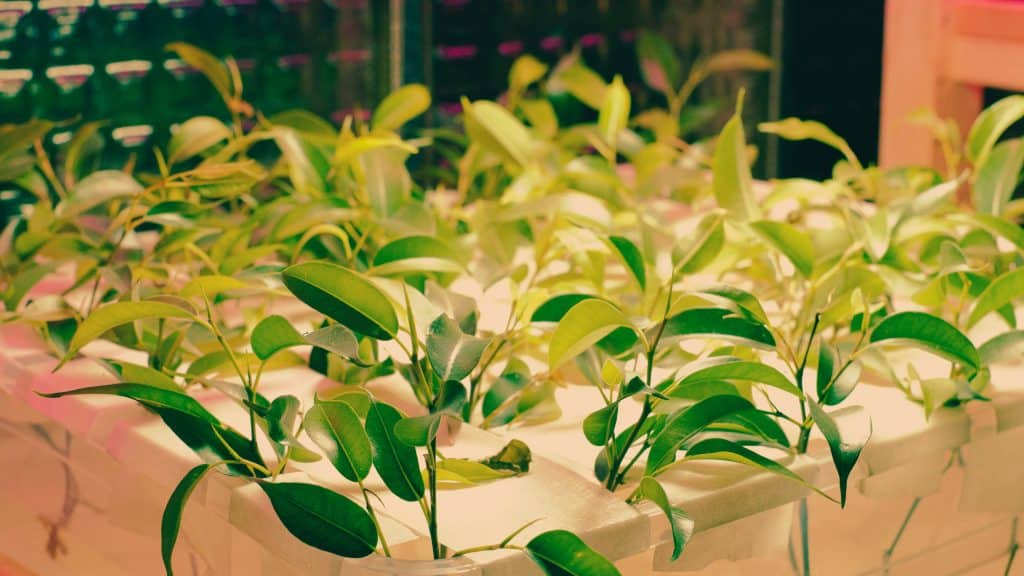
These new hydroponic setups are pretty slick – stacking plants to the ceiling in cities and growing food in the dead of winter. It’s wild seeing lettuce grow in old warehouses, right next to apartment buildings. That’s the future happening right now. Computers handle most of the work these days. They’re like plant babysitters, tweaking the lights and nutrients just right.
No more guessing games about when to water or feed – the machines got it covered. Less work, less waste, more food. Best part? Those greens don’t have to ride trucks across the country anymore. They’re growing right where people need them – in the city. Fresh food, fewer trucks on the road. Makes sense, doesn’t it?
- Vertical farming stacks crops vertically to increase yields per square foot.
- Smart controls optimize environmental conditions, reducing energy waste.
- Urban hydroponic farms supply fresh leafy greens year-round.
Such advancements make hydroponic gardening a key player in sustainable food production and climate change mitigation.
Environmental Benefits and Climate Change Mitigation
City farms using hydroponics means your salad doesn’t have to ride a truck for days to reach your plate. Makes sense, right?The plants grow in controlled environments where pests are limited, meaning little to no pesticide use compared to conventional farms. And forget about fertilizer turning local streams green – these systems keep everything contained. These days, with water becoming precious (you can thank the weird weather for that), hydroponics looks pretty clever.
Every drop gets used over and over.Indoor plants have another benefit. When weather is very hot or wet, these plants still grow well. They’re living the good life in their controlled spaces, growing away like nothing’s wrong.Reduced pesticide reliance lowers chemical pollution.
- Water use efficiency preserves scarce freshwater resources.
- Controlled environments stabilize crop yields despite climate variability.
While energy use remains a challenge, integrating renewable sources and improving system design could amplify hydroponics’ role in sustainable agriculture.
Policy Support and Research Directions
Getting more farmers to try hydroponics means the government’s got to step up with some decent incentives. Solar panels on greenhouses? Tax breaks would help. And somebody’s got to fund those scientists figuring out how to make these systems run smoother. Teaching people how to run these operations right is key – can’t expect farmers to just figure it out on their own. Meanwhile, the tech keeps getting better.
New designs use less power, waste less water. It’s not perfect yet, but it’s getting there. Every tweak helps save a little more energy, grows a little more food.
- Incentives can promote clean energy use in hydroponic farms.
- Research advances smart control and nutrient management technologies.
- Education programs build expertise for sustainable operations.
Supporting these efforts will help hydroponic gardening realize its full potential as a sustainable farming method.
FAQ
How does hydroponic gardening actually work?
Hydroponic farming is a method of cultivating plants without soil, where plant roots grow in a nutrient solution or a growing medium. Systems such as the drip system, ebb and flow, flood and drain, and the nutrient film technique ensure that water and nutrients circulate effectively. An air pump, control systems, and careful monitoring of ph levels support steady plant growth and nutrient uptake. Artificial lighting, including grow lights and led lights, allows crops to grow year round. Hydroponic systems make it possible to achieve faster growth, higher yields, and reliable crop production of leafy greens and other plant species in controlled environments.
Is hydroponic gardening really sustainable in the long term?
Hydroponic farming offers sustainable food production by lowering water usage, reducing water consumption, and limiting food waste, which strengthens food security. It reduces water loss, prevents soil erosion, and helps conserve agricultural land while improving water efficiency. Hydroponic farms located in urban areas and urban centers meet global population needs by producing increased crop yields and grown produce closer to consumers. These farming methods limit the use of pesticides and herbicides, lower the carbon footprint, and can integrate renewable energy. However, the initial setup and initial costs can be high, and farming practices must still address the challenges of climate change to support a sustainable future.
What are the environmental benefits and challenges?
Hydroponic technology supports sustainable agriculture by creating a lower carbon footprint compared with traditional farming and traditional agriculture. Hydroponic vertical farms and hydroponic greenhouses maximize space efficiency and resource efficiency, making them highly efficient parts of a modern agricultural system. The benefits of hydroponic farming include environmentally friendly practices, sustainable and efficient crop cycles, and a stronger return on investment. Hydroponics offers sustainable farming practices and provides essential nutrients for different growing conditions. Yet hydroponic systems also face challenges, such as energy demands, weather conditions, pests and diseases, and overall environmental impact, especially when considered against the global demand for sustainable food and the challenges of climate change.
How does hydroponic gardening compare with traditional farming methods?
Hydroponic farming methods and the many types of hydroponic systems allow growers to cultivate plants in controlled environment agriculture, where nutrients and oxygen are delivered consistently through nutrient solutions. This growing environment differs from traditional farming methods and traditional agriculture, which rely heavily on agricultural land, farming practices, and variable weather conditions. Hydroponic lettuce and other crops can grow more quickly through efficient growth cycles, optimal growing conditions, and a steady nutrient supply. The benefits of hydroponic farming include space efficiency, the ability to grow plants in vertical farming systems, and reliable sustainable food production. Even so, hydroponic farming must still prove that it can deliver sustainable food production when facing the challenges of climate change.
Conclusion
Growing food without soil might sound strange, but hydroponic farming is changing the game. By growing plants in nutrient-rich water, these systems use up to 95% less water than traditional farms and can even fit inside shipping containers. The catch? They require significant power for lighting and climate control. While costs are improving, energy use remains a challenge. So, can hydroponic farms feed our cities without overloading the grid? Let’s dig into how they work.
References
- https://www.mdpi.com/1660-4601/12/6/6879
- https://doi.org/10.48130/tihort-0024-0002
Related articles
- https://tophydroponicgarden.com/hydroponic-systems/
- https://tophydroponicgarden.com/leafy-greens/
- https://tophydroponicgarden.com/hydroponic-garden-maintenance/
Was this helpful?

I’m Barrie L., a passionate hydroponic gardening enthusiast dedicated to cultivating thriving, soil-less gardens. With a focus on all things hydroponic, I share my expertise on innovative growing techniques and sustainable practices through my blog, tophydroponicgarden.com. As a seasoned hydroponics specialist, my goal is to inspire and guide fellow gardeners in harnessing the power of water-based cultivation for bountiful and eco-friendly harvests. I’m also an author of the book “Hydroponics For Absolute Beginners: Your Step By Step Guide For How To Create An Hydroponics System At Home Without Soil, For Growing Vegetable, Fruit And Herbs.” which is sold on Amazon. Join me on a journey of redefining the way we cultivate plants, one nutrient-rich solution at a time. Happy growing!