

Growing plants without soil might sound impossible, but hydroponics and aeroponics make it work through different approaches.
In hydroponics, plant roots thrive in nutrient-enriched water while being supported by materials like clay pebbles or rockwool.
Aeroponics takes a different path, roots hang freely in enclosed spaces while getting sprayed with a fine nutrient mist.
Both methods use about 90% less water than regular soil farming, though they differ in setup costs, maintenance needs, and how plants respond to them.
Ready to see which method fits your garden plans? Let’s break down what makes each system tick.
Key Takeaway
- Hydroponics submerges roots in nutrient-rich water with a solid medium; aeroponics suspends roots in air and mists nutrients.
- Aeroponics offers faster growth and better oxygenation but needs complex setup and constant monitoring.
- Hydroponics is simpler and more forgiving, ideal for beginners and commercial growers with lower initial costs.
Why Choosing the Right Soilless Method Matters
Anyone who’s grown tomatoes in water knows there’s more than one way to feed a plant. While traditional farmers stick to soil, modern growers are turning to two main soil-free approaches.
There’s hydroponics, a system that has evolved since its early introduction to hydroponic farming, where roots soak in nutrient soup (usually propped up by stuff like crushed rocks or shredded coconut shells).
Then there’s the high-tech cousin, aeroponics, where roots hang freely in air chambers and are misted with a fine nutrient spray.
Then there’s the high-tech cousin, aeroponics, where roots hang freely in air chambers and are misted with a fine nutrient spray.
These aren’t just cool science projects, they’re seriously changing the growing game. Hydroponic systems use about 80-90% less water than regular farming, while aeroponics sips even less, saving up to 95%.
Plus, since plants get their food delivered straight to their roots, they don’t waste energy digging through dirt.
But before jumping in, remember, choosing between these methods will hit different spots in your budget, affect how fast your plants bulk up, and determine whether you’ll spend your weekends tinkering with spray nozzles (1) or balancing water chemicals.
Growing Medium and Root Environment

Plants in hydroponic systems basically live in a wet nursery. Their roots either float in nutrient soup or get watered through stuff like rock wool (those weird foam-looking blocks) or coconut shell bits.
These materials act like plant kickstands, they keep everything upright while the roots drink up. The catch? Roots can get pretty cramped and oxygen-starved when they’re packed in wet material all day long.
Key points:
- Roots stay soaked in their food water
- Support stuff holds plants up but crowds the roots
- Perfect for kitchen herbs and salad greens
Aeroponics strips everything down, no dirt, no support junk, just roots hanging in air-filled boxes.
Picture a plant spa where roots get misted with nutrient spray while dangling in open space.
With nothing in their way, roots grab both food and air at once, which usually means plants grow like weeds compared to regular setups.
Key points:
- Roots just hang there in air
- Food comes as a fine mist
- Plants only get support at the top
The tricky part? Those bare roots need perfect conditions or they’ll dry up fast.
But get it right, and you’re actually closer to how plants grow in nature, just without the dirt getting in the way.
Nutrient Delivery and Oxygenation
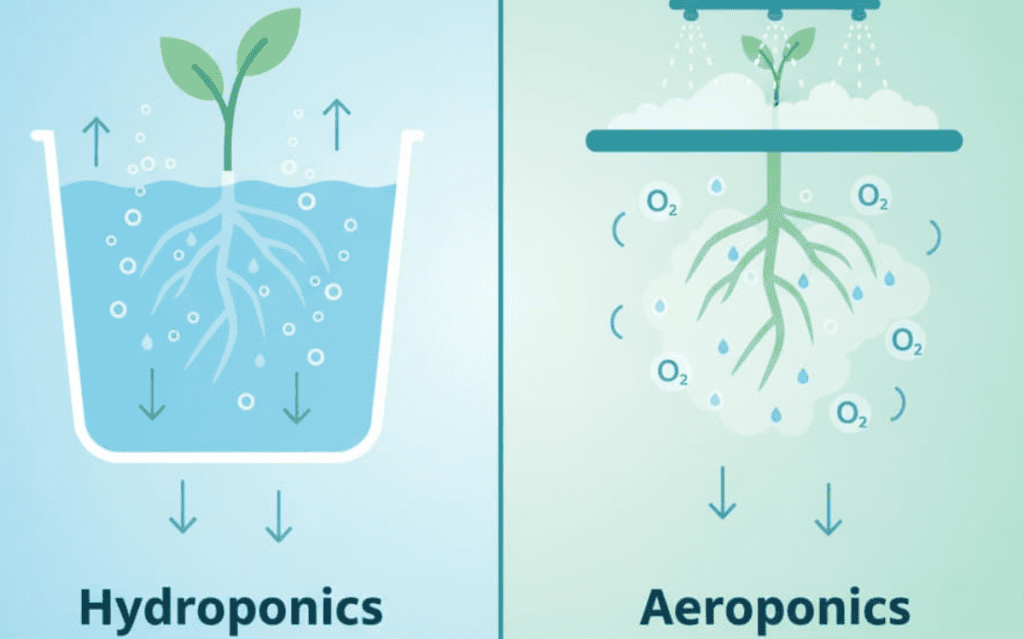
In hydroponics, plants get their food like they’re sitting at an all-you-can-eat buffet, their roots constantly swim in or get washed with vitamin-rich water.
While they never go hungry, they might end up gasping for air since water can only hold so much oxygen. It’s like trying to breathe through a wet blanket, doable, but not ideal.
Aeroponics takes more of a spray-and-pray approach (2).
Roots hang out in the air while getting hit with bursts of nutrient mist, kind of like a plant shower.
Since the roots aren’t drowning, they can breathe easy and grab nutrients better.
Most growers notice their plants bulk up faster this way, some leafy greens grow up to 30% quicker than in regular hydro setups.
Quick breakdown:
- Hydro keeps roots well-fed but sometimes oxygen-starved
- Aeroponics lets roots breathe while feeding them
- Plants usually grow faster when their roots can catch their breath
Water Efficiency and Environmental Control
Let’s talk about water savings, both these methods make regular farming look like a leaky faucet.
Hydroponic setups cut water waste by roughly 80-90%, mainly because they keep recycling the same water in closed loops, one of the key benefits of hydroponic farming that makes it ideal for sustainability-focused growers.
Picture a kiddie pool that keeps getting topped off instead of dumped out. A basic hydro setup might use just 10 gallons where soil farming needs 50.
Aeroponics goes even further, using barely a trickle, about 95% less than traditional farming. But there’s a catch.
Those misting systems need babysitting like a newborn. Miss a few spray cycles or let humidity drop, and roots turn into plant jerky.
Hydro’s more laid back roots stay cozy in their wet beds no matter what.
Bottom line:
- Hydro saves tons of water and won’t throw a fit if you mess up
- Aeroponics saves even more but needs constant attention
- You’re trading simplicity for efficiency, pick your battle
Complexity and Maintenance
Because roots remain constantly moist, hydroponic systems are more prone to root rot if not monitored. Since roots stay soaked, they’re prime targets for nasty stuff like root rot.
Think of it as an athlete’s foot for plants. Even with weekly cleanings and constant checking, those wet conditions can turn your nutrient soup into a petri dish of problems.
Aeroponics keeps roots more like bare feet in fresh air, they can breathe between showers of nutrients.
Less soaking means fewer chances for gross stuff to grow. Those hanging roots soak up oxygen like a kid at an ice cream shop, staying perky and healthy.
But miss a few misting cycles and those happy roots turn into crispy noodles real quick.
The rundown:
- Hydro roots can get swampy if you’re not careful
- Aero keeps things cleaner but demands perfect timing
- Both need regular cleaning, like washing your car (except more often)
Even the cleanest setup needs weekly scrubbing, skipping maintenance is like never washing your gym clothes. Gross stuff will grow eventually, no matter which method you pick.
Plant Health and Disease Exposure
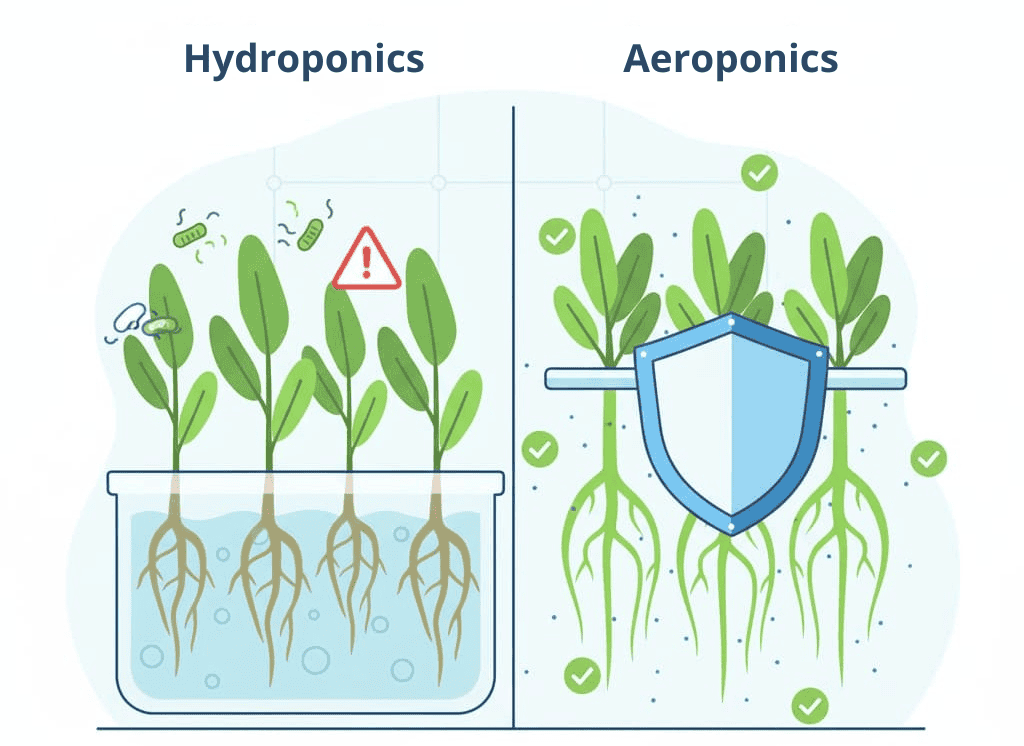
The environment roots grow in affects their health and susceptibility to disease.
Hydroponic roots are submerged or kept moist in nutrient solutions, which can create conditions favorable for fungal or bacterial infections like root rot.
These risks require regular system cleaning and monitoring.
Aeroponics offers a healthier root environment since roots are exposed to air between misting cycles, lowering risk of soil-borne diseases and pests.
This exposure helps roots absorb oxygen better and stay healthier, although the system’s sensitivity means any interruption in misting can quickly cause stress.
- Hydroponics has a higher risk of waterborne diseases.
- Aeroponics reduces disease risk with better oxygen access.
- Both require careful hygiene and monitoring for best results.
Choosing the Right Method: Guidance

Credit: Everything Hydroponics
Choosing between hydroponics and aeroponics depends on your goals, budget, and experience with soilless cultivation.
If you’re just dipping your toes into soilless growing, hydroponics is probably your speed. It’s like getting a reliable sedan, not fancy, but it’ll get you where you need to go without breaking the bank, a method perfected since hydroponics was first introduced decades ago.
Most folks can grow anything from basil to beefsteak tomatoes without losing sleep over equipment failures.
That’s why you’ll spot hydro setups in everything from basement gardens to massive greenhouses.
Aeroponics is more like jumping into a Tesla, high performance, but you better know what you’re doing (or be ready to learn fast).
Sure, it’ll grow plants like they’re on steroids and save more water than a desert cactus.
But you’ll need deep pockets and some serious know-how to keep those misting systems running right.
FAQ
What is the main difference between hydroponics and aeroponics in how plants receive nutrients?
The main difference between hydroponics and aeroponics is how the plants receive nutrients.
In a hydroponic system, plant roots grow in a nutrient solution or enriched water medium. In an aeroponic system, roots are exposed to air and misted with nutrients directly.
Both methods allow efficient nutrient absorption and promote faster plant growth without soil.
Which system is more water efficient: hydroponics or aeroponics?
Aeroponics is generally more water efficient than hydroponics because it uses a fine mist to deliver water and nutrients directly to plant roots.
Hydroponic farming still conserves much more water than traditional farming but uses more than aeroponics.
Both growing methods reduce environmental impact and are ideal for sustainable indoor food production.
What are the setup costs for hydroponic and aeroponic systems?
The initial cost of aeroponic systems is usually higher than that of hydroponic systems because they require precise control equipment for nutrient delivery and misting.
Hydroponic gardening, including systems like deep water culture or nutrient film technique, is easier to set up and maintain.
However, both systems can achieve high yields once properly managed.
Can hydroponics and aeroponics be used for large-scale farming?
Yes, both hydroponic and aeroponic systems can be used for large-scale farming by commercial growers.
These soilless cultivation methods allow a wide range of crops and fresh herbs to grow indoors throughout the year.
With precise control of water usage and nutrient levels, both systems promote faster growth and higher yields than traditional farming.
Which growing method is better for home or indoor gardening?
For home or indoor gardening, hydroponic systems are often easier to manage because they use a stable nutrient solution and simple equipment.
Aeroponic gardening, while highly efficient, needs regular maintenance to prevent mist nozzle blockages.
Both hydroponics and aeroponics allow plants to grow without soil, making them ideal for small spaces.
Conclusion
Wrapping this up, let’s cut through the garden jargon. Hydroponics offers simplicity and stability, while aeroponics provides faster growth with greater technical demands.
The real deal? Both beat digging in dirt any day. Pick hydro if you want something that won’t keep you up at night worrying about sprayers.
Go aero if you’re the type who likes tinkering and wants to push your growing game to the max.
Whatever you choose, you’re still miles ahead of traditional farming, just pick the path that matches your patience, wallet, and technical skills.
References
- https://en.wikipedia.org/wiki/Spray_nozzle
- https://agris.fao.org/search/en/providers/122436/records/682f2adbd0cf3796e6212fa8
Related Articles
- https://tophydroponicgarden.com/hydroponics-introduction/
- https://tophydroponicgarden.com/key-benefits-of-hydroponic-farming/
- https://tophydroponicgarden.com/who-introduced-hydroponics/
Was this helpful?

I’m Barrie L., a passionate hydroponic gardening enthusiast dedicated to cultivating thriving, soil-less gardens. With a focus on all things hydroponic, I share my expertise on innovative growing techniques and sustainable practices through my blog, tophydroponicgarden.com. As a seasoned hydroponics specialist, my goal is to inspire and guide fellow gardeners in harnessing the power of water-based cultivation for bountiful and eco-friendly harvests. I’m also an author of the book “Hydroponics For Absolute Beginners: Your Step By Step Guide For How To Create An Hydroponics System At Home Without Soil, For Growing Vegetable, Fruit And Herbs.” which is sold on Amazon. Join me on a journey of redefining the way we cultivate plants, one nutrient-rich solution at a time. Happy growing!