
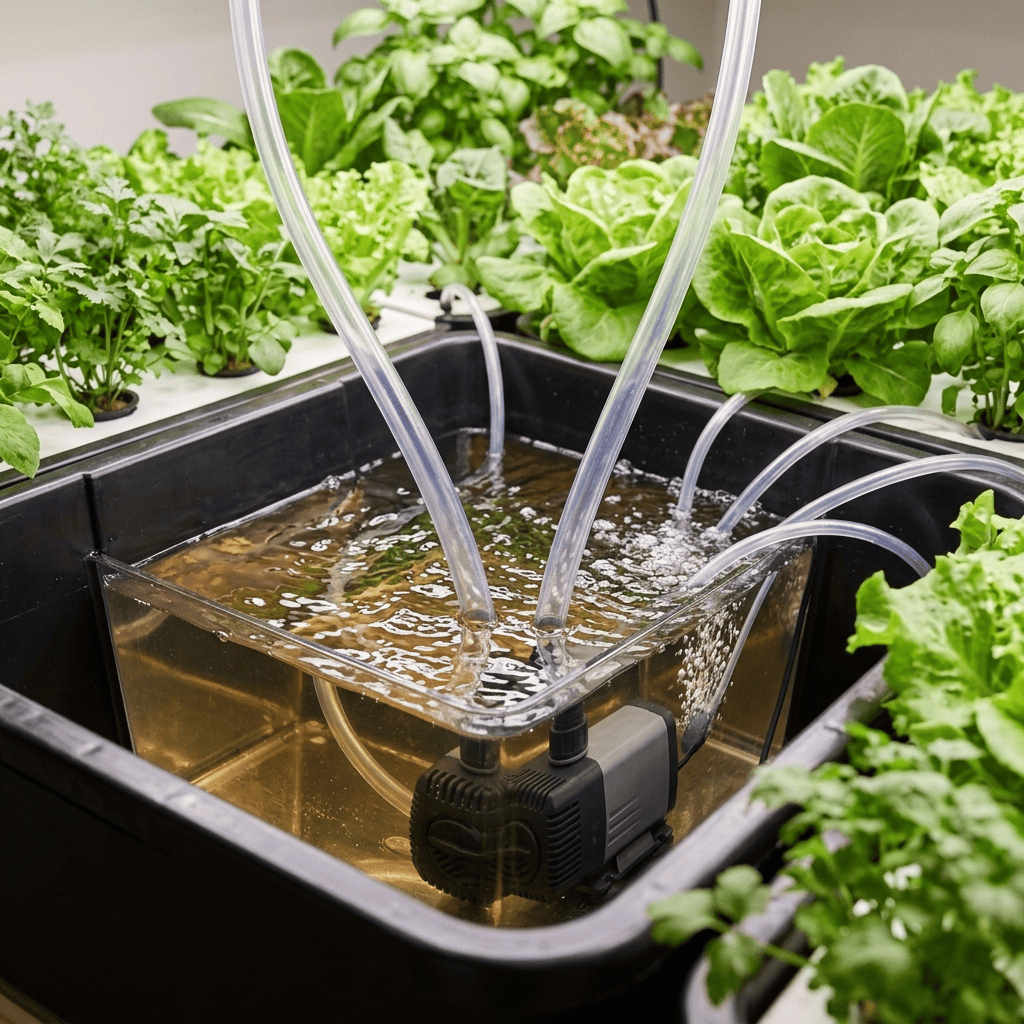
Hydroponic water pump reviews help growers choose equipment that delivers nutrient solution at the right flow rate, pressure, and height for their system. A dependable pump can support consistent circulation in active systems such as NFT, drip irrigation, ebb and flow, and recirculating DWC. The University of Minnesota Extension also describes small hydroponic setups that use pumps to move nutrient solution through the growing system. Keep reading to see what separates a suitable pump from an expensive mismatch.
What Hydroponic Water Pump Reviews Reveal
- Flow rate and head height matter more than a high GPH number alone.
- Submersible pumps suit many home systems, while inline pumps often fit larger installations.
- Durability, energy use, and maintenance can affect long term value as much as purchase price.
Why Pump Choice Affects Hydroponic Performance
A hydroponic water pump controls how nutrient solution moves through an active growing system. Hydrobuilder Learning Center identifies pumps as essential equipment for systems including ebb and flow, drip hydroponics, recirculating DWC, and aeroponics. Its current buying guidance also separates pumps into submersible, inline, and bottom draw designs.
A pump with excessive flow can disturb roots or overflow channels. A weak pump may fail to supply enough water once tubing, fittings, and vertical lift reduce its real output.
The strongest hydroponic water pump reviews therefore compare the whole system instead of focusing only on the number printed on the box.
How Flow Rate Changes Real Pump Performance
Flow rate shows how much water a pump can move, but the advertised rating usually represents ideal conditions. Head height, tubing length, bends, filters, and outlet restrictions can reduce actual delivery.
For example, a pump rated at 400 GPH may move far less water when it must lift nutrient solution several feet. That difference becomes especially noticeable in vertical towers and multi level NFT systems.
This is why experienced growers often compare a pump’s performance curve rather than treating its maximum GPH rating as the final answer.
A useful starting point is to calculate the system’s water demand first, then choose a pump that maintains enough capacity after normal resistance reduces flow.
Hydroponic Water Pump Types Compared
Different hydroponic systems place different demands on a pump. The table below shows where each common design usually fits best.
| Pump Type | Best Use | Main Strength | Main Limitation |
| Submersible | Small and medium reservoirs | Quiet, compact, simple setup | Adds heat to reservoir water |
| Inline | Larger or external systems | Strong flow and easier heat management | Requires more plumbing |
| Bottom Draw | Sumps and specialized reservoirs | Draws water from low points | Less common for basic setups |
According to Hydrobuilder Learning Center, submersible pumps are commonly used by hobby growers, while inline options often suit larger systems that need greater power.
The best option depends on the system layout, not simply the pump’s price or brand name.
What the Best Hydroponic Water Pump Reviews Measure
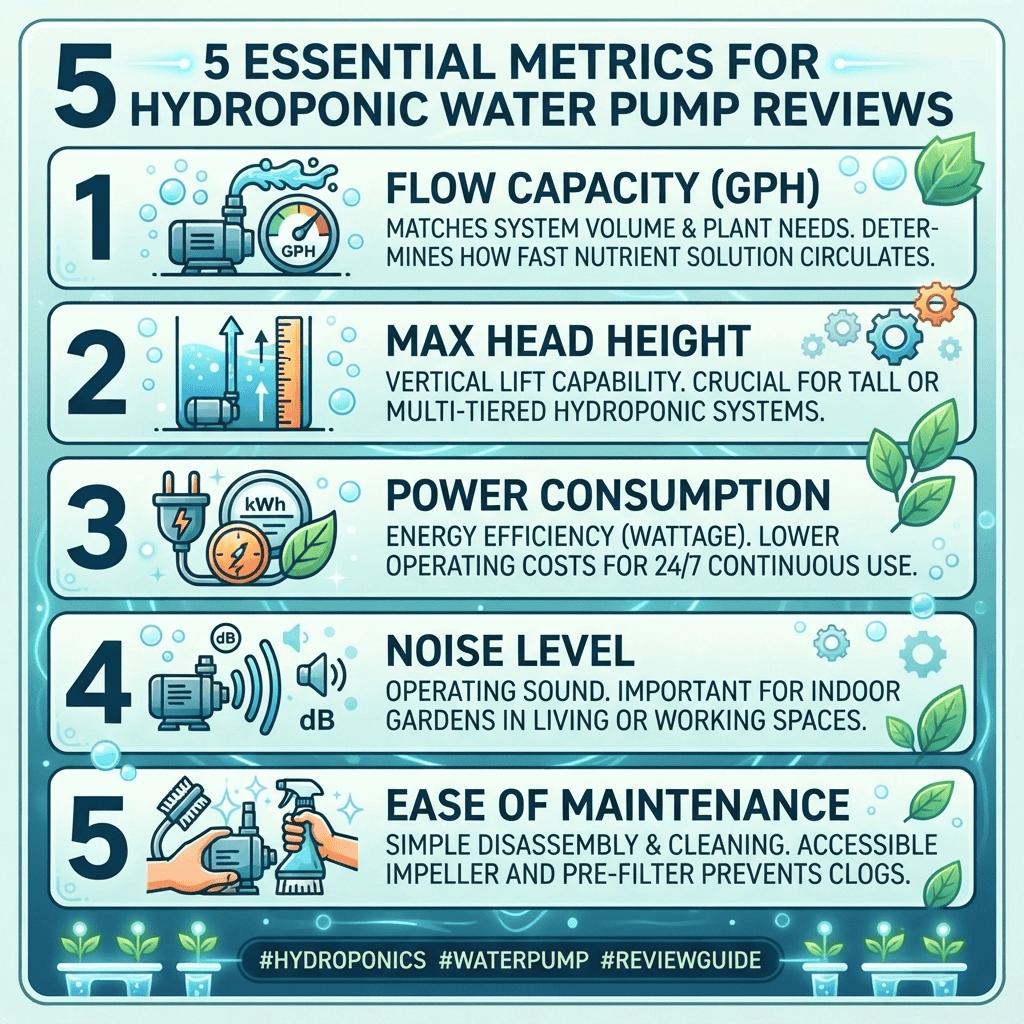
5 Key Metrics to Look For in Hydroponic Water Pump Reviews :
- Flow Capacity (GPH): Matches your plant count and overall system design.
- Head Height: The maximum vertical lift—crucial for tall vertical systems.
- Power Consumption: Wattage matters for pumps running 24/7 to save on electricity bills.
- Noise Level: Essential for indoor growers to maintain a quiet, peaceful environment.
- Maintenance & Cleaning: Easy-to-reach impellers and pre-filters prevent sudden clogs.
Of course, a pump with impressive specifications can still be the wrong choice if its fittings do not match the existing tubing.
A balanced review should explain where a pump works well and where another model would make more sense.
Submersible Pumps for Small Hydroponic Systems
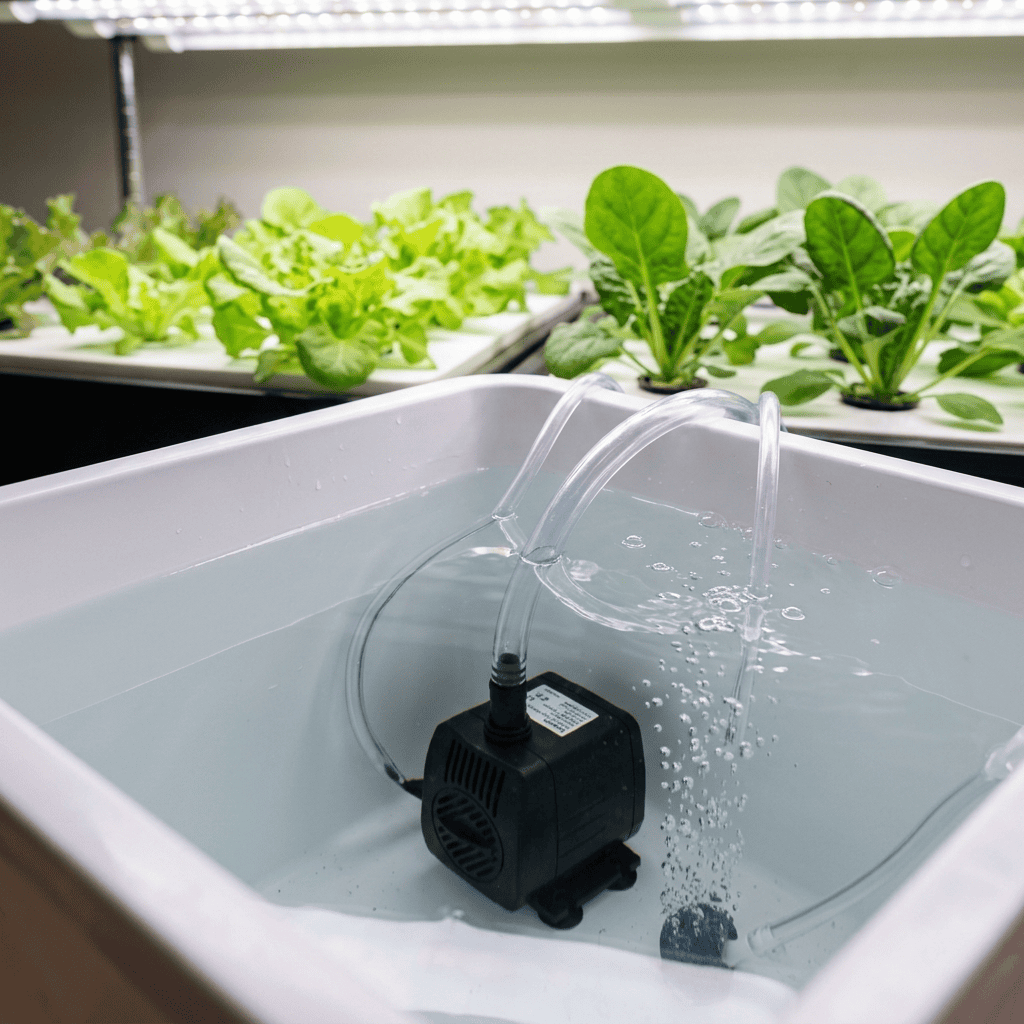
Submersible pumps remain a practical choice for many home growers because they sit directly inside the nutrient reservoir. This design can simplify installation and reduce the number of external connections.
A 350 to 400 GPH range is often discussed for smaller vertical systems, although the correct capacity still depends on lift height and plumbing resistance. Soil Free Harvest’s 2026 sizing guide, for example, describes this range for many home hydroponic towers.
The tradeoff is reservoir heat.
Because the motor operates in the nutrient solution, a continuously running submersible pump can slightly increase water temperature in smaller reservoirs.
Why Head Height Can Matter More Than GPH
Head height measures how far upward a pump can push water before flow eventually reaches zero. This specification becomes critical when nutrient solution travels from a floor level reservoir to elevated channels.
A 500 GPH pump with limited head height may perform worse in a tall system than a lower rated pump with stronger lifting capacity.
Pump selection should therefore start with the highest vertical point in the system. After that, growers should account for tubing friction, elbows, filters, valves, and manifolds.
A small safety margin can help maintain stable circulation as equipment becomes slightly dirty over time.
Choosing a Pump for NFT and Vertical Systems
NFT channels and vertical towers usually need steady, predictable circulation rather than uncontrolled maximum output. A pump should maintain the desired flow at the system’s actual operating height.
The University of Minnesota Extension shows that small scale hydroponic systems can use a reservoir pump to move nutrient solution upward before it returns through the system.
“Most home tower gardens need a 350 to 400 GPH pump with a head height rating of 5 to 7 feet.” Soil Free Harvest hydroponic pump sizing guide
That figure should remain a starting reference, not a universal rule.
Growers with longer channels, taller towers, or more outlets may need a different capacity.
Pump Volume Planning Before Buying
Pump capacity should connect directly to the volume and layout of the hydroponic system. Buying a larger pump without checking system demand can create unnecessary turbulence, noise, and electricity use.
A reservoir’s total gallons provide useful context, but the circulation path matters just as much. A compact system with a short return line may need less pumping power than a taller system with fewer gallons.
For a more detailed planning method, growers can review this internal resource on pump volume calculations for hydroponic systems.
The goal is controlled circulation that matches the system rather than maximum movement for its own sake.
Energy Efficiency and Long Term Cost
A low purchase price does not always mean a low cost over time. Pumps often operate for hours each day, so wattage can influence electricity consumption across an entire growing cycle.
For example, a 20 watt pump running continuously uses less electricity than a 60 watt model, although actual costs depend on local energy prices and operating schedules.
That said, growers should not sacrifice reliability simply to save a few watts.
A pump that frequently stalls, overheats, or loses flow can create larger problems than a slightly higher electricity bill.
The strongest hydroponic water pump reviews compare efficiency alongside performance and durability.
Durability Is a Review Category Worth Watching
A durable pump can handle repeated use, nutrient exposure, and routine cleaning without losing performance quickly. Materials, impeller design, thermal protection, and strainers can all affect service life.
Hydrobuilder Learning Center lists established hydroponic equipment brands such as Active Aqua, EcoPlus, EZ Clone, and Leader when discussing pump options for different system sizes.
“Having the best water pumps for hydroponics can be the difference between a flawless system and equipment failure.” Hydrobuilder Learning Center water pump review guide
Brand reputation alone does not guarantee the right fit, but replacement parts and warranty support can improve long term ownership.
Common Problems Found in Water Pump Reviews
User reviews often reveal issues that product specifications do not explain clearly. Noise, clogging, vibration, inaccurate flow ratings, and early impeller wear can appear only after regular use.
Several recurring issues deserve attention:
- Reduced flow after debris reaches the intake.
- Extra heat in small reservoirs.
- Noise from vibration against hard surfaces.
- Performance loss at higher head pressure.
A simple pre filter and regular cleaning can prevent some of these problems.
For systems where reliability matters over long growing cycles, this internal guide on choosing durable water pumps can help narrow the selection.
How to Match a Pump to Your Hydroponic Setup
The best pump is the one that meets the system’s actual demand with enough reserve capacity. Start with vertical lift, then check the number of outlets and the resistance created by plumbing.
A simple selection process works well for many growers.
First, measure the distance from the reservoir to the highest water outlet. Next, estimate tubing length and fittings. Then compare those needs with the manufacturer’s pump curve.
Finally, check whether the pump can operate continuously or should run on a timer.
This approach avoids one of the most common buying mistakes: choosing equipment based only on the largest GPH number.
Choosing the Right Pump for Your System
Pump reviews become more useful when paired with the specific design of the hydroponic setup. A beginner’s small NFT system and a commercial recirculating installation should not use the same buying checklist.
A compact grower may value quiet operation and easy cleaning. A larger grower may prioritize pressure stability, head height, and external installation.
For a broader breakdown of system matching, see choosing the right water pump for your hydroponic system.
The most reliable choice usually comes from matching performance to demand rather than buying the most powerful model available.
Video Resource: Understanding Pump Selection
This YouTube video explains practical factors such as pump head, flow rate, pipe friction, and pump curves. It provides useful background for growers who want to understand why real world flow can differ from a pump’s advertised maximum rating.

Credits : Do it with Pierre
The video works best as a technical companion to product reviews because it focuses on the calculations behind pump selection rather than simply naming a preferred model.
FAQs About Hydroponic Water Pump Reviews
What size water pump is best for hydroponics?
The correct size depends on system volume, required flow, tubing resistance, and vertical head height.
Are submersible pumps good for hydroponics?
Yes. They are common in small and medium systems because they are compact and easy to install.
How often should a hydroponic water pump run?
The schedule depends on the hydroponic method, plant type, growing medium, and system design.
Does a higher GPH rating always mean a better pump?
No. Real flow can drop significantly when the pump works against height and plumbing resistance.
How can a grower make a water pump last longer?
Regular cleaning, intake protection, proper water levels, and matching the pump to the system can reduce unnecessary wear.
Can one pump serve several hydroponic channels?
Yes, provided the pump maintains enough flow and pressure after the water is divided among multiple outlets.
Making Hydroponic Water Pump Reviews Work for You
The best hydroponic water pump reviews focus on fit, not hype. Flow rate, head height, energy use, durability, and maintenance should work together with the design of the growing system.
A small indoor garden may perform well with a compact submersible model, while a larger setup may benefit from an inline pump with stronger pressure control. Real value comes from stable circulation and dependable operation over time.
Before buying, measure the system, compare pump curves, and consider long term maintenance. Then choose the model that supports consistent nutrient delivery instead of simply chasing the biggest specifications.
[Explore more hydroponic equipment guides and choose a water pump that fits your growing system with confidence.]
References
- https://soilfreeharvest.com/hydroponic-pump-sizing-guide/
- https://learn.hydrobuilder.com/best-hydroponic-water-pump/
Related Articles
- https://tophydroponicgarden.com/choosing-the-right-water-pump-for-your-hydroponic-system/
- https://tophydroponicgarden.com/pump-volume-calculations-for-hydroponic-systems/
- https://tophydroponicgarden.com/choosing-durable-water-pumps
Was this helpful?
